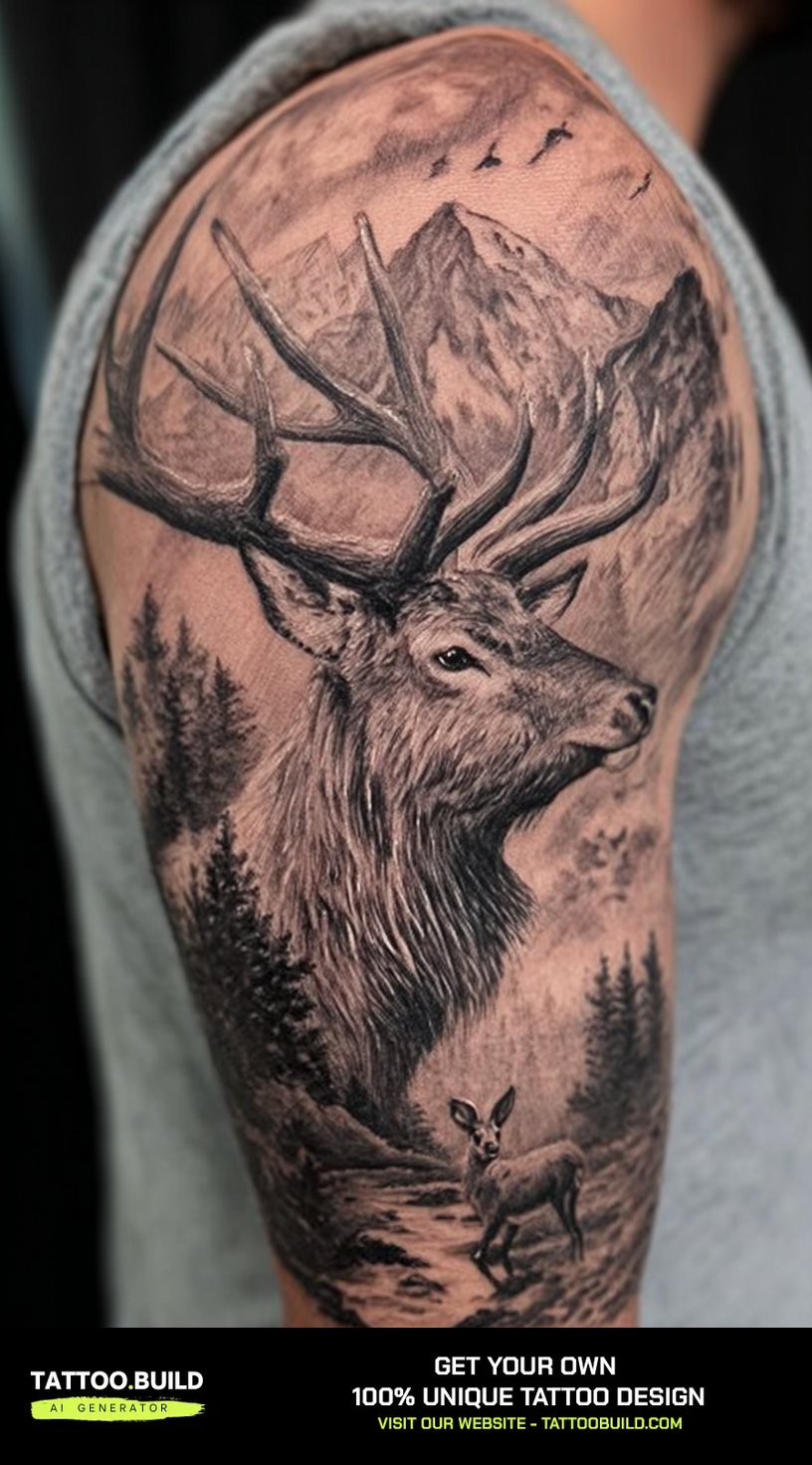
A nature tattoo works because it carries meaning without needing a caption. A mountain range, a coiled snake, a breaching whale — the reference is doing the talking, and nobody has to ask what it stands for.
I have spent years looking at these pieces on other men’s arms and asking the artists who put them there what actually survives a decade. The answer is almost always the same: strong shapes, honest scale, and a subject the wearer had a real reason to choose.
This guide walks through ten nature tattoo directions for men that keep working long after the healing is done, with notes on placement, style, and the trade-offs nobody mentions in the consultation. If landscapes are the pull for you, the deeper dive on mountain tattoo ideas for men covers the terrain side in more detail.
Every design below is shown on real skin, not a flash sheet, so you can see how the linework behaves once it settles.
Which Nature Tattoo Style Is Right for You?
Style matters more than subject when it comes to how a piece looks in year ten. Here is how the four approaches I see most often compare.
| Style | Best For | How It Ages | Typical Session |
|---|---|---|---|
| Bold blackwork | Mountains, wolves, silhouettes, heavy landscapes | The most forgiving option; thick lines stay legible for decades | 3–6 hours for a forearm panel |
| Black and grey realism | Elk, owls, sharks, anything with fur or feather detail | Softens gradually; mid-tones need a touch-up around year 8–12 | 6–12 hours, usually split across sittings |
| Fine line | Branches, small botanicals, minimal horizons | Thinnest lines can blur; best kept above roughly 5–6 cm | 1–3 hours |
| Dotwork and stipple | Water, smoke, sky, texture behind a main subject | Holds shape well; density can read slightly softer over time | 4–8 hours |
When I have asked artists which of these they would pick for a first large piece, bold blackwork comes up more than anything else — not because it is easier, but because it is the hardest to ruin.
What Actually Makes a Nature Tattoo Last
Most disappointing tattoos are not badly drawn. They are drawn too small for the amount of detail packed into them.
Ink spreads microscopically in the skin over years. Two lines sitting close together will eventually read as one thicker line, which is why a densely detailed forest shrunk onto a wrist tends to turn into a dark smudge.
The fix is scale, and it is the single most useful thing I have learned from watching these pieces age. A design that looks slightly too big on the stencil is usually the right size on skin.
Placement matters nearly as much. Hands, fingers, feet and the outer edges of the forearm see more friction and more sun, and in most cases they fade faster than the inner arm, chest or thigh.
Sun exposure is the fastest way to age a tattoo prematurely. Nature designs get worn outdoors more than most, which makes sunscreen on a healed piece less optional than it sounds.
10 Nature Tattoo Ideas for Men That Hold Up
1. Sun Rising Over a Mountain Horizon
This is the design I see most often on men getting their first serious piece, and there is a reason it keeps working.
The composition is built from two shapes that read clearly at any distance: a jagged ridgeline and a disc. Even when the fine shading softens, the silhouette survives.
Symbolically it lands somewhere between a fresh start and an obstacle cleared, which is broad enough to mean something personal without being vague to look at.
In practice, the sunrise element gives an artist somewhere to put warmth or gradient work, while the ridge gives the piece its structure. Ask for the ridgeline to be committed in solid black rather than built from stipple — it is the part you want still crisp in fifteen years.
The outer forearm and the outer bicep both suit it, since the horizontal composition matches the way the muscle wraps.
2. Snake Coiled Around a Branch or Tree
A snake wrapped around bare wood is one of the oldest images in tattooing and one of the few that genuinely improves on a curved surface.
The coils give an artist a natural reason to follow the shape of an arm or calf, so the tattoo sits on the body instead of being pasted onto it.
Meaning-wise it pulls from shedding and renewal on the snake’s side and growth and rootedness on the tree’s, which is why it suits men marking a period of change rather than a single event.
The technical thing to insist on is negative space. If the coils sit too tightly against the branch, the gaps close up over the years and the whole piece flattens into one dark mass.
If the snake is the part you care about most, the dedicated guide to snake tattoos for men goes further into scale patterns and posture.
3. Whale Breaching Through Waves
A breaching whale is a scale statement. It works because the animal is enormous and the tattoo has to imply that without actually being enormous.
The trick artists use is contrast: heavy solid black on the whale’s back, and open skin left in the wave crests so the water looks bright by comparison.
I have seen this design fail when the waves get as much detail as the animal. The eye then has nowhere to rest and the whole thing reads as busy texture.
It suits the upper arm, shoulder blade and outer thigh, all of which give enough vertical room for the arc of the breach.
For more compositions built around the same animal, the whale tattoo ideas collection is worth a look.
4. Elk With Full Antlers
An elk is the design men choose when they want something from where they actually live rather than something generically wild.
Antlers are the whole appeal and the whole difficulty. They branch, they overlap, and they need real width to stay separate as the ink settles.
Every artist I have asked about this piece says the same thing: give the antlers more space than you think they need, and let them break the outer edge of the composition rather than tucking them inside a neat border.
Black and grey realism is the usual approach, and it earns the extra hours. A softly shaded coat against sharp antler lines is what makes the animal look alive rather than illustrated.
Budget for a touch-up somewhere in the second decade if you go heavy on fur texture — that is normal, not a sign of bad work.
5. Desert Cactus With Sand Dunes
Desert pieces are quietly one of the best-ageing categories in nature tattooing, and they are still under-used.
The reason is simple: a saguaro is a strong vertical shape, and dunes are long clean curves. There is almost nothing fine enough to blur.
The mood is different from mountain work too. Where a peak reads as struggle, a desert reads as patience and self-sufficiency, which is a more specific thing to say about yourself.
Linework alone is often enough here. I have seen calf pieces done in nothing but outline and light stipple that still look sharp years later.
If the plant itself is the draw, there are more compositions in the cactus tattoo ideas roundup.
6. Shark Cutting Through Ocean Waves
The shark passes the silhouette test better than almost any other animal in tattooing.
Block it out in solid black and you can still tell what it is from across a room. That is the property you want in any piece you plan to keep.
It carries a harder edge than the whale — less awe, more directness — and men who pick it usually want that read.
Where it goes wrong is teeth. Over-detailed jaws are the first thing to lose definition, so a slightly open mouth with a few well-placed shapes ages far better than a full anatomical grin.
The shoulder and outer arm both work well. The shark tattoo ideas page has more variations if this is the direction you are leaning.
7. Volcano Erupting With Smoke and Lava
A volcano is a mountain with a story attached, and it solves the problem of landscape tattoos looking passive.
Smoke is what sells it. A plume gives the composition height and lets the artist fill the upper space with something soft against the hard cone below.
If you want colour anywhere in a nature piece, this is the design that justifies it. A narrow band of red or orange in the lava, and nothing else, keeps the impact without committing the whole tattoo to colour that will need more upkeep.
Bold outlines are worth insisting on. Illustrative volcano work with clean black borders holds its shape well, while a purely soft-shaded version can lose its edges.
It reads best vertically, which makes the outer forearm and the calf natural homes for it.
8. Owl Perched on a Tree Branch
The owl is the most detailed subject on this list, and the one where artist choice matters most.
Feathers are hundreds of small marks sitting close together, which is exactly the situation where ink spread does the most damage over time.
A good artist handles this by grouping feathers into larger tonal shapes rather than drawing each one, so the bird still reads correctly once the fine stippling softens.
Body shape is the practical advantage here. An owl fits a tall narrow panel naturally, which is why the forearm suits it better than the chest.
Symbolically it points at judgement and watchfulness rather than raw strength, which makes it a good counterweight if the rest of your work is heavy. The owl tattoo ideas guide covers more poses.
9. Palm Tree Silhouette Against the Sunset
Palm trees get dismissed as a holiday souvenir, which is unfair to what is actually a very well-built design.
Two or three trunks, a sun disc behind them, a flat horizon line: it is almost entirely silhouette, and silhouette is the thing that survives.
Most men who choose it are marking a specific place rather than a general idea, and that specificity is what keeps it from feeling generic on the skin.
If there is a gradient in the sun, put the piece somewhere protected. The inner bicep sees far less direct sun than the outer arm, and soft tonal work benefits from that.
There are more takes on this in the palm tree tattoo collection, including heavier blackwork versions.
10. Sea Turtle Swimming in Ocean Currents
The turtle is the calmest design on this list, and the one that most often carries a family meaning.
Longevity and steady progress are the usual associations, and the shell gives an artist a built-in frame for pattern work — geometric, ornamental, or Polynesian-influenced depending on the direction you want.
Currents should stay loose. A few flowing lines around the animal suggest water far more effectively than a filled background, and they leave the piece breathing room.
Scale is the usual mistake. A turtle small enough for a wrist rarely has space for shell detail, and the pattern is the part people actually look at.
More layouts are collected in the turtle tattoo ideas guide.
Other Nature Directions Worth Considering
If none of the ten above is quite it, these variations come up constantly in consultations and cover most of what is left.
Forest and Treeline Panels
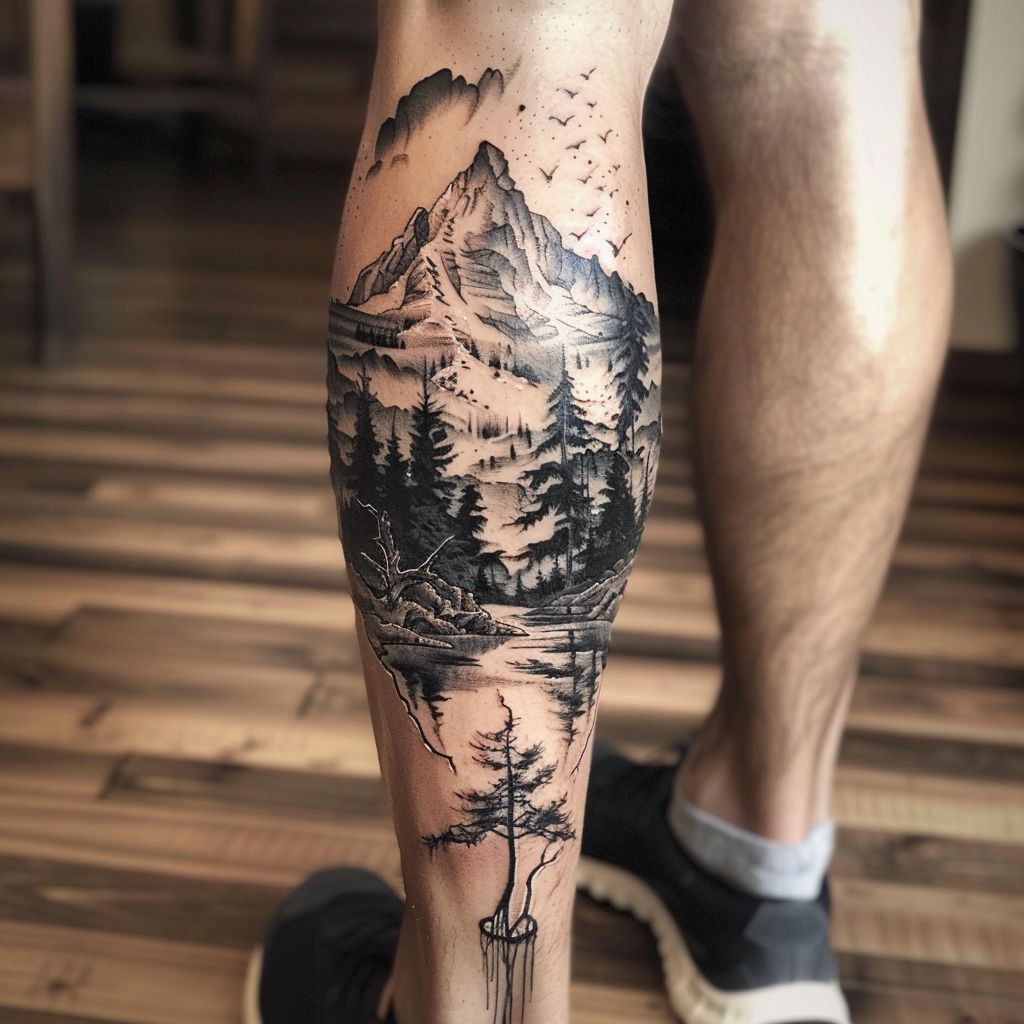
A band of pine silhouettes wrapping the arm is one of the simplest large pieces you can commit to, and it fills space without demanding a focal point.
It also works well as a base layer for a sleeve you plan to build out later.
Wolves and Bears
Both are heavily tattooed, which is a real drawback and a real advantage. Artists have drawn them enough to be very good at them.
If you go this route, ask for a specific posture rather than a generic head study — that is usually what separates a personal piece from a stock one.
Waves and Water Alone
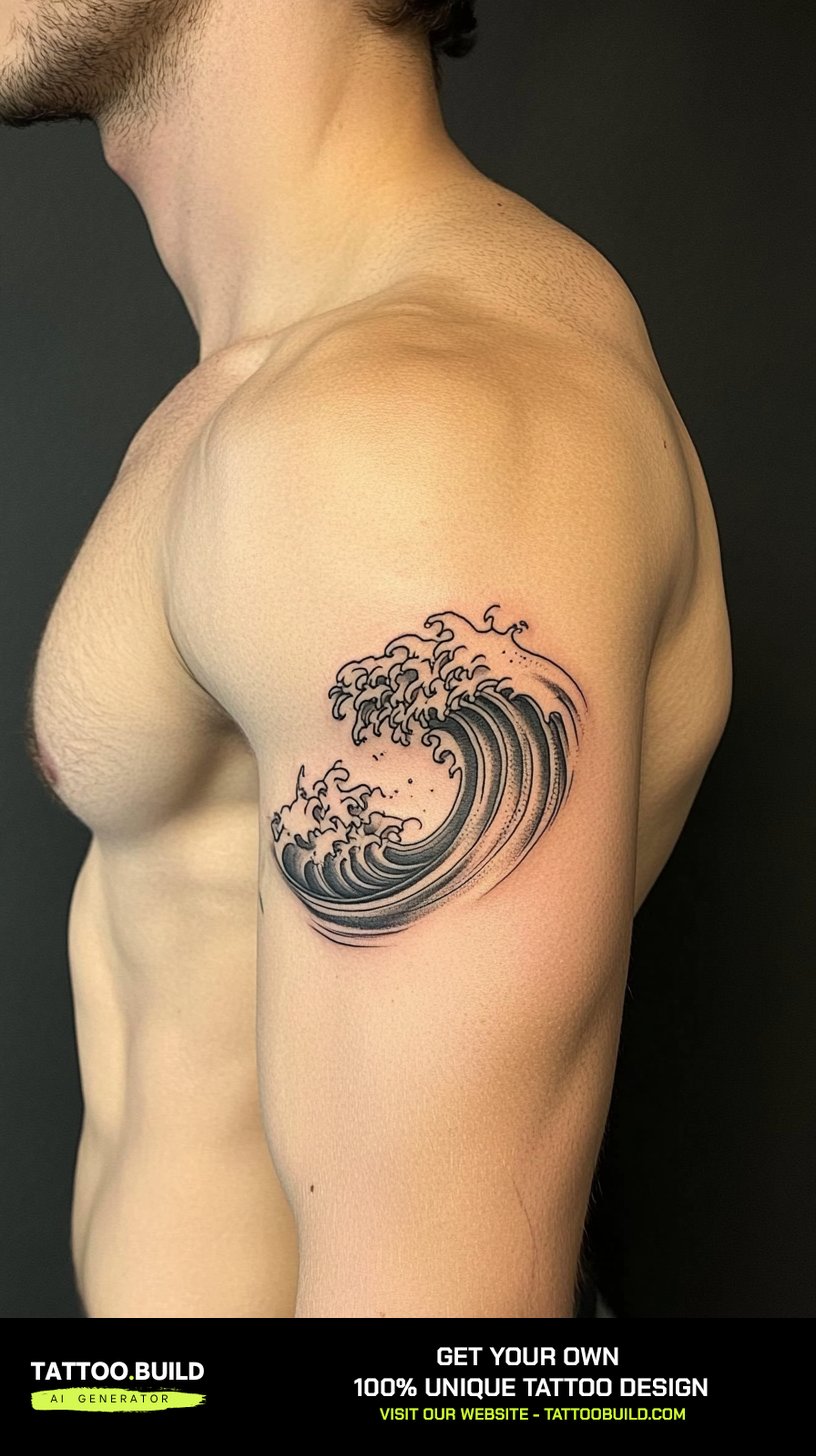
Japanese-influenced wave work with no animal in it is a strong option for men who want movement without a subject.
It also fits awkward areas well, since water can be shaped around a joint in a way an animal cannot.
Single Botanical Elements
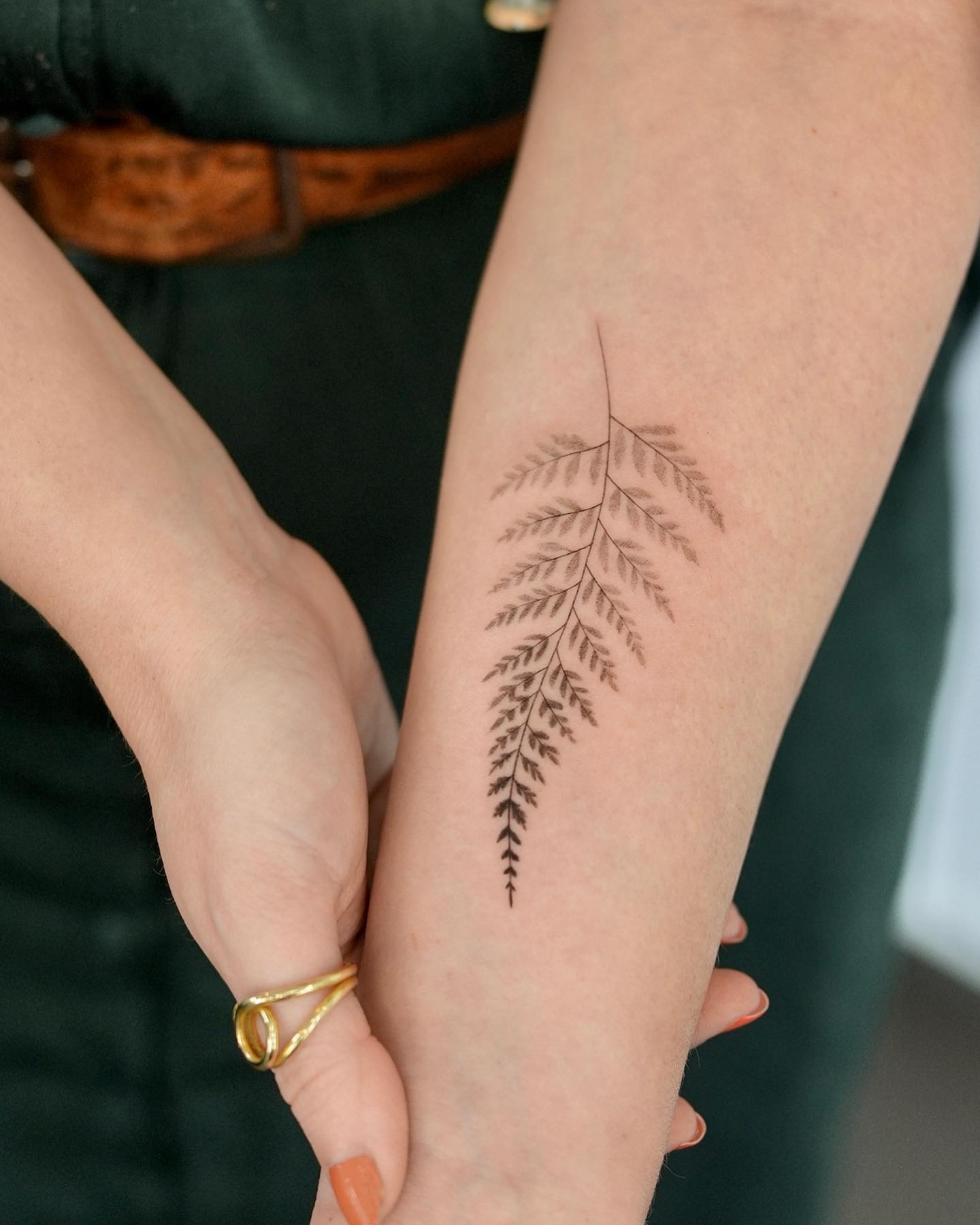
A fern, a pine bough, a single branch: small nature pieces work when they are one clear object rather than a miniature scene.
Keep them above roughly five or six centimetres and the linework will stay open as it ages.
Placement, Sizing and Aftercare Advice That Actually Matters
Pick the placement before the design. An artist drawing for a specific limb will produce something that fits the body, while a design chosen first has to be forced into whatever space is left.
Go a size up from your instinct, especially on anything with texture. Fur, feathers, foliage and water all need room, and every artist I have asked would rather talk a client up in size than watch a piece close in over the years.
During healing, follow the aftercare instructions your artist gives you rather than advice from the internet, since the right routine depends on the wrap used and the work done. Our general tattoo aftercare guide covers the common ground if you want to know what to expect before the appointment.
Once healed, sunscreen is the highest-value habit for a nature tattoo, because these are pieces people tend to wear outdoors. It will not stop fading entirely, but it slows it noticeably.
On the safety side, Mayo Clinic lists infection, allergic reactions, granulomas, keloids and rare MRI complications among tattoo risks, and the FDA notes that no colour additive is currently approved for injection into the skin. If a healing tattoo becomes hot, swollen, or increasingly painful after the first few days, that is a question for a doctor and your artist — not something to manage on your own.
Common Mistakes, and What to Do If You Are Still Not Sure
The most common mistake is choosing a subject before choosing an artist. Portfolios are specialised, and an artist who is excellent at fine botanical work may not be the right person for heavy blackwork.
The second is designing for a photo rather than for a decade. Ultra-fine detail photographs beautifully on the day and is the first thing to soften.
The third is filling every gap. Open skin is a design element, and the pieces that still look sharp years later almost always left more of it than felt comfortable at the time.
If you are torn between a detailed and a bold approach, looking through blackwork tattoo ideas for men is a useful reality check on how much the heavier styles can carry.
And if you are not sure about the subject at all, wait. In my experience, the men happiest with their nature work are the ones who sat with the idea for months before booking.
Frequently Asked Questions
How much do nature tattoos for men usually cost?
Cost depends on size, detail and your artist’s hourly rate rather than the subject itself. A simple linework cactus or small horizon might be a single short session, while a full black and grey elk can run six to twelve hours split across sittings. Most shops quote either an hourly rate or a flat price for the piece once they have seen the design. Ask for the estimate in writing before the stencil goes on.
Which nature tattoo ages the best?
Bold blackwork with strong silhouettes ages best in almost every case, because thick lines and clear shapes survive the gradual spread of ink in the skin. Mountains, sharks, palm silhouettes and simple treelines all fall into this category. Highly detailed realism can look extraordinary but usually softens in the mid-tones over a decade or so. That is normal, and a touch-up handles it.
Where should a first nature tattoo go?
The outer forearm and outer bicep are the usual recommendations for a first piece. Both give enough space for a proper composition, sit in areas most people find manageable for pain, and are easy to keep clean during healing. Hands, fingers and feet see more friction and sun, so they generally fade faster. Talk placement through with your artist, since it also affects how the design is drawn.
Do nature tattoos work better in colour or black and grey?
Black and grey is the default for most of the designs in this guide, and it is the lower-maintenance option over time. Colour earns its place when there is one specific element that needs it, such as lava in a volcano or a narrow band of warmth in a sunrise. Full-colour nature work is possible but asks more of both the artist and your long-term care. In most cases a mostly black and grey piece with a single colour accent is the safer middle ground.
How long does a large nature tattoo take to heal?
The surface usually looks settled within two to three weeks, while the deeper layers of skin generally take a few months to finish healing. Large or heavily shaded pieces tend to sit at the longer end of that range. Follow the specific aftercare your artist gives you, since it varies with the wrap and the work. If you see spreading redness, heat, or worsening pain rather than steady improvement, contact a healthcare professional.
Quick Summary
- Nature tattoos for men work best when the subject reads clearly in silhouette, before any shading is added.
- Bold blackwork is the most forgiving style over time; fine line is the least forgiving at small sizes.
- Scale is the most common mistake — going one size up is almost always the right call.
- Mountains, sharks, cacti and palm silhouettes are the strongest choices for long-term legibility.
- Elk, owls and other detailed animals are worth the extra hours, but expect a touch-up in the second decade.
- Choose the placement before the design so the artist can draw for that part of the body.
- Sunscreen on healed work is the single highest-value habit for pieces you will wear outdoors.
- Follow your artist’s aftercare, and treat spreading redness or worsening pain as a reason to see a doctor.