I have spent more hours than I care to count talking tattoos with line cooks, pastry chefs and one very opinionated saucier, and the pattern is always the same. A chef tattoo is rarely about food — it is about the hours, the burns and the people you survived the shift with.
The knives, the whisks, the produce, the skull in a toque: they are shorthand for a life most people outside the kitchen never see.
This guide walks through 30+ chef tattoo ideas, the styles that actually hold up on hands and forearms, and the aftercare problem nobody warns you about — healing ink while working next to a flat-top. If you want a second angle on the theme, my other round-up of chef tattoo ideas covers a few designs I did not repeat here.
Every image below is a design concept, not a photo of a finished client piece. Bring them to your artist as a starting point, not a printout to copy.
Which Chef Tattoo Style Is Right for You?
Before you pick a subject, pick a style. It decides how the piece ages far more than the design does.
| Style | Best for | Typical single session | How it ages |
|---|---|---|---|
| Fine line | Whisks, forks, small tools, script | 1–2 hours | Softens fastest; hands and wrists may need touch-ups |
| Blackwork | Skull-and-knife crests, bold silhouettes | 2–4 hours | Holds shape the longest of any style here |
| Neo-traditional | Plated dishes, produce, dessert pieces | 3–5 hours | Very well — heavy outlines contain the colour |
| Black & grey realism | Knives, engraved blades, produce sleeves | 4–6 hours, often multiple | Mid-tones flatten over time; needs a strong contrast range |
| Watercolour | Toque-and-knife pieces, abstract splashes | 2–4 hours | Loosest of the group; expect touch-ups soonest |
Those session times are rough ranges from artists I have asked, not quotes. Size, placement and your own skin all move the number.
What Chef Tattoos Actually Mean in the Kitchen
Kitchens were tattooed long before tattoos went mainstream, and the reason is practical as much as cultural.
Cooking is one of the few skilled trades where visible ink almost never cost you a job. Chef whites cover the arms during service, and the culture behind the pass has run on its own rules for generations.
That freedom turned the kitchen into one of the most heavily tattooed workplaces there is. Every head chef I have spoken to has at least one piece, and most cannot tell you how many they are up to.
The subjects follow a pattern too. A first knife, a mentor’s initials, the dish that got you your first section, a phrase like mise en place — these are career markers, and they get added shift by shift the way a sleeve fills in.
There is a superstition side as well. Plenty of cooks treat a hand or neck piece as the point of no return, the moment you stop pretending this is a job you will leave for an office.
Popular Chef Tattoo Designs
These are the design families that come up again and again, roughly in the order artists tell me they get asked for them.
Chef’s Knife Tattoos
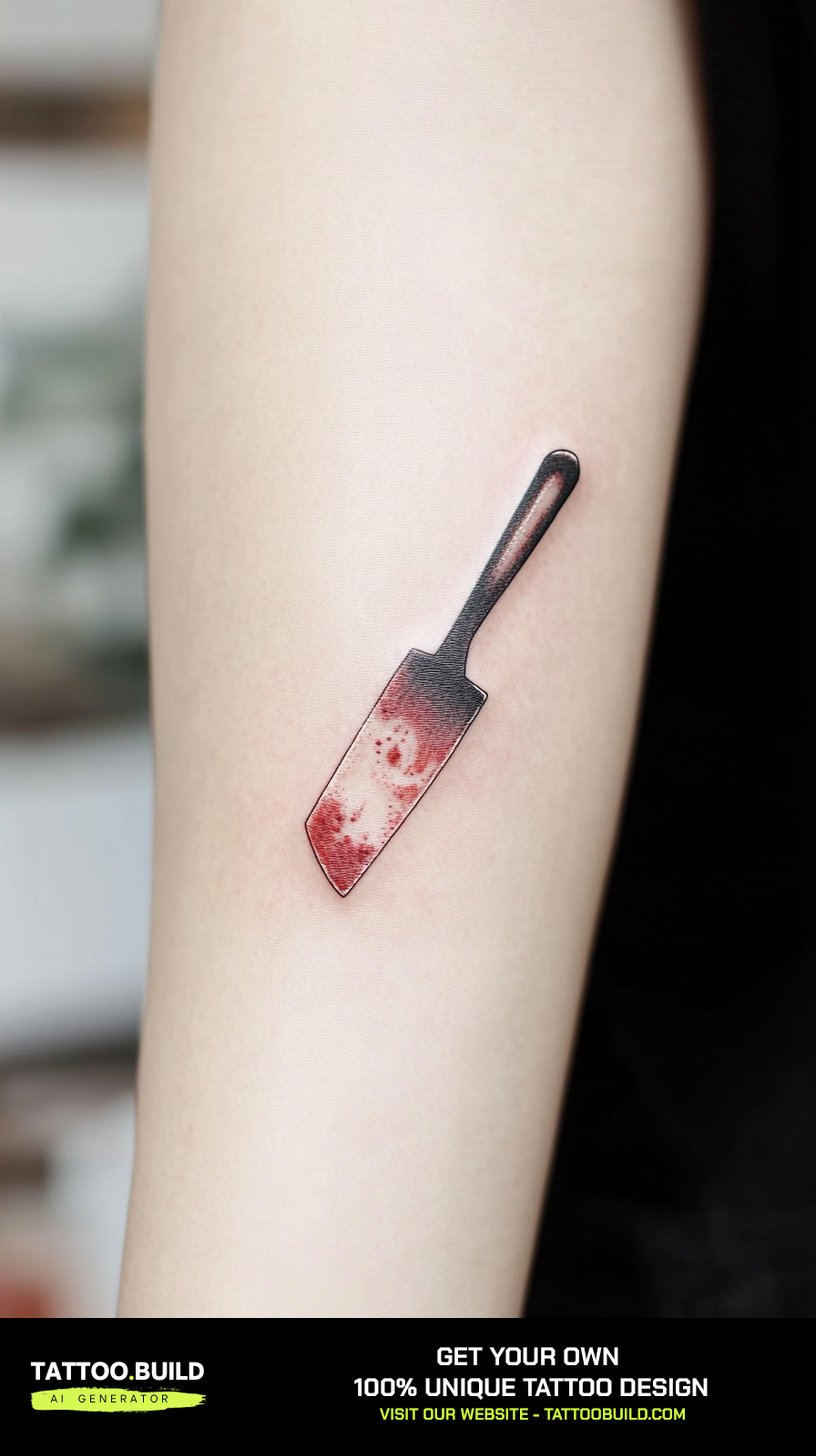
The chef’s knife is the single most requested chef tattoo, and for good reason — it is the one tool every cook owns a personal version of.
A plain blade down the inner forearm follows the limb naturally and needs no filler to look finished. In my experience it is also the cheapest way into the theme, often a single short sitting.
The detail that makes it yours is the engraving. A name, a date, a restaurant, or the make of the knife you actually cook with turns a stock image into a personal one.
Adding vegetables to the blade is the other common variation. It softens what is otherwise a weapon shape, which matters if you work front of house as well.
Signature Dish and Plated Food Tattoos
Tattooing the dish that defined a stage of your career is the most personal option on this list, and the hardest to get right.
Bowls work better than plates. A ramen bowl, a pho, a stew — the round shape holds together on the arm, where a flat plated dish tends to read as a blob from a metre away.
Steam, broth and noodles all need an artist who can handle overlapping translucent shapes. Ask to see a healed photo of something similar before you book.
These pieces need room. Every good one I have seen sits on a thigh, a shoulder or an outer bicep, not a wrist.
Ingredient and Produce Tattoos
A single ingredient is the best entry point into chef tattoos if you are not ready to commit to a sleeve.
Chillies, garlic, avocado, citrus and mushrooms all share the same advantage: a silhouette you can recognise at a glance, in one or two colours.
Pick something you actually cook with weekly. The cooks who regret these are usually the ones who chose an ingredient because it looked good, not because it meant anything.
Produce also scales. One chilli on the forearm can become a garden panel years later without the first piece looking orphaned.
Kitchen Tools and Minimalist Designs
Whisks, spoons, rolling pins and thermometers are the quiet end of the genre — usually the choice of people who do not want an obvious tattoo.
They suit line work almost perfectly. A whisk is essentially a set of curves, which is why it appears so often in single-needle work.
Keep them larger than you think you need. Thin parallel lines close together will blur into a solid shape over the years, a limitation covered in more depth in my minimalist tattoo ideas guide.
The inner wrist looks great on day one and is one of the faster-fading spots on the body. Ask your artist about the forearm instead if longevity matters to you.
Chef Hat and Skull Tattoos
The skull in a toque over crossed knives is as close as the industry gets to an official emblem.
It carries a specific meaning — the kitchen as something you endure, not just a workplace. Every cook who has one can tell you the shift that earned it.
Blackwork suits it best. Heavy outlines and solid fill keep the shape readable decades in, which is the same reasoning behind most skull tattoo designs that survive well.
The one thing to get right is the toque. A badly drawn chef’s hat reads as a cartoon, so look for an artist who has drawn the pleats before.
Culinary Quotes and Typography
Lettering is where chef tattoos go wrong most often, because the font choice is doing all the work.
Block capitals along the forearm stay legible for the longest. Fine script wraps the arm more elegantly but the thin tails are the first thing to soften.
Lines widely attributed to Julia Child — including “people who love to eat are always the best people” — are the most requested, alongside mise en place and short lines from Anthony Bourdain.
Read it out loud before you commit. If it sounds like a caption rather than something you believe, it will feel that way on your arm; there are more options in my quote tattoo ideas collection.
Botanical and Garden-to-Table Tattoos
The farm-to-table generation of cooks brought a whole style with them: root vegetables with their tops on, herbs, seed heads, whole plants rather than trimmed produce.
Carrots and beets are the workhorses here because the leafy tops give an artist a flowing line to build a composition around.
These pieces scale into sleeves better than almost anything else in this article. A full produce sleeve is normally a four-session-plus project, mapped out in advance.
Decide on colour before the first session, not after. Adding colour to a black and grey botanical sleeve later rarely looks planned.
Dessert and Pastry Tattoos
Pastry chefs run a different aesthetic to the hot line, and their tattoos show it — smaller, cleaner, less hardware.
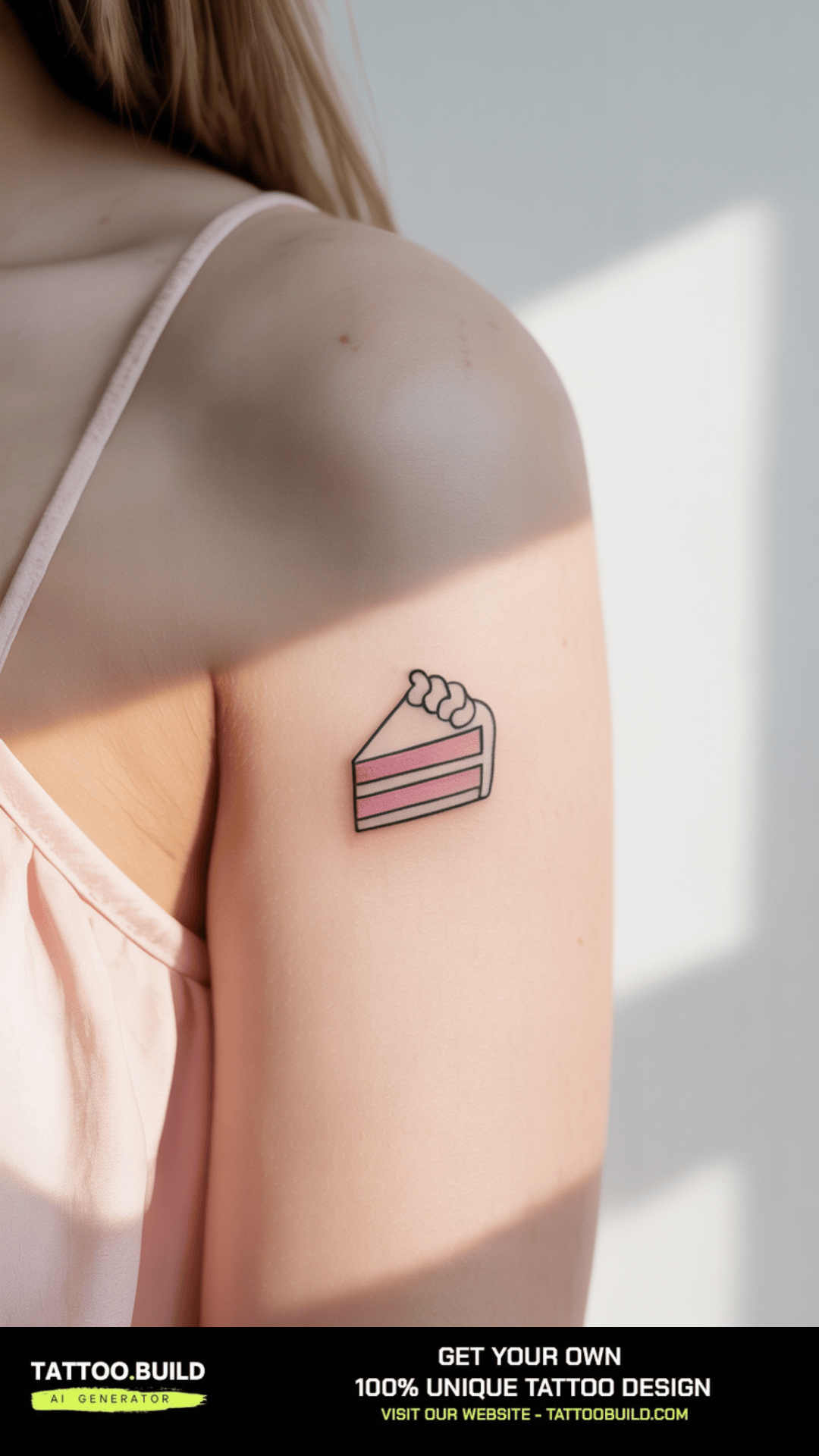
Cake slices, cupcakes, sundaes and croissants all reduce to simple geometry, which is why they work at small sizes where a plated dish would not.
A sundae or layered dessert is the exception. The tiers and drips give a neo-traditional artist enough to build a proper mid-size piece around.
These are the designs I most often see people get with a colleague, matched rather than identical.
Tattoo Styles and Artistic Approaches
The same knife can be five different tattoos depending on who draws it. Here is how each approach behaves on the skin.
Fine Line and Single Needle
Delicate, quiet, and popular with cooks who want ink that disappears under a jacket.
The trade-off is longevity — very thin lines soften faster, particularly on the hands, and a touch-up every few years is normal for fine line work.
Traditional and Neo-Traditional
Bold outlines, limited palette, high contrast. This is the safest bet for food subjects, because the black line holds the shape even as colour softens.
It is also the most forgiving under kitchen conditions, where sweat and heat give healing tattoos a harder time than most.
Blackwork and Ornamental
Solid black, negative space, and engraving-style detail on the blade itself.
Ornamental knife work is where this theme stops looking generic, and blackwork designs generally hold their edges longer than any other style in this list.
Watercolour and Abstract
Colour splashes behind a black toque-and-knife is a striking look and the most divisive option here.
Be realistic about upkeep: loose watercolour tattoos typically need refreshing sooner than blackwork, especially on sun-exposed forearms.
Alternatives and Variations Worth Considering
If nothing above fits, these variations come up often enough to be worth naming.
Matching Kitchen Brigade Tattoos
Whole sections get matched pieces after a big service or a restaurant closing — usually something tiny, like a single ingredient or a date.
Cover-Up and Add-On Pieces
A knife is a useful shape for working over an older linear tattoo, since a long narrow subject can follow an existing scar or line.
Front-of-House-Friendly Placements
If you cross into the dining room, the inner bicep, upper back and ribs stay covered in short sleeves without limiting the size of the design.
Healing a Tattoo While Working in a Kitchen
This is the part of chef tattoos that gets skipped, and it is the part that most often goes wrong.
A kitchen is hot, humid and full of raw protein. A fresh tattoo is an open wound. Those two facts do not sit well together, and general tattoo aftercare advice assumes an office, not a service.
The practical answer most artists give is to time the tattoo around your days off — get it after your last shift of the week, not before a run of doubles.
Food safety rules also apply to you. In the US, the FDA Food Code requires food employees to keep wounds on the hands and arms covered, and a healing tattoo is a wound; check with your manager and your local health authority about what covering is acceptable. The FDA Food Code is the reference most North American health departments build on.
Watch for the signs an artist will tell you to take seriously: spreading redness, heat, swelling that increases after day three, pus, or fever. Mayo Clinic lists infection and allergic reaction among the real risks of tattooing — if any of that appears, see a doctor rather than waiting it out. Nothing in this article is medical advice.
Ink safety is worth a read too, since regulation varies by country. The US FDA has published guidance on what is and is not known about tattoo ink safety.
Still Not Sure? Common Mistakes to Avoid
Almost every chef tattoo regret I have heard about comes down to one of these four.
Going too small on a detailed subject. A plated dish at two inches will be a smudge in ten years. Either scale it up or simplify it.
Booking before a run of long shifts. Sweat, heat and constant hand-washing during the first two weeks are exactly what you do not want; the tattoo healing stages guide sets out what those weeks should actually look like.
Choosing a trend rather than a tool. The cooks happiest with their ink chose something tied to a specific job, mentor or dish.
Skipping the portfolio check. Ask specifically to see healed food and metal work — fresh photos flatter every artist equally.
Frequently Asked Questions
Are visible tattoos a problem for a professional chef?
In most kitchens, no — cooking is one of the more tattoo-tolerant skilled trades, and visible ink is common at every level of the brigade. Fine dining rooms and hotel groups with front-of-house crossover are the usual exceptions, and some ask for arms to be covered during service. Hand, neck and face pieces still carry more risk than forearm work. If you are unsure, ask about the dress code before you book the appointment rather than after.
How much does a chef tattoo cost?
It depends far more on size, style and your artist’s rate than on the subject. A small line-work whisk or knife is usually a shop-minimum piece taking under two hours, while a full produce sleeve is a multi-session project priced by the day. Colour and realism cost more than blackwork because they take longer. Get a written quote from the artist you actually want, since rates vary enormously between cities.
What is the best placement for a chef tattoo?
The inner and outer forearm are the most popular by a wide margin — the shape suits knives and tools, and the area is easy to keep clean while healing. Upper arms and thighs give you the room a plated dish or ramen bowl needs. Hands and wrists look sharp but fade fastest and are the hardest spots to heal in a kitchen. Ribs and inner bicep are the usual choice if you need the piece hidden in short sleeves.
How long should I wait before going back on the line?
Most artists suggest keeping a fresh tattoo out of a hot, humid kitchen for as long as you reasonably can, which is why timing it around days off is the standard advice. The surface generally settles within one to two weeks, though deeper healing takes longer. If you must work, follow your artist’s covering instructions and your workplace’s food safety rules. Your artist knows your skin and your piece — their instructions beat anything you read online, including this.
What is the most popular chef tattoo design?
The chef’s knife, without much competition. It is instantly readable, it fits the forearm without filler, and it can be personalised with an engraving on the blade. The skull-in-a-toque over crossed knives is a close second, particularly among line cooks. Ingredient tattoos — chilli, garlic, citrus — are the most common first piece for people easing into the theme.
Quick Summary
- Pick the style before the subject — it decides how the piece ages more than the design does.
- The chef’s knife is the most requested chef tattoo; an engraved blade is what makes it personal.
- Bowls beat plates for dish tattoos, and both need a thigh, shoulder or bicep rather than a wrist.
- A single ingredient you genuinely cook with is the best low-commitment entry point.
- Blackwork holds its shape longest; fine line and watercolour will need touch-ups soonest.
- Botanical and produce designs scale into sleeves best — plan colour before session one.
- Time the appointment after your last shift of the week, never before a run of doubles.
- Spreading redness, heat, pus or fever means a doctor, not a forum thread.