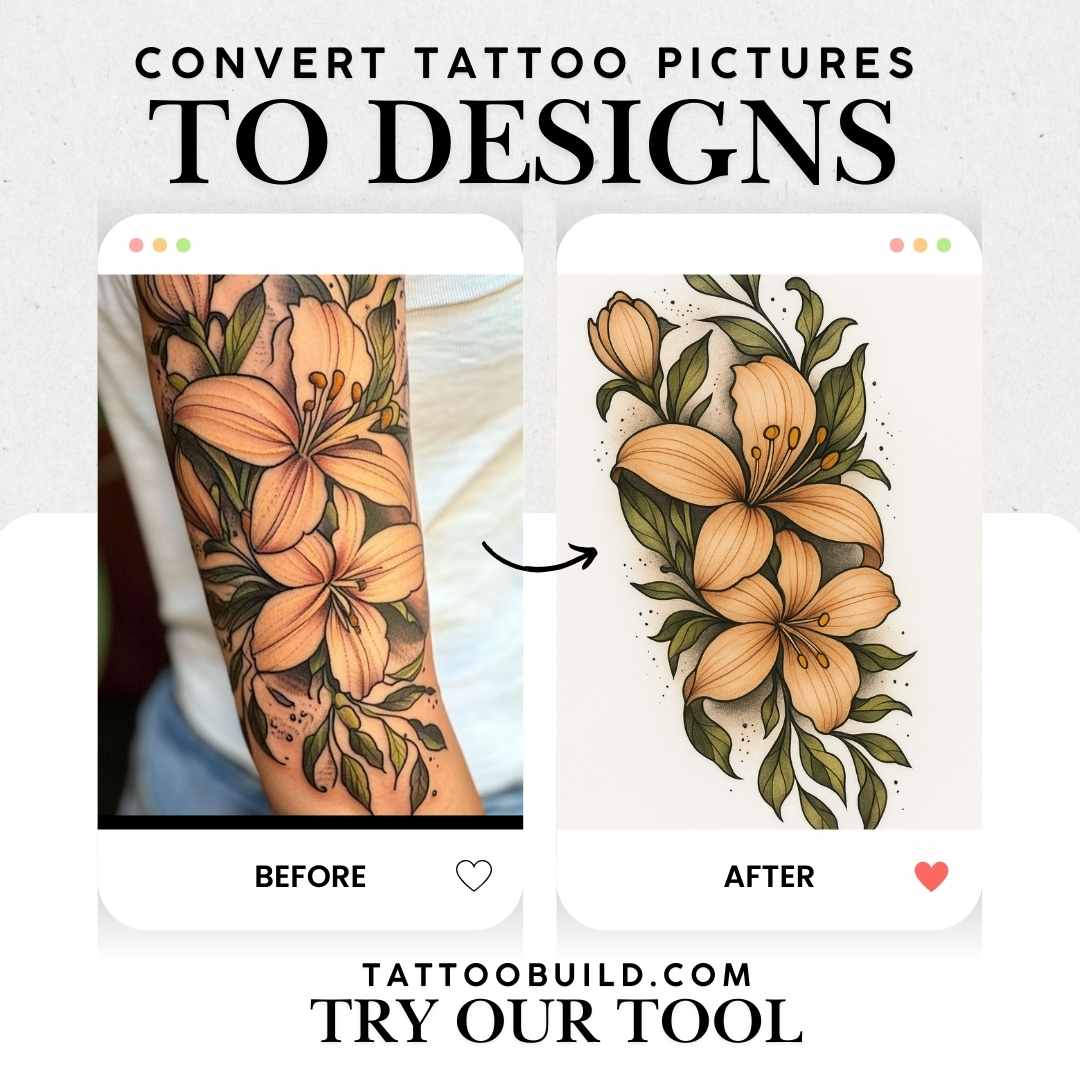
I have spent more time than I care to admit sitting in tattoo studios with line cooks, and one thing comes up every single time: a chef tattoo has to survive heat, steam, constant hand washing and a sleeve rolled up over a hot pass, so the design decision and the placement decision are really the same decision.

Kitchens are one of the most heavily tattooed workplaces I have ever walked into. The imagery is right there — knives, fire, produce, the toque, the dish you have plated ten thousand times.

Below are 40 chef tattoo ideas grouped by theme, plus the practical stuff most idea lists skip: which styles hold up on a working forearm, what placements to avoid if you glove up all shift, and how healing actually goes when you are standing next to a 300°F flat top.

If you are still narrowing down where to put it, it is worth reading through forearm tattoo ideas alongside this list, because placement will quietly rule out about half the designs here.

Which Chef Tattoo Style Is Right for You?

Every cook I have asked about regrets says the same thing: it was never the subject that disappointed them, it was the style. Here is how the four most common approaches actually behave over time.

StyleBest forHow it ages on a working armTypical session
American traditionalKnives, cleavers, skull-and-toque, whole fishThe most forgiving. Bold outlines and solid black stay readable for decades2–4 hours for a palm-sized piece
Black and grey realismPortraits, produce, a plated dishGood if the artist keeps contrast high; soft grey wash can flatten out4–8 hours, often across two sittings
Fine lineHerbs, small utensils, minimalist toqueThe least forgiving. Thin lines soften, and detail can close up over years1–3 hours
Colour illustrativeProduce, desserts, regional dishes, cocktailsHolds well with sunscreen; reds and yellows fade first on exposed arms3–6 hours

If you are drawn to the bottom two rows, look through fine line tattoo ideas first and be honest with yourself about how much detail you actually want to maintain.

What Actually Affects How a Chef Tattoo Holds Up

Kitchen work is unusually hard on skin, and that is not a small footnote. It changes which designs I would recommend.

Hands and wrists get washed constantly, often with hot water and degreasing soap. That is fine for healed skin and genuinely rough on a fresh tattoo.

Line cooks also work in dry radiant heat all shift. Every artist I have asked says the same thing — a healing tattoo under a rolled sleeve next to a grill will scab harder and itch more than the same piece on someone with a desk job.

The practical result is that upper arm, outer bicep and shoulder placements are far easier to heal than hands, wrists and inner forearms for anyone working a line. That is not a rule, it is just what I have watched happen repeatedly.

Sun matters too, if you commute or smoke outside between services. The American Academy of Dermatology’s guidance on caring for tattooed skin is worth a read on this — see their advice on tattoo care and sun protection.

40 Chef Tattoo Ideas by Theme

I have grouped these the way cooks actually talk about them, rather than by style.

1. Knife and Cleaver Tattoos

The knife is the default chef tattoo, and for good reason — it is the one tool that is genuinely yours.

What separates a decent knife tattoo from a great one is specificity. A generic chef’s knife reads as clip art; your actual gyuto with the chipped heel and the scorched handle reads as a story.

Crossed knives function as a kind of crest, and they sit well on the outer forearm where the natural taper of the arm follows the blade. Single blades work better vertically along the forearm or up the inner bicep.

Cleavers are underrated here. If you butcher, break down whole animals, or came up through a butchery station, a cleaver says something more precise than a chef’s knife does.

One warning from experience: very thin, very long blade outlines are the first thing to blur. Ask your artist to keep the spine of the blade a solid weight rather than a hairline.

2. Ingredient and Produce Tattoos

Ingredient tattoos are the ones I see people love the longest, because they are rarely about the job — they are about a person or a place.

Garlic, onions, tomatoes, chillies and citrus all translate well because they have strong silhouettes. A vegetable that is mostly texture, like a cauliflower, is much harder to make readable at small sizes.

Colour is genuinely worth it here. Produce is one of the few culinary subjects where black and grey loses something real.

If you want a cluster rather than a single item, ask for a composition sketch before the stencil goes on. Three ingredients arranged well beats six crammed in.

3. Kitchen Utensil and Tool Tattoos

Whisks, spoons, tongs, thermometers, rolling pins, pepper mills — the supporting cast.

These make excellent small pieces and excellent filler. When I have watched people build a culinary sleeve over several years, it is almost always utensils that get added to bridge the bigger elements.

A wooden spoon worn smooth on one side, a specific thermometer, the mandoline you have a scar from — the ones with a bit of wear in the drawing land better than pristine catalogue versions.

Utensil tattoos are also the cheapest way to test how your skin takes ink before committing to a full sleeve. Most artists will do a small one in under two hours.

4. Signature Dish and Food Tattoos

Pasta, pizza, tacos, burgers, dumplings, a plated dish from your own menu.

This is the most personal category on the list and also the one where I have seen the most hesitation, because a dish can feel tied to a specific job you might leave.

My honest take: pick the dish you cook at home for people you love, not the one that happens to be on the current menu. Menus change every season; the dish you make on your day off usually does not.

Bold traditional styling suits diner and street food especially well. Delicate plating shots are better served by black and grey realism with real contrast.

5. Herb and Spice Tattoos

Rosemary, sage, thyme, star anise, peppercorns, chilli. Botanically simple, visually elegant, and they fit almost anywhere on the body.

Herb sprigs are the single most placement-flexible design in this article. I have seen the same rosemary sprig work on a wrist, along a spine, behind an ear and wrapped around an ankle.

Bring a real photo or a real sprig to your consultation. Artists who do not cook will often default to a generic leaf shape, and a chef will spot the difference immediately.

Spice designs are also the easiest to keep meaningful over a whole career, because they are not tied to any one cuisine or kitchen.

6. Wine, Coffee and Spirits Tattoos

Not strictly kitchen, but the same trade. Bottles, glasses, corkscrews, espresso cups, bar tools.

These sit naturally alongside knife and produce work on a mixed sleeve, which matters if you have front-of-house history or came up through bars.

Glassware is deceptively hard. Transparency has to be implied with highlights and negative space, so this is a subject where I would pay for a more experienced artist rather than shop on price.

Coffee designs have quietly become one of the most common requests I hear from pastry chefs and bakers, who are usually the ones in at four in the morning.

7. Pastry and Dessert Tattoos

Croissants, cakes, cupcakes, macarons, the classic whisk-and-bowl pairing.

Pastry work tends toward softer palettes and lighter line weight than savoury designs, which is aesthetically right but does mean it can fade sooner on a sun-exposed arm.

Laminated dough — a croissant cross-section, in particular — gives an artist a genuinely interesting texture problem to solve, and the good ones enjoy it.

If you want a dessert piece small, keep it to one object. Miniature multi-item dessert scenes close up into a blur faster than almost anything else I have seen.

8. Seafood and Butchery Tattoos

Whole fish, crab, oysters, lobster, and on the other side, butcher cut charts and meat diagrams.

Seafood is one of the best subjects in the entire list from a purely technical standpoint. Scales, shells and claws give an artist repeating texture, and repeating texture ages well because it does not rely on any single fragile line.

Crustaceans in particular carry a lot of symbolic weight beyond the kitchen — there is more on that in this guide to crab tattoo meaning.

Butcher charts need more space than people expect. A readable cut diagram usually wants a thigh, a full outer forearm or a good chunk of ribs.

Alternatives and Variations Worth Considering

Minimalist and Fine Line Chef Tattoos

A single-line toque, a small knife outline, a tiny sprig. These are the designs I most often recommend to someone getting their first tattoo while unsure how their workplace will react.

They are quick, relatively low commitment, and easy to build on later. Browse minimalist tattoo ideas if this is the direction you are leaning.

Blackwork and Heavy Black Chef Tattoos

If longevity is your top priority, solid black is the answer, and it is not close.

Heavy black holds its shape through sun, scrubbing and decades. Blackwork designs suit cleavers, silhouetted tools and bold botanical shapes particularly well.

The Full Culinary Sleeve

Built over years rather than booked in one go, a culinary sleeve is the most common end state I see for chefs who start with a single knife.

Plan the anchor pieces and the flow with one artist before you start, even if you will not finish for five years. It also helps to know roughly what you are signing up for financially — sleeve tattoo costs vary enormously by region and artist.

Placement and Timing Tips for People Who Work in Kitchens

Get inked at the start of a run of days off, not the night before a double. Two clear days makes a real difference to how the first scab sets.

Hands and fingers are the highest-maintenance placement in the trade — constant washing, constant glove friction, and a faster fade than anywhere else. They can look excellent, but go in informed; hand tattoo ideas is a useful reality check.

Upper arms, outer biceps and shoulders are the easiest to heal under kitchen conditions. Inner forearms are the most common chef placement and sit somewhere in the middle. The tattoo pain chart is a decent guide to what you are in for.

Talk to your chef or manager before you book anything visible. Attitudes have shifted enormously in most kitchens, but hospitality is not uniform, and fine dining rooms and hotel groups still vary.

Aftercare When You Work Next to a Grill

This section is general information, not medical advice. Your artist’s written aftercare sheet always outranks anything you read online, and anything that looks infected is a question for a doctor, not a forum.

The basics do not change: keep it clean, keep it lightly moisturised, do not pick, and follow the wrapping instructions you were given. The full tattoo aftercare guide covers the routine properly.

What does change in a kitchen is heat and moisture. Sweat under a rolled sleeve, steam from a dish pit and radiant heat from a flat top all make a healing tattoo more uncomfortable and more prone to over-scabbing.

There is also a food safety dimension that people forget. Food codes in the United States generally require food handlers to cover any open wound or lesion on the hand with an impermeable cover — the FDA Food Code is the reference your operation will be working from, and a fresh tattoo on a hand is a wound. Ask your manager how they want it handled before you get one there.

If something looks wrong — spreading redness, heat, pus, fever — see a doctor promptly rather than waiting it out. The tattoo healing stages guide is useful for telling normal healing apart from a problem, and the FDA fact sheet on tattoos covers the risks worth knowing about.

Common Mistakes I See With Chef Tattoos

Booking with an artist who has never drawn a knife. Kitchen tools have very specific proportions, and a bolster drawn in the wrong place will bother you forever.

Going too small for the detail. This is the number one regret I hear, and it applies to plated dishes, butcher charts and multi-item compositions especially.

Tattooing the current employer’s logo. I would not, and most of the chefs I know who did have covered it since.

Skipping sunscreen once healed. If you want colour to last, this is the single highest-return habit, and it costs nothing.

Frequently Asked Questions

Are chef tattoos a problem for food safety?

A fully healed tattoo is intact skin and is generally not treated as a food safety issue on its own. A fresh tattoo is different, because it is an open wound — US food codes typically require open wounds on the hands to be covered with an impermeable cover and a single-use glove. Talk to your manager before booking anything on your hands or forearms. Policies vary by operation and by jurisdiction.

Where is the best place for a chef tattoo?

Upper arm, outer bicep and shoulder are the easiest placements to heal in kitchen conditions, because they stay out of hot water and away from glove friction. Inner and outer forearms are the most popular chef placement and sit in the middle for difficulty. Hands and fingers look great but fade fastest and need the most upkeep. In my experience the placement question is worth more thought than the design question.

How much does a chef tattoo cost?

It depends heavily on your city, the artist’s experience and the size, so any single number would be misleading. A small utensil or herb piece is usually an hour or two of shop time; a detailed forearm knife with shading is typically a half-day. Full culinary sleeves are built over years and priced per session. Ask for a written estimate at your consultation rather than over text.

Which tattoo style lasts longest on a working chef?

American traditional and blackwork, without much debate. Bold outlines and solid black keep their shape through sun exposure, constant washing and decades of wear. Fine line work is the least durable on a hard-working arm, though it can still be a good choice if you accept it may need a touch-up sooner. Colour sits in between and lasts much better with regular sunscreen.

Can I get tattooed if I work full time on a line?

Yes, and most cooks do. The practical advice is to book it at the start of your days off, avoid hand and finger placements if you can help it while you are still learning how your skin heals, and follow your artist’s aftercare sheet closely. Heat and sweat make healing less comfortable but not unsafe. If anything looks infected, see a doctor rather than pushing through a shift.

Quick Summary

  1. Knives, ingredients, utensils, dishes, herbs, drinks, pastry and seafood cover almost every chef tattoo you will see.
  2. Specificity beats generic imagery — your knife, your dish, your grandmother’s recipe.
  3. American traditional and blackwork age best on a working arm; fine line ages worst.
  4. Colour is worth paying for on produce and dessert designs, and worth protecting with sunscreen.
  5. Upper arm and shoulder heal most easily in kitchen conditions; hands and fingers are the hardest.
  6. Book at the start of your days off, never the night before a double.
  7. A fresh tattoo is an open wound — check your operation’s policy before you ink your hands.
  8. See a doctor, not the internet, if healing looks wrong.