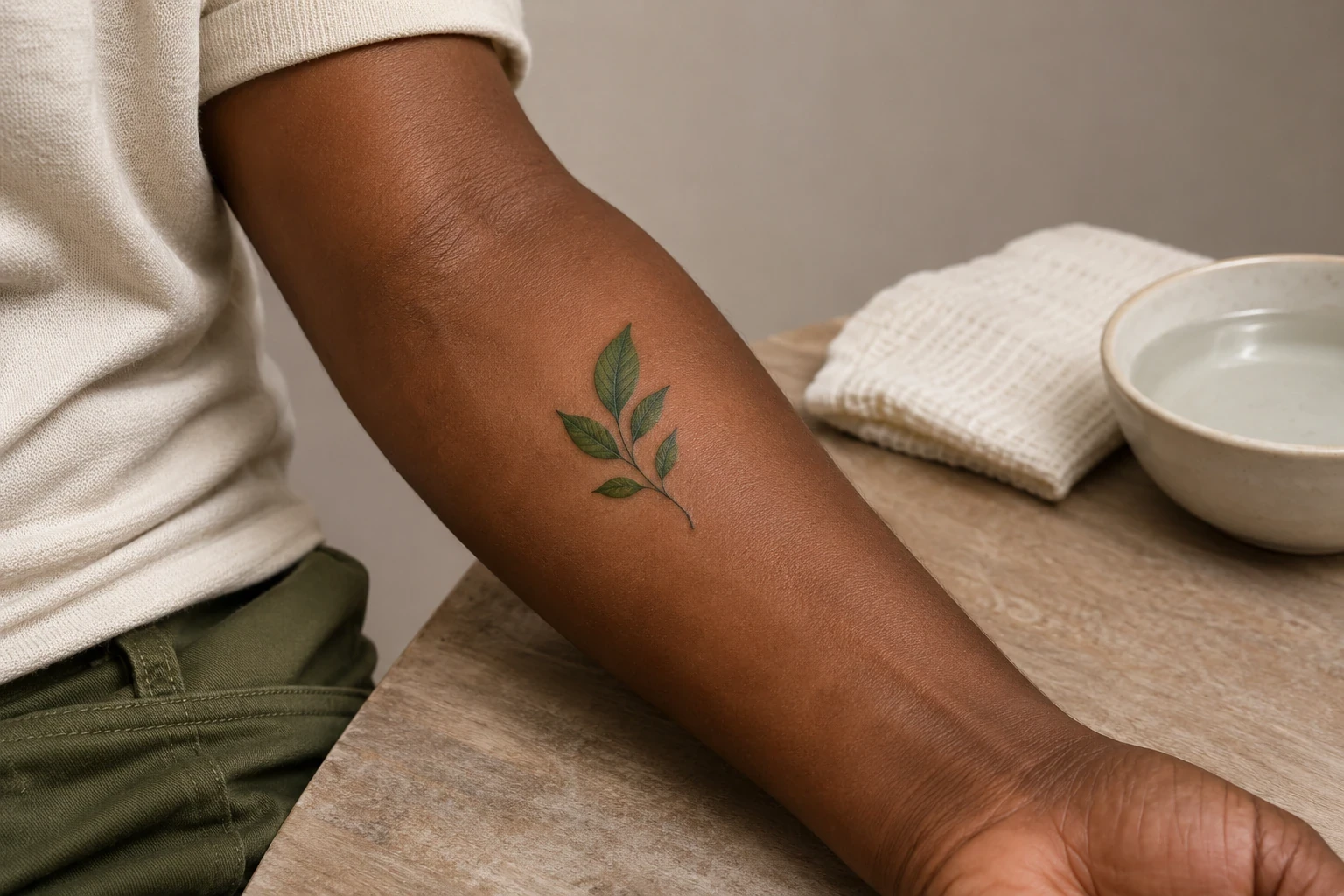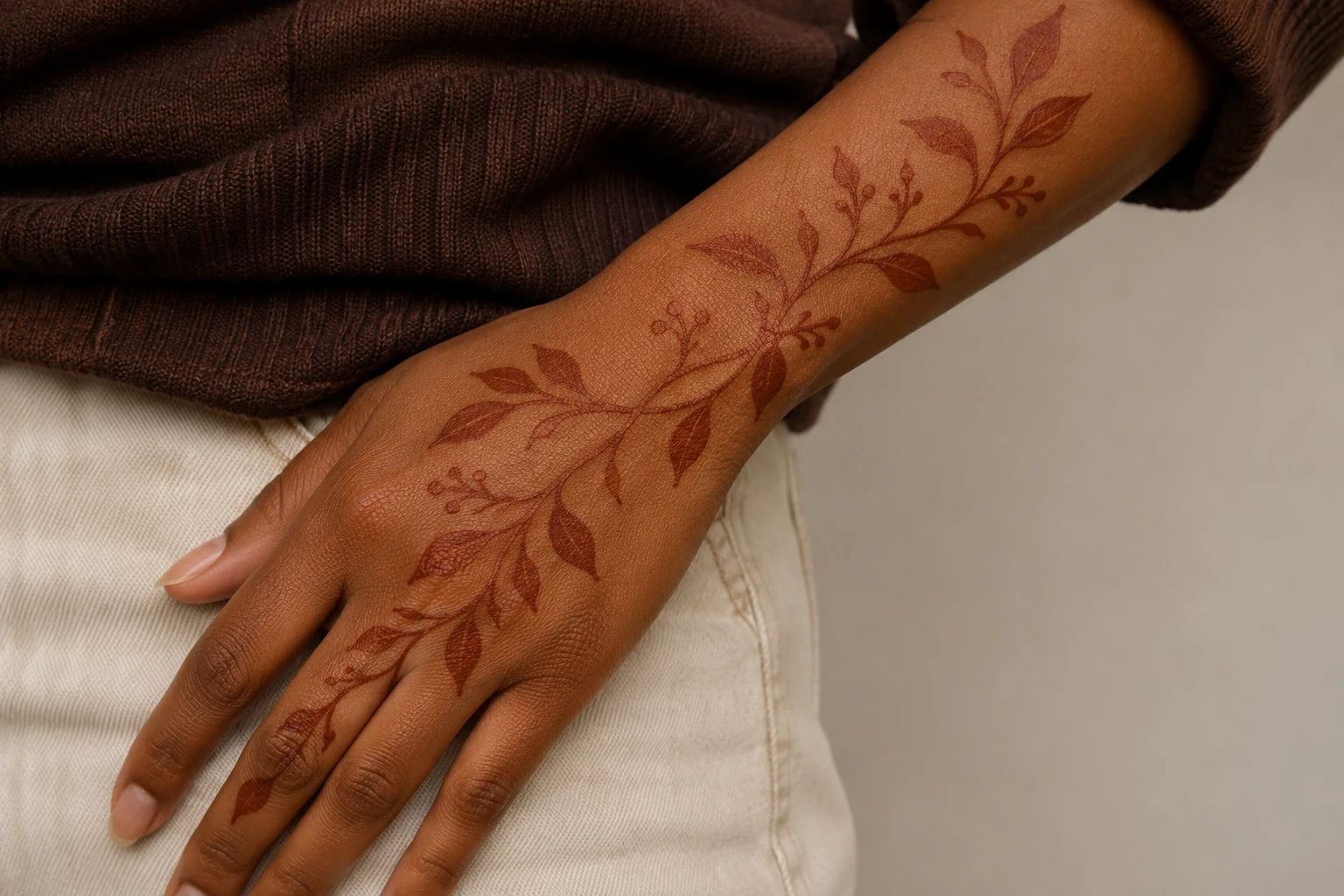
Natural henna tattoos can stay visible for several days to about three weeks. The color can start looking lighter well before the last trace disappears. If you’re planning around a photo, ceremony or trip, think about how long you need the pattern to stay crisp, as well as how long you can live with a faint outline.
Image disclosure: This guide uses AI-generated tattoo mockups shown on fictional adults and educational illustrations. They do not depict real clients or actual application results.
What henna looks like as it fades
Natural henna can leave an orange-brown, reddish-brown or brown stain, according to Health Canada. An initially orange mark can darken after the paste comes off. Later, the color gradually loses contrast. Thin lines may become hard to see before the broader areas do, so the whole pattern rarely disappears at once.
The U.S. FDA’s consumer guide describes henna wear as anywhere from three days to a few weeks. In a study of henna as a surgical skin marker, marks could remain visible for almost three weeks. That study looked at whether a mark was still detectable. It doesn’t tell you how many days a decorative pattern will look fresh.
Why two henna tattoos can fade at different speeds
The formula, the application and where the pattern sits all affect what you see. A design across the palm may start out a different shade from one on the forearm. The hand is also washed and used throughout the day. If you’re planning a design for an event, ask the artist what fading usually looks like on that exact spot and whether they can show photos taken after the first day.
Pattern density matters to how the fade looks. A filled petal can still read as part of a flower when thin lines around it are barely visible. If you want the design to remain recognizable as the stain lightens, consider a motif with a few larger shapes and clear gaps between them.
Can you remove a henna stain before it fades?
Henna colors the outer skin. The paste can come off while the color remains, and the stain fades as the stained surface cells shed. A shower won’t lift it in one piece like a decal, and scrubbing hard or using household chemicals can irritate skin. If you need a temporary design off by a certain date, don’t count on being able to erase henna on demand.
For a decal or transfer, use the product’s removal directions. Our guide to applying a water-transfer tattoo explains that format, and our temporary tattoo removal guide compares transfers and surface stains.
Why to avoid products sold as black henna
A jet-black result is not the usual color of plain henna. The FDA’s fact sheet and Health Canada’s advisory warn that products sold as black henna may contain the hair dye ingredient PPD, which can cause serious skin reactions. Ask for the ingredient list. If the seller can’t tell you what’s in the product, pass on it. Color alone can’t confirm what a product contains.
If you develop itching, swelling, blistering or a rash after application, contact a healthcare professional. Skin reactions can be delayed. Difficulty breathing after exposure is an emergency. Safety sources checked November 13, 2026.
Henna duration FAQs
How long can a henna tattoo last?
A trace can remain visible for around three weeks in some cases. The useful distinction is between the time the pattern looks sharp and the time it takes the last pale marks to go. Don’t treat three weeks as a guarantee.
Is the orange color right after the paste comes off the final shade?
Not necessarily. A natural henna stain can deepen toward reddish-brown or brown after the paste is removed. If you’re comparing reference photos, check when they were taken.
Will my henna tattoo be gone by next weekend?
It may be lighter by then, but there’s no reliable way to promise a clear date. If the design must be gone before a work shift or event, choose an option with a manufacturer’s removal method rather than relying on a stain to fade in time.