A rose is the most-requested flower in men’s tattooing, and it is also the one most often ruined by being made too small. That is the single biggest lesson I have taken from years of looking at these pieces heal.
I have watched guys walk in wanting a two-inch rose on the wrist and walk out, after a good artist talked them through it, with a four-inch rose on the forearm instead. Five years later they are still glad about it.
The rose works on men because it is not one design — it is a shape flexible enough to carry a skull, a dove, a clock, a name, or nothing at all. If you are still deciding on a subject, it is worth browsing wider flower tattoo designs for guys before you settle.
Below are the styles, placements and pairings I keep coming back to, plus the practical stuff — size, cost, healing — that most idea galleries leave out.
Which Rose Tattoo Style Is Right for You?
Style matters more than the subject here. The same rose drawn five ways ages five different ways.
| Style | Best Size | How It Ages | Good For |
|---|---|---|---|
| American Traditional | 3–5 in | Excellent — heavy outlines hold for decades | Forearm, chest, calf |
| Black & Grey Realism | 5 in and up | Good if shading is solid; soft greys fade first | Outer forearm, upper arm, sleeves |
| Neo-Traditional | 4–7 in | Very good — bold lines plus more colour depth | Shoulder, thigh, half sleeve |
| Fine Line / Single Needle | 2–4 in | Weakest — expect softening and touch-ups | Inner arm, ribs, low-friction skin |
| Blackwork / Illustrative | 4 in and up | Excellent — solid black is the most durable ink | Forearm, back, full sleeve |
If you cannot decide, the safe answer is traditional or blackwork at four inches or larger. I have never seen someone regret going bolder.
What Actually Makes a Rose Tattoo Work on Men
The rose reads as masculine or feminine depending almost entirely on three things: line weight, contrast, and what surrounds it.
Heavy outlines and hard black shadows push a rose toward the bold, graphic look most guys are after. Soft grey wash with thin lines pushes it the other way.
The second lever is composition. A rose sitting alone in the middle of a bicep tends to look like a sticker. The same rose with leaves, a stem, or a second element anchoring it reads as a designed piece.
The third is placement geometry. Roses are round, and round shapes want a flat or gently curved surface — the outer forearm, the shoulder cap, the chest, the calf. Wrapping a round bloom around a wrist or an ankle distorts it.
Detail needs room. Every artist I have asked gives some version of the same answer: petal separation, shading transitions and any skull or portrait work inside the design need physical space or they will blur into a grey mass within a decade.
Cool Rose Flower Tattoo Ideas for Guys
These are the pairings I see hold up best, roughly in order from most to least common.
1. Rose and Dove
This is the most requested combination in the shops I have spent time in, and usually the most personal — it is very often a memorial piece.
The dove gives the composition a second focal point and a natural direction of movement, which stops a single rose from floating.
It works best in black and grey at five inches or more, running down the inner or outer forearm. The bird’s wing feathers need line separation to stay legible, so undersizing this one is a real risk.
If it is a memorial, bring a photo or a date to the consultation. In my experience artists build a much better layout when they know what the piece is for.
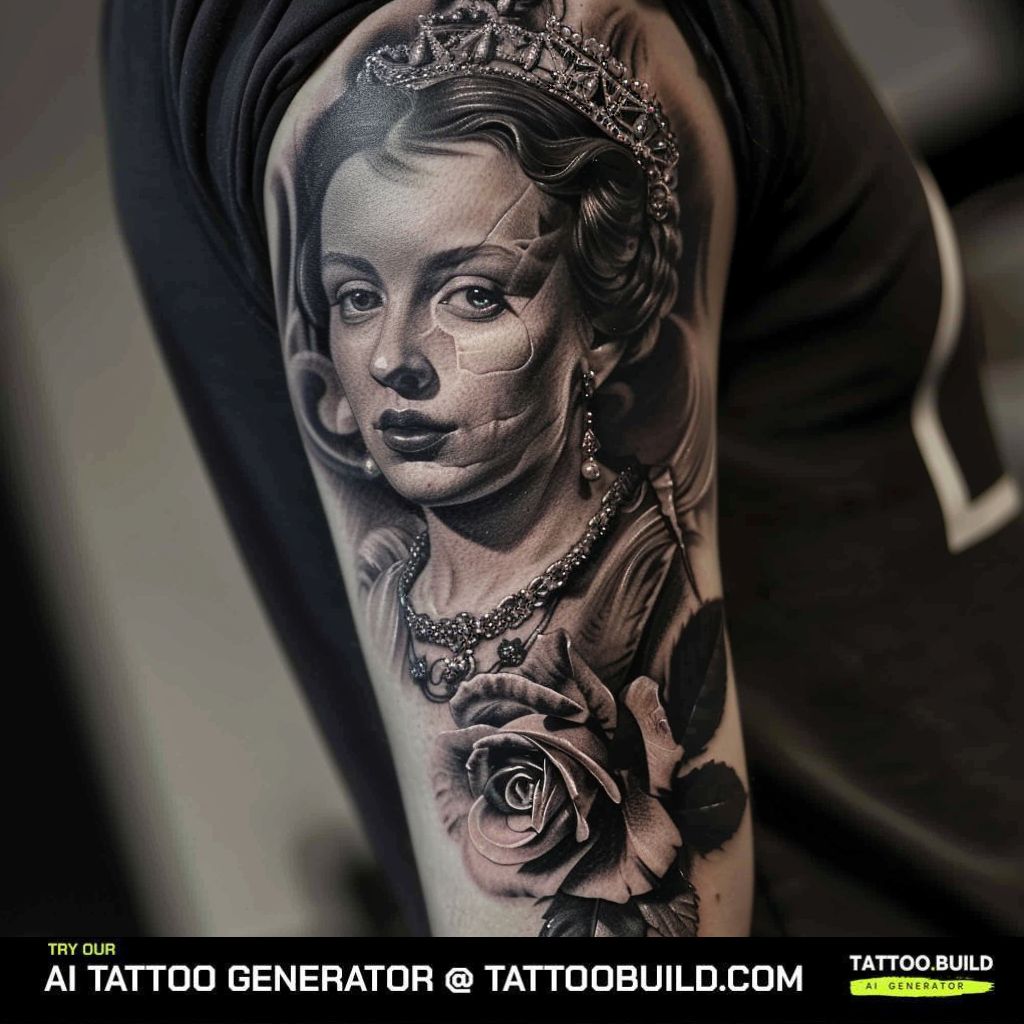
2. Rose with a Portrait
A rose is the standard framing device around portrait work, and for good reason — the petals fill awkward negative space around a face without competing with it.
Portraits are the hardest thing in tattooing. This is not the design to book with a generalist; look specifically for an artist whose healed portrait photos you have seen.
Expect this to be a multi-session piece. The portrait is usually done first, the roses built around it afterwards once the face has settled.
Size is not negotiable here. Realistic faces below about five inches lose their likeness as the ink spreads.
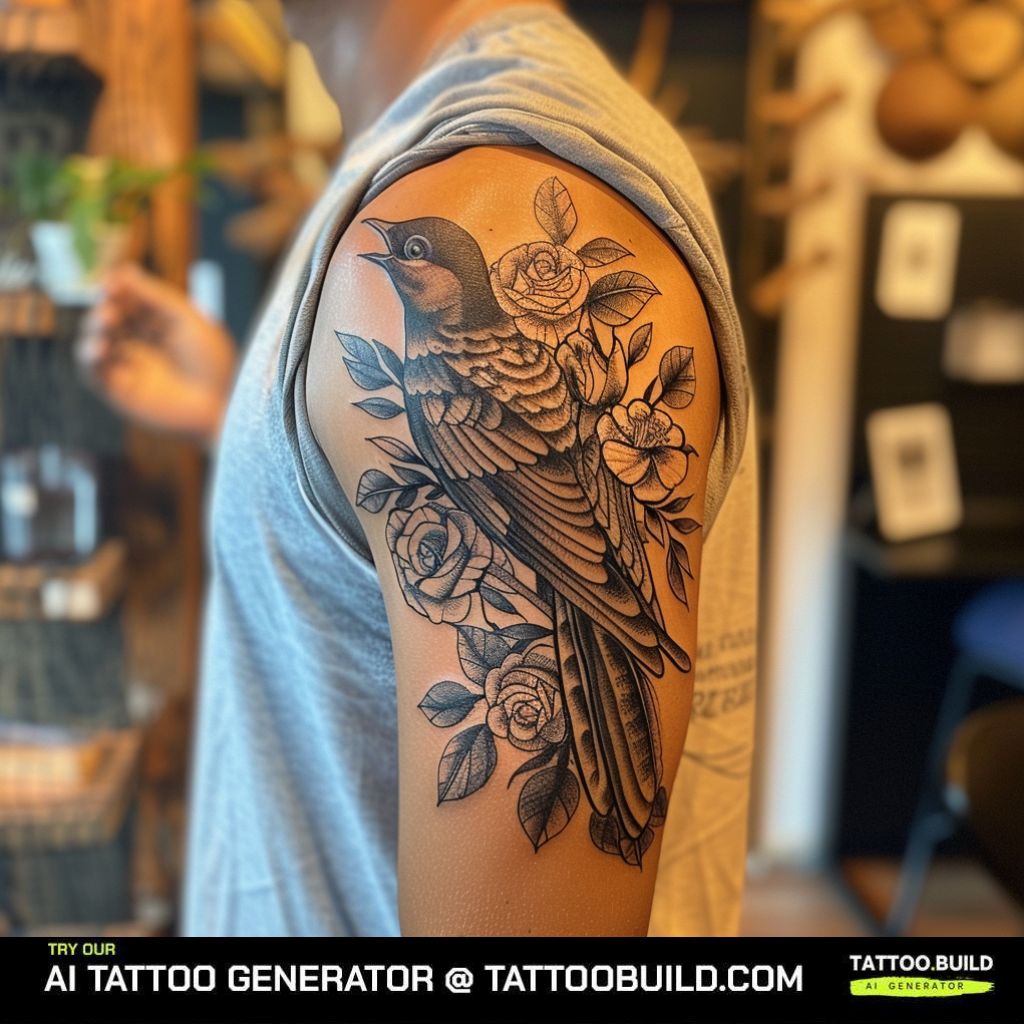
3. Rose with a Bird or Mockingbird
A lighter variation on the dove idea — smaller bird, more linework, less solid black.
I like this one on the outer forearm because the bird can sit above the rose and use the natural taper of the arm as a frame.
Fine-line shading on the bird next to a heavier rose creates a contrast that reads well from a distance, which is really the test of any tattoo.
4. Rose Vine Sleeve
The vine is the smartest structural choice on this list. It gives you a composition that can grow.
You can start with a single bloom and a length of stem, then extend the vine at your own pace over months or years without ever needing a redesign. That flexibility is rare.
It also follows the arm naturally — the vine spirals with the muscle instead of fighting it, which is why these look good in motion.
If a full sleeve for men is where this is heading, plan the whole layout with your artist up front even if you only get a third of it done.
5. Skull and Rose Fusion
The oldest pairing in Western tattooing, and still the most requested combination among guys who want the rose to read as unmistakably tough.
The symbolism is straightforward: life and death in one image. It does not need explaining, which is part of why it endures.
The technical demand is contrast. A skull is mostly hard edges and deep shadow; a rose is mostly soft curves. When one overwhelms the other the piece turns muddy.
Give it six inches or more if you want the teeth and eye sockets to stay sharp. There are more variations in these skull and flower tattoo ideas, and the skull rose tattoo drawing references are worth a look before you commit.
6. Full-Sleeve Rose Composition
Multiple roses, layered, with dark background shading filling every gap. This is the most expensive idea on the page and the most impressive when it is done well.
The background is what does the work. Without it you have several separate tattoos on one arm; with it you have one piece.
Realistically this is 20 to 40 hours across several sessions, spaced two to four weeks apart so each section heals. Budget accordingly — this guide to sleeve tattoo cost breaks down what drives the price.
Do not start a sleeve with an artist you have not already been tattooed by. That is the mistake I have seen cost people the most money.
7. Single Rose on the Shoulder
If someone asked me for one recommendation for a first rose, this would be it.
The shoulder cap is flat, low-friction, rarely exposed to sun, and easy to cover for work. Tattoos there tend to hold their detail longer than almost anywhere else on the body.
It is also among the less painful placements — plenty of muscle, not much bone directly under the needle.
Four to six inches, traditional or neo-traditional, and it will still look sharp in twenty years.
8. Minimalist Rose Outline
Clean, understated, and the option I am most cautious about recommending.
Fine single-needle work looks superb for the first two or three years. After that, ink migration under the skin thickens those hairline strokes and the negative space between them closes up.
It is not a reason to avoid the style — it is a reason to place it well and accept touch-ups. Inner arm and other low-friction, low-sun areas hold up considerably better than hands or fingers.
If you want the minimal look with more longevity, ask for a medium-weight line rather than the thinnest possible one.
9. Chest and Pec Rose
The chest gives you the most uninterrupted flat canvas on the upper body, which means a rose can be scaled up without crowding anything.
It is also one of the more painful sessions, particularly across the sternum and over the collarbone where the skin sits directly on bone.
Placement across the pec, angled slightly toward the shoulder, tends to follow the body better than a dead-centre chest piece.
Variations Worth Considering
If none of the above is quite right, these are the directions I would look next.
Black Rose
Solid black petals with grey wash for depth. It carries a heavier, more sombre tone and it is one of the most durable things you can put on skin. See the black rose tattoo for men gallery for range.
Rose with a Clock or Compass
Adds a time or direction theme without extra colour. The clock face gives the composition a hard geometric anchor against the rose’s curves.
Rose on the Hand or Fingers
High impact, high maintenance. Hands see constant friction and sun, and they fade faster than anywhere else — plan on touch-ups every few years. More options in these hand tattoo ideas for men.
Rose with a Name or Date
Keep the lettering larger than feels necessary. Small script closes up faster than any other element, and unreadable text ruins an otherwise good piece.
Rose and Wildlife
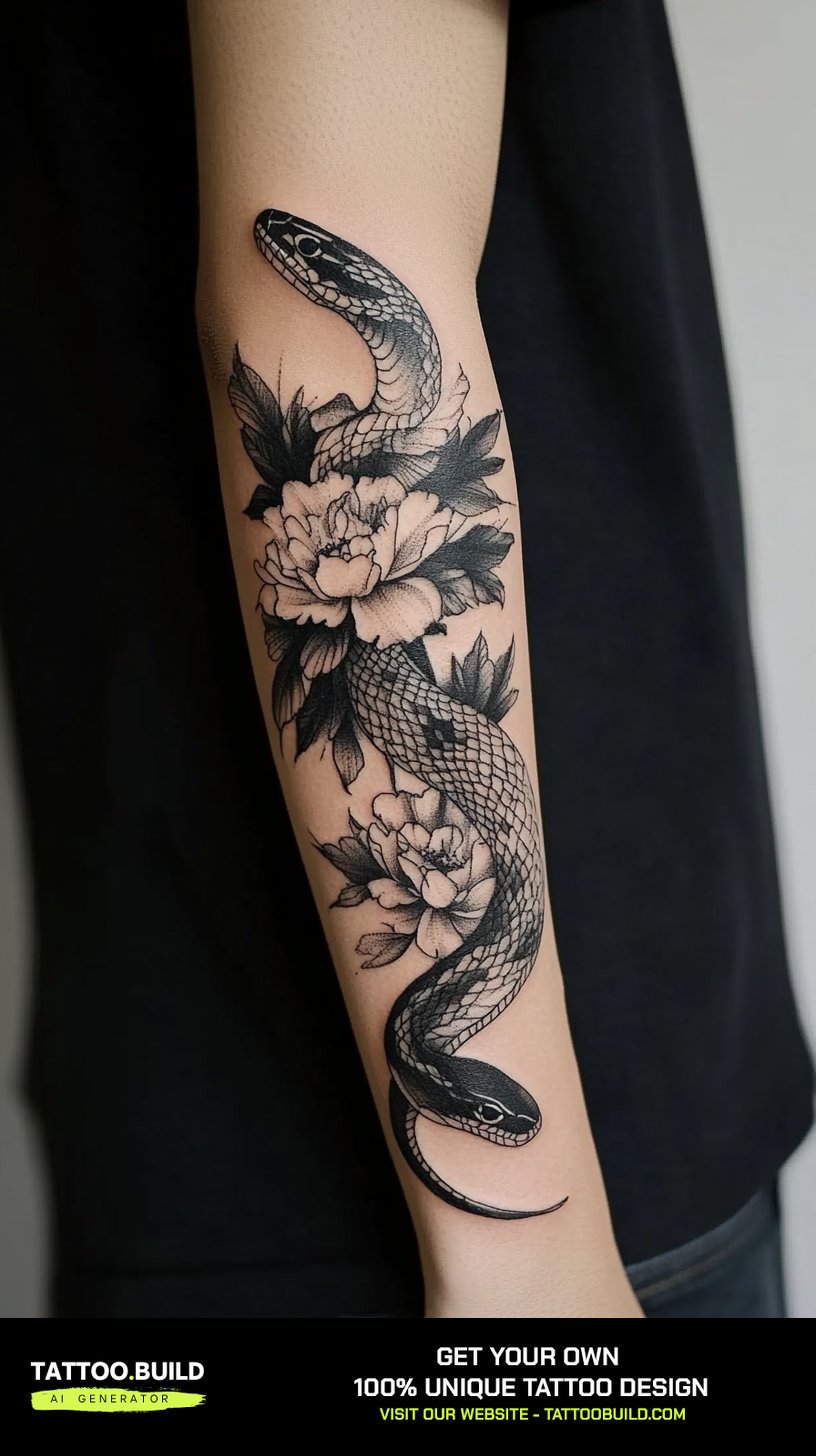
Snakes, panthers and wolves all pair well with roses and shift the whole design toward a more traditional, masculine read. Broader ideas sit in this masculine flower tattoos collection.
Practical Advice Before and After You Get Inked
Book a consultation rather than a walk-in for anything over three inches. A twenty-minute conversation about size and placement saves more regret than any amount of Pinterest scrolling.
Bring three to five reference images, and be clear about which part of each one you actually like — the linework, the shading, the layout. Artists work far better from specifics than from a whole photo you hand over.
For healing, follow the aftercare your artist gives you rather than anything you read online, including this page. Broadly: keep it clean, keep it lightly moisturised, keep it out of the sun, and do not pick at it. The American Academy of Dermatology has sound general guidance.
See a doctor, not your artist, if you develop spreading redness, swelling that worsens after day three, pus, or a fever. Those are signs of infection and they need medical treatment. The FDA and Mayo Clinic both cover the risks — including allergic reactions to certain pigments, which can appear years later — better than any tattoo blog can.
Common Mistakes and What to Do Instead
Going too small is the mistake I see most. If your artist suggests larger, they are almost certainly right — they are the ones who have seen their own work heal.
Choosing an artist by price is the second. A cheap rose you need covered up later costs far more than the good one would have.
Skipping the sun protection is the quiet one. Sunscreen on a healed tattoo, every summer, is the difference between crisp and washed out at the ten-year mark.
Still not sure what you want? It helps to browse adjacent ideas — meaningful forearm tattoos for guys covers placement, and flower tattoo designs for guys covers subject.
Frequently Asked Questions
Are rose tattoos masculine?
Yes, and the style is what decides it rather than the flower itself. Heavy black outlines, hard shadows and larger scale read as bold and graphic; soft grey wash and thin lines read softer. In my experience the rose is one of the most common pieces on men in any traditional shop, usually paired with a skull, a bird or lettering. The symbolism has always covered strength and sacrifice as much as love.
How much does a rose tattoo cost?
It depends almost entirely on size, detail and your artist’s hourly rate, so any figure quoted online is close to useless. A small simple rose is usually a single short session; a detailed black-and-grey forearm piece typically runs several hours; a full sleeve runs many sessions across months. Ask for a quote at consultation, and be suspicious of a price that seems far below the local average. Cheap tattoos are the ones that get covered up.
Where does a rose tattoo hurt the least?
Areas with more muscle and less bone directly under the skin are generally more tolerable — the outer upper arm, the shoulder cap and the outer thigh are commonly cited as easier. Ribs, sternum, collarbone, hands and feet tend to be the harder ones. Pain varies a lot between people, so treat this as a rough guide rather than a rule. Eating beforehand and staying hydrated genuinely helps.
How long does a rose tattoo take to heal?
The surface usually looks settled within about two to three weeks, but the deeper layers continue healing for a couple of months. During that time it is normal for the tattoo to flake and look dull before the colour comes back. Avoid soaking it, avoid direct sun, and follow the specific aftercare your artist gives you. If anything looks or feels wrong, ask a doctor rather than waiting it out.
Should I get colour or black and grey?
Black and grey is the more durable choice and the more common one for men’s rose tattoos, because solid black holds its density longer than most coloured pigments. Red roses look striking but red is among the pigments most associated with allergic reactions, and it can fade unevenly on some skin. Traditional colour palettes with bold outlines age well because the linework carries the design even as the fill softens. Talk it through with your artist based on your skin tone.
Quick Summary
- Size beats detail. Four inches or more for anything with shading, skulls or portrait work.
- Style decides the tone — heavy lines and hard contrast read bold; thin lines and soft grey read delicate.
- Best first placement is the shoulder cap or outer forearm: flat, low-friction, easy to cover.
- Black and grey outlasts colour, and solid black outlasts everything.
- Vine layouts are the most flexible — you can extend them into a sleeve later without a redesign.
- Skull-and-rose needs six inches or the contrast collapses into grey.
- Fine-line minimalism will need touch-ups; place it on low-sun, low-friction skin.
- Infection signs go to a doctor, not to your artist or a forum.