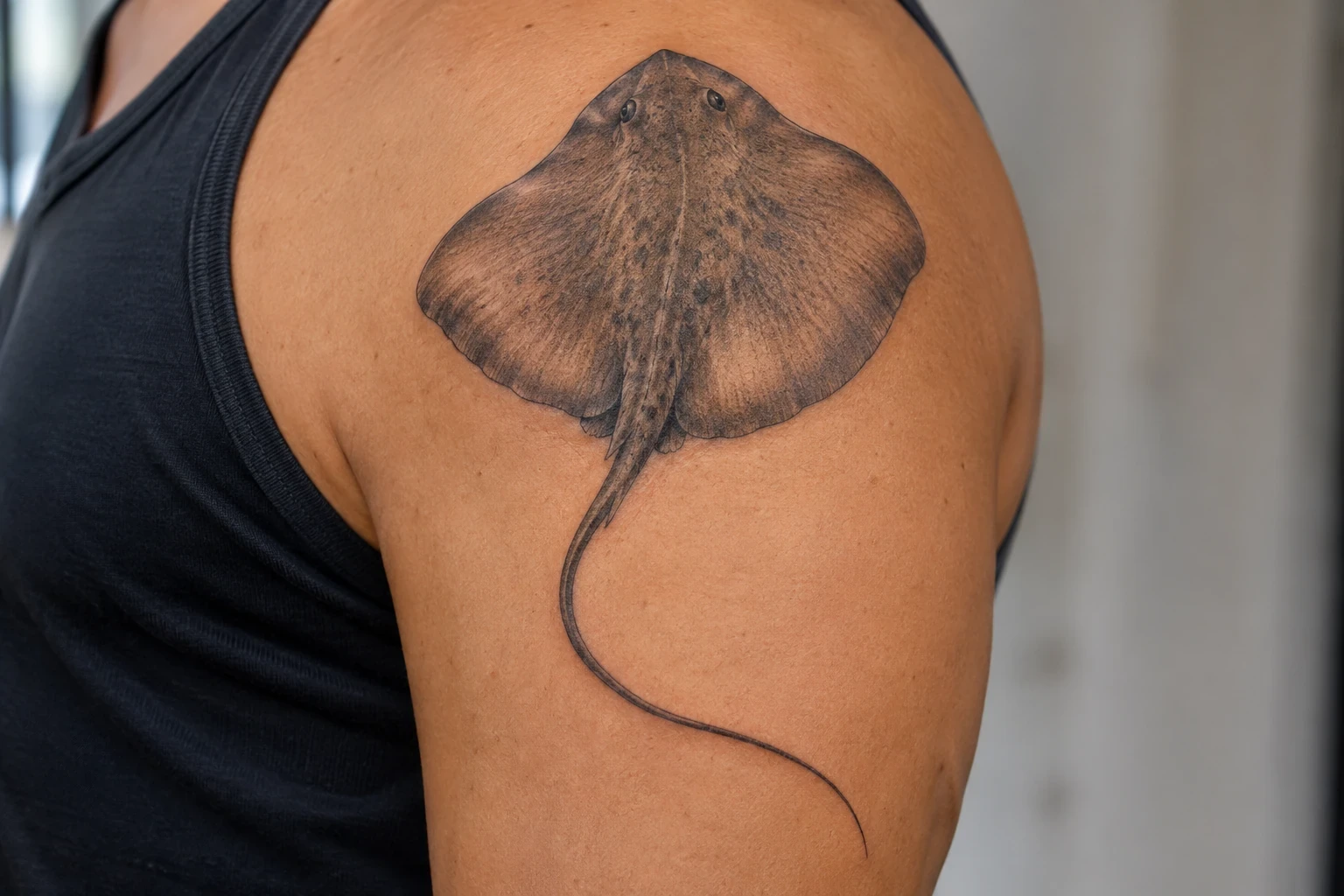
A stingray tattoo can be a small open outline, a bold graphic shape or a softly shaded animal study. Its broad disc and trailing tail give it a distinctive silhouette, so the first decision is how much space that complete shape needs on your body. These 20 stingray tattoo ideas compare different styles and settings through original on-skin mockups.
Choose the body shape and pose before adding waves, plants or a frame. A rounded disc feels different from a more angular one, and a gently curved tail changes the direction of the whole composition. If a particular species matters to you, bring your artist a named reference rather than relying on the broad label “ray.”
Image disclosure: All images are AI-generated tattoo mockups on fictional adults. They are design and placement concepts, not real clients, healed tattoos or species-identification plates. Your artist should redraw the idea, check the anatomy and fit the stencil to your body.
Plan the tail as part of the design
Do not measure the disc alone when choosing a size. The tail can make an otherwise compact drawing much longer, and its curve affects how the tattoo sits alongside a wrist, elbow or nearby piece. Ask for the entire outline at the intended size before deciding how much texture to include.
For a small tattoo, compare a simplified outline with a solid black version. The broad shape and the space around the tail may contribute more than tiny surface marks. The minimalist tattoo ideas gallery is useful if you are deciding how restrained you want the finished drawing to be.
1. A small open outline
An open outline lets the disc and tail carry the composition with very little interior detail. Keep the two sides of the body balanced without forcing perfect symmetry onto a curved arm. Try the complete forearm stencil in a relaxed position and decide where the tail should finish before adding any small marks.
2. A bold black silhouette
A black silhouette makes the outer shape the main feature. The tail needs a deliberate transition from the body rather than looking like a separate line attached afterward. On the upper arm, compare the design from a normal viewing distance. A clean outline can be more useful than extra texture inside a compact shape.
3. A softly shaded animal study
Soft grey shading can describe the disc without turning it into a dense block. Keep the raised eye area and body edges clear, and use a wildlife reference for the surface you want illustrated. On the calf, look at the whole pose from more than one angle before concentrating on the small details.
4. A rounded disc shape
A rounder disc creates a softer overall silhouette than an angular design. Decide whether that shape is an artistic preference or a feature of a particular ray you want represented. The thigh provides room to compare the disc and full tail together. Do not let the large body area make the tail an afterthought.
5. A gentle banking pose
A slight banking pose introduces movement without needing a dramatic bend. The lifted side should still feel connected to a flattened body rather than become a separate wing. On the forearm, compare the angle of the animal with the arm’s natural direction. Ask the artist to show the basic contour before adding shading.
6. A stippled stingray
Stippled shading gives the surface a softer texture while leaving open skin between the marks. Keep the body edge clear enough that the animal remains readable outside a close-up photograph. The forearm example is a starting point for comparing the larger gradient with the much thinner tail, which should remain a distinct part of the drawing.
7. Engraved contour shading
Engraved contour lines can follow the disc’s surface instead of filling it with a smooth gradient. Agree on the direction and density of those lines before adding more. The thigh offers room for a larger pattern, but a smaller version may need fewer hatch marks rather than the same drawing compressed into less space.
8. A faceted geometric ray
Faceted planes make the stingray an intentionally graphic interpretation. Keep the disc and tail connections understandable even when curved edges become angular. Compare the black and open areas before adding extra decoration. The example uses original geometric shapes; the animal’s outline should remain clear without relying on a borrowed pattern.
9. A blue and teal accent
A blue and teal wash can suggest water behind a simple ray. Keep the animal’s outline readable when viewed without the color accents. Ask to see the artist’s own examples of a similar approach, including healed work where available. The wash should support a clear design rather than conceal an uncertain body shape.
10. A spotted disc
A spotted disc puts more attention on the surface pattern. Decide whether you want a specific species reference or an illustrative arrangement of spots before the artist develops the texture. Keep the eyes distinguishable from the pattern. On the upper arm, compare the whole silhouette as well as the small pale circles.
11. A single curling wave
One curling wave gives the ray an ocean setting without building a complete scene. Leave enough separation that the tail does not become confused with a water line. On the forearm, test whether the wave improves the balance or simply makes the design wider. A plain animal can be complete without the extra element.
12. Sparse kelp fronds
Sparse kelp-inspired fronds create a vertical contrast to the broad disc. Keep plant lines from crossing the tail or hiding the animal’s edge. The calf example offers room to compare that spacing. Choose the main focal point before adding more fronds, since several similar curves can quickly make a small composition hard to follow.
13. A crescent above the ray
A crescent gives the design a symbolic nighttime mood. Keep it separate from the disc and tail so the basic animal shape remains clear. The thigh layout stacks the elements vertically. If you want a smaller piece, decide whether the crescent matters more to you than extra shading or surface texture.
14. A muted sun disk
A muted sun disk adds a simple color accent to a mostly black-and-grey drawing. Check where its boundary meets the animal so it does not create an accidental extra shape on the disc. Compare the rough layout without the disk as well. It should strengthen an already readable composition rather than rescue one that feels unfinished.
15. A short star trail
A few stars give a small ray a more playful graphic setting. Keep them clear of the eyes and body edge so they remain separate accents. The upper-arm example is a starting point for discussing their number and spacing. Try removing a star or two before deciding how much detail the design needs.
16. An oval sea vignette
An oval frame turns the ray into a small vignette. The whole tail should fit comfortably within the intended boundary, with room around its tip. On the upper arm, test the complete oval against the body before choosing its width. A few water lines can suggest the setting without filling every open area.
17. An open circle
An open circle can collect the disc and curved tail into one arrangement. Choose where the frame should break so the gap feels intentional. On the calf, compare the circle and animal from several angles rather than judging only one photograph. The frame may need adjusting to follow the leg naturally.
18. A diamond frame
A diamond frame echoes the broader body shape while adding a separate boundary. Keep enough space to distinguish the ray’s own edge from the frame. A deliberate opening can allow the tail to continue downward without feeling trapped. Test the full length on the forearm before refining the corners or adding interior texture.
19. Two rays at different heights
Two rays need separate bodies and tails that you can follow easily through the composition. A difference in size or height can help organize the arrangement without imposing a fixed meaning. On the calf, compare both animals together at the intended scale. If they become crowded, simplify or enlarge the design rather than overlap their outlines accidentally.
20. A bubble trail
A short bubble trail adds a second direction without requiring a complete underwater background. Keep the circles separate from the eyes and surface pattern so they do not look like extra features on the animal. Try the arm layout with fewer bubbles first and keep the accents that improve its balance.
Choose an animal reference as well as a tattoo style
The Florida Museum’s Atlantic stingray profile describes its long, tapered, whip-like tail. The Smithsonian’s freshwater stingray information notes that the eyes sit on the upper surface while the mouth and gill slits are underneath. These references help you check a drawing, but they describe particular animals rather than one identical appearance for every ray. Sources checked 28 November 2026.
If you want an identifiable species, choose it before asking for a pattern or a highly stylized pose. Bring a clear photograph of the view you prefer. Colors and spots in these mockups are artistic choices, and a top-view drawing should not acquire a human-like face simply because the underside of a ray looks expressive in another photograph.
Match placement to the complete silhouette
Compare the disc width and tail length together. A broad upper arm or thigh can give the body room, while a forearm or calf may offer useful length for the tail. Those are options to test, not rules about one best location. A smaller disc with an extremely long tail still needs careful spacing.
Check the stencil with the body area relaxed and moving normally. Look for a tail tip that disappears around a curve or into a clothing edge when you would prefer the whole design visible. The tattoo placement gallery shows how different shapes relate to the body; those composition principles can help any adult preparing an artist brief.
Keep the style consistent
A lightly outlined ray, a dark silhouette and an engraved study ask for different kinds of detail. Choose one main direction before adding a frame, plant or color wash. If you like several approaches, ask the artist to compare rough versions instead of combining every element from your references into one small image.
Open space can be part of the finished composition. A tail does not need bubbles around every bend, and a disc does not need an elaborate pattern to look intentional. Decide which details you would actually miss if the artist recommended simplifying the drawing.
What could a stingray tattoo mean?
You might choose the subject because of an interest in marine wildlife, a coastal memory, a particular encounter or the appearance of its broad silhouette. Calm, movement or adaptability could be personal interpretations, but they are not a universal definition attached to everyone who wears a ray.
You can also choose it simply because you like the image. If the design marks a private memory, you do not need to add lettering or explain the story to strangers. Give the artist enough context to understand the mood you want while keeping any personal details you prefer not to share.
Stingray tattoo questions
Can a stingray work as a small tattoo?
A simple outline or silhouette is worth comparing at your intended size. Ask the artist how much room the disc, eyes and tail need to remain distinct. A pair of rays or a detailed framed scene needs a different drawing from a compact standalone animal.
Should I choose a rounded or diamond-shaped body?
Decide whether you want a particular species or a more stylized interpretation. Bring an animal reference for the body shape and a separate reference for the tattoo style. Your artist can then simplify deliberately instead of guessing which feature matters to you.
Does the tail need to be straight?
No. A gentle curve can be part of the composition, but it should remain connected and easy to follow. Try the complete outline against the body before deciding how much to bend it around a frame, wrist or neighboring tattoo.
Can I add dots or a pattern?
You can discuss an original illustrative pattern or use a reference for a particular species. Keep the eyes and the edge of the disc readable, and compare the pattern at the actual size. Fine details in an enlarged image can create a misleading expectation of how much will fit into a small tattoo.
Can two rays represent a relationship?
You can give the pair that personal meaning if you want. Decide how the sizes and positions should relate, and leave room for both tails. A viewer cannot reliably infer a particular relationship or family story from the design alone.
Can I take these mockups directly to a studio?
Yes, as reference concepts. They are AI-generated artwork, so ask the artist to redraw the subject, check its anatomy and fit the stencil to your body. Mark the features you like and the parts you would be comfortable simplifying.
A useful brief for your artist
Choose a body shape, a preferred style and the direction of the tail. Add an approximate size and two possible placements, plus an animal photograph if species accuracy matters to you. The tattoo consultation tips can help you turn that shortlist into a clear conversation before the final drawing is made.