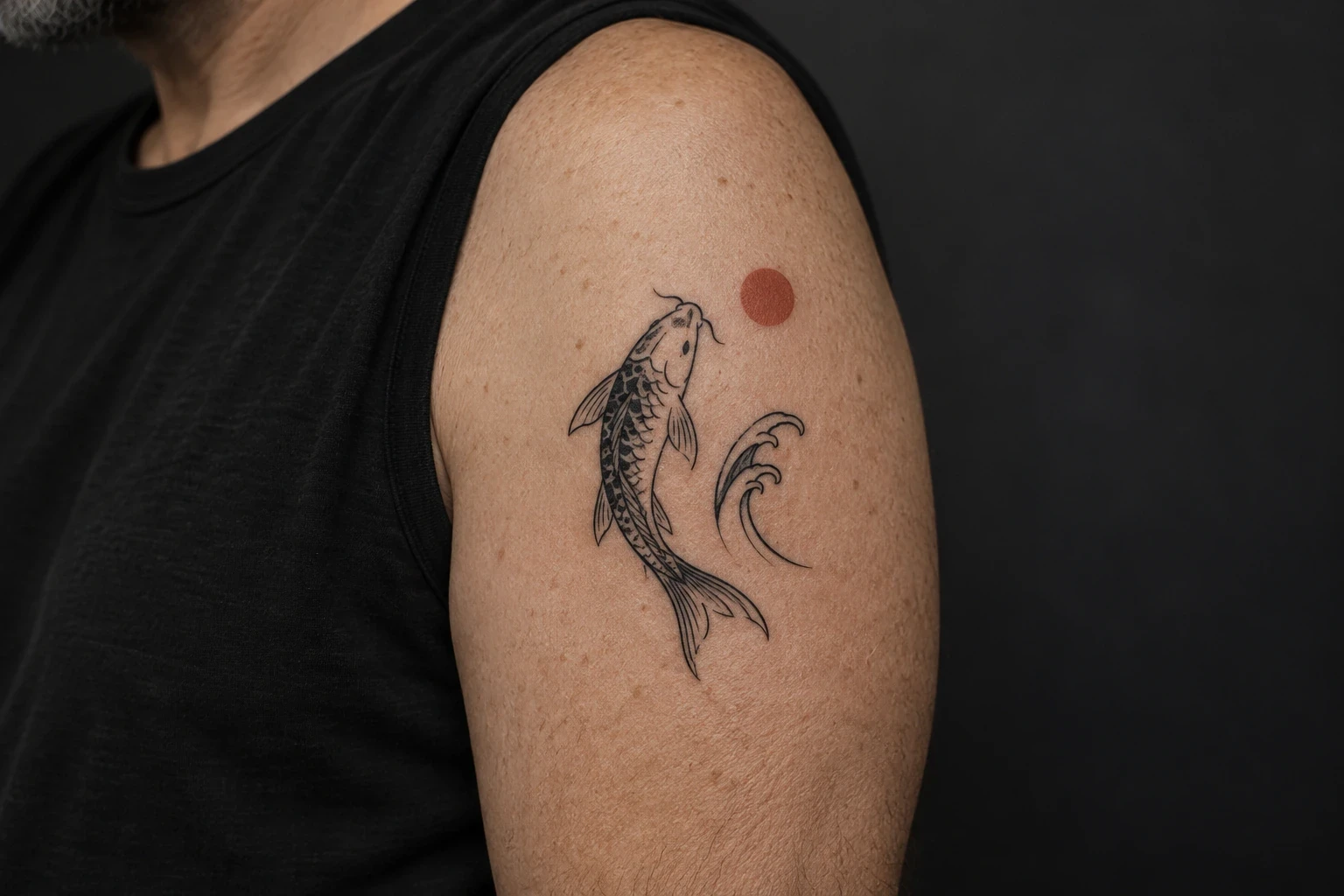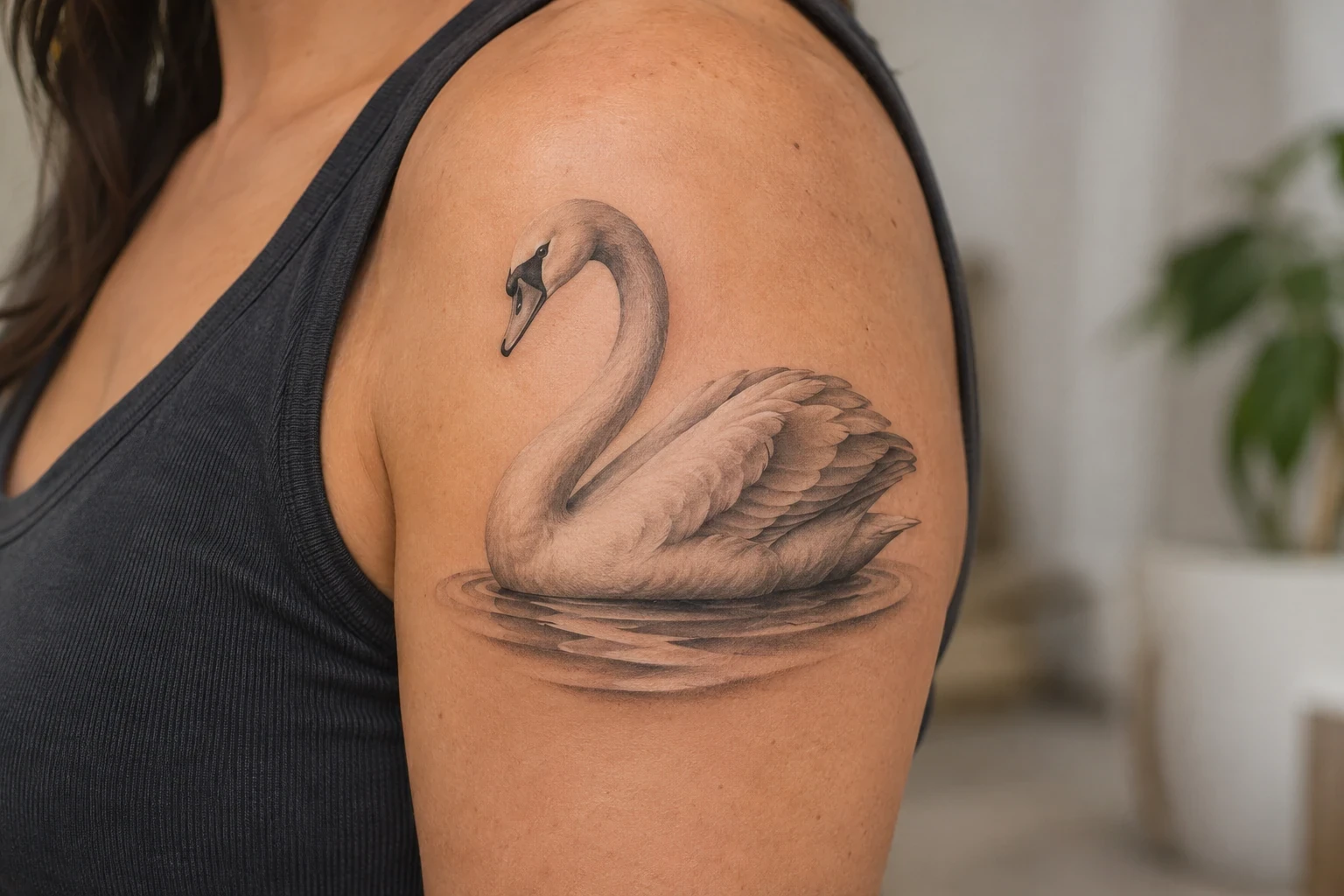
A swan tattoo works especially well when the pose is clear: a curved neck for a compact profile, extended wings for a broad composition, or a pair of birds with space between them. These 22 swan tattoo ideas explore those choices through fine linework, shaded feathers, bold silhouettes and a few carefully chosen botanical or celestial details.
Use the gallery to choose a direction, then ask your artist to redraw it for your preferred body area. The long neck and rounded body should read together before you add flowers, stars or a background. A simple swan that fits the space can make a stronger composition than a miniature scene with too many competing elements.
Image disclosure: All images are AI-generated tattoo mockups on fictional adults. They show design and placement concepts, not real clients, healed tattoos or guaranteed results. Your artist should check the anatomy, scale and stencil before tattooing.
Choose the mood and silhouette first
Decide what draws you to the bird. A quiet floating profile may suit a personal idea of calm, while a swan in flight can suggest movement. Two facing birds can be a way to express a relationship. Those are possible personal interpretations, not a universal dictionary of swan tattoo meanings.
Next, choose the visual weight. An outline leaves much of the skin open; a dark silhouette makes a compact graphic; feather shading needs enough room to separate its larger shapes. If you prefer sparse artwork, compare the minimalist tattoo ideas gallery before deciding how much detail your swan needs.
1. A simple swan in fine linework
A restrained profile puts the long neck and rounded body ahead of feather detail. Keep the curve smooth and the bill distinct so the design reads as a bird rather than an abstract loop. The forearm example leaves clear space around the outline. Ask your artist which lines are essential at your chosen size, and resist adding a cluster of tiny waves simply because the reference photograph has room around it.
2. A compact black silhouette
A black silhouette uses contrast instead of shading to define the swan. The neck, bill and tail need deliberate shapes because there are fewer interior marks to explain the pose. This upper-arm composition can work as a standalone graphic with just a water line beneath it. Try a full-size outline on the area first, especially if you want the design to remain compact beneath a shirt sleeve.
3. A softly shaded white swan
Soft grey shading can describe a pale swan without filling the entire body with a solid white shape. Let the folded wing carry the most important feather pattern while the neck stays cleaner. On the calf, compare the profile from the side as well as in a straight-on photograph. Bring your artist a clear bird reference and ask how much of its detail should be simplified for the actual tattoo size.
4. A dark-feathered swan
A dark-feathered swan changes the balance of the same basic silhouette. Textured feathers can give the body depth, while a small red bill creates a focused color accent. Keep the neck separate from the darkest parts of the folded wing. The outer-thigh example gives the composition space; if you want a smaller version, ask the artist to reduce the feather pattern rather than compress every mark into the new size.
5. Two swans forming a heart
Two facing swans can create a loose heart-shaped opening with their necks. The empty space is the key part of this composition, so the birds do not need to touch at every point. Check that both heads, bills and bodies remain distinct. A wider upper-back arrangement gives the pair room to sit together without turning the necks into a confusing knot. Decide whether you prefer balanced symmetry or a slightly more natural difference between the two birds.
6. A swan in level flight
A flying swan gives the image a long direction, with the neck extended away from the body. The wings need space to be understood as part of one coherent bird. Use the upper-arm mockup to consider how the whole silhouette sits around a curve, then ask the artist to check it with the arm relaxed. For a tighter area, a floating profile may be easier to compose than a wide flight pose.
7. A swan lifting its wings
Lifting the wings creates a broader, more dramatic arrangement than a folded-wing swan. Keep a clear gap between the wings and the head so the neck does not disappear among the feather shapes. The thigh provides a substantial area for that outline. Decide where the wing tips should finish before adding decorative details; the overall width will guide the scale of everything else in the tattoo.
8. A swan preening its feathers
A swan turning its head toward its feathers creates an inward-looking composition. The neck folds back into the body, so the small head and bill need to remain readable. A shoulder-blade placement lets the curve sit diagonally rather than forcing the image into a straight vertical strip. Ask your artist to show the outline first, with no shading, so you can judge whether the pose is clear before the feather texture is added.
9. A resting swan
A resting swan feels quieter than a bird with raised wings or an extended neck. Its head nestles toward the wing, making the body a compact oval. Leave enough separation around the face that it does not look as though the head has vanished. A few water lines can establish the setting without building an entire landscape. The inner forearm example is a useful reference for that restrained balance.
10. A swan beside a cygnet
An adult swan beside a small cygnet can be a personal way to represent care, family or a particular relationship. Give the two birds separate silhouettes and enough space that the smaller bird is not mistaken for part of the adult. The calf mockup uses the size difference as the main feature. If you want to represent several people, discuss the number of birds and the available width before committing to a much busier family scene.
11. A swan above a lotus
A lotus below the swan introduces a second focal shape. Keep the bird and flower separated rather than hiding the lower body inside the petals. You can choose the combination for its appearance or give it a personal meaning; the pairing does not impose one shared interpretation on everyone who wears it. On the upper arm, test whether the bloom makes the whole design too wide for the area you want to use.
12. A swan with a water lily
A water lily places the swan in a simple pond setting. One blossom and a small pad can be enough to explain the scene while leaving the bird in charge. A muted petal accent gives you a color option without changing the entire design into a colorful illustration. Compare the outlines in black and grey before deciding whether that extra color adds something you actually want.
13. A swan between reeds
Reeds can frame a swan without enclosing it in a hard border. Keep the stems sparse so the long neck does not become lost among several similar vertical lines. A calf placement offers room for the plants to rise above the water while the bird sits below. Ask the artist to balance the two sides rather than automatically mirror them; an uneven natural arrangement may suit the scene better.
14. A swan beneath a crescent
A crescent above the swan creates a symbolic night-scene composition. The moon is a separate graphic accent, so it does not need a complete sky behind it. Use the space between moon and bird to keep both forms readable. The thigh example lets the arrangement stack vertically. If you want a smaller piece, compare a plain crescent with the more detailed feather shading and decide where to simplify.
15. A swan with a trail of stars
A few stars above a small swan can suggest a storybook or celestial mood without becoming a full scene. Keep them large enough to remain intentional shapes within the drawing, rather than a dusting of incidental dots. The upper-arm mockup shows a lighter visual approach. Ask the artist to compare the design with and without the stars; the bird should still feel complete if you choose the simpler version.
16. A swan inside a botanical oval
An oval frame turns the swan into a small illustrated vignette. Sparse leaves can soften the border, but keep them from crossing the bird’s neck or hiding the bill. Place the complete oval against your body before choosing its size, since the frame makes any tilt more noticeable. On an upper arm, decide whether you want the long axis to follow the arm or lean slightly with the surrounding contours.
17. A swan with geometric accents
A circle and diamond can give a soft swan profile a more graphic setting. The geometric marks should support the bird rather than intersect every feather. Leave deliberate gaps where shapes approach the neck and wing. A forearm composition makes it easy to compare the relationship between the motif and the arm’s long direction. Bring the artist a simple version first and add only the accents that improve the overall balance.
18. A swan with a blue color wash
A blue and teal wash beneath the swan can suggest water while keeping a clear black outline around the bird. Treat the color as part of the tattoo design, not as a promise that ink will look like fresh paint on the skin. Ask to see examples of the artist’s own work in a similar style, including healed work where available. The outline should still make sense when viewed without the color accents.
19. A swan in an engraved style
An engraved approach replaces soft gradients with repeated hatching and heavier contours. That makes the direction of each feather group part of the design. Keep the neck comparatively open so the head does not compete with a dense wing. The thigh example provides room for the larger pattern. If you prefer a smaller version, ask the artist to reduce the number of hatch lines instead of shrinking an elaborate drawing unchanged.
20. A swan with bold outlines
Bold outlines make the swan a clear graphic subject, with a few feather shapes rather than a photographic texture. A small warm-colored bill can draw attention to the head. Keep the water lines equally deliberate so they do not look like an afterthought beneath a heavy bird. Compare this approach with the traditional black and grey bird tattoo guide if you are deciding between this style and finer shading.
21. A swan with a separate feather
A separate feather below the swan gives the design a second shape without distorting the bird itself. The gap between them matters: the feather should read as an intentional companion, not an extra tail or limb. On the inner forearm, try the whole arrangement with your arm in its usual resting position. Decide whether the feather adds a useful personal detail or whether the swan alone would be the stronger choice.
22. A swan in a small lake scene
A small lake scene gives the swan a setting, with low hills and a few trees behind it. Keep the background lighter or simpler than the bird so the subject remains clear. A vertical forearm composition can use the water and distant land to lead the eye through the design. Agree on the outer boundary early; an open-edged scene will feel different from the same artwork inside a rectangle or oval.
Decide how closely the design should follow a real swan
If a particular species matters to you, tell the artist before the drawing is finalized. The Trumpeter Swan Society’s identification guide distinguishes the dark bill of a Trumpeter Swan from a Mute Swan’s orange bill. That small detail can change the reference you choose. Source checked 25 November 2026.
The mockups here are stylized concepts rather than field-guide illustrations. For a nature-focused tattoo, bring a separate wildlife photograph showing the pose, head and wing structure you want. For a symbolic piece, you can simplify those details while still keeping a coherent bird. Either way, review the drawing for one head per bird, a connected neck and a clear relationship between body and wings.
Choose placement around the whole outline
A floating swan is often a wide composition, even though its neck adds height. Compare the complete outline against the chosen area instead of sizing only the body. Raised wings and paired swans need extra width; a single profile or separate feather can be arranged more narrowly. Let the artist show you what changes when the design turns around an arm or leg.
Test the stencil in a relaxed position and in the clothes you usually wear. A bird partly hidden by a sleeve may lose its most recognizable feature if the neck or head sits above the hem. Decide whether that is the effect you want. If a larger sleeve or collection of tattoos is likely, consider the neighboring space now rather than using every gap around the first swan.
Keep the meaning personal and the details intentional
You might connect a swan with calm, self-possession, a relationship, a favorite lake or simply a bird you enjoy drawing. Write that reason in your artist brief if it helps explain the mood. You do not need to adopt someone else’s interpretation to justify the image, and a pair of swans does not prove anything about a wearer’s relationship status.
Limit the supporting elements to the ones that serve that idea. A flower, moon, feather and frame can each work, but combining all of them can make a modest design difficult to read. Try removing one element at a time. The best version for you may be the one that leaves more skin open around the bird.
Swan tattoo questions
What does a swan tattoo mean?
Its meaning depends on the wearer and design. A person may choose it for elegance, quiet confidence, care or a relationship, while someone else may be remembering a place. Treat those as possible readings rather than fixed meanings attached to every swan tattoo.
Can a swan tattoo be very small?
A simplified outline or silhouette is worth discussing for a compact tattoo. Ask the artist what size gives the neck, head and bill enough separation. A detailed wing, two birds or a complete landscape needs a different drawing from a small standalone profile.
Do I need white ink for a white swan?
You can discuss a design that suggests pale feathers through open skin, black outlines and grey shading. The choice depends on the intended look and the artist’s approach. Ask to see relevant examples rather than assuming every white bird needs to be filled with white ink.
Where does a pair of swans fit best?
Start by comparing the width of the whole pair on your preferred area. The upper back, thigh or a sufficiently broad part of an arm are possibilities to test, not automatic recommendations for everyone. The space between the necks should remain clear in the position you will usually view it.
Can I combine a swan with flowers?
Yes. Choose whether the flower sits below, beside or around the bird before adding more stems and petals. Keep the swan’s head and neck clear, and ask the artist to compare the composition at its intended size. One flower can be enough to create the botanical mood.
Take a clear brief to your artist
Choose a pose, one preferred style and no more than a few essential supporting details. Add your intended placement and approximate size, plus a wildlife reference if species accuracy matters. Bring these mockups as conversation starters and use the tattoo consultation tips to organize your questions before the artist creates your own drawing.