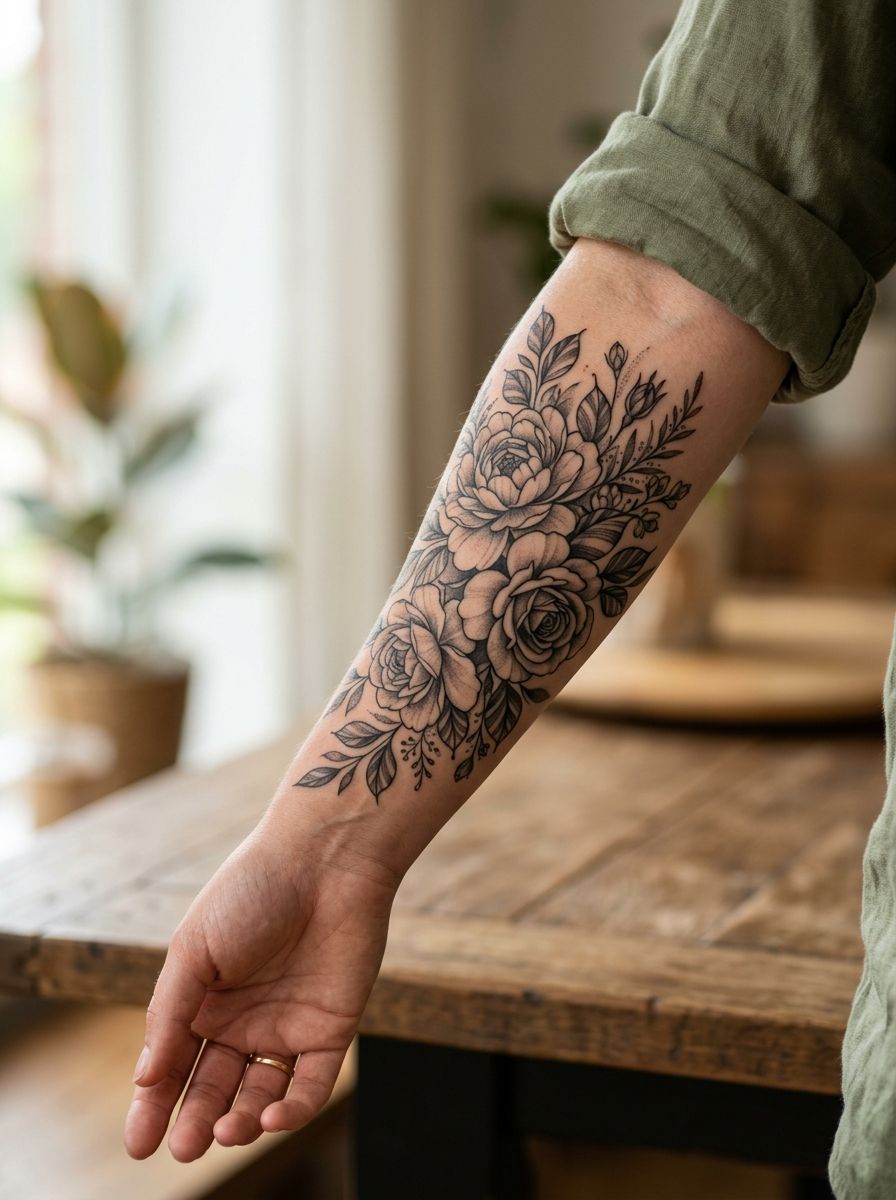
Vaseline is not the right choice for a brand-new tattoo, but it is not the disaster the internet makes it out to be either.
I have asked this question of every artist who has ever worked on me, and the answers have been remarkably consistent: keep the petroleum jelly away from fresh ink, and save it for a specific, narrow job later on.
The reason it keeps coming up is that petroleum jelly sits in almost every bathroom cabinet in North America, and a tub of it costs less than a coffee.
Below I have laid out what petroleum jelly actually does to healing skin, the two situations where I would still reach for it, and what I use instead the rest of the time. If you want the wider picture first, our full tattoo aftercare guide covers the whole healing window.
Vaseline vs. What Artists Actually Recommend
Here is how petroleum jelly stacks up against the products that get handed to you at the end of a session.
I have used every one of these on my own work at some point, so the notes below are what I noticed rather than what the packaging promises.
| Product | Best Window | Lets Skin Breathe? | Main Drawback |
|---|---|---|---|
| Petroleum jelly (Vaseline) | Fully healed skin, or protecting a tattoo from chlorine for an hour | Poorly — it is close to fully occlusive | Traps moisture and heat over weeping ink |
| Healing ointment (Aquaphor-style) | Days 1–4, in a whisper-thin layer | Partly — thinner and lighter than jelly | Easy to over-apply and clog the tattoo |
| Fragrance-free lotion | Day 3 onward, until peeling stops | Yes | Can sting slightly on very raw skin |
| Adhesive second-skin film | The first 24 hours to 5 days | Vapour-permeable by design | Adhesive reactions on sensitive skin |
| Coconut oil or shea butter | Late peeling and long-term upkeep | Mostly | Can clog pores on oily or acne-prone skin |
If you only take one row away, take the third: a plain fragrance-free lotion does most of the work for most people. Our roundup of the best lotions for tattoos goes deeper on picking one.
Why Petroleum Jelly Gets Recommended at All
Petroleum jelly has a genuinely good reputation in wound care, and that reputation is not made up.
It is a refined blend of mineral oils and waxes that forms a physical seal over the skin, which slows how fast water evaporates out of a wound.
Dermatologists reach for it constantly on scrapes, cracked heels and post-procedure skin, and the American Academy of Dermatology lists plain petroleum jelly among the things that keep healing skin from drying out.
The problem is that a fresh tattoo is not quite the same kind of wound.
It is a shallow, wide, weeping surface rather than a small deep break, and for the first day or two it is actively pushing plasma, blood and excess ink up out of the skin — which a seal gets in the way of. The tattoo healing stages break that timeline down properly.
What Vaseline Actually Does on a Healing Tattoo
It Seals, But It Does Not Feed the Skin
Petroleum jelly is close to a pure occlusive: it holds in whatever moisture is already there and adds none of its own.
That distinction matters more than people expect. A lotion carries water and humectants into the skin, while jelly only builds a roof over it.
When I have put jelly on skin that was already dry and flaking, it stayed dry and flaking under a shiny film for days.
The practical version: seal after you hydrate, never instead of it. On a tattoo past the peeling stage, a thin layer of lotion followed by a barely-there film of jelly is a reasonable combination.
The Plasma Problem in the First 48 Hours
For roughly the first two days, a new tattoo leaks a mix of plasma, lymph and surplus ink.
That fluid needs somewhere to go. Left under a thick occlusive layer, it pools and then dries into heavier, thicker scabs than you would otherwise get.
Thick scabs are the actual risk here, because they crack, catch on clothing and take patches of colour with them when they come off early.
Every artist I have asked has said some version of the same thing: in the first two days, wash and let it dry, and put less on it than you think you should.
Does Vaseline “Suffocate” a Tattoo?
This is the claim you see everywhere, and it is half right.
Skin does not breathe in the respiratory sense — it takes its oxygen from your blood, not the air. So a layer of jelly is not smothering your cells.
What it genuinely does is block the movement of water vapour outward, which is a different and more relevant problem on a surface that is still weeping.
Trapped warmth and moisture make a friendlier environment for bacteria than dry, clean skin does. That is the honest version of the argument, and it is enough reason on its own to skip jelly early.
This is also why breathable adhesive films behave so differently from a greasy layer — they are engineered to let vapour out while keeping contaminants away. See our guide to Saniderm tattoo healing if your artist sent you home in one.
Can Vaseline Pull Ink Out of a Tattoo?
Not directly, and I want to be precise about this because the myth gets repeated as fact.
Petroleum jelly is not a solvent, and it cannot reach the dermal layer where the pigment actually sits.
What it can do is cause patchy healing indirectly, by encouraging heavy scabs that lift pigment out with them when they detach too soon.
So the faded, blotchy result people blame on Vaseline is usually real — the mechanism is just one step removed from what they think. If patchiness is already your worry, preventing tattoo fading is worth reading next.
Breakouts, Bumps and Clogged Pores
Pure petroleum jelly is generally considered non-comedogenic, which surprises people who assume anything greasy causes spots.
The trouble is what gets sealed underneath it: sweat, dead skin, residue from soap or from whatever ointment you used earlier.
On a chest or back piece in summer, I have watched that combination turn into a rash of small white bumps within a couple of days.
If you do use jelly, it goes on clean, fully dry skin and nothing else.
The Two Times I Still Use It
First: a completely healed tattoo on skin that has gone dry and dull in winter. A thin film over lotion at night brings the contrast back within a day or two.
Second: as a short-term barrier. Before a swim or a shift in a wet environment, a thin coat over a healed tattoo keeps chlorinated or dirty water off the skin for a while.
I want to be clear that this second one is a stopgap, not a waterproof seal, and it is not a licence to submerge a healing tattoo — see how long after a tattoo you can swim for the real timeline.
Some artists also use a light petroleum-based product during the session itself to keep the skin gliding, which is a controlled, wiped-off application rather than aftercare.
Vaseline Under a Wrap Is the Worst Combination
Of everything in this article, this is the one I would ask you to avoid outright.
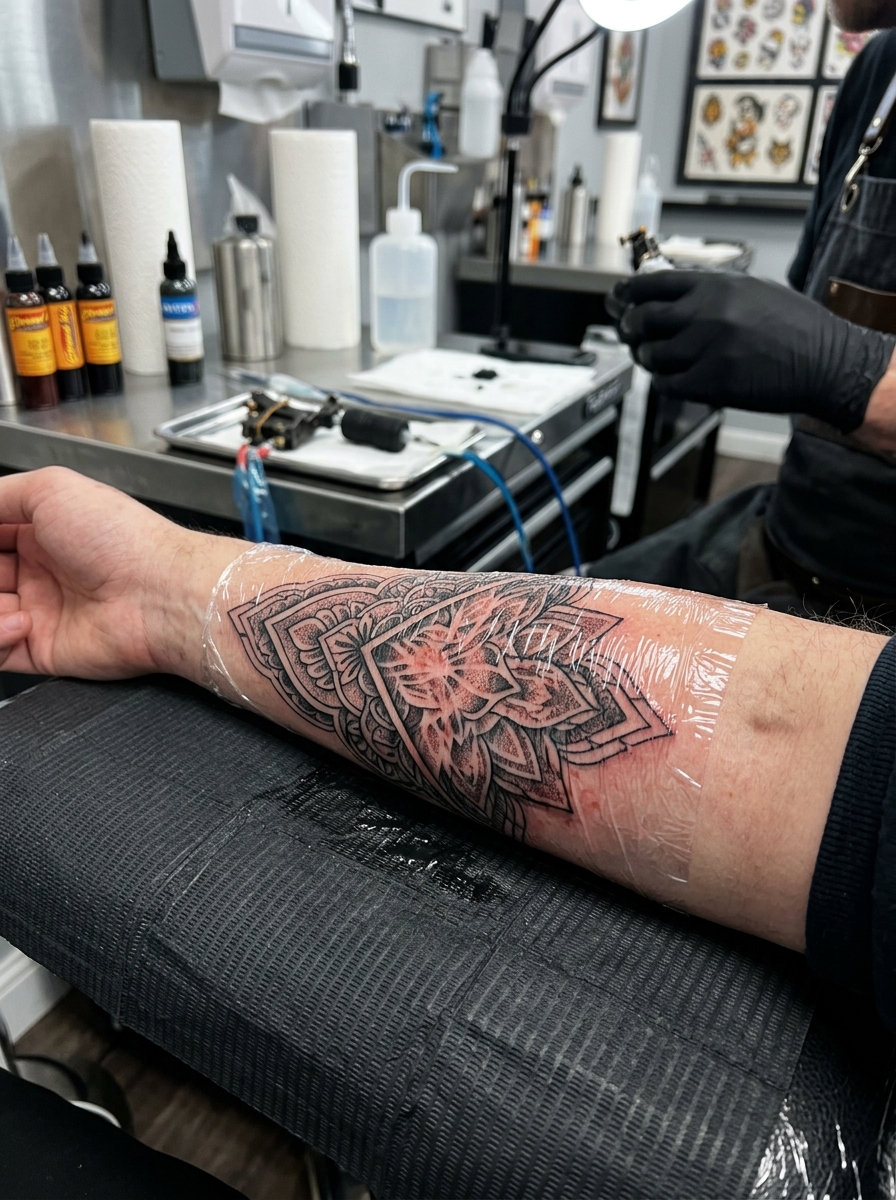
A greasy layer under cling film gives you two occlusive barriers stacked on a weeping wound, with nowhere at all for fluid or heat to go.
It also stops adhesive second-skin films from sticking, which is how people end up with a half-peeled bandage leaking down their arm at 2am.
Follow whatever your artist told you about how long to keep a tattoo wrapped, and put nothing under the wrap that they did not hand you.
Better Alternatives to Vaseline
A Thin Healing Ointment for Days 1–4
Healing ointments blend petrolatum with lighter oils and glycerin, which makes them noticeably thinner than straight jelly.
They still need restraint — a coat you can see is already too much. Our breakdown of Aquaphor for tattoo healing covers how thin is thin enough.
Fragrance-Free Lotion From Day Three
This is what I use for the bulk of every heal, and it is the least glamorous product in the list.
Look for no fragrance, no essential oils and a short ingredient list. Fragrance is the most common trigger for contact irritation on freshly traumatised skin.
Plant Butters and Oils, Later
Shea butter, coconut oil and cocoa butter are fine once the peeling has finished and the surface is closed.
They are heavier than they look, though, and coconut oil in particular can clog pores on chest and back placements.
Sometimes, Nothing At All
Dry healing — washing and then leaving the tattoo alone — works well for some people, especially on oily skin.
It is also the easiest method to get wrong, because skin that cracks from being too dry scabs just as badly as skin that is smothered. Ask your artist before choosing it.
How I Actually Heal a Tattoo
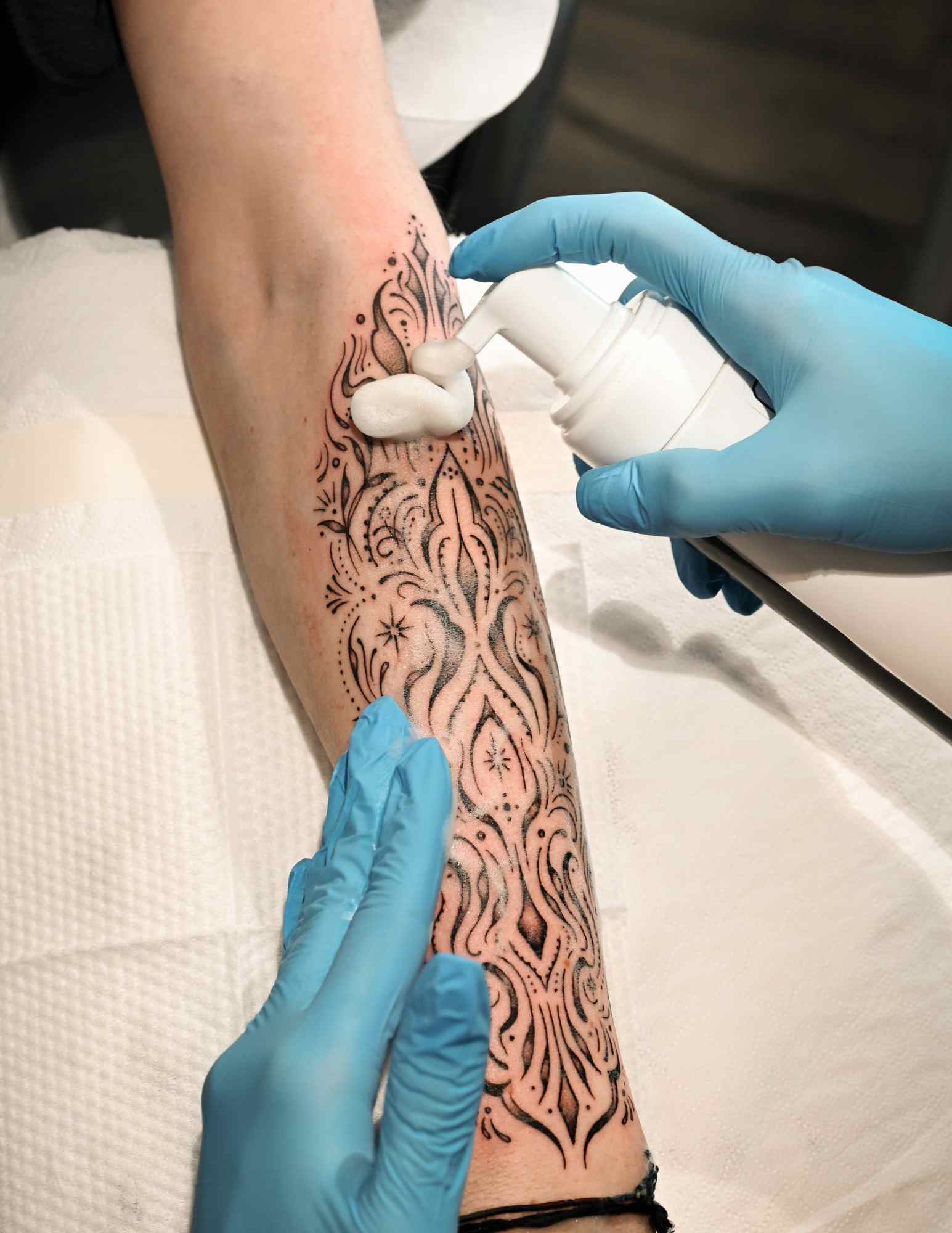
I wash twice a day with lukewarm water and unscented liquid soap, using only my fingertips, then pat dry with paper towel rather than a bath towel.
For the first two or three days I either use nothing or the thinnest possible smear of the ointment my artist gave me, and I let the tattoo air-dry for ten minutes after every wash.
From about day three, when the surface tightens and starts to flake, I switch to fragrance-free lotion two or three times a day and keep going until the peeling stops — usually somewhere in the second or third week. How long a tattoo takes to heal depends heavily on placement and size.
After that it is sunscreen, indefinitely. UV exposure is the single biggest cause of a tattoo looking tired at five years, and it is the easiest one to control.
One thing I will not do is self-diagnose. Spreading redness, heat, swelling that worsens after day three, pus, or a fever are reasons to call a doctor rather than a forum — the AAD’s page on tattoo skin reactions is a good sanity check, and its guidance on caring for tattooed skin covers the basics well.
Common Mistakes People Make With Vaseline
The most common one by far is applying far too much. A healing tattoo should look matte, not wet.
The second is double-dipping — scooping jelly out of a shared tub with unwashed fingers, which is a straightforward way to introduce bacteria to an open wound.
The third is reaching for a scented or medicated variant. Anything with menthol, camphor, aloe fragrance or antibiotic ointment mixed in belongs nowhere near new ink unless a doctor prescribed it.
And the fourth is treating jelly as sun protection. It offers no meaningful SPF at all.
Frequently Asked Questions
Can I use Vaseline on my tattoo the first night?
I would not. The first night is when the tattoo is weeping most heavily, and a sealing layer keeps that fluid trapped against the skin. Wash gently, pat dry, and either leave it bare or use the thin ointment your artist provided. If your artist wrapped you in an adhesive film, leave it alone and put nothing underneath it.
Will Vaseline fade my tattoo?
Not by dissolving pigment — it cannot reach the dermis where the ink lives. It can lead to patchy areas indirectly, by encouraging thick scabs that take colour with them if they come away early. On a fully healed tattoo it does no harm at all and can temporarily make the colours look richer. Sun exposure is a far bigger fading risk than any moisturiser.
When is it safe to start using Vaseline?
Once the tattoo has finished peeling and the surface is smooth and closed, which is usually somewhere between two and four weeks. Even then I would use it as a night-time sealing layer over lotion rather than as your only product. Deeper healing under the surface continues for a couple of months, so keep being gentle.
Is Aquaphor the same thing as Vaseline?
No. Vaseline is essentially pure petrolatum, while Aquaphor blends petrolatum with lanolin alcohol, mineral oil and glycerin, which makes it lighter and less completely occlusive. That is why plenty of artists still recommend an Aquaphor-style ointment for the first few days but not plain jelly. Anyone with a lanolin sensitivity should avoid it and use a fragrance-free lotion instead.
I already used Vaseline on my new tattoo — what now?
Do not panic, and do not scrub it off aggressively. Wash gently with lukewarm water and unscented soap, pat dry, and let it air out before switching to a lighter product. One or two applications rarely causes lasting damage in my experience. If you see spreading redness, heat, pus or a fever, contact a doctor rather than waiting it out.
Quick Summary
- Skip Vaseline on a fresh tattoo — it seals in plasma and heat during the weeping stage.
- It does not dissolve ink, but the thick scabs it encourages can lift colour out.
- Never put it under cling film or an adhesive second-skin bandage.
- Use a whisper-thin healing ointment for days one to four, if your artist recommends one.
- Switch to fragrance-free lotion from about day three until the peeling stops.
- Petroleum jelly is genuinely useful on fully healed skin, and as a short water barrier.
- Apply less than feels right — matte, not shiny, is the target at every stage.
- Spreading redness, pus or fever means a doctor, not another layer of ointment.