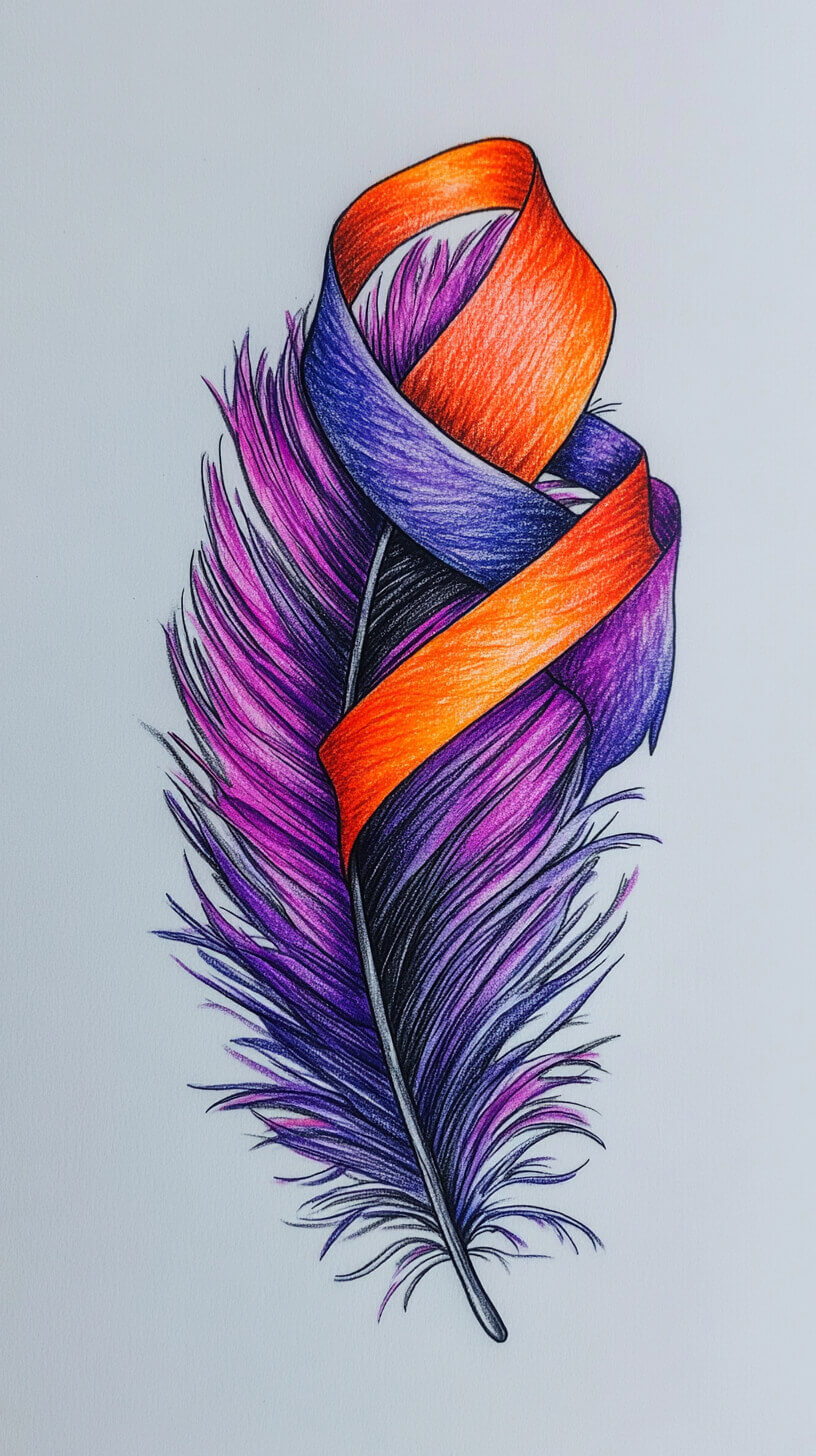
A cancer ribbon feather tattoo works because it says two things at once: the ribbon names the fight, and the feather says what survived it.
I have watched a lot of people try to design this tattoo on their own, and the sticking point is almost always the same — they draw a good feather, they draw a good ribbon, and then the two shapes sit next to each other like they were photocopied from separate pages.
The designs that actually work treat the ribbon as part of the feather’s structure. It threads through the barbs, it replaces the quill, or it trails off the tip as if the feather unravelled into it.
This guide walks through the drawings on this page style by style, with the colour meanings, the placements that hold up, and the mistakes I would avoid. If you are still deciding on the bird half of the idea, the feather tattoo drawings for females collection is a useful companion.
Which Ribbon Colour Belongs in Your Design?
The colour is the one part of this tattoo you should not improvise. Each shade is tied to a specific cancer, and the wrong one changes what the tattoo says to anyone who recognises it.
Here are the colours that come up most often in the drawings below. For the full list, the National Breast Cancer Foundation ribbon colour guide is a reliable reference.
| Ribbon Colour | Commonly Represents | How It Reads on Skin |
|---|---|---|
| Pink | Breast cancer | Holds its colour well; the most instantly recognised of all the ribbons |
| Teal | Ovarian cancer | Strong against black linework, but can read closer to blue as it settles |
| Lavender | All cancers generally | The softest of the set; needs a darker outline or it disappears |
| Gold | Childhood cancers | Yellow pigments are among the first to fade; expect touch-ups |
| Orange | Leukemia | Bright and warm, sits well beside black and grey feathers |
| Grey | Brain cancer | Works beautifully in an all-black-and-grey design with no colour at all |
| Dark blue | Colon cancer | Deep and stable, but can blur into black outlines if drawn thin |
| Black outline only | Any cancer, or a private tribute | Ages the best of every option here and never needs colour matching |
If you want the tattoo to stay legible for decades with the least maintenance, the black-outline version in the last row is the honest answer. Colour is the more expressive choice, and it costs you touch-ups.
Why the Feather and Ribbon Pairing Works So Well
Feathers carry an unusually wide range of meanings — flight, release, protection, the spirit, a message from someone who is gone. That range is exactly why they pair with a ribbon so easily.
The ribbon is specific and the feather is open. One names the diagnosis; the other lets the wearer decide whether the tattoo is about grief, survival, or simply carrying someone with them.
In my experience the people who are happiest with this tattoo a few years later are the ones who chose the feather for a reason they can still articulate — a bird their mother liked, a species from a place that mattered, a shape from a drawing someone made.
There is also a practical reason the pairing works. A feather is long and narrow, which suits the forearm, the ribcage, the spine and the calf, and the ribbon adds a curve that stops the shape from looking like a straight line. Many of the memorial tattoo ideas that fail do so because they are too rigid to follow the body.
The feather gives the design movement; the ribbon gives it meaning. Lose either one and it stops working.
Cancer Ribbon Feather Tattoo Drawings by Style
Every drawing on this page falls into one of the approaches below. Read these before you book, because the style you pick determines the artist you need more than the subject does.
1. Fine-Line and Single-Needle Feathers
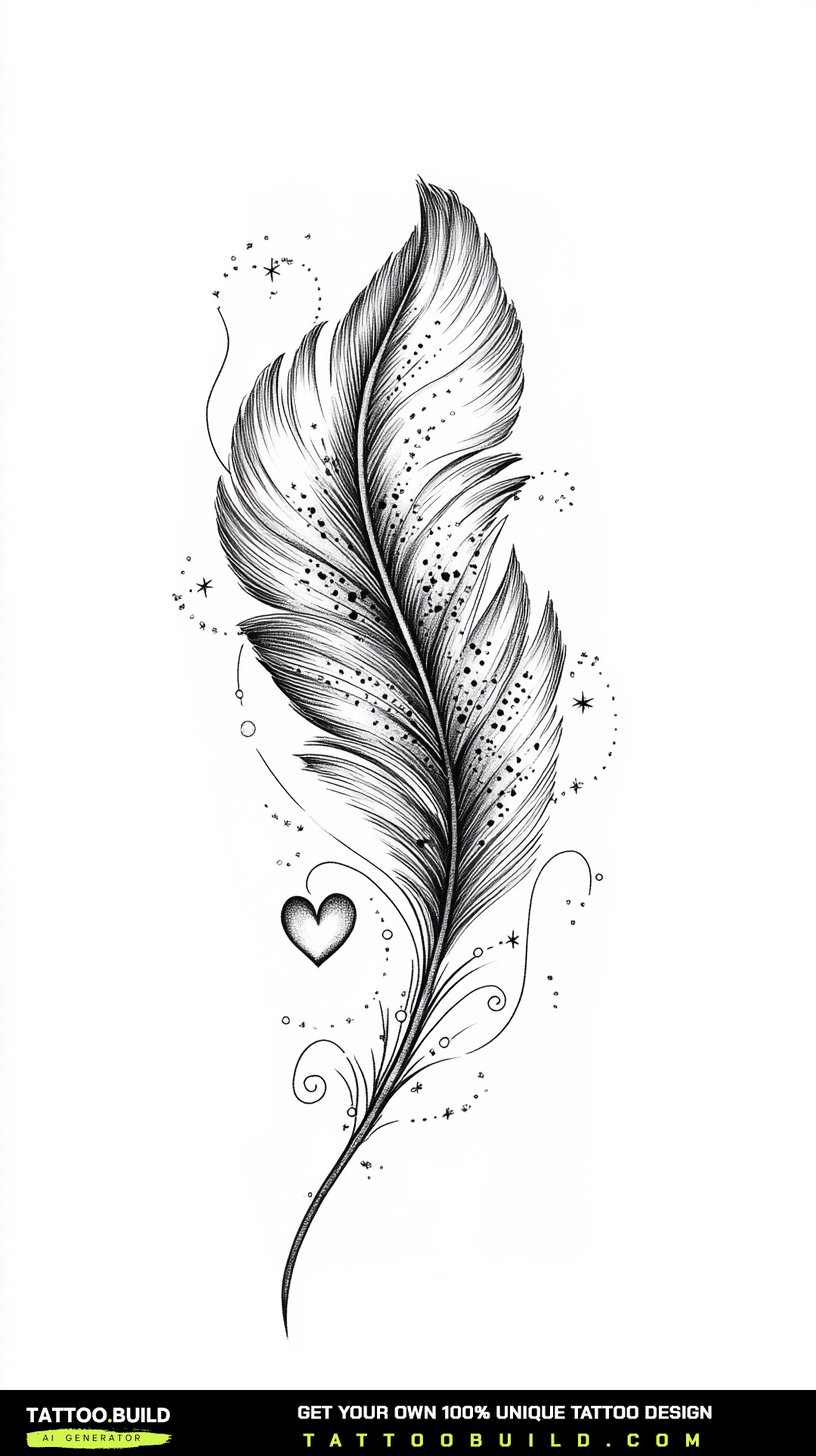
This is the most requested version and the most fragile. A single-needle feather is drawn with hairline strokes for the barbs and a slightly heavier line for the quill.
It looks stunning for the first few years. Then the lines soften, and barbs drawn too close together can begin to merge into a grey mass.
If you want fine-line, ask the artist to leave real space between the barbs and to keep the design at least three inches long. Anything smaller and the detail has nowhere to go.
I would also avoid placing fine-line work on the hands, fingers or feet — those areas turn over skin fastest and blur the soonest.
2. Watercolour Ribbons with Black Linework
Watercolour suits this subject because the ribbon can bleed past its outline the way real fabric catches light.
The version that lasts keeps a black or dark-grey structural line under the wash. Pure watercolour with no anchor line tends to soften into a bruise-coloured patch over time.
Ask to see healed photos, not fresh ones. Any artist who works in this style regularly will have them, and the watercolor tattoo ideas gallery gives you a sense of what a well-built one looks like.
Expect this style to need a touch-up sooner than a traditional piece — usually somewhere in the five-to-ten-year range, depending on sun exposure.
3. Minimalist and Wrist-Sized Designs
A minimalist version reduces the whole idea to a curved quill and a single ribbon loop. No barbs, no shading, no colour.
These are the easiest to place and the easiest to hide, which matters to people who work in uniform or in clinical settings.
The trick with a small design is to reduce the number of elements, not to shrink the same drawing. If you are drawn to this direction, the minimalist tattoo ideas collection is worth a scroll first.
A small tattoo with too much detail is the single most common regret I hear about.
4. Feathers That Break Into Birds
The barbs at the tip of the feather dissolve into a small flock — usually three to seven birds, rising away from the ribbon.
It is the most literal reading of the design: something left, something was released. Some artists find it overused; most clients love it anyway.
Keep the birds simple. Detailed birds at that scale become blobs within a few years, while soft silhouettes stay clean.
Odd numbers of birds tend to compose better than even ones, and staggering their heights reads as flight rather than as a row.
5. Black and Grey with Heavy Shading
This is the version I recommend most often to people who want the tattoo to look the same in twenty years.
The feather is built with real weight — a solid quill, deep shadow between the barbs, and the ribbon shaded rather than coloured.
Because there is no colour to fade, the design ages by softening rather than by changing hue. Grey wash also suits the grey brain-cancer ribbon without any extra explanation.
Every artist I have asked about longevity says the same thing: contrast survives, delicacy does not. That is as true here as it is for the strength tattoo ideas for women people bring in for the same reasons.
6. Names, Dates and Script Additions
Adding a name or a date turns a symbolic tattoo into a specific one, and it is the change people most often make on the day.
Keep the text small and set it along the quill or under the ribbon tail rather than across the feather. Script laid over linework fights it.
Proofread the spelling and the date twice with the stencil on your skin, in a mirror, before any needle touches you. Artists check, but the responsibility is yours.
For a parent, the memorial tattoo ideas for mom page has layouts where the text is integrated rather than added on.
7. Full-Length Spine, Ribcage and Back Pieces
At full scale the design changes character. A spine-length feather with a ribbon winding through it becomes an architectural piece rather than a small tribute.
Large work also gives the artist room to do the thing that makes these designs beautiful — vary the barbs, break some, curl others, let the ribbon pass behind the feather and reappear.
Budget realistically. A detailed spine piece is usually several sessions, and the spine is one of the more uncomfortable places to sit for.
If you have never sat for long work before, start with a forearm version of the same design and see how you handle two hours.
Variations Worth Considering
If the standard feather-and-ribbon layout is not quite right, these are the adaptations that come up most.
Infinity Loops and Heartbeat Lines
Running the ribbon tails into an infinity symbol, or threading an ECG line through the quill, both give the design a second layer without adding clutter.
The heartbeat version reads especially well for someone still in treatment rather than as a memorial.
Matching and Family Sets
Two mirrored feathers, one on each person, with the ribbon continuing across both is a common request among siblings and close friends.
Design them together and tattoo them in the same session if you can, so the linework matches. The same logic applies to the paired semicolon tattoo ideas people often get alongside these.
Faith, Florals and Added Symbols
A small cross, a set of forget-me-nots, or a lotus tucked at the base of the quill all sit comfortably beside a ribbon.
One added symbol is usually enough. Two starts to look like a collage, and the ribbon loses its role as the focal point.
Placement, Sizing and Aftercare
Forearm, outer upper arm, shoulder blade and calf are the placements that hold detail longest, because the skin there moves and sheds less than on the hands or feet.
For a feather, give the design at least three to four inches of length if it has barbs, and five or more if birds are involved. Behind the ear and on the wrist, drop the detail rather than the size.
On healing: keep it clean, keep it out of the sun, and follow your artist’s instructions over anything you read online, including this page. The Mayo Clinic overview of tattoo risks covers the warning signs — spreading redness, swelling, pus or fever — that mean you should see a doctor rather than wait it out.
Ink allergies are uncommon but real, and red and yellow pigments are the ones most often implicated; the FDA consumer guidance on tattoo safety is worth reading before you commit to a colour ribbon. If you have a history of pigment reactions, ask for a patch test.
Sunscreen is the single highest-return thing you can do for a coloured ribbon. Nothing else comes close, and it matters most in the first few years.
Common Mistakes and What to Do Instead
These are the ones I see repeatedly, in roughly the order they cause regret.
- Choosing the colour by preference rather than by meaning. A pink ribbon on a tribute to someone who had leukemia will be read as breast cancer by nearly everyone who sees it.
- Cramming a full-detail feather into a two-inch space. Reduce the elements instead — fewer barbs, no birds, thicker lines.
- Booking on style rather than on portfolio. An artist who is brilliant at bold traditional work may not be the right hand for a single-needle feather.
- Skipping the stencil check. Look at the placement in a mirror, standing as you normally stand, before you agree to it.
- Adding names during the appointment. Text decided on the chair is the most common thing people later want covered.
If none of the drawings above is quite it, two directions usually help: browse the wider women’s feather tattoo ideas for feather shapes you can borrow, or look at hope tattoo ideas if the ribbon feels too clinical for what you want to say.
Frequently Asked Questions
What does a cancer ribbon feather tattoo mean?
It usually combines two ideas: the awareness ribbon names a specific cancer, and the feather stands for freedom, resilience or the spirit of a person. Together they most often read as a tribute — to someone lost, to someone still in treatment, or to the wearer’s own recovery. The exact meaning is personal, and many people never explain it beyond the colour. There is no single fixed interpretation, which is part of why the design has stayed popular.
Which ribbon colour should I choose?
Match the colour to the cancer you are honouring: pink for breast, teal for ovarian, gold for childhood cancers, orange for leukemia, grey for brain, dark blue for colon. Lavender is the general choice when you want to represent all cancers or more than one. If you are unsure, a black-outlined ribbon with no colour is a legitimate option that ages better than any pigment. Check a reputable reference before you commit, because the colours are widely recognised and hard to explain away later.
How much does a cancer ribbon feather tattoo cost?
Price depends far more on size, detail and your artist’s hourly rate than on the subject. A small wrist or ankle version is typically a shop-minimum piece, while a detailed forearm design usually runs a couple of hours. Full spine or back pieces are multi-session work and should be quoted as such. Ask for a written estimate at consultation, and treat an unusually cheap quote for detailed work as a warning sign rather than a bargain.
Does the feather part fade faster than the ribbon?
Often, yes — thin barbs and hairline detail soften before a solid coloured ribbon does. Bright yellows and light lavenders are the pigments that tend to fade first, so a gold ribbon may need attention before the feather does. Sun exposure is the biggest single factor for both. Most detailed pieces benefit from a touch-up somewhere in the five-to-ten-year range, though this varies a lot by skin, placement and habits.
Can I get this tattoo during or right after cancer treatment?
This is a question for your oncology team, not for an artist or a website. Treatment can affect healing, immune response and skin condition, and many artists will ask for medical clearance before tattooing someone in active treatment or recently finished. Radiated skin and areas near surgical sites usually need to be avoided or approached with specific advice. Ask your doctor first, then bring their answer to the consultation.
Quick Summary
- Let the ribbon and the feather share structure — thread one through the other rather than placing them side by side.
- Pick the ribbon colour by what it represents, not by what you like; a black outline is the safe, long-lasting alternative.
- Fine-line looks best on day one; black and grey with real contrast looks best in twenty years.
- Give a barbed feather at least three to four inches, and more if birds are involved.
- Reduce detail for small placements instead of shrinking the same drawing.
- Proofread names and dates on the stencil, in a mirror, before the first line goes in.
- Sunscreen and shade do more for a coloured ribbon than any aftercare product.
- Ask your medical team before tattooing during or shortly after cancer treatment, and see a doctor for any sign of infection.