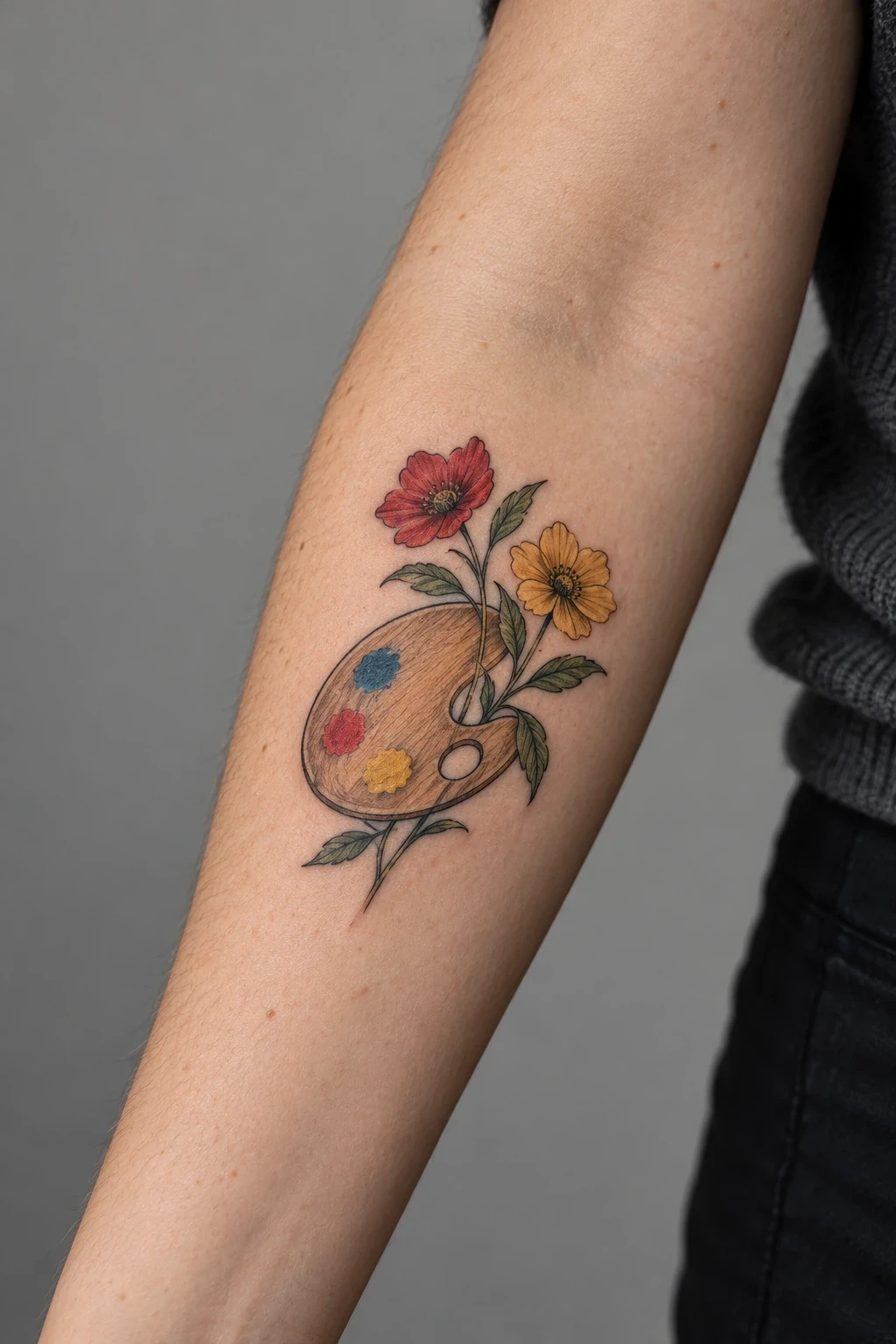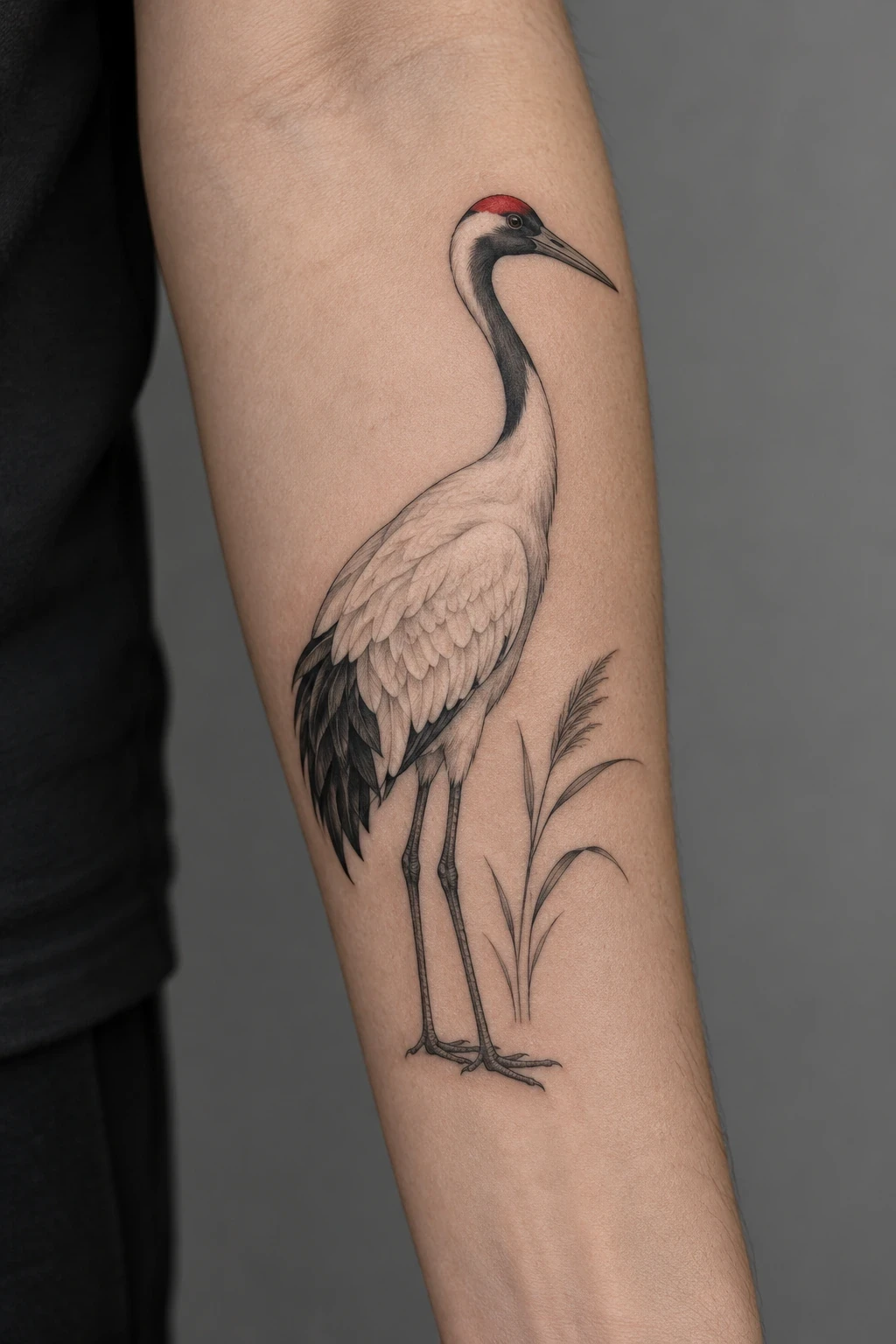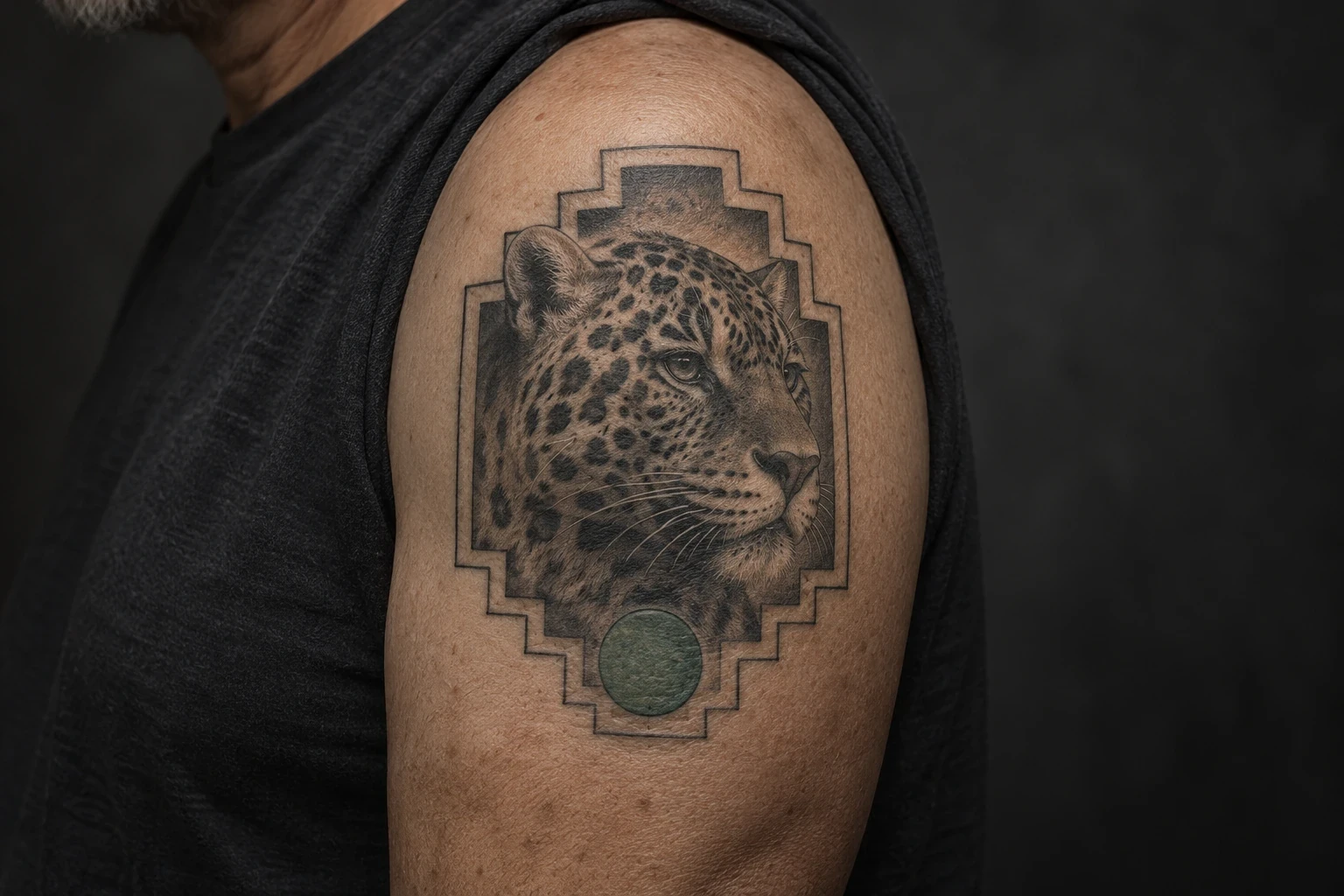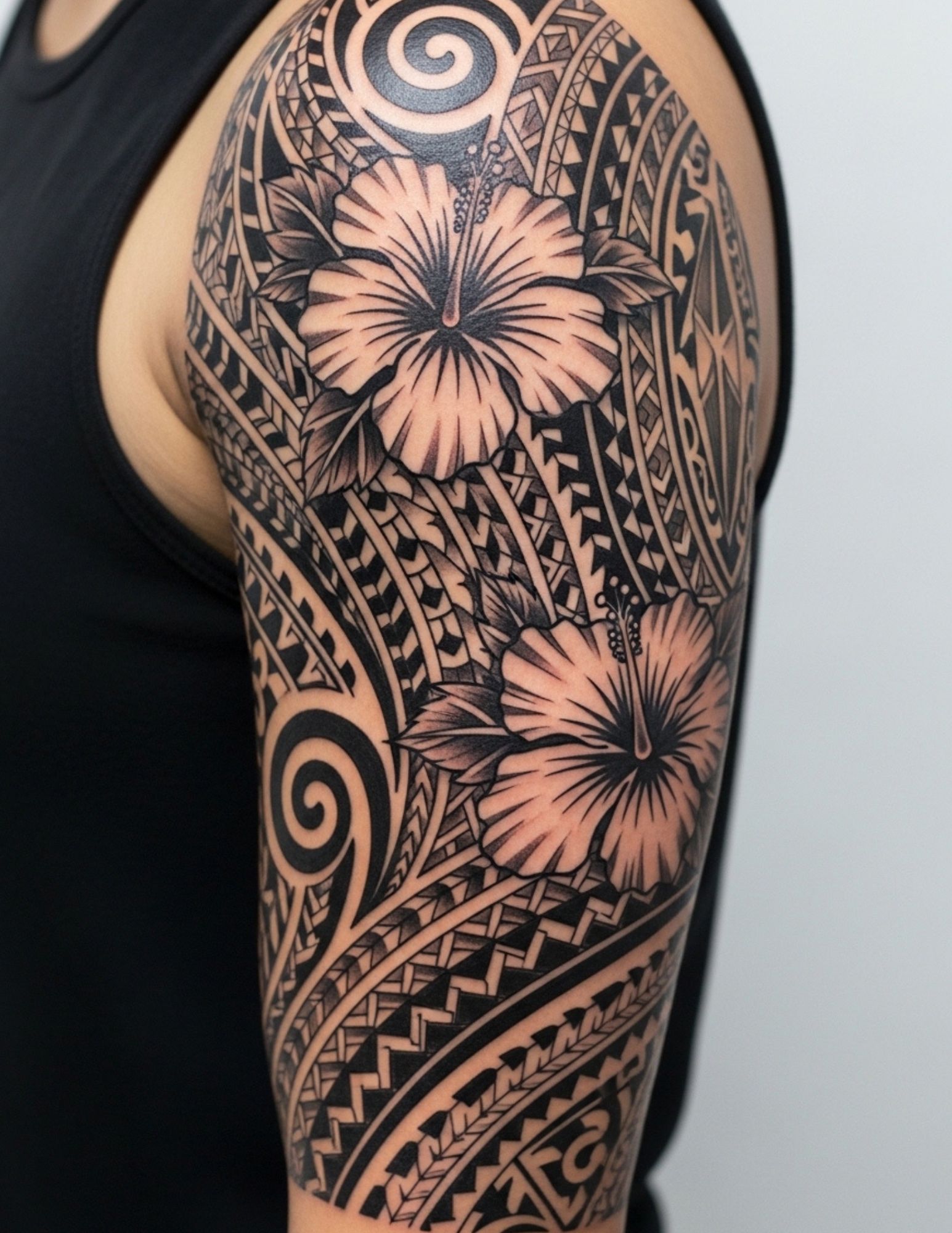
A yoga tattoo can mark the part of practice you return to: a familiar posture, the mat you unroll, time spent paying attention, or a personal reminder to pause. Start with that connection before choosing a symbol.
These 24 yoga tattoo ideas move from pose silhouettes to practice objects and abstract nature motifs. There are exactly 24 separate design concepts below, plus a separate editorial hero image.
Image disclosure: Every image is an AI-generated concept illustration, not real or healed client work. Pose drawings are artistic references, not exercise instructions or demonstrations of correct technique. Ask a tattoo artist to redraw your chosen concept for your body and intended size.
Choose a connection before choosing a symbol
The National Center for Complementary and Integrative Health describes yoga as a complex practice rooted in Indian philosophy, with more to it than physical postures alone. Its overview distinguishes postures, breathing practices and meditation. That context matters when deciding what you want a tattoo to represent. Source checked 8 November 2026.
A pose can refer to your own practice without claiming to represent yoga as a whole. A mat or journal can recall an ordinary routine. A flower, moon or line can carry a personal association, but these decorative motifs do not each have one universal yogic meaning.
This collection avoids lettering and sacred-script designs. If you want an Om symbol or a Sanskrit phrase, research its context and have a qualified reader check the exact artwork before using it. Our separate Om tattoo ideas article offers a more focused starting point. Do not add unfamiliar script simply to make a pose illustration look spiritual.
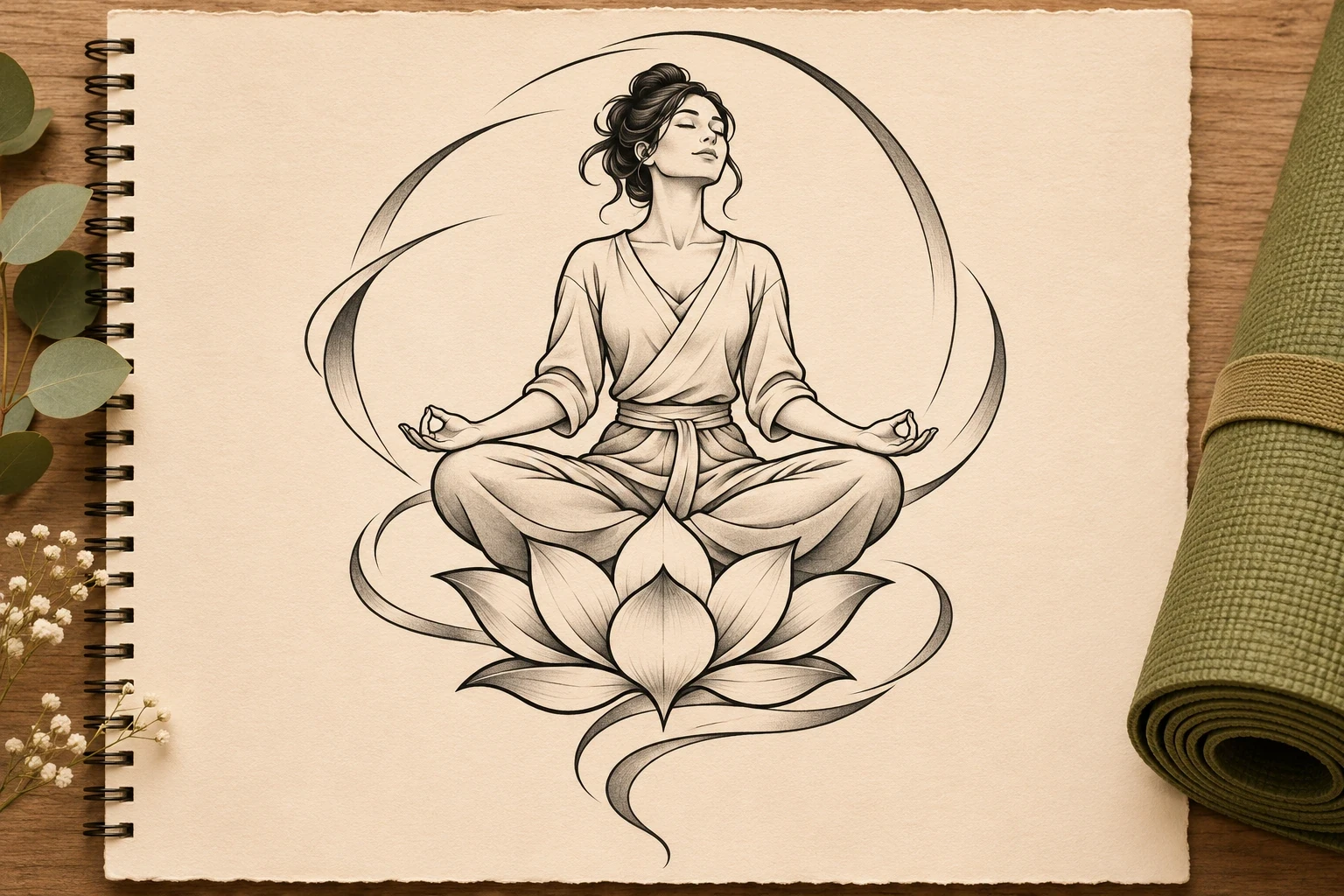
1. Seated meditation silhouette
A crossed-leg figure creates a compact, balanced shape. The hands and knees provide small breaks in the outline while the upright torso gives the design a clear center.
Ask the artist to preserve open spaces between arms and body. A blank face can keep the image anonymous; a photograph of your own seated position can provide a more personal reference.
2. Tree pose silhouette
The standing leg supplies a strong vertical axis, with the raised arms echoing it above. The bent leg makes the asymmetry recognizable without surrounding the figure with extra symbols.
Keep the supporting foot and bent-leg outline easy to distinguish. Choose the pose because it matters to you, rather than treating balance in the illustration as a promise about life or health.
3. Warrior II in a wide frame
Outstretched arms make this a broad composition with a clear horizontal line. The wide stance and bent front knee create a different rhythm from the more upright silhouettes.
A horizontal space may suit this drawing better than a very narrow placement. Check both hands, the knee direction and the connection of each leg before approving the artist’s stencil.
4. Mountain pose with a ground line
An upright figure and short baseline make a quiet emblem. With little movement in the outline, the proportions and spacing become the main visual decisions.
Let the figure remain simple instead of adding many tiny facial details. You might connect it with showing up for practice, but that is a personal interpretation rather than a fixed meaning.
5. Chair pose in charcoal
Bent knees and lifted arms give the silhouette a diagonal energy. The shape can remain recognizable with a few large areas of black and clear gaps around the limbs.
Ask the artist to check the outline at the proposed size. Preserve the difference between the arms and head so the top of the design does not become one solid block.
6. Downward dog outline
The inverted V supplies a strong outer shape, with the head set below the shoulders. Hands and feet anchor the composition along a shared lower line.
Check the complete limb count and the route from shoulder to wrist. This is a tattoo concept rather than a cue for performing the posture; use an appropriate teacher for practice questions.
7. Wide stance with an upward reach
A wide base, bent knee and one raised arm make a silhouette that opens sideways. The tilted torso creates a different visual balance from a seated or symmetrical figure.
Keep the reaching hand distinct from the head and upper body. Ask for a redraw that retains the open triangle-like spaces instead of squeezing the figure into a narrow strip.
8. Resting child pose
A folded figure close to the ground gives this design a low, gently curved profile. Extended arms can carry the drawing outward without adding another decorative element.
Make sure the head, back and hands remain readable as separate parts. If the posture reminds you of rest, explain that connection in the brief without presenting it as a universal symbol.
9. Boat pose with bent legs
The raised legs and torso create an open center, while the forward-reaching arms repeat the horizontal direction. Bent knees keep the silhouette compact.
Check that both legs can be followed from hip to foot in the final drawing. Leave room around the hands so they do not appear fused to the knees.
10. Bridge pose silhouette
An arched torso sits between grounded shoulders and bent legs. The gap below the body is an important part of the composition, not an area to fill with extra shading.
Ask the artist to preserve that negative space and a coherent shoulder outline. A simplified figure can work as a memory of practice without needing anatomical detail throughout.
11. Hands-and-knees silhouette
The long curve of the torso becomes the main gesture, supported by a stable shape below. It offers a lower, wider outline than the straight arms of a standing pose.
Trace each arm and leg through the drawing before approving it. Keep the pose identifiable without adding a second overlapping figure that would confuse the limb arrangement.
12. Standing forward fold
A forward-folding figure creates a tall outer outline with a curved upper end. Hands near the shins make the composition more contained than an arm-reaching posture.
Keep the head and knees distinct in the silhouette. The artist can adjust clothing lines and spacing for clarity while retaining the overall gesture you recognize.
13. Open lotus outline
Broad petals give the flower a readable center and a rounded upper edge. A short stem keeps the drawing from becoming a full botanical composition.
Choose petal spacing before adding fine shading. For more flower-led arrangements, compare our lotus flower tattoo ideas; do not assume every lotus drawing carries the same cultural or personal meaning.
14. Rolled mat with a leaf
The spiral end of a rolled mat makes an ordinary practice object recognizable. A small leaf gives the lower edge a contrasting organic shape.
Check the roll and the outer mat edge as one coherent object. This can refer to the routine of beginning practice without using a pose or religious symbol.
15. Two support blocks
Stacked rectangular forms offer a graphic alternative to human figures. Their angled relationship provides depth while the broad surfaces leave room for restrained grey shading.
Ask for consistent corners and clear contact between the blocks. If support is the idea you want to carry, describe it as your own association with these objects.
16. Looped practice strap
A loose oval and small buckle create a flowing design with one recognizable functional detail. The strap can remain open and light rather than becoming a heavy band.
Trace both fabric edges through the loop and check the buckle connection. Avoid reducing the hardware so far that it becomes a stray dark mark.
17. Bolster and folded blanket
The cylindrical cushion and flat blanket create two contrasting forms. Their soft edges can make a practical still life feel more relaxed than a sharply geometric emblem.
Keep the cushion seam and blanket folds secondary to the overall shapes. Bring a photograph if you want the drawing to resemble equipment from a particular studio or home practice.
18. Paired breathing arcs
Two opposing curves inside an open circle provide an abstract direction. The blank center can carry as much of the composition as the lines around it.
You can use the curves as a personal reminder to pause, but they are not a standardized breathing symbol or a timed exercise. Ask the artist to keep the gaps intentional and even.
19. Crescent above a flowing line
A thin crescent and low floral curve combine a contained shape with a longer botanical gesture. The separation above the flower keeps the composition airy.
Decide whether the moon has a personal connection or is simply part of the composition. It does not need an invented yogic explanation to belong in your own tattoo brief.
20. Sun at the horizon
A half-disc and sparse rays create a simple landscape-like emblem. The straight horizon gives the rounded sun a clear baseline.
Choose which rays are necessary before shrinking the artwork. A connection with morning practice is one possible personal reading, not a claim that this exact drawing is a traditional yoga symbol.
21. Unfurling fern
A curling tip gives the plant a visible starting point, with smaller leaves following the stem. It can add a natural direction to a collection otherwise dominated by figures.
Keep the spiral open enough to distinguish it from a filled circle. Explain whether the plant relates to a place, memory or personal idea so the artist has a reason for the details.
22. Three balanced stones
Three smooth pebbles make a small stacked composition with a broad lower base. Their separate outlines keep the forms identifiable even with soft shading.
Ask the artist to check where each stone rests on the next. Treat any connection with steadiness as your interpretation, rather than evidence of a universal spiritual meaning.
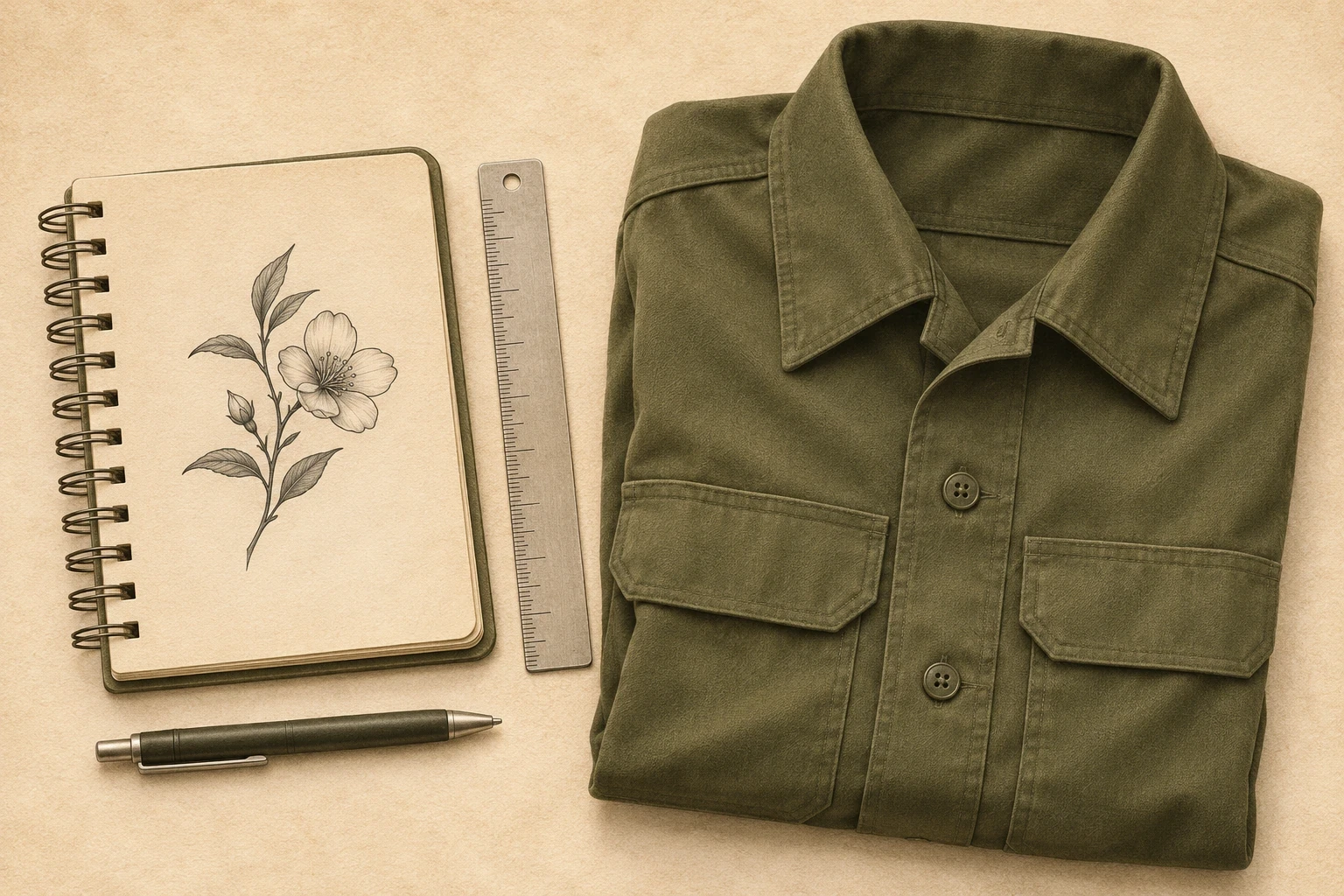
23. Open practice journal
A blank book and leaf-shaped bookmark point toward reflection and record-keeping. Flowers frame the open pages, while the center fold gives the drawing a clear axis without requiring words.
Keep the page edges and bookmark connection legible. If your practice includes a journal, a detail from your own notebook can make the concept feel less generic.
24. Flower with eight dot accents
Eight separated dots in two arcs give this floral composition a repeated rhythm. The open flower and leafy stem remain the main subject, with the dots extending the design sideways.
Confirm all eight dots and their spacing in the stencil. The number can refer to something you choose; this floral arrangement is not a complete diagram of yoga philosophy.
Match the placement to the shape
Long upright silhouettes need a different space from a wide Warrior II outline. Compare the design’s height, width and negative spaces on a full-size paper print before settling on a body location. A small image on a screen can hide crowded hands or overlapping lines.
For a discreet direction, start with the broadest shapes and remove decorative detail before reducing the entire drawing. Our minimalist tattoo ideas can help you compare how much information a compact design needs.
Prepare a useful artist brief
Bring your preferred concept, a short explanation of its connection to your practice, the proposed size and a photograph of the intended placement. For a pose, add a reference photograph you have permission to use. Ask the artist to check the anatomy and simplify it into a coherent tattoo drawing.
Review the complete silhouette before approving small shading details: one head, two arms, two legs, clear joints and intentional gaps. For objects, trace straps, seams and folds. For plants, follow each leaf to its stem. For a repeated motif, count the marks in the actual stencil.
Plan around your appointment
Ask your tattoo artist how the placement and your usual clothing or equipment affect their aftercare instructions. If you have a skin condition, healing concern or question about returning to exercise, ask an appropriate clinician rather than using a gallery image as medical guidance.
Frequently asked questions
Does a yoga tattoo need an Om symbol?
No. A personally meaningful pose, practice object or abstract design can stand on its own. If you choose a sacred symbol, research its context rather than adding it as filler.
Which idea works without a person in the design?
The mat, blocks, strap, bolster, flower, journal and abstract line concepts all avoid a human figure. Choose the object or shape that has an actual connection for you.
Can I combine two of these concepts?
Yes, but choose a main subject. A small leaf beside a mat can remain clear; several poses, objects and symbols in a tiny space may lose their separate outlines. Ask for a single coherent composition.
Are the pose images instructions for practising yoga?
No. They are AI-generated artistic concepts for discussing a tattoo. A qualified teacher can help with practice questions, and the tattoo artist should check the final drawing independently.
Do these designs have fixed meanings?
The meanings discussed here are possible personal associations. A tattoo does not establish a level of practice, a qualification, a religious commitment or a health outcome.