A men’s neck tattoo is one of the most visible and personal pieces you can commit to, and the wrong idea in that spot will follow you into every job interview, wedding photo and coffee run for years. In my experience helping friends narrow down neck concepts, the difference between a piece people compliment and one people quietly wince at usually comes down to placement, weight and style — not the idea itself.
I have spent a lot of time looking at neck work in shops, on portfolios and in real life, and the patterns that hold up over time are rarely the busy, flashy ones. The neck rewards restraint. A single strong shape or one crisp line often reads better than a crowded scene, because you are working with a curved, moving surface that most people see in three-quarter view rather than head-on.
This guide walks through 31+ men neck tattoo ideas organised by style, plus the pain, healing and placement realities I wish I had known before my own first neck-adjacent piece. If you want a broader gallery of options first, our full men neck tattoo designs collection pairs well with this article.
Every artist I have asked has said the same thing: come in with a mood, not a Pinterest board of thirty screenshots. Use the ideas below to figure out which direction feels like you, then take two or three to a consultation.
Which Neck Tattoo Style Is Right for You?
Before we dive into individual designs, here is a quick comparison of the four style families most men choose from for a neck piece. Use it to narrow your shortlist before you start booking consultations.
| Style | Visual Weight | Ages Well? | Best For |
|---|---|---|---|
| Fine-line / minimal | Light, subtle | Usually softens by year 5 | First neck piece, discreet placements |
| Traditional / old-school | Bold, high-contrast | Very well when done properly | Statement pieces, symbolic designs |
| Blackwork / ornamental | Heavy, graphic | Excellent | Full side or throat coverage |
| Japanese / illustrative | Medium to heavy | Very well | Continuations from chest or sleeve |
Why the Neck Is Different from Any Other Placement
The neck is not just another patch of skin. Compared to an arm or a chest, it sits in constant motion, gets a lot of sun, and — most importantly — is almost impossible to fully cover with a collar unless you live in turtlenecks. Every tattoo you commit to here has to work as everyday clothing.
The skin itself behaves differently, too. It is thinner over the sides of the neck, sits directly over major muscles and vessels, and heals a little quicker but with more swelling than most areas. That combination means good artists usually push clients toward simpler designs on their first neck piece.
Neck ink also carries social weight in a way that a shoulder tattoo does not. That is neither good nor bad, but it is worth being honest with yourself about how visible pieces are perceived in your industry, family and city. If you are unsure, the tattoo pain chart and a quick chat with your artist about coverability are both cheap sanity checks.
One more thing worth naming: neck tattoos are usually painful. The area rates highly on most painful tattoo spots guides for a reason. Front of the throat and behind the ear are typically the sharpest zones, while the side of the neck is closer to a manageable sting for most people I have talked to.
31+ Neck Tattoo Ideas for Men (Organised by Style)
Traditional and Old-School Neck Pieces
Traditional work — think dagger, swallow, panther, anchor — is one of the few styles I would confidently recommend for a first neck tattoo. The thick outlines and solid black fill were designed to sit under skin that ages, sweats and moves, which is exactly what your neck does.
The most common traditional neck placements I see on men are a swallow tucked under the jaw, a small dagger running along the side of the neck, or a heart with banner just below the ear. These read as intentional statements rather than random ornaments.
Bold lines and simple silhouettes are what make traditional work stay legible for decades. If you love a busy design, honour the tradition by keeping the frame clean and letting the imagery breathe.
Fine-Line and Minimalist Neck Tattoos
Fine-line work is the polar opposite of traditional and it has become the default request for men who want something subtle. A single-line mountain range, a hairline script date or a small geometric mark just below the ear are all popular.
The honest catch: fine-line neck tattoos usually soften and blur faster than heavier work. When I compare five-year-old fine-line pieces to five-year-old blackwork on the same person, the difference is obvious. Plan on a light touch-up at year three or four if you go this route.
If you like the idea of minimal ink but want it to hold up, ask your artist about a slightly thicker line weight than what looks perfect on paper. That extra fraction of a millimetre is the difference between crisp at ten years and faded at four.
Blackwork and Ornamental Neck Coverage
Blackwork covers everything from a single solid shape to full sides of the neck packed with patterns, lace and negative space. When it is done well, it is arguably the best-ageing style you can put on your neck. When it is done poorly, it is also the hardest to fix.
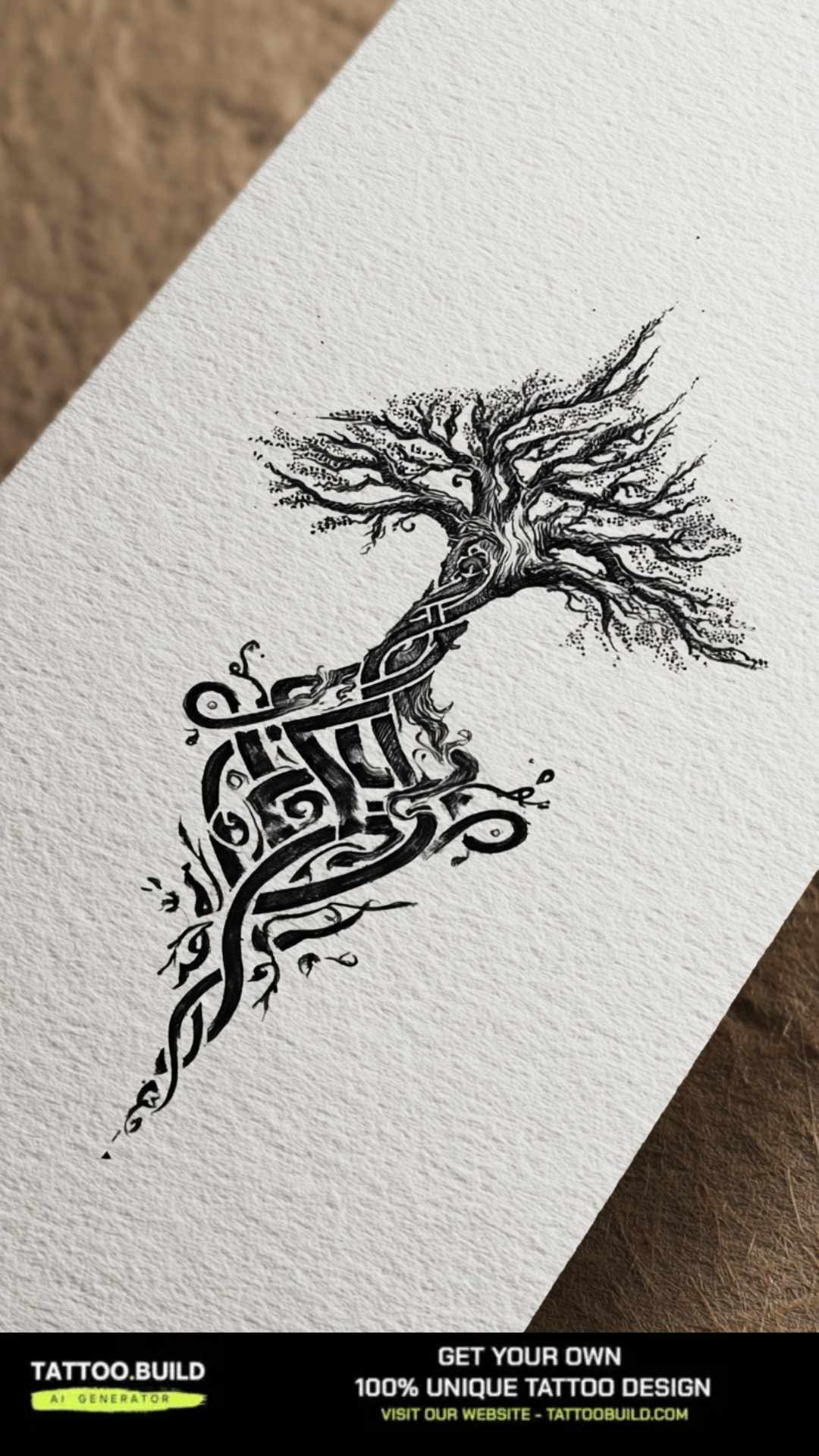
Ornamental blackwork — mandala-adjacent patterns, filigree, dotwork borders — is a common choice for men who want density without imagery. It flows naturally around the curve of the neck and pairs well with existing shoulder or chest work.
If you already have a heavy sleeve, blackwork is often the only style that will visually match it. Ask your artist to design the neck piece so the negative space aligns with the negative space in the sleeve — that continuity is what separates a good body plan from a random collection of tattoos.
Japanese and Illustrative Neck Panels
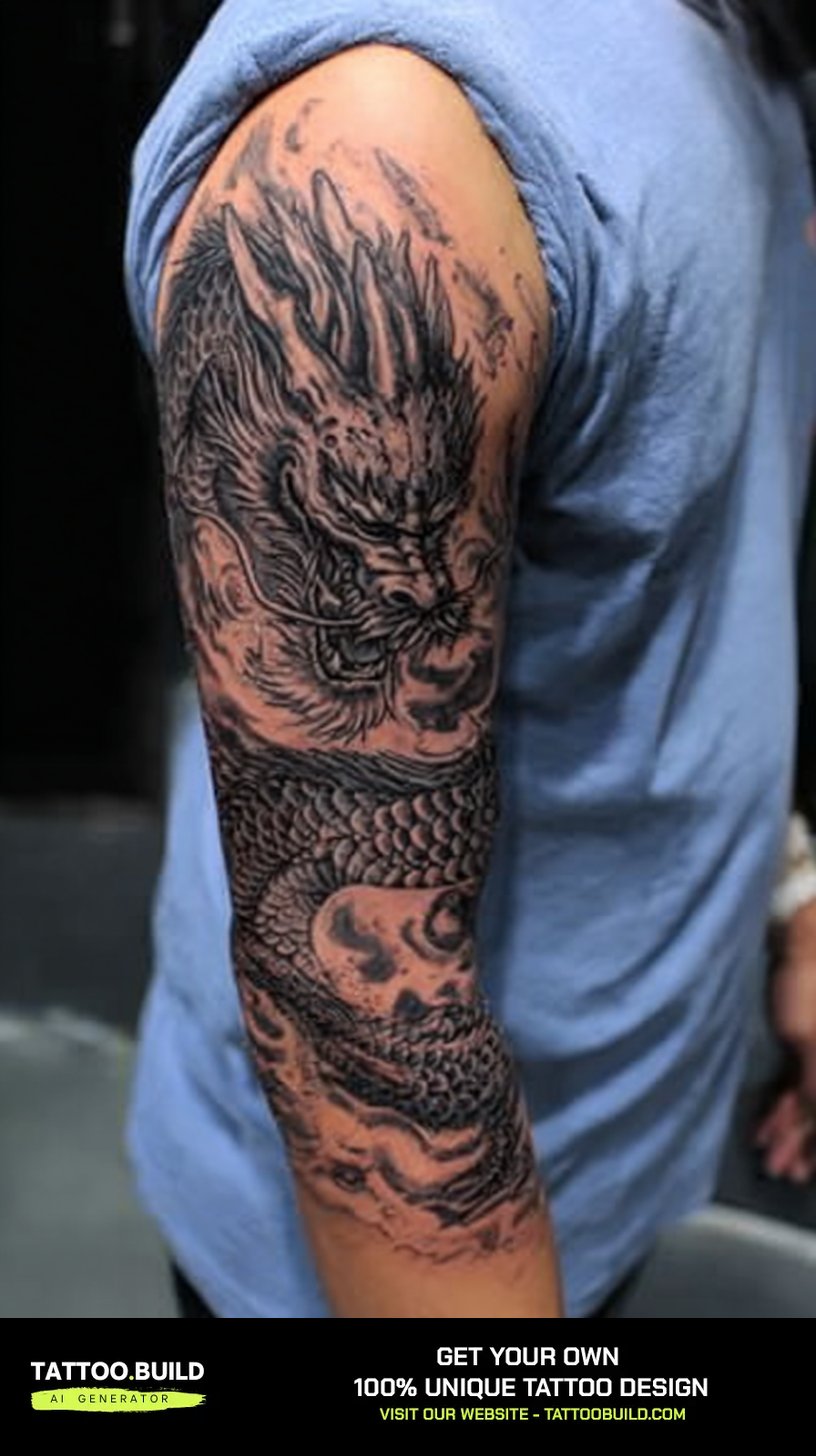
If you are wearing Japanese work anywhere else, the neck can be a beautiful continuation piece rather than a standalone. Wind bars, wave crests and cloud filler are all designed to wrap around limbs and joints; the neck falls easily into that vocabulary.
For a first piece, I would rarely recommend starting your Japanese collection on the neck. But if you already have a chest panel or half sleeve, extending it up the neck is one of the cleanest ways to add impact without booking another huge session.
Full colour Japanese neck work exists but is uncommon. Most men I know who wear Japanese pieces there keep the neck black-and-grey, letting the colour live on the chest and arm where it fades more slowly.
Script, Lettering and Small Symbols
Script and lettering are the most requested and, in my experience, the most regretted neck tattoo choices. That is not a reason to skip them — it is a reason to pick your word carefully and to pick your artist even more carefully.
The rules I have picked up: keep it to one word or a very short phrase, avoid trendy fonts, and always have a lettering specialist do it rather than a generalist. Bad kerning is impossible to hide on a curved surface.
Small symbols — a Roman numeral, a compass point, a single letter — are lower-risk versions of the same idea and often ageing better because they need less precision than long words do.
Portraits and Realism
Realism on the neck is a big commitment. The size limits, the movement and the skin quality all conspire against fine detail, and portraits especially can age unevenly on that placement.
When I see realism neck work that has held up, it is almost always black-and-grey, not full colour, and it uses simplified value ranges rather than photorealistic detail. Think a stylised eye or a small animal head rather than a photo-accurate face.
If you are set on realism, budget for one solid touch-up at years three, six and ten. That maintenance cadence is what keeps the piece looking intentional instead of faded.
Tribal, Polynesian and Geometric Work
Tribal and Polynesian pieces are one of the most historically appropriate placements for a neck tattoo. They were designed to be worn openly, they scale to the natural shape of the neck, and they age beautifully because they are almost entirely solid black.
If you are drawn to this style, please spend time researching before you book — many tribal patterns carry specific cultural meaning and should not be worn casually. A respectful artist will steer you toward a design that is either genuinely yours by heritage or is a modern neo-tribal piece rather than a copy of a sacred motif.
Geometric work sits in a similar visual family and has fewer cultural pitfalls. Clean linework, dot shading and symmetrical patterns can wrap the side of the neck in a way that feels ornamental without imitating a specific tradition. Our tribal tattoo ideas roundup is a starting point if you want to see the range.
Behind-the-Ear and Under-Jaw Micro Pieces
Not every neck tattoo has to be a statement. A tiny symbol behind the ear or just under the jawline is one of the most requested “starter” neck placements for men, especially when the client wants something they can grow into or leave as a single piece.
The trade-off is pain: these two spots are among the sharpest on the whole body because the skin sits directly over bone with almost no fat between them. Sessions are quick, so most men tolerate it, but do not expect it to feel like a shoulder.
These pieces are also easy to hide with hair or a collar, which makes them a reasonable compromise if you want the experience of a neck tattoo without the social visibility of a throat piece.
Placement Variations Around the Neck
Where you put the tattoo matters as much as the design. Below are the four placements men choose most often, and what to expect from each.
Side of the Neck
The most common and, for most people, the most flattering placement. It handles medium-sized designs well and is a manageable pain zone for most men. Everything from small script to full ornamental coverage works here.
Back of the Neck
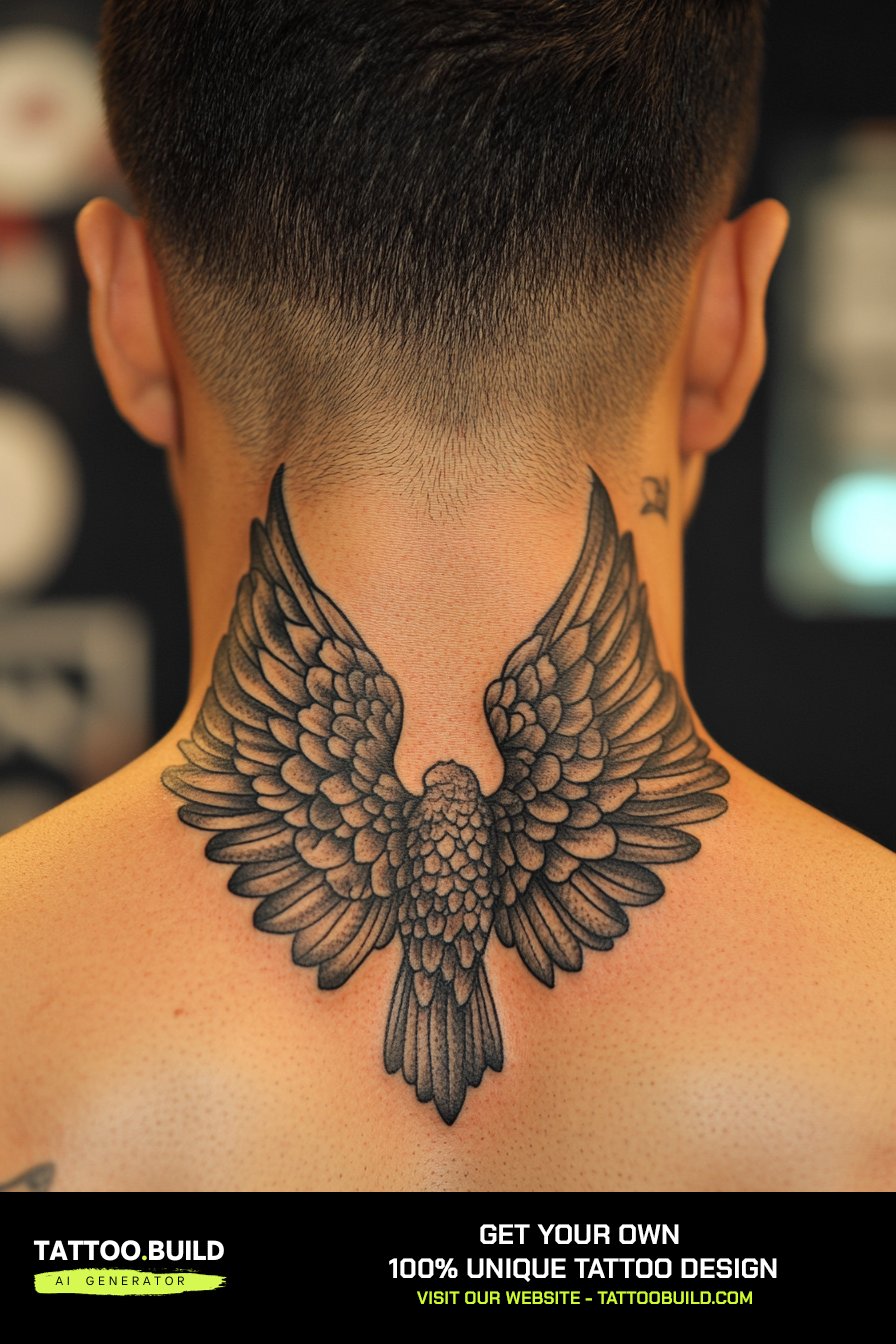
The lowest-visibility neck placement and often the first neck spot people try. A single symbol at the base of the hairline is a classic choice. See our dedicated male back-of-the-neck tattoo guide for more direction here.
Front of the Throat
The boldest neck placement. Reserved, in my experience, for men who already have significant work elsewhere. Pain is sharp, visibility is total, and the skin moves constantly. Only a very experienced artist should touch this area.
Under the Jaw and Behind the Ear
The two “micro” neck placements. Both are easy to conceal with hair or a collar, both are painful, and both suit small, high-contrast designs rather than fine detail.
Aftercare and Best Practices for Neck Tattoos
Neck tattoos heal a little faster than most placements but are much easier to irritate. Every collar, scarf and pillow becomes an aftercare variable, and the constant motion means scabs pull off more easily than they should.
The routine I have seen work: gentle wash twice a day with fragrance-free soap, thin layer of a proper aftercare balm for the first five to seven days, and no direct sun for at least three weeks. Sleep on your back if you can bear it, and keep your hair off the piece.
Avoid the gym for the first week — sweat and friction against the neck are the two biggest reasons neck tattoos heal patchy. For a full breakdown, our tattoo aftercare guide and the tattoo healing stages walkthrough both cover neck-specific quirks in more detail.
If you notice spreading redness, warmth or pus at any point — not the mild redness that is normal for the first two days, but growing redness after day three — see a doctor. This article is a design guide, not medical advice, and neck infections are one of the few tattoo complications where waiting is a bad idea. General tattoo-related infection guidance from the U.S. CDC and the American Academy of Dermatology is worth a read if you are unsure.
Common Mistakes and Still Not Sure?
The mistakes I see most often on men’s neck tattoos: choosing a design that is too small and too detailed for the placement, picking a trendy script font, and going to a generalist artist instead of someone whose portfolio actually features neck work.
A quieter mistake is placement asymmetry. A design that looks great on a flat sketch can sit awkwardly on a real neck if the artist has not adjusted for the natural angle of the jaw and shoulder. Ask to see the stencil in the mirror from multiple angles before you say yes.
If you are still not sure whether a neck piece is right for you, browsing broader galleries can help. Our full tattoo ideas for men collection is a good place to see how neck work reads alongside other placements and to figure out where your first piece should really go.
Frequently Asked Questions
Are men’s neck tattoos still considered unprofessional?
It depends heavily on your industry and city. In creative, trades and hospitality work I have almost never seen it be an issue. In corporate, client-facing finance or legal roles it can still cost you interviews. If you are unsure, a discreet side or back-of-neck placement is a safer first step than a throat piece.
How much do neck tattoos hurt for men?
Most men rate the neck between a seven and a nine out of ten. The side is generally the most tolerable, the front of the throat and behind the ear are the sharpest, and the back of the neck sits somewhere in between. Sessions are usually short, which helps, but nobody I know has called a neck tattoo “easy.”
How long do men’s neck tattoos take to heal?
Surface healing is usually seven to ten days, with full deep healing taking about four to six weeks. Neck skin heals a touch faster than most placements, but it also gets irritated by clothing, sweat and shaving more easily, so it can look patchy for a couple of weeks even when it is healing normally.
Can a neck tattoo be covered up or removed later?
Cover-ups are possible but limited — the neck does not accept dense re-work as well as a shoulder or thigh, and options usually shrink to blackwork or ornamental cover pieces. Laser removal is effective but tends to take more sessions on the neck due to the skin type, and there is a small risk of hyperpigmentation. Both are honest reasons to be sure about your design the first time.
Should a neck tattoo be my first tattoo?
In most cases, no. I would strongly suggest at least one other tattoo before you put anything on your neck, purely so you know how your skin heals and how you handle sustained pain. Artists I trust will often decline a neck piece as a first-ever tattoo for exactly this reason.
Quick Summary
- Traditional, blackwork and ornamental styles age best on the neck; fine-line reads beautifully but often needs a touch-up by year four.
- Side of the neck is the most flexible placement; front of the throat is the boldest and most painful.
- One strong shape almost always beats a crowded scene on a curved, moving surface.
- Book a lettering specialist for any script piece — bad kerning is impossible to disguise here.
- Expect pain in the seven-to-nine range for most men, with behind-the-ear and under-jaw being the sharpest zones.
- Aftercare is the same as any tattoo but harder to protect from collars, hair and sweat — plan around that.
- Consider whether your industry accepts visible neck ink before committing to a throat or side piece.
- Only book a neck tattoo with an artist whose portfolio genuinely features neck work.