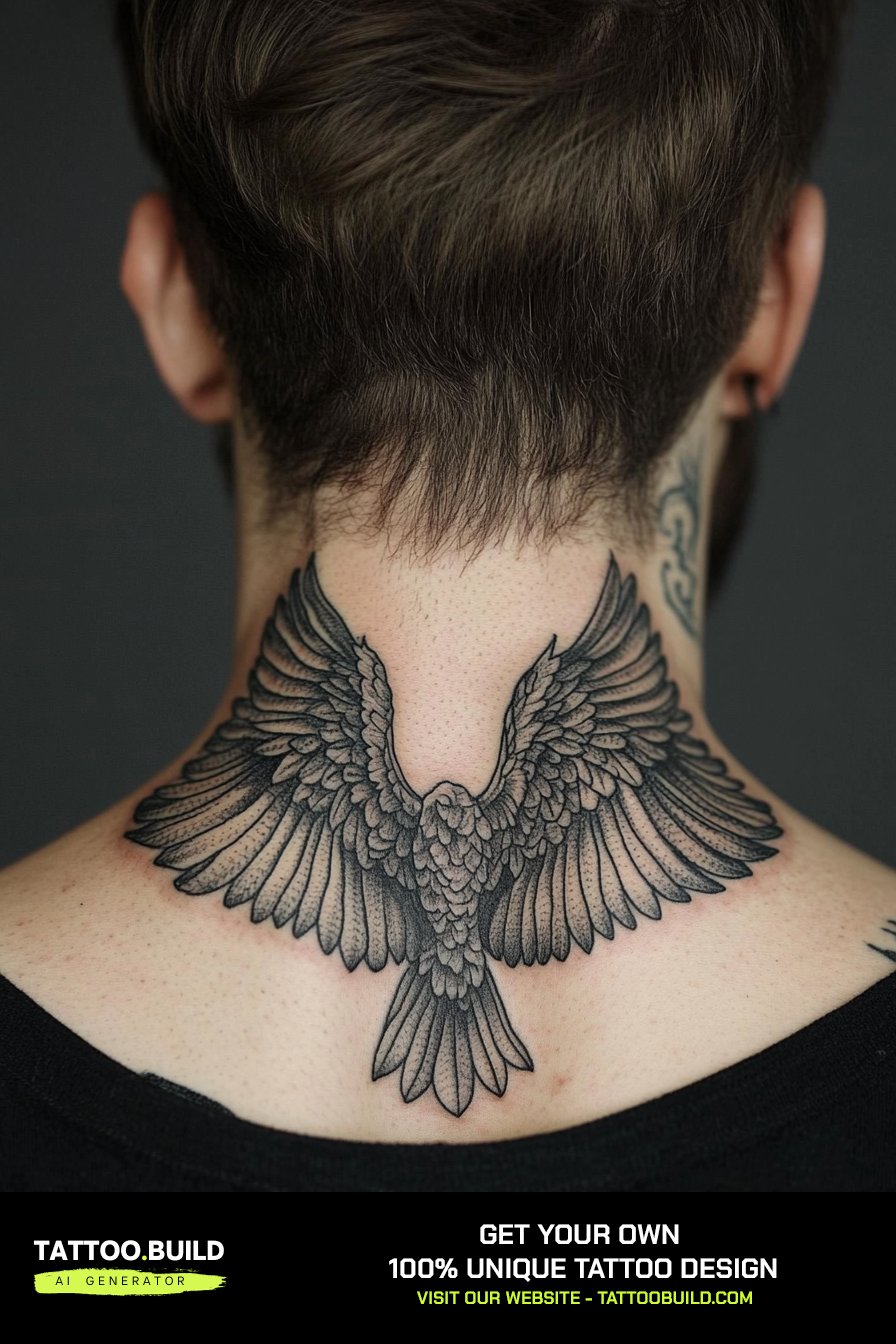
The nape is one of the few places on a man’s body where a tattoo can be a statement one day and completely invisible the next. Grow your hair out an inch and a back of the neck tattoo disappears; get a fade and it becomes the first thing anyone notices.
I have watched a lot of people talk themselves into and out of this placement, and the ones who end up happy almost always decide on the haircut before they decide on the design.
The 27 designs below are grouped by style rather than dumped in a random pile, so you can skip straight to the family you are drawn to – wings, tribal, knotwork, fine line nature, animals, crosses or personal symbols.
If you are still deciding between the nape and the sides of the neck, the wider overview in my guide to men’s neck tattoo designs is worth reading first.
Which Back of the Neck Style Is Right for You?
This is the comparison I sketch out for anyone who asks me where to start. Sitting time assumes a single design, not a session that runs onto the shoulders.
| Style | Typical sitting time | How easy to hide | Best for |
|---|---|---|---|
| Small symbol or lettering | Under an hour | Very easy | A first neck tattoo, or a strict workplace |
| Spread wings / bird | Two to four hours | Moderate | Balancing broad shoulders |
| Tribal or Polynesian panel | Four hours upward, often split | Hard once it wraps | Anyone planning to continue onto the shoulders |
| Celtic knotwork | Three to five hours | Moderate | Heritage pieces that need to age well |
| Fine line nature or geometry | One to three hours | Easy | A subtle look under a grown-out cut |
| Animal realism | Four hours upward | Hard | People happy to book touch-ups later |
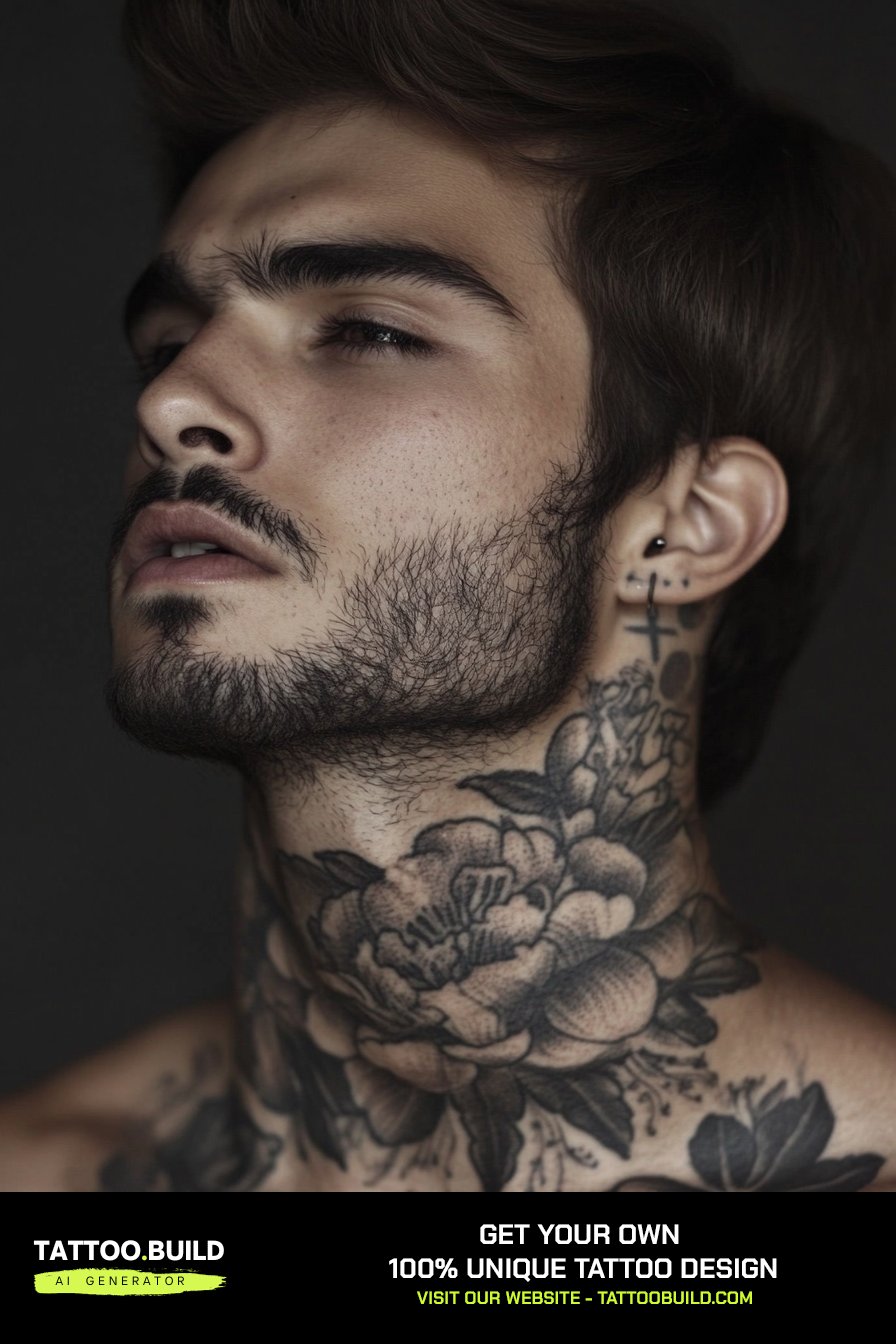
What Makes the Nape Different From Every Other Placement
The back of the neck is not just a smaller version of the upper back. The skin behaves differently, and that changes what works there.
It is thin, it sits directly over bone at the top of the spine, and it moves every time you look down. That combination is why nape tattoos tend to sting more than the same design on a bicep.
In my experience the sharpest part of a nape session is the vertical strip right over the spinous processes – the little bumps you can feel at the base of your neck. If your design crosses that line, expect the tone of the session to change when the artist gets there. My ranking of the most painful tattoo spots breaks down how the neck compares with the rest of the body.
The second difference is exposure. The nape sits under a collar, under a helmet strap, and under whatever hair you have. That is a real advantage for hiding it, and a real problem for healing, because all three rub.
The third is symmetry. The nape is one of the most naturally symmetrical patches of skin on the body, which makes crooked work extremely obvious. Every artist I have asked about this places the stencil twice and checks it in a mirror before starting.
27 Male Back of the Neck Tattoo Designs, Grouped by Style
Each group below covers what the style actually costs you in sitting time, how it ages, and who it tends to suit.
1. Spread Wings and Birds of Prey
Wings are the single most common request I see for this placement, and there is a practical reason for it rather than just a symbolic one.
A pair of spread wings mirrors the line of the trapezius, so the design sits along muscle you already have instead of fighting it. That is why a wing piece flatters broad shoulders and can make narrow ones look wider.
Eagles carry the obvious associations – freedom, vigilance, protection – but the version I like most is the plainer one, where the feathers are rendered in black and grey with no colour and no banner text. It ages better and it does not date.
The practical limit is width. If the wings reach past the outer edge of your neck they will show above almost any collar, so ask the artist to stencil the widest version and the narrowest version before you commit.
2. Tribal and Polynesian Panels
Tribal is the style that has aged best on necks, and I say that as someone who is usually sceptical of it.
The heavy, solid black shapes hold their edges as the ink spreads slightly over the years, which is exactly the failure mode that ruins thin linework on thin skin.
Polynesian and Maori-influenced work comes with an important caveat: authentic patterns carry specific meaning and family associations. If you want genuine Samoan, Maori or Marquesan motifs, find an artist who works within that tradition rather than pulling a pattern off a search results page.
These panels are also the easiest to extend. Most of the tribal necks I have seen started as a nape piece and grew onto the shoulders a year or two later – so tell your artist that up front and let them design the whole map even if you only ink part of it now.
3. Celtic Knotwork and Ornamental Blackwork
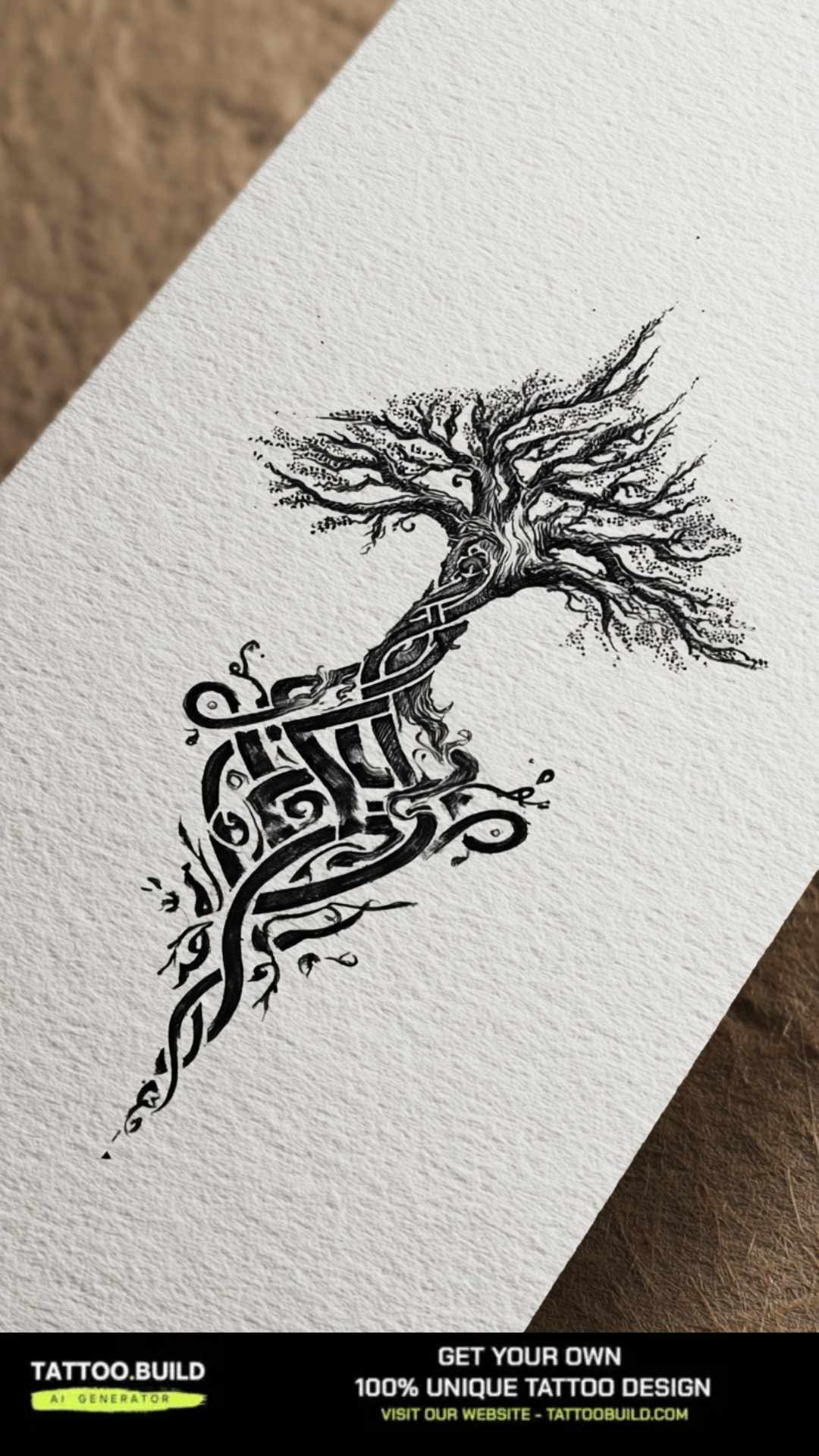
Knotwork suits the nape better than almost any other body part because it wants a long, narrow, symmetrical space and that is precisely what you have.
The interlacing runs naturally down the line of the spine, and a good artist will design the knot so it resolves cleanly at both ends rather than just stopping.
The thing to check before you book is the artist’s line consistency at small scale. Celtic work lives or dies on whether the over-under weave stays readable, and on the neck it will be inked at a smaller scale than the flash suggests.
Ornamental blackwork – mandalas, filigree, geometric lacework – follows the same logic. If you like this family of designs, my collection of blackwork tattoo ideas for men has a lot more in this vein.
4. Trees, Mountains and Fine Line Nature
This is the group I recommend most often to men getting their first neck piece, because it is quiet.
A bare tree, a mountain ridge, a small flock of birds – these read as texture from a distance and only resolve into a design when someone is close.
The honest downside is longevity. Fine line and light dotwork on the neck fades faster than solid black, partly because of sun exposure on a spot most people never think to protect. I have seen delicate nape work look noticeably softer within a few years.
If you go this route, ask the artist to keep the lines a hair thicker than they would on a forearm, and treat a touch-up as part of the plan rather than a failure. Geometric variants of this style are collected in my geometric tattoo designs guide.
5. Wolves, Dragons and the Phoenix
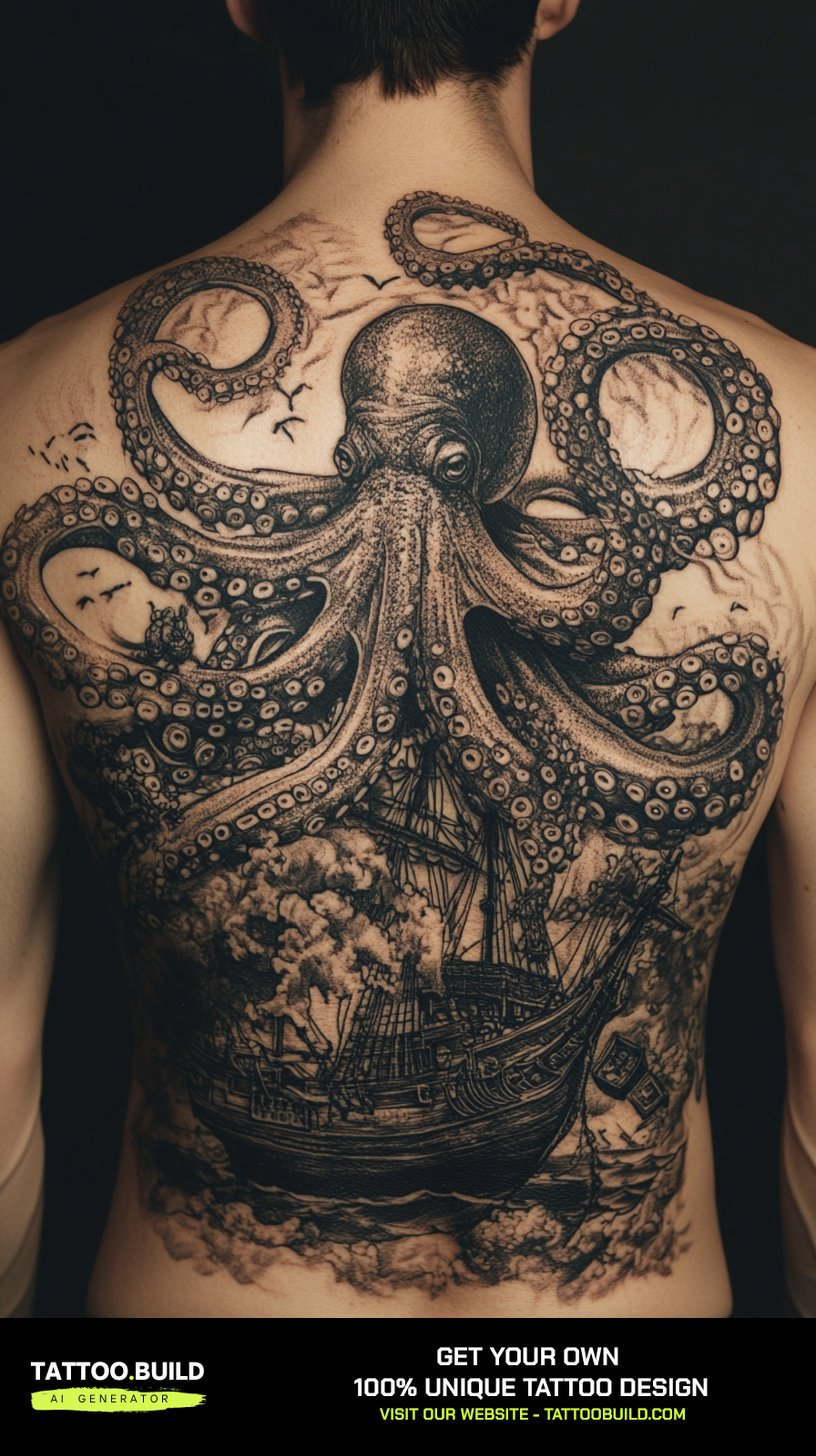
Animal work is the most ambitious thing you can put on a nape, and the most likely to disappoint if it is rushed.
The problem is scale. A wolf’s face needs enough room for the eyes to sit correctly, and the nape gives you roughly the area of a playing card before the design starts creeping onto the hairline or the shoulders.
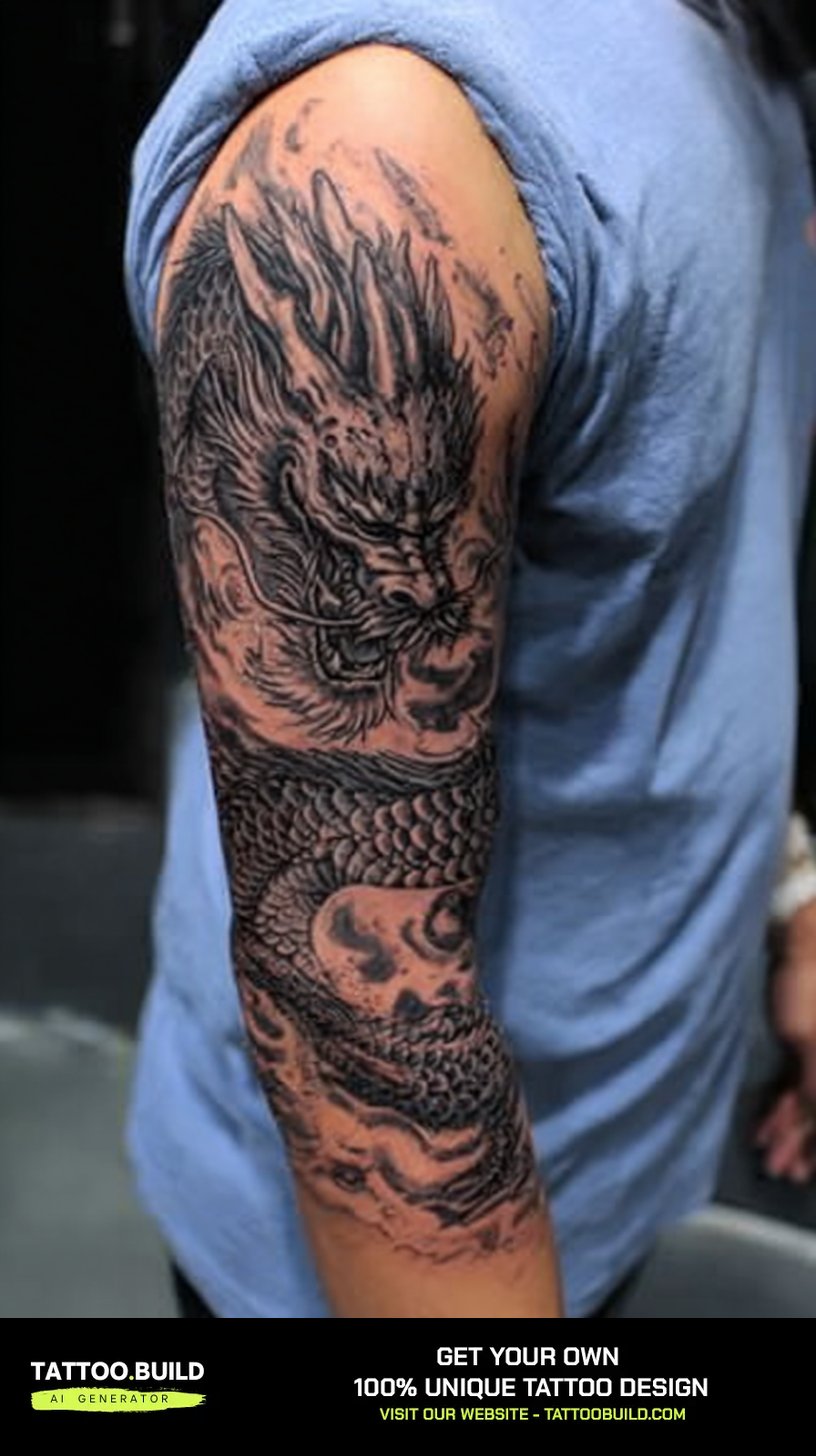
Dragons solve this by being long rather than wide – a serpentine body running down the spine uses the shape of the placement instead of fighting it. That is why Eastern-style dragons work on necks when Western ones often do not.
The phoenix is the most forgiving of the three. Its shape is essentially a bird with decorative tail feathers, so it fills vertical space, tolerates being stylised, and does not depend on photorealistic detail to be recognisable.
6. Crosses and Faith-Based Designs
A cross on the nape is one of the oldest choices in this placement and still one of the most common.
The range is enormous. A small solid Latin cross an inch tall is a twenty-minute tattoo; an ornate filigree cross running from the hairline down between the shoulder blades is a multi-session commitment.
If the meaning matters more than the impact, I would push you toward the smaller version. It stays personal, it sits under a collar, and it is the piece people regret least.
One point worth being blunt about: religious neck tattoos are read differently in different countries and different workplaces. That is not a reason to avoid one, but it is worth knowing before rather than after.
7. Lotus, Mandala and Personal Symbols
The last group is the hardest to categorise because these designs mean something specific to the person wearing them.
An open book, a compass, a lotus, a date, a set of coordinates – the design itself is often simple and the weight comes from what it refers to.
When I have asked men about the nape pieces they are happiest with years later, this is the category that comes up most. The designs people keep loving are usually the ones that were never meant to impress anyone else.
The one piece of design advice here: resist the urge to add ornament around a simple symbol just to fill space. Empty skin around a small design is what makes it read as deliberate rather than unfinished.
Variations Worth Considering Before You Book
If none of the seven groups above is quite right, these adjustments come up constantly in consultations.
Move it Higher, Into the Hairline
Placing a small design right at the base of the skull means it vanishes the moment your hair is longer than a buzz cut.
The trade-off is that the skin there is thinner still, and you will need the area shaved for every touch-up.
Let It Run Down the Spine Instead
Extending downward rather than outward keeps the tattoo hidden under almost any shirt while giving the artist far more room.
Spine work hurts in a different way – more of a deep ache than a sharp sting, in my experience – and it is usually split across sessions.
Wrap the Sides for Maximum Impact
Carrying a panel around to the sides of the neck is the most visible option available and effectively cannot be hidden.
Be realistic about your job and your plans before choosing this. The wider men’s neck tattoo collection covers what full coverage actually looks like.
Start With a Test Piece
A small symbol now tells you how your skin takes ink in that spot and how you handle the sensation, before you book six hours of blackwork.
Several of the best nape pieces I have seen were built outward from a first small tattoo rather than designed all at once.
Healing a Nape Tattoo: What Actually Matters
The nape is a harder heal than most placements, and it is not because of the tattoo itself – it is because of everything that touches it.
Collars, hoodie seams, car headrests, backpack straps, long hair and pillows all rub the same square of skin. The single biggest thing you can do is sleep on your side or your front for the first week and keep your hair off it.
Wash it gently with clean hands and unscented soap, pat it dry, and use a thin layer of whatever your artist recommends. Thin is the operative word – a thick layer traps moisture against skin that is already under a collar. My full tattoo aftercare guide walks through the routine day by day, and the tattoo healing stages breakdown explains what you should be seeing at each stage.
Adhesive healing films are genuinely useful here precisely because of the friction problem, though not everyone tolerates the adhesive. If your artist offers one, my notes on Saniderm tattoo healing cover how to use it without trapping fluid.
One caution I will not soften: if the area becomes increasingly painful after the first few days, develops spreading redness, feels hot, weeps pus, or you run a fever, that needs a doctor rather than a forum thread. The Mayo Clinic guidance on tattoo risks is clear that infection and allergic reaction are real risks with any tattoo, and the neck is close to structures you do not want to gamble with. Nothing in this article is medical advice.
Once it is healed, sunscreen is the difference between a nape tattoo that stays crisp and one that goes grey. The American Academy of Dermatology recommends protecting tattooed skin from UV to keep it looking its best, and the back of the neck catches more sun than almost anywhere else on the body.
Common Mistakes and What to Do Instead
Choosing the design before choosing the haircut. Your hair length decides how much of the tattoo anyone ever sees, so decide that first.
Sizing from a phone screen. A design that looks bold on a screen is often smaller than a credit card once it is on skin – always look at the stencil in a mirror.
Booking detailed realism as a first neck tattoo. It is the hardest style to execute in that space and the one most likely to need correcting.
Ignoring the workplace question. It is easier to ask honestly now than to explain later.
Skipping the touch-up. Most artists include one, and on the neck you will usually want it.
Still weighing this up? Compare the options in my guides to back of the neck tattoos for males and neck tattoo designs for men before you book anything.
Frequently Asked Questions
Do back of the neck tattoos hurt more than other placements?
For most people, yes – the skin is thin and it sits close to bone at the top of the spine. The sharpest part is usually the centre line rather than the softer sides. That said, pain is genuinely individual and the sessions are often short, which makes it manageable. If you are worried, start with a small design and find out how you react before booking a long sitting.
How long does a nape tattoo take to heal?
The surface usually looks settled within two to three weeks, while the deeper layers keep repairing for a couple of months. The nape is slower than average because collars, hair and pillows keep rubbing it. Keeping friction off the area is the main thing that speeds it up. If anything looks or feels wrong, ask your artist and see a doctor if symptoms are getting worse rather than better.
Can I hide a back of the neck tattoo at work?
It depends almost entirely on your hair and your collar. With hair past the hairline, most nape designs are invisible; with a fade, they are on full display. Anything that wraps to the sides of the neck cannot realistically be hidden. If discretion matters, keep the design inside the area a shirt collar covers.
How much does a male back of the neck tattoo cost?
Cost tracks time and detail rather than placement, so a small symbol is usually a shop minimum and a full panel is priced by the hour or by the session. Rates vary widely by city and by artist, so ask for a quote based on your actual design rather than a general figure. Be wary of a quote that is far below everyone else in your area.
Will a neck tattoo fade faster than one on my arm?
It can, mainly because the back of the neck gets a lot of unprotected sun and the skin is thin. Solid blackwork holds up better than fine linework in this spot. Daily sunscreen once healed makes a real difference. Plan on a touch-up at some point, especially with delicate line or dot work.
Quick Summary
- Decide your haircut first – it controls how visible the tattoo will ever be.
- Wings and birds of prey flatter the shoulder line and are the most requested nape design.
- Tribal and Polynesian blackwork ages best on thin neck skin; source authentic patterns respectfully.
- Celtic knotwork suits the nape because it wants a long, narrow, symmetrical space.
- Fine line nature and geometry look subtle but fade faster – budget for a touch-up.
- Animal realism needs more room than the nape gives; dragons and phoenixes handle it better than faces.
- Expect a sharper sting over the spine, and a slower heal because collars and hair rub the area.
- Sunscreen once healed is the difference between crisp black and grey mush.