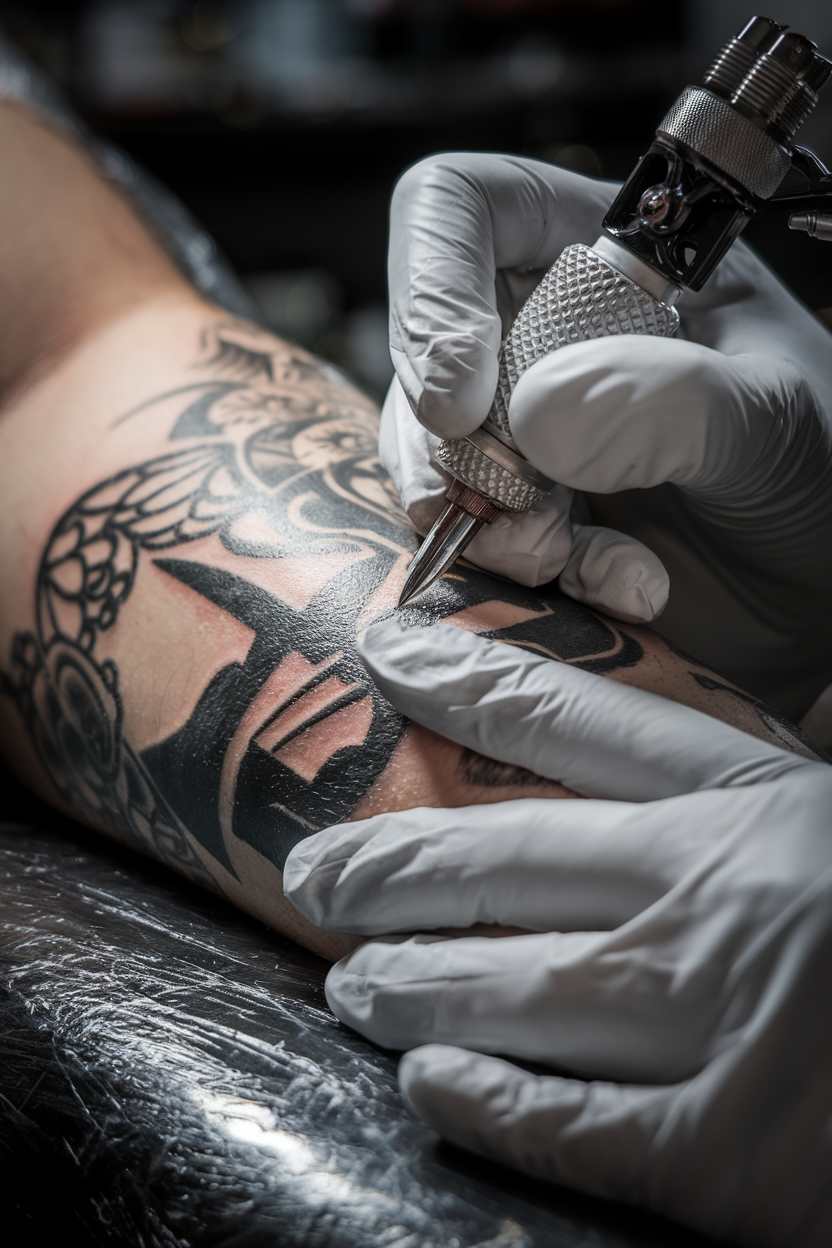
Yes, you can fly after getting a tattoo — most artists I have asked suggest waiting about 24 to 48 hours, and the flight itself is rarely the problem.
The trouble usually starts on the ground: airport bathrooms, seatback trays, a backpack strap rubbing a raw shoulder for six hours.
I have flown with fresh work three times now, twice within two days of the appointment, and the difference between a smooth trip and a miserable one came down entirely to preparation.
This guide covers the realistic waiting window, what cabin conditions actually do to healing skin, how to pack aftercare through security, and the warning signs that mean you should see a doctor rather than tough it out. If you want the wider picture first, our full tattoo healing stages breakdown pairs well with this one.
How Long Should You Wait Before Flying?
There is no single rule here, and anyone who gives you one is oversimplifying. The honest answer depends on how big the piece is, where it sits on your body, and how long you will be in the seat.
Use this table as a starting point, then defer to whatever your own artist tells you.
| Your Situation | Suggested Wait | Why It Matters |
|---|---|---|
| Small line-work piece, short flight | 24 hours | Minimal weeping, easy to keep covered under a sleeve |
| Medium colour or shaded piece | 48 hours | Heavier plasma leakage in the first day makes wrapping messier |
| Large back, chest or thigh work | 3 to 5 days if possible | Swelling and soreness peak around day two, exactly when you would be seated |
| Foot, ankle or lower leg | 3 to 5 days if possible | Sitting still at altitude encourages fluid to pool in the lower limbs |
| Long-haul flight over 8 hours | At least 48 to 72 hours | More hours in recycled cabin air and more time in one position |
| Any sign of infection | See a doctor first | Flying does not cause infection, but it does put you far from your artist and your clinic |
In my experience the 48-hour mark is the sweet spot for anything larger than a palm. By then the initial weeping has usually stopped, the wrap can be changed once cleanly, and you are past the worst of the swelling.
What Cabin Conditions Actually Do to a Healing Tattoo
People imagine cabin pressure forcing ink out of the skin. That is not what happens, and I have never met an artist who has seen it.
What does change is humidity. Aircraft cabins run notably drier than most indoor environments, and dry air pulls moisture out of skin that is already trying to rebuild a barrier.
The practical result is tightness, early flaking, and an itch that arrives sooner than it would at home. It is annoying rather than dangerous, and a thin layer of ointment handles most of it.
The second real factor is immobility. Sitting for hours slows circulation and lets fluid settle in the lower body, which is why a fresh ankle piece can look puffier when you land than it did at the gate.
The third factor is contact, and it is the one nobody plans for. Tray tables, armrests, overhead bin edges and shared seatbacks are not clean surfaces, and a healing tattoo is an open wound until the skin closes over.
Flying With a Fresh Tattoo: What to Do
1. Tell Your Artist About the Flight Before You Book the Session
This is the single most useful thing you can do, and it costs nothing. Say the date, the flight length and the destination climate when you book.
Every artist I have asked adjusts something once they know. Some will place a planned piece somewhere less likely to rub against a bag strap; some will scale a session down and finish the shading after you return.
Mine switched me from a standard wrap to a longer-wear adhesive film specifically because I was flying, which meant I never had to touch the tattoo in an airport bathroom. If you are unsure which covering you will get, our guide to how long to keep a tattoo wrapped explains the usual options.
2. Travel With the Tattoo Covered, Not Bare
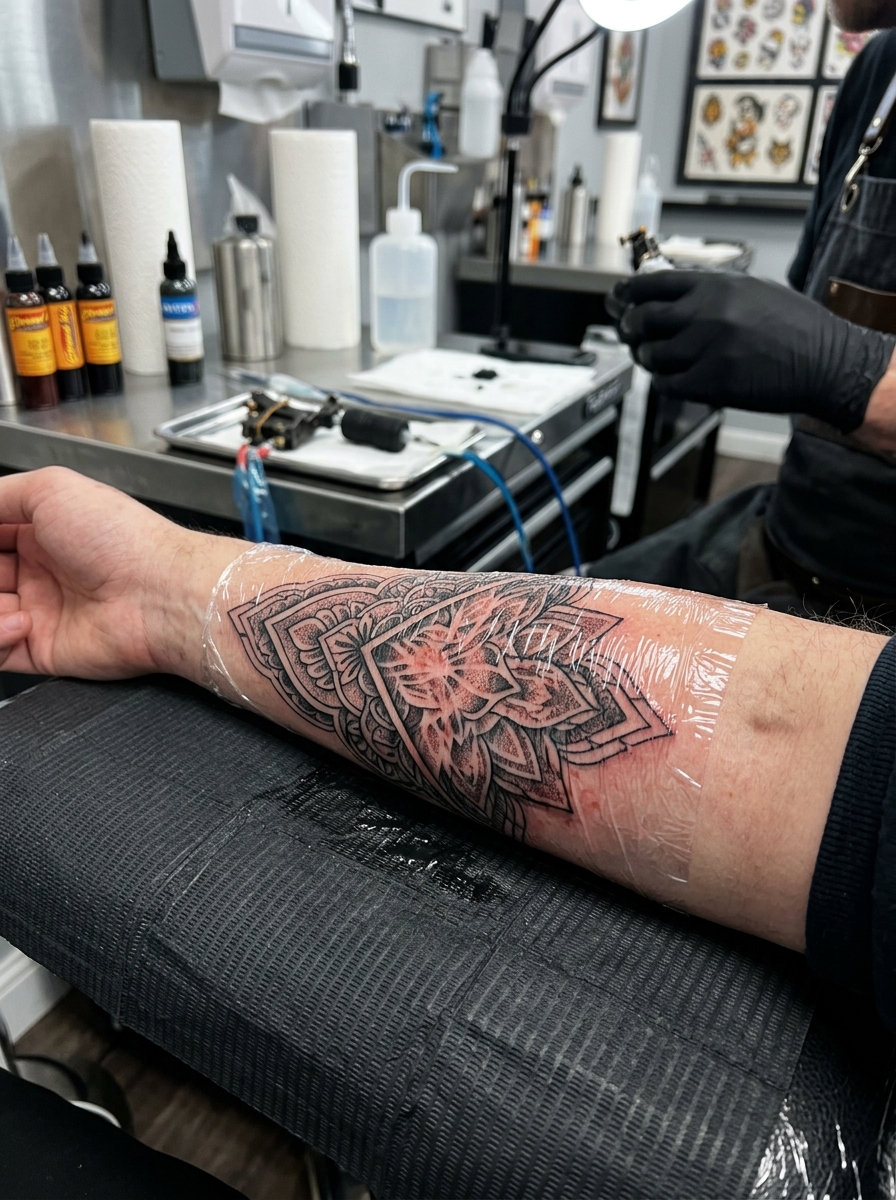
A breathable adhesive film is the easiest solution for travel days because it seals the area and stays on through a whole journey.
When I tested this on a seven-hour flight, the film stayed sealed the entire time and I did not have to unwrap anything until I reached the hotel. That alone removed the worst variable, which is handling a fresh tattoo in a public restroom.
Do not improvise with plastic wrap for hours at a stretch. Non-breathable coverings trap fluid against the skin, and that is the condition you least want on a long flight. Our Saniderm healing guide covers how these films are meant to be used and when to change them.
3. Dress Around the Tattoo, Not Over It
Loose, soft, breathable clothing is not a style suggestion here — friction is the main mechanical threat on a travel day.
A waistband sitting on a fresh hip piece for six hours will do more damage than the flight ever could. The same goes for a bra strap over a shoulder tattoo or a sock line across a healing ankle.
Dark colours are also worth considering for the first day or two, because a small amount of plasma and ink can transfer onto fabric. It washes out in most cases, but a white shirt makes for an anxious flight.
4. Pick Your Seat and Your Bag With the Tattoo in Mind
If the tattoo is on your outer arm, book the window seat so the fresh side faces the wall rather than the aisle traffic.
If it is on your leg, an aisle seat makes it far easier to stand up and move, which helps with both swelling and general stiffness.
Backpacks are the hidden problem. I switched to a shoulder tote on the trip after my upper-back piece because the straps sat directly across the healing area, and that one change made the airport portion painless.
5. Drink Water and Skip the In-Flight Drinks
Dry cabin air plus alcohol is a poor combination for skin that is rebuilding, and alcohol can also thin the blood slightly, which is unhelpful in the first day or two.
I keep a refillable bottle and fill it past security. It is a small thing, but the flights where I stayed properly hydrated had noticeably less tightness and itching by landing.
Caffeine is not forbidden, but treat coffee as a bonus rather than a substitute for water on a long-haul day.
6. Get Up and Move Every Couple of Hours
Movement is good for you on any long flight, and it is particularly useful when a lower-body tattoo is healing.
A short walk down the aisle every two hours, plus some ankle circles in your seat, helps keep fluid from settling around the fresh area.
If your tattoo is on a foot or lower leg, elevating it slightly on a bag under the seat in front can also take the edge off the puffiness.
7. Do Your Real Aftercare Once You Land
Wait until you are somewhere clean with running water. An airport bathroom is not that place, and neither is a taxi.
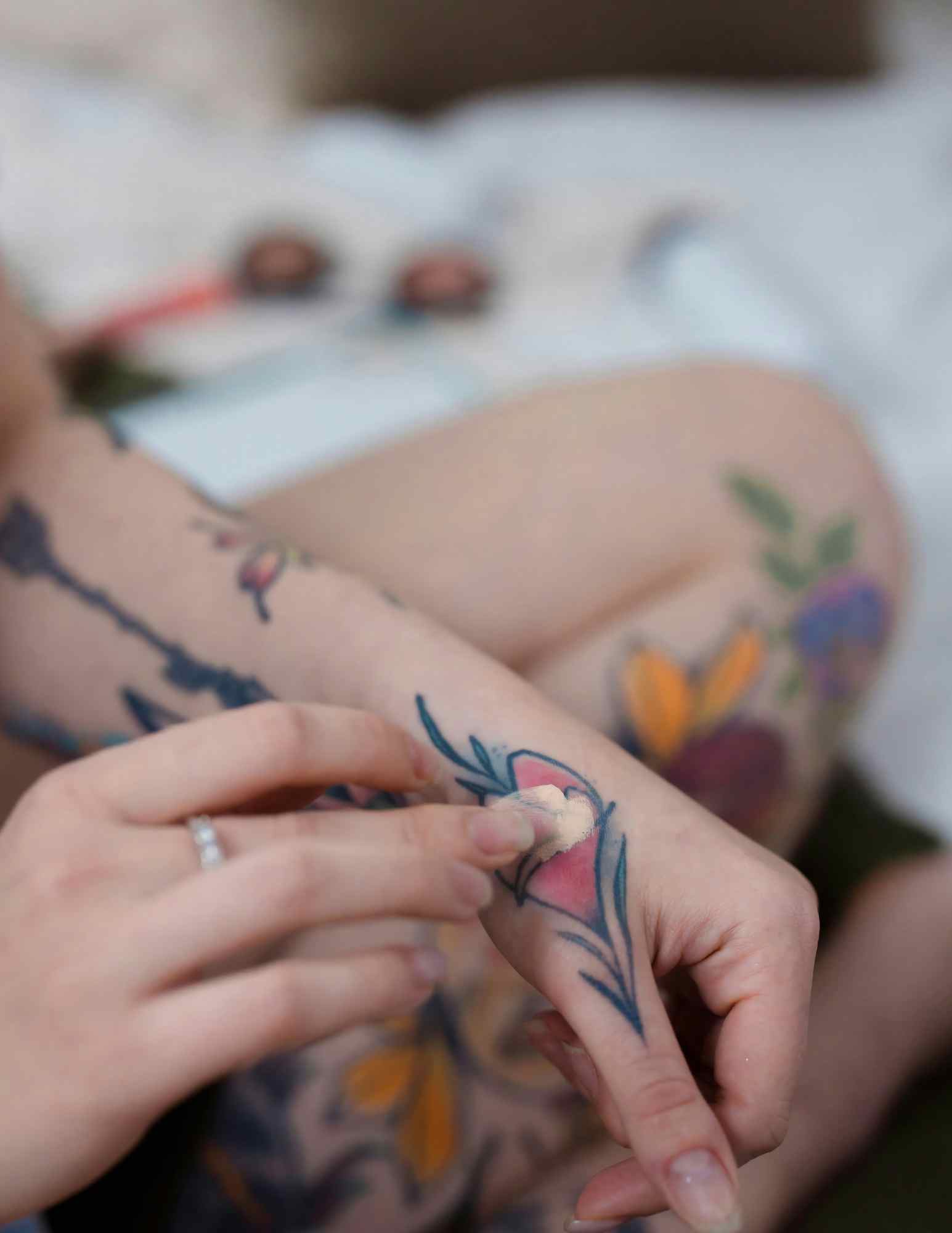
Wash your hands, remove the covering gently, rinse the tattoo with lukewarm water and a fragrance-free soap, pat it dry with a clean paper towel, and apply a thin layer of your usual product.
Thin is the operative word. A heavy layer suffocates the skin and can cause the very irritation you are trying to avoid. Our guide to the best lotions for tattoos and our notes on using Aquaphor for tattoo healing both go into what works and how much to use.
Packing Aftercare Through Airport Security
Keep Everything Under the Liquids Limit
In the United States, carry-on liquids, gels and creams must be in containers of 3.4 ounces (100 ml) or less and fit inside one quart-sized clear bag, as set out in the TSA liquids, aerosols and gels rule.
Tattoo ointment counts as a gel. I decant mine into a small travel pot rather than gambling on a full-size tube surviving the scanner.
Limits differ by country, so check your departure airport’s rules if you are flying internationally.
The Short Packing List
- Fragrance-free ointment or lotion in a travel-sized container
- A spare piece of adhesive film in case the original lifts
- Fragrance-free soap sheets or a small bottle of mild cleanser
- Hand sanitiser for before you touch anything
- Clean paper towels rather than the hand dryer or a shared towel
- Your artist’s aftercare instructions saved to your phone
Keep all of it in your carry-on. A checked bag that goes missing on the day your tattoo needs its first clean is a genuinely miserable outcome.
Will Security Ask About the Tattoo?
In practice, no. Screening is concerned with what you are carrying, not what is on your skin, and a bandage or film has never caused me a problem at a checkpoint.
If an officer does want to inspect a covered area, you can usually request a private screening. It is a routine request and staff are used to it.
Destination Risks That Matter More Than the Flight
Sun Exposure
Ultraviolet light on a healing tattoo is the fastest way to ruin the result, and it can burn skin that has no intact barrier to protect it.
Keep a fresh piece covered with loose clothing rather than sunscreen for the first couple of weeks, because most artists advise against putting sunscreen on unhealed skin. Once it has fully closed over, daily SPF is what keeps the linework crisp for years.
Pools, Oceans and Hot Tubs
This is the one that catches people out on beach holidays. Submerging a healing tattoo introduces bacteria to an open wound and softens the scabbing.
Most artists ask for two to four weeks before swimming, which is worth knowing before you book a diving trip for the day after your appointment. We cover the timeline in detail in how long after a tattoo you can swim.
Heat and Humidity
Tropical destinations bring heavy sweating, and sweat trapped under clothing against a fresh tattoo is an irritant.
Rinse gently and pat dry more often than you would at home, and give the area air time in a clean room whenever you can.
Getting Tattooed at the Destination Instead
Flipping the order — travel first, tattoo second — solves the flight question entirely, and a holiday tattoo carries a nice bit of built-in meaning. Our travel tattoo ideas collection is a good place to start if that appeals.
The caveat is that standards vary enormously between shops and between countries. Check that the studio is licensed, that needles come out of sealed packaging in front of you, and that the artist is willing to answer questions about sterilisation.
The FDA’s tattoo safety guidance is a useful primer on ink and hygiene risks if you are considering a shop you do not know.
Aftercare on the Road: Practical Habits
Travel disrupts routine, and tattoo aftercare is a routine. The single most useful habit I adopted was setting two phone alarms a day for the first week — one morning, one evening — purely to wash and moisturise.
Wash gently with clean hands and lukewarm water, never scrub, and never soak. A quick shower is fine from the day after your appointment in most cases; a bath is not.
Hotel toiletries are usually heavily fragranced, so bring your own soap rather than using what is on the shelf. The American Academy of Dermatology’s guidance on tattoos is a sound reference for general skin care around new work.
Resist picking at flakes, however tempting the itch becomes. Pulling a scab early is the most common cause of patchy healing, and it is entirely avoidable. If you want the full routine written out, see our complete tattoo aftercare guide.
Warning Signs: When to Stop Improvising and See a Doctor
Some redness, warmth, swelling and tenderness in the first few days is normal. Flying does not cause infection, but being far from home makes it harder to deal with one.
Seek medical attention rather than advice from the internet if you notice any of the following:
- Redness that spreads outward from the tattoo rather than fading
- Pus, foul-smelling discharge, or fluid that is not clear
- Fever, chills, or feeling generally unwell
- Pain that increases after day three instead of easing
- A rash, hives, or intense itching that could indicate an allergic reaction to the ink
- Red streaks running away from the area
This article is general information from someone who travels with fresh work, not medical advice. A doctor or a licensed artist who can actually look at your skin will always be the better authority.
Before an international trip, it is worth checking whether your travel insurance covers complications from a recent tattoo, since some policies exclude them.
Common Mistakes — and Where to Read More
The mistakes I see repeated are always the same handful, and none of them are about the flight itself.
Booking a tattoo the night before a holiday and assuming a beach day is fine. Wrapping in cling film for eight hours. Using hotel soap. Packing the ointment in a checked bag. Picking at flakes on the plane out of sheer boredom.
If you are still weighing up the timing, our guide to how long a tattoo takes to heal gives realistic timeframes for each stage, which makes it much easier to work out where a flight fits.
Frequently Asked Questions
Can cabin pressure damage a new tattoo?
There is no good evidence that cabin pressure pulls ink out of the skin or damages a tattoo. The realistic effects of a flight are dry air, which makes healing skin feel tight and itchy, and long periods of sitting still, which can let fluid pool around a lower-body piece. Neither is dangerous for most people. Keeping the tattoo covered, drinking water and moving around handles both.
How soon after a tattoo can I fly?
Most artists suggest waiting at least 24 to 48 hours, and longer for large pieces or tattoos on the feet and lower legs. The waiting period is mainly about getting past the initial weeping and the peak of swelling, which usually happens around the second day. If you cannot delay the flight, tell your artist in advance so they can adapt the wrap and the session. Always follow your own artist’s instructions over a general guideline.
Should I keep the wrap on during the flight?
Generally yes, provided your artist has used a breathable adhesive film designed for extended wear. Keeping it sealed through the journey means you never have to touch the tattoo in an airport bathroom, which is the main hygiene risk of a travel day. If you were sent home with a standard non-breathable wrap, follow your artist’s timing for removal and plan to do it somewhere clean. Carry a spare piece of film in case the original lifts at an edge.
Can I bring tattoo ointment in my carry-on?
Yes, as long as it meets the liquids rule for your departure airport. In the United States that means containers of 3.4 ounces or 100 ml or less, all fitting in one quart-sized clear bag. Decanting your usual product into a small travel pot is the simplest approach. Keep it in your carry-on rather than a checked bag so you still have it if your luggage is delayed.
Is it better to get tattooed before or after a holiday?
After, in almost every case. A holiday usually involves sun, swimming, sweat and alcohol, which are the four things a healing tattoo tolerates worst. Getting tattooed at the end of a trip, or once you are home, means you can follow aftercare properly without missing out on anything. If you do get tattooed at your destination, make sure the studio is licensed and that you watch sterile equipment come out of sealed packaging.
Quick Summary
- You can fly after getting a tattoo. Most artists suggest waiting 24 to 48 hours, longer for large or lower-leg pieces.
- Cabin pressure is not the issue. Dry air, immobility and dirty shared surfaces are the real factors.
- Tell your artist about the flight before the session so they can adjust placement, size and the type of covering.
- Travel with the tattoo covered using a breathable adhesive film, and carry a spare piece.
- Pack aftercare in your carry-on in containers that meet the liquids rule, and skip hotel soap.
- Wear loose clothing and rethink your bag so nothing rubs the fresh area for hours.
- Avoid sun, pools and the ocean until the tattoo has healed — usually two to four weeks before swimming.
- See a doctor for spreading redness, pus, fever or worsening pain. Do not wait until you are home.