I have watched the dreamcatcher go in and out of fashion three separate times in the years I have spent around tattoo shops, and it keeps coming back for the same reason. A dreamcatcher is one of the few designs that gives an artist a built-in frame, which means almost anything you love can be hung inside it or from it.
That flexibility is why the request never really dies. A hoop, a web, a few feathers — and from there it becomes a deer, a mandala, a moon, a skull, or a bunch of wildflowers.
It is also a design that asks something of you. The dreamcatcher comes from Ojibwe (Anishinaabe) tradition, and getting one without knowing that is a bit like getting script in a language you have never read. I will cover that honestly further down, along with how it compares to a straightforward feather tattoo if you want the aesthetic without the cultural weight.
Below are the variations I see requested most, what each one actually costs you in chair time, and where they sit best on the body.
Which Dreamcatcher Style Is Right for You?
Every artist I have asked says the same thing: pick the style before you pick the placement. Here is how the main variations compare in practice.
| Style | Typical Size | Rough Chair Time | Best Placement | How It Ages |
|---|---|---|---|---|
| Minimalist fine line | 2–4 in | 45 min – 1.5 hr | Inner forearm, ankle, behind ear | Softens fastest; may need a touch-up |
| Floral / dotwork | 5–8 in | 3–5 hr | Forearm, thigh, ribs | Good, if the dots are spaced properly |
| Deer or antler | 6–10 in | 4–7 hr | Upper arm, back, thigh | Strong, thanks to the bold antler shapes |
| Skull / black and grey | 6–9 in | 5–8 hr | Forearm, calf, upper back | Very well — contrast carries it |
| Tribal / blackwork | 4–8 in | 2–4 hr | Shoulder, outer arm, spine | Best of the group; solid black holds |
| Mandala geometric | 5–9 in | 4–6 hr | Shoulder blade, sternum, thigh | Good, but symmetry shows any drift |
| Moon / celestial | 2–5 in | 1–2.5 hr | Inner arm, wrist, collarbone | Fine if lines are not too thin |
Treat those chair times as a starting point for a conversation, not a quote. Artists price by their own hourly rate and by how much detail you push for.
Where Dreamcatchers Come From — And Why It Matters
The dreamcatcher originates with the Ojibwe (Anishinaabe) people of the Great Lakes region, and versions of it spread to other Native nations later, particularly through the Pan-Indian movement of the twentieth century. Britannica gives a clear, short account if you want the background before you commit.
The traditional object is a willow hoop with a woven web, hung above a sleeping child. The web is meant to catch bad dreams; good ones pass through the centre.
That origin is the part most people skip, and it is the part worth ten minutes of reading before you book. I am not going to tell you whether wearing one is appropriate — that is a call you make, ideally after hearing from Native voices rather than from a tattoo blog.
What I will say from experience: the clients happiest with theirs years later are the ones who could explain what it meant to them. The ones with regrets usually picked it off a wall of flash without a second thought.
If the appeal is really the symbolism of protection or intuition rather than the object itself, there are other routes. A crescent moon, a woven knot, or something from our spiritual tattoo ideas collection may land closer to what you actually want.
Dreamcatcher Tattoo Ideas for Females
These are the variations that come up again and again, roughly in order of how often I see them requested.
1. Minimalist Dreamcatcher Tattoos
The minimalist version strips the design to a hoop, a simple web, and one or two feathers. Nothing else.
It is the cheapest entry point and the easiest to hide, which is why it is usually the first dreamcatcher someone gets. Expect somewhere between forty-five minutes and an hour and a half in the chair for a piece two to four inches across.
The trade-off is longevity. Very thin lines spread slightly as ink settles into the skin over the years, so a web drawn with hairline strokes will look softer at year ten than at week ten. If you want this look, read up on fine line tattoo technique first and choose an artist who does it constantly rather than occasionally.
My advice, based on watching a lot of these heal: ask for slightly heavier line weight than the reference photo shows. You will not notice the difference at first, and you will be glad of it later.
2. Floral Dreamcatcher Tattoos
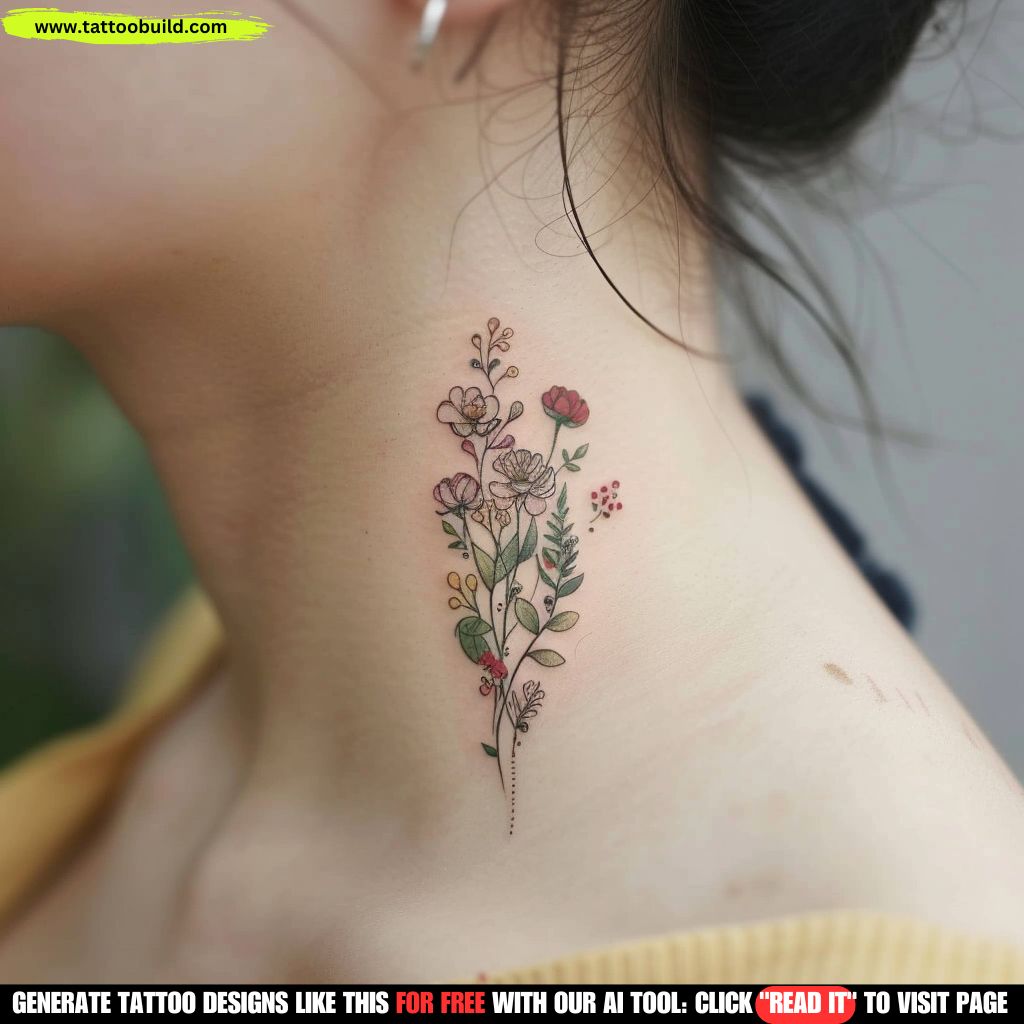
Swapping some of the feathers for flowers is the most common way to soften the design, and it is what I would suggest to anyone who finds the traditional version too stark.
Roses, peonies and wildflowers all work. Peonies in particular fill space well because their petals are large and loose, so the artist is not fighting for room.
Dotwork shading suits this combination better than solid black. The stippled texture reads as soft, which matches the flowers rather than competing with them.
Budget three to five hours. Floral additions add detail fast, and detail is what drives the bill.
3. Deer and Antler Dreamcatchers
This is my favourite structural idea in the whole category. The antlers become the hoop, or curve around it, so the two elements are genuinely one design rather than two things stacked together.
It needs room. Below about six inches the antler tips and the web start to collide, and the piece turns muddy.
Upper arm, outer thigh and upper back are the placements I see work best. If you are drawn to the animal more than the hoop, a standalone deer tattoo might serve you better and cost less.
Four to seven hours is realistic for a well-rendered version, often split across two sittings.
4. Skull and Dreamcatcher Tattoos
Pairing a skull with a dreamcatcher creates a deliberate contrast: something heavy hanging inside something delicate.
Black and grey realism is the usual treatment. The skull carries the weight and the web stays light, which is what keeps the composition from feeling top-heavy.
The mistake I see most often is letting the two elements overlap too much. Ask your artist to stretch the web behind the skull rather than across it, so each one stays readable.
This is the most demanding version on this list technically, and it is worth paying for an artist whose portfolio is full of black and grey rather than one who dabbles.
5. Tribal and Blackwork Dreamcatchers
Bold solid black shapes, geometric webs, no shading. Graphic rather than delicate.
Of everything here, this ages the best. Solid black areas hold their edges far longer than fine linework does, and the design does not depend on small details surviving.
A word of caution on terminology: “tribal” in tattoo shops usually means a Polynesian-influenced blackwork style, which has nothing to do with Ojibwe origins. Mixing the two without thinking about it is worth a conversation with your artist. Our tribal tattoo ideas for women guide covers where those styles actually come from.
Two to four hours for most sizes, and it hurts less than dotwork because the artist is packing rather than picking.
6. Crystal and Gemstone Dreamcatchers
Faceted crystals hanging from the hoop in place of, or alongside, feathers.
Grey wash suits this better than hard black. The point of a crystal is that light moves through it, and soft shading suggests that in a way flat black cannot.
Keep the number of crystals low. Three or four hanging stones read as intentional; eight read as clutter, and every extra facet is another set of lines to keep clean over time.
This one photographs beautifully and is genuinely quicker than it looks — usually two to four hours.
7. Butterfly Dreamcatcher Tattoos
A butterfly either sits inside the hoop as the focal point, or perches above it.
Inside the hoop is the stronger composition in my view, because the hoop then does what a frame is supposed to do.
Fine-line wings are the popular treatment, and the same caveat applies as with minimalist designs: ask for a little more line weight than the reference shows.
Wing detail is the first thing to blur on a small butterfly, so if you want it under three inches, simplify the wing pattern rather than shrinking it.
8. Mandala and Geometric Dreamcatchers
Here the web is replaced by a mandala — layered symmetrical petals radiating from a centre point.
It is the most ornamental version and it needs a flat, roughly circular area of skin to sit on. Shoulder blade, sternum and the outer thigh all qualify.
Symmetry is unforgiving. Any drift in the geometry is obvious in a way it never is on an organic design, so this is one to book with a mandala specialist rather than a generalist.
Four to six hours, and dense dotwork sections can push that higher.
9. Moon and Celestial Dreamcatchers
A crescent moon replaces the hoop, or hangs within it, with a feather or two below.
This is the smallest-friendly variation on the list. Because the crescent is a bold, simple shape, it survives being scaled down in a way a woven web does not.
Inner forearm, wrist and collarbone are the natural homes for it. If the celestial side is the real draw, our moon phase tattoo ideas go further in that direction.
One to two and a half hours covers most versions, which makes it a reasonable first tattoo.
Variations Worth Considering
If none of the nine above is quite it, these adjustments come up often in consultations.
Hoop Only, No Feathers
Dropping the feathers entirely leaves a woven circle. It is quieter, reads as more abstract, and sidesteps some of the cultural questions.
Colour Accents on Black and Grey
A single colour — usually a muted teal, dusty rose or ochre — on the beads or one feather, with everything else in black and grey.
Restraint works better here than a full-colour piece, which tends to date faster.
Memorial Dreamcatchers
Names, dates or birth flowers woven into the web. I have tattooed and seen a number of these, and the ones that work keep the text small and let the design carry the emotion.
Scaled Down for Wrist or Ankle
Under three inches, cut the number of elements roughly in half. The design should get simpler as it gets smaller, not just shrink.
Practical Advice Before and After You Book
Bring three to five reference images rather than one. A single photo tends to get copied; a spread of five lets your artist design something that is actually yours.
Ask to see healed work, not fresh work. Fresh photos flatter everything. Healed photos — ideally a year or more old — tell you how that artist’s linework actually settles. The American Academy of Dermatology has straightforward guidance on caring for tattooed skin, and it is worth reading before your appointment rather than after.
Sun is the single biggest threat to a design like this. Fine webs and thin feather barbs fade before anything else does. Once healed, keep it covered or use a high-SPF sunscreen on it. Our full tattoo aftercare guide covers the healing window in more detail.
On healing: some redness, swelling and light scabbing in the first few days is normal. Spreading redness, heat, pus, or a fever is not — that is a same-day call to your artist and, if it is not clearly settling, to a doctor. Nothing in this article is medical advice, and an allergic reaction to a pigment is something only a clinician can properly assess.
Common Mistakes — And What to Do If You Are Still Not Sure
The most common mistake is going too small for the amount of detail wanted. A five-element design at two inches will not stay crisp, whatever anyone promises you.
The second is choosing placement before style. A mandala wants a flat round area; a deer and antler design wants length. Decide what you are getting, then decide where it goes.
The third is skipping the origin question entirely and running into it later, usually from someone else.
If you are still weighing it up, it is worth checking how much the placement itself will affect the experience — our guide to the most painful tattoo spots is blunt about which areas are genuinely rough.
And if you book a consultation and leave feeling rushed or dismissed, that is information. Go elsewhere. There is no deadline on this.
Frequently Asked Questions
Is it disrespectful for a non-Native person to get a dreamcatcher tattoo?
There is genuine disagreement on this, including among Native people, so anyone who gives you a flat yes or no is oversimplifying. The dreamcatcher is Ojibwe (Anishinaabe) in origin, and some consider its use outside that context appropriative while others see it as shared symbolism. The most useful thing you can do is read Native writers on the subject rather than tattoo blogs, and be able to explain why you want it. If that reading leaves you uneasy, a feather, knot or celestial design gets you a similar look without the question.
How much does a dreamcatcher tattoo usually cost?
It depends far more on your artist’s hourly rate and your city than on the design itself. Using the chair times in the table above as a guide, a minimalist piece is often a shop-minimum or single-hour job, while a deer or skull version spanning several sessions sits at the other end. Ask for a quote at consultation and confirm whether it is hourly or a flat piece price. Be wary of anyone dramatically cheaper than everyone else in your area.
Where do dreamcatcher tattoos hurt the least?
In my experience the outer arm, outer thigh and calf are the most tolerable spots for a design of this size. Ribs, sternum, spine and the inner arm near the elbow are consistently reported as harder. Because dreamcatchers tend to be long and vertical, the outer arm and thigh also happen to suit the shape well. Pain is individual, though, so treat any chart as a rough guide rather than a promise.
Will the fine web lines blur over time?
Some softening is normal for any fine linework as ink settles into the skin over years, and a woven web has more thin lines than most designs. How fast depends on line weight, placement, sun exposure and your skin. Asking for slightly heavier lines than your reference photo is the single most effective thing you can do about it. A touch-up somewhere in the five to ten year range is a reasonable expectation, not a sign anything went wrong.
What size should a dreamcatcher tattoo be?
Match the size to the number of elements rather than to the space available. A hoop with one or two feathers works fine at two to four inches; add flowers, antlers or a skull and you realistically need six inches or more. If you want a detailed design in a small area, cut elements instead of shrinking them. Your artist will tell you honestly if the maths does not work — and if they will not, that tells you something too.
Quick Summary
- The dreamcatcher works as a tattoo because the hoop acts as a frame — almost any motif can hang inside it or from it.
- It is Ojibwe (Anishinaabe) in origin; read up on that before you book rather than after.
- Minimalist and moon versions are the quickest and cheapest, usually one to two and a half hours.
- Deer, skull and mandala versions need six inches or more and often two sittings.
- Tribal and blackwork versions age the best, because solid black holds its edges longest.
- Ask for slightly heavier line weight than your reference photo shows — fine webs soften over the years.
- Choose the style first, then the placement; the design should dictate where it goes.
- Sun protection matters more for this design than for most, and any sign of infection is a call to your artist and a doctor.