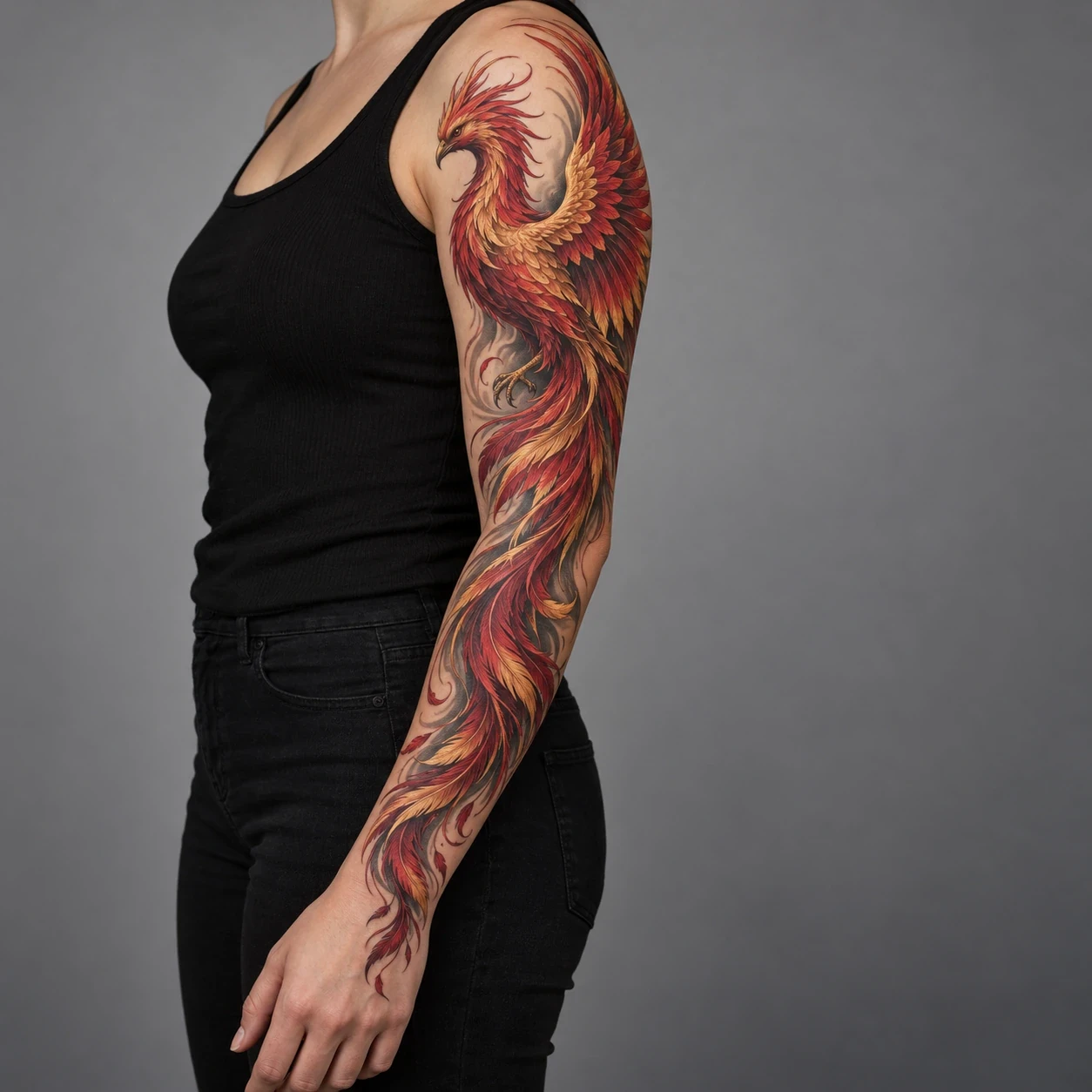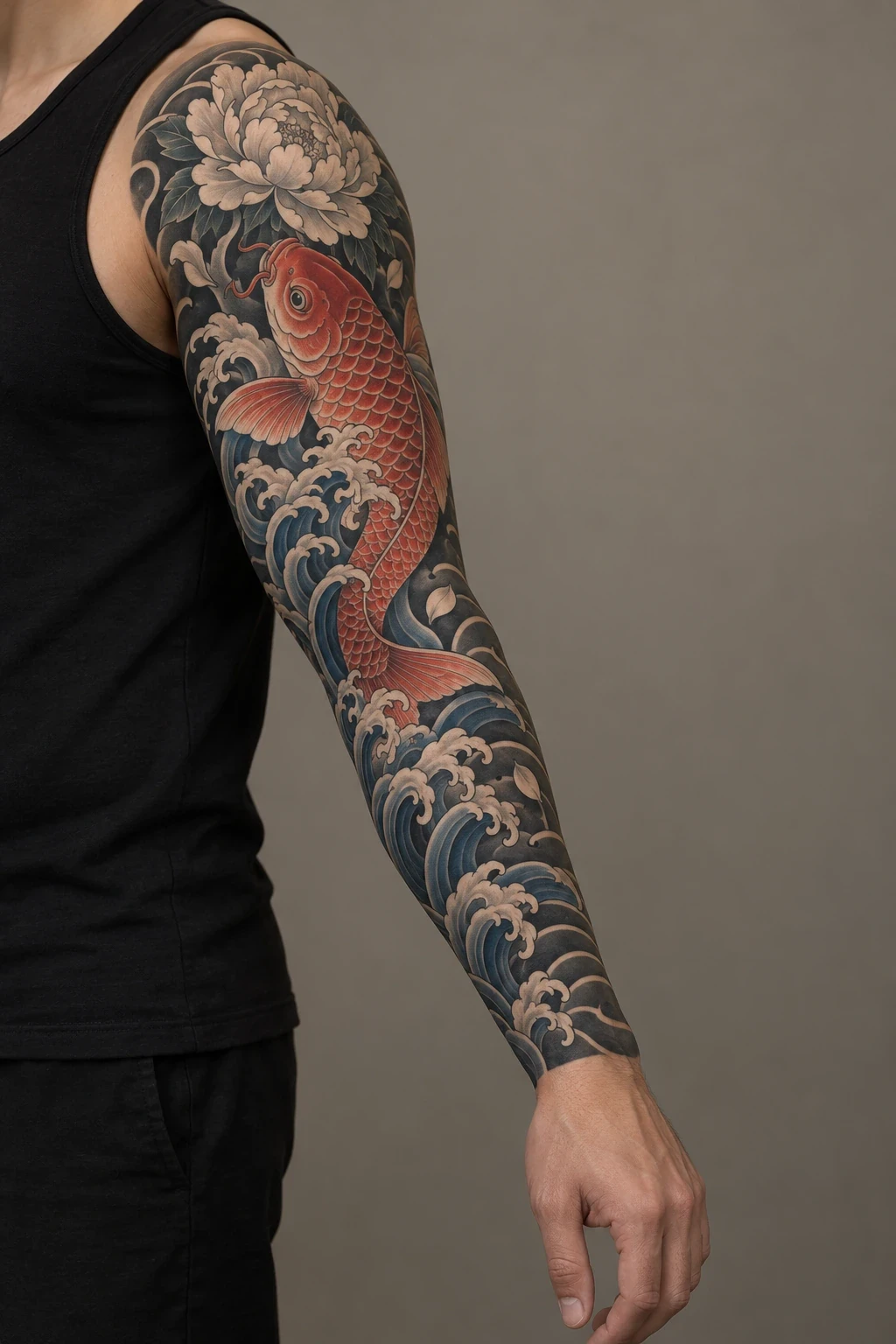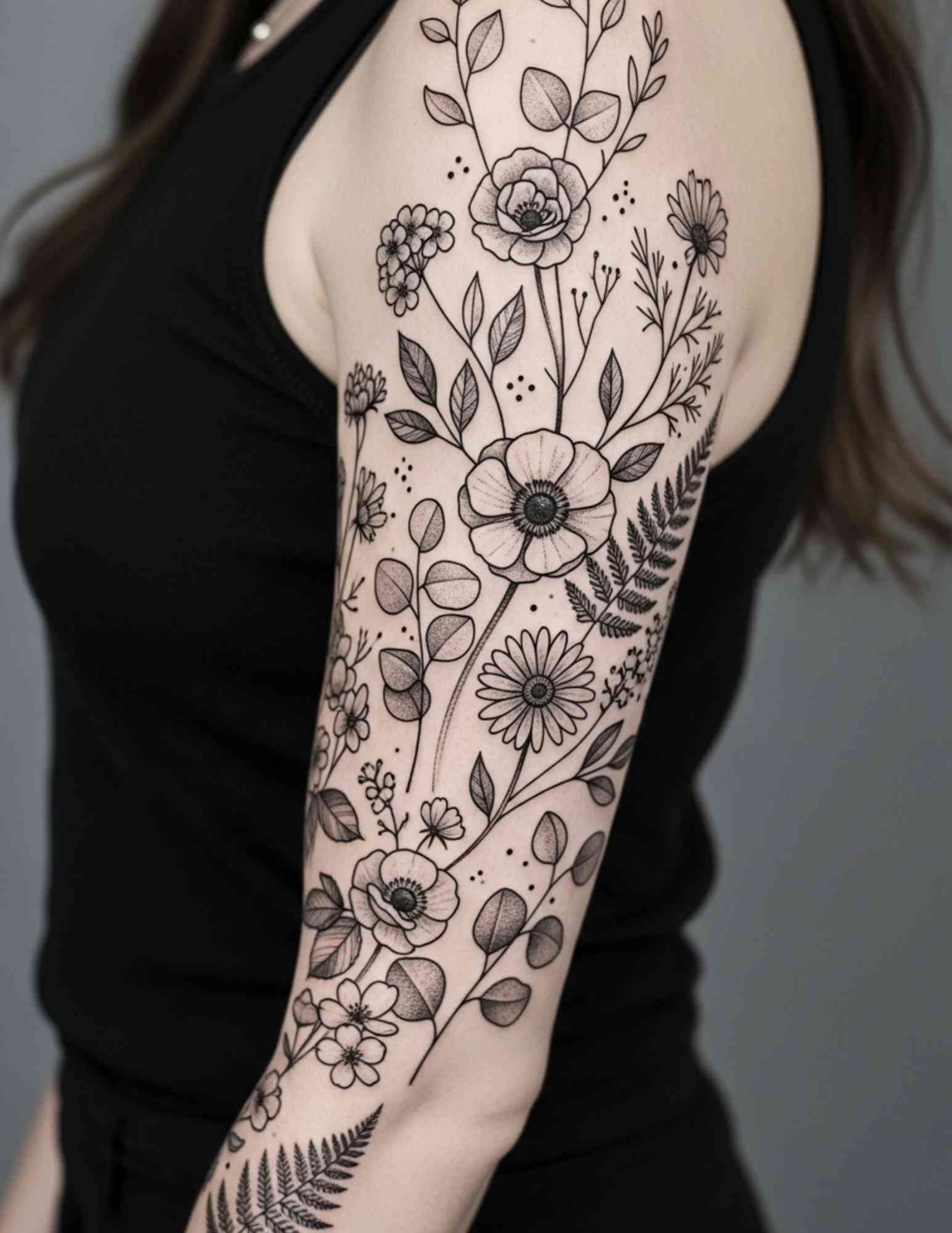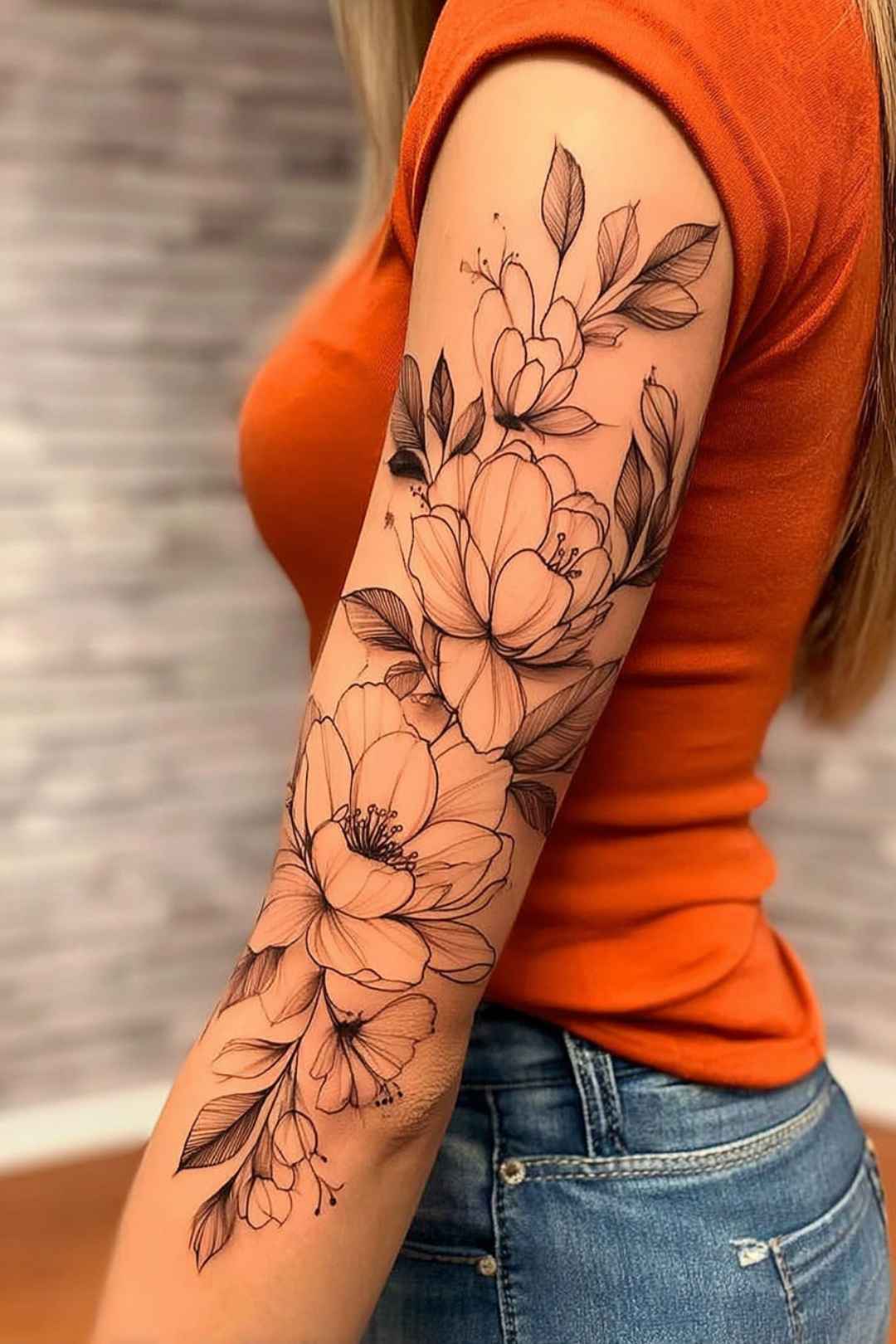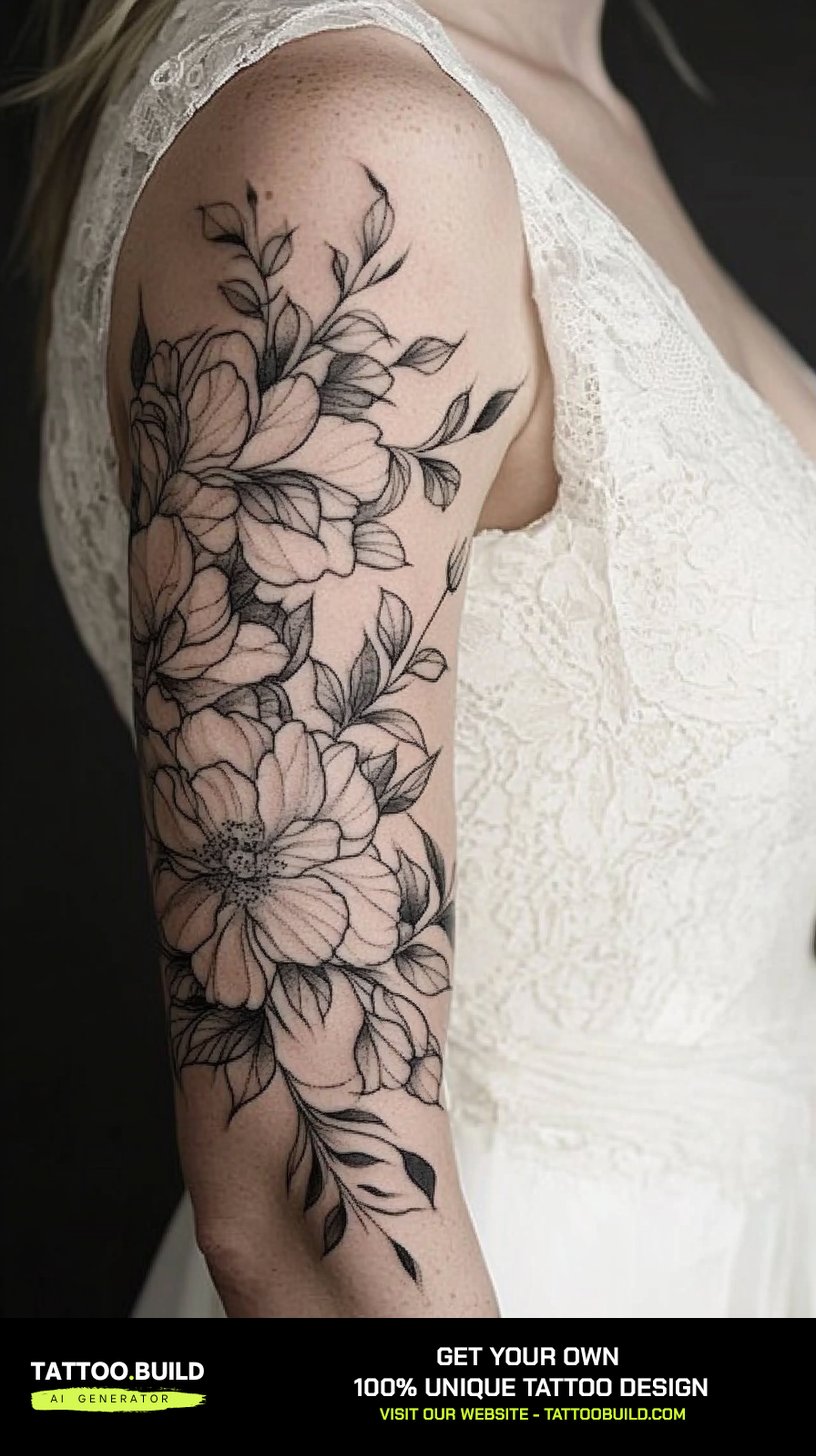
An epic women sleeve tattoo is not the one with the most detail crammed into it. The sleeves that still look incredible five years later are the ones with a clear focal point, honest black values and deliberate gaps of bare skin.
I have spent a lot of hours in shops watching sleeves get built, and the pattern is boringly consistent. The pieces that age badly were designed flower by flower; the ones that age well were designed as a whole arm first.
This guide walks through the styles that actually hold up on a woman’s arm — blackwork florals, roses, landscapes, butterflies, wildflowers and fine line work — with real photos of each so you can see the difference in weight and spacing.
If you are still deciding on scale rather than subject, start with our wider round-up of full sleeve tattoo ideas for women and come back here for the styling detail.
Which Sleeve Length Is Right for You?
Before style comes coverage. Choosing the length first is what stops a sleeve from turning into a patchwork you did not plan.
| Sleeve type | Coverage | Suits these designs | Typical time | Best if |
|---|---|---|---|---|
| Full sleeve | Shoulder to wrist | Landscape scenes, layered florals, anything that needs a story arc | Multiple long sessions over months | You want one unified piece and can commit to the schedule |
| Three-quarter sleeve | Shoulder to mid-forearm | Big florals and roses that stop above the cuff line | Slightly fewer sessions than a full | You want the look but need a clean wrist for work |
| Half sleeve (upper) | Shoulder to elbow | Peonies, forest scenes, ornamental panels | Often a handful of sessions | You want coverage a t-shirt hides completely |
| Half sleeve (lower) | Elbow to wrist | Wildflowers, fine line stems, single-subject pieces | Usually the fastest of the four | You want to see your own tattoo every day |
In my experience the most common regret is not the design at all — it is going straight to a full sleeve when a three-quarter would have given the same visual impact with a much shorter commitment.
What Actually Makes a Sleeve Look Epic
Four things separate a sleeve that stops people mid-conversation from one that reads as a blur of grey. None of them are about the subject matter.
The first is value contrast. An artist needs true blacks, mid greys and untouched skin in the same piece, or everything flattens into one tone once the ink settles.
The second is flow. A sleeve should follow the arm — stems spiralling with the bicep, a horizon line sitting where the muscle turns — rather than being pasted on like a sticker.
The third is a hierarchy of size. When I ask artists what they wish clients understood, the answer is almost always the same: you need one or two big shapes, a few mid-size ones, and filler. Twelve equally sized flowers is a wallpaper pattern, not a sleeve.
The fourth is planning for healing. Fine detail packed too tightly will blur as the skin settles, which is why good artists space elements further apart than the drawing looks like it needs.
8 Epic Women Sleeve Tattoo Styles Worth Stealing
Each of these is a real, buildable direction rather than a mood board word. I have grouped the photos by style so you can see how the same arm shape changes completely with different ink weight.
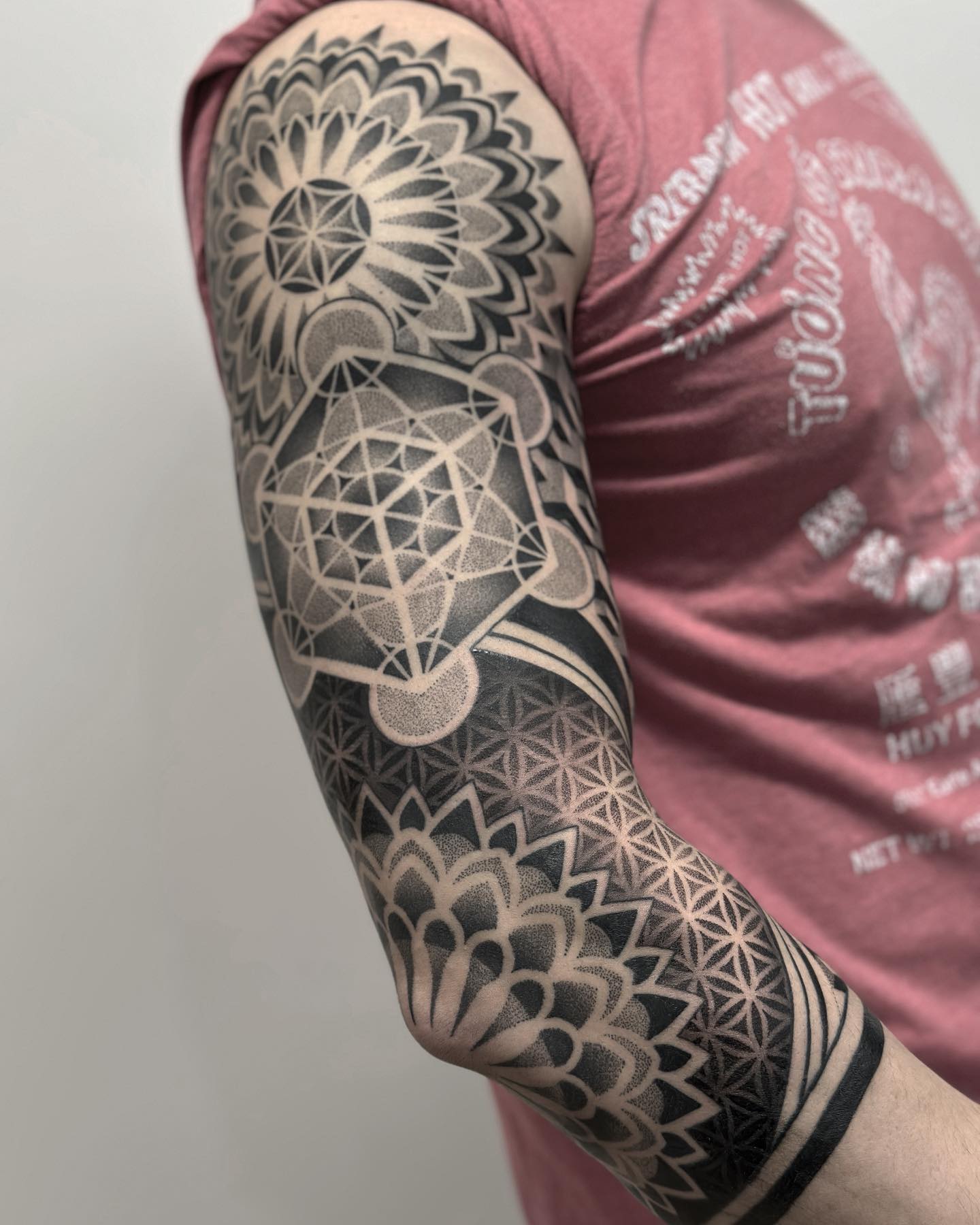
1. Bold Blackwork Floral Sleeves
Blackwork florals lean on heavy saturated black with flowers carved out of it in negative space. This is the loudest option on the list and the one that photographs best.
The trade-off is commitment. Solid black is very hard to lighten or cover later, so I would only recommend it if you are certain about the placement.
It also demands a specialist. When I have compared blackwork sleeves side by side, the difference between a good one and a muddy one is almost entirely in how the artist planned the light gaps before touching skin.
Blackwork suits arms where you want one continuous statement rather than a collection of separate tattoos.
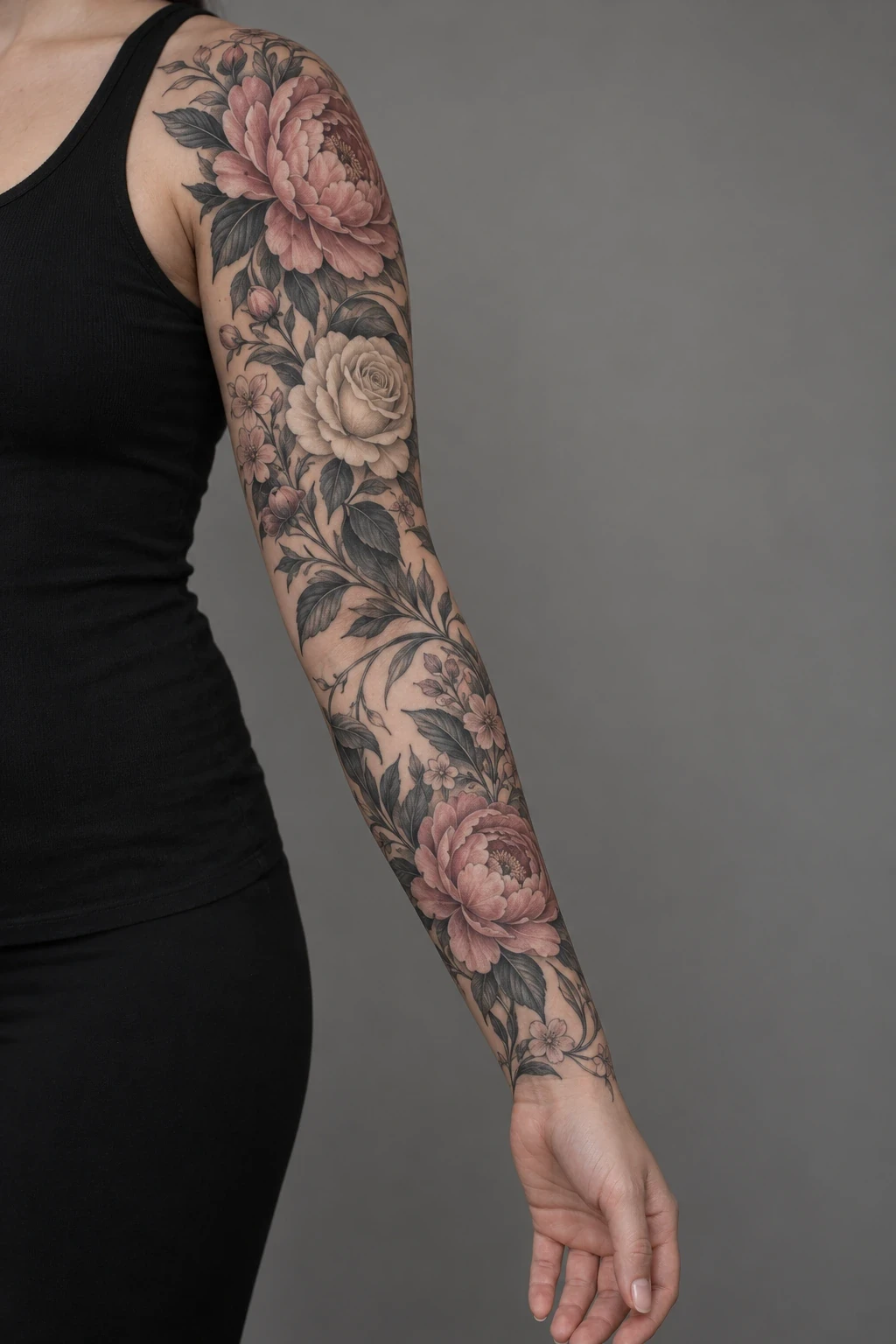
2. Black and Grey Blossom Sleeves
This is the safest starting point for a first big piece, and I mean that as a compliment. Large open blooms with soft grey wash read clearly at a distance and forgive small imperfections.
Peonies, magnolias and cherry blossom all work because they have big simple silhouettes. The petals give an artist somewhere to put smooth gradients.
The honest limitation is longevity of the light greys. Soft wash tends to fade before the linework does, so plan on a touch-up somewhere down the road — most artists build that expectation in from the start.
If you only take one idea from this article, take the big-simple-shapes rule.
3. Rose Sleeves
Roses have been on arms for a century for a good reason: the shape survives ageing better than almost anything else.
A rose is essentially a spiral of overlapping curves. Even when fine detail softens over the years, the eye still reconstructs the flower without effort.
I would push most people toward fewer, larger roses rather than many small ones. Three big blooms on a forearm will still look sharp long after eight small ones have run together.
For colour and symbolism options, our guide to black rose tattoos for women covers how much the shading choice changes the mood.
4. Nature and Landscape Sleeves
Landscape sleeves — pine forests, mountain ridges, water — are the most technically demanding pieces here.
The problem is that arms are cylinders and landscapes are flat scenes. A skilled artist solves it by wrapping the horizon rather than fighting it, usually placing the focal point on the outer arm.
Ask to see healed photos of landscape work specifically before booking. Atmospheric grey is where weaker artists lose detail once it settles.
In every landscape sleeve I have liked, the artist left real sky — open skin — above the treeline. The ones that filled every millimetre looked like a smudge from two metres away.
5. Butterfly and Botanical Sleeves
A butterfly among florals is a small addition that changes the whole read of a sleeve. It introduces movement into a design that is otherwise static.
One focal insect is usually plenty. When I have seen three or four butterflies in a single sleeve, they compete with each other and none of them lands.
Butterflies are also a genuinely useful filler shape. They fit into awkward triangular gaps around the elbow ditch where a flower would look forced.
6. Sunflower, Daisy and Wildflower Sleeves
Wildflower sleeves are looser and more scattered than a designed floral panel, and that is the appeal.
They suit the forearm particularly well because the flat outer face shows off round, open flower heads without distortion.
This style also grows gracefully. You can start with a few stems and keep adding over years without the piece ever looking unfinished — something a tightly composed sleeve cannot do.
If you are building from the wrist upward, our forearm tattoo ideas for females has more placements that extend well.
7. Fine Line Sleeves
Fine line sleeves are the most requested style I see right now, and the one where artist choice matters most.
Thin single-needle lines look immaculate fresh. Over the years they spread slightly, which is normal ink behaviour in skin rather than a sign of bad work.
The fix is spacing, not thinner lines. Good fine line artists leave generous gaps precisely because they know the lines will thicken a little.
Our guide to fine line tattoo ideas goes deeper on how to vet a portfolio for healed work rather than fresh photos.
8. Forearm-Forward Half Sleeves
Starting on the forearm rather than the shoulder is an underrated strategy, and it is the one I recommend most often.
You see the tattoo every day, which tells you quickly whether you actually want more of it.
It also builds naturally upward later. A lower half sleeve designed with an open top edge can extend past the elbow without redrawing anything.
The inner forearm is more sensitive than the outer, so expect the softer skin to sting more — see our guide to the most painful tattoo spots for a realistic map.
Alternatives if a Full Sleeve Feels Like Too Much
Not everyone should get a full sleeve, and there is no shame in scaling down. These three routes give most of the effect for less commitment.
The staged build
Get one strong forearm piece, live with it for six months, then decide about the upper arm. Every artist I have asked prefers this to a rushed full-sleeve booking.
The patchwork sleeve
Individual tattoos placed with deliberate gaps, filled in over years. It reads as a collection rather than one design, which some people prefer and others find messy.
The one rule is to agree a consistent style and black weight early, or the arm will never resolve into a whole.
The shoulder cap
A dense piece over the deltoid that stops cleanly at the bicep. It gives you a striking silhouette in a tank top and disappears entirely under a sleeve.
Have a look at female half sleeve tattoos if this is the direction you are leaning.
Planning, Sessions and Aftercare
Book a consultation before booking ink time. A good artist will redraw your idea into something that fits your specific arm, and that conversation is worth more than any reference folder.
Budget realistically. Sleeve pricing varies enormously by city, artist demand and session length, so ask for a per-session rate and an honest session estimate rather than a single flat number — our breakdown of how much a sleeve tattoo costs explains what drives the range.
Eat properly and sleep before a long session. Sitting well is a skill, and low blood sugar is the single most common reason a session gets cut short.
For healing, follow the aftercare your artist gives you rather than advice from the internet, since it depends on the products and technique they used. The American Academy of Dermatology’s guidance on caring for tattooed skin is a solid general reference.
If you notice spreading redness, heat, swelling that worsens after the first few days, pus or a fever, contact a doctor rather than waiting it out. Infections and allergic reactions to ink are uncommon but real, and the Mayo Clinic’s overview of tattoo risks sets out what to watch for. This article is design guidance, not medical advice.
Never attempt to tattoo or remove ink yourself. Removal in particular is a medical procedure that belongs with a qualified practitioner, and home methods can scar permanently.
Common Mistakes — and What to Do If You Are Still Not Sure
Most sleeve regret traces back to one of a handful of decisions made early.
- Designing flower by flower. Ask for a full-arm layout sketch before any needle touches skin.
- Filling every gap. Bare skin is a design element, not a mistake to be corrected.
- Mixing styles mid-build. A fine line forearm and a blackwork bicep rarely reconcile.
- Choosing an artist by price. A sleeve is a multi-session relationship; portfolio fit matters more.
- Booking the wrist first. The most visible, most painful area is a poor place to learn how you sit.
If you are still weighing options, browse our collection of the coolest sleeve tattoos for women for range, or narrow it down with floral half sleeve forearm designs if florals are where you keep landing.
Frequently Asked Questions
How long does a full women sleeve tattoo take?
Most full sleeves are built across several long sessions spread over months rather than finished in one sitting. The exact number depends on density, style and how well you sit — heavy blackwork generally takes longer than open fine line work. Your artist will give a realistic session estimate at the consultation. In my experience, people who rush the schedule end up with the weakest results, because tired skin does not take ink well late in a long day.
Do sleeve tattoos hurt more than smaller tattoos?
Not more intensely at any given point, but the duration is what makes them harder. A sleeve covers areas that vary a lot in sensitivity, from the relatively forgiving outer bicep to the tender inner arm and elbow ditch. Most people find the sting manageable in short bursts and cumulative over hours. Breaks, food and sleep make a genuine difference.
Can I combine different styles in one sleeve?
You can, but it needs deliberate planning rather than being decided session by session. The most reliable way to combine styles is to keep one consistent black weight across the whole arm so the pieces feel related. Fine line next to heavy blackwork usually fights unless there is a designed transition. Discuss the whole arm with your artist before starting.
Will a fine line sleeve blur over time?
Fine lines do soften and spread slightly as ink settles in skin — that is normal rather than a defect. Well-spaced fine line work stays readable for many years; tightly packed detail is what turns into a grey patch. Ask any prospective artist for healed photographs at least a year old, not just fresh work. Sun protection also makes a real difference to how it holds.
Should I start at the shoulder or the wrist?
There is no single right answer, but starting mid-forearm or upper arm and building outward is the more forgiving route. It lets you test how you feel about the commitment before covering the most visible skin. Starting at the hand or wrist locks in the most public part of the design first. Many artists will encourage you to leave those areas until last.
Quick Summary
- Decide coverage first — full, three-quarter, upper half or lower half — before you pick a subject.
- Insist on a full-arm layout sketch rather than approving individual elements one at a time.
- Build a hierarchy: one or two large shapes, a few mid-size, then filler.
- Leave real bare skin. Gaps are what make black look black.
- Big simple silhouettes — roses, peonies, magnolias — age better than dense micro-detail.
- Judge an artist on healed photographs, not freshly wrapped ones.
- Starting on the forearm lets you test the commitment before covering the most visible skin.
- Follow your artist’s aftercare, and see a doctor for any sign of infection rather than searching for home remedies.