A tattoo that means strength and courage only works when the symbol is true to something you actually lived through — the design is the easy part.
I have sat in on a lot of these consultations, and the pattern is always the same. Someone arrives with a saved photo of a lion, and twenty minutes later we are drawing something else entirely.
That is not a failure. It is the point. The strongest pieces come out of a conversation about what you survived, not out of a search result — which is also why strength tattoos for women tend to look nothing like each other.
Below are the symbols that hold up, the ones that do not, and how to pick a placement that will still read clearly in fifteen years.
Which Strength Symbol Is Right for You?
This is the shortlist I sketch out on paper when someone cannot decide. Match the meaning first, then worry about the drawing.
| Symbol | The Kind of Strength It Reads As | Best Placement | Rough Session Time |
|---|---|---|---|
| Lion | Authority, protecting other people | Outer forearm, chest | 3–6 hours |
| Wolf | Loyalty, endurance, family | Upper arm, calf | 3–5 hours |
| Phoenix | Rebuilding after a collapse | Spine, thigh, ribs | 5–10 hours |
| Bear | Quiet power, standing your ground | Shoulder, back | 4–7 hours |
| Dragon | Controlled force, discipline | Calf, back, full sleeve | 8–20+ hours |
| Semicolon | Surviving, continuing | Wrist, finger, ankle | Under 30 minutes |
| Arrow | Moving forward under pressure | Inner wrist, forearm | 30–90 minutes |
| Shield & sword | Defence, service, duty | Forearm, outer thigh | 2–5 hours |
Times are the ranges I have watched artists quote, and they move with size, detail and how well you sit. Treat them as a planning tool, not a promise.
Why Strength Tattoos Fail More Often Than Other Tattoos
Strength is an abstract idea, and abstract ideas are the hardest thing to put on skin. A rose is a rose; courage has to be argued for.
The most common mistake I see is borrowing someone else’s symbol before you have found your own. It photographs well and means nothing.
The second is scale. People pick a design with realism-level detail and then ask for it at three inches, which is how a lion turns into a smudge in eight years.
Skin spreads ink slowly over time, so fine detail packed too tightly tends to blur together. Every artist I have asked says the same thing: leave more space than feels necessary.
The last one is timing. Getting a survival piece in the middle of the thing you are surviving usually means redesigning it later — waiting a few months costs nothing.
Strength and Courage Tattoo Symbols That Hold Up
These are the designs I keep coming back to, roughly in order of how often they are asked for.
The Lion: Strength That Protects Somebody Else
The lion is the default for a reason. It reads as authority without reading as aggression, which is a narrow line most animals do not walk.
What separates a good one from a generic one is the eyes. When I look at lion tattoo ideas, the pieces that land are the ones where the gaze is calm rather than snarling.
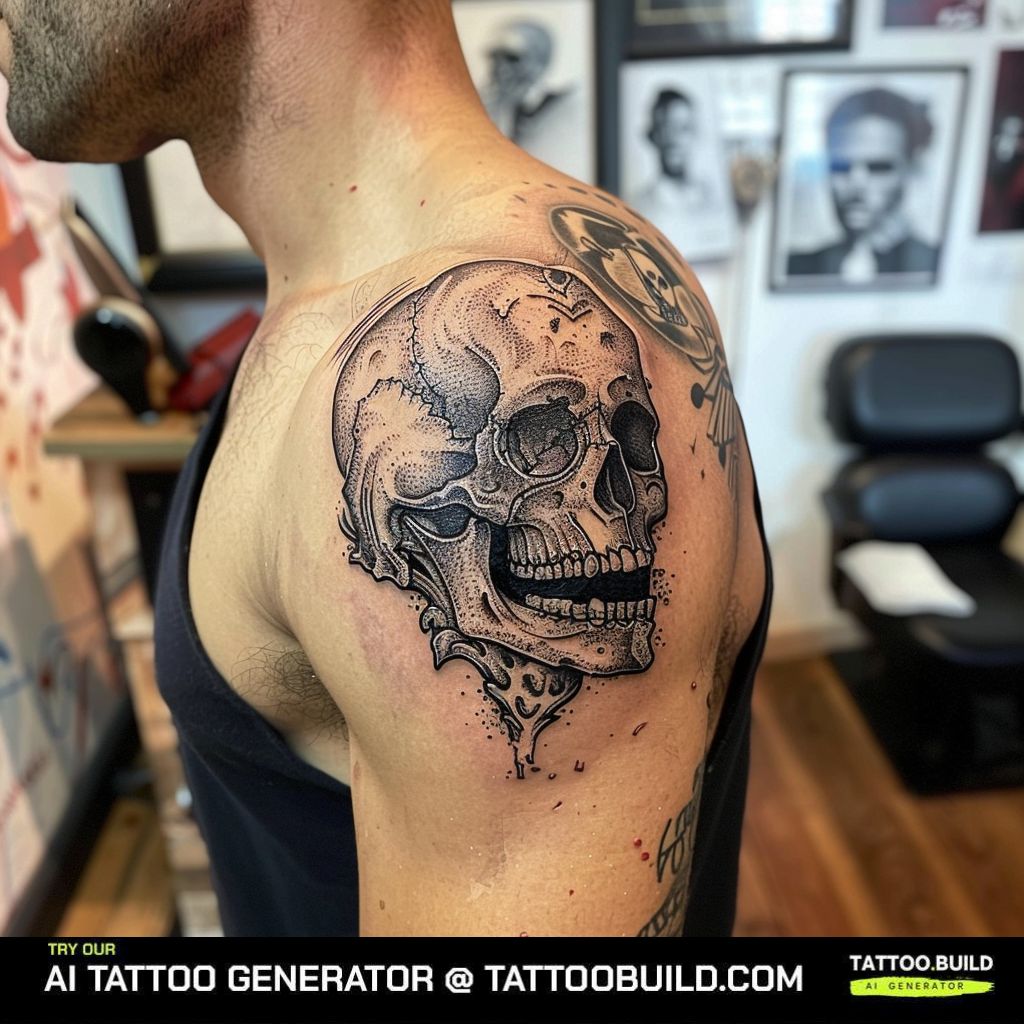
A geometric or mandala-based lion is the safer long-term bet. The linework holds its shape as it ages, where a full realism portrait relies on soft grey washes that soften further over the years.
Outer forearm and chest are the placements that suit it best, because both give you a flat panel wide enough for the mane to open out.
The Wolf: Endurance and Loyalty
If the lion is about standing over people, the wolf is about standing beside them. It is the symbol people choose when the strength they mean is really about family.
The technical trap is fur. Rendering every hair looks incredible for about a year, then fills in — good artists break fur into clumps and let the eye do the rest.
I usually point people towards wolf tattoo ideas when they want a sense of how much variation the subject allows, from stark blackwork to soft black and grey.
Upper arm and calf both work. Both are curved surfaces, so the drawing has to be built for the wrap rather than drawn flat and stuck on.
The Bear and the Tiger: Power Without Noise
The bear is the most underrated strength symbol on this list. It carries the same weight as a lion but almost none of the visual cliche.
In North American Indigenous traditions the bear appears widely as a figure of protection and healing, with meanings that vary meaningfully between nations. If you are drawing on a specific tradition, it is worth learning whose it is first.
The tiger sits at the opposite end. It is the least apologetic animal you can wear, and it needs a placement that can carry it.
Ribs suit the tiger because the curve follows the animal, though ribs are among the more painful placements most people report. Plan for a longer sitting than you think you need.
Lion designs and the prompts behind them
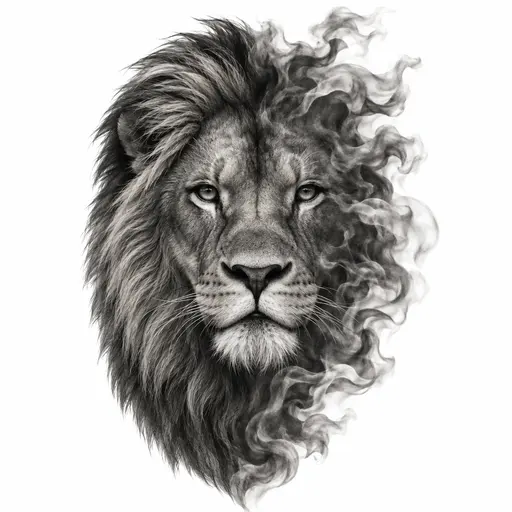
A lion's face in soft morning light, half of its mane dissolving into smoke
Use this idea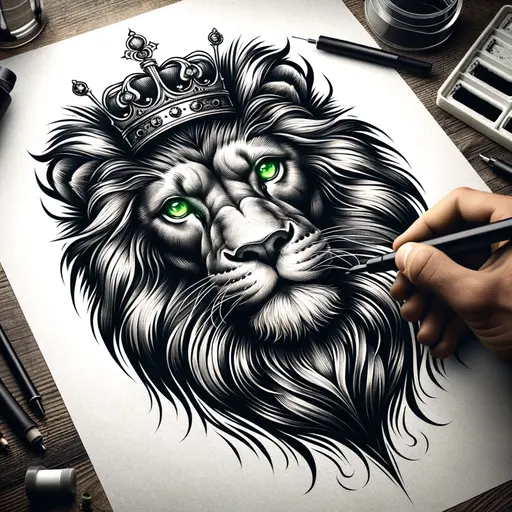
Lion with crown and green eyes
Use this idea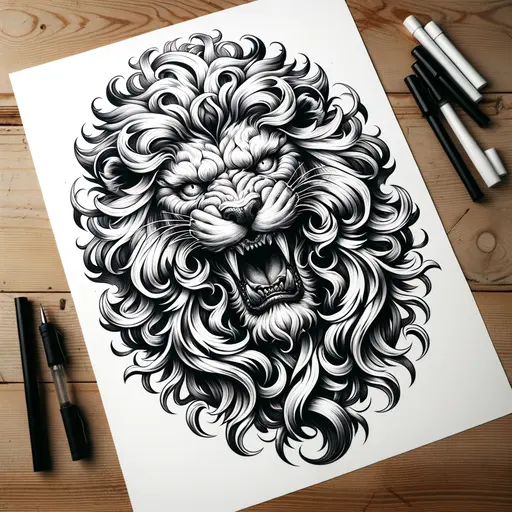
a lion tattoo design on a white paper background
Use this idea
The Phoenix: Rebuilding After a Collapse
The phoenix is the clearest survival symbol there is, and it is the one I most often see chosen after an illness, an addiction, or a marriage ending.
The bird appears in Greek and Roman writing as a creature that renews itself from its own remains — Britannica has a readable summary of the myth’s origins if you want the background before you commit to it.
Design-wise, the tail is everything. A phoenix lives or dies on whether the tail feathers have somewhere to go, which is why spine, thigh and full-back placements dominate phoenix tattoo ideas.
Fine-line versions are beautiful fresh, but they are the ones I have most often seen need a touch-up. Ask your artist directly how their line weight ages on that part of the body.
The Dragon: Force That Is Under Control
The dragon means something different depending on where you are standing. In East Asian traditions it generally reads as a bringer of water, fortune and balance rather than a monster to be killed.
That is the meaning most people are actually after: power that is disciplined, not power that is unleashed.
It is also the biggest commitment on this page. A Japanese-style dragon is a multi-session project, and the good ones are designed around the whole limb from the first sketch.
If you are considering one, look at how the negative space is used — the wind and cloud work is not filler, it is what stops the piece reading as a knot of scales.
The Eagle: Courage Seen From a Distance
The eagle is the most legible symbol here from across a room, which is exactly why it suits a back piece.
The shoulder blades give the wings two natural anchor points, and the spine gives the body a centre line. Very few designs fit the human back this neatly.
Where it goes wrong is feather detail at small sizes. On a forearm, an eagle usually needs to be simplified into fewer, bolder shapes to survive.
It also carries national and military associations in some countries, which is worth thinking about if you travel or if the association is not one you want attached to you.
The Samurai and the Warrior Figure
A warrior figure is the most literal way to say courage, and literal is not automatically bad. It is bad only when the figure is anonymous.
The pieces that work usually reference a specific tradition and get its details right — armour, weapon, posture. The ones that do not tend to be a generic armoured man with no story.
When I have compared samurai tattoo ideas side by side, the difference is almost always in the face and hands. Those are the two things a rushed artist simplifies first.
Outer thigh is the placement I recommend most. It is flat, it is large, and it hurts considerably less than ribs or sternum for a piece of that size.
Shield, Sword and Armour: Strength as Duty
These read as service rather than dominance, which is why they are common among people in the military, the trades, and emergency work.
Solid blackwork suits them. A shield rendered in heavy black with the boss left as negative space will still be crisp long after a shaded version has gone soft.
There is a deeper symbolic history here than most people expect, and the meaning behind sword and shield tattoos is a good place to start if you want the design to mean something specific rather than generic.
Keep the weapon secondary to the shield if the meaning you want is protection rather than attack. It changes how the whole piece reads.
Quieter Alternatives to Animal Symbols
Not everyone wants a predator on their arm. These carry the same meaning with a fraction of the visual volume.
Arrows and Compasses
An arrow has to be drawn back before it goes forward, which is about as neat a metaphor for a hard year as you will find.
It is also cheap, fast and easy to place. Inner wrist and inner forearm both work, though the wrist fades faster with sun exposure.
The compass is its close cousin, and it usually means holding a direction rather than pushing through. There is more nuance to compass tattoo meaning than the design suggests at first glance.
The Semicolon and Survival Marks
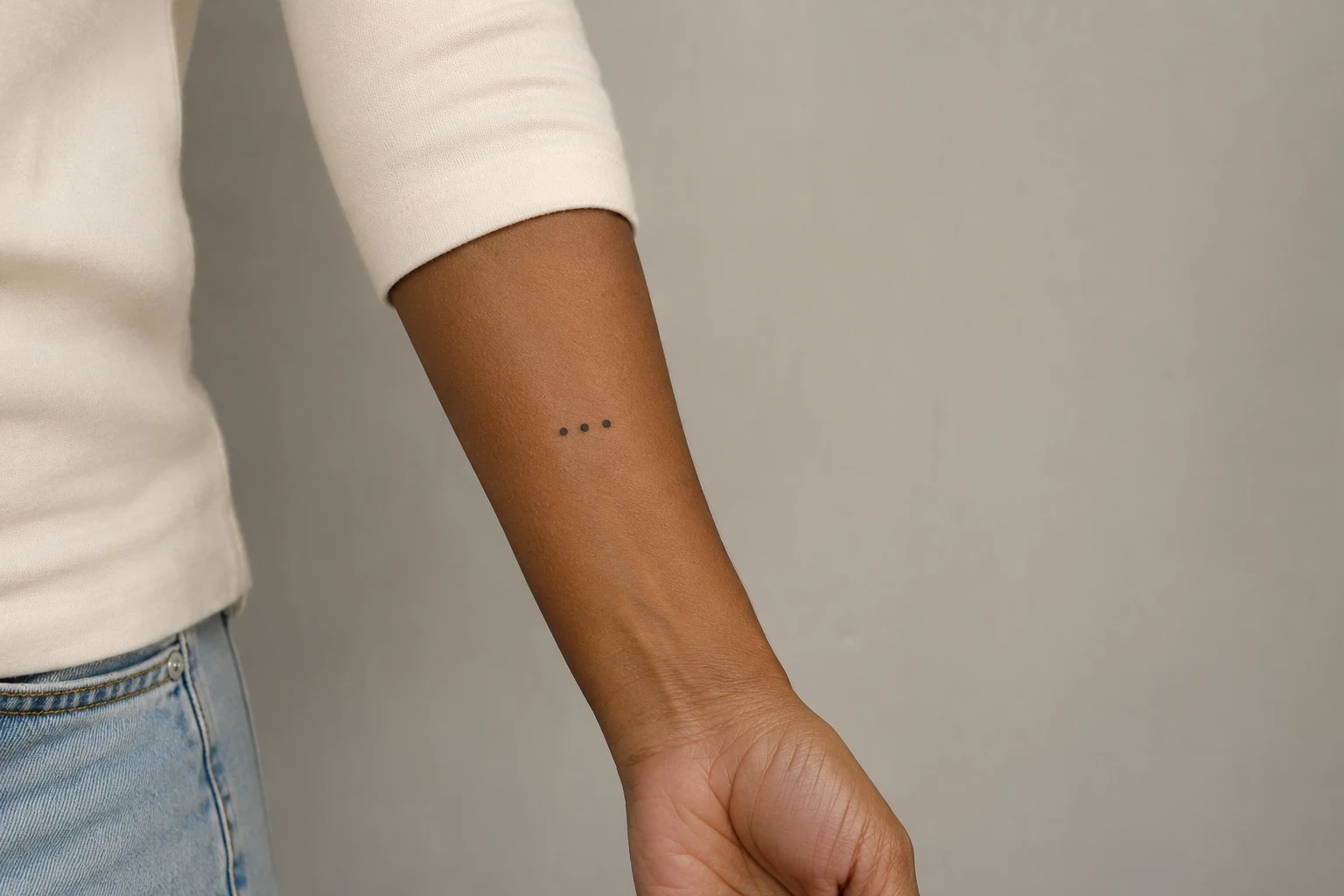
The semicolon is the quietest strength tattoo in common use. A sentence could have ended and did not.
It is small enough to be done in minutes and private enough that most people will never ask about it, which for a lot of wearers is the entire appeal.
I usually suggest joining it to something — a heartbeat line, a date, a small flower — because a semicolon alone can be mistaken for a stray mark. This guide to semicolon tattoos covers the common variations.
Botanical Strength: Roses, Thorns and Regrowth
Plants make a better argument for resilience than animals do, because a plant survives by regrowing rather than by winning.
A rose kept deliberately thorny is the clearest version. The thorns are not decoration; they are the point.
Other options that read the same way: a plant growing through stone, a tree with visible roots, or a flower that closes and reopens.
Lettering, Runes and Banded Designs
Script is the riskiest choice on this page. It ages worse than almost anything else, and a mistranslation is permanent.
If you want words, keep them short, keep the font simple, and have a native speaker check any language you do not read yourself.
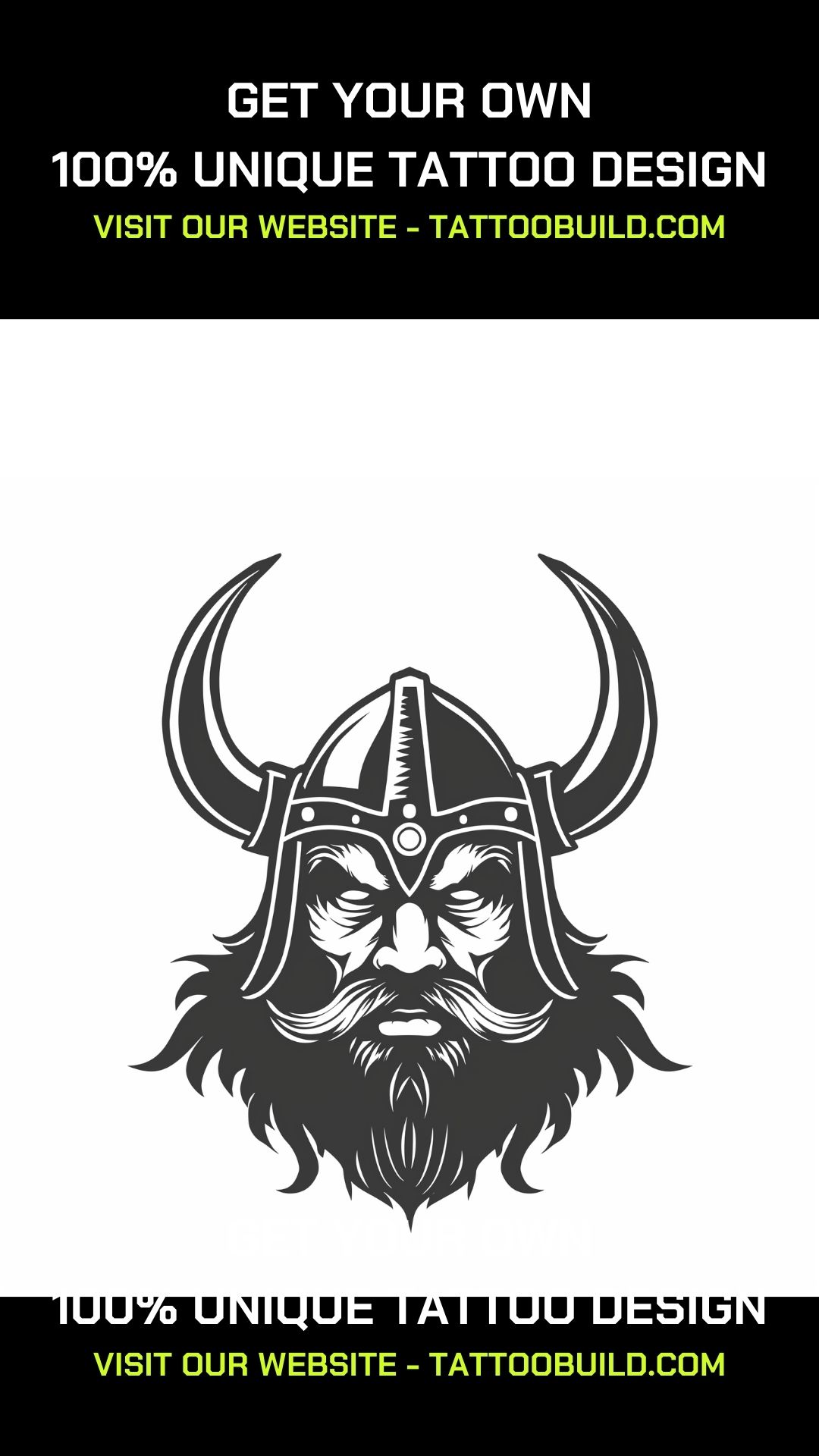
Banded and pattern-based designs are the safer version of the same instinct. If you are drawn to Norse motifs specifically, this collection of Viking tattoo ideas shows how much range the style has beyond the obvious.
One caution worth stating plainly: a handful of Norse symbols have been appropriated by extremist groups, so it is worth checking what a rune is currently associated with before you wear it.
Getting It Done Well: Practical Advice
Book a consultation before you book the tattoo. A good artist will redraw your idea at least once, and that redraw is usually the moment the piece becomes yours.
Look at healed work, not fresh photos. Fresh tattoos all look sharp; healed portfolios are where you find out whether an artist’s lines hold.
Eat properly beforehand and do not drink the night before. Sitting well is a real skill, and being under-slept or dehydrated makes a long session much harder than it needs to be.
On aftercare, follow the instructions your artist gives you over anything you read online, including this page. Broadly, most tattoos look surface-healed in around two to three weeks and settle over a few months, and the general guidance on caring for tattooed skin from the American Academy of Dermatology is a sensible baseline.
If you see spreading redness, heat, pus or a fever, see a doctor rather than waiting it out. Infections and allergic reactions to ink are uncommon but real, and the FDA’s consumer information on tattoo safety is worth reading before you sit down. Nothing here is medical advice.
Still Not Sure? Common Mistakes to Avoid
Choosing the symbol before the meaning. If you cannot say in one sentence what the tattoo is about, you are not ready to book.
Going too small for the detail level. This is the single most common regret I hear about, and it is entirely avoidable at the design stage.
Copying a specific artist’s piece exactly. Most artists will decline, and the ones who agree are usually not the ones you want.
Ignoring placement pain and healing. High-friction spots like the inner wrist and ribs need more care, and this look at meaningful forearm tattoos is a useful comparison if you are weighing visibility against practicality.
Rushing the artist search to save a few weeks. The wait for someone whose healed work you trust is always shorter than the wait for a cover-up.
Frequently Asked Questions
What tattoo symbolizes strength and courage the most clearly?
The lion is the most widely recognised, followed closely by the wolf and the bear. That recognition is both its advantage and its drawback: everyone reads it instantly, and everyone has seen it before. If you want the meaning to be obvious to other people, the lion is the safest pick. If you want it to be obvious mainly to you, a phoenix, an arrow or a semicolon will usually do more work.
Where is the best placement for a strength tattoo?
It depends on how visible you want it and how much detail the design carries. Outer forearm, upper arm and outer thigh are the workhorses because they are flat, relatively low pain, and heal predictably. Ribs, sternum and spine give you dramatic placement at the cost of a harder sitting. Inner wrist works for small pieces but tends to fade faster with sun exposure.
How much does a strength and courage tattoo usually cost?
Pricing varies enormously by city, artist and design, so any single number would be misleading. Most shops charge either an hourly rate or a flat price per piece, with a minimum charge for small work. The honest advice is to ask two or three artists for a quote on the same brief and compare, and to treat an unusually low quote as information rather than a bargain.
Is it worth waiting before getting a survival tattoo?
Usually, yes. In my experience, pieces designed in the middle of a crisis get redesigned or covered more often than ones designed a few months after. Waiting does not weaken the meaning; it tends to sharpen it. If you are unsure, sit with the drawing for a month and see whether you still want it.
Can a strength tattoo be small and still look good?
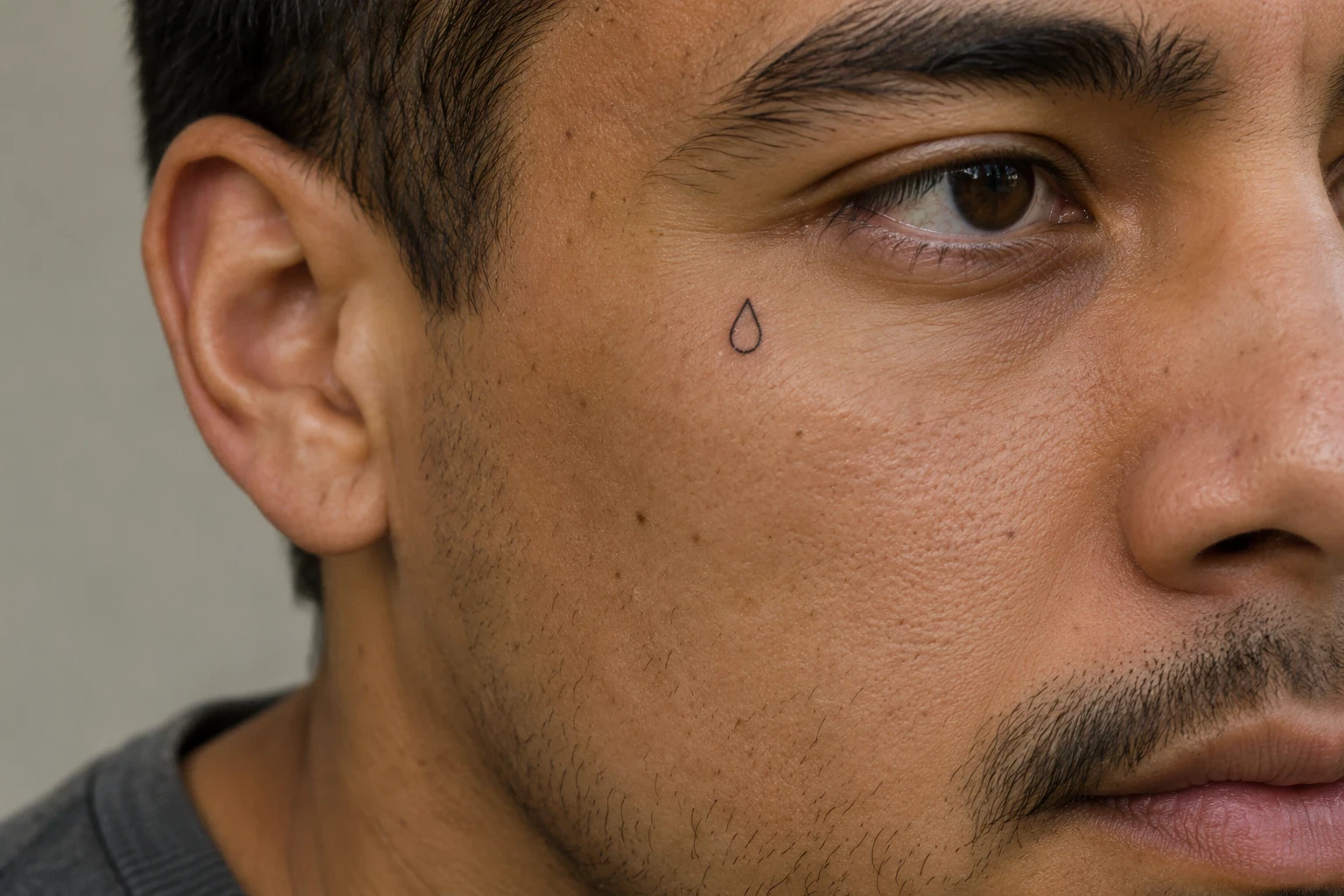
Yes, provided the design is built for the size rather than shrunk down to it. Simple symbols like arrows, semicolons, runes and single-line shapes hold up well at small scale. Detailed animals generally do not, because the fine work fills in as the ink settles over the years. Ask your artist to show you a healed example at the size you want.
Quick Summary
- Decide what kind of strength you mean before you pick a symbol — protection, endurance, survival and discipline all point to different designs.
- The lion, wolf, bear and tiger read as strength immediately; the phoenix, arrow and semicolon read as survival.
- Size the design for the detail it carries. Detail packed too tightly blurs as the ink settles over the years.
- Flat, low-friction placements like the outer forearm, upper arm and outer thigh heal most predictably.
- Judge an artist on healed photographs, not fresh ones.
- Check the history of any cultural or runic symbol before wearing it, including its modern associations.
- Follow your artist’s aftercare instructions, and see a doctor for spreading redness, heat, pus or fever.
- If you are in the middle of the thing the tattoo is about, waiting a few months usually improves the design.