Aztec tattoos for females sit in an unusual place: they are among the boldest designs in the shop book, and also among the most misunderstood. The single biggest factor in whether an Aztec piece still looks good in ten years is not the artwork — it is whether the line weight was chosen for the size of the canvas.
I have spent a long time looking at how these designs age, and the pattern is consistent. Pieces built from thick, confident geometry hold up. Pieces that try to shrink a temple carving onto a wrist do not.
That is the honest starting point for this guide. Below you will find the symbolism worth knowing, the six style families that actually work on female anatomy, and the placement trade-offs artists will raise before they raise them — plus a look at broader tribal tattoo ideas for women if you are still deciding on a direction.
Everything shown here is a real design from our collection, not a rendering.
Which Aztec Tattoo Style Is Right for You?
Five style families cover almost every Aztec request I have seen. They differ less in subject matter than in how much skin and how many sessions they demand.
| Style | Best For | Placement That Suits It | Typical Commitment | How It Ages |
|---|---|---|---|---|
| Black tribal / fret patterns | A first bold piece; strong graphic impact | Forearm, outer thigh, upper arm | One session, roughly 2–4 hours | Excellent — heavy black is the most durable option |
| Symbol & calendar panels | Meaning-led designs; stacking several glyphs | Inner forearm, spine, calf | One to two sessions | Good if each glyph is kept large enough to breathe |
| Goddess & deity portraits | Face detail, feather headdresses, softness | Thigh, back, upper arm | Two or more sessions | Depends heavily on size — small portraits blur first |
| Stone statue heads | Black-and-grey depth without colour | Outer thigh, shoulder, calf | Two sessions for a large piece | Strong — shadow-driven work softens gracefully |
| Warrior & full sleeves | A long-term project piece | Full arm, full back, leg sleeve | Multiple sessions over months | Very good when one motif leads and the rest supports |
What Aztec Tattoo Motifs Actually Mean
Most Aztec tattoo designs draw on Mexica art rather than on any historical tattoo tradition. The motifs come from carved stone, codex illustration and architecture — which is exactly why they translate so well into heavy blackwork.
The circular design people call the Aztec calendar is the Aztec sun stone, a monolith held by the National Museum of Anthropology in Mexico City. It is a cosmological carving rather than a working calendar, and its central face is the most-tattooed Aztec element there is.
Eagles and jaguars appear constantly because both were tied to warrior orders. Feathered serpents point to Quetzalcoatl; skull imagery usually traces back to death and renewal rather than to anything morbid.
Worth saying plainly: these are symbols from a living culture with living descendants. Most artists I have spoken with will happily talk through what a motif meant before they draw it, and that conversation tends to improve the design.
If you want to browse the raw shapes before committing, our collection of Aztec drawings and tattoo references is a useful place to start.
Aztec Tattoo Designs for Females That Actually Work
Six families, ordered roughly from the most forgiving to the most demanding.
1. Black Tribal and Fret Patterns
This is the entry point, and there is no shame in that — it is also where the best-ageing Aztec work lives.
Fret patterns, stepped meanders and banded geometry are built from thick strokes and clean negative space. When I look at older Aztec pieces that still read cleanly from across a room, they are almost always this style.
The design decision that matters is where the band stops. On a forearm, ending the pattern at the wrist bone rather than mid-forearm gives it a deliberate edge instead of a cut-off look.
Ask your artist to draw the pattern on with a marker before you commit to the stencil. Geometry that looks balanced on paper often needs adjusting once it wraps a curved limb.
2. Symbol and Calendar Panels
A panel stacks several glyphs into one vertical column — sun stone segments, day signs, serpent heads, stepped borders.
The mistake I see most often is cramming six symbols into a space that comfortably holds three. Each glyph needs its own margin or the whole panel reads as a grey smudge after a few years.
Inner forearm and spine both suit this format because they give you length without much width. A calf works too, and takes the needle more easily than the shin.
If a specific symbol matters to you, have it sized as the anchor and let everything else be smaller supporting shapes.
3. Aztec Goddess and Deity Portraits
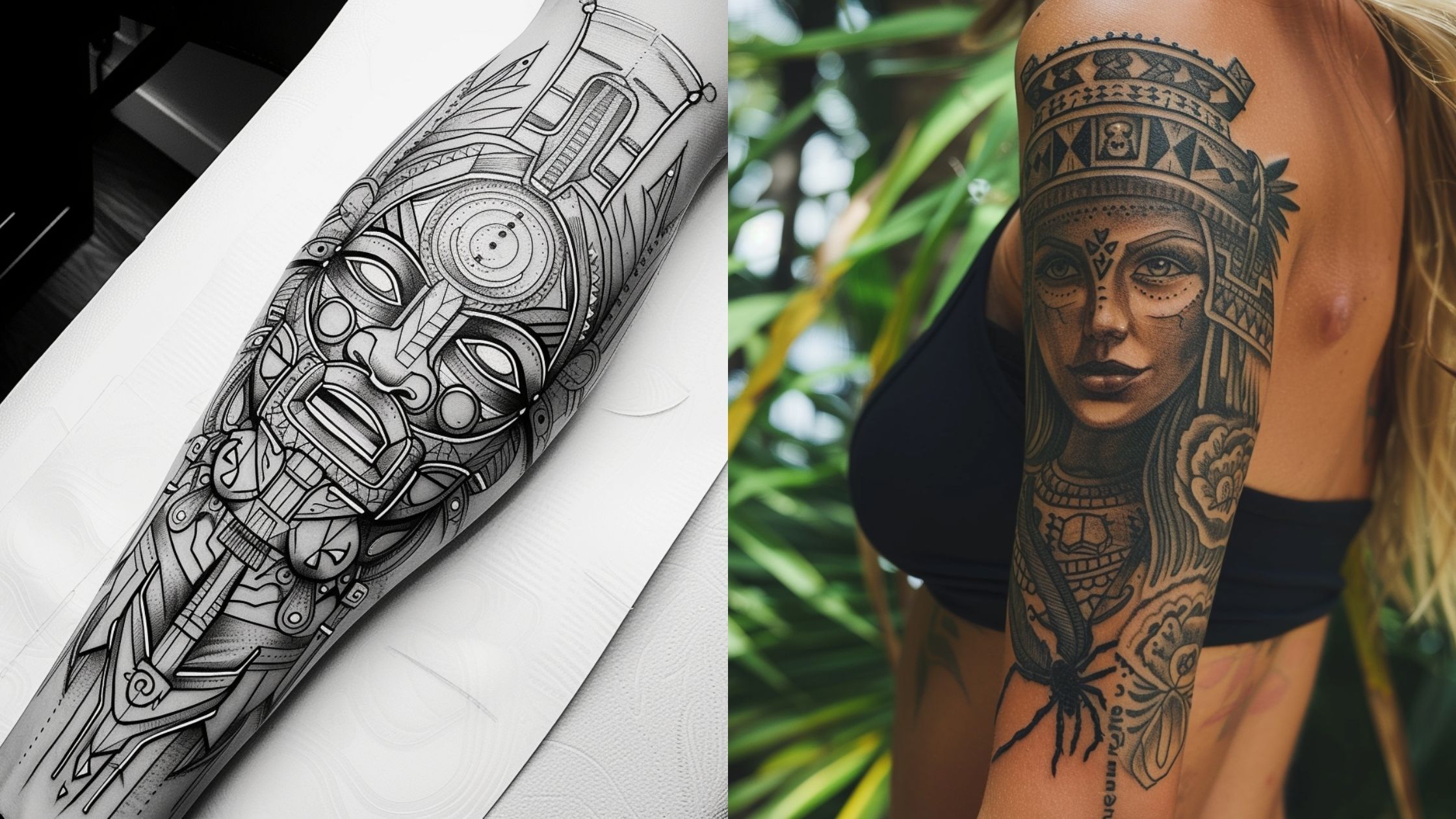
Portrait work is where Aztec designs pick up softness — the headdress feathers, the jewellery, the face itself.
These are also the pieces most likely to disappoint at small sizes. A face needs enough room for the artist to build shadow, and shadow is what makes it look like carved stone rather than a sticker.
In my experience the thigh is the most reliable canvas for a first portrait: flat, generous, and easy to keep out of the sun while it heals.
People often cross-shop these against Egyptian tattoo ideas, since both traditions lean on profile faces and elaborate headwear.
4. Full Aztec Sleeves
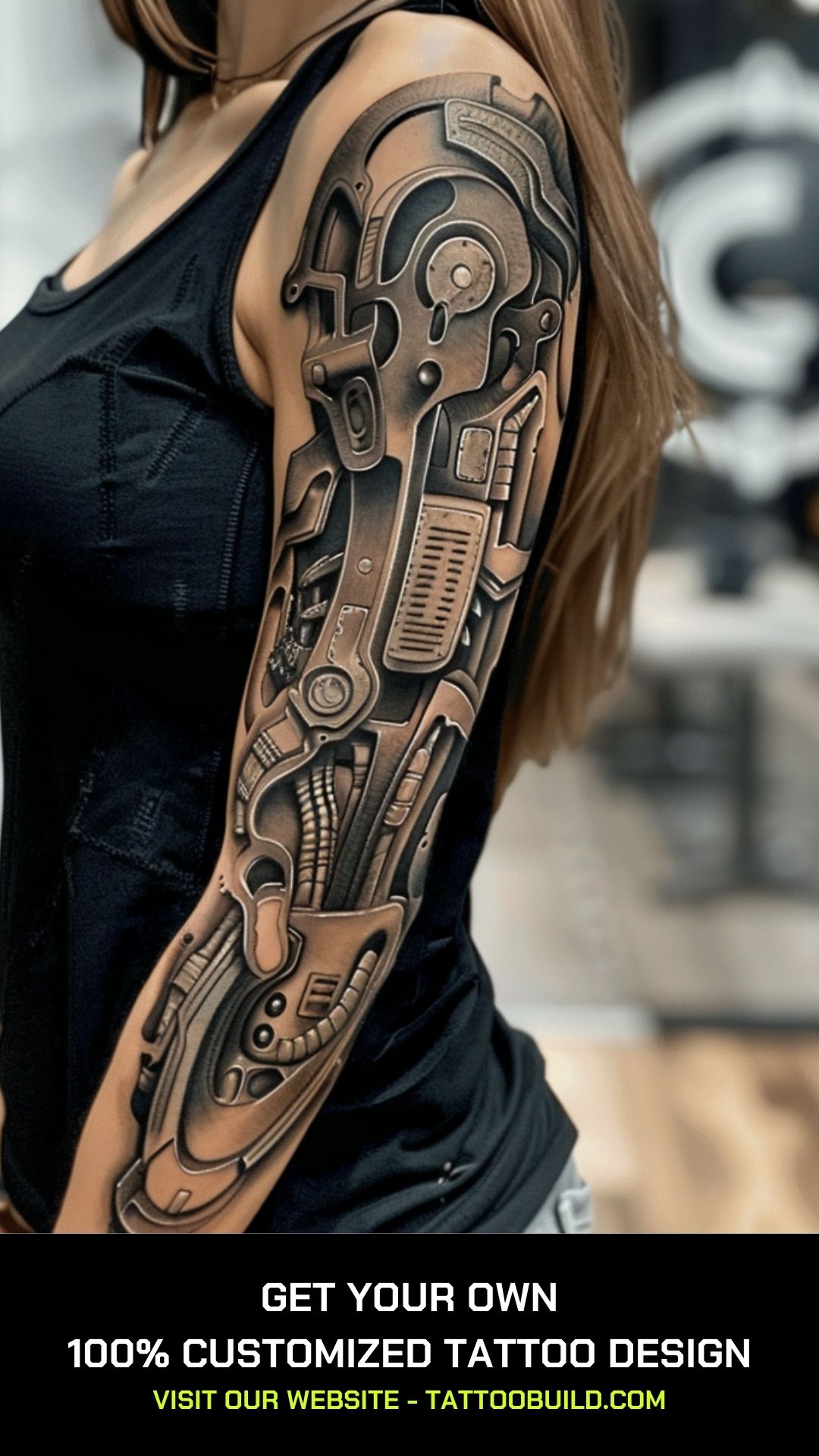
A sleeve is a project, not a tattoo. Expect several sessions spread over months, and expect the layout conversation to take longer than you think.
The sleeves that work have a hierarchy: one dominant motif — usually a sun stone or a warrior head — with fret work and texture filling around it.
The ones that do not work are collections of equally sized elements competing for attention. Every artist I have asked says the same thing about this.
Budget realistically and book sessions close enough together that the style stays consistent. Our guide to full sleeve tattoo ideas for women covers the planning side in more depth.
5. Stone Statue Heads
Statue heads are my favourite recommendation for someone who wants depth without colour.
Because the reference is already carved stone, the artist is drawing shadow rather than inventing it. That makes the finished piece unusually convincing, and it softens well as it ages.
Outer thigh and outer shoulder both give a flat, stable surface. Avoid areas that fold constantly if you want the shading to stay even.
Keep the crop tight. A head rendered large enough to fill the space beats a full statue shrunk to fit it.
6. Leg and Thigh Pieces
Legs give you the two things Aztec designs want most: length and uninterrupted surface.
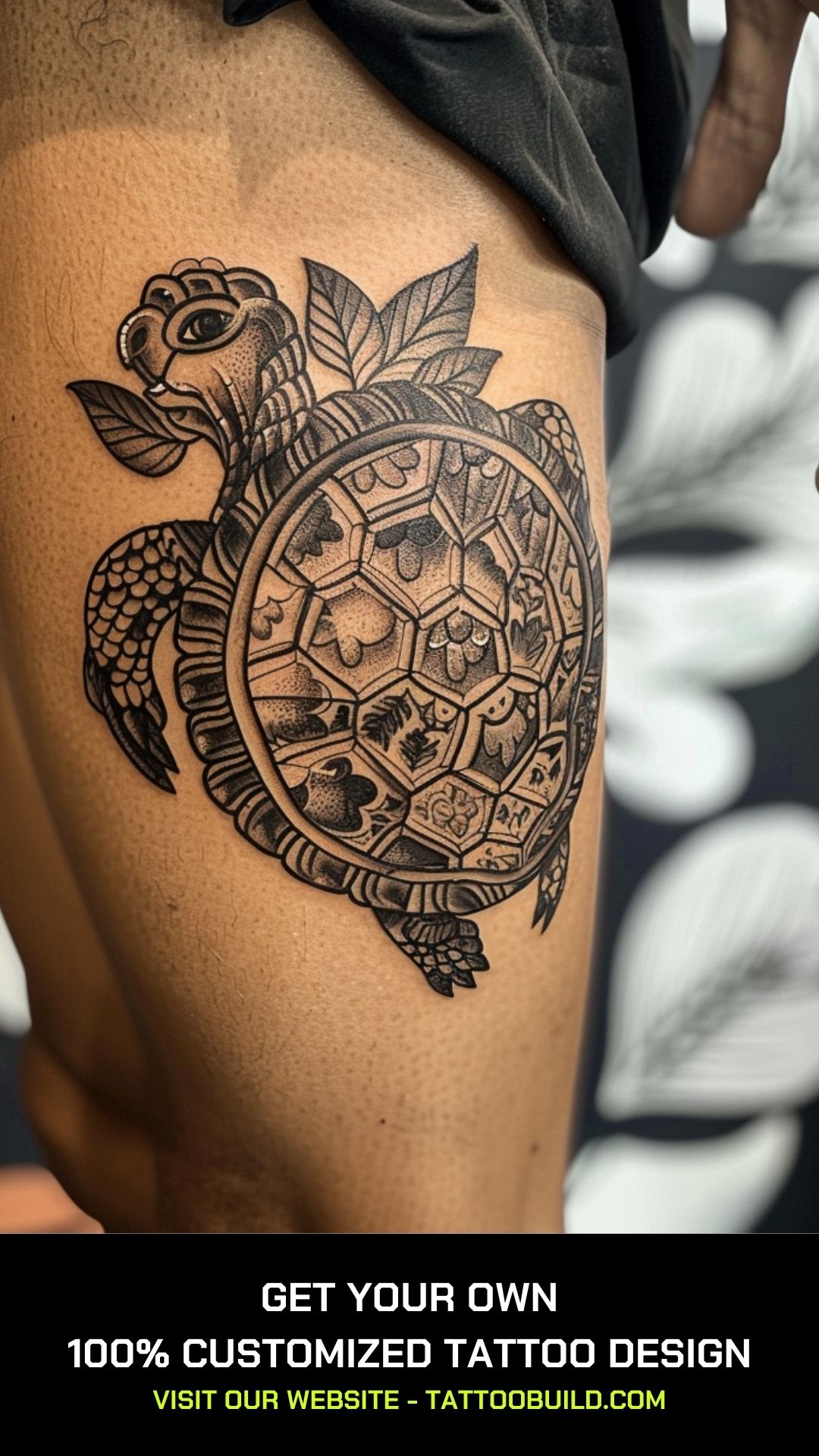
A calf takes a vertical panel beautifully. A thigh takes almost anything, and it is the placement most people pick when they want something substantial that stays private day to day.
The planning question on a thigh wrap is where the pattern terminates on the inner leg — that area is more sensitive and heals a little slower for most people.
More options in our roundup of the best leg tattoos for women.
7. Warrior Figures and Back Pieces
Warrior imagery — eagle knights, jaguar knights, headdressed figures — is the most requested Aztec subject I come across.
On an upper arm, the constraint is keeping the face legible. On a back, the constraint is symmetry: the spine is a hard centre line and the eye notices when a design ignores it.
Back pieces also need a plan for what happens at the shoulder blades, which move independently and can distort a rigid grid.
If a large canvas appeals, see our full back tattoo ideas for women before you settle on a layout.
Variations Worth Considering
Not every Aztec tattoo has to be a large blackwork commitment. Three variations come up often enough to be worth naming.
Aztec Elements Blended Into Florals
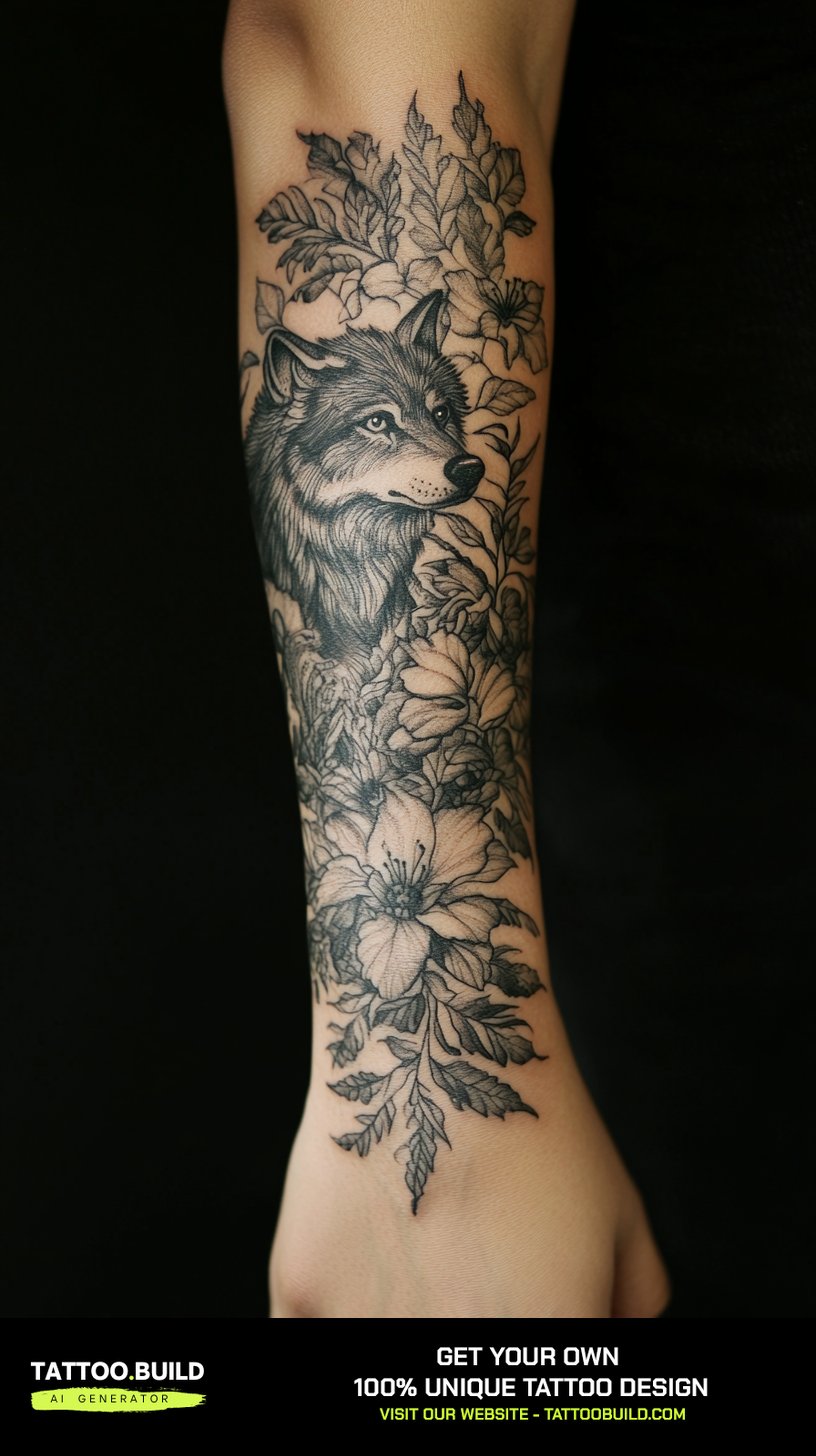
Fret borders framing roses or agave is a common request, and it softens the geometry considerably.
It works best when the Aztec element is structural — a border, a frame, a base — rather than sitting beside the florals as an equal.
Fine-Line Aztec Work
Fine-line versions exist and can look lovely fresh. Be honest with yourself about longevity: thin lines packed closely together are the first thing to blur.
If you want fine line, keep the composition sparse and the spacing generous.
Small Single-Symbol Tattoos
One glyph, done well, at two or three inches, is a perfectly legitimate Aztec tattoo.
It is also the lowest-risk way to find out whether you like living with the style before committing to a sleeve.
Getting It Right: Practical Advice
Bring reference images of the style you want, not just the subject. Two artists can draw the same sun stone in completely different weights.
Ask to see healed photos, not fresh ones. Fresh blackwork always looks crisp; healed blackwork tells you whether the artist packs ink properly.
Placement drives comfort more than style does — our breakdown of the most painful tattoo spots is worth a look before you pick a location.
For heavy black coverage, eat a real meal beforehand and expect the session to run long. Large solid-black areas are as much about endurance as artistry.
Aftercare is where good work gets protected. Follow your artist’s instructions over anything you read online, keep the area clean, and use sun protection once it has fully healed — UV exposure is the main long-term enemy of black ink. General guidance from Mayo Clinic and the US FDA is worth reading before your first large piece.
If you develop spreading redness, swelling that worsens after the first few days, discharge, or a fever, contact a doctor rather than waiting it out. This article is design guidance, not medical advice, and infections and ink allergies are things a professional needs to look at.
Common Mistakes — and What to Do If You Are Still Not Sure
Sizing down is the mistake that causes the most regret. An Aztec design shrunk to fit a small space loses the negative space that makes it readable.
Picking a motif purely on looks is the second. It is a permanent symbol from a specific culture, and knowing what it meant costs you one conversation.
Choosing an artist who does not regularly work in heavy black is the third. Blackwork packing is a specific skill, and portfolios make it obvious quickly.
Still undecided? Looking at blackwork tattoo designs more broadly can help you separate what you like about Aztec work from what you like about bold black tattoos in general.
And if the pull is really about what the tattoo says rather than how it looks, our collection of strength tattoo ideas for women may get you closer, faster.
Frequently Asked Questions
Are Aztec tattoos disrespectful for someone without Mexican heritage?
Opinions differ, and it is fair to say there is no single answer. Aztec motifs come from Mexica culture, whose descendants are alive today, so the respectful approach is to learn what a symbol meant before wearing it. Many artists of Mexican heritage tattoo these designs for clients of all backgrounds and are happy to discuss context. If it matters to you, ask — that conversation is usually welcomed rather than resented.
How much does an Aztec tattoo for females typically cost?
Cost depends far more on time than on style, and hourly rates vary widely by city and by artist. A forearm fret band might be a single sitting; a full sleeve is a multi-session project priced accordingly. Ask for a total estimate and a session plan rather than a per-hour figure alone. Reputable artists will give you a realistic range up front.
Do Aztec tattoos hurt more than other designs?
The style itself is not unusually painful, but the technique can be. Large areas of solid black require repeated passes over the same skin, which many people find more tiring than a linework piece of similar size. Placement matters more than style — ribs, spine and inner thigh are commonly reported as harder than outer arm or outer thigh. Tell your artist if you need breaks; that is normal.
What is the best placement for a first Aztec tattoo?
Outer forearm and outer thigh are the two I would suggest most often. Both are flat enough to keep geometry undistorted, easy to keep clean during healing, and comfortable for most people to sit through. They also let you judge how you feel about the style at a decent size before scaling up. Avoid hands, fingers and feet for a first piece — they fade fastest.
Can Aztec tattoos be done in colour?
Yes, though the majority are black or black and grey, which suits the carved-stone origin of the imagery. Colour can work well on feather headdresses and on codex-inspired designs, which were originally painted. Bear in mind that colour generally needs more maintenance over the years than solid black. Discuss it with your artist before the stencil stage, as colour changes how the design should be drawn.
Quick Summary
- Line weight matched to canvas size is the single biggest factor in how an Aztec tattoo ages.
- Black tribal and fret patterns are the most forgiving starting point and the most durable long term.
- Symbol panels need generous spacing — three well-sized glyphs beat six cramped ones.
- Goddess and warrior portraits need a large canvas; the thigh and back are the safest choices.
- Statue heads deliver depth without colour because the reference is already carved shadow.
- A full sleeve should have one dominant motif with everything else supporting it.
- Choose an artist with healed blackwork in their portfolio, not just fresh photos.
- Learn what your motif meant before you wear it, and see a doctor for any healing that looks wrong.