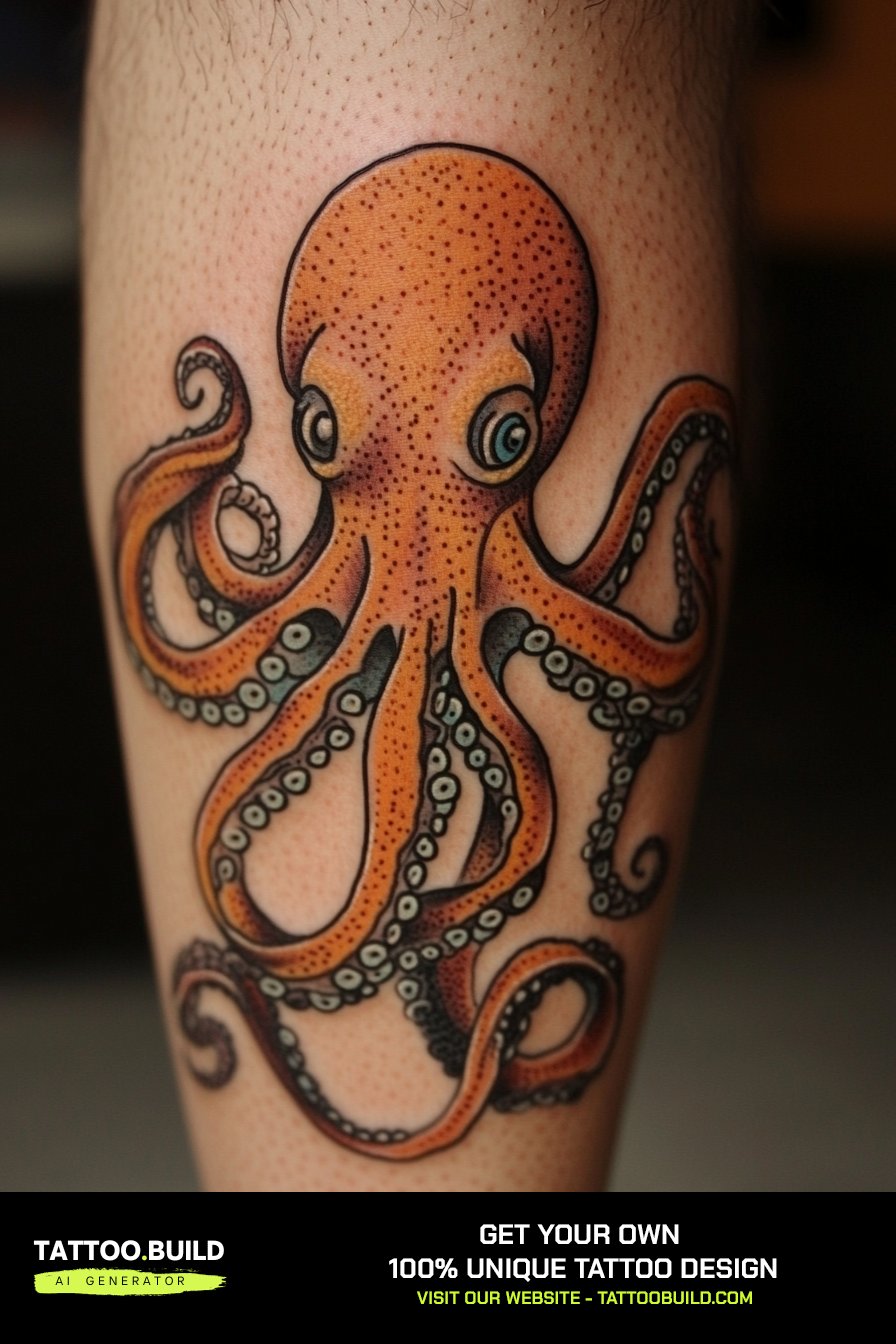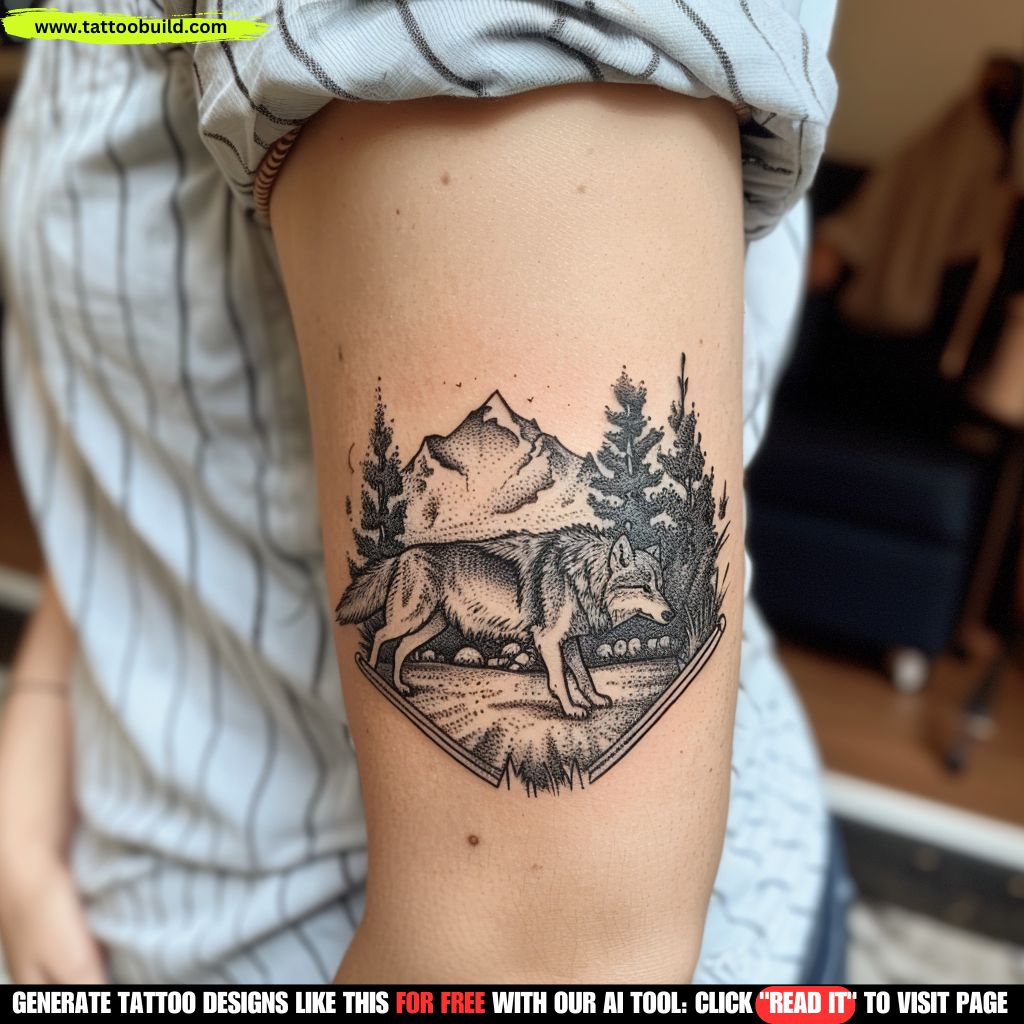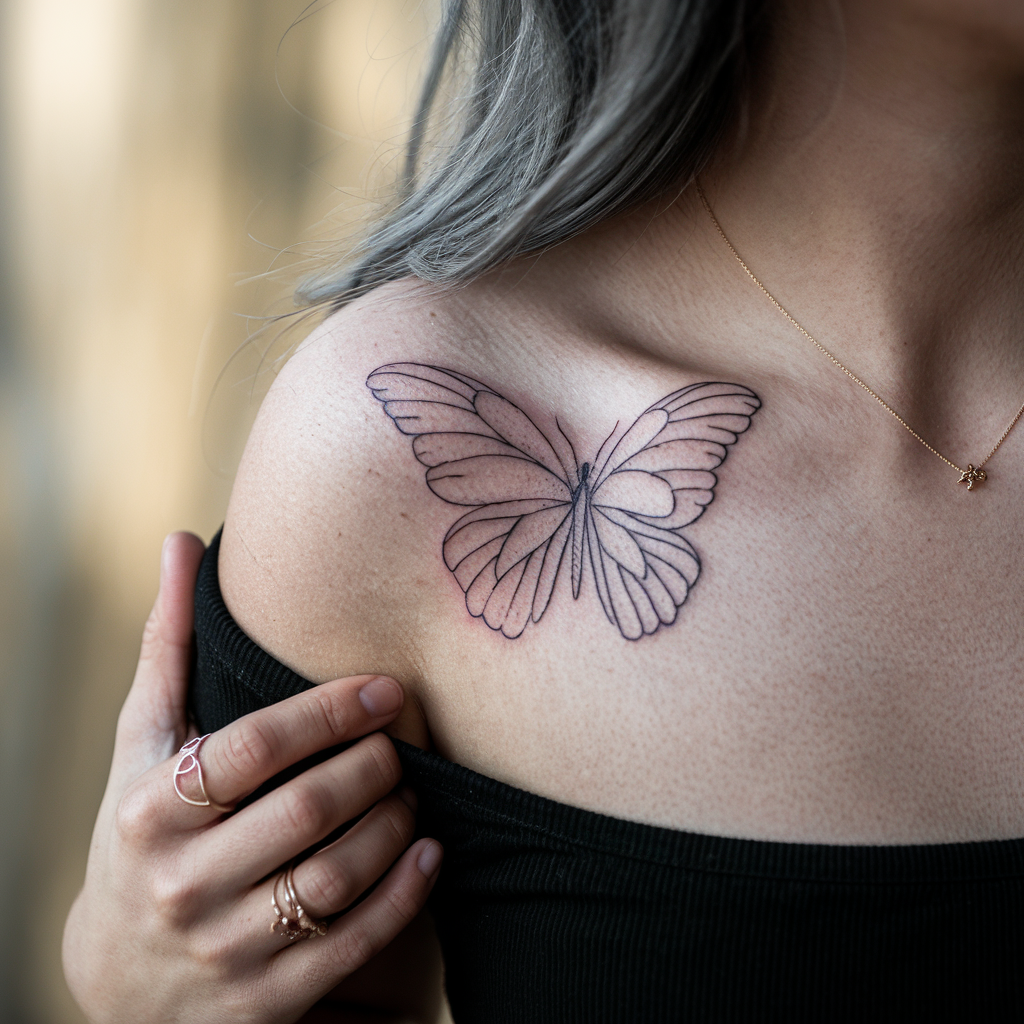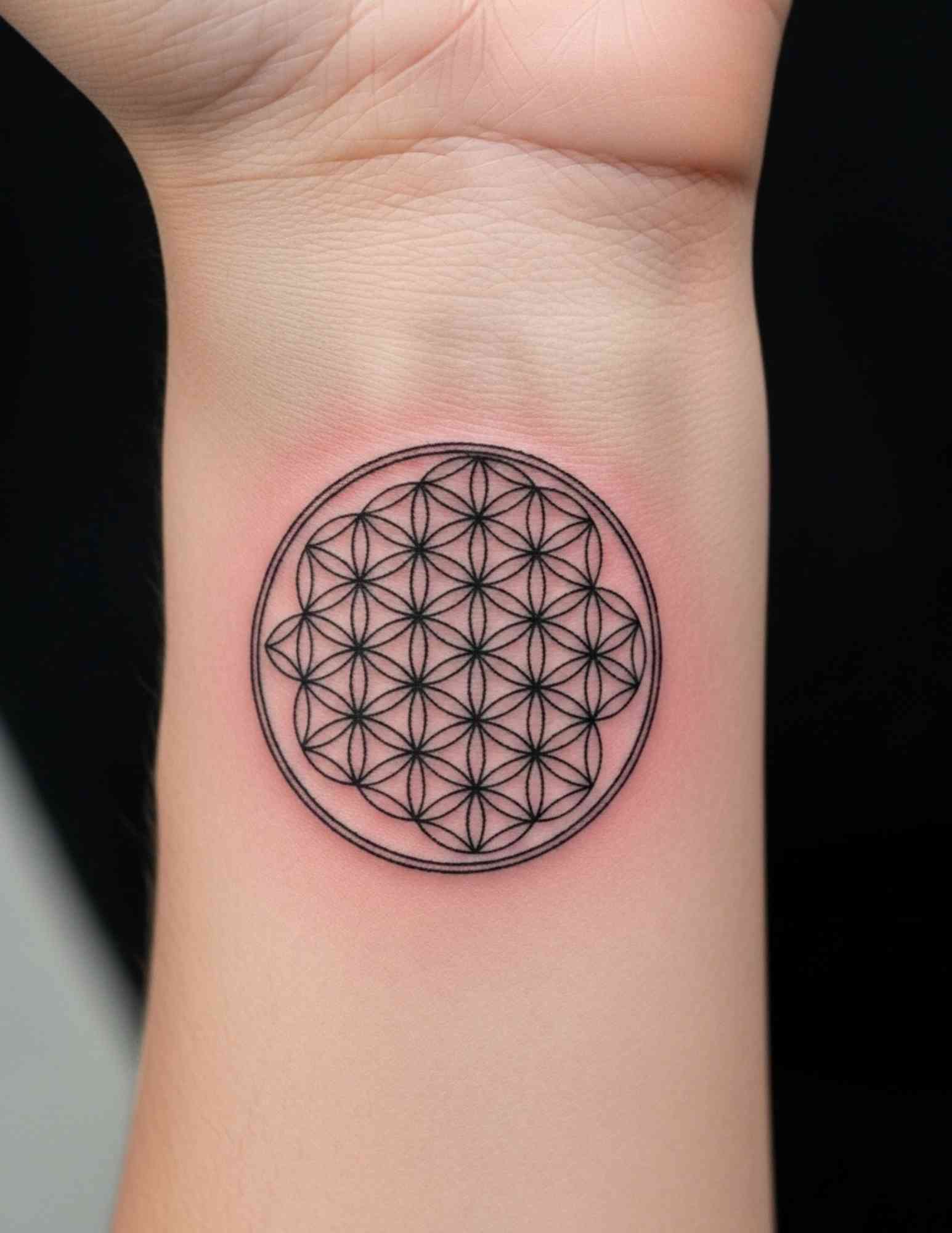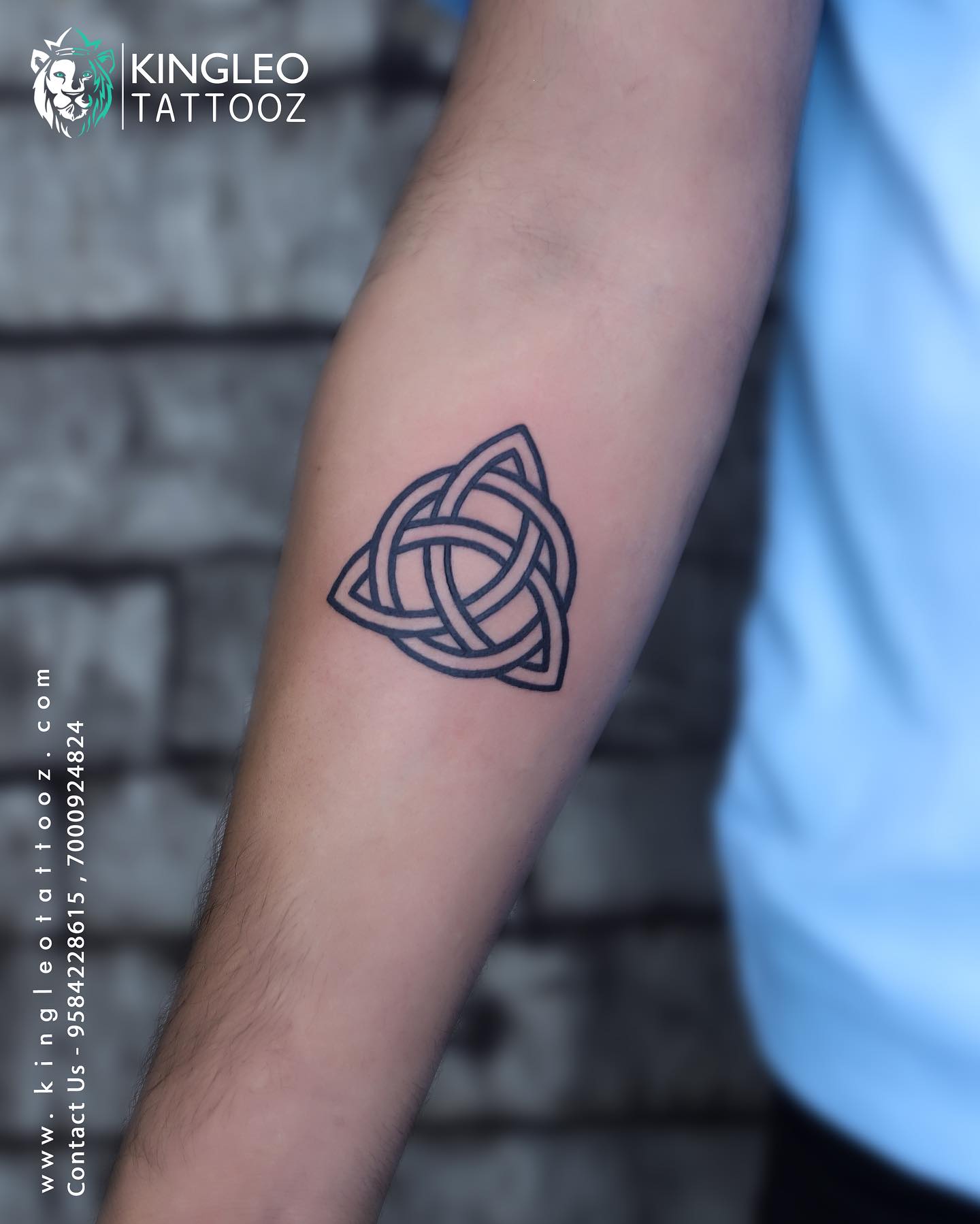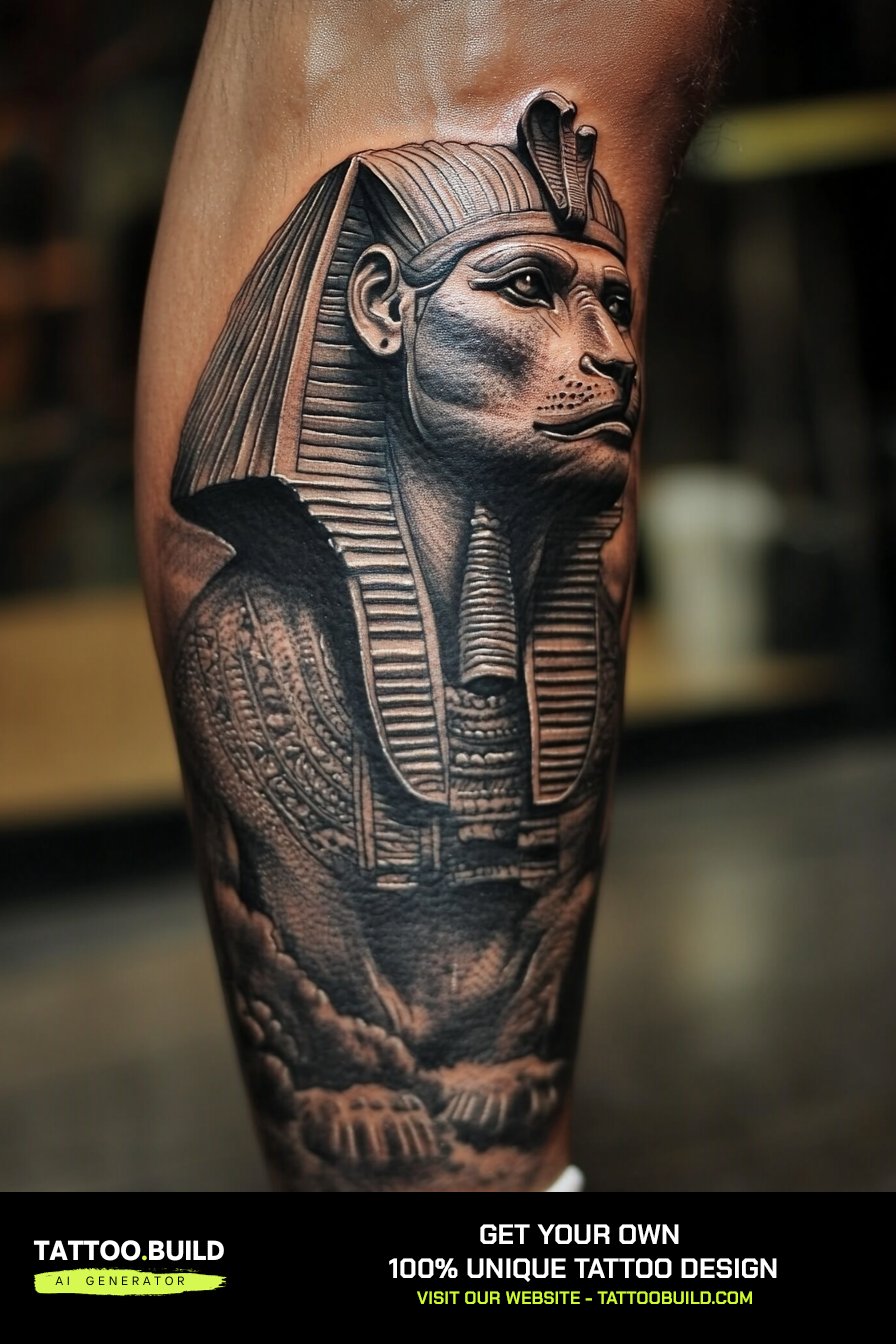
I have been collecting Egyptian tattoo references for years, and the same thing happens every time I show a folder of them to someone: they stop on the ankh, the eye, or the jackal, and they want to know what it actually means. Egyptian tattoos work because the symbols were designed to be read at a glance three thousand years before anyone thought about tattoo flash.
That is not an accident. Egyptian religious art was built for carved stone and painted plaster, so the shapes are simple, symmetrical and high contrast — exactly the qualities that survive in skin.
The trade-off is that these symbols carry weight. An ankh is not a decorative cross, and Anubis is not a wolf. Getting the meaning right matters as much as getting the linework right, and the two are easier to combine than most people expect.
This guide walks through 40 Egyptian tattoo ideas grouped by symbol, with honest notes on what each one holds up like over time. If you like the clean, structured look you will see in a lot of these, it overlaps heavily with geometric tattoo designs.
Which Egyptian Tattoo Style Is Right for You?
Most Egyptian pieces land in one of five style lanes. This is roughly how I explain the differences when someone is deciding.
| Style | Best For | Typical Size & Sitting | How It Ages |
|---|---|---|---|
| Bold blackwork | Ankh, Eye of Horus, hieroglyph bands | 2–6 in, often one sitting | The most forgiving option — thick lines stay readable |
| Fine-line & dotwork | Scarabs, geometric Anubis, small ankhs | 2–5 in, one to two sittings | Softens noticeably; expect a touch-up in a few years |
| Black & grey realism | Sphinx, Tutankhamun, Nefertiti portraits | 6 in and up, multiple sittings | Holds well at size; small versions blur first |
| Neo-traditional colour | Bastet, Cleopatra, colour scarabs | 4–8 in, one to three sittings | Strong outlines carry it; colour needs sun protection |
| Ornamental / band | Hieroglyphic cuffs, wrap-around panels | Wraps the limb, two or more sittings | Very well, provided the spacing was drawn generously |
Why Egyptian Symbols Read So Clearly on Skin
Ancient Egyptian imagery was made for durability. It was carved into limestone, painted on tomb walls and pressed into gold, and none of those materials reward fussy detail.
What you get instead are strong silhouettes and repeated geometry — the T-shape of the ankh, the almond of the wedjat eye, the triangular ears of a jackal. A tattoo lives or dies on silhouette, and Egyptian art hands you a good one for free.
There is also a large, well-documented visual record to work from. The Met’s Egyptian Art collection holds roughly 30,000 objects spanning about 5,000 years, and browsing that collection is a better reference source than a page of copied tattoo flash.
In my experience the pieces that disappoint people are the ones where an artist has drawn an Egyptian-looking thing from memory. The proportions of a nemes headdress or the internal markings of the wedjat eye are specific, and getting them wrong is visible even to people who could not name the error.
Most of these designs also sit comfortably in black and grey, which is why so many of them overlap with black and grey tattoo ideas.
40 Egyptian Tattoo Ideas, Symbol by Symbol
1. The Ankh — The Symbol of Life
The ankh is the hieroglyph for “life,” and in tomb art it is usually held to the nose of a king by a god — the gesture of granting breath.
It is the single most forgiving Egyptian tattoo. The shape is symmetrical, vertical and legible at almost any size, which is why it works on a wrist, a spine or a finger equally well.
Every artist I have asked prefers to place it along the inner forearm or the centre of the spine, because those are the two spots where the vertical axis of the body matches the vertical axis of the symbol.
Variations worth considering: solid black for maximum longevity, dotwork shading for something softer, or an ankh with a wedjat eye set inside the loop. Keep the loop generously open — if it is drawn too tight, ink spread will close it over ten or fifteen years.
2. The Eye of Horus — Protection and Healing
The wedjat, or Eye of Horus, comes from the myth in which Horus loses an eye in his conflict with Set and it is restored. It became a symbol of protection, healing and wholeness, and was worn as an amulet by the living and the dead.
The design has a fixed internal structure: the brow line, the pupil, the falcon-marking teardrop and the curled spiral beneath it. Those four elements are what make it the Eye of Horus rather than a decorative eye.
When I tested this on friends, the versions with a clean, uniform outline were recognisable instantly, while the softly shaded ones needed a second look. That is a fair guide to how each will read in twenty years.
It suits the forearm, the back of the neck, the sternum and behind the ear. If you are drawn to the eye motif more broadly rather than the Egyptian version specifically, there is a wider range of eye tattoo designs worth comparing first.
3. The Scarab — Rebirth and the Rising Sun
The scarab represents Khepri, the god associated with the morning sun. Egyptians watched dung beetles roll a ball across the ground and read it as a mirror of the sun being pushed across the sky — hence rebirth and renewal.
It is my favourite Egyptian subject to look at because it gives an artist so much internal structure to work with: wing cases, legs, and the sun disc above.
The winged version is the one that solves placement problems. Its horizontal spread suits a chest, a sternum or the space between the shoulder blades, while the compact version fits a forearm.
A word of caution from experience: very fine leg detail on a small scarab is the first thing to blur. If you want it under about three inches, ask your artist to simplify the legs rather than shrink them. The sun disc above the beetle is also a natural bridge into sun tattoo designs if you want to expand the piece later.
4. Anubis — Guardian of the Dead
Anubis is the jackal-headed god of embalming and the guide who leads the dead to judgement, where the heart is weighed against the feather of Maat.
People usually choose it for one of two reasons: as a memorial piece, or as a protective figure. Both are consistent with the original role, which is not always true of tattoo symbolism.
The jackal head is a gift for geometric interpretation — the ears, snout and collar are already close to straight lines, so linework and dotwork versions look intentional rather than forced.
Draw the ears long and the snout narrow. The most common failure I see is an Anubis that reads as a Doberman, and it almost always comes down to a snout that is too short and ears that are too rounded.
5. The Sphinx, the Pyramids and the Pharaohs
This is the group that demands the most skin. Sphinx and pharaoh portraits are effectively stone sculpture translated into black and grey, and sculpture needs room for its shadows.
The gold mask of Tutankhamun is the most requested single subject in this category, and it converts to black and grey better than most people expect — the striped nemes headdress does the work that colour would otherwise do.
For the Sphinx, the strongest compositions overlap the pyramid behind the figure so the whole thing reads as one silhouette. Two separate objects floating side by side always looks like two tattoos.
Under about five inches, portraits of this kind are a gamble. In most cases I would rather see someone go bigger on the calf or the outer arm than squeeze a pharaoh onto a wrist.
6. Cleopatra, Nefertiti and the Goddesses
Nefertiti’s painted bust and the image of Cleopatra are the two portraits most people mean when they ask for an Egyptian queen tattoo, and they are visually very different requests.
The Nefertiti bust is a profile with a distinctive flat-topped crown, so it works as a clean silhouette. Cleopatra is usually drawn as an interpretation rather than a likeness, which gives an artist far more freedom.
Goddess figures — Isis with her outstretched wings, or a vulture headdress framing the face — give you a built-in way to fill a wide area without inventing filler.
The thigh is an underrated placement for these. It is a large flat panel that takes detail well and is easy to keep out of the sun, and there are plenty of thigh tattoo ideas that show how the area handles a big portrait.
7. Bastet, Sekhmet and the Egyptian Cat
Bastet is the cat goddess associated with the home, protection and fertility. Sekhmet is her fiercer counterpart, lioness-headed and connected with war and healing.
They are frequently confused. If the head is a domestic cat it is Bastet; if it is a lioness, usually crowned with a sun disc, it is Sekhmet.
The seated cat pose is drawn from Egyptian bronzes, and that flat, side-on posture is what makes a cat tattoo read as Egyptian rather than as a pet portrait.
Colour suits this group better than any other Egyptian subject, because the source bronzes were often gilded and inlaid. If you are leaning toward Sekhmet, it is worth looking at lion tattoo ideas to see how artists handle a big cat’s face at different sizes.
8. Hieroglyph Bands and Minimal Geometry
A hieroglyphic band wraps the forearm, bicep or ankle like a cuff, and it is one of the few Egyptian designs that improves as it gets longer.
The honest warning here: have any hieroglyphs you intend as words checked by someone who reads them. Egyptian writing is not a one-to-one alphabet, and “my name in hieroglyphs” is usually a phonetic approximation at best. Decorative panels avoid the problem entirely.
At the minimal end, a line-shaded pyramid or a simple triangle gives you the Egyptian reference without committing to a figure. These are the pieces people are least likely to regret.
Bands need spacing drawn deliberately, since the gaps close up as ink settles. If you are still choosing a spot, our guide to forearm tattoo ideas covers how the wrap works on different arm shapes.
Alternatives and Variations Worth Considering
If the classic symbols feel too familiar, there are several directions that keep the Egyptian reference without the obvious motifs.
Djed, Was and Other Lesser-Known Symbols
The djed pillar (stability, associated with Osiris) and the was sceptre (power) are both simple vertical shapes that tattoo as cleanly as an ankh but are far less common.
The feather of Maat is another — a single ostrich plume standing for truth and cosmic balance, and one of the quietest Egyptian tattoos you can get.
Colour Versus Black and Grey
Black and grey is the default for stone subjects: sphinxes, statues, carved reliefs. Colour belongs with painted subjects: tomb-wall figures, gilded bronzes, Bastet, Cleopatra.
Matching the palette to the original material is the simplest rule I know for making an Egyptian tattoo look considered rather than arbitrary.
Small Pieces Versus Full Sleeves
Ankhs, eyes, scarabs and feathers all work small. Portraits, sphinxes and multi-figure scenes do not, and shrinking them is the most common regret in this category.
If you are heading toward a full arm, plan the whole composition before the first session. Sleeves built one symbol at a time tend to end up as a collection rather than a scene — the sleeve tattoo ideas worth studying are almost always the ones that were mapped out in advance.
Practical Advice Before and After You Get Inked
Choose an artist by portfolio, not by proximity. Egyptian work splits into ornamental linework and black and grey realism, and very few artists are genuinely strong at both — ask to see healed photos, not just fresh ones.
Budget for size rather than trying to fit a design to a budget. Cost scales with hours, and a rushed pharaoh portrait is worse value than a well-drawn ankh; our breakdown of sleeve tattoo costs gives a realistic sense of what larger pieces involve.
On aftercare, follow the instructions your artist gives you rather than advice from the internet, including this page. The American Academy of Dermatology’s guidance on caring for tattooed skin covers the basics well: keep it clean, keep it moisturised, do not pick, and protect it from the sun once healed.
Anything that looks like an infection or an allergic reaction — spreading redness, heat, pus, fever, a rash that will not settle — is a matter for a doctor, not a forum thread. The same goes for removal: laser removal is a medical procedure and belongs with a qualified practitioner, never a home kit.
Still Not Sure? Common Mistakes to Avoid
The mistake I see most often is scale. A design that looks perfect on a phone screen is frequently being viewed at twice the size it will be tattooed.
The second is unverified text. Hieroglyphs, cartouches and “translations” pulled from image searches are unreliable — if the meaning matters to you, get it checked before the needle, not after.
The third is mixing pantheons. Egyptian gods next to Norse runes or Greek figures rarely reads as intentional, and it is the hardest thing to fix later.
If you want the ancient-symbolism feel but Egyptian imagery is not quite it, Aztec tattoo ideas cover similar ground with a different visual language, and are worth a look before you commit.
Frequently Asked Questions
What does an Egyptian ankh tattoo mean?
The ankh is the ancient Egyptian hieroglyph for life. In tomb and temple art it is usually shown being held to a king’s face by a deity, representing the gift of breath and eternal life. As a tattoo it is generally worn to mean life, vitality or continuity, and it carries no requirement of religious belief. It is also one of the most durable Egyptian designs because the shape is simple and symmetrical.
Is it disrespectful to get an Egyptian tattoo?
Most Egyptologists and artists I have spoken to treat ancient Egyptian symbols as part of a shared historical heritage rather than a closed religious tradition, so a well-researched Egyptian tattoo is not usually considered appropriation. The respectful approach is to know what your symbol meant and to have it drawn accurately. Where people do cause offence is by treating hieroglyphs as decoration for text they have not verified. If you are unsure about a specific symbol, read about its original use before booking.
Which Egyptian tattoo ages the best?
Bold blackwork ages best, so an ankh, a strongly outlined Eye of Horus or a hieroglyphic band will typically stay crisp the longest. Fine-line and dotwork pieces look beautiful when fresh but soften over the years and often need a touch-up. Large black and grey portraits also hold up well, provided they were tattooed at a size that let the artist put real shading in. Sun exposure is the biggest variable in all cases.
Where is the best placement for an Egyptian tattoo?
It depends on the shape of the symbol. Vertical designs such as the ankh, the djed pillar or a winged scarab suit the forearm, spine and calf, while wide designs such as an outstretched-wing scarab or Isis suit the chest, sternum and upper back. Portraits need a large flat area, which usually means the thigh, calf or outer arm. Bands and cuffs are made for the forearm, bicep and ankle.
How much does an Egyptian tattoo cost?
Cost depends on size, detail and your artist’s hourly rate rather than on the subject itself, so prices vary widely by city and studio. A small ankh is typically a shop-minimum piece, while a black and grey pharaoh portrait is several hours of work and often more than one session. The most reliable approach is to send your reference to two or three artists and compare quotes. Choosing on price alone is the most expensive decision you can make with a portrait.
Quick Summary
- The ankh means life and is the most forgiving Egyptian tattoo — simple, symmetrical and readable at any size.
- The Eye of Horus stands for protection and healing; keep the four internal elements accurate or it stops reading as the wedjat.
- The scarab represents rebirth through Khepri and the rising sun; the winged version solves wide placements like the chest and back.
- Anubis guards the dead and suits geometric linework — long ears and a narrow snout are what stop it looking like a dog.
- Sphinx and pharaoh portraits need size; under about five inches they lose the shading that makes them work.
- Queens and goddesses suit the thigh and upper back, where a large flat panel can carry the detail.
- Bastet and Sekhmet are the strongest candidates for colour, mirroring the gilded bronzes they come from.
- Hieroglyphic bands should be verified before they are tattooed, or kept decorative rather than literal.