The first time a client asked me whether the silver lines across her hip would ruin the peony she wanted, I gave her the honest answer instead of the comforting one. Yes, you can tattoo over stretch marks, and most people get a result they are happy with — but the skin behaves differently, the ink can sit unevenly, and the design has to be chosen with that in mind.
Stretch marks are not open wounds or fresh scars. They are bands of skin where the collagen and elastin underneath tore during rapid growth, and once they have settled into their pale, flat stage they take ink reasonably well.
What changes is the predictability. In my experience the same needle pass that lays a crisp line on unmarked skin can spread slightly or drop out entirely where a mark runs, which is why artists who do this work often plan for a touch-up from the beginning. If you are weighing a similar decision on surgical or injury scarring, our guide to tattoo over scar ideas covers the differences in more detail.
Below is everything I would want a friend to know before booking: how mark age changes the outcome, which styles genuinely hide texture, what the session actually feels like, and the honest limits of what ink can do.
Which Style Is Right for You?
Not every tattoo style disguises texture equally well. This is the rough hierarchy I have watched play out across healed work — busier and softer designs forgive uneven skin, while precise geometry exposes it.
| Style | How well it hides marks | Best for | Watch out for |
|---|---|---|---|
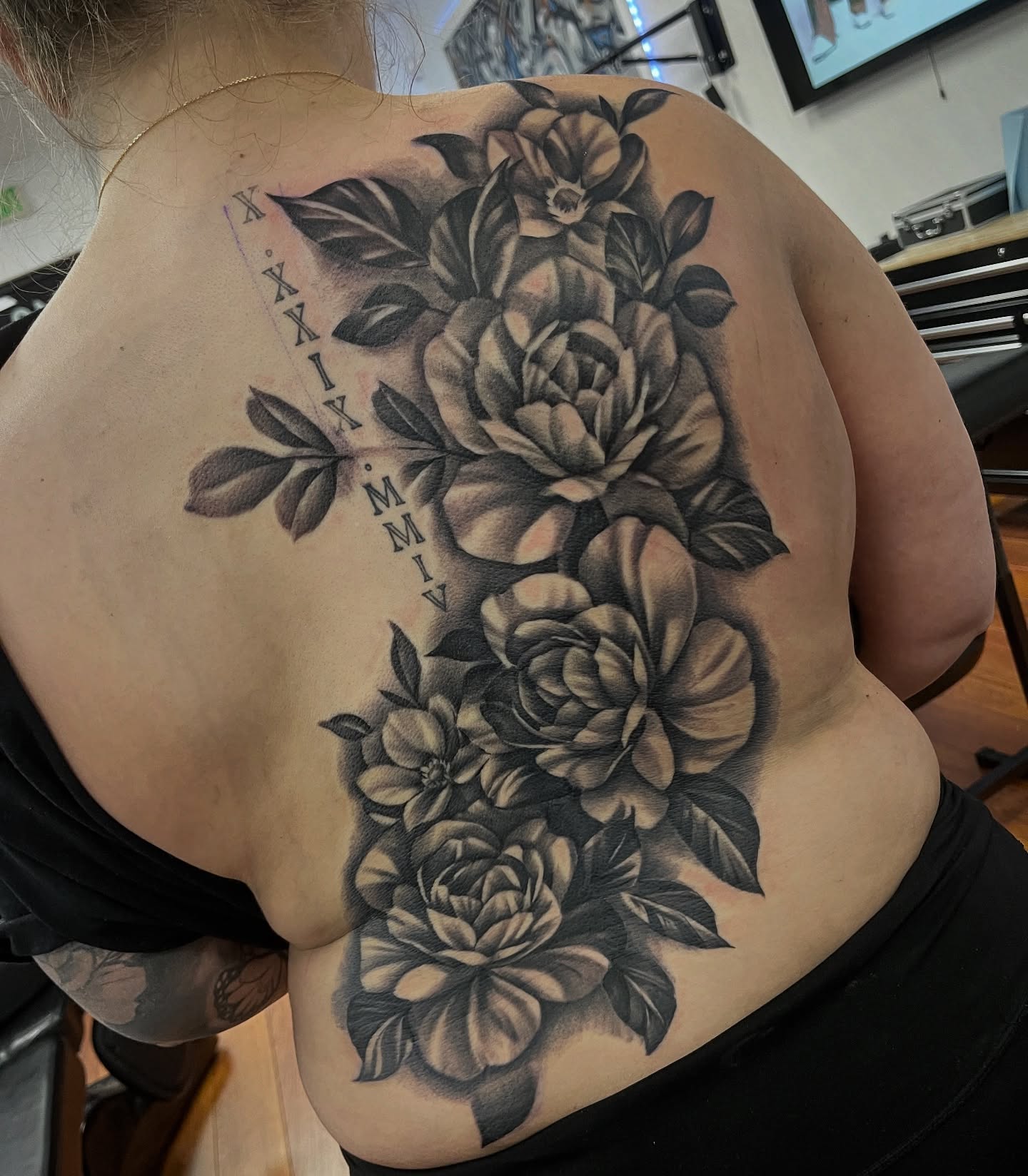
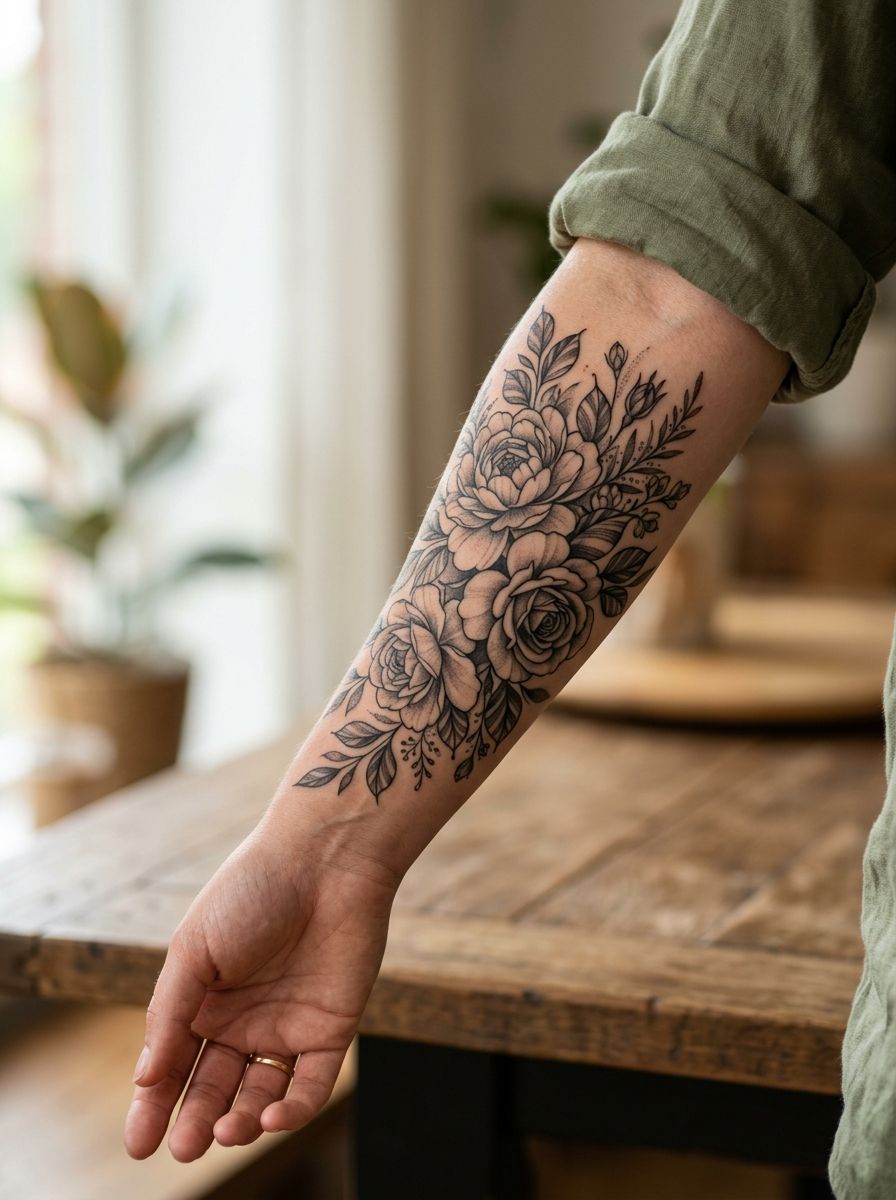
| Botanical / floral | Excellent | Hips, thighs, stomach, ribs | Needs enough size to work — tiny florals look thin over texture |
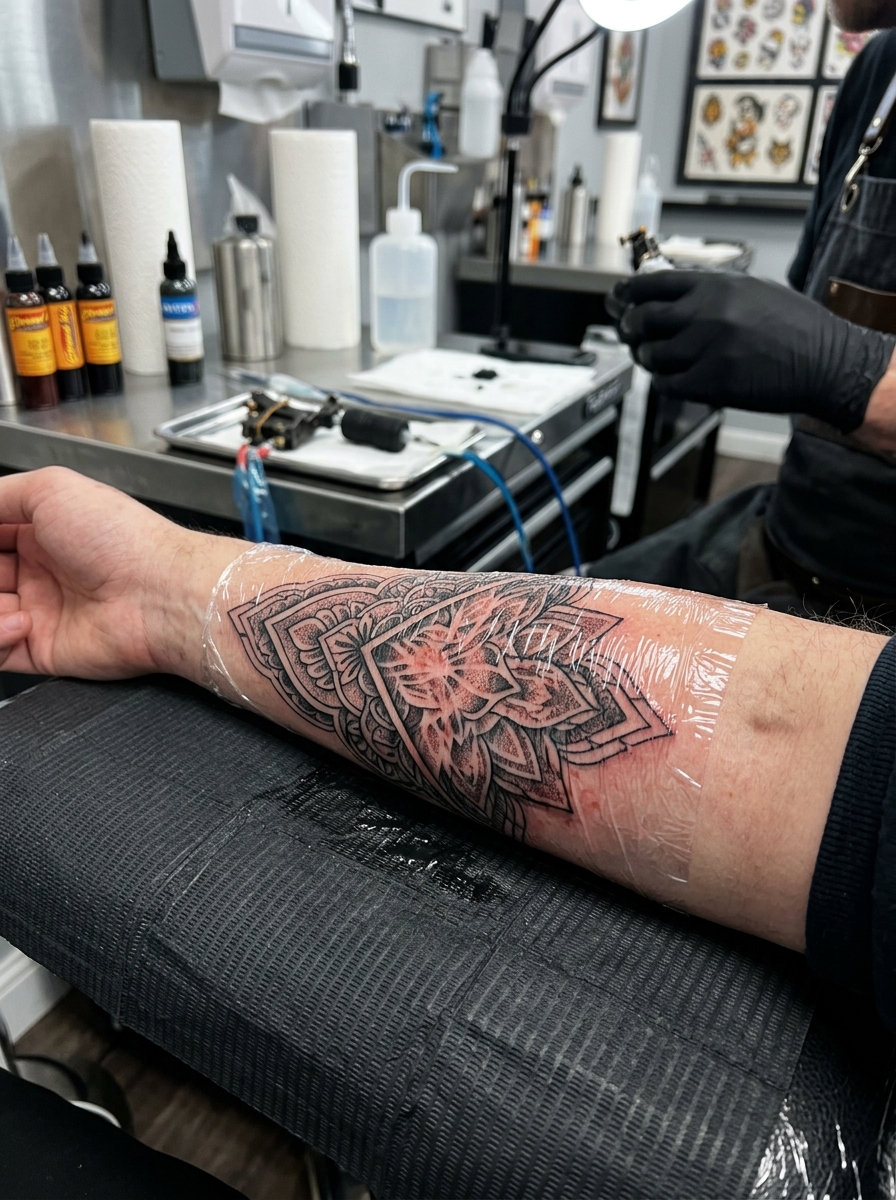
| Ornamental & mandala | Very good | Thighs, chest, back of arm | Perfect symmetry can drift on stretched skin |
| Watercolour | Very good | Ribs, shoulder, stomach | Softer edges tend to need earlier refreshing |
| Blackwork / dotwork | Good | Larger areas with heavy marking | Solid black shows patchiness if a mark rejects ink |
| Fine line | Poor to fair | Areas with faint, flat marks only | Thin lines break or blur where texture changes |
| Geometric / straight-line | Poor | Unmarked skin nearby | A ruled line crossing a raised mark reads as a wobble |
If a style on this list appeals to you, our ornamental tattoo ideas collection is a good place to see how dense linework behaves across curved, changeable skin.
What Actually Changes When Skin Has Stretch Marks
Stretch marks — clinically called striae distensae — form when skin is pulled faster than its collagen and elastin can adapt, most often during pregnancy, growth spurts, rapid weight change or muscle gain.
The American Academy of Dermatology describes them as a form of scarring rather than a surface discolouration, which is exactly why they matter to a tattoo artist.
Beneath a mark, the dermis is thinner and its fibre structure is disorganised, so ink deposited there does not always anchor the way it does in neighbouring skin.
That produces the two effects I see most often: a line that widens slightly as it crosses the mark, and a patch of shading that heals lighter than the area around it. Neither is a disaster, and both are usually correctable at a touch-up.
The other variable is texture. Marks that are still raised or indented change the angle the needle meets the skin, and that is a technique problem rather than a healing one.
Tattooing Over Stretch Marks: What to Expect
1. Wait for the marks to mature
Fresh stretch marks are red, pink or purple because the blood vessels underneath are still visible through thinned skin. Over months to a couple of years they usually fade to a pale silver or white and flatten out.
Every artist I have asked prefers to work on that mature stage. The skin is calmer, it bleeds less, and the ink settles more predictably.
As a rough guide, most artists I know want marks to be at least six to twelve months old and no longer red before they will commit to detailed work over them. If yours are recent — postpartum marks especially — waiting is the single cheapest thing you can do to improve the result.
There is no medical rule forcing you to wait, but tattooing actively changing skin means the design is being placed on a moving target.
2. Expect the design to be built around the marks, not on top of them
The best results I have seen were not attempts to erase anything. They used the direction of the marks as a compositional cue.
Stretch marks run in bands, usually perpendicular to the direction the skin stretched. An artist who runs stems, feathers or ornamental sweeps along those bands lets the eye follow the design instead of the lines underneath.
Working with the grain of the marks hides them far better than trying to blanket them in solid ink.
When I tested this on my own thigh piece years ago, the section where the leaves crossed the marks at an angle stayed noticeable; the section where they ran parallel effectively disappeared once healed.
3. Placement matters more than usual
Stretch marks cluster on the stomach, hips, outer and inner thighs, breasts, upper arms and lower back — all areas that also move and stretch daily.
Thighs and hips are my usual recommendation for a first piece over marks: the skin is thick, the surface is broad enough for a design with real scale, and it is easy to keep covered while healing.
Stomachs are more demanding. Skin there is thinner, more mobile, and often has the deepest marks, so I would only send someone there with an artist who has healed photos to show. If that is your target area, our belly tattoo ideas show how designs sit on that curve.
For thigh-specific inspiration, thigh tattoos for women is worth a scroll before your consultation.
4. It will probably hurt more than the same spot without marks
Thinner skin over a mark means less cushioning between the needle and the nerve endings, and many people describe those passes as sharper or hotter.
It is not usually a dramatic difference, but it is noticeable, and it stacks on top of the fact that stomachs, inner thighs and ribs are already tender areas. Our most painful tattoo spots chart gives a realistic baseline for the area you are considering.
Tell your artist before you start, not halfway through. Most will happily break a long session into two shorter ones.
5. Ink retention can be uneven, and touch-ups are normal
Plan for a touch-up rather than being disappointed by one. A follow-up session six to eight weeks after healing to fill any spots that dropped out is standard practice for work over textured skin, and many artists include it in the price.
Where marks are deep, a second pass sometimes still will not hold solid colour. A good artist will tell you that at the consultation and adapt the design so those areas carry shading rather than critical detail.
Healing itself follows the usual pattern — you can read what to expect week by week in our guide to tattoo healing stages.
6. Choose the artist before you choose the design
This is the part people skip. Portfolio photos of fresh tattoos tell you almost nothing about how ink behaved in damaged skin.
Ask specifically for healed photographs of work over stretch marks or scarring, taken at least a couple of months out. An artist who does this regularly will have them ready.
In my experience the honest answer — “this area will hold, this area probably won’t” — is the strongest signal you are in the right chair.
If nobody local has that portfolio, it is worth travelling or waiting. A cover-up of a badly healed piece is far more expensive than the original.
Alternatives and Variations Worth Considering
Camouflage and skin-tone tattooing
Some specialists tattoo flesh-toned pigment into stretch marks to blend them with surrounding skin rather than decorate them.
Results vary considerably and the pigment does not tan or change with the seasons the way your skin does, so it can become more visible over time. It is a specialised field — ask for long-term healed photos on skin similar to yours before committing.
Decorative work that frames rather than covers
You do not have to cover every mark. Placing a design near or between bands of striae, so the eye is drawn to the artwork, often looks more natural than a large solid block.
This tends to age better too, because less of the tattoo depends on compromised skin.
Combining with scar work
If you have surgical scars alongside stretch marks — after a caesarean or an abdominoplasty, for example — the same design can address both, but the timelines differ. Scars generally need longer to settle. Our tattoo ideas for scars guide goes into that.
Leaving them alone
Worth saying plainly: stretch marks are ordinary, extremely common, and not a defect that needs correcting. Plenty of people book the tattoo, then realise partway through the process that they wanted the art, not the concealment.
How to Prepare and Care for a Tattoo Over Stretch Marks
Start moisturising the area daily for several weeks before your appointment. Supple, well-hydrated skin takes ink more evenly, and it is the one variable you fully control.
Avoid tanning or burning the area in the weeks beforehand, and do not book during a period of rapid weight change or in the months right after giving birth — the skin is still moving.
Eat properly and hydrate the day of the session. Sessions over textured skin often run longer than the same design elsewhere because the artist works more slowly.
Afterwards, follow your artist’s instructions rather than internet consensus, keep the piece out of the sun once healed, and moisturise consistently for the life of the tattoo. Our general tattoo aftercare guide covers the routine in full. If the area becomes increasingly red, hot, swollen or starts discharging pus, contact your artist and see a doctor — that is a medical issue, not a healing stage.
Common Mistakes and How to Avoid Them
Booking too soon. Tattooing red, active marks is the single most common regret I hear. Waiting until they silver is free and it works.
Choosing a design that fights the skin. Crisp geometry, ruled lines and tiny fine-line scripts all draw attention to texture rather than away from it.
Going too small. A design that is barely larger than the marked area leaves the marks visible around its edges; scaling up almost always looks better.
Assuming a tattoo removes the texture. Ink changes colour, not surface. Under raking light you may still see the ridges.
Not budgeting for the touch-up, or picking an artist purely on price. If you are still comparing approaches, our tattoo cover-up ideas guide shows how experienced artists solve difficult skin.
Frequently Asked Questions
Does tattooing over stretch marks hurt more?
Usually a little, yes. The skin over a stretch mark is thinner than the skin around it, so needle passes there can feel sharper, and stretch marks tend to sit in already-sensitive areas like the stomach, hips and inner thighs. Most people describe it as a noticeable difference rather than an unbearable one. Tell your artist beforehand so they can pace the session or split it in two.
How long should I wait before tattooing new stretch marks?
Most artists want the marks to have faded from red or purple to pale silver and to be flat rather than raised, which commonly takes somewhere between six months and two years. There is no fixed medical rule, but tattooing skin that is still changing means the design is placed on a moving surface. If you are postpartum or in the middle of significant weight change, waiting until things stabilise is the safer choice. Your artist can assess the marks at a consultation.
Will a tattoo completely hide my stretch marks?
It will hide the colour difference far better than the texture. Ink sits in the skin, so any ridges or indentations remain and can still be visible in raking light or when the skin stretches. Busier styles like botanical, ornamental and watercolour work disguise this best. Going in expecting a good disguise rather than an erasure is the realistic mindset.
Can the ink fade or drop out of stretch marks?
It can. The dermis under a stretch mark is thinner with disorganised collagen, so pigment does not always anchor as reliably as it does in undamaged skin. Patchy healing over the marks is common and is normally fixed at a touch-up six to eight weeks after healing. Deep marks may never hold solid colour, which is why artists often plan shading rather than fine detail there.
Is it safe to tattoo over stretch marks?
For healthy, fully matured stretch marks, tattooing is generally considered no riskier than tattooing elsewhere, since striae are settled scar tissue rather than open skin. It is not appropriate over skin that is broken, actively inflamed, or affected by a condition your doctor is treating. If you have a skin condition, take medication affecting healing, or are unsure, speak to a doctor or dermatologist first. This article is general information and not medical advice.
Quick Summary
- Yes, you can tattoo over stretch marks — they are settled scar tissue, not open skin.
- Wait until marks fade from red or purple to pale silver and lie flat, often six months to two years.
- Ink hides colour differences well but does not remove texture; ridges can still catch the light.
- Botanical, ornamental, watercolour and dotwork styles disguise marks best; fine line and geometric styles expose them.
- Designs that follow the direction of the marks conceal far better than designs that cross them.
- Expect slightly more discomfort and plan for a touch-up six to eight weeks after healing.
- Choose the artist first — ask for healed photographs of work over stretch marks or scars.
- See a doctor for any spreading redness, heat, swelling or discharge during healing.
For further reading on how striae form and how dermatologists treat them, the Mayo Clinic overview of stretch marks is a reliable starting point.