A scar is a mark you did not choose, and a tattoo over it is the first thing about that patch of skin that you get to decide. That is the whole appeal, and in my experience it is why these consultations run longer and feel heavier than almost any other kind.
There are two honest routes. You can cover the scar so it disappears into a design, or you can incorporate it so the scar becomes part of the image on purpose.
I have watched both work beautifully and I have watched both go wrong, and the difference almost always came down to the artist’s experience with scar tissue rather than the idea itself. A gorgeous concept applied to a raised keloid by someone who has never worked on one will not hold.
Below are 20 directions worth considering, along with the practical constraints that decide which of them your skin can actually take. If you are still weighing whether a scar can be tattooed at all, our guide to tattooing over scars covers the groundwork.
Covering or Incorporating: Which Approach Fits Your Scar?
Neither approach is braver or better. They suit different scars, different budgets and, more than anything, different feelings about the thing that caused the scar.
| Approach | Best for | Design freedom | Sessions to expect | Main limitation |
|---|---|---|---|---|
| Covering | Flat, pale, fully settled scars | Lower — the design must be dense and large enough to hide the mark | Often two or more, with a touch-up after healing | Raised texture stays visible under any amount of ink |
| Incorporating | Linear surgical scars, keloids, anything with a clear shape | Higher — the scar dictates composition but not style | Usually one, sometimes two for large pieces | The scar stays part of the image, which is not what everyone wants |
| Framing around it | Fresh-ish scars, keloids too raised to needle safely | High — no ink touches the scar itself | One, in most cases | Draws the eye toward the untouched area if badly placed |
| Waiting | Scars under roughly two years old | n/a | None yet | Frustrating, but it protects both the scar and the tattoo |
What Scar Tissue Actually Does to Ink
Scar tissue is collagen laid down fast and in the wrong direction. It is denser, less elastic and less predictable than the skin around it, and every artist I have asked describes the needle “grabbing” differently as it crosses the boundary.
The practical result is that ink saturates unevenly. A line that looks solid on normal skin can go patchy or blurry the moment it crosses the scar, and you often will not know until the piece has healed.
Age matters more than anything else. Most reputable artists want a scar to be fully matured before working on it, which commonly means waiting at least a year and often closer to two after it has finished changing colour and flattening.
Scar type sets the ceiling on what is achievable. Flat, pale atrophic scars take ink surprisingly well; raised hypertrophic and keloid scars are the hard cases, and the American Academy of Dermatology notes that keloids can regrow after injury to the area, which includes tattooing.
Location compounds all of this. A scar over the ribs or the inner arm hurts more and moves more than the same scar on a thigh, and our notes on managing tattoo pain are worth reading before you book a long session.
None of this is medical advice. If your scar is still changing, itches, tightens, or came from surgery within the last couple of years, ask the surgeon or a dermatologist before you ask a tattooist.
20 Tattoo Ideas for Scars
These are ordered roughly from the most forgiving to the most demanding, not from best to worst.
1. Floral Cover-Up
Roses, peonies and wildflowers remain the default scar cover for a reason: petals have no correct shape, so an artist can redraw them around whatever the skin does.
When I have seen floral covers fail, it is almost always because the design was too small and too sparse. Density is what hides a mark, and a scattering of fine-line stems will not do it.
Ask for a design that extends well past the scar edges in at least two directions. Anything that stops exactly where the scar stops will draw a border around the thing you are trying to lose. For style references, our wildflower tattoo ideas show how loose botanical shapes fill space.
2. The Scar as a River or Path
Instead of covering the line, treat it as the river running through a landscape. Trees line the banks, hills frame the course, and the mark becomes the geography of the piece.
This suits long, relatively straight scars best — abdominal, spinal, along a limb. It is one of the few ideas that genuinely improves with scar length.
The catch is that it only works if you are at peace with the scar remaining visible. The design points at it.
3. Vine or Branch Overlay
Trailing vines or bare branches drawn along the scar’s path, with the scar acting as the main stem and smaller lines breaking away from it.
In my experience this is the single most reliable option for a clean surgical scar, because the design already expects one dominant line and forgives its irregularities.
Leaves placed at intervals also give the artist somewhere to put solid black, which helps disguise any patchy saturation along the scar itself.
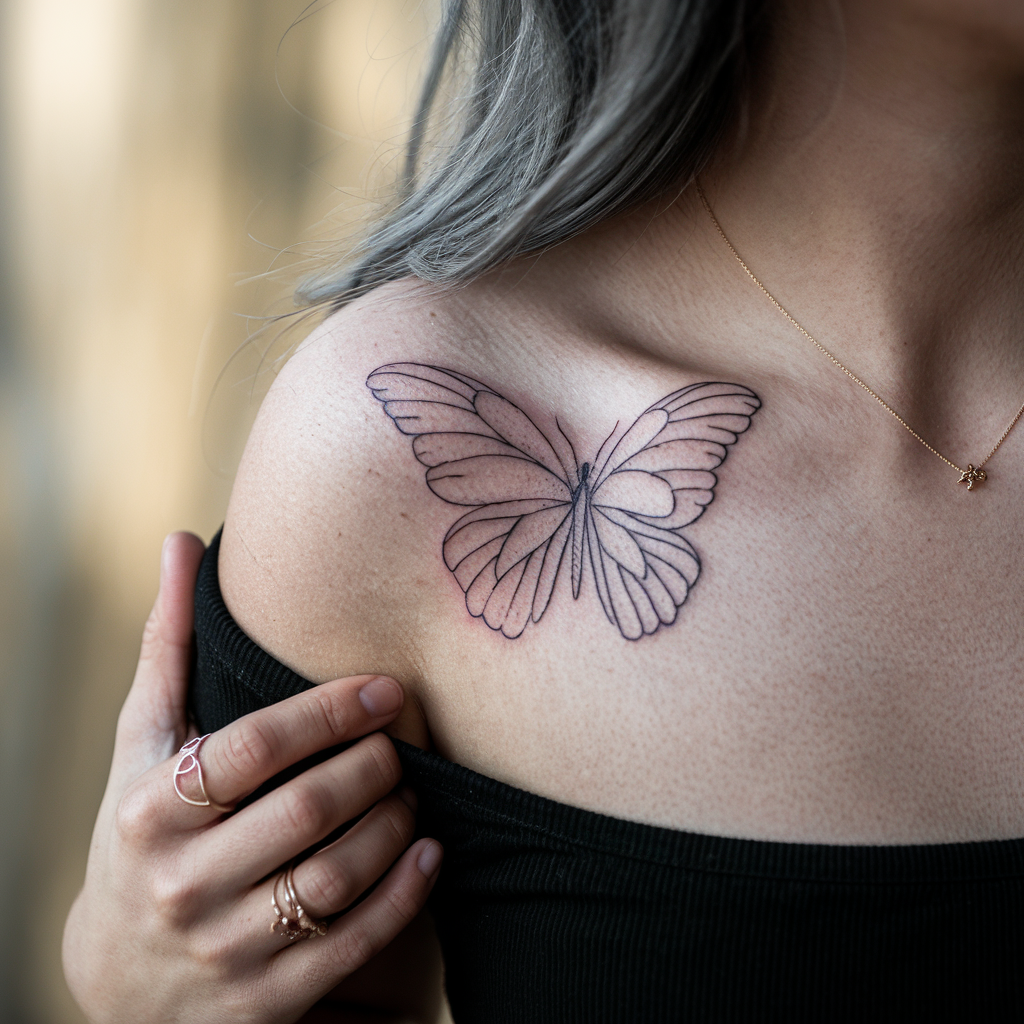
4. Butterfly or Moth
The body of the insect sits along the scar line and the wings open to either side, which hides the mark under the darkest part of the design.
Moths tend to work better than butterflies on wider scars, since the body is thicker and the wing patterning is denser. The symbolism is not subtle, but it is chosen for a reason.
The symbolism is well worn but it is chosen deliberately here: the body of the design sits exactly where the damage was.
5. Watercolour Wash
Soft fields of colour that surround and soften a scar without trying to erase it. The mark stays visible, sitting inside a wash rather than under it.
I like this for people who are ambivalent — who do not want the scar gone but do not want it to be the first thing they see either.
Be honest with yourself about longevity. Watercolour work without a black underlay generally softens faster than traditional linework, and on scar tissue that can be more pronounced. Our watercolour tattoo ideas cover the trade-off in more detail.
6. Kintsugi Lines
Borrowed from the Japanese practice of repairing broken pottery with gold, the scar line is traced in golden or ochre ink so the repair is the ornament.
True gold does not exist in tattoo ink and metallic effects are painted, not literal, so set expectations accordingly. Warm yellows and browns are what actually go in.
This is the most explicitly declarative option on the list. It is for people who are finished hiding.
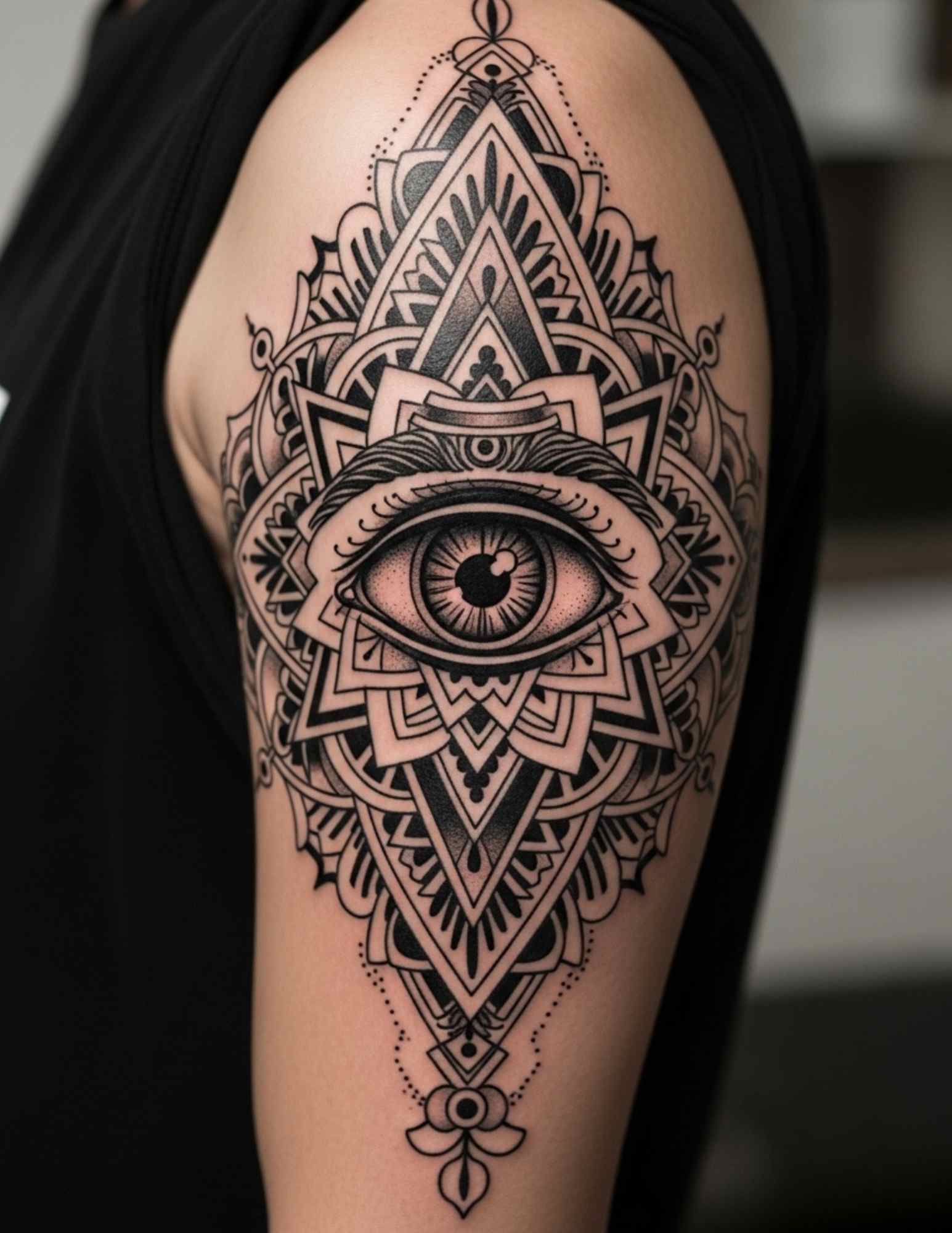
7. Mandala Centred on the Scar
The scar sits at or near the centre of a radial pattern, with the geometry expanding outward from it.
Dotwork suits this better than heavy linework, because stippling can be built up gradually over uneven tissue rather than committing to one pass.
It demands real symmetry skill from the artist. Ask to see healed mandalas rather than fresh ones, because dotwork settles a lot in the first month.
8. Geometric Patch
Hexagons, triangles and angular panels covering the scar area in a pattern that reads as reconstruction rather than concealment.
There is a structural honesty to it that a lot of people respond to. Something was rebuilt here, and the design says so without narrating it.
One warning from experience: perfectly straight lines across raised tissue are unforgiving, and any wobble shows. Curved or broken geometry is safer on anything textured.
9. Forest or Treeline Scene
A dense treeline drawn across the scar, with trunks and roots positioned to absorb its edges.
This is my usual suggestion for wide horizontal scars on the abdomen or back, where a single motif would need to be enormous to cover the span.
The negative space between trunks also gives the artist room to work around any patch of tissue that refuses to hold ink.
10. Semicolon Transformation
For self-harm scars, a semicolon placed alongside or through the marks: the sentence that could have ended and did not.
It does not hide anything, and that is the point. Some people want that; many do not, and there is no wrong answer here.
If those scars are recent, or if the feelings behind them are still live, please talk to a doctor or counsellor before booking anything. Support is available through the 988 Suicide & Crisis Lifeline in the US and equivalent services elsewhere. Our semicolon tattoo ideas page covers design variations.
11. Phoenix Rising from the Scar
The bird positioned so its ascent begins at the scar line, making the placement carry the meaning rather than the imagery alone.
Phoenixes are large by nature, which is useful — the tail and wing feathers give an artist a lot of ink to lay down over difficult skin.
Colour choices matter more than usual here, since heavy reds and oranges over scar tissue can heal unevenly. Look at phoenix tattoo designs and note how much black anchors the good ones.
12. Script Along the Scar
A word or short line written along the scar so the mark becomes the baseline for the text.
Script is the riskiest thing to put on scar tissue. Thin, consistent strokes are exactly what uneven skin ruins, and blowouts show instantly in lettering.
If you want words, ask for a heavier weight than you think you need and accept that it may require a touch-up.
13. Wave or Water Design
Water curving over or along the scar, its shape following whatever line the skin already gives you.
Waves bend to fit, which makes them one of the most adaptable motifs for irregular or curved scars.
The metaphor does a lot of quiet work too — water moves around obstacles rather than being stopped by them.
14. Roots and Botanical Integration
Not covering but growing from: roots emerging from the scar, a stem that follows it and flowers above.
This needs a genuinely custom drawing. Templates cannot anticipate the specific bend and thickness of your mark.
Budget for a longer design consultation than usual, and expect the artist to want photographs of the scar in different lighting first.
15. Celestial Map
Constellations, moon phases or a star chart placed across the scarred area, with the mark absorbed into a larger system.
Fine dots and small stars are easy to reposition mid-session, which is a real practical advantage on unpredictable skin.
Keep the linework of any moon or planet away from the densest scar tissue if you can. Save the smooth curves for smooth skin.
16. Abstract Colour Fill
A saturated field of colour over the scar with no representational image at all, chosen for personal resonance rather than subject matter.
Solid colour is genuinely one of the better concealers for flat scars, because there is no line for the eye to catch a break in.
It does nothing for texture, though. Raised tissue under solid colour still catches the light at an angle.
17. Animal Companion
An animal whose symbolism connects to whatever the scar marks — a wolf, a snake shedding, a bird mid-flight.
The choice should be personal rather than decorative, otherwise you end up with a large, permanent piece of clip art over a very personal mark.
Fur and scale texture are forgiving on uneven skin, which is a quiet argument for animals over hard-edged geometric subjects.
18. Lace or Embroidery Over Surgical Scars
Particularly associated with mastectomy scars, an embroidery or lace pattern that turns an incision line into deliberate ornament.
A number of artists work almost exclusively in this area, and their portfolios are worth seeking out specifically rather than settling for a generalist nearby.
Post-surgical skin has its own timeline. Clearance from your surgical team comes first, always — and reconstruction sites in particular can have reduced sensation, which changes how a session is managed.
19. Arrow Through the Scar
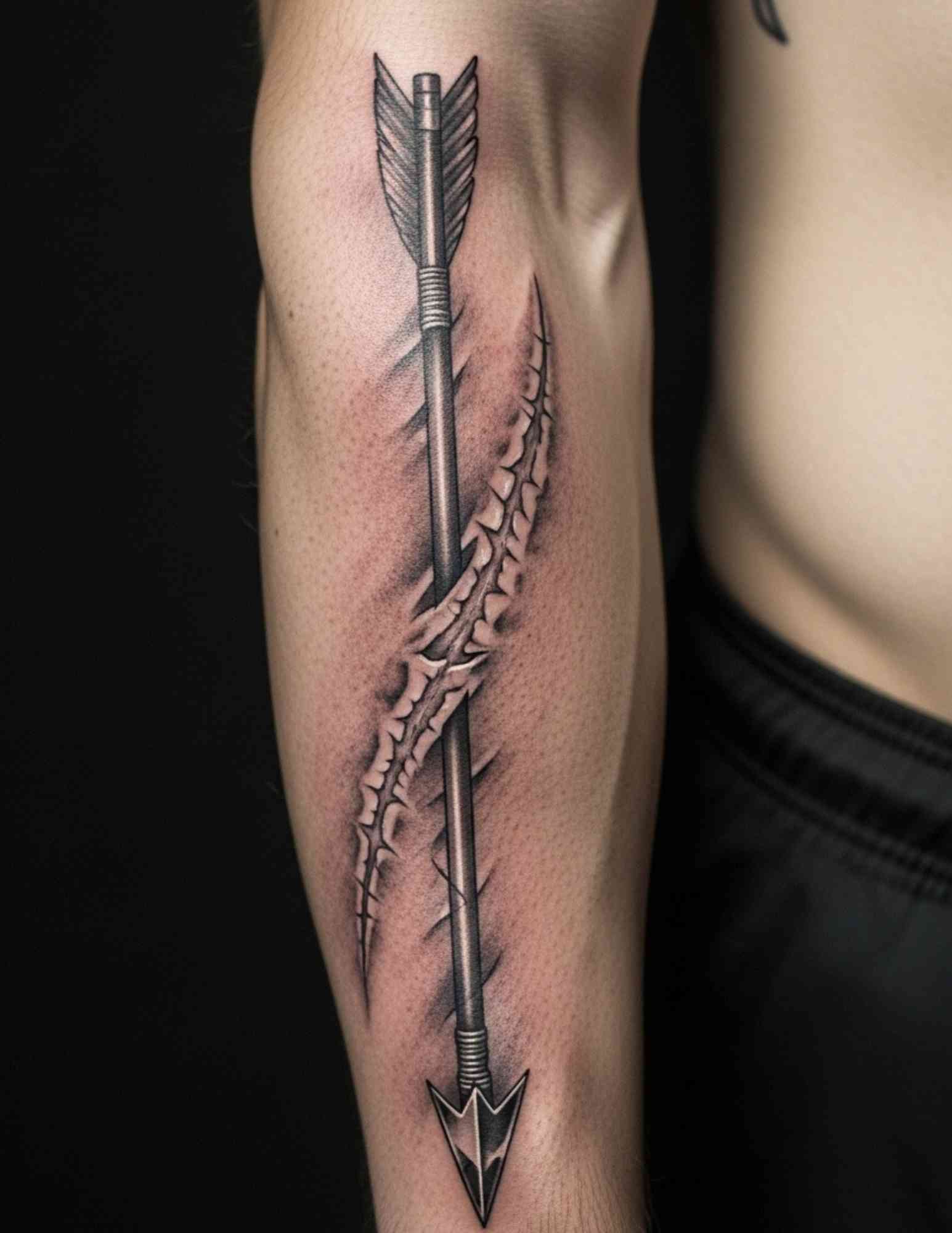
An arrow whose shaft runs the length of the scar, the direction of travel chosen deliberately.
It is one of the simplest options here, and simplicity is an advantage: fewer lines means fewer places for uneven healing to show.
The fletching and arrowhead also give you two dense anchors at either end, which visually steadies the whole piece.
20. Entirely Your Own Design
A piece drawn for your scar’s exact shape, size and location, developed with an artist who has actually looked at it in person.
No template, no saved reference, no category. It will cost more and take longer to design.
Every scar cover-up I have seen that genuinely worked was, in the end, a custom piece. The 19 ideas above are conversation starters for that appointment, not finished plans.
Alternatives Worth Considering First
A tattoo is not the only route, and it is permanent in a way the alternatives are not.
Leaving the Scar Alone for Now
Scars keep fading for years. The mark that feels urgent today may be considerably less visible in eighteen months, and you will have more options once it has settled.
Medical Scar Treatment
Silicone sheeting, steroid injections and laser resurfacing are all standard dermatological approaches for raised or discoloured scars. A dermatologist can tell you whether yours is likely to respond.
Some people do both: treat the scar first to flatten it, then tattoo the calmer surface a year or two later.
Framing Rather Than Covering
If the tissue cannot safely be needled, a design that surrounds the scar without touching it gives you most of the visual effect with none of the risk.
Related Marks That Are Not Scars
Stretch marks follow different rules from surgical or trauma scars, and we cover them separately in can you tattoo over a stretch mark.
Aftercare and Practical Advice for Scar Tattoos
Scar tissue heals more slowly and less evenly than normal skin, so plan for a longer, fussier heal than you are used to.
Expect swelling to sit differently across the scarred area, and expect some patches to scab while others do not. That unevenness is normal and not, by itself, a sign of a problem.
Follow whatever aftercare your artist gives you rather than what worked on your last tattoo. If you want a general baseline, our walkthrough of the tattoo healing stages sets sensible expectations for timing.
Book the touch-up in advance. In my experience, scar work needs a second pass more often than not, and artists who do it well already expect that conversation.
Signs that need a doctor rather than a forum: spreading redness, heat, pus, fever, or a scar that starts thickening and growing beyond the original boundary. None of that is something to wait out.
Common Mistakes and Still Not Sure?
The most common mistake is going too soon. A scar under a year old is still remodelling, and tattooing it can worsen both the scar and the ink.
The second is choosing an artist by portfolio aesthetics alone. Beautiful work on clean skin tells you nothing about how someone handles scar tissue — ask directly and ask for healed photographs.
The third is under-sizing the design. Coverage needs mass, and a piece that stops at the scar’s edge frames the problem instead of solving it.
If you are not sure where to start, our guide on how to find a tattoo artist covers vetting properly, and cover-up tattoo ideas is useful even when the thing being covered is not old ink.
Frequently Asked Questions
How long should I wait before tattooing over a scar?
Most artists want a scar to be fully mature before they will work on it, which usually means at least a year and often closer to two after it has stopped changing. A mature scar has settled to a stable colour, stopped itching or tightening, and is no longer flattening month to month. Tattooing before that point risks poor ink retention and can irritate tissue that is still remodelling. If you are unsure where yours is in that process, a dermatologist can assess it faster than any artist can.
Does tattooing over scar tissue hurt more?
Usually yes, though it varies a lot between people and between scars. Scar tissue can be either more sensitive or numb depending on how the nerves healed, and many people report both sensations within the same scar. Sessions also tend to run longer because the artist works more slowly over uneven skin. Tell your artist beforehand if any part of the area is numb, since reduced sensation changes how they judge depth.
Can you tattoo over a keloid scar?
Sometimes, but it is the highest-risk category and many artists will decline. Keloids can regrow in response to skin injury, and tattooing is a skin injury, so there is a real chance of aggravating the scar rather than disguising it. If you have a keloid, see a dermatologist before you see a tattooist — treatment to flatten it first often opens up options that were not available otherwise. Some artists will offer to design around it instead, which is a reasonable compromise.
Will the scar still be visible after the tattoo?
Texture almost always remains visible even when colour is fully concealed. Ink can disguise discolouration very effectively, but it cannot change the surface of the skin, so a raised or indented scar will still catch the light at an angle. Flat, pale scars come closest to disappearing. Any artist promising complete invisibility on a textured scar is overselling it.
How much does a scar cover-up tattoo cost?
It depends far more on size, style and your local market than on the fact that it is a cover-up, so any figure quoted here would be misleading. What is fairly consistent is that scar work takes longer than the same design on clean skin and more often needs a paid or included touch-up. Ask for an estimate that explicitly includes the second session. Booking a consultation first is normal and often free.
Quick Summary
- Wait until the scar is fully mature — commonly at least a year, often closer to two.
- Decide early whether you want to cover the scar, incorporate it, or frame around it.
- Flat, pale scars cover most easily; raised and keloid scars rarely disappear entirely.
- Choose organic, textured subjects — florals, forests, water, fur — over fine script and rigid straight lines.
- Make the design larger than the scar in at least two directions so it does not frame the mark.
- Vet the artist specifically for scar experience and ask to see healed photographs, not fresh ones.
- Plan and budget for a touch-up, because scar tissue frequently needs a second pass.
- See a doctor or dermatologist first for keloids, recent surgical scars, or any scar that is still changing.