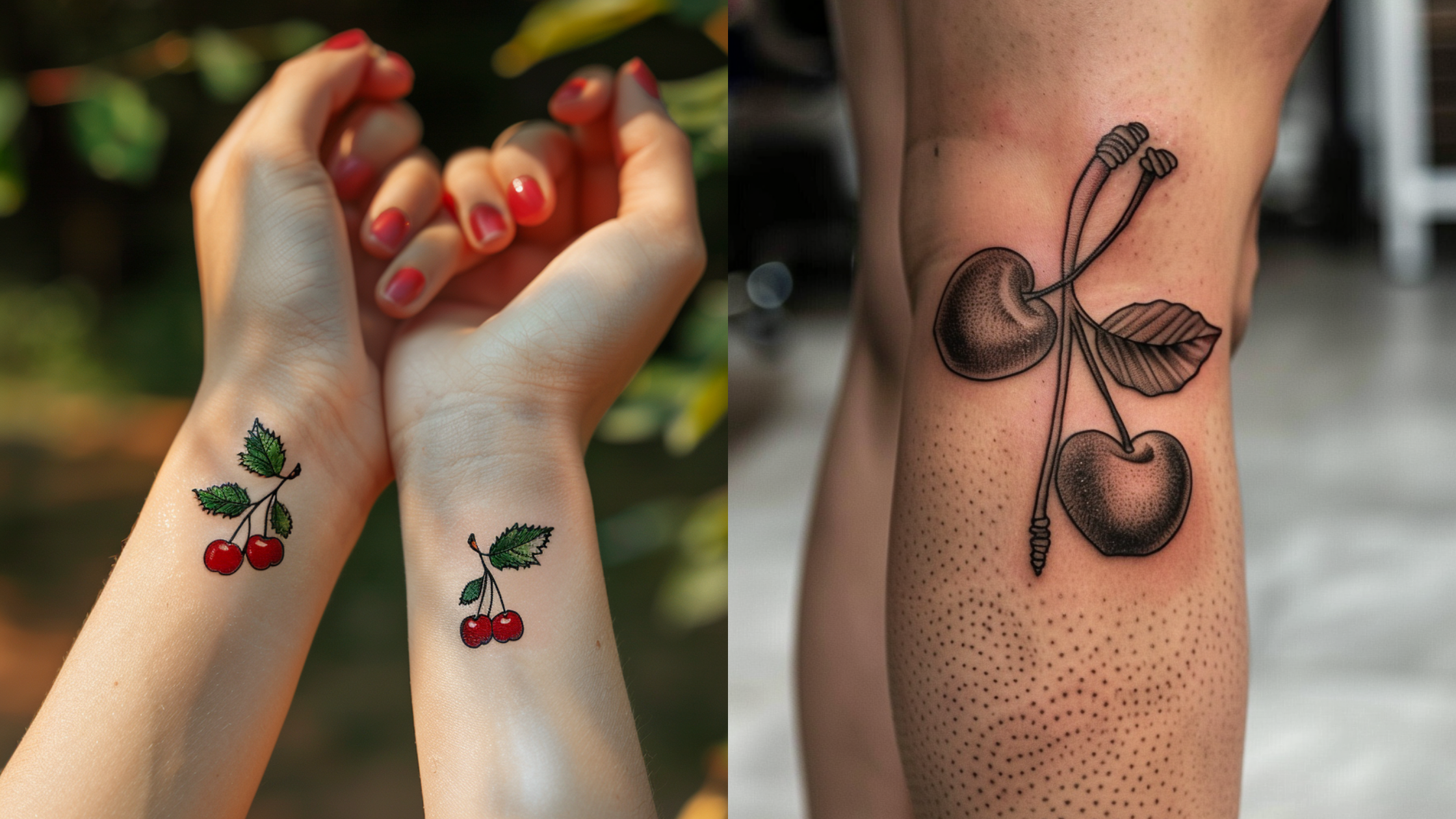
I have watched cherry tattoos come back around at least twice in the years I have spent looking at flash sheets and healed work, and they never really leave. A pair of cherries is one of the few designs that works at postage-stamp size and still reads as something specific rather than a red blob.
That is the whole appeal. Two circles, a stem, a leaf — and everyone knows exactly what they are looking at from four feet away.
When I first started paying attention to why some small tattoos age badly and others do not, cherries kept showing up in the “still crisp after eight years” column. The shape is simple enough that ink spread does not destroy it.
This guide covers what cherry tattoos actually mean, the design directions worth considering, how they compare to the closely related cherry blossom tattoo, and the practical decisions — size, placement, colour — that determine whether yours still looks good in a decade.
Which Cherry Tattoo Style Is Right for You?
Most people arrive with a vague idea and leave with a very different one once they understand the trade-offs. This is roughly how I would frame the choice.
| Style | Best size | Typical sitting | How it ages | Good for |
|---|---|---|---|---|
| Minimalist / fine line | 1–2 in | Under an hour | Lines soften; may need a touch-up in a few years | First tattoos, discreet placements |
| Classic / bold outline | 2–4 in | 1–2 hours | Very well — thick lines tolerate spread | Anyone who wants it to still read at 20 years |
| American traditional | 3–6 in | 2–3 hours | Excellent; the style was built for it | Pin-up, skull and vine combinations |
| Realism / micro-realism | 3–5 in minimum | 2–4 hours | Hardest to keep sharp; detail blurs first | Forearm and thigh, artist-dependent |
| Blackwork / outline only | 1–3 in | Under an hour | Well, if the line weight is not too thin | People who do not want colour at all |
| Cherry tree / branch | 5 in and up | 3+ hours | Depends on canopy shading quality | Back, thigh, full forearm panels |
What Cherry Tattoos Actually Mean
Cherries carry more meanings than most small designs, which is part of why they suit so many different people.
The most common reading is love, desire and a certain amount of playful mischief — the deep red, the paired heart-like shape, the long association with flirtation in mid-century advertising and pin-up art.
There is also a straightforward association with youth, sweetness and short seasons. Cherries ripen fast and do not last, which is why they show up so often in work about living in the moment.
The cherry blossom is a separate symbol that people often conflate with the fruit. In Japanese tradition the sakura stands for the beauty and brevity of life; you can read more on the cultural background of cherry blossom symbolism. If that meaning is what you are after, you probably want blossoms, not fruit.
And plenty of people get cherries for no symbolic reason at all. Every artist I have asked says a good share of their cherry tattoos are simply because the client liked how they looked, which is a perfectly legitimate reason.
Cherry Tattoo Design Ideas Worth Considering
These are the directions I see most often, roughly in order of how frequently they get booked.
1. The Classic Twin Cherries
Two cherries, a Y-shaped stem, one or two leaves. This is the version most people picture, and it is the one I would recommend to anyone unsure.
The reason it works is line weight. A bold outline holds its shape as ink migrates slightly under the skin over the years, so the design stays legible instead of turning mushy.
In my experience the sweet spot is around two to three inches. Smaller than that and the leaf detail starts to close up; much larger and a design this simple can look empty unless the artist adds shading or a background element.
Placement is flexible — forearm, ankle, upper arm, ribs. I have seen this exact design work on all of them.
2. Cherry Blossom Branches
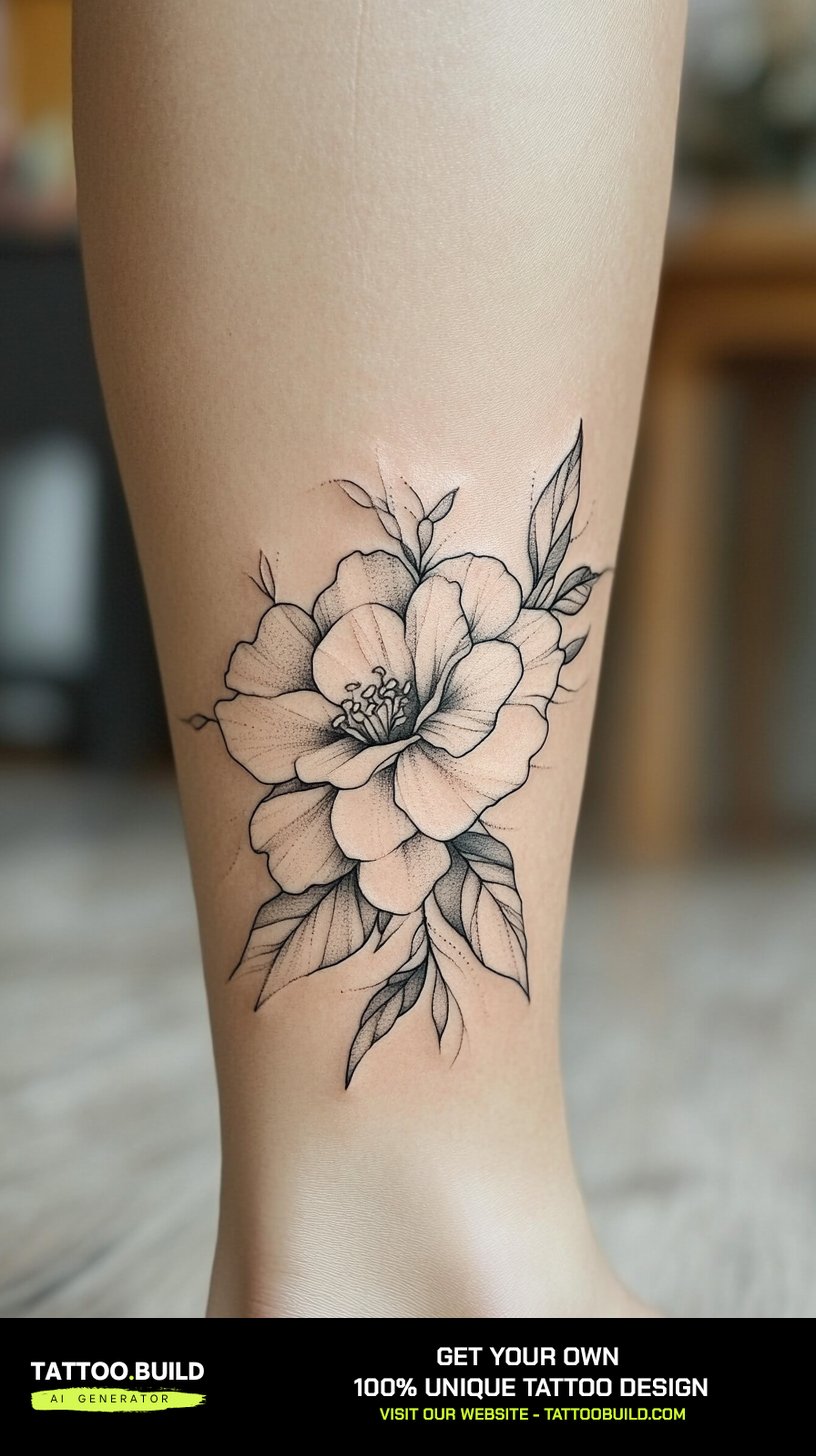
Blossoms are a completely different visual language: scattered, soft-edged, and usually spread across a larger area rather than concentrated in one shape.
They suit long placements — the outside of the arm, the spine, along a collarbone — because the design can breathe instead of clustering.
Black and grey blossoms age noticeably better than pink ones in my observation, since soft pink is one of the first pigments to fade in sun-exposed skin. If you want colour on a blossom piece, be honest with yourself about how often that spot sees the sun. Our full cherry blossom tattoo guide goes deeper on branch layout.
3. Realistic and Micro-Realistic Cherries
Realism drops the outline entirely and builds the fruit from light, shadow and a hard specular highlight. Done well it looks like you could pick it off.
Done badly it looks like a smudge, and this is the style where artist choice matters most. Ask specifically for healed photos, not fresh ones — fresh realism always looks incredible.
Realistic cherries need room. Under about three inches there is not enough space for the tonal range that sells the illusion, and the highlight either dominates or disappears.
Expect a longer sitting and a higher rate of touch-ups than any other option on this list.
4. Cherries and Skulls
The sweet-object-plus-death-symbol pairing is old, and it works because the contrast does the storytelling for you.
Traditional versions use heavy black outlines and a limited palette — red, black, maybe a muted green — which is exactly why traditional flash from decades ago still reads clearly today.
There is a minimalist version too: a small line-work skull with two cherries hanging from the stem. It carries the same idea at a fraction of the size and sitting time.
5. Pin-Up Girl with Cherries
This one is unapologetically retro and I have a soft spot for it. The cherry started appearing in pin-up imagery decades ago and the pairing stuck.
It needs space — usually four inches or more — because faces are unforgiving at small scale. A slightly blurred cherry is fine; a slightly blurred face is not.
If this direction appeals to you, our pin-up girl tattoo guide covers the style history and the placements that suit it.
6. Cherry Vines and Trailing Stems
Instead of a single cluster, the vine version runs fruit and leaves along a line — down a forearm, around a wrist, along the spine.
The advantage is that it follows the body instead of sitting on top of it. A vine that traces the natural curve of a limb almost always looks more considered than a static motif.
Ask your artist to draw the stencil directly on your skin for this one. A vine designed flat on paper rarely sits correctly once it wraps a three-dimensional arm.
7. Minimalist and Fine-Line Cherries
Two small circles, a hairline stem, no fill or a single flat red. This is the most-requested version I encounter and the one people most often get wrong.
The mistake is going too small. Under about an inch, fine lines placed close together can blur into each other as they settle, and the gap between the two cherries is exactly where that shows up.
A millimetre or two of extra breathing room between elements is the single best insurance you can buy on a design like this. Our fine-line tattoo guide and minimalist tattoo ideas both cover this in more detail.
Fine-line work also tends to need a touch-up sooner than bold work — often within a few years rather than a decade. That is normal, not a sign of a bad tattoo.
8. Cherries with Birds
Adding a small bird turns a static object into a scene, and it gives the artist somewhere to put detail without crowding the fruit.
Swallows and sparrows are the usual choices because both have strong silhouettes that survive at small size.
This combination sits well on the thigh, hip and outer arm — places with enough uninterrupted surface for two elements to sit apart without competing.
9. Full Cherry Trees
At the far end of the scale is the whole tree: trunk, branch structure, canopy. This is a piece, not a motif.
Plan for multiple hours and, realistically, more than one session if you want a full canopy with depth.
The thing to scrutinise in a portfolio is canopy shading. A canopy built from thousands of small marks looks alive; one built from a solid grey mass looks like a cloud.
Variations and Alternatives
If none of the above is quite right, these are the usual adjacent options.
Outline-Only Cherries
No fill, no shading — just the contour. It suits people who want the shape without the colour commitment, and it heals faster than anything with packed pigment.
Keep the line weight moderate. Very thin outlines on a shape this rounded can lose definition faster than you would expect.
Cherries with Celestial Elements
Cherries tucked inside a crescent moon, or hanging from a star cluster, is a combination I have seen a lot more of recently.
It reads as softer and more dreamlike than the traditional versions. If that direction interests you, our moon tattoo ideas collection has more on how the crescent shape interacts with other motifs.
Placement-Led Variations
Sometimes the placement should drive the design rather than the other way round. A cherry sized for the inner wrist is a different drawing from one sized for the ribs.
Ankles and wrists are the two most requested spots for small cherries — see our ankle tattoo ideas for how designs sit on that curve.
Practical Advice Before You Book
A few things I would tell a friend before they sat down for a cherry tattoo.
Go one size up from whatever feels right. Nearly everyone I know who regrets a small tattoo regrets the size, not the design, and the fix is another appointment.
Bring reference for the red you want, not just the shape. “Cherry red” covers everything from a bright fire-engine tone to a deep oxblood, and those are very different tattoos.
Check healed work specifically. A fresh tattoo photographed in good light tells you almost nothing about how that artist’s work settles. Our guide on how to find a tattoo artist covers what to look for in a portfolio.
Think about pain honestly. Ribs, sternum and the inside of the ankle are noticeably rougher than the outer arm or thigh; the most painful tattoo spots guide is worth a read if this is your first.
Common Mistakes — and Aftercare That Actually Matters
The most frequent mistake is sizing down to make a tattoo discreet, then losing the detail that made the design appealing in the first place.
The second is choosing an artist by price rather than by style match. An excellent blackwork artist is not automatically a good colour-realism artist, and cherries specifically expose colour packing.
The third is skipping aftercare on a small piece because it seems trivial. Small tattoos scab and peel exactly like large ones.
Follow whatever aftercare instructions your artist gives you — they know what they used. Our tattoo aftercare guide covers the general routine, and the American Academy of Dermatology publishes plain-language guidance on tattoo care and skin reactions.
If you develop spreading redness, swelling that worsens after the first few days, pus, or a fever, contact a doctor rather than waiting it out. Red pigment in particular is the colour most commonly linked to allergic reactions in tattoos, so tell a medical professional which colours were used. This article is general information, not medical advice.
And never attempt to remove or alter a tattoo yourself. Removal is a clinical procedure; home methods scar.
Frequently Asked Questions
What does a cherry tattoo mean?
Most commonly it signals love, desire, playfulness and youth — a set of associations that come largely from mid-century pin-up and advertising imagery. It can also stand for sweetness, fleeting seasons and living in the present. In some contexts people choose cherries specifically for the flirtatious connotation. There is no single fixed meaning, and plenty of people get one purely because they like the look.
Are cherry tattoos and cherry blossom tattoos the same thing?
No, and the distinction matters. Cherry tattoos depict the fruit and lean toward love, playfulness and vitality. Cherry blossoms depict the flower and, in Japanese tradition, symbolise the beauty and brevity of life. They also look completely different: fruit is compact and high-contrast, blossoms are scattered and soft.
How small can a cherry tattoo be?
Around an inch is the practical floor for a two-cherry design with a stem and leaf. Below that, the gap between the two circles and the leaf detail can close up as the tattoo settles over the years. If you want something genuinely tiny, ask your artist to simplify the drawing rather than shrink it — dropping the leaf or thickening the stem usually helps.
Do cherry tattoos fade quickly?
Red pigment generally holds reasonably well, but any tattoo fades faster with regular sun exposure. Fine-line versions typically need a touch-up sooner than bold-outline ones, sometimes within a few years. Daily sunscreen on a healed tattoo is the single most effective thing you can do. Placement matters too: hands, feet and forearms take more sun and more friction than a thigh or rib piece.
Where does a cherry tattoo hurt least?
Outer upper arm, outer thigh and the fleshy part of the forearm are generally among the more tolerable spots. Ribs, sternum, inner ankle and the top of the foot are usually reported as considerably rougher. Pain tolerance varies enough between individuals that these rankings are a guide, not a guarantee. A small cherry is a short sitting either way, which makes even a sensitive spot manageable for most people.
Quick Summary
- Cherries mainly symbolise love, desire, youth and sweetness — but there is no single fixed meaning.
- Cherry fruit and cherry blossom are different symbols with different visual styles; decide which you actually want.
- Bold-outline and American traditional versions age the best; fine-line versions look sharpest early and need touch-ups sooner.
- Roughly one inch is the practical minimum for a two-cherry design; two to three inches is the reliable sweet spot.
- Realism needs at least three inches, a longer sitting, and an artist whose healed portfolio you have actually seen.
- Ask for the stencil to be drawn on your skin for vines and wrapping designs so they follow your body’s curve.
- Sunscreen on healed work is the most effective anti-fade step, especially for red and pink pigment.
- Watch for spreading redness, worsening swelling, pus or fever after a tattoo, and see a doctor if they appear.