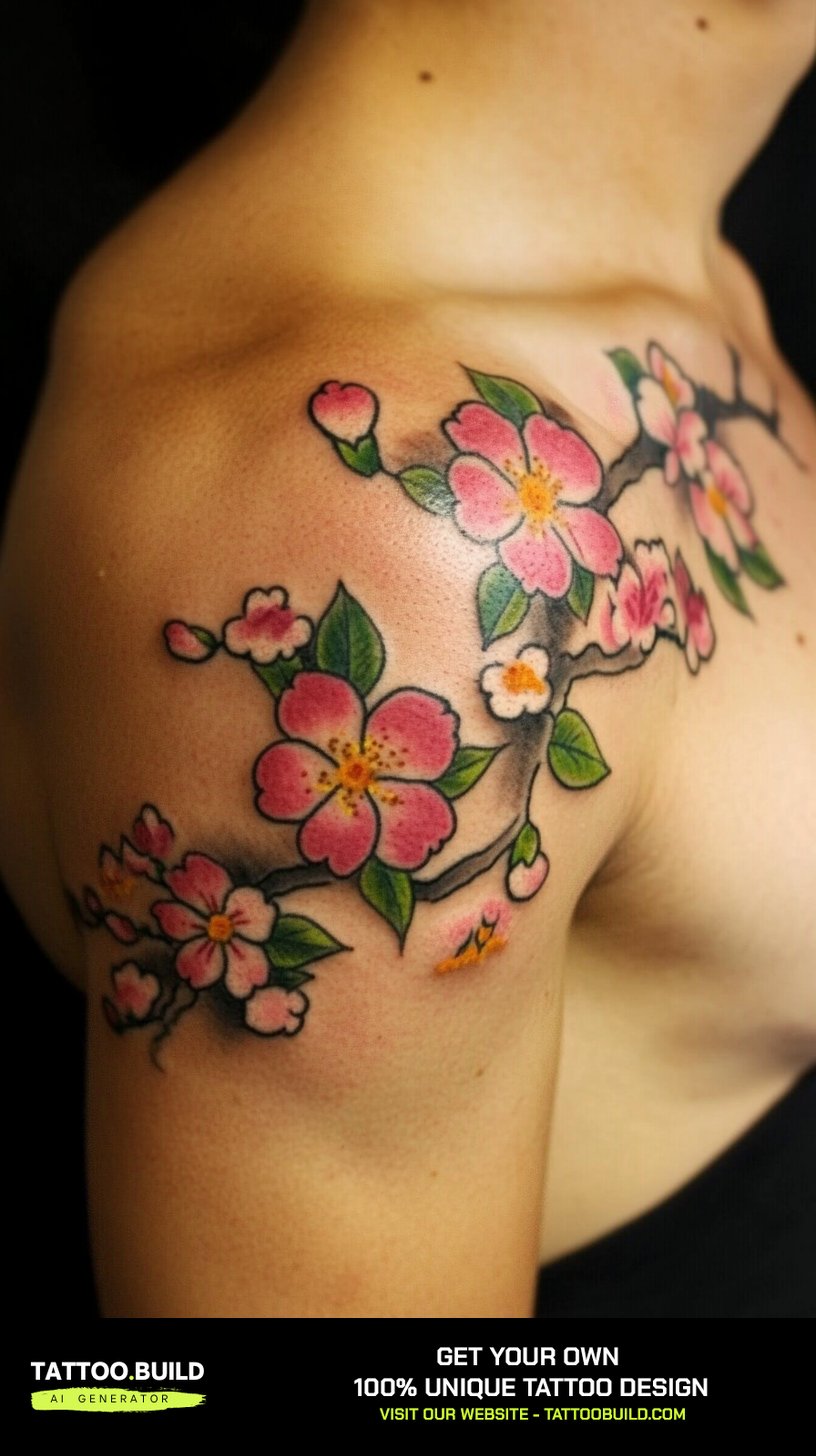
Cherry blossoms — sakura in Japanese — have been carried on skin for as long as tattooing has been an art form in East Asia. A cherry blossom tattoo is one of the few floral designs that reads as beautiful and melancholy at the same time, which is exactly why it has outlasted almost every other flower trend.
I have watched this design move through phases over the years, from heavy Japanese-style branch work to the barely-there single-needle pieces that dominate feeds now. The motif survives all of it because the meaning does not depend on the style.
What follows is a practical guide rather than a symbolism essay. I want you to leave knowing which version suits your body, your budget and how long you want it to look sharp.
Fair warning up front: pale pink ink is the hardest thing on this page to keep looking good, and I will come back to that more than once.
Which Cherry Blossom Style Is Right for You?
Most people arrive with a saved photo and no idea which of the four main approaches it actually belongs to. This is the comparison I sketch out for friends before they book anything.
| Style | Best Size | Typical Sittings | How It Ages | Suits You If |
|---|---|---|---|---|
| Japanese / irezumi | Half sleeve and up | 3–8+ | Very well — built for it | You want a piece that still reads in twenty years |
| Fine line | Palm-sized to forearm | 1–2 | Softens; may need a touch-up | You want subtle and can accept blur over time |
| Watercolour | Forearm to shoulder | 1–3 | Fades fastest of the four | You love the painted look and will protect it from sun |
| Black and grey | Any | 1–4 | Best of the four | You want longevity and a quieter look |
There is no wrong row here. There is only a trade you should make on purpose rather than by accident.
What Cherry Blossoms Actually Mean
The core idea is impermanence. Sakura bloom for roughly a week or two before the petals drop, and Japanese culture built an entire seasonal ritual — hanami, flower viewing — around watching that happen.
The related aesthetic term is mono no aware, usually translated as a gentle sadness at the passing of things. That double register — lovely and already leaving — is the whole reason the motif carries weight.
In samurai-era symbolism the falling petal was often read as a life ended at its peak, which is why you still see sakura in war memorials and in older Japanese tattoo work.
Chinese tradition reads the flower differently, leaning toward feminine beauty, love and renewal rather than mortality. Neither reading is more correct; they are separate traditions that happen to share a tree.
Outside Asia the flower has picked up a straightforward association with spring and fresh starts. Washington DC’s trees, for instance, came from a gift of 3,020 trees from Japan that arrived in March 1912 after a first shipment two years earlier had to be destroyed for pests, according to the US National Park Service — most of them the Somei-Yoshino cultivar.
If someone tells you the flower has one fixed meaning, they are flattening several centuries of it. Pick the reading that is true for you and let that guide the composition.
Cherry Blossom Tattoo Ideas by Style and Placement
Japanese Branch Work and Traditional Irezumi
This is the version the motif was built for, and it is the one I recommend most often to people who want scale.
The structure is always the same: a heavy, confident branch that gives the piece its skeleton, with blossom clusters hung off it and loose petals filling the negative space. The branch does the compositional work; the flowers are decoration.
What makes traditional work age well is the weight of the line, not the colour. A bold outline holds its shape for decades in a way a 0.18mm liner simply cannot.
In my experience the most common mistake here is asking for a Japanese-style branch at a size that cannot carry it. Below about a hand’s width, the background shading and wind bars have nowhere to go and the piece turns into a smudge within a few years.
If you like this look, budget for multiple sittings and find someone whose portfolio is genuinely full of Japanese work rather than someone who does a bit of everything.
Fine Line and Minimal Sakura
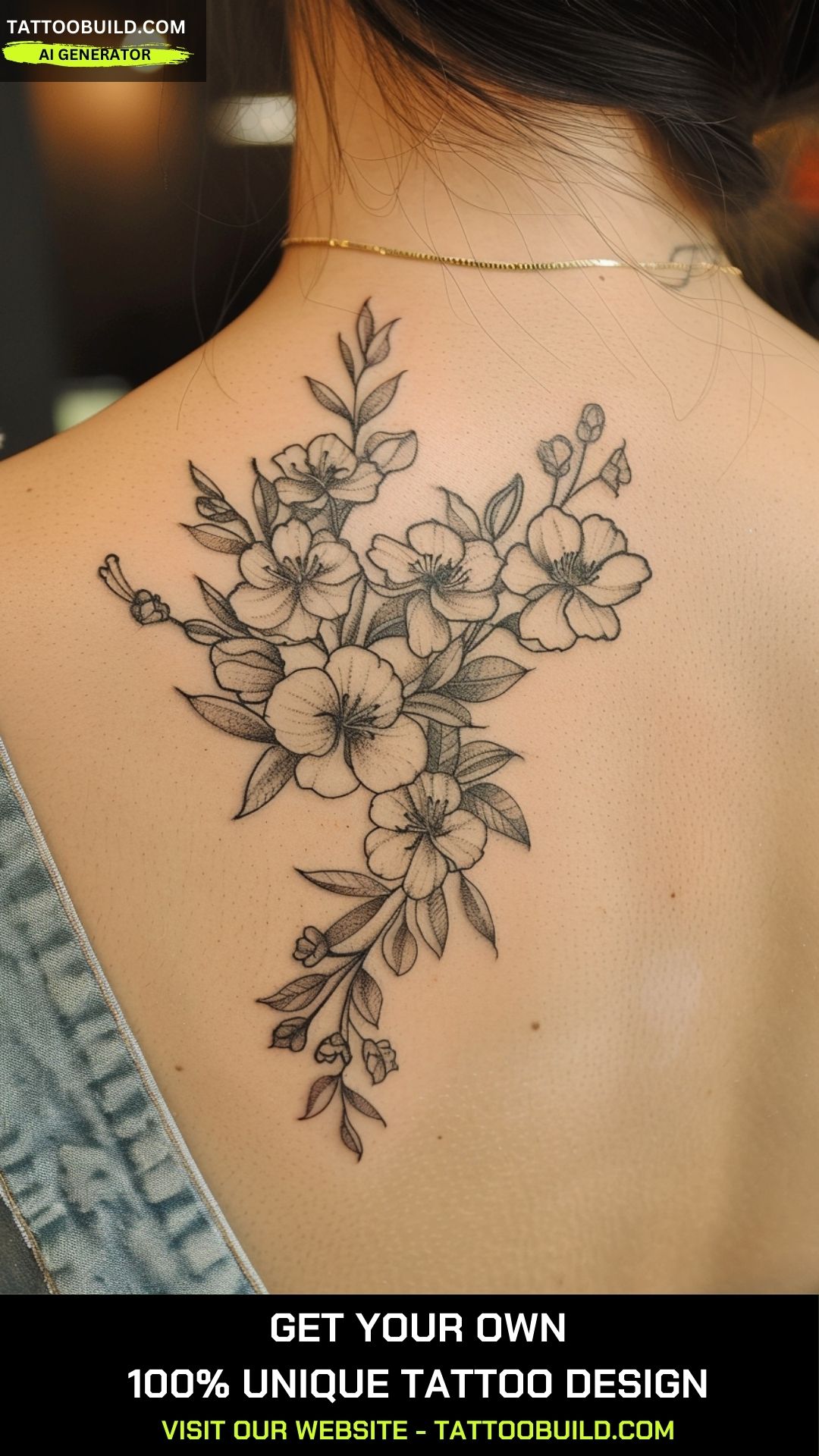
Single-needle blossoms are the most-requested version right now, and for good reason — they are quiet, quick and relatively cheap.
A typical piece is a thin branch with three to seven open blossoms, sized somewhere between a matchbox and a phone. Most artists I have asked will do this in a single sitting of one to two hours.
The honest caveat: fine line work softens. Thin lines spread slightly in the skin over years, and the tiniest details — a stamen, a two-millimetre bud — are usually the first to go.
Ask your artist to design at least one element with a heavier line so the piece keeps some structure as it settles. A slightly thicker branch against delicate petals ages far better than uniform hairlines.
Placement matters more here than in any other style. Fingers, the outer wrist bone and the side of the foot all move and rub, and fine line work in those spots frequently needs touching up within a couple of years.
Colour and Watercolour Blossoms
Pink is the obvious choice and also the difficult one. Pale pinks sit low in contrast against most skin tones and are among the first pigments to look tired.
Watercolour treatments push this further by design — washes deliberately bleed past the linework, which looks beautiful fresh and gives the piece very little structure to fall back on later.
If you want colour and longevity, the compromise most artists suggest is a strong dark branch with colour only in the petals. The dark element carries the design even after the pink has softened.
Deeper magentas and corals generally hold better than the palest blush tones. It is worth asking to see healed photos, not fresh ones, before committing to a specific pink.
Sun is the main enemy. The American Academy of Dermatology advises protecting tattooed skin from the sun once healed, and with pastel work that advice is not optional if you want it to last.
Sleeves and Large-Scale Compositions
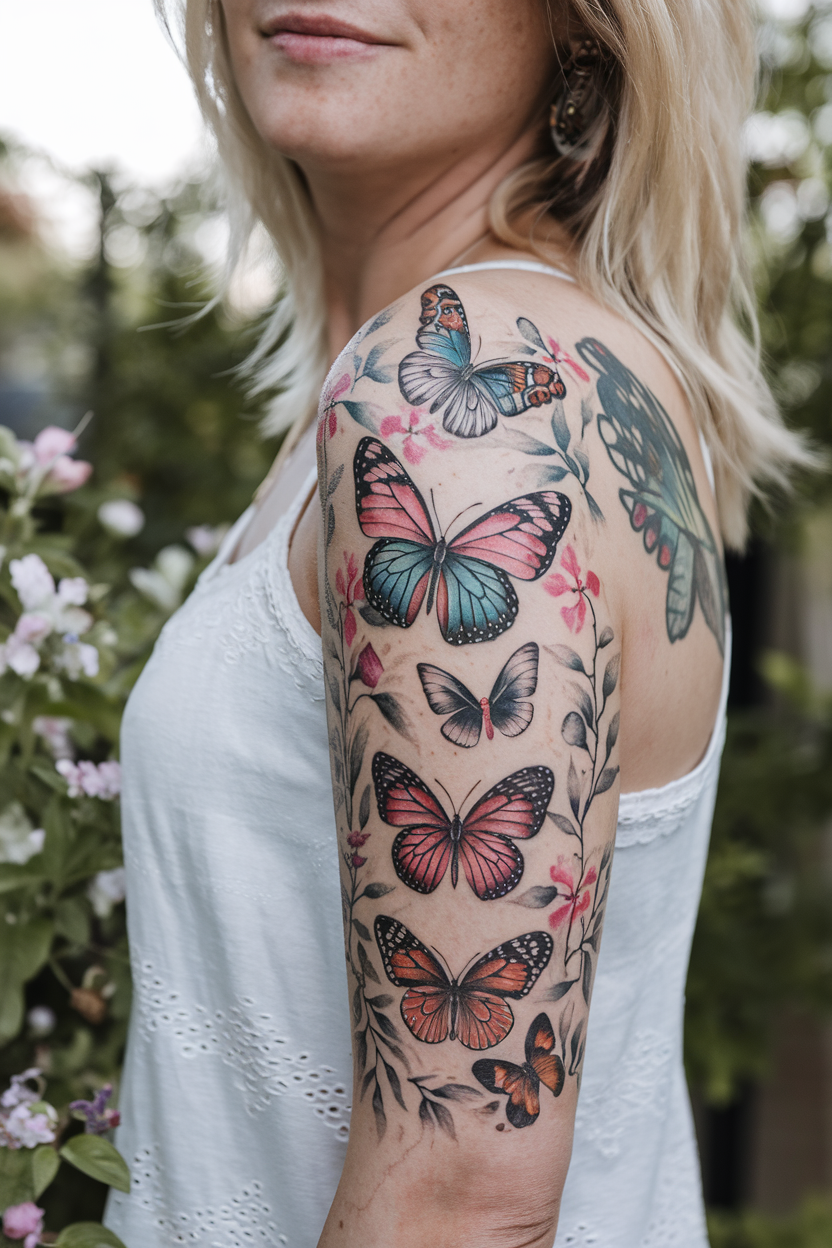
A cherry blossom sleeve is one of the more forgiving large projects because the branch gives you a natural flow line down the arm.
The usual approach is to start at the shoulder or upper arm and let the branch travel toward the elbow or wrist, with blossom density heaviest at the top and petals scattering as it descends.
Every artist I have asked about floral half sleeves says the same thing: leave more blank skin than feels comfortable in the drawing stage. Negative space is what makes the petals read.
Expect real time. A half sleeve in this style is commonly three to five sessions; a full sleeve with background can run considerably longer, and the schedule depends as much on healing gaps as on the drawing.
Design the whole sleeve before the first needle touches skin, even if you tattoo it in pieces. Sleeves assembled from unrelated sessions almost never flow properly.
Back, Spine and Shoulder Blossom Trails
A branch running down the spine is one of the most elegant placements for this motif, because the body already supplies a straight line to follow.
The trade is comfort. Spine tattoos sit directly over bone with very little padding, and most people describe them as sharply uncomfortable rather than dull — check a tattoo pain chart before you assume you will breeze through it.
Shoulder blades are the gentler alternative and give you a wider canvas for petals to drift across. They also stay covered under most clothing, which matters if your workplace is conservative about visible ink.
Anything on the back has one practical drawback worth naming: you cannot easily see it, and you cannot easily care for it during healing. Line up someone to help with aftercare before you book.
Small Standalone Blossoms
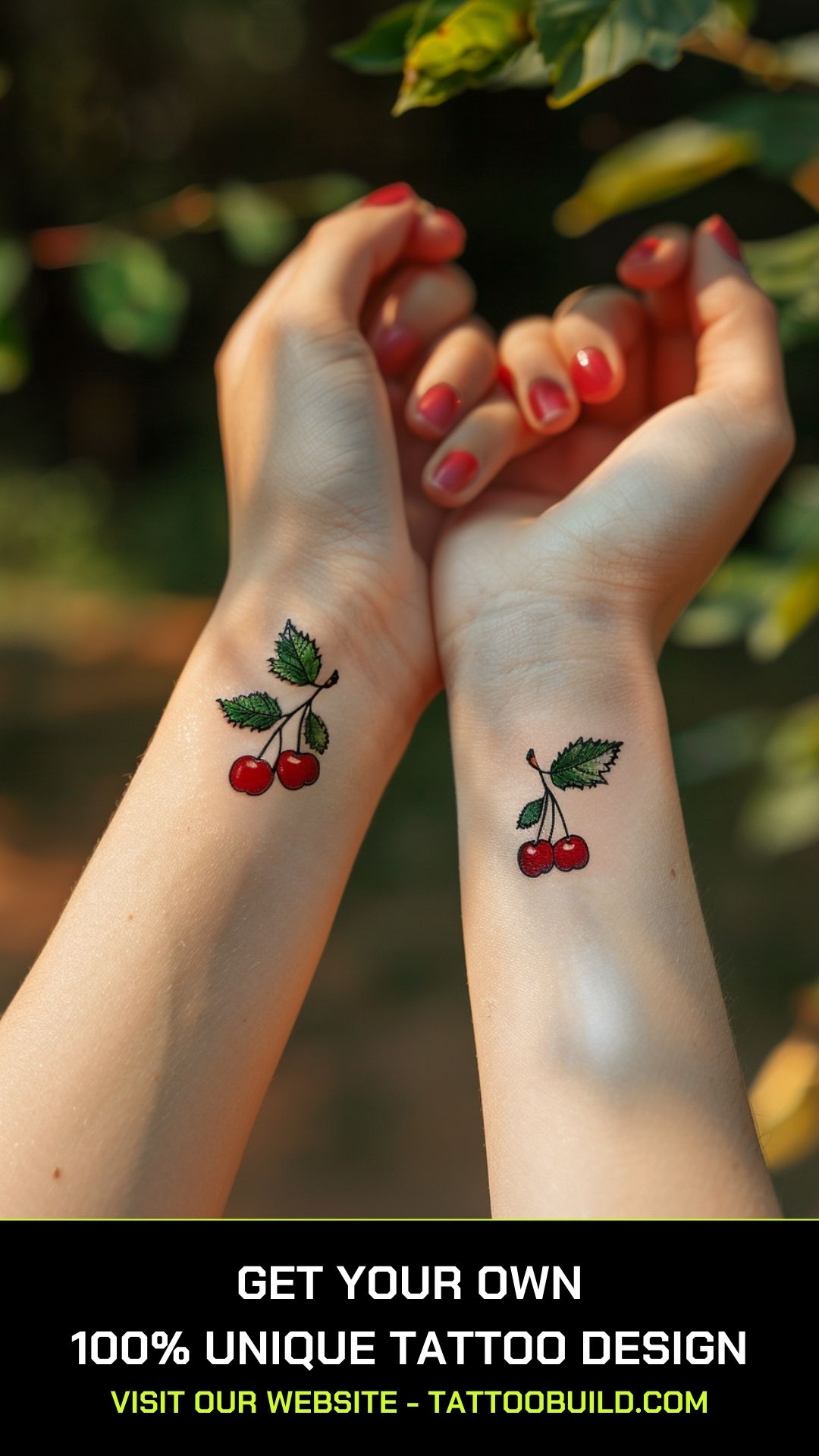
Not everyone wants a branch. A cluster of two or three blossoms with no stem at all is a legitimate design, and it suits the ankle, the collarbone and the back of the arm.
The rule I would keep in mind is that a blossom needs five distinguishable petals to read as sakura rather than as a generic flower. Below roughly two centimetres across, that gets difficult.
If you are set on something tiny, go simpler rather than smaller — fewer petals, cleaner shapes, no internal shading.
A single small piece also makes a sensible first tattoo, since it tests how your skin takes ink before you commit to a larger cherry blossom design.
Variations Worth Considering
If the plain branch feels too expected, these are the directions I see working most consistently.
Sakura Paired with a Crane or Koi
Both are traditional companions and both solve a compositional problem — they give the eye somewhere to land in a design that is otherwise all texture.
A crane in flight above the branch works particularly well on the upper back and shoulder.
Blossoms Fading into Petals
Starting with dense, fully rendered flowers at one end and dissolving into loose falling petals at the other is the single most effective way to make a mid-sized piece feel intentional.
It also flatters limbs, since the tapering matches the taper of a forearm or calf.
Cherry Blossom with Another Flower
Pairing sakura with peonies is common in Japanese-influenced work, since the two are seasonal counterparts and their shapes contrast nicely.
Keep one flower dominant. Two equally weighted blooms in the same piece usually fight each other.
Black and Grey Only
Dropping the colour entirely is the choice I would make if longevity were my only criterion. Shading carries all the softness that pink normally provides.
It also reads as more restrained, which some people prefer for placements that will be visible at work.
Aftercare, Sun and Keeping Pale Petals Sharp
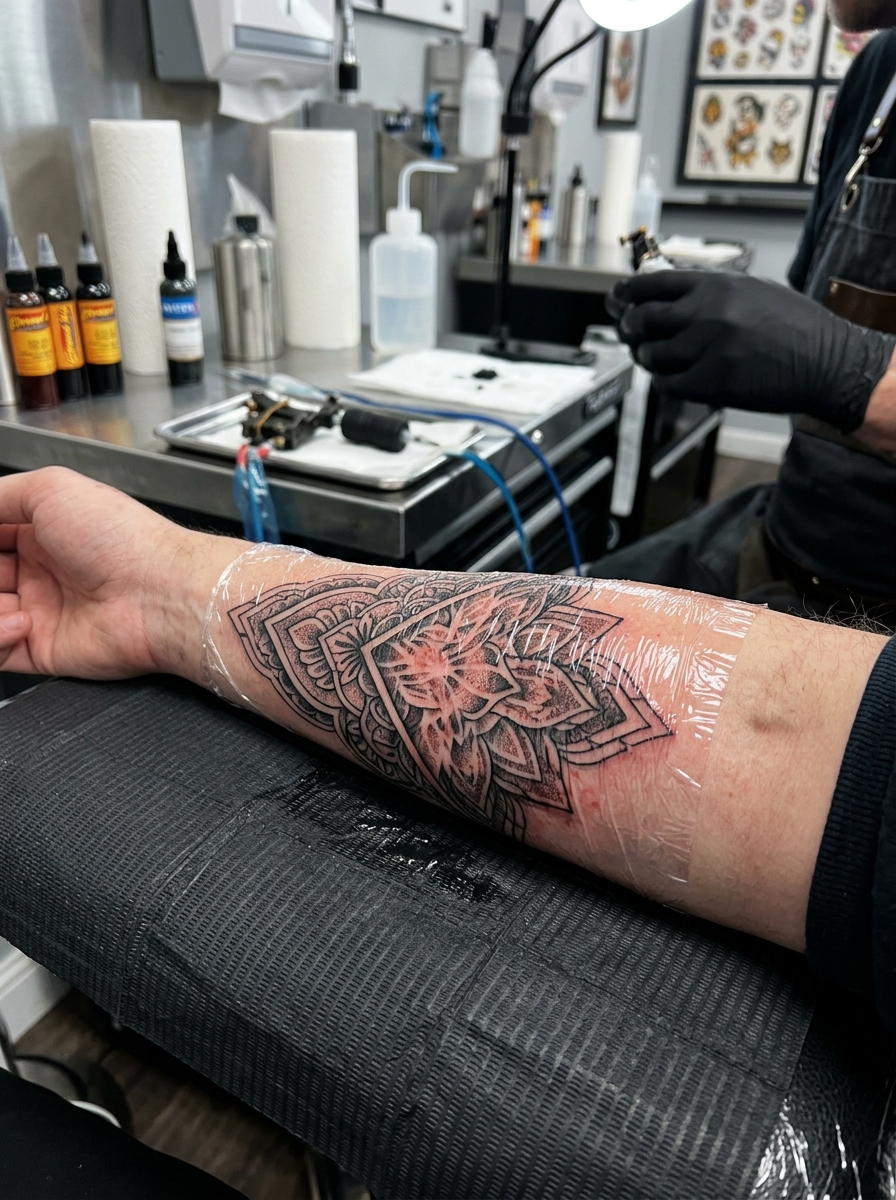
Your artist’s instructions override anything you read online, including this page. Aftercare protocols vary by studio and by the products they use, and they know what they put in your skin.
The general shape of it is consistent though: keep it clean, keep it lightly moisturised, do not pick the flaking, and stay out of pools, baths and open water until it has fully closed. Full healing on the surface commonly takes two to three weeks, with deeper settling continuing for a couple of months.
Sun is the one factor most within your control and the one most people neglect. Once healed, a high-SPF sunscreen over the tattoo whenever it is exposed will do more for a pink cherry blossom than any aftercare balm — the American Academy of Dermatology also documents the range of skin reactions tattoos can trigger, which is worth reading before you book.
On the medical side, be direct with yourself: spreading redness, heat, swelling that worsens after day three, pus, or a fever are not normal healing. Contact your artist and see a doctor — this article is not medical advice and cannot assess your skin.
Allergic reactions to red and pink pigments are recognised and can appear weeks or even months after the tattoo. If a specific colour in your piece stays raised or itchy long after the rest has settled, that is a conversation for a dermatologist rather than a forum.
For the general routine, our tattoo aftercare guide covers the first month in more detail.
Common Mistakes — and Still Not Sure?
The mistake I see most often is scale. People bring a reference photo of a half sleeve and ask for it at four inches, and the artist either says no or delivers something that will not survive a decade.
Second is over-filling. Cherry blossom designs live on negative space, and cramming every gap with petals removes the very quality that makes the motif work.
Third is choosing colour without asking about it. If nobody has told you that pale pink fades faster than black, you have not had a proper consultation.
Fourth, and the most expensive to fix: booking on price rather than portfolio. A cheap sakura branch from someone who mainly does lettering is not a saving.
Still weighing it up? It may help to look at how watercolour pieces hold up before you settle on a direction.
Frequently Asked Questions
What does a cherry blossom tattoo mean?
In Japanese tradition it represents impermanence — the idea that beauty matters partly because it does not last. Chinese tradition reads the same flower as feminine beauty, love and renewal. Western usage has broadened it further into a general symbol of spring, hope and fresh starts. Most people who get one are drawing on the first or third reading, and there is no requirement to pick just one.
How much does a cherry blossom tattoo cost?
It depends almost entirely on size and your artist’s hourly rate, which varies widely by city and by reputation. A small fine line branch is usually a single short sitting, while a half sleeve in Japanese style is a multi-session project. The most reliable way to find out is to send your reference and rough size to two or three studios and compare quotes. Be wary of a price far below the local norm.
Do cherry blossom tattoos fade quickly?
The pale pink ones fade faster than most tattoos, yes. Light pigments sit low in contrast and break down under UV exposure more readily than black. Black and grey versions, and pieces with a strong dark branch holding the structure, hold up considerably better. Consistent sunscreen once healed is the single biggest thing you can do about it.
Where is the best placement for a cherry blossom tattoo?
The forearm and upper arm are the most forgiving, because the branch follows the limb naturally and the skin there ages relatively well. The spine and shoulder blade suit long trailing designs but are less comfortable to sit through. Hands, fingers and feet are the hardest placements to keep sharp. In my experience most people are happiest with a placement they can see themselves.
Is a cherry blossom tattoo appropriate if I am not Japanese?
Opinions differ and it is worth thinking about honestly. A cherry blossom as a flower is not restricted — the tree grows across much of the world and the motif appears in several cultures. Full traditional irezumi with its specific iconography is a heavier borrowing, and many artists will talk you through that if you ask. A good artist is the right person to raise this with, not a comment section.
Quick Summary
- Cherry blossoms symbolise impermanence in Japanese tradition and renewal in Chinese tradition — both readings are valid.
- Four main styles: Japanese branch work, fine line, colour or watercolour, and black and grey.
- Black and grey ages best; pale pink and watercolour fade fastest.
- A strong dark branch gives any version structure that survives fading.
- Negative space is essential — over-filling ruins the motif faster than any other mistake.
- Forearm and upper arm are the most forgiving placements; spine and shoulder suit long trailing designs but hurt more.
- Fine line sakura will soften over years and may need a touch-up; design one heavier element to hold it together.
- Follow your artist’s aftercare, wear sunscreen once healed, and see a doctor for any sign of infection or a delayed reaction.