A Chinese dragon spine tattoo is one of the few designs where the placement and the subject were made for each other. The dragon already has a long, serpentine body. The spine already gives you a long, narrow, symmetrical canvas.
I have watched a lot of people bring reference photos into a shop, and this is the pairing that gets the fewest questions from the artist. The shape simply works.
What does take some thought is style, length and how much of your back you want the dragon to claim. A hairline-to-waist dragon is a very different commitment from a palm-sized one sitting between the shoulder blades, and both are valid. If you are still weighing placement generally, it is worth reading through other spine tattoo ideas before you commit to a subject.
Below are the styles I keep seeing hold up well over time, what each one costs you in sessions and pain, and the honest limitations of the placement.
Which Chinese Dragon Style Is Right for You?
Style choice affects healing, cost and how the piece will look in ten years far more than the dragon’s pose does. Here is how the main options compare.
| Style | Typical Sitting Time | How It Ages | Best For |
|---|---|---|---|
| Fine line | 3–5 hours | Softens noticeably; may need a touch-up in 5–10 years | A subtle first spine piece |
| Black and gray | 6–12 hours, often split | Very well if the grey wash is not too light | Realistic scales and depth |
| Blackwork | 8–15 hours | Best of any style; solid black stays solid | High contrast and long-term durability |
| Dot work | 6–10 hours | Can blur if the dots are packed too tightly | Soft texture without hard shading |
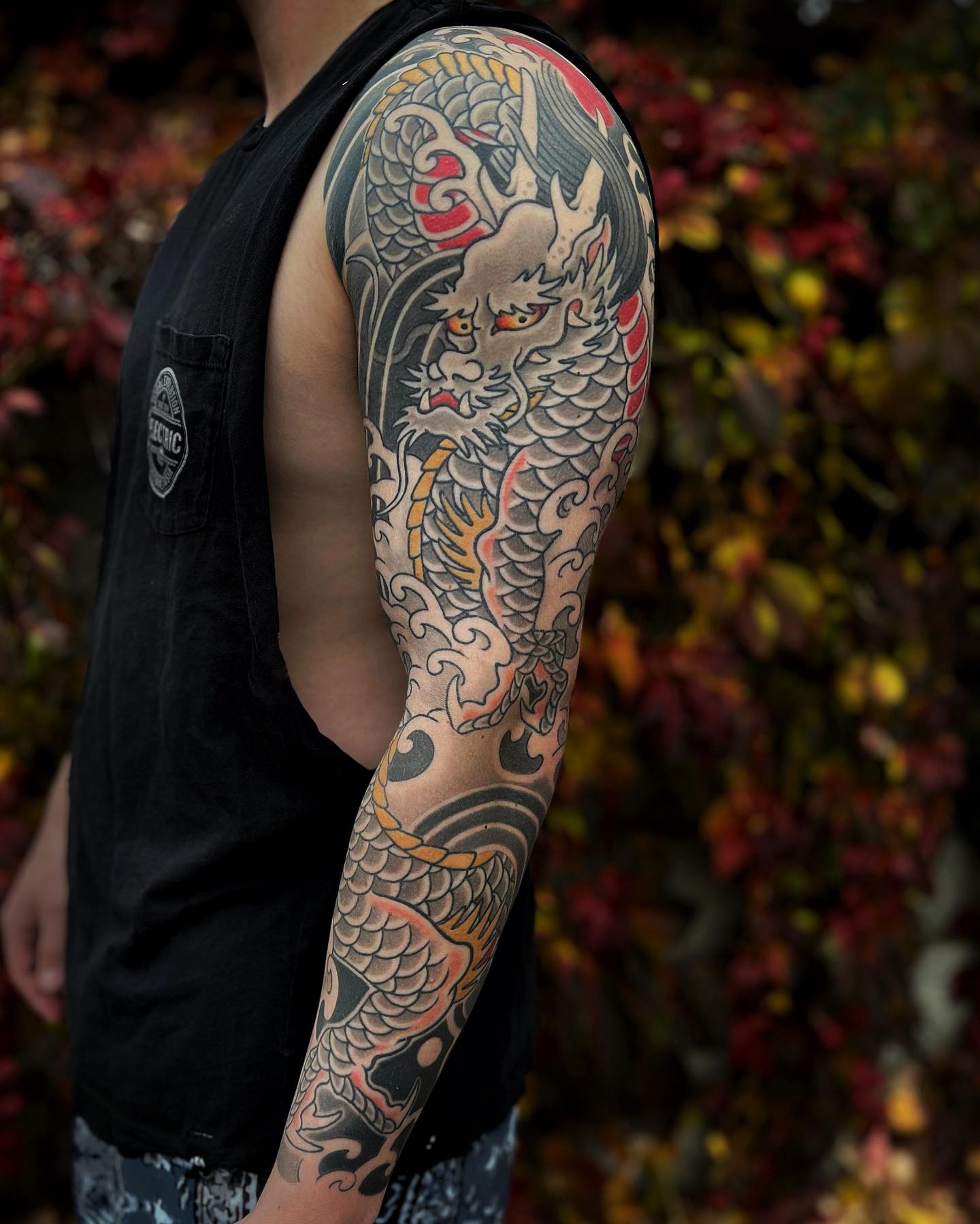
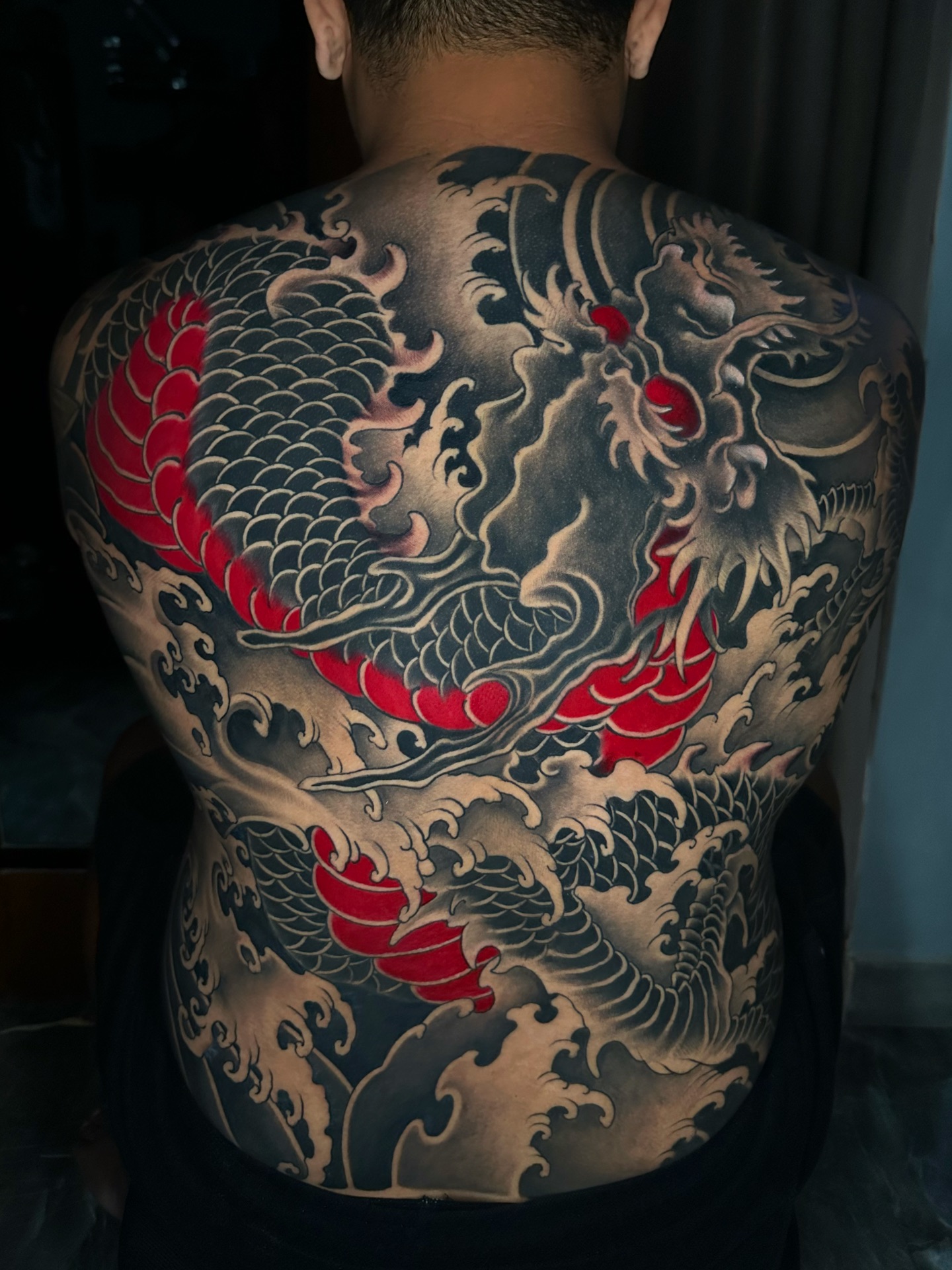
| Traditional Japanese-influenced | 15+ hours across sessions | Excellent; the style was built to age | Dragons that spill onto the back and ribs |
The sitting times above are ranges I have heard quoted by artists for full nape-to-waist pieces. Yours will depend on your size, your artist’s speed and how many breaks you need.
Why the Spine Is a Demanding Placement
The spine is one of the more painful places to get tattooed, and I would rather you hear that upfront than find out an hour in.
The reason is simple anatomy. There is very little fat between the needle and the vertebrae, and the bone itself conducts the vibration. Most people describe it as a sharp, rattling sensation rather than the burn you get on fleshier areas.
It also does not hurt evenly. In my experience the area over the shoulder blades and the very base of the spine are the worst, while the middle of the back is usually manageable. If you want a broader comparison, the most painful tattoo spots guide covers how the back stacks up against ribs and knees.
Then there is the symmetry problem. A dragon running down the spine sits directly on the body’s centre line, which means any crookedness is obvious. This is not the placement for a cheap deal or an artist you have not vetted.
Finally, the back moves. Bending forward stretches the skin along the spine considerably, so a design that is tight and cramped when you stand straight can look distorted when you slouch. Good artists account for this when they place the stencil.
Chinese Dragon Spine Tattoo Ideas Worth Considering
These are the compositions I see working repeatedly. Each one solves the same problem differently: how to fill a long, narrow space without the design turning into a straight vertical stripe.
1. Fine Line Dragon Down the Vertebrae
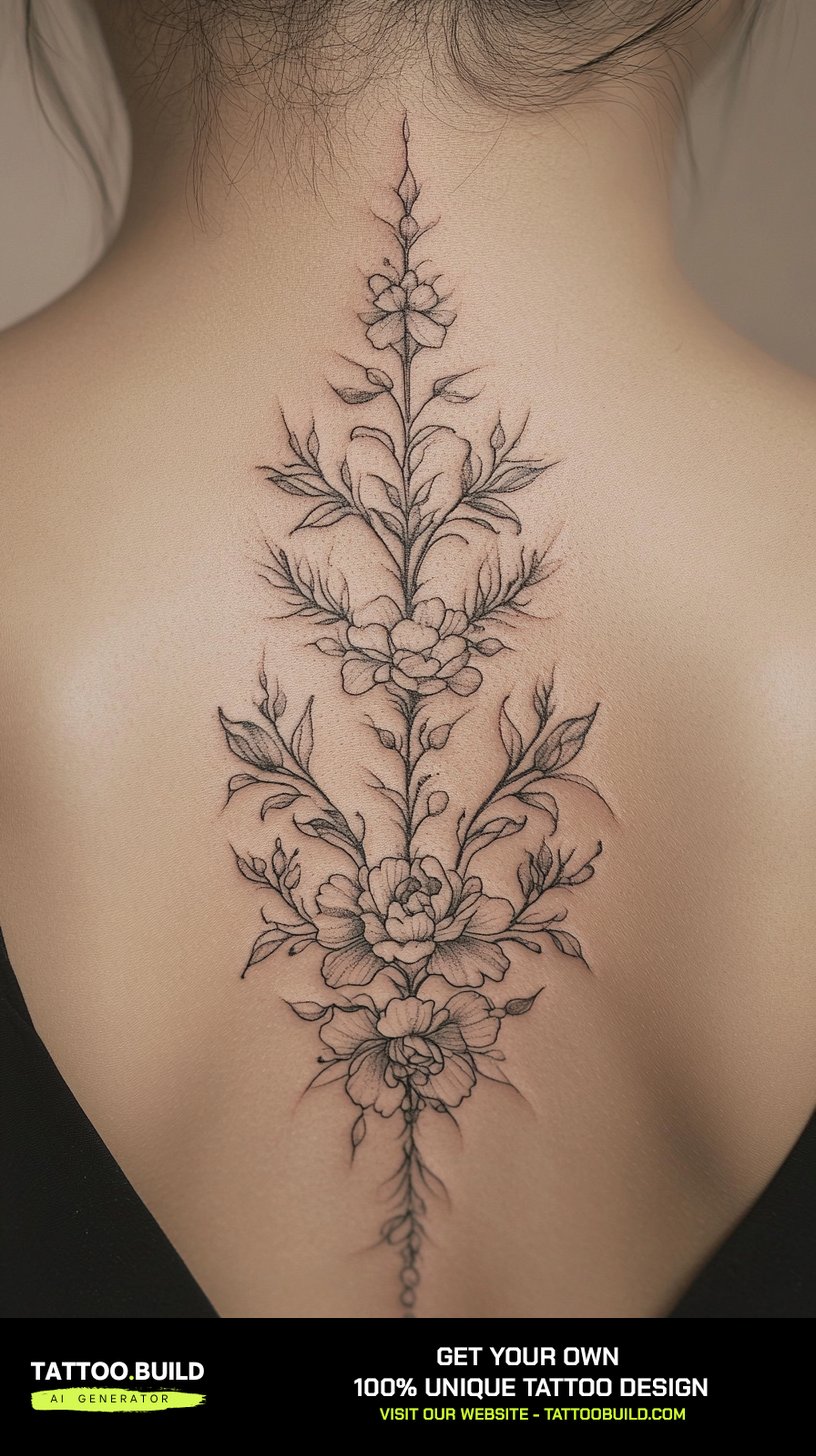
The fine line approach uses a single needle grouping and almost no shading, letting the dragon’s outline do all the work.
It suits people who want the piece to be visible but not loud. From a few feet away it reads as an elegant vertical line; up close the whiskers, claws and scale detail come into focus.
The trade-off is longevity. Thin lines on a high-movement area spread over time, and I have seen five-year-old fine line spine work that had lost some of its crispness. Ask your artist to keep the smallest details slightly larger than they would on a forearm.
If this direction appeals to you, the wider fine line spine tattoo gallery has more compositions to compare.
2. Black and Gray With Full Shading
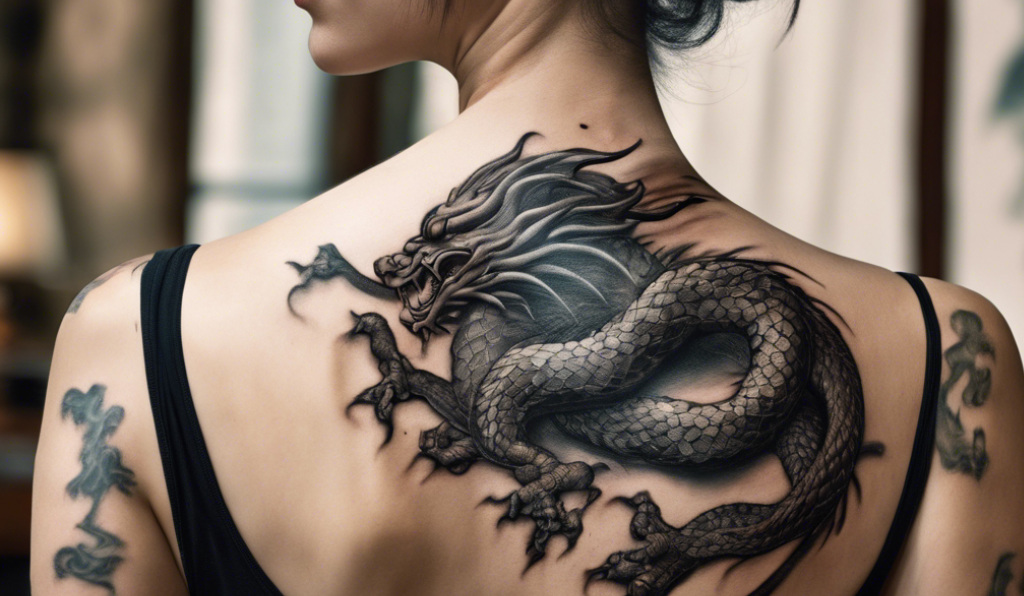
Black and gray is the most requested version of this design in my experience, and for good reason.
Grey wash lets the artist build actual dimension into the scales, so the dragon looks like it is lifting off the skin rather than sitting flat on it. The mane, whiskers and cloud motifs also gain a lot from soft shading.
This style takes longer and usually needs at least two sessions for a full-length piece. It also demands an artist who is genuinely good at smooth gradients, because patchy grey on the spine is very hard to hide.
One practical note: ask for the greys a shade darker than you think you want. Light wash tends to fade toward invisible faster than mid-tones do.
3. Blackwork and Solid Silhouettes
Blackwork fills the dragon’s body with solid black and carves the scales, eyes and claws out as negative space.
It is the most durable option on this list. Solid black packed properly stays solid, and the design will still read clearly in twenty years when finer work has softened.
It is also the least forgiving decision. Solid black is difficult to cover and difficult to remove, so this is a style to commit to rather than experiment with. If you like the aesthetic, browse blackwork tattoo designs first to make sure it is really your taste.
Every artist I have asked about blackwork on the spine says the same thing: budget more sessions than you expect, because packing black over bone is genuinely tiring for both of you.
4. Dot Work and Stippled Texture
Dot work builds shading out of thousands of individual dots rather than smooth grey wash.
On a dragon it does something specific and useful: it makes scales look textured rather than painted. Up close you can see the stippling; from a distance it reads as a soft gradient.
The catch is spacing. Dots packed too tightly bleed into a solid smudge as the skin ages, so a good dot work artist deliberately leaves breathing room. If a portfolio shows only fresh work and no healed photos, keep looking.
5. Dragon and Sword Compositions
Pairing the dragon with a vertical sword or spear is one of the smartest solutions to the narrow-canvas problem.
The blade gives the composition a straight structural line down the spine, and the dragon coils around it. That coiling motion adds width and rhythm that a plain vertical dragon does not have.
It also carries meaning for a lot of people, reading as protection or discipline rather than pure decoration. I would not over-explain it, though; symbolism is personal and you do not owe anyone a translation.
6. Flying Dragon With Cloud Motifs
Clouds are not filler. In Chinese iconography the dragon is closely tied to water and weather, and cloud bands are part of the traditional visual language.
Practically, they widen the design at the shoulders and stop the lower back from looking empty. A dragon alone on a long spine can read as thin; clouds fix that without adding another focal subject.
You can see how the traditional imagery developed in this overview of the Chinese dragon in Wikipedia, which covers the water associations and the nine-animal description of the creature’s body.
7. The Classic Long-Body Wrap
This is the version most people picture: the dragon’s head at the nape, the body tracing the vertebrae, the tail finishing near the waist.
Its main advantage is control over visibility. The head sits high enough to show above a low collar, and the rest disappears under almost any shirt.
Start with the head placement, not the tail. Every good spine piece I have seen was designed downward from a deliberate head position, because that is the part people actually see.
Variations and Alternatives to Consider
If a full spine dragon feels like too much for a first piece, these are reasonable adjustments rather than compromises.
Half-Spine or Upper-Back Only
A dragon running from the nape to mid-back gives you the same silhouette at roughly half the sitting time and cost.
It also leaves room to extend later if you decide you want the full length, provided your artist designs the tail with that in mind.
Colour and Red Ink
Red is traditional in Chinese imagery and looks striking fresh, but it does not hold as well as black over decades in my experience.
A common middle ground is a black and grey dragon with small red accents on the eyes, mane or a single cloud. It gives you the colour without betting the whole piece on it.
Off-Centre Placement
Running the dragon slightly beside the spine rather than directly on it reduces the bone pain noticeably and removes the symmetry pressure.
It reads differently, more like a back piece than a spine piece, but for a lot of people that is the better outcome.
A Different Serpentine Subject
The spine suits any long, flexible subject. Snakes, vines and koi all solve the same design problem, and snake tattoo ideas are worth a look if the dragon’s cultural weight is not what you are after.
Practical Tips Before and After the Session
Eat a real meal beforehand and bring something sugary. Spine sessions are long, and a blood sugar crash on a bony area is where most people tap out early.
Plan the aftercare around the fact that you cannot reach your own back. You will need someone to help you wash and moisturise it, or a mirror and a lot of patience, for the first week or two.
Sleeping is the other overlooked problem. A fresh spine tattoo means sleeping on your front or side for several nights, and I would put clean sheets on the bed before your appointment rather than after.
Keep it out of the sun once healed. The back gets more incidental UV exposure than people expect, and sun is the main reason black and grey work goes flat.
On safety: infections and allergic reactions are uncommon but real, and the FDA tattoo fact sheet outlines the risks worth knowing, including contaminated ink and reactions to pigment. If your tattoo becomes hot, swollen, increasingly painful after the first few days, or starts weeping, contact your artist and see a doctor. This article is design guidance, not medical advice.
Common Mistakes and How to Avoid Them
The most frequent one is choosing the artist by price. Spine work is centred, symmetrical and permanent, and a bargain that is two millimetres off centre will bother you every time you see a photo.
The second is booking one long session for a full-length piece. Most people’s pain tolerance on bone runs out well before the tattoo is finished, and a rushed second half is obvious.
The third is picking a design that ignores your actual proportions. A dragon drawn for a long torso looks cramped on a short one, so insist on a custom stencil rather than a copied reference.
If you are not settled on the subject yet, it is worth comparing dragon tattoo ideas for women, Japanese tattoo designs and full back tattoo layouts before you book. There is no rush, and the spine is not a placement to improvise on.
Frequently Asked Questions
How painful is a Chinese dragon spine tattoo?
Most people rate the spine among the more painful placements because there is little padding over the vertebrae and the bone carries the vibration. The sensation is usually described as sharp and rattling rather than burning. Pain is not uniform along the back, and the areas over the shoulder blades and the tailbone tend to be the hardest. Numbing options exist, but discuss them with your artist first because some affect how the skin takes ink.
How long does a full spine dragon take?
For a full nape-to-waist piece, artists commonly quote anywhere from around five hours for simple fine line work to fifteen or more hours for heavily shaded or blackwork designs. Most are split across two or more sessions. Your own timing depends on your height, the level of detail and how often you need breaks. Ask for an estimate in writing at the consultation.
Will a spine tattoo affect getting an epidural?
This comes up often and the honest answer is that it depends on the anaesthetist and the hospital. Some practitioners prefer to avoid inserting a needle directly through fresh or heavily pigmented tattooed skin, while many consider a healed tattoo a non-issue. If this matters to you, raise it with a doctor rather than relying on tattoo forums. It is a medical question, not a design one.
Can a Chinese dragon spine tattoo be extended later?
Yes, provided the original is designed with that in mind. Ask your artist to finish the tail or clouds in a way that can flow outward rather than closing off neatly. Extending into the shoulders, ribs or a full back piece is common. Retrofitting an extension onto a design that was drawn as a closed composition is much harder.
Does the number of claws on the dragon mean anything?
Historically it did. Under some Chinese dynasties, five-clawed dragons were reserved for the emperor while four-clawed versions were used by nobles, a distinction covered in general histories of the motif. Today the choice is aesthetic and nobody will hold you to imperial protocol. Pick the version you find more visually balanced.
Quick Summary
- The dragon’s long, serpentine body is a natural match for the spine — the shape does half the design work for you.
- Fine line is the gentlest entry point but softens fastest; blackwork lasts longest but is the hardest to change.
- Black and gray is the most versatile middle ground, and asking for slightly darker greys pays off over time.
- Expect real pain over the shoulder blades and tailbone, and plan on more than one session for a full-length piece.
- Clouds, swords and other secondary elements add width so the design does not read as a thin vertical stripe.
- Design downward from a deliberate head position at the nape — that is the part people actually see.
- Arrange help with aftercare before the appointment, because you cannot properly reach your own back.
- Choose the artist on centred, symmetrical healed work, not on price.