The first time I brought a folder of reference drawings to a consultation, my artist flipped through it for about ninety seconds and said the quiet part out loud: a classy half sleeve is not a collection of pretty images, it is one drawing that happens to cover half an arm.
That reframing changed how I look at every design since. The pieces that hold up are the ones drawn as a single composition from the start.
Below are the drawing styles I keep coming back to, why each one behaves the way it does on an arm, and the practical things I wish someone had told me before my first outline session. If you want a broader sweep of the category first, the guide to classy half sleeve tattoos for women covers the fundamentals.
Everything here comes from consultations, healed results on my own arm, and a lot of conversations with artists who draw sleeves for a living. Where I am unsure, I say so.
Which Half Sleeve Style Is Right for You?
This is the comparison I sketch out for friends who are stuck between directions. Session estimates are rough ranges from the artists I have worked with, not fixed prices or guarantees.
| Style | Best For | Typical Sessions | How It Ages |
|---|---|---|---|
| Fine line botanical | Soft, understated arms | 2–4 | Lines soften; may need a touch-up in a few years |
| Bold black floral | Long-term durability | 3–5 | Holds shape well over decades |
| Ornamental / lace | Symmetry and structure | 3–6 | Dense dotwork can blur if packed too tightly |
| Grey wash illustrative | Depth without heavy black | 4–6 | Lightest greys fade first |
| Celestial mixed | Symbolic, personal pieces | 2–4 | Depends heavily on line weight chosen |
| Geometric + organic | Modern, graphic looks | 3–5 | Straight lines show distortion soonest |
What Actually Makes a Half Sleeve Look Classy
Ask five artists and you will get five answers, but the overlap is consistent: restraint, flow, and breathing room.
Restraint means fewer subjects, drawn larger. The arms I envy usually have three or four main elements, not eleven.
Flow means the drawing follows the muscle rather than fighting it. A design mapped flat on paper often looks crooked once it is wrapped around a bicep, which is why good artists redraw on the skin.
Breathing room is the one most people skip. Negative space is what separates an elegant sleeve from a busy one, and it is also what keeps the piece readable from across a room.
In my experience the drawings that fail are rarely badly drawn. They are usually well drawn and overcrowded, which is a much harder problem to fix later.
Classy Half Sleeve Tattoo Drawings Worth Copying to Your Reference Folder
These are the six directions I see working most reliably on upper arms. Each behaves differently under the needle and over time.
Botanical and Floral Compositions
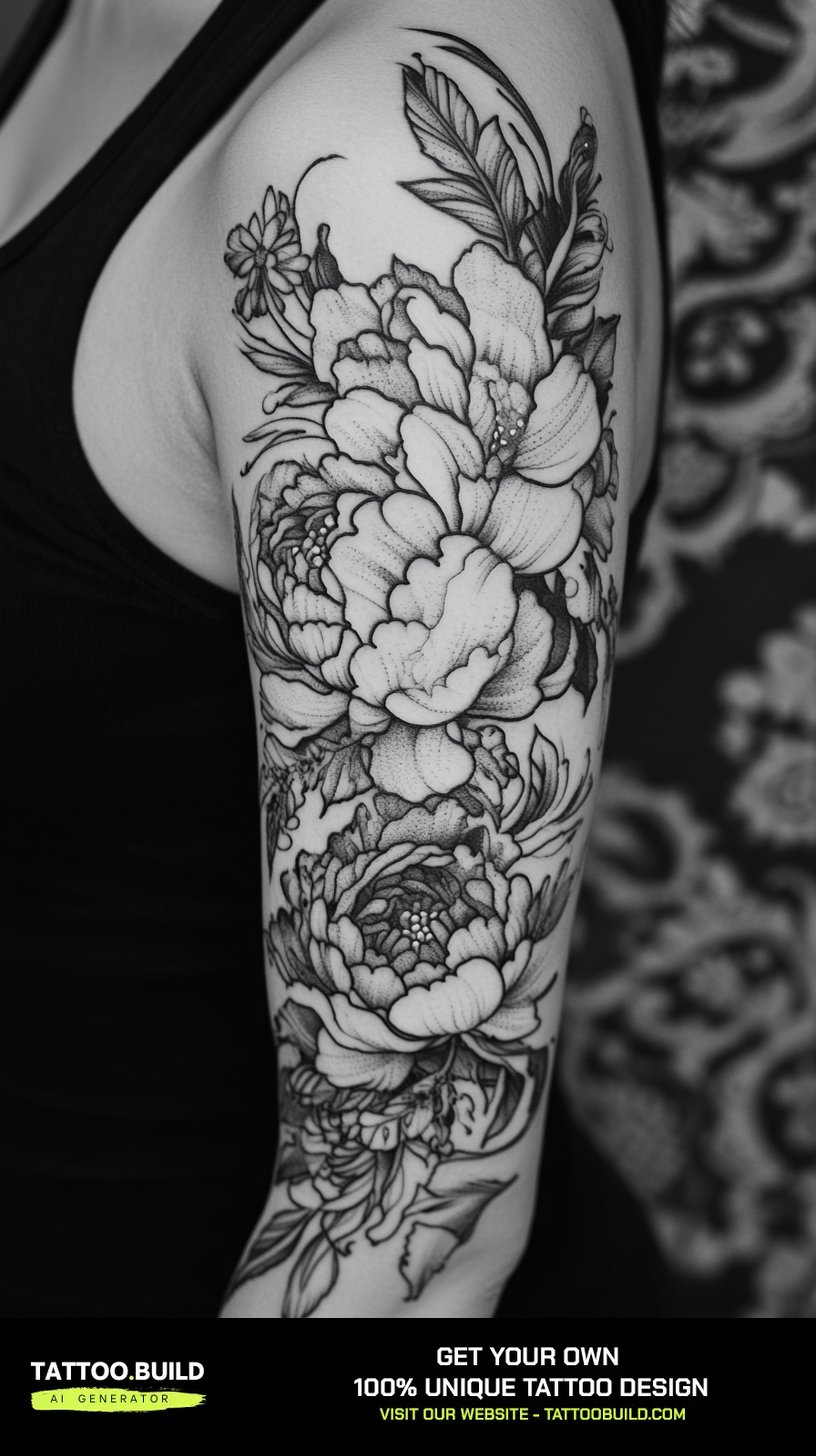
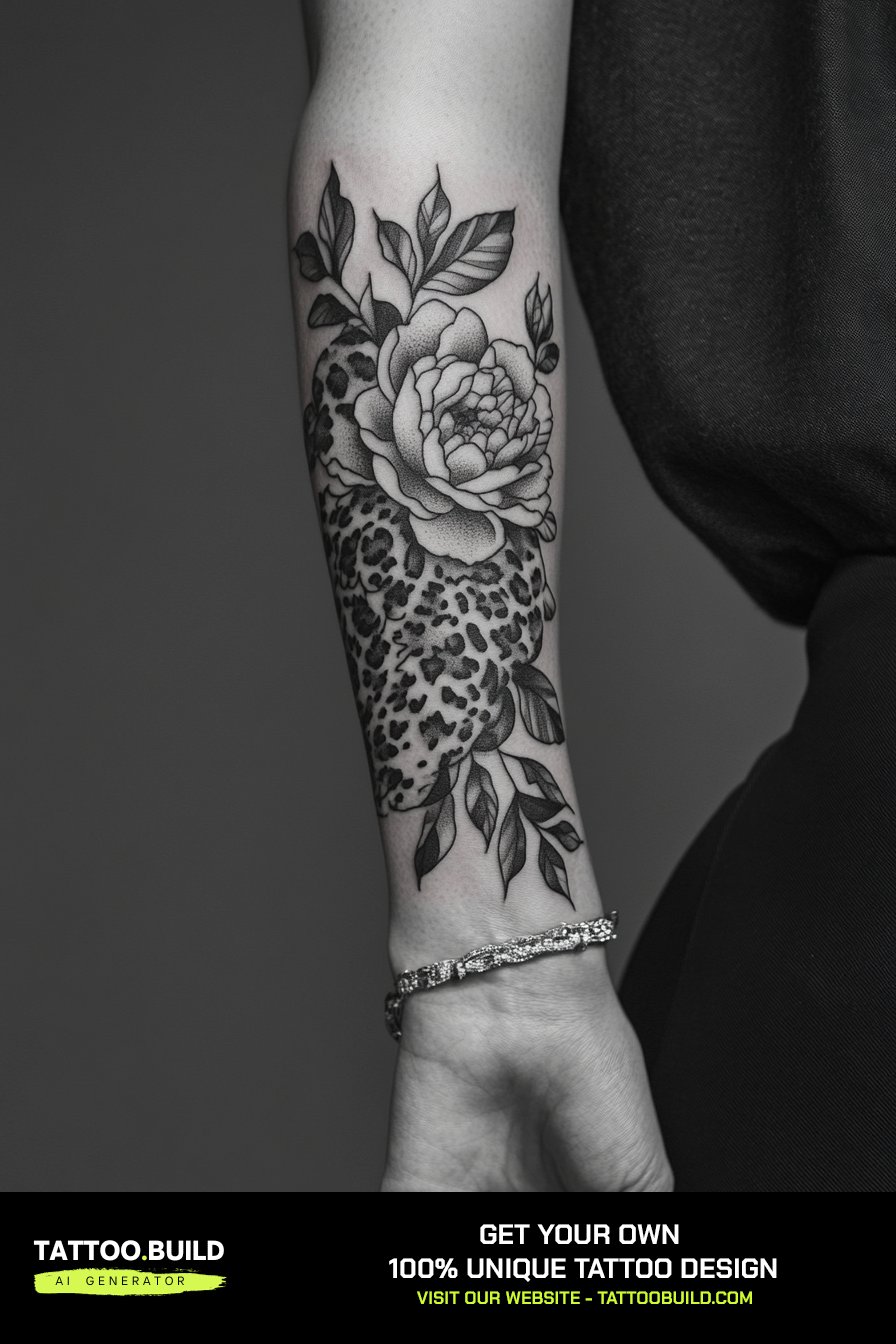
Florals remain the default for a reason: petals and leaves are naturally curved, so they wrap an arm without looking distorted.
The drawings I like best treat one large bloom as the anchor, usually placed on the shoulder cap or the outer bicep, with smaller supporting elements trailing toward the elbow.
When I tested reference images against my own arm with a marker, the ones with a single dominant flower always read better than the ones with five equal-sized blooms competing for attention.
Peonies, roses, and magnolias give you large readable shapes. Wildflowers and sprigs are better as connective tissue than as the main event.
If forearm placement interests you more, the floral forearm half sleeve guide covers how the same botanical logic changes below the elbow.
Fine Line and Minimal Linework
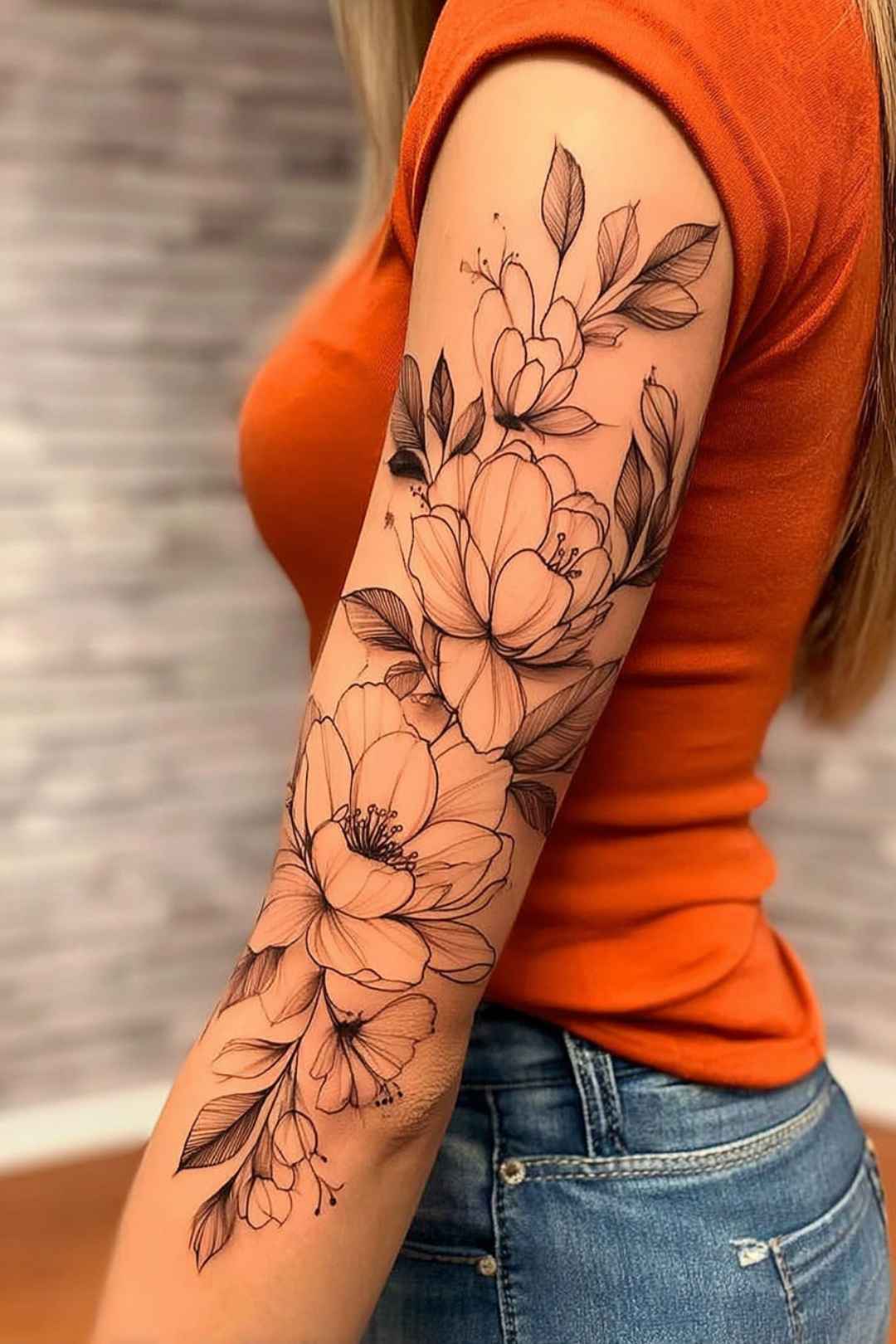
Fine line is the style people most often ask for and most often misunderstand.
A single-weight thin line looks stunning fresh. It also has the least ink in the skin, so it is the most likely of any style here to need a touch-up down the line.
Every artist I have asked says the same thing: fine line ages best when it is drawn slightly larger and slightly simpler than the reference image suggests.
If you want fine line to last, give the lines room to spread. Details packed closer than a few millimetres tend to merge as the skin settles.
The fine line sleeve ideas collection has more examples of how spacing changes the result.
Ornamental, Lace, and Mandala Work
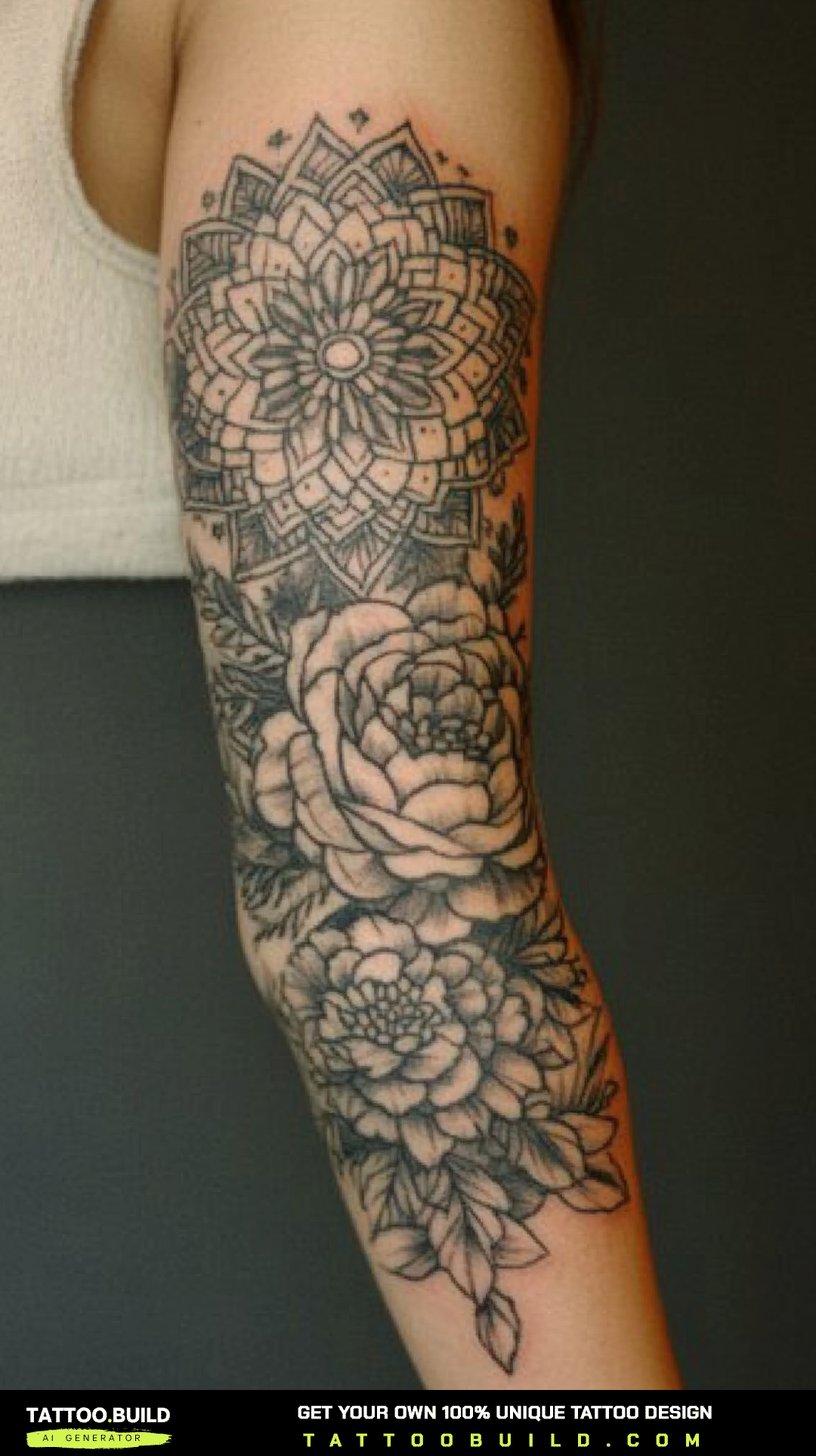
Ornamental drawings are the most architectural option on this list, and the most forgiving of an arm that does not want to hold a picture.
Because the patterns repeat, they can be extended or trimmed to fit your exact arm length without breaking the design.
The trade-off is density. Dotwork shading that is packed too heavily can blur into a solid grey patch, which I have seen on healed arms more than once.
A good ornamental artist leaves visible gaps between the dot fields. If a reference drawing has no gaps at all, ask how it will look in ten years.
For symmetry-led designs specifically, the mandala sleeve ideas page is a better starting point than generic ornamental searches.
Celestial and Symbolic Elements
Moons, stars, and sun motifs are easy to draw badly and hard to draw memorably.
What separates the good ones is usually scale contrast: one large moon or sun, then genuinely small stars, rather than a field of medium-sized shapes.
When I mocked this up on my own arm, the versions with three sizes of element looked composed and the versions with one size looked like wallpaper.
Celestial pieces also mix well with botanical work, which makes them a useful bridge if you are combining two ideas into one sleeve.
Animals, Birds, and Nature Subjects
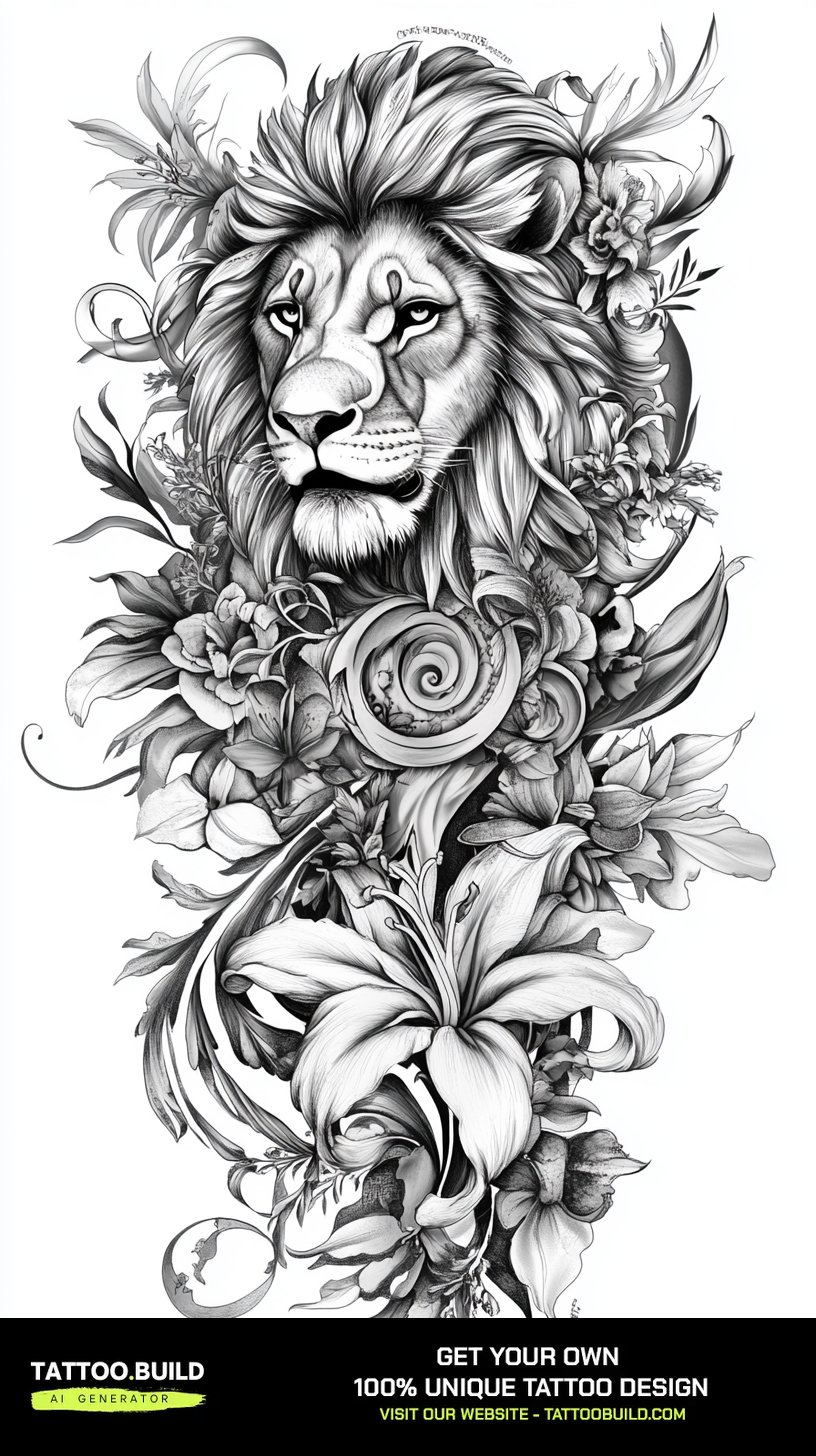
An animal gives a sleeve a focal point that a purely decorative design cannot.
Birds in particular suit half sleeves because wings are wide at the top and taper naturally, which mirrors the shape of an upper arm.
The mistake I see most often is placing the animal low, near the elbow, where it gets bent and folded every time the arm moves.
Put the most important element on the outer upper arm. That surface stays relatively flat and is the part other people actually see.
Abstract, Washed, and Geometric Hybrids
This is the fastest-moving category and the hardest to judge from a drawing alone.
Soft washed pieces with no hard outline can look extraordinary healed, but they depend almost entirely on the artist’s control of grey values.
Geometric elements are the opposite problem: straight lines are unforgiving, and any wobble or later stretching of the skin shows immediately.
If you are drawn to this direction, look at healed photographs from the specific artist rather than fresh ones. I now ask for healed work at every consultation, and a few artists have quietly told me it is the question they wish more clients asked.
Variations Worth Considering Before You Commit
A half sleeve is not the only shape these drawings fit into. Two of these alternatives have talked friends out of designs they were not ready for.
The Quarter Sleeve
A quarter sleeve runs from the shoulder to roughly mid-bicep and costs a fraction of the time and money.
It is also the easiest piece to extend later, since the lower edge can be left deliberately open rather than closed off.
The Inner Arm Panel
Instead of wrapping, the design runs vertically along the inner arm only. It is more private, more painful in my experience, and reads as one clean panel.
Growing Toward a Full Sleeve
Some of the best arms I have seen were built in stages over several years, with each session designed to connect to the last.
If that is your plan, say so at the first consultation. Planning a full sleeve for women from the start changes where the artist places the anchors.
Gaps between elements are normal in a staged build, and sleeve filler ideas are how those gaps eventually close.
Planning, Sessions, and Aftercare
Most half sleeves I know of took between two and six sessions, spaced two to four weeks apart so each area could heal before the next pass.
Bring reference for the feeling you want, not the exact drawing you want copied. Artists draw better work when they are designing rather than tracing, and most will refuse to copy another artist’s piece anyway.
Aftercare is where good work gets lost. Keep the area clean, follow the specific instructions your artist gives you, and expect flaking and itching during the first couple of weeks. General guidance from the American Academy of Dermatology is a reasonable baseline, but your artist’s instructions come first.
Sun is the long-term enemy. Once healed, the single most useful habit I have adopted is covering or sunscreening the arm, because faded grey wash is very hard to rescue.
Take healing seriously as a medical matter, not just a cosmetic one. If you see spreading redness, swelling that worsens after a few days, discharge, or a fever, contact a doctor rather than waiting it out. The Mayo Clinic’s overview of tattoo risks explains what to watch for, and nothing in this article is a substitute for professional medical advice.
Still Not Sure? The Mistakes I Would Undo
Choosing the artist for their price rather than their portfolio. This is the expensive mistake, because correcting or covering a sleeve costs far more than the original.
Approving a stencil you are not happy with. Stencils are free to redraw and permanent to tattoo. I have asked for four stencil revisions in one sitting and no good artist has ever minded.
Collecting too many references. If you are stuck between directions, browsing a focused set like these half sleeve tattoo drawings or the wider half sleeve drawing ideas library is more useful than another hour of scrolling.
Ignoring how the design meets the shoulder and the elbow. Those two edges decide whether the sleeve looks finished or simply stopped. Looking at healed female half sleeve tattoos is the quickest way to see the difference.
Frequently Asked Questions
How long does a classy half sleeve take to complete?
Most of the half sleeves I have followed took between two and six sessions. Fine line and minimal designs sit at the shorter end, while dense ornamental or grey wash work sits at the longer end. Sessions are usually spaced two to four weeks apart so each section heals fully before the next pass. Your artist can give a realistic estimate once the drawing is finalised, since the design itself drives the timeline more than the arm size does.
Does a half sleeve hurt more than a smaller tattoo?
The pain is not usually sharper, but it lasts much longer, which is the real difference. The outer upper arm is generally reported as one of the more tolerable areas, while the inner arm and the skin near the elbow tend to be more sensitive. In my experience the third hour is harder than the first, so eating beforehand and taking short breaks matters more than any pain hack. Tell your artist if you need to stop; a paused session is always better than a rushed one.
Will fine line work still look good in ten years?
It can, but it generally needs more maintenance than bolder styles because there is less ink in the skin. Lines drawn very close together are the most likely to soften and merge as the skin ages. Drawing the piece slightly larger and slightly simpler than the reference is the most common way artists build in longevity. Sun protection makes a bigger difference than almost anything else you can control.
Can I combine two different styles in one half sleeve?
Yes, and some of the most interesting arms I have seen do exactly this. The usual approach is to let one style lead and use the second as accent rather than giving them equal weight. Botanical work mixes comfortably with celestial or ornamental elements because the shapes are compatible. Combining two heavily detailed styles at equal weight is where designs tend to get muddy.
What should I bring to the first consultation?
Bring reference for the mood, colours, and level of detail you want, plus photographs of your own arm from a few angles. Be ready to talk about placement limits, such as whether the design needs to be coverable at work. It also helps to know your rough budget and how many sessions you can realistically commit to. Asking to see healed photographs of the artist’s previous work is completely normal and worth doing.
Quick Summary
- Design the half sleeve as one composition, not a collage of separate tattoos.
- Use three or four main elements drawn large rather than many small ones.
- Leave deliberate negative space — it is what makes a sleeve read as elegant.
- Place your most important element on the outer upper arm where it stays visible and flat.
- Expect two to six sessions, spaced two to four weeks apart for healing.
- Ask every artist for healed photographs, not just fresh work.
- Fine line needs the most long-term maintenance; bold black holds shape longest.
- Follow your artist’s aftercare instructions, and see a doctor if healing looks infected.