A mountain and tree tattoo is one of the few designs that genuinely works at almost any size, on almost any part of the body. A ridgeline and a treeline can be three inches on a wrist or thirty inches down a back, and the idea survives either way.
I have watched this design move from a niche request to something artists see most weeks. In my experience the reason is simple: it means something specific to the person wearing it without needing a single word of explanation.
Below are 40 mountain and tree tattoo ideas pulled from real pieces, organised by placement and style rather than dumped in a pile. If you like this direction generally, it sits in the same family as the broader nature tattoo designs people bring to their artists.
I will also be honest about which of these age well and which do not, because that is the part most galleries skip.
Which Mountain and Tree Style Is Right for You?
Style matters more than subject here. The same peaks and pines look completely different depending on how they are rendered, and they age at very different rates.
| Style | Best Size | Typical Sittings | How It Ages |
|---|---|---|---|
| Fine line / minimalist | 2–5 inches | One short session | Lines soften and spread; usually needs a touch-up in time |
| Blackwork silhouette | 4–10 inches | One to two sessions | The most forgiving option long term |
| Black and grey realism | 6 inches and up | Two or more sessions | Light grey wash fades first; mid-tones hold |
| Colour landscape | 5 inches and up | Two or more sessions | Depends heavily on sun exposure and aftercare |
| Geometric / framed | 3–7 inches | One session | Clean if the frame is solid; wobbles show over time |
| Full back or sleeve scene | 12 inches and up | Several, spaced weeks apart | Well, if the artist left breathing room |
If you are torn, the blackwork row is the safest bet. Every artist I have asked about longevity says roughly the same thing: solid black outlasts everything else on the list.
What a Mountain and Tree Tattoo Actually Means
Mountains have carried the same broad meaning across cultures for a very long time: obstacle, endurance, perspective. Trees sit alongside that as symbols of growth, roots and continuity.
Put them together and you get a scene rather than a symbol, which is why so many people find it easier to live with than a single loaded icon.
In practice, most people I have spoken to about theirs describe it in personal terms rather than symbolic ones — a specific range they grew up near, a hike they did after something hard, a place a parent took them.
That specificity is worth protecting. If a real skyline matters to you, bring a photograph, not a Pinterest board.
The design also overlaps with older symbolic traditions. If the tree half is doing most of the emotional work for you, it is worth looking at tree of life tattoo designs before you settle.
Mountain and Tree Tattoo Ideas by Placement and Style
Placement changes the design more than most people expect. A composition that sings on a forearm can look cramped on a calf, and the reverse is just as true.
1. Forearm and Lower Arm Mountain Scenes
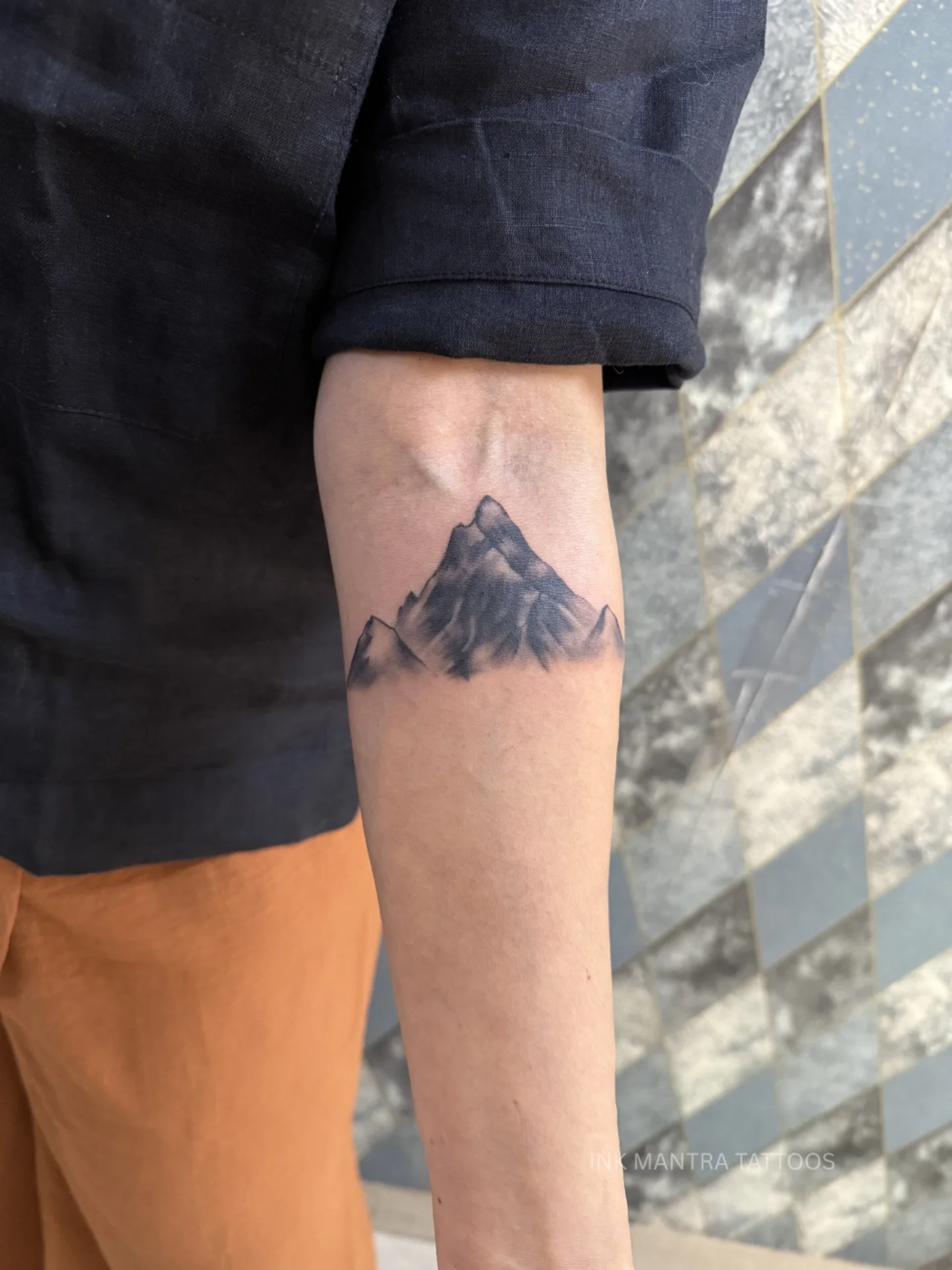
The forearm is the most requested spot for this design, and for good reason: it is flat, it is visible, and it heals easily.
The catch is width. You have roughly three to four inches of usable space before the design starts wrapping, so wide panoramic ranges get compressed.
The fix most artists use is to crop the scene rather than shrink it — two or three peaks instead of six, and a treeline that runs off the edge of the design rather than resolving neatly.
When I have seen these done well, the pines are the sharpest, darkest element and the peaks sit softer behind them. That contrast is what keeps it readable at arm’s length.
Inner forearm placements hurt a little more than the outer side and tend to hold ink slightly less crisply. Plenty of other forearm tattoo ideas follow the same rules.
2. Upper Arm and Half Sleeve Designs
The upper arm gives you something the forearm cannot: a curve to wrap a range around.
A skyline that starts on the outer bicep and disappears toward the inner arm reads as a landscape you are standing inside, rather than a picture stuck on the skin.
This is where most mountain and tree pieces start growing into half sleeves. In my experience people underestimate how quickly that happens — you add clouds, then a sun, then a river, and suddenly you are three sessions deep.
If a sleeve is where you are heading anyway, plan the whole composition before the first needle touches skin. Retrofitting a full sleeve around a standalone piece is always harder than it sounds.
3. Full Back Pieces
The back is the only canvas that lets a mountain and tree scene run at true scale.
You get width for a whole range and height for a sky, which means the design can include foreground, middle distance and background without any of it turning to mush.
Back pieces are a commitment measured in months, not hours. Expect several sittings spaced a few weeks apart so each section can heal properly.
The upper back and shoulders sit comfortably; the spine and lower back are noticeably sharper. Every person I have talked to about theirs mentions the spine specifically.
Other large-canvas approaches are covered in this guide to symbolic back tattoos.
4. Shin, Calf and Leg Placements
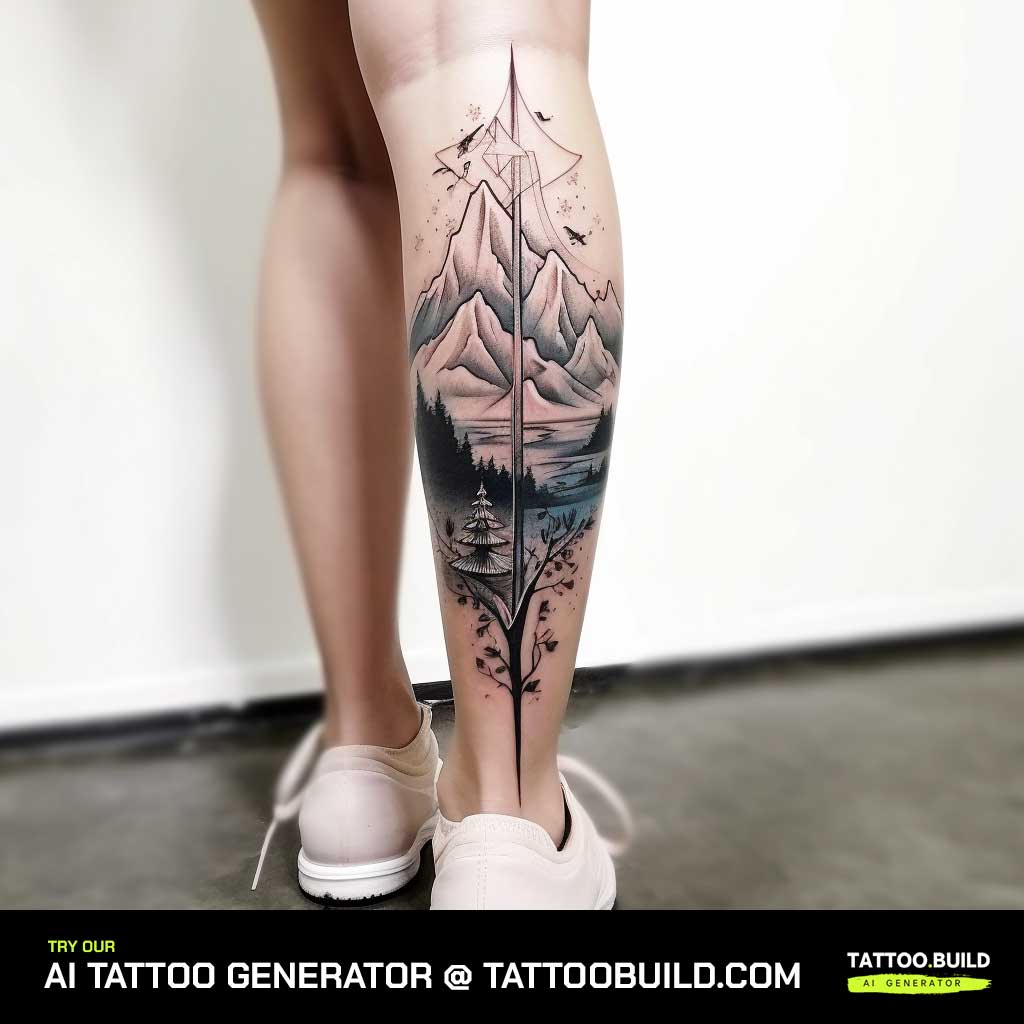
Legs are underrated for this design. A shin gives you a tall, narrow window that suits stacked peaks and a vertical treeline perfectly.
Calves offer more muscle and more room, and they generally hurt less than the shin, where the skin sits directly over bone.
One practical note from people I have asked: leg pieces are slower to heal than arms, largely because of swelling and the fact that you walk on them all day.
Keep the leg elevated where you can in the first few days and skip long runs until the peeling stage is over.
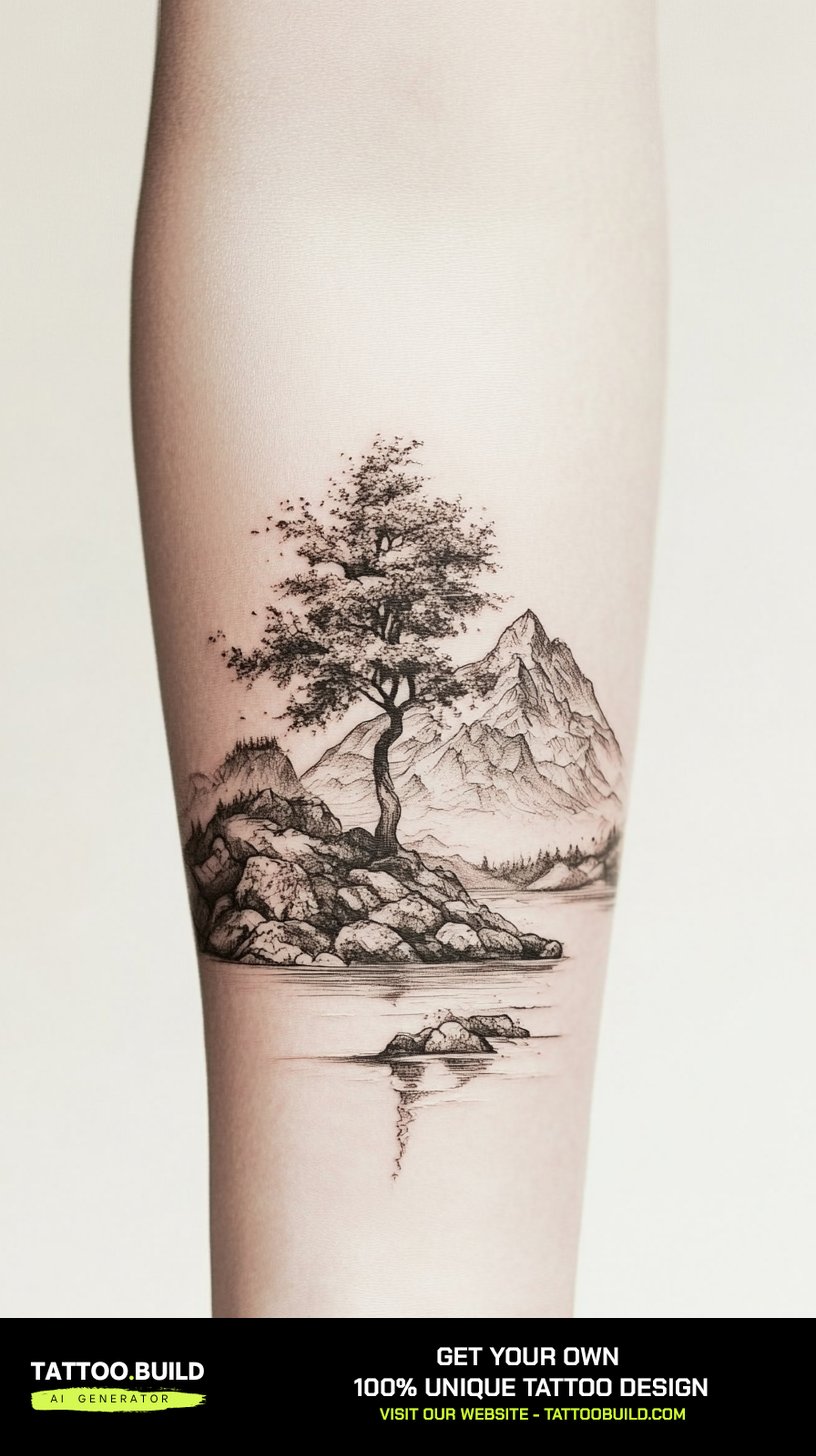
5. Fine Line and Minimalist Versions
A fine line mountain and tree tattoo is the entry point for a lot of first-timers, and it is a reasonable one.
Small, quick, relatively low pain, and easy to place somewhere private. The design reduces well: a ridge, two or three pines, done.
The honest trade-off is longevity. Single-needle lines spread as skin ages, and pines drawn too close together can blur into a single mass over a decade or more.
The artists I trust build in more space between elements than looks right on the stencil, precisely for that reason. If you want this style, look at how spacing is handled across other fine line tattoo ideas before you commit.
6. Blackwork and Heavy Silhouettes
If you only care about one thing — that the tattoo still looks like what it is in twenty years — this is the style to pick.
Solid black holds its shape better than grey wash or colour, and a silhouetted treeline against a clean skyline is about as durable as tattooing gets.
It also suits the subject. Mountains at dusk genuinely do read as flat black shapes, so the stylisation is not a compromise.
When I have compared healed blackwork against healed grey-wash pieces of similar age, the difference in crispness is obvious even to people who know nothing about tattoos.
7. Colour and Watercolour Landscapes
Colour opens up sunsets, alpine blues and autumn treelines, and there is nothing else that gets you that mood.
It is also the highest-maintenance choice on this list. Colour pigments generally fade faster than black, and sun exposure accelerates it.
True watercolour styles — soft washes with no containing line — are the most vulnerable of all. Most artists I have asked recommend a black line or blackwork base underneath so there is still structure once the colour softens.
If you choose colour, treat daily sunscreen on the piece as part of owning it, not an optional extra.
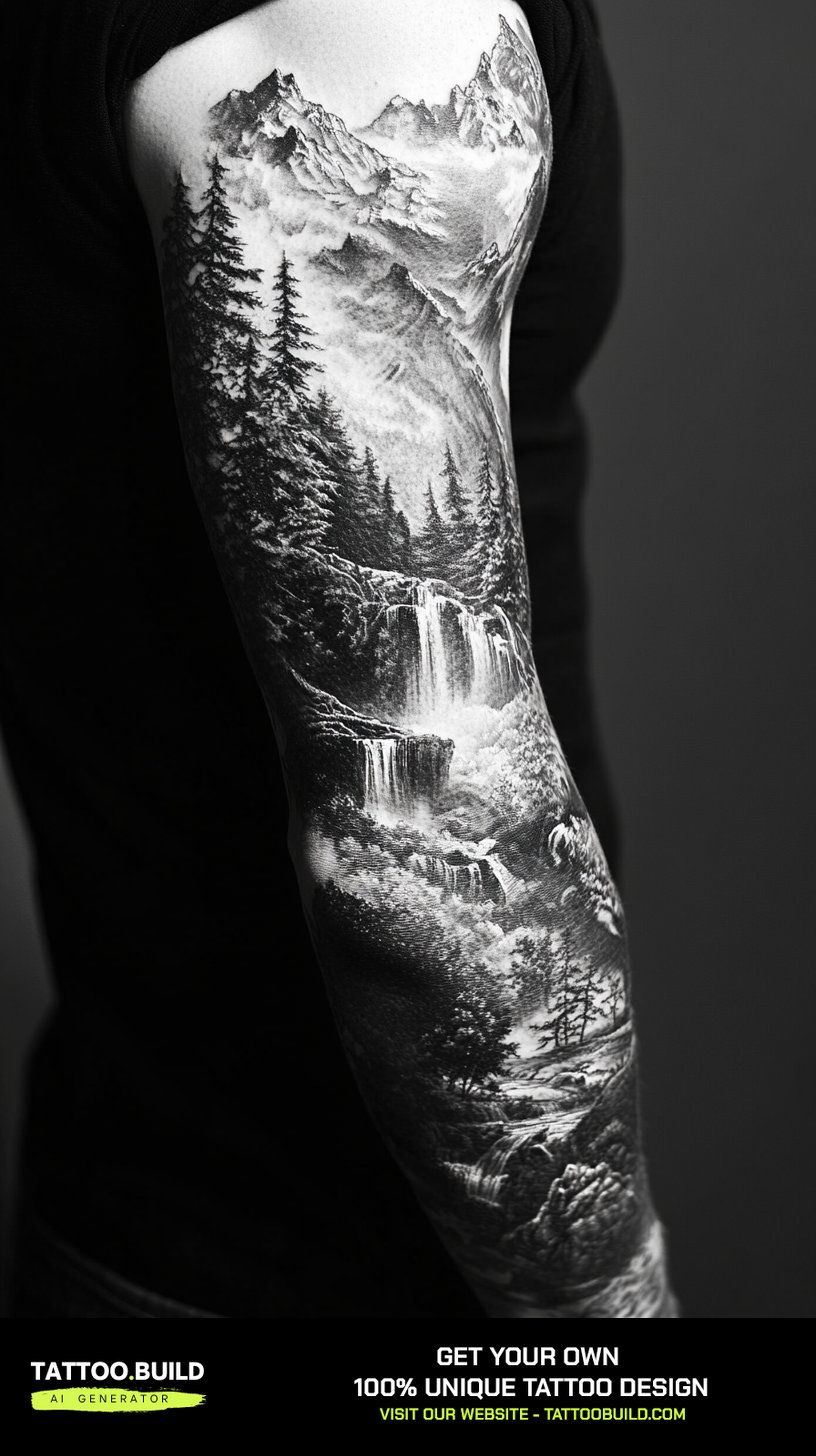
8. Detailed Realism and Scenic Compositions
This is the most ambitious end of the spectrum: real rock texture, atmospheric haze, individual trees rendered rather than suggested.
It is genuinely impressive work and it needs size. Detail that fine on a small piece will not survive the healing process, let alone the years after it.
Ask to see healed photographs, not fresh ones. Fresh detail always looks sharper than it will six months later, and a good artist will show you the healed version without being asked twice.
In my experience this is also the style where artist choice matters most. Realism is a specialisation, and a great traditional artist is not automatically a great realism artist.
Variations Worth Considering
If the standard range-and-treeline feels too common, these three variations come up most often as alternatives.
Mountain and Compass Combinations
Adding a compass shifts the meaning from endurance toward direction and finding your way.
It works best when the compass is integrated into the landscape rather than stamped on top of it — points cutting through the sky, or a rose framing the peaks.
There is a wide range of approaches in this collection of compass tattoo designs.
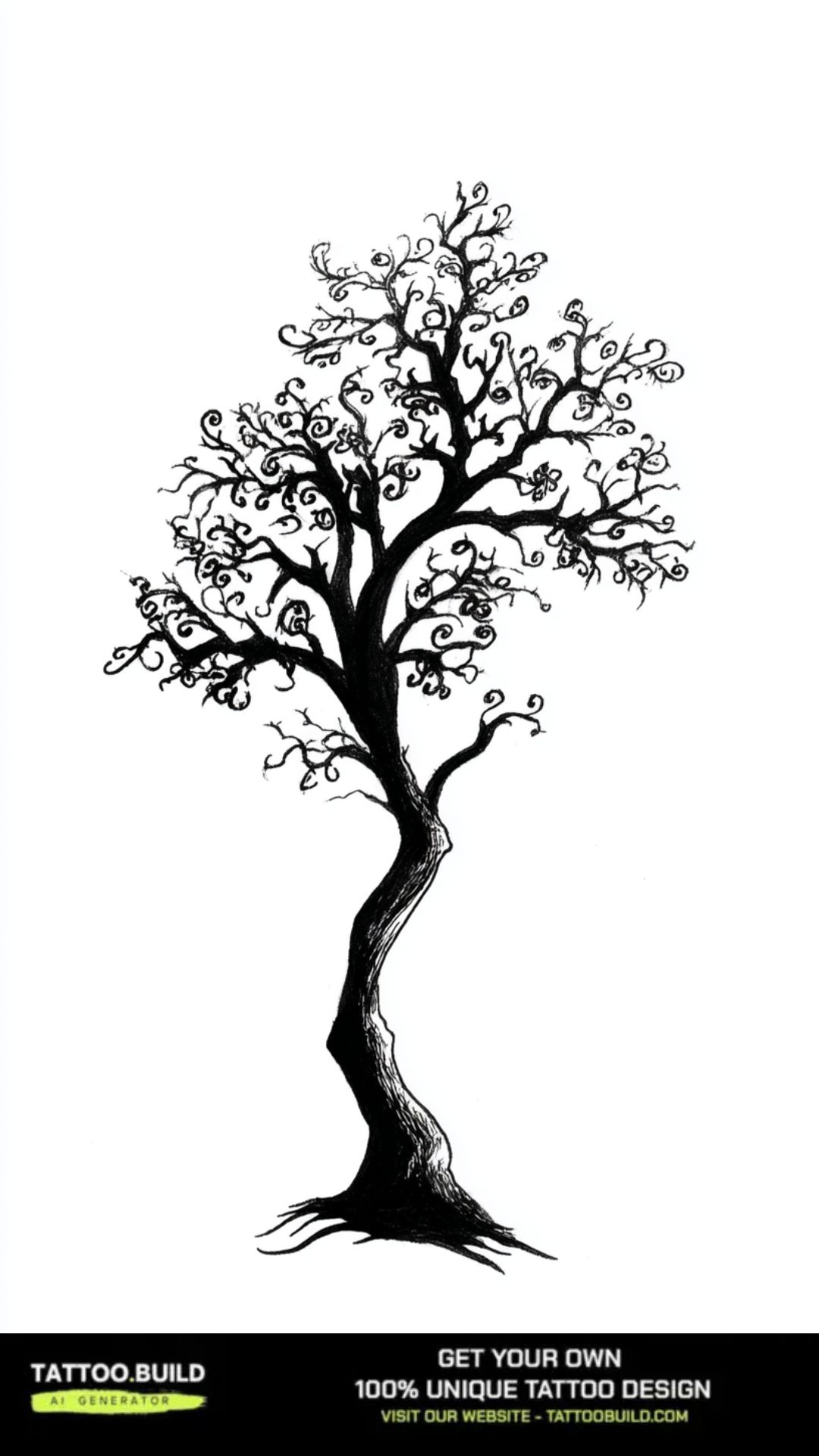
The Lone Tree
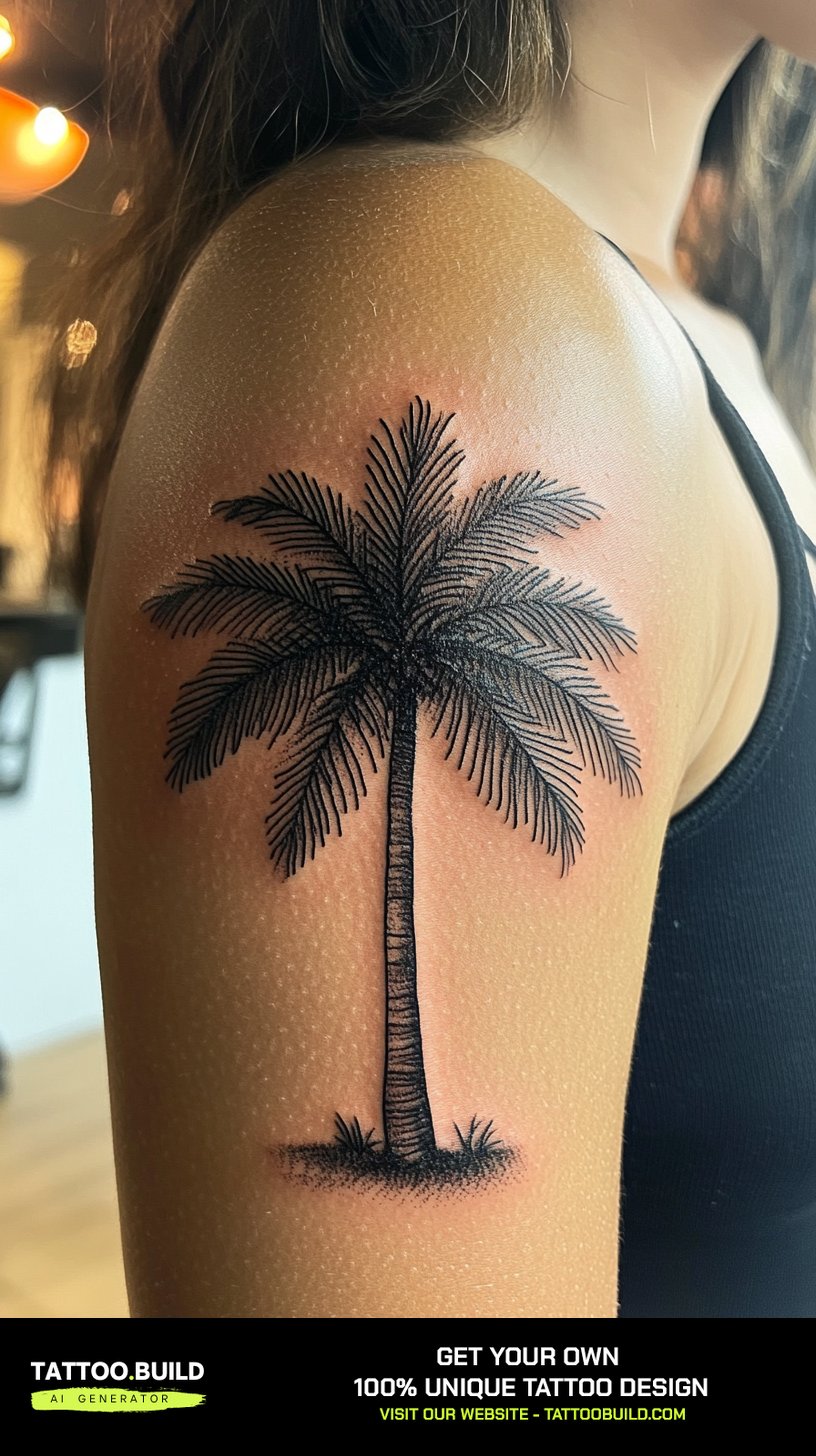
One pine in front of one ridge. It is the quietest version of this design and, to my eye, often the strongest.
It also solves the aging problem almost by accident: with a single tree there is nothing to blur into.
If the tree is the part you care about, these tree tattoo drawings are a good place to look for shapes.
Softer Feminine Compositions
Same subject, lighter hand: finer lines, more grey than black, more negative space, and often a longer, narrower composition.
These sit particularly well along the spine, the ribs and the outer thigh, where the shape of the body gives the scene its proportions.
Lower contrast does mean the design can look faint from a distance, which is a genuine trade-off rather than a flaw.
Practical Advice Before You Book
A few things that consistently separate the pieces people love from the ones they quietly regret.
Go bigger than feels necessary. Almost every complaint I have heard about a landscape tattoo traces back to too much detail in too little space.
Choose the artist for their portfolio, not their availability. If someone has no landscape or blackwork work in their gallery, they are not the right person for this piece, however good they are otherwise.
Ask about the pain before you pick placement. Ribs, spine and shin are consistently reported as the harder spots; this tattoo pain chart is a reasonable starting reference, though tolerance varies a lot between people.
For healing, follow the aftercare your artist gives you rather than advice from the internet, and see a doctor promptly if you get spreading redness, heat, swelling that worsens after a few days, pus or a fever. The American Academy of Dermatology and the Mayo Clinic both publish plain-language guidance on tattoo risks and skin care. Nothing here is medical advice.
Common Mistakes and How to Avoid Them
The most common one is cramming a full panorama into a small space. Six peaks at three inches becomes a grey smudge; two peaks at three inches stays a tattoo.
The second is copying another person’s piece exactly. Most artists will decline, and the ones who agree are usually not the artists you want.
The third is skipping sun protection on colour work. It is the single easiest thing to get right and the most commonly ignored.
The fourth is booking a large piece without discussing budget openly. A back piece or sleeve is a multi-session commitment, and this breakdown of sleeve tattoo costs gives a realistic sense of scale before you sit down.
Finally, never attempt to tattoo or remove one yourself. Removal in particular is a clinical procedure — the US Food and Drug Administration has published consumer guidance on the risks of tattoo inks and at-home removal products.
Frequently Asked Questions
How much does a mountain and tree tattoo cost?
It depends almost entirely on size and the artist’s hourly rate rather than the subject itself. A small fine line piece is typically a single short session, while a full back scene runs across several sittings spaced weeks apart. Ask for an estimate in sessions rather than a flat price, since landscape work often takes longer than the stencil suggests. Most artists I have asked prefer to quote after seeing the placement in person.
Does a mountain and tree tattoo hurt more than other designs?
The design itself does not change the pain much — placement does. Shin, ribs and spine are consistently reported as harder than the outer forearm or the calf. Larger scenes hurt cumulatively rather than more intensely, because you are sitting longer. Pain tolerance varies enormously between people, so treat any chart as a rough guide only.
Will a small mountain and tree tattoo blur over time?
Some softening is normal for any tattoo, and fine lines placed close together are the most vulnerable. Pines drawn tightly packed at a small scale can merge as the lines spread over the years. A good artist will space the elements more generously than looks necessary on paper to account for this. Touch-ups are common and completely normal.
Black and grey or colour — which lasts longer?
Black generally holds up better than colour over the long term, and solid blackwork holds up best of all. Colour is not a bad choice, but it asks more of you in terms of sun protection and occasional touch-ups. If low maintenance matters most, a silhouetted treeline against a clean sky is the safest option. If mood matters more, colour is worth the upkeep.
Can I have a real mountain range tattooed accurately?
Yes, and it is one of the better reasons to get this design. Bring a clear photograph of the skyline rather than a stylised illustration, and tell your artist which peaks actually matter to you. They will usually simplify the ridgeline so it reads as a tattoo rather than a photograph, which is the right call. Expect a conversation about which details get cut.
Quick Summary
- Mountains read as endurance and perspective; trees read as growth and roots — together they make a scene rather than a symbol.
- Placement drives the composition: forearms need cropped scenes, upper arms suit wrapping ranges, backs allow true scale.
- Blackwork and solid silhouettes age better than anything else on the list.
- Fine line versions are great first tattoos but expect softening and a possible touch-up down the line.
- Colour and watercolour styles need a black or line base underneath and consistent sun protection.
- Detailed realism needs size — ask to see healed photographs, not fresh ones.
- Go larger than feels necessary; over-detailing a small piece is the most common regret.
- Follow your artist’s aftercare, and see a doctor for spreading redness, worsening swelling, pus or fever.