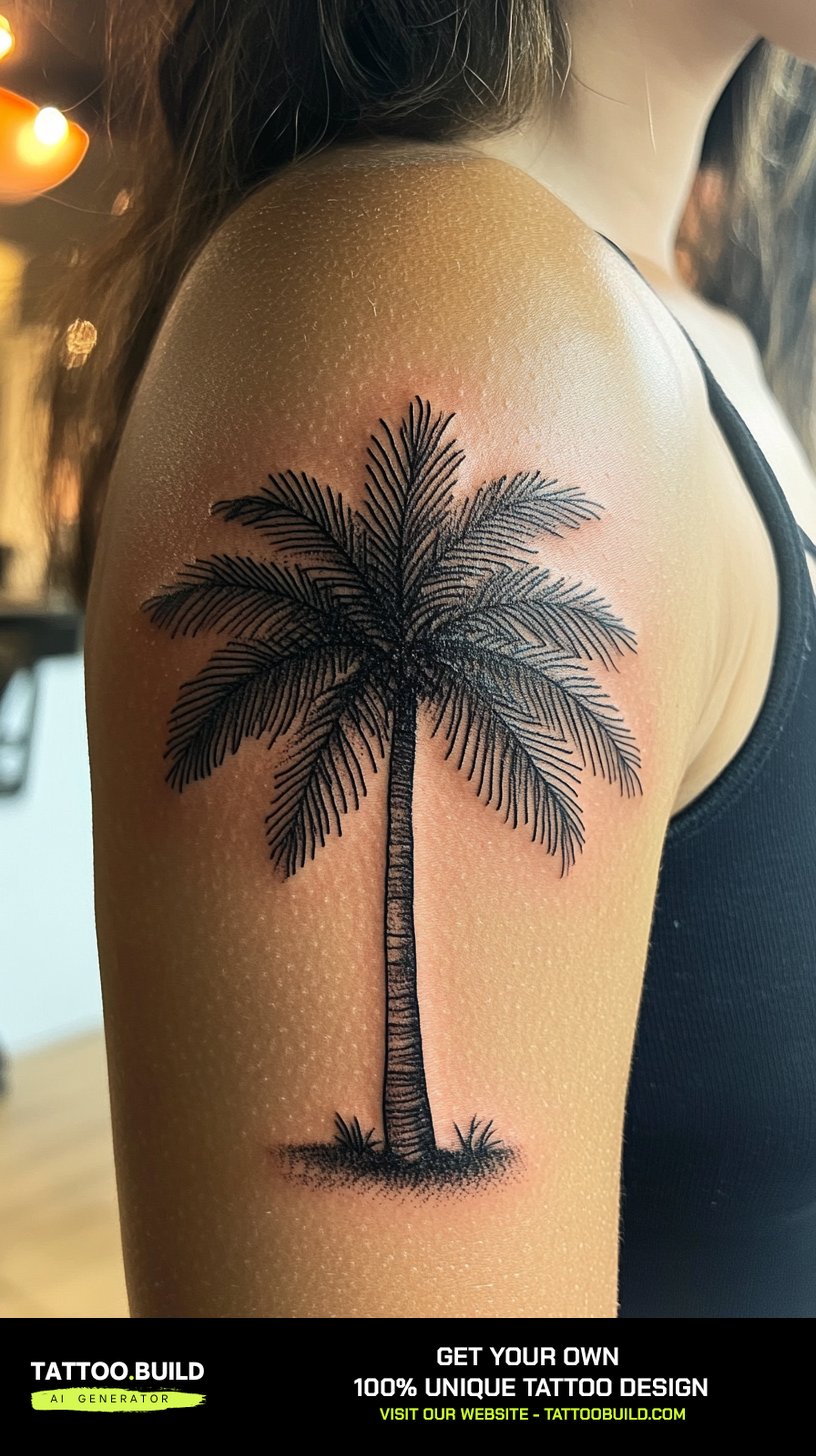
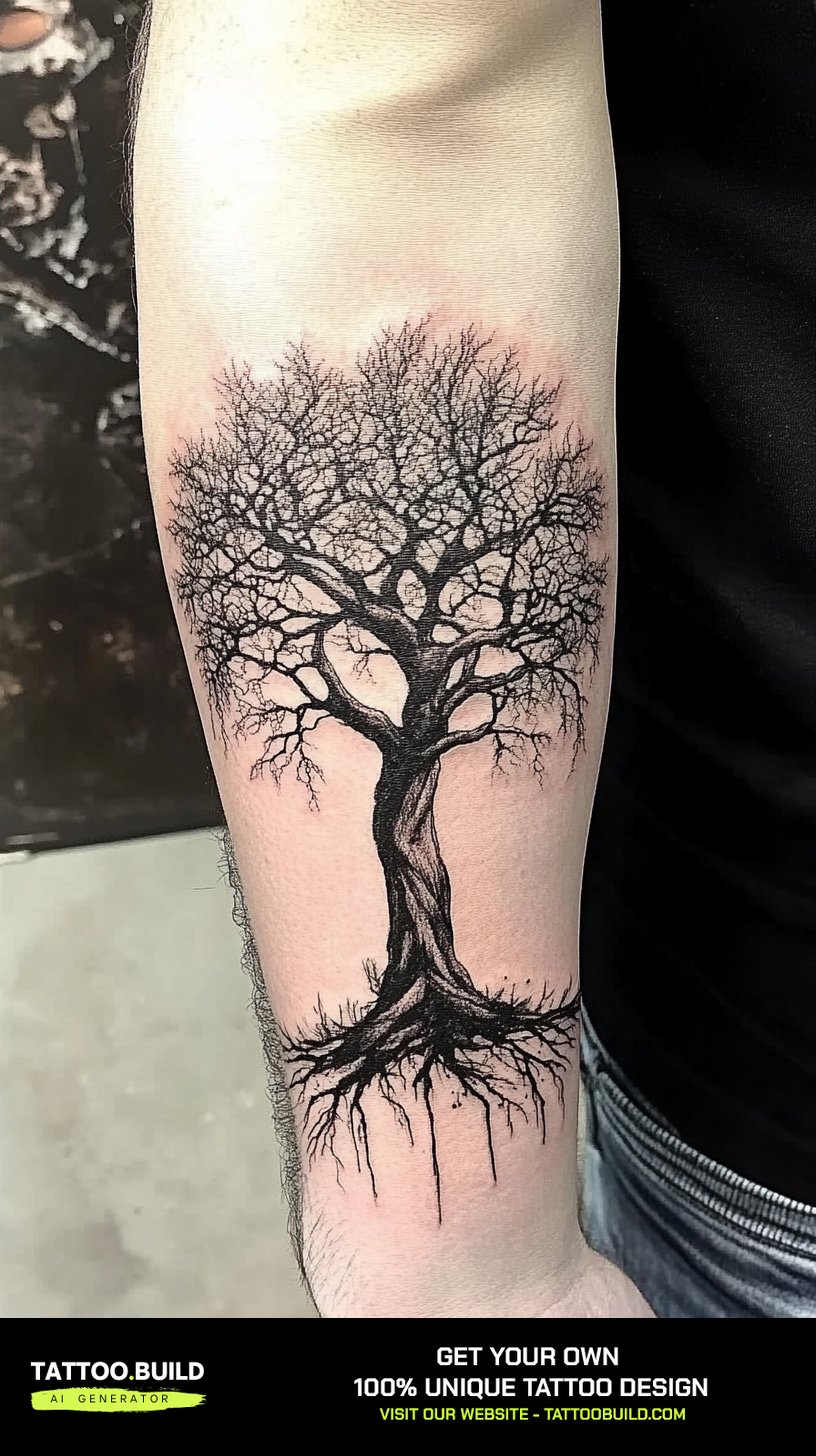
A tree tattoo drawing lives or dies on the negative space between its branches, not on how many leaves you cram into it.
I have collected tree designs for years, and the ones that still look good a decade later are almost always the ones that left room to breathe.
Trees are one of the few subjects that work at almost any size, from a two-inch pine on an ankle to a full spine piece with roots running into the lower back.
This guide walks through the drawing styles that tattoo well, the ones that need a specialist, and how to hand a reference to your artist without boxing them in. If you want the symbolism side first, the tree of life tattoo guide covers that in more depth.
Which Tree Tattoo Style Is Right for You?
Most people arrive with a reference photo and no idea which style it should be rendered in. This table is the shortcut I wish I had been handed years ago.
| Style | Best Size | How It Ages | Typical Sitting |
|---|---|---|---|
| Fine line | 2–5 inches | Softens noticeably; expect a touch-up in 5–10 years | 1–2 hours |
| Blackwork silhouette | 4–10 inches | Excellent — solid black holds shape longest | 2–4 hours |
| Black and grey realism | 6 inches and up | Good if shading is committed rather than faint | 4–8 hours, often multiple sessions |
| Geometric / dotwork | 3–8 inches | Strong lines age well; dense stipple can blur | 2–5 hours |
| Watercolour | 4–8 inches | Fades fastest, especially without a black anchor | 3–5 hours |
| Illustrative botanical | 4–8 inches | Reliable when leaf shapes stay separated | 3–6 hours |
What Makes a Tree Tattoo Drawing Actually Work
A drawing on paper and a drawing that survives in skin are two different objects, and the gap between them catches most people out.
Ink spreads slightly over the years as it settles into the dermis, so anything drawn with hairline gaps tends to close up over time.
The practical rule most artists I have spoken to work to is that any gap should be at least as wide as the line beside it. Twigs drawn a pencil-width apart will read as a solid smudge in fifteen years.
Silhouette matters more than detail. Squint at your reference from across the room — if the tree is still recognisable as a specific tree, the drawing is doing its job.
Species is worth deciding early, too. An oak, a birch and a willow have completely different branch architecture, and “just a tree” usually produces a generic result nobody feels attached to.
Tree Tattoo Drawing Ideas by Style
Fine Line and Single Needle Trees
Fine line work uses a single needle or a very tight grouping to produce a line roughly the weight of a pen stroke.
It suits sparse winter trees, bare birches and small botanical studies where the shape of the branch is the whole point.
When I have compared fine line pieces at one year and at six years, the honest picture is that they soften. They do not vanish, but crisp becomes gentle, and that is normal rather than a sign of bad work.
Ask to see healed photos, not fresh ones — a fresh fine line tattoo looks perfect on everyone. The fine line tattoo ideas collection is a useful place to calibrate what healed work should look like.
The Tree of Life
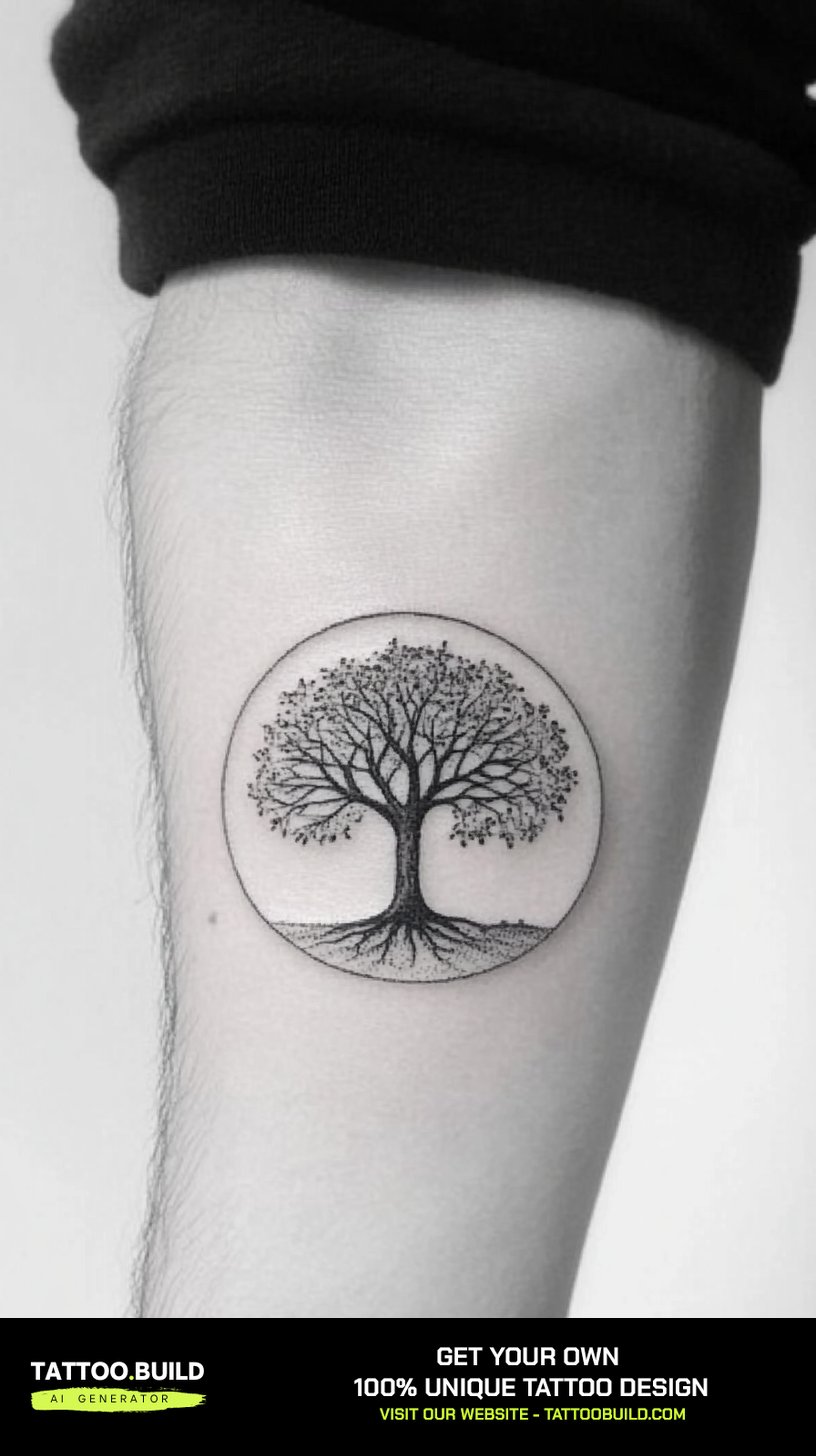
The tree of life is the most requested tree design I come across, usually drawn with the canopy and roots mirroring each other inside a circle.
The motif appears across Norse, Celtic and several ancient Near Eastern traditions, which is part of why it reads as meaningful to so many different people.
The circular frame is what makes or breaks it. A slightly out-of-round circle is very obvious on a forearm, so this design rewards an artist comfortable freehanding curves onto a curved surface.
If you want variations on the same theme, there are more worked-up versions in these tree of life tattoo designs.
Blackwork and Black-and-Grey Realism
Blackwork trees are built from solid mass rather than line, which is why they hold up better than almost anything else over decades.
Black and grey realism goes the other direction, using whip shading and soft gradients to suggest bark texture and depth of field behind the trunk.
Realism is the least forgiving style on this list. In my experience it is worth waiting months for the right artist rather than taking a next-week cancellation with someone whose portfolio is mostly traditional work.
Expect more than one session for anything above hand size, with healing time between them.
Geometric and Dotwork Trees
Geometric treatments frame an organic subject inside something rigid — a circle, a triangle, a hexagon — and the tension between the two is the appeal.
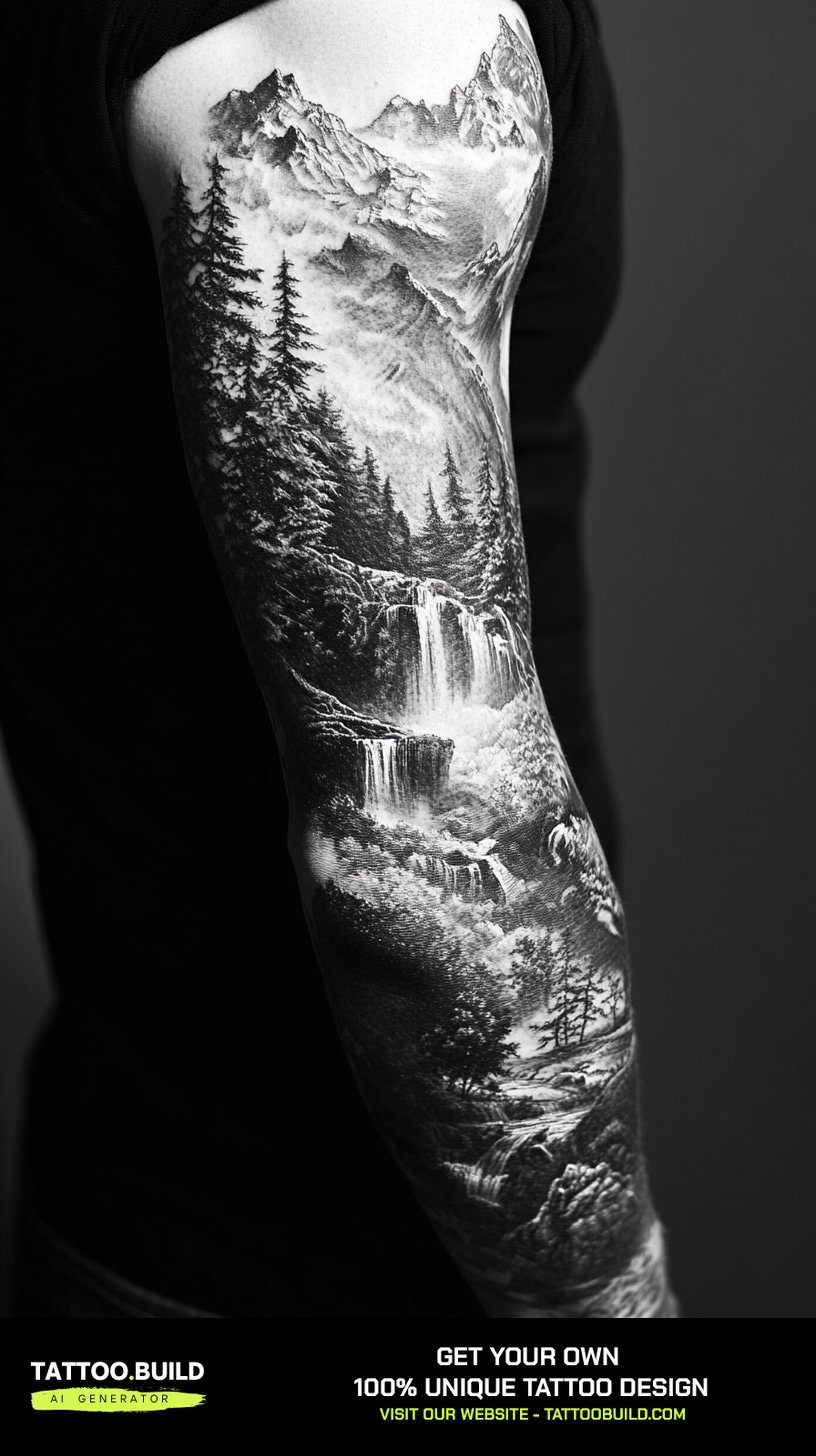
Dotwork builds tone from stippling instead of shading, which gives a soft, printed quality that suits mountain-and-forest scenes especially well.
Dense stipple is the one thing to watch here. Dots packed too tightly tend to merge into grey over time, so the best dotwork leaves visible white between points.
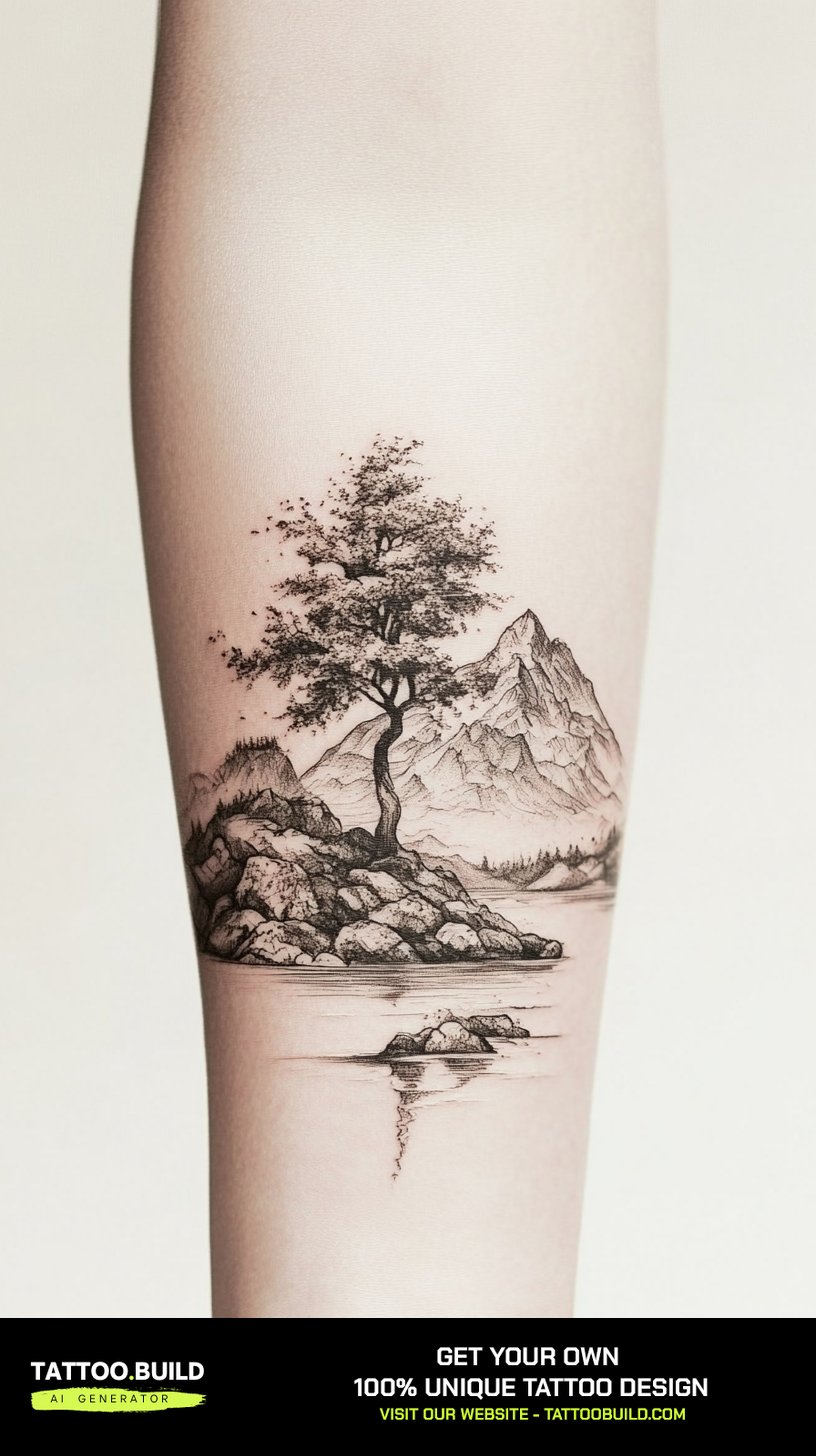
Landscape framing is a natural fit — see how it is handled in these mountain and tree tattoo designs.
Roots, Family Trees and Name Work
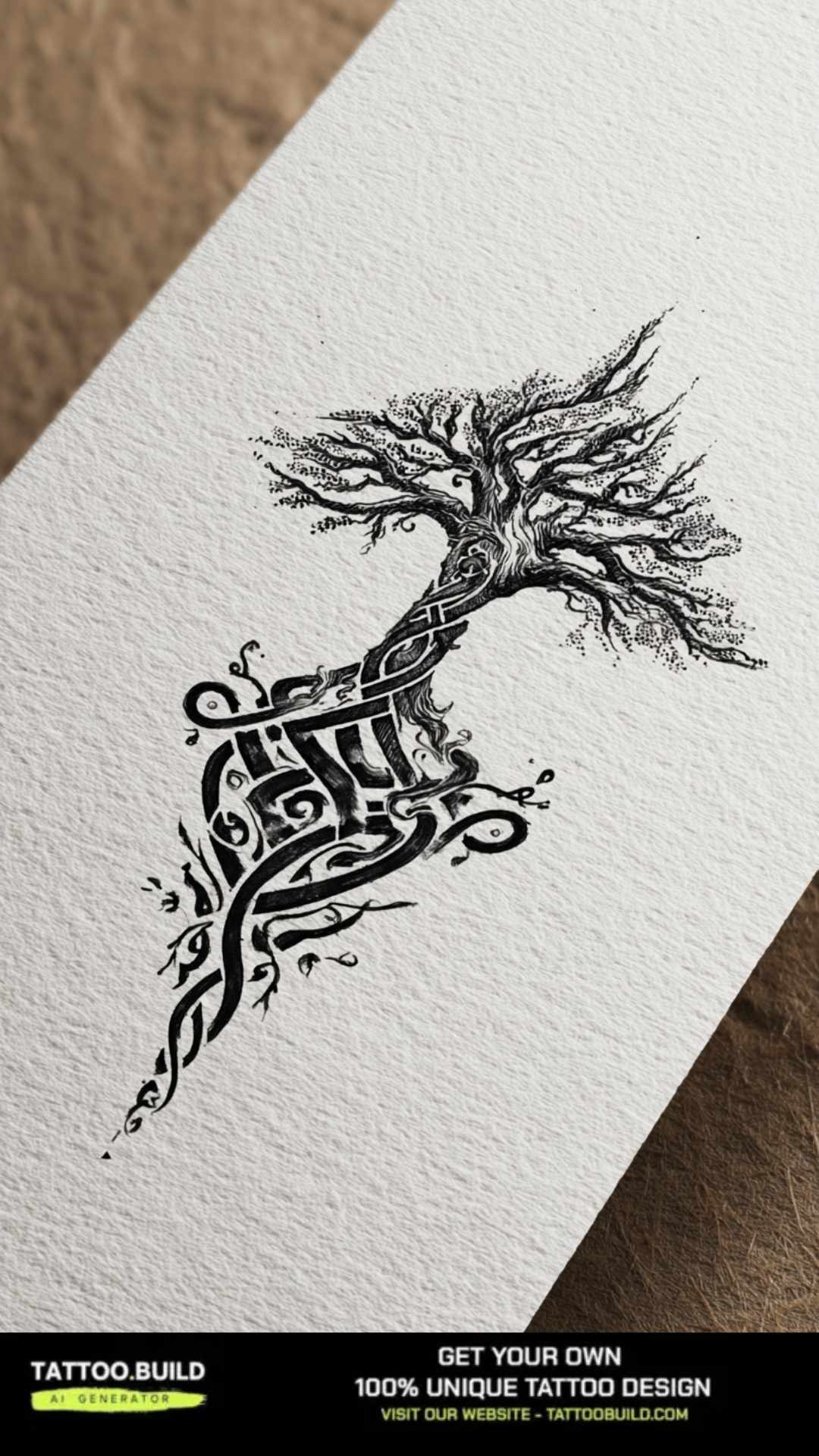
Root systems are underused. A tree drawn with its roots exposed fills a shoulder blade or a calf far more naturally than a floating trunk does.
Family versions often add initials, birth dates or small birds standing in for each person.
My honest advice on lettering: keep it small, keep it separate from the branches, and leave space around it. Text tucked between twigs is the first thing to blur.
Every artist I have asked about family pieces says the same thing — plan for the design to be added to later, because people usually want to. There are more approaches in these family tattoo ideas.
Silhouette and Landscape Trees
Silhouettes strip the tree down to its outline, sometimes with a sun, moon or horizon line behind it.
This is the most forgiving option for a first tattoo, because there is no fine detail to lose and the shape reads clearly from a distance.
It also scales down further than any other style here — I have seen convincing silhouette pines under two inches, which is not true of realism.
If nature scenes are the direction you are leaning, browse these nature tattoo designs for composition ideas.
Botanical Illustration Style
Botanical style borrows from field-guide engraving: accurate leaf shapes, visible veining, and often a specific identifiable species.
Willows, olive trees and Japanese maples all have distinctive enough foliage to survive this treatment.
When I tested references for this style, the drawings that translated best were the ones where each leaf cluster had clear air around it rather than merging into a mass.
More layouts in this vein are collected in these tree tattoo drawing ideas.
Colour and Watercolour Trees
Watercolour trees use soft washes and splashes that appear to bleed past the drawing, most often on autumn or blossom subjects.
The version that lasts is the one with a black or dark-grey structure underneath the colour. Pure wash with no anchor is the design most likely to look tired within a decade.
Colour also asks more of your skin tone and your sun habits, so it is worth an open conversation with your artist rather than a photo and a thumbs up.
Placement Variations Worth Considering
Forearm and Inner Arm
The forearm suits a vertical tree almost perfectly, because the trunk follows the limb and the canopy can open at the elbow or the wrist.
The inner arm hurts more than the outer for most people, but it holds detail well and stays out of direct sun. There are more layouts in these forearm tattoo ideas.
Back and Spine
A spine tree is the most dramatic option: trunk along the vertebrae, branches spreading over the shoulder blades, roots into the lower back.
It is also a long project. Expect several sessions, and expect the spine itself to be among the sharper spots you will sit through.
Ribs, Ankle and Small Placements
Small placements push you toward silhouette or minimal linework, because there is simply not enough room for shading to read.
If that is the direction you are heading, these minimalist tattoo ideas show how far a stripped-back drawing can go.
Tips for a Tree Tattoo That Ages Well
Bring three or four references rather than one, and say what you like about each. “I want the trunk from this and the canopy shape from that” gives an artist far more to work with than a single screenshot.
Then let them redraw it. A design traced straight from a photo usually needs the branch spacing opened up before it will tattoo cleanly.
On healing, follow the aftercare your artist gives you, since they know the specific work they put in your skin. The American Academy of Dermatology also publishes general guidance on caring for tattooed skin, and the US Food and Drug Administration covers ink safety and reactions.
If you develop spreading redness, swelling, pus, a fever or a rash days after a tattoo, see a doctor rather than waiting it out. This article is design guidance, not medical advice, and infections and allergic reactions need a professional. Never attempt to tattoo or remove a tattoo at home.
Long term, sunscreen over a healed piece does more for it than any aftercare product does — the Mayo Clinic covers the wider risk picture worth reading before you book.
Common Mistakes and Still Not Sure?
The most common mistake is scale. A drawing that looks detailed on a phone screen is often being planned at half that size on skin.
The second is over-filling the canopy. Every extra leaf reduces the gaps that keep the design readable later.
The third is booking on style rather than portfolio. An artist who does beautiful traditional work is not automatically the right person for photorealistic bark.
If you are still weighing options, it usually helps to look at whole categories rather than single images — try the wider nature tattoo collection and see which compositions you keep returning to.
Frequently Asked Questions
How big does a tree tattoo need to be?
It depends entirely on the style. A silhouette or simple linework pine can work at two to three inches, while black and grey realism generally needs six inches or more before the shading has room to read. If an artist tells you your reference will not work at the size you want, that is usually experience talking rather than an upsell.
Do tree tattoos blur over time?
All tattoos soften as ink settles and skin changes, and trees show it more than most because they contain so many thin lines close together. Designs with generous spacing between branches age much better than dense ones. Sun exposure accelerates the process, so sunscreen on a healed piece makes a real difference.
What does a tree tattoo symbolise?
Broadly, trees are associated with growth, roots, family and endurance, but the specific meaning shifts by species and culture. Oak tends to stand for strength, willow for flexibility and grief, pine for resilience through winter. Most people I have spoken to end up attaching their own meaning to the piece regardless of the traditional reading.
How long does a tree tattoo take?
A small fine line tree is often a one to two hour appointment. A detailed forearm piece typically runs three to six hours, and a back or spine tree is a multi-session project spread over weeks or months. Your artist can give a realistic estimate once they have drawn the design at actual size.
Can I bring my own tree drawing to a tattoo artist?
Yes, and most artists welcome it — but expect them to redraw it for skin. Line weights, branch spacing and the way the design wraps a curved limb all need adjusting from a flat drawing. If you drew it yourself, say so, and if you found it online, be honest about that too so the artist can create an original version rather than copying another artist’s work.
Quick Summary
- Spacing beats detail — gaps should be at least as wide as the lines beside them.
- Pick a species. Oak, birch, willow and pine each have a distinct silhouette.
- Blackwork and silhouette age best; fine line and watercolour need realistic expectations.
- Forearm suits vertical trees, the back suits full trunk-and-root compositions, small placements suit linework.
- Bring several references and explain what you like about each one.
- Book on healed portfolio work in your chosen style, not on price or availability.
- Follow your artist’s aftercare, and see a doctor for any sign of infection or allergic reaction.
- Sunscreen is the single best long-term investment in how the tattoo looks.