A couple tattoo is one of the few decisions in a relationship that you both carry out of the room on your skin. The pairs that still look good years later are almost never the ones that shout the loudest — they are the ones that would survive being seen alone.
I have sat in on a lot of these appointments, and the pattern is consistent. The couples who leave happy spent more time on placement and line weight than on picking a symbol.
The couples who leave uncertain usually rushed a design in the lobby that morning. That is the single biggest avoidable mistake in this whole category.
What follows is a working guide rather than a gallery: the approaches that hold up, the ones that quietly do not, and how to tell which camp your idea falls into. If you want the broader shortlist first, our roundup of matching tattoo ideas for couples covers more ground on design families.
Which Couple Tattoo Approach Is Right for You?
There are really only four structural approaches to a couple tattoo, and each one carries a different amount of risk if life changes.
| Approach | What It Looks Like | Best For | Trade-off |
|---|---|---|---|
| Identical / matching | The same design, same size, on both people | Couples who want the link to be obvious | Reads as a pair even when worn alone |
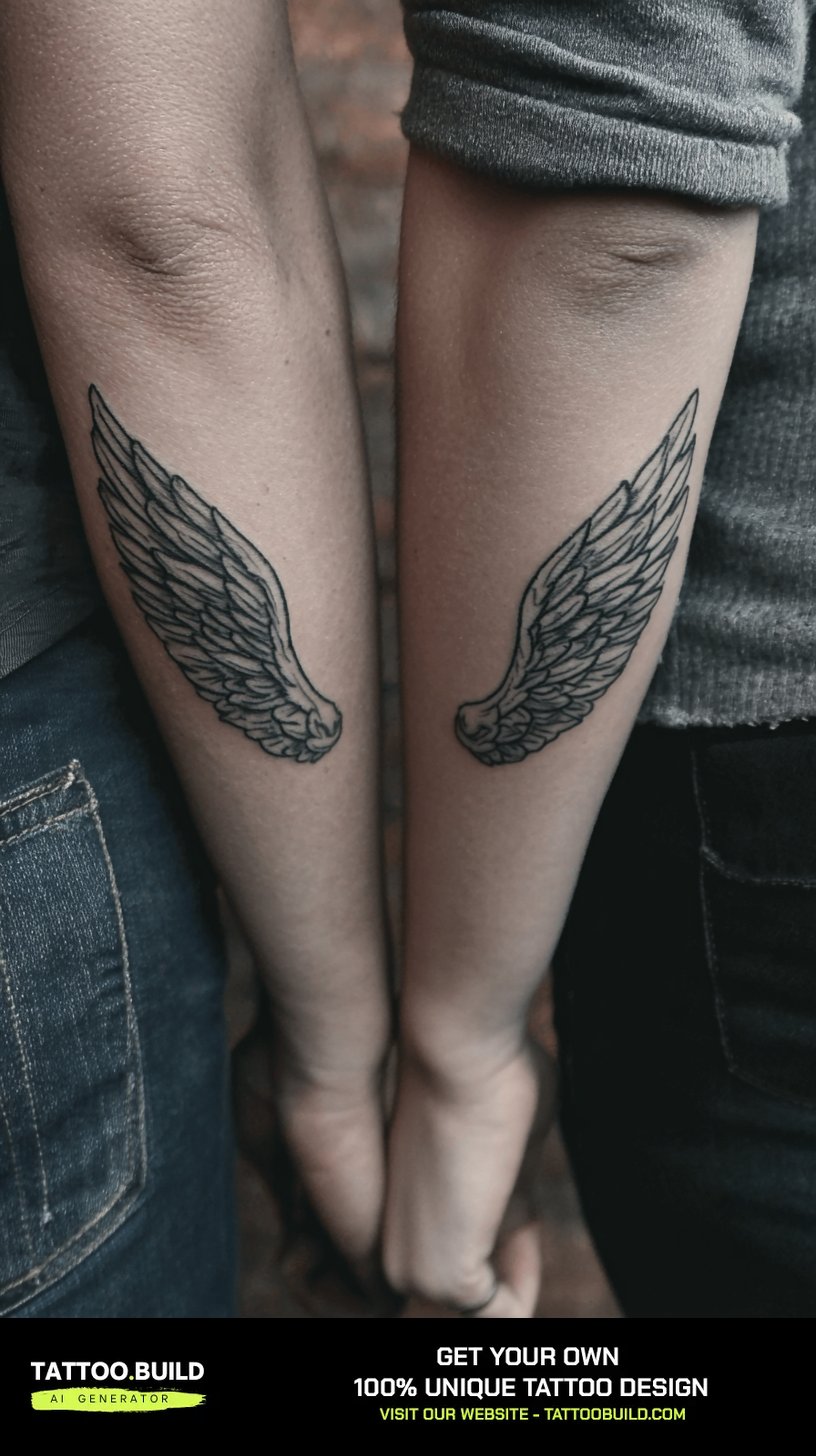
| Complementary halves | Two designs that complete one image side by side | Photos, and couples who like a puzzle | Each half must still work on its own |
| Shared theme, own design | Same style and palette, different subjects | Two people with different taste | The connection is subtle, sometimes invisible |
| Coordinates, dates, script | Numerals or lettering marking a shared moment | Anniversaries, moves, births | Hardest to reinterpret if things change |
In my experience the third row is the most under-chosen and the most forgiving. A shared theme lets each person get a tattoo they would have wanted anyway.
What Actually Makes a Couple Tattoo Age Well
Two things decide whether a couple tattoo looks good in a decade, and neither of them is the concept.
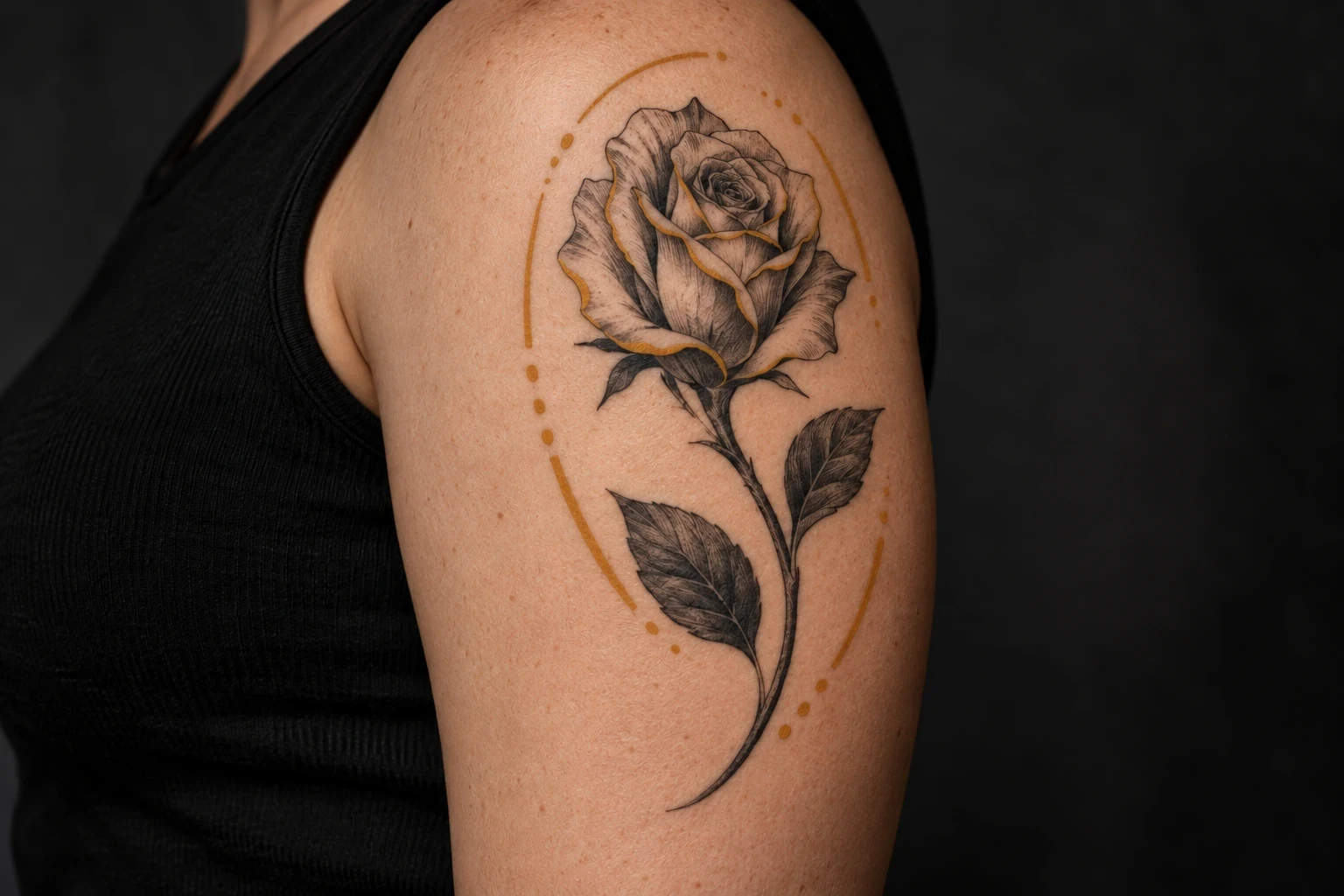
The first is line weight. Very fine lines on high-friction areas spread and soften over time, which is normal ink behaviour rather than bad work.
The second is placement. Fingers, palms, the outer edge of the hand and the tops of the feet all shed ink faster than the inner forearm or the ribs, because the skin there turns over quickly and takes more abrasion.
When I have asked artists what they wish couples understood, the answer is nearly always the same: size up. A design that is 20 percent larger holds detail far longer than the tiny version of the same drawing.
The other honest factor is money. Two tattoos means two sittings and, usually, two minimums — worth reading up on how much a small tattoo costs before you set a budget.
Couple Tattoo Ideas That Hold Up Over Time
Matching Designs: Identical by Intention
Matching means the same drawing on both people, usually at the same size and often in the same spot.
It is the most direct version of the idea and the easiest to get right, because there is only one design to approve.
What works: bold simple shapes, small solid symbols, short repeated motifs. What tends to disappoint: heavily detailed illustrations shrunk down to wrist size, where the interior detail closes up within a few years.
If you go identical, agree on the placement before the stencil goes on — mismatched placement is the thing couples notice in photos, not the drawing itself.
Complementary Halves: Two Parts of One Image
Complementary tattoos split a single image so that it only resolves when you stand together.
A lock and key, two halves of a linework landscape, one continuous line cut in the middle — the format is flexible.
The test I would apply is simple: cover one half and look at the other. If the remaining piece reads as an unfinished fragment, ask the artist to rework it so each side is a complete composition.
Done well, this is the approach that photographs best, and it is the one artists usually enjoy drawing most.
Symbols That Carry Private Meaning
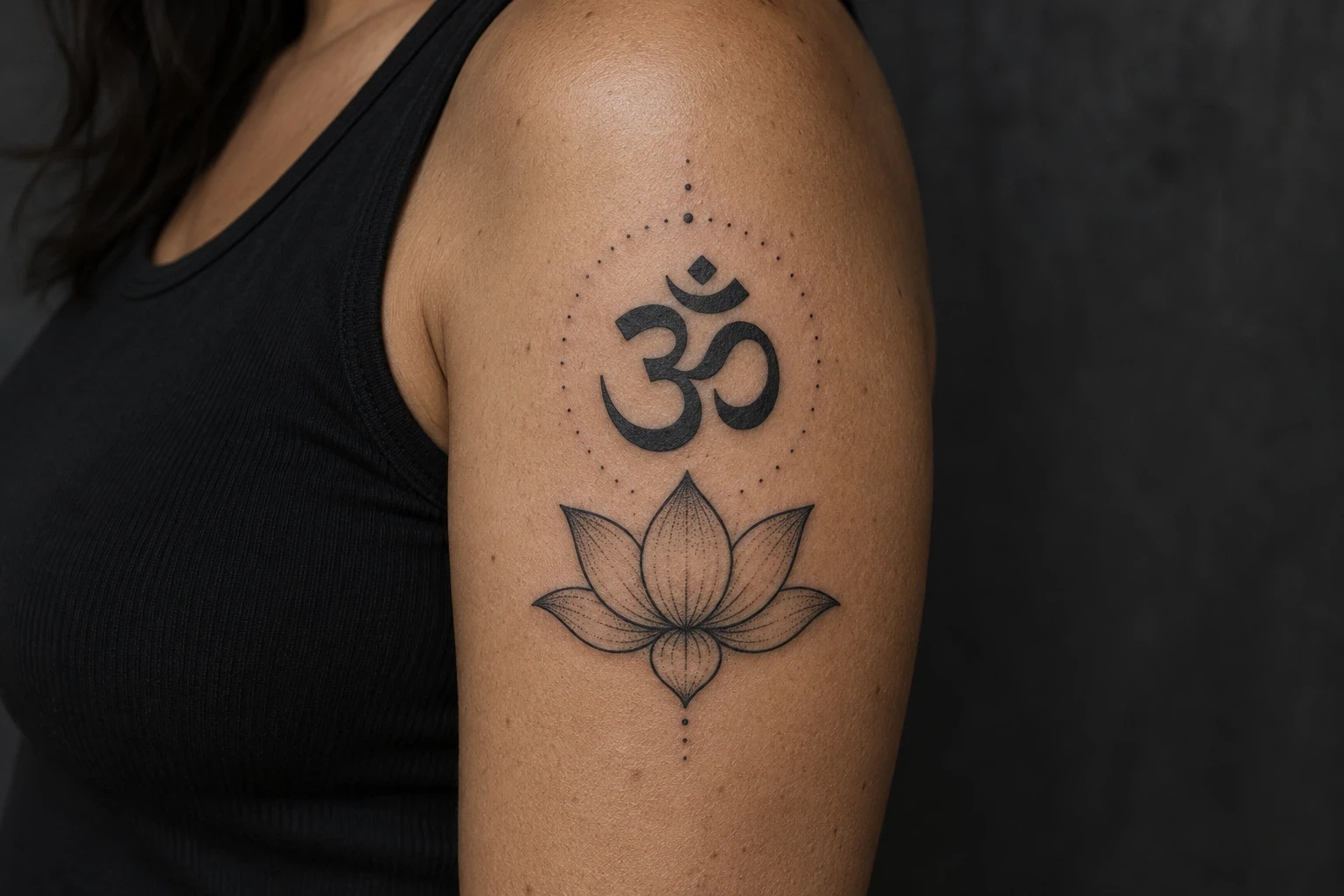
Symbol tattoos let you keep the meaning between the two of you and skip the explanation entirely.
Common choices include celestial pairs, anchors, mountains, waves, arrows and small animal motifs.
Celestial pairings are popular for a practical reason as much as a romantic one — they are legible at small sizes. Our sun and moon tattoo ideas page goes deeper on the variations.
One caution worth stating: symbols carry different meanings across cultures and religions. If a motif comes from a tradition that is not yours, it is worth a few minutes of research before it becomes permanent.
Script, Handwriting and Typography
Lettering is where couple tattoos get personal fastest — a word, a shared phrase, or literally each other’s handwriting.
The handwriting version is the one I would recommend if lettering appeals to you. Scan or photograph an actual note, hand it to the artist, and let them clean it rather than redraw it.
Keep letters reasonably large. Thin script at small sizes is one of the most common reasons people book a touch-up in year three.
If you are considering each other’s names specifically, read the trade-offs in our name tattoo ideas guide first — the honest ones, not the superstitions.
Micro Tattoos with Outsized Meaning
Tiny couple tattoos suit people who want the commitment without the visual weight.
A single dot, a small triangle, a two-letter monogram, a matching stroke below the wrist bone — these take minutes to tattoo and cost close to a shop minimum.
The trade-off is honest: small work fades sooner and has less room for correction. Expect a touch-up eventually and treat that as part of the plan rather than a failure.
Our minimalist tattoo ideas collection has more designs in this size range if that is the direction you are leaning.
Playful and Funny Designs
Not every couple tattoo needs to be solemn, and the funny ones are frequently the ones people are still happy with.
Cartoon pairings, inside jokes, food that goes together, small characters that face each other across two arms.
The one rule I would hold to: draw humour in bold lines. A joke that relies on fine detail stops being readable long before it stops being funny.
Humour ages better than it gets credit for, provided the linework is heavy enough to survive.
Dates, Coordinates and Roman Numerals
Marking a specific moment — a date, a place, a set of coordinates — is the most literal approach available.
Roman numerals are the usual choice because they space well in a line and read as design rather than data. Our Roman numeral tattoo ideas guide covers layout and common conversion errors.
Check the numerals twice, then have the artist check them. Transcription mistakes in this category are more common than you would expect, and they are expensive to fix.
Alternatives If a Matching Tattoo Feels Like Too Much
Plenty of couples want the shared experience without the shared design. These are the middle paths I see most often.
Same Artist, Different Tattoos
You both book with the same artist on the same day and get entirely unrelated pieces.
The link is the day and the hand that drew them, which is a real connection and carries no design risk at all.
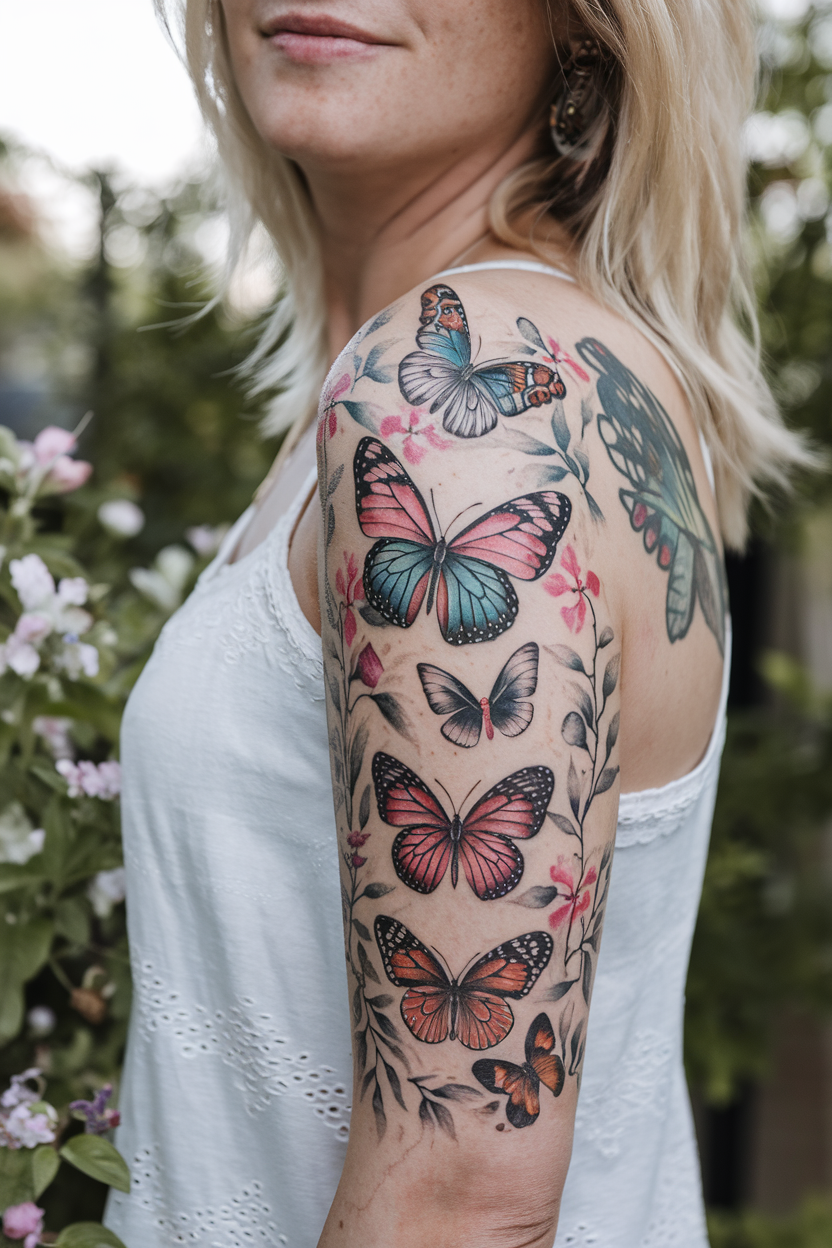
Same Style, Different Subject
One agrees on fine-line botanical, or bold traditional, or blackwork — then each person picks their own subject inside that style.
From a distance the two read as a set. Up close they are two individual tattoos.
Sequential Rather Than Simultaneous
Get yours now, and let your partner add theirs in six months if they still want it.
This removes the quiet pressure that makes some couple tattoos feel obligatory, and I have never seen anyone regret the pause.
Practical Tips Before You Book
Book a consultation rather than a walk-in. Twenty minutes with the artist beforehand is worth more than an extra hour of scrolling for references.
Eat properly and stay hydrated before the appointment, and expect the sensation to vary a lot by placement — ribs, sternum, hands and feet are consistently reported as harder than the outer arm. Our tattoo pain chart breaks the body down area by area.
Aftercare is where the result is actually won or lost: keep it clean, keep it moisturised, keep it out of direct sun and out of pools and baths until it has closed. Follow your artist’s specific instructions over anything you read online, including ours — our tattoo aftercare guide is a general reference, not a substitute for what your artist tells you.
If a healing tattoo becomes hot, increasingly painful after the first few days, swollen, or starts weeping pus, that is not normal healing. Contact your artist and see a doctor — infections and ink allergies both need proper medical care, and neither is something to manage from a blog post.
Common Mistakes and How to Avoid Them
The first is designing in the shop. Arriving without a settled idea means you are making a permanent decision under time pressure.
The second is choosing a placement for the photograph rather than for the skin. Hands and fingers look excellent on the day and fade fastest afterwards — worth reading finger tattoo ideas before committing to that spot.
The third is picking a size the design cannot support. If the artist suggests going bigger, that advice is almost always about longevity, not about the bill.
The fourth is skipping the conversation about what happens if the relationship ends. It is an awkward five minutes that saves a much longer conversation later.
For a broader look at where to place a first piece, the most painful tattoo spots guide is a useful reality check before you decide.
Frequently Asked Questions
Are couple tattoos a bad idea?
Not inherently, but the risk is real and worth naming. The safest versions are designs that carry meaning independent of the relationship — a symbol you both love, a shared place, a style you would have chosen anyway. Avoid designs whose only meaning is the other person, since those are the hardest to live with if things change. In my experience, couples who apply that filter rarely regret the tattoo.
What is the best placement for a couple tattoo?
Inner forearm, outer forearm, upper arm and ribs all hold ink well and heal predictably. Fingers, hands, palms and feet look striking but fade considerably faster because the skin there turns over quickly and takes more friction. If you want the tattoo visible day to day, the wrist and inner forearm are the usual compromise. Ask your artist what they would choose for that specific design.
How much do couple tattoos cost?
It depends entirely on size, detail and the shop’s rates, and there are two of you paying. Most shops have a minimum charge that applies even to very small pieces, so two tiny tattoos often cost more than people expect. Ask for a quote for both pieces at the consultation rather than on the day. Tipping is customary in many regions but not all — ask locally.
Do the tattoos have to be identical?
No, and identical is only one of several approaches. Complementary halves, shared themes with different subjects, and matching styles with individual designs all read as a pair without being copies. The shared-theme approach in particular tends to suit couples with different taste. Identical works best when both people genuinely like the same design on its own merits.
How long does a couple tattoo take to heal?
The surface usually closes within about two to three weeks, while the deeper layers continue settling for a few months. Small, simple pieces tend toward the shorter end of that. Keep it clean and moisturised, avoid soaking it, and keep it out of direct sun while it heals. If anything looks or feels wrong beyond the first few days, contact your artist and, if needed, a doctor.
Quick Summary
- Pick an approach first — identical, complementary, shared theme, or a date — before you pick a design.
- Make sure each half works on its own; a couple tattoo you can only understand as a pair is the riskiest kind.
- Size up. Larger designs hold detail far longer than shrunk-down versions of the same drawing.
- Favour the inner and outer forearm over fingers, hands and feet if longevity matters to you.
- Use real handwriting for script tattoos, and have the artist clean it rather than redraw it.
- Book a consultation instead of walking in — designing under time pressure is the main source of regret.
- Budget for two sittings, two minimums, and an eventual touch-up on anything small.
- Follow your artist’s aftercare instructions, and see a doctor if healing looks infected rather than waiting it out.
For general tattoo safety and hygiene standards, the FDA tattoo fact sheet and the American Academy of Dermatology both publish plain-language guidance worth reading before your appointment.