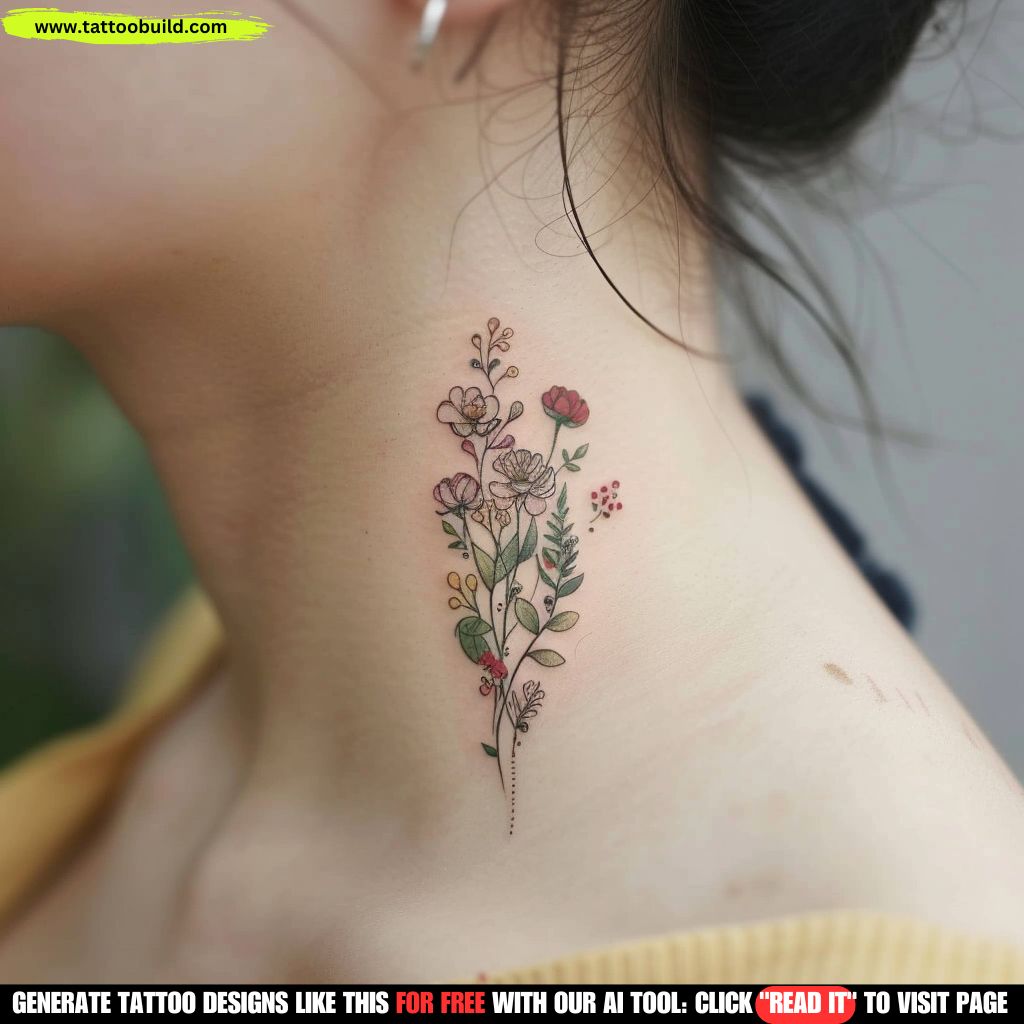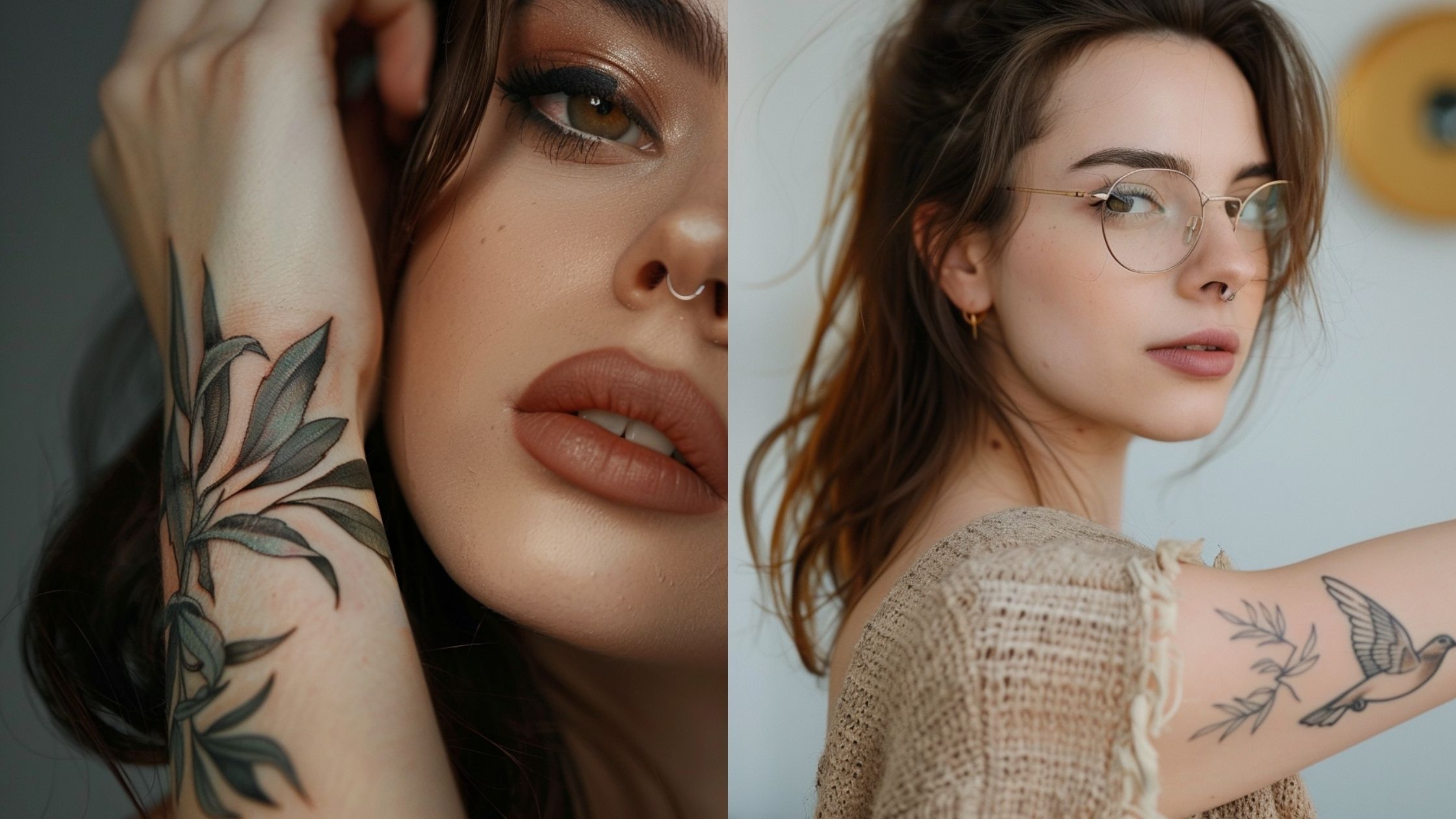
I have been drawing and researching symbol tattoos for years, and “goodness” is the request that comes up more often than almost any other abstract idea. A goodness tattoo is not one design — it is a family of symbols that all point at the same thing: kindness, peace, compassion and the quiet decision to be decent to people.
That breadth is the reason so many people stall. When I sit down with someone who says they want a goodness tattoo, they usually have the feeling clear and the image completely undefined.
So this guide works the way I actually work through it in person. First the symbols and what they genuinely mean, then the practical side — placement, size, ageing — and finally the mistakes I see most often. If your instinct leans inward rather than outward, the self-love tattoo ideas collection covers that angle in more depth.
Every design below is one I have either drawn, watched get tattooed, or talked a client out of for a reason I will explain.
Which Goodness Symbol Is Right for You?
This is the table I sketch on paper for people who cannot choose. It compares the six symbols in this guide on the things that actually matter once the needle is out.
| Symbol | Reads As | Smallest Size That Works | Ages Well? | Best For |
|---|---|---|---|---|
| Heart in hands | Care, giving, service | About 5 cm | Yes, if lines stay bold | Inner forearm, upper arm |
| Dove | Peace, gentleness, release | About 4 cm | Yes in simple form | Wrist, ribs, shoulder |
| Olive branch | Peace-making, truce | About 7 cm of length | Only with spaced leaves | Forearm, collarbone, ankle |
| Rainbow | Hope, diversity, promise | About 5 cm | Colour needs touch-ups | Inner arm, shoulder |
| Chakra symbols | Inner balance, spiritual work | About 6 cm each | Risky if very fine | Spine, forearm, back |
| Yin yang | Balance of opposites | About 3 cm | Excellent | Wrist, ankle, nape |
The sizes in that table are the smallest I have personally seen hold their shape past the first couple of years, not the smallest a machine can technically produce.
Why Goodness Tattoos Are Harder to Get Right Than They Look
Concrete tattoos are easy to judge. A wolf either looks like a wolf or it does not.
Abstract virtue tattoos are different, because the design has to carry a meaning that is not visually obvious. The symbol does most of the work, and a weak symbol cannot be rescued by good shading.
In my experience the pieces that fail are almost never badly tattooed. They are well tattooed versions of a symbol the wearer picked in an afternoon.
The second problem is scale creep in the wrong direction. People want goodness tattoos small and discreet, which pushes designs below the size where their detail survives.
And the third is that “goodness” means something specific to each person. Kindness toward others is a different tattoo from inner peace, even though people use the words interchangeably when they book. Tattoos built around strength and courage sit next to this category but pull in a noticeably different direction.
18 Goodness Tattoo Ideas, Broken Down by Symbol
Each section below covers what the symbol actually means, how it behaves as a tattoo, and where I would put it.
1. Heart Cradled in Hands
This is the most literal goodness design there is: two open hands supporting a heart. It reads as care given rather than care received.
I like it because it survives simplification. Strip it back to five or six lines and it still communicates, which is more than most symbolic designs manage.
The risk is the hands. Hands are difficult to draw convincingly, and a slightly wrong knuckle turns tenderness into something stiff. When I test a design like this I sketch it at final size first, not blown up on a screen, because that is where the awkwardness shows.
Placement-wise the inner forearm is the natural home. It is flat, it holds line work well, and you see it yourself several times a day — which is the point of a reminder tattoo. If you like the shape but want the emphasis on the heart itself, the broader heart tattoo designs guide has variations worth borrowing.
2. The Dove
The dove carries peace across an unusually wide range of cultures and religious traditions, which is exactly why it works as a goodness tattoo — nobody needs it explained.
Two versions exist in practice. The single-line dove is a small, quiet mark that suits a wrist or behind the ear. The fully rendered dove with individual feathers is a proper piece that wants an upper arm or shoulder blade.
Every artist I have asked about doves says the same thing: the wing shape matters more than the feather detail. A well-observed wing angle makes the bird look like it is moving. Feathers packed into a bad silhouette just look busy.
One honest caveat — very small doves with fine internal detail tend to blur into a dark smudge over the years, because the ink spreads slightly in the skin. If you want tiny, go simple. The dove tattoo drawing examples show how much can be cut before the bird stops reading.
3. The Olive Branch
An olive branch is peace offered rather than peace felt, which makes it the right pick if your idea of goodness is about repair — mending things, being the one who extends a hand first.
Visually it is a gift, because a branch naturally follows the curve of a limb. Along the forearm, around an ankle, or tracing a collarbone, it fits the body instead of sitting on top of it.
When I have drawn these, the thing that decides whether it ages well is leaf spacing. Leaves crowded tightly along the stem merge as the ink settles. Leaves given clear gaps stay individual for decades.
Ask your artist to space the leaves slightly wider than looks right on paper. It will look marginally sparse on day one and correct at year ten. That is usually the trade worth making.
4. The Rainbow
Rainbows read as hope and as promise, and in many contexts as diversity and inclusion. That last association is worth being conscious of, because it is what a lot of viewers will assume first.
This is one of the few goodness symbols where colour is not decoration but the entire content. A black and grey rainbow is a curve.
Colour brings a maintenance conversation with it. Saturated inks hold better than pastels, and every colour piece fades faster on hands, forearms and anywhere else that catches daily sun. Sunscreen on a healed tattoo genuinely extends its life.
An abstract arc is the compromise I most often suggest — the gesture of a rainbow without the literal illustration. It ages more gracefully and reads as personal rather than iconographic. There is more in this direction in the hope tattoo ideas collection.
5. Chakra Symbols
Chakras come from Indian spiritual traditions, where they describe energy centres running up the body. Each has its own symbol, colour and associated quality.
The full set of seven down the spine is a striking piece, but it is a commitment — a long session, a painful placement over bone, and a design that only works if it is done as a single planned composition rather than added to over time.
One symbol is often the better tattoo. The heart chakra in particular maps almost exactly onto what most people mean by goodness: compassion, openness, care for others.
If you are drawn to these, learn what the specific symbol means before committing. They are borrowed from a living tradition, and wearing one without understanding it is the kind of thing people regret quietly. The spiritual tattoo ideas guide is a reasonable starting point.
6. Yin Yang
The yin yang comes from Chinese philosophy, where it describes complementary forces that define each other rather than fight — light needs dark, and neither is the villain. Britannica gives a clear summary of the concept if you want the background before committing.
As a tattoo it is close to perfect. Bold shapes, high contrast, no fine detail to lose. It is one of the few designs I am comfortable recommending at genuinely small sizes.
It also fits goodness in a more grown-up way than most symbols here. It does not claim you are good — it says you accept that you are both things and try to keep them balanced.
The one modification I would push back on is filling both halves with heavy detail, which kills the contrast the symbol depends on. Light florals in one half, as in the middle image below, is about as far as I would take it. More variations sit in the yin yang tattoo ideas gallery.
7. The Tree of Life
The tree of life appears in Norse, Celtic and several other traditions, generally standing for interconnection — roots and branches as one system.
For goodness specifically it works if your idea of being good is about contribution: what you put back, what outlasts you.
It is a bigger tattoo than most people expect. Roots and branches both need room, and shrinking it turns the fine root work into a grey mass. I would not go under about ten centimetres. The tree of life tattoo examples show the size range in practice.
8. Single Words and Short Lettering
Sometimes the honest answer is the word itself — kindness, grace, compassion, or a short phrase in your own handwriting.
Lettering has one advantage nothing else here has: zero ambiguity. Nobody has to interpret it.
It also has one hard rule. Small script with thin strokes closes up as it heals and ages — the counters inside letters fill in. Bold enough strokes, generous letter spacing, and a font that was designed for skin rather than for print.
Get the spelling checked by three people. I am not joking about this, and every artist reading it just nodded.
Variations Worth Considering
If none of the eight above fits cleanly, these are the directions I would explore next.
Combining Two Symbols
An olive branch held by a dove, or a heart worked into a yin yang. Combinations work when one symbol is clearly dominant and the other supports it — they fail when both compete for the same space.
Negative Space Designs
Letting untattooed skin form the symbol rather than ink. It is subtle, it ages well because there is no fine line to lose, and it looks more considered than most small tattoos.
Matching Goodness Tattoos
Split symbols between two people — one takes the light half of a yin yang, one takes the dark. I would only suggest this for relationships with real history behind them, for obvious reasons.
Micro Placements
Behind the ear, inside a finger, on the ribs. Legible for years rather than decades, and fingers in particular fade fast because the skin renews quickly and takes constant wear. Go in expecting a touch-up.
Practical Tips Before You Book
Sit with the design for a month before booking. I have never met someone who regretted waiting, and I have met plenty who regretted not waiting.
Ask your artist for the stencil at true size and hold it against the actual placement in a mirror. Designs that look balanced on a tablet often sit wrong on a curved limb.
On healing: most artists will tell you the surface heals in roughly two to three weeks, with the deeper skin settling over a couple of months. Keep it clean, keep it out of the sun, do not pick, and follow the specific aftercare your artist gives you over anything you read online — including this.
If something looks wrong during healing — spreading redness, heat, swelling that increases after the first few days, or any discharge that is not clear plasma — see a doctor rather than posting a photo and waiting. Infections and ink allergies are uncommon but real, and the Mayo Clinic and the US FDA both publish plain-language guidance on the risks worth knowing about. Never attempt to tattoo or remove a tattoo yourself.
Common Mistakes, and What to Do Instead
Going too small for the detail. This is the mistake I see most. Either simplify the design or accept a larger size — trying to have both is how you end up with a blur in five years.
Picking a symbol from a search results page without checking its origin. Several symbols in the goodness category come from specific living traditions, and a two-minute read is worth doing.
Choosing an artist by price rather than portfolio. Look specifically for healed photographs, not fresh ones. Fresh work always looks sharp.
Treating the first idea as the final idea. The design I end up happy with is almost never my first sketch.
Still undecided? Browsing adjacent categories usually clarifies things faster than staring at the same six symbols. The minimalist tattoo ideas guide covers restraint as a style, and if budget is part of the decision, how much a small tattoo costs sets sensible expectations before you walk into a studio.
Frequently Asked Questions
What does a goodness tattoo actually mean?
There is no single fixed meaning, because goodness is an idea rather than an object. In practice the tattoo means whatever the symbol you choose means — a dove reads as peace, an olive branch as reconciliation, a yin yang as balance. The shared thread is a commitment to kindness and decency. What matters most is that the symbol matches your own definition rather than a generic one.
Where is the best place for a goodness tattoo?
The inner forearm is the placement I recommend most often, because it is flat, holds line work well, and you can see it yourself throughout the day. Wrists and ankles suit smaller symbols like a yin yang or a simple dove. The spine works for chakra sets, though it is a more painful sitting. Choose based on how visible you want it and how much detail the design carries.
Do small goodness tattoos fade faster?
Small tattoos do not fade faster in themselves, but detail packed into a small area closes up sooner, which looks like fading. Ink spreads very slightly in the skin over the years, so fine lines placed close together gradually merge. Fingers, hands and feet also lose definition faster than protected areas because of wear and sun exposure. Simpler designs at a slightly larger size are the reliable fix.
How much does a goodness tattoo usually cost?
It depends far more on your artist’s rate and your city than on the design itself. Small single-symbol pieces are commonly quoted at a studio minimum, while a full chakra set down the spine is a multi-hour booking priced by the hour. Always ask for a quote before the appointment, and be cautious about unusually low prices, which often signal inexperience. Paying more for a better portfolio is almost always worth it.
Is it disrespectful to get a chakra or yin yang tattoo?
Opinions differ, and it is worth taking the question seriously rather than dismissing it. Both symbols come from living traditions — chakras from Indian spiritual practice, yin yang from Chinese philosophy — and most people within those traditions distinguish between genuine interest and casual decoration. Learning what the symbol means and being able to explain why you chose it goes a long way. If you cannot answer that question, it is a sign to keep looking.
Quick Summary
- A goodness tattoo is a family of symbols — kindness, peace, compassion, balance — not one fixed design.
- Decide first whether your idea of goodness points outward at other people or inward at your own peace.
- Heart in hands, doves and olive branches carry the outward meaning most clearly.
- Chakra symbols and the yin yang carry the inward, balance-focused meaning.
- Yin yang is the most durable design here; fine olive branch leaves and pastel colour are the least.
- Size for the detail you want, not the discretion you want — that trade-off is the most common regret.
- Learn the origin of any symbol borrowed from a living tradition before committing to it.
- Choose an artist on healed portfolio work, sit with the design for a month, and see a doctor if healing goes wrong.