A summer tattoo is not really a style — it is a decision about what you want visible when you stop covering up. That is the part most guides skip.
I have spent a lot of Junes in tattoo studios, and the pattern is always the same. The booking calendar fills the second the weather turns, and half the people in the waiting room are asking for something they want to see in a tank top by July.
So this guide is built around that. Not just pretty pictures, but which designs actually survive a season of sun, which placements you will still like in September, and what changes about healing when it is 30 degrees outside.
Every image below is a real piece, and I have flagged the ones that are more work than they look.
Which Summer Tattoo Style Is Right for You?
Before you pick a design, pick a lane. The four styles below behave very differently over time, and that matters more than the subject you choose.
| Style | Typical sitting | How it ages in sun | Best for |
|---|---|---|---|
| Fine line | 1–2 hours | Softens fastest — thin lines spread and lighten | Small, discreet first tattoos |
| Traditional / neo-traditional | 2–5 hours | Best long-term legibility — heavy outlines hold | Bold colour that still reads at a distance |
| Colour realism | Multiple sessions | Most sun-sensitive — needs the most upkeep | Beach and sunset scenes, half sleeves |
| Blackwork / dotwork | 3–6 hours | Very durable, but fine dots can blur | Botanicals, mountains, larger statement pieces |
If you take one thing from that table: colour realism looks the most spectacular on day one and asks the most of you afterwards.
What Summer Actually Does to a Tattoo
Sunlight is the main reason tattoos fade, and that is not a marketing line — UV exposure breaks down pigment particles in the dermis over time.
Colour is not affected evenly. In the pieces I have watched age, the lighter end of the spectrum — yellows, soft oranges, pale greens — gives up first, while black and deep blue hold on far longer.
Heat matters too, but for a different reason. A fresh tattoo is an open wound, and summer adds sweat, chlorine, salt water and sand to the healing window.
The Mayo Clinic guidance on tattoos is worth reading before a first appointment, because it covers infection and ink-reaction risk plainly.
None of that means avoid summer. It means plan around it — which is what the rest of this guide does.
Summer Tattoo Ideas I Keep Coming Back To
These are the categories that show up again and again in real studio portfolios, rather than the ones that only look good on a mood board.
1. Sun, Wave and Sunburst Designs
The sun is the most requested summer motif I have come across, and traditional styling suits it better than anything else.
A bold traditional sun uses thick black outlines and a limited palette, which is exactly what survives repeated sun exposure. If you want a piece that still looks intentional in a decade, this is the safest bet on the list.
Pairing the sun with a wave gives the design a horizon line, which stops it reading as a floating circle. It also lets an artist wrap the piece naturally around a bicep or calf.
There is a much wider range of shapes than most people expect — the sun tattoo designs catalogue covers everything from sharp geometric rays to soft rising suns.
2. Tropical Florals in Full Colour
Hibiscus, plumeria and lily designs are the backbone of the colour summer tattoo, and they scale beautifully from a single bloom to a full arm.
The thing to ask your artist is how much green they plan to use. Leaves carry the composition, and a piece with too few of them ends up looking like flowers stuck on skin.
In my experience these age best when the artist commits to strong outlines rather than pure painterly colour. The neo-traditional approach below does exactly that.
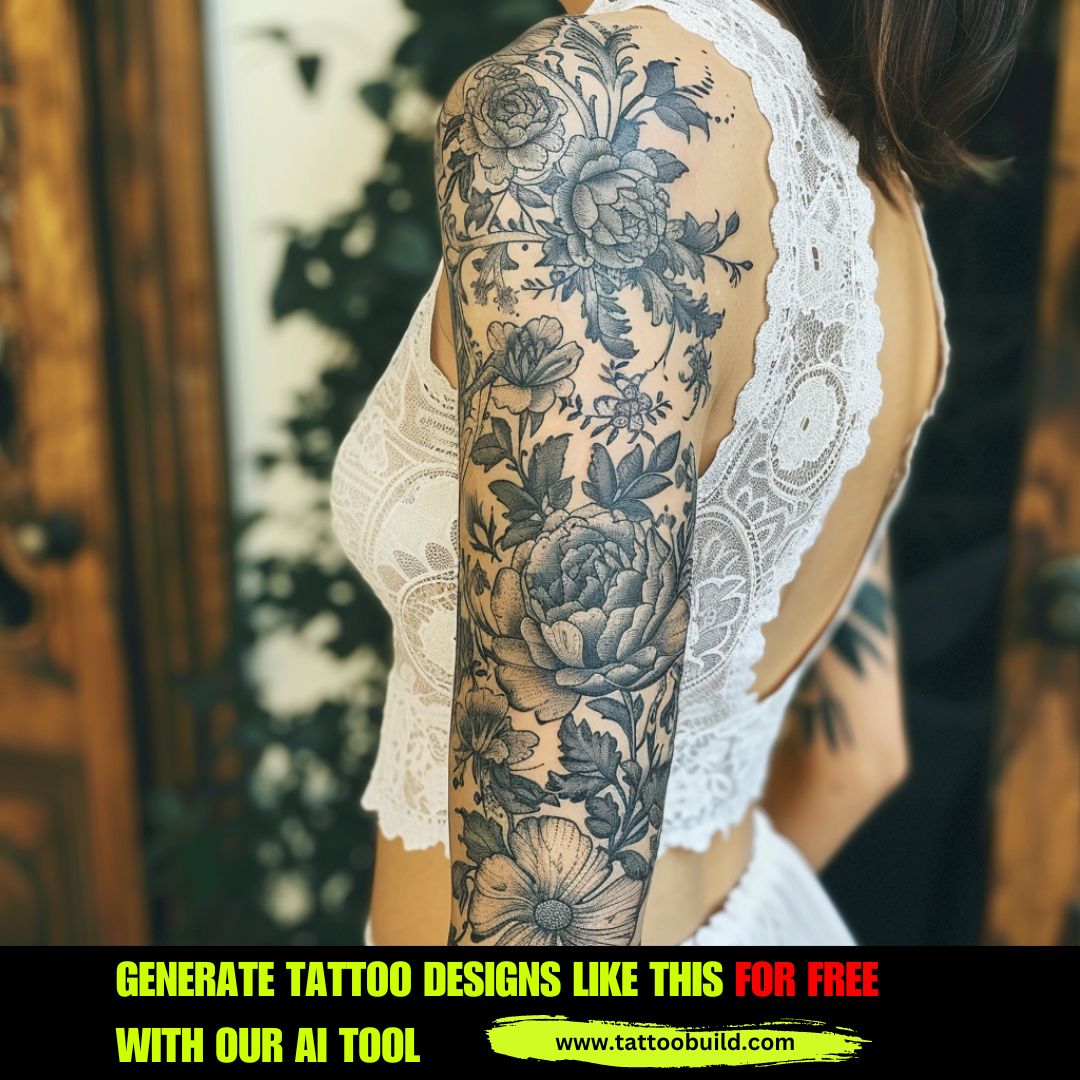
3. Fine-Line Botanicals and Insects
Fine-line work is the entry point for a lot of first-timers, and summer is when it gets requested most — it is small, quick and easy to keep covered while it heals.
A dragonfly over a single flower is a good example of the format working properly: one focal point, one supporting element, plenty of clean skin between them.
Be honest with yourself about upkeep, though. Every artist I have asked says the same thing — hairline linework is the first to soften, and a touch-up after a few years is normal rather than a failure. The fine-line tattoo ideas guide goes into how to choose a design that ages sensibly.
Dotwork sits in the same family but holds up better, because the shading is built from density rather than a single thin line.
4. Bees, Honeycomb and Small Wildlife
Bee tattoos have quietly become one of the most consistent summer requests, and they suit dotwork almost perfectly.
The honeycomb behind the bee does real design work. It gives the artist a geometric background to break up the organic shapes, and it lets the piece expand later without looking bolted on.
I like these because the scale is flexible. The same design reads well as a two-inch piece on a forearm or spread across a whole shoulder cap, as in the second image.
If you want to see the range before committing, the bee tattoo design ideas collection is a useful starting point.
5. Cocktail and Fruit Tattoos
This is the most playful category here, and it is more common than you would think — cocktail glasses, citrus slices, cherries and berries.
Their strength is that they date well precisely because they are not trying to be timeless. A cocktail tattoo is a mood, and most people who get one know that going in.
Watch the glass shape. A coupe or martini silhouette gives an artist clean geometry to anchor florals around, while a tall tumbler tends to look flat.
The four pieces below run from loose fine line with colour accents through to full neo-traditional, so they are a good way to see how much the same subject changes with style.
6. Beach and Ocean Scenes
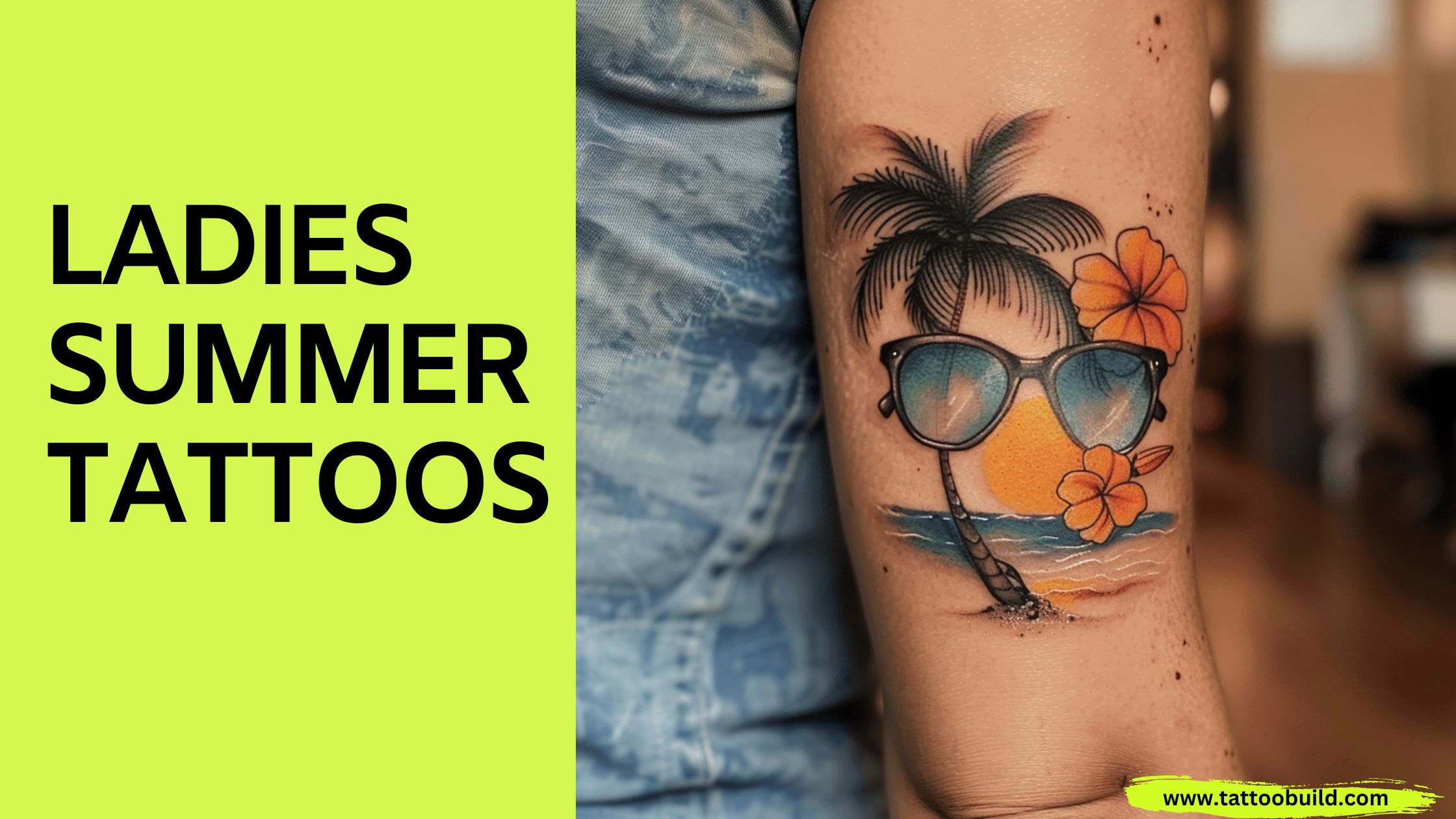
Full beach scenes are the biggest commitment on this list. A colour half sleeve like the one below is usually several sessions, not an afternoon.
The reason they are worth it is depth. A sunset over water gives an artist a genuine gradient to work with, and that is what makes the piece look like a place rather than a sticker.
The trade-off is maintenance. Those soft oranges and pale blues are exactly the pigments most vulnerable to UV, so this is the style that most needs sunscreen to be a habit rather than a holiday thing.
Smaller ocean motifs — waves, shells, a single fish — give you most of the feeling with a fraction of the upkeep, and the ocean tattoo ideas guide has plenty of those.
7. Mountains, Trails and Summer Adventure
Not every summer tattoo is a beach. For a lot of people the season means trails, and blackwork landscapes have become the default way to mark that.
These work because a mountain ridge is naturally horizontal, which suits a shoulder, an upper back or the length of a thigh far better than a vertical subject would.
The detail level is where the decisions happen. A dense engraved-style forest looks incredible fresh, but fine texture is the first thing to blur — so ask your artist to leave more space between elements than feels necessary.
When I tested this against older pieces I have seen, the simpler silhouettes were consistently the ones that still read cleanly from a few feet away.
8. Script and Quote Tattoos
Short script paired with a tiny symbol is one of the most durable formats for a small summer piece.
Keep it short. Two or three words in a clean hand sit comfortably on a forearm, whereas a full sentence in fine script tends to lose its spacing as the lines soften.
Ask to see the stencil at actual size on your skin before the needle starts — script almost always looks bigger on paper than it does in place.
If the wording is the hard part, this collection of quote tattoo ideas is a good place to browse phrasing that does not age badly.
Placement: Where Summer Tattoos Actually Sit Best
Placement is the decision people rush and then regret. Here is how the common summer spots really behave.
Forearm and Inner Arm
The most visible option, and the one you will see every day. Healing is straightforward, though it is also the area most exposed to sun year-round.
Shoulder and Upper Arm
My usual recommendation for a first larger piece. It is easy to cover with a t-shirt, comfortable to sit through, and the flat cap of the shoulder suits circular designs.
Ankle and Foot
Delicate and easy to hide, but genuinely awkward in summer — sandals rub, and swelling is common in heat. The ankle tattoo guide is worth reading before you book this one.
Thigh and Hip
The most forgiving canvas on the body: large, relatively low-friction, and easy to keep out of the sun. If you want colour that lasts, this is where to put it. See feminine thigh tattoo ideas for scale references.
Rib and Side
Beautiful, and honestly one of the more painful spots. Skin here also stretches with weight change, so keep detail moderate.
Summer Aftercare: What Actually Changes
Healing in summer is not harder, but it is less forgiving of shortcuts. Follow the aftercare instructions your artist gives you — they know what they used on you.
No swimming until the tattoo has fully closed over. Pools, lakes and the ocean all carry infection risk on broken skin, and soaking is bad for pigment retention regardless.
Keep new work out of direct sun entirely while it heals. Sunscreen goes on healed skin, not fresh tattoos — loose clothing is the right cover in the first couple of weeks.
Once it is healed, broad-spectrum SPF 30 or higher is the standard the American Academy of Dermatology recommends for daily sun protection, and it is the single biggest thing you can do to slow fading.
If you see spreading redness, heat, swelling that worsens after the first few days, or any discharge, contact your artist and see a doctor. That is medical territory, not something to manage from a blog post. Our tattoo healing stages and tattoo aftercare guides cover the normal timeline so you can tell the difference.
Common Mistakes — and What to Do Instead
Booking a colour piece the week before a beach holiday. This is the one I see most, and it forces a choice between the holiday and the healing.
Going too small for the detail requested. A design with six elements crammed into two inches will merge as it settles — either scale up or simplify.
Treating sunscreen as a summer-only thing. Fading is cumulative, and the tattoos I have seen hold their colour best belong to people who are boring about SPF year-round.
Choosing a placement for the photo rather than the life. Ask yourself where you want this at work, at a wedding, and in ten years — not just where it looks best on Instagram.
Skipping the consultation. Fifteen minutes with the artist beforehand catches nearly all of the above.
Frequently Asked Questions
Is summer a bad time to get a tattoo?
No, but it takes more discipline. The main constraints are sun exposure and water — you need to keep the fresh tattoo covered and out of pools, lakes and the ocean until it has fully closed. If a beach holiday is booked within the next month, most artists will suggest waiting until you are back. Outside of that, summer is as good a time as any.
Which tattoo colours fade fastest in the sun?
Lighter pigments generally give way first — yellows, pale oranges, soft greens and white highlights. Black and dark blue tend to hold their density much longer. That is why traditional and blackwork styles usually age more gracefully than pastel colour realism. Sunscreen on healed skin slows the process considerably in all of them.
How long before I can swim after getting a tattoo?
Wait until the surface has fully closed and there is no scabbing or weeping left, which for most people is somewhere around two to four weeks. Your artist will give you a figure based on the size and style of your piece, and that number beats any general estimate. Submerging a tattoo too early risks both infection and patchy healing. If you are unsure, ask rather than guess.
What is the least painful placement for a first summer tattoo?
The outer upper arm and the outer thigh are the two spots most people find easiest, because there is more muscle and fat between the needle and bone. Ribs, ankles, feet and the inner arm tend to be sharper. Pain is genuinely individual, though, so treat this as a general pattern rather than a promise.
Do I need to reapply sunscreen over a tattoo specifically?
Yes, and treat it like any other exposed skin. Broad-spectrum SPF 30 or higher, reapplied roughly every two hours when you are outdoors and after swimming or heavy sweating, is the standard advice. There is no special tattoo sunscreen you need to buy. Consistency matters far more than the product.
Quick Summary
- Pick a style before a subject — traditional and blackwork age best, colour realism needs the most upkeep.
- Sun is what fades tattoos; lighter pigments go first, black holds longest.
- Suns, waves, tropical florals, bees, cocktails, beaches, mountains and short script are the categories that consistently work.
- Thigh and shoulder are the most forgiving placements; ankle and rib are the most demanding.
- No swimming until the tattoo has fully closed — usually a few weeks, but ask your artist.
- Keep fresh work out of the sun entirely; save sunscreen for healed skin.
- Broad-spectrum SPF 30+ year-round is the single best thing for long-term colour.
- Spreading redness, heat or discharge means a doctor, not a forum thread.
Whatever you land on, book the consultation before you book the appointment. The best summer tattoos I have seen all started as a conversation rather than a screenshot.