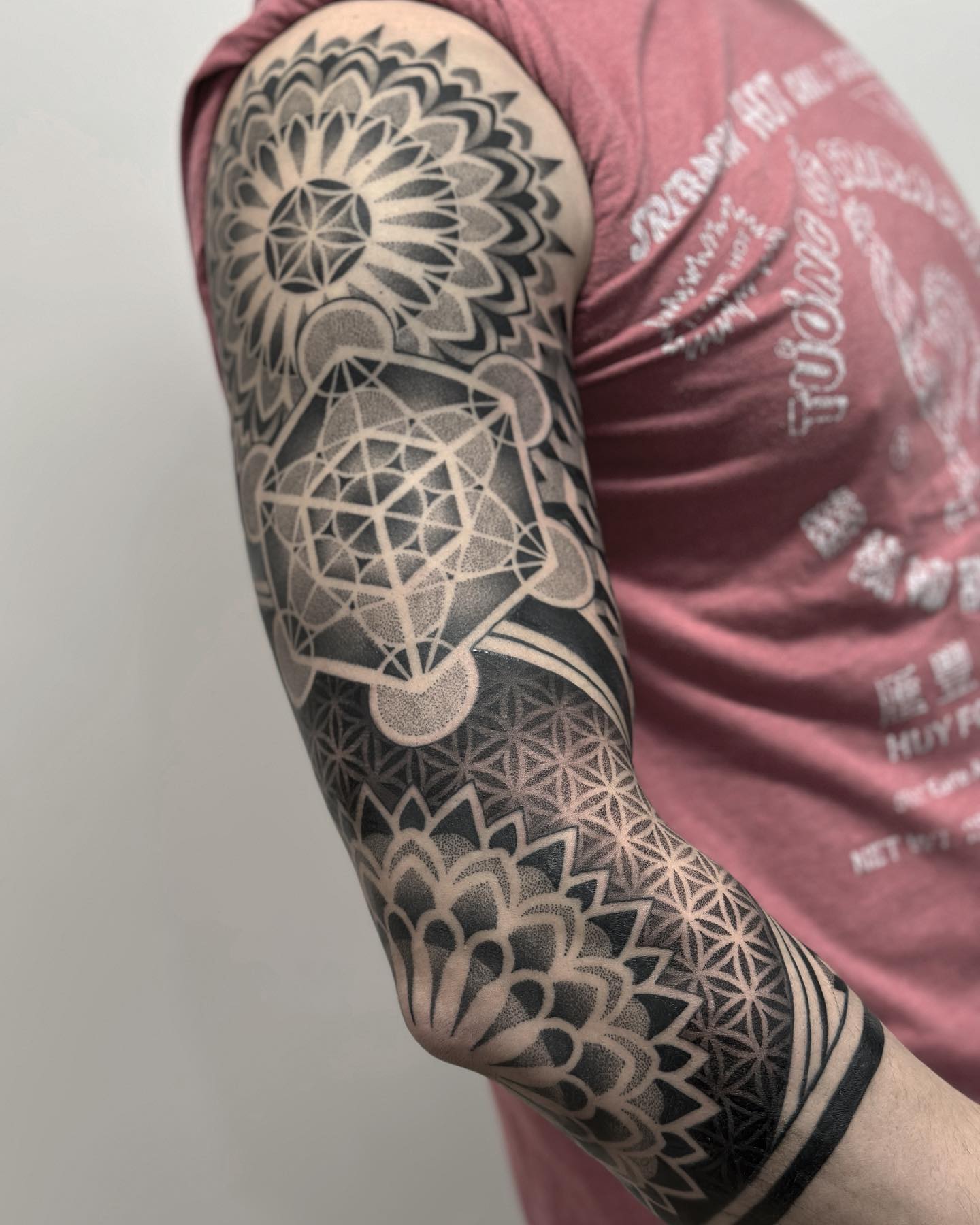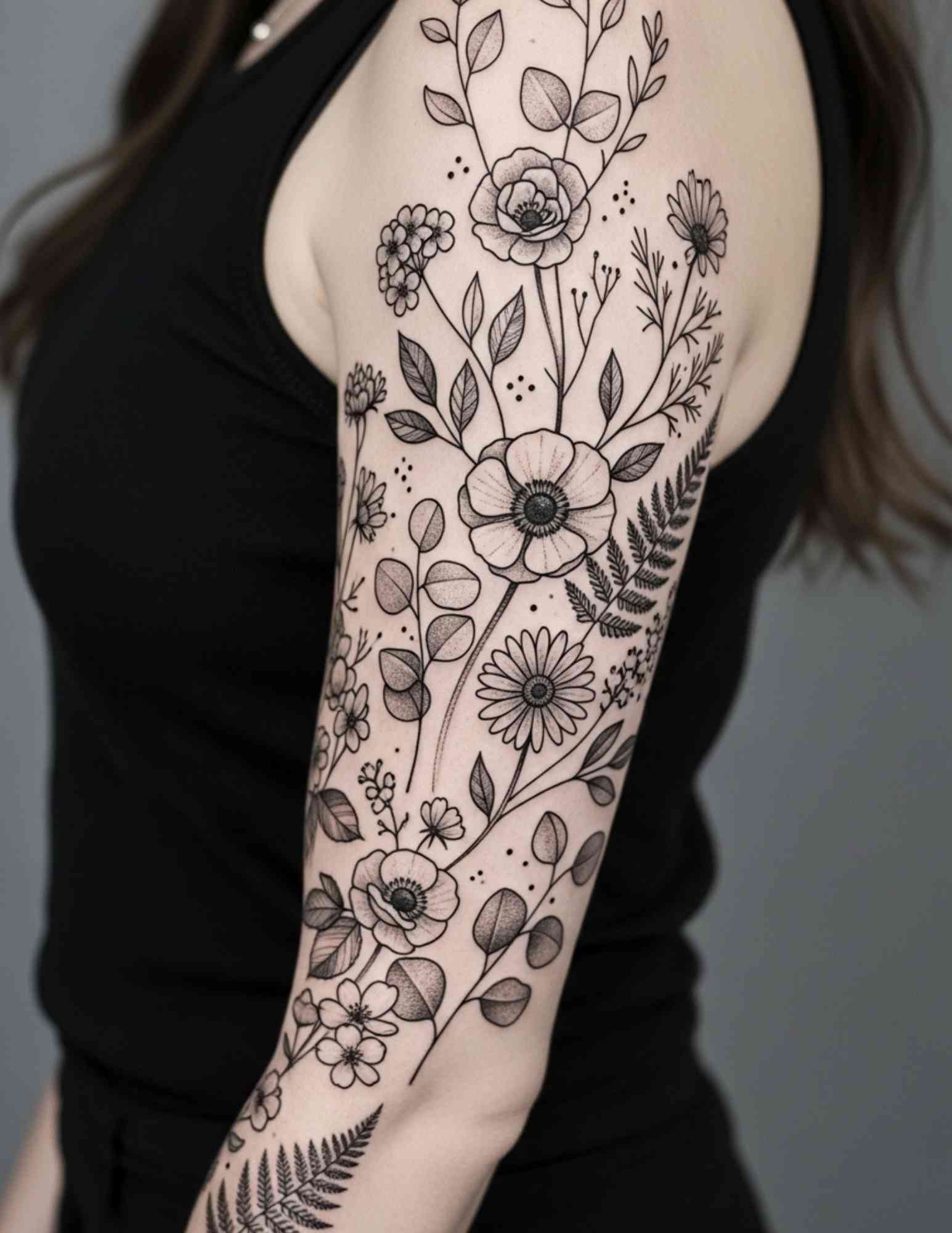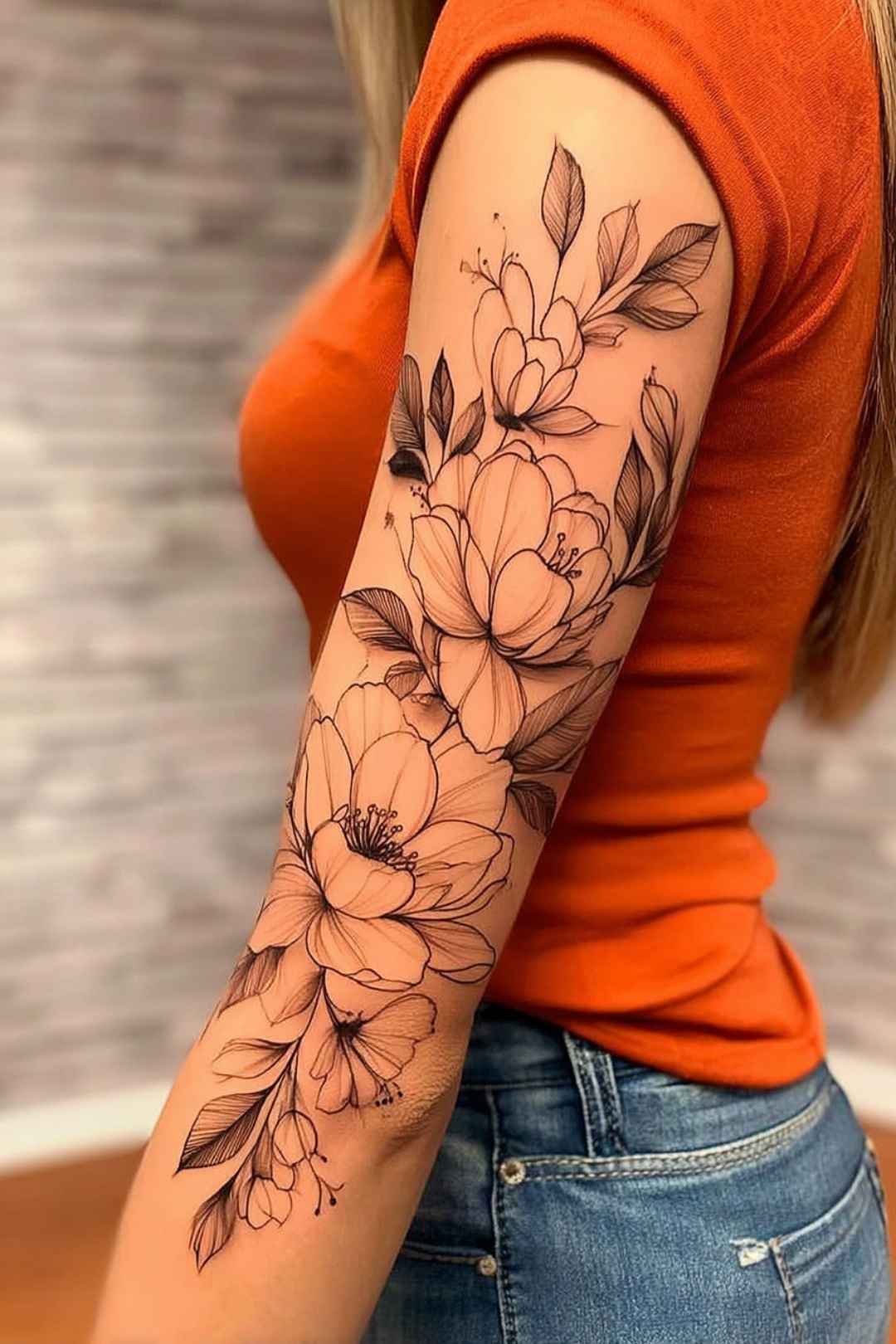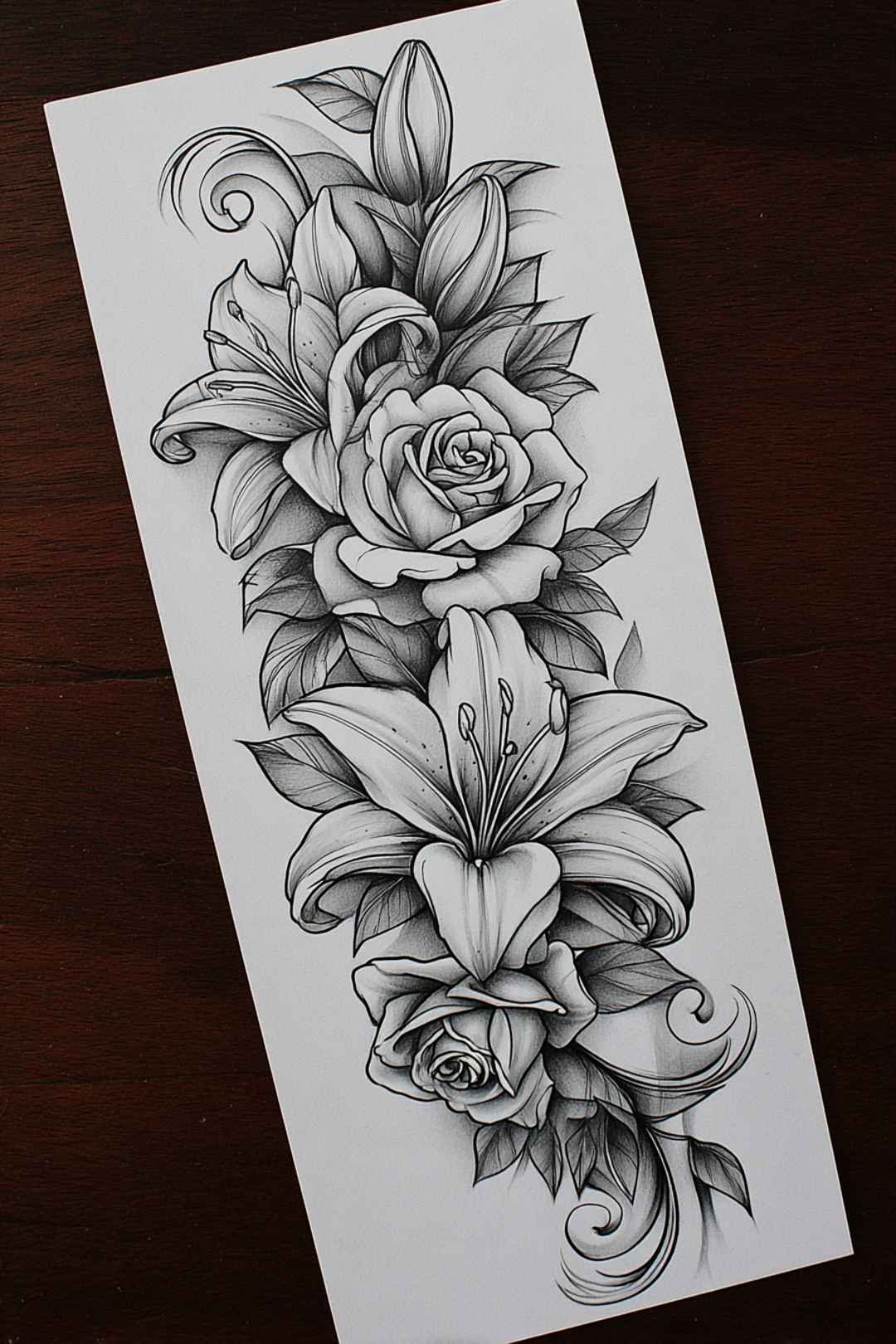
I have been collecting sleeve references for years, and the pattern is always the same: the drawing is where the sleeve is won or lost. A men’s sleeve tattoo drawing is not a picture you hand to an artist – it is a map of how the arm will be filled, wrapped and read from across a room.
The twenty drawings below are the ones I keep coming back to, because each solves a different problem: how to wrap a bicep, how to break up a forearm, how to keep a busy scene readable at arm’s length.
If you are still deciding on a direction rather than a specific design, it is worth browsing broader sleeve tattoo ideas for men first and coming back here once you know the mood you want.
I will also be honest about which of these are harder than they look. A few of them I would not recommend as a first tattoo, and I say so where it applies.
Which Sleeve Style Is Right for You?
Most of the drawings on this page fall into one of four families. They age differently, they hurt differently, and they demand different things from your artist.
| Style | Best For | Typical Sessions | How It Ages | Watch Out For |
|---|---|---|---|---|
| Japanese (Irezumi) | Full wrap, dragons, samurai, koi | 6–12+ for a full sleeve | Usually excellent – bold outlines hold | Needs a specialist; half-finished looks unfinished |
| Black & Grey Realism | Portraits, statues, religious scenes | 5–10 for a full sleeve | Soft greys can fade; needs touch-ups | Too much detail in a small area turns grey |
| Blackwork / Tribal | Bold shapes, lions, geometric wraps | 3–6 for a full sleeve | Generally the most durable of the four | Hard to cover or rework later |
| Neo-Traditional | Animals, roses, skulls with colour | 4–8 for a full sleeve | Good, if the outlines are heavy enough | Muted colours can go flat on darker skin tones |
If you are unsure which column you belong in, the honest answer is usually the one your chosen artist already does well. Pick the artist first, then pick the drawing that fits their hand.
What Actually Makes a Sleeve Drawing Work
A sleeve is a cylinder, not a canvas. The single most common mistake I see in drawings is a beautiful flat composition that falls apart the moment it curves around the arm.
Good sleeve drawings have flow lines – wind bars, waves, clouds, smoke, drapery – that carry the eye from shoulder to wrist without a hard stop. The Japanese tradition formalised this centuries ago, which is why so many modern sleeves still borrow its background language.
They also plan for negative space. Skin left bare is not wasted; it is what stops a sleeve from turning into a single grey smudge at conversational distance.
The second thing to plan for is cost and time. A full sleeve is rarely one appointment, and prices vary enormously by artist and region – our breakdown of how much a sleeve tattoo costs goes into what actually drives the number.
Finally, plan the order. In my experience the arms that look best are the ones tattooed outward from a single anchor piece, rather than assembled from unrelated tattoos and stitched together later.
20 Men’s Sleeve Tattoo Drawings Worth Building On
Each of these is grouped by theme rather than listed one by one, because that is how they actually get combined on an arm.
1. Religious and Faith-Based Sleeves
Faith sleeves are the most requested category I have come across, and also the least forgiving. Christ portraits, crowns of thorns and Last Supper panels live or die on facial structure.
When I tested reference photos with artists, the advice was consistent: give a portrait more room than you think it needs. A face that reads perfectly at 6 inches on paper can lose its likeness at 4 inches on a bicep.
Rays of light, clouds and drapery are the friends of a religious sleeve. They fill space, carry the flow line, and stop the composition from becoming a row of isolated portraits.
If you want a Last Supper panel, budget for a specialist in black and grey realism – that drawing has thirteen faces in it, and every one of them has to work.
2. Japanese Dragons, Pagodas and Samurai
Japanese sleeves are the safest long-term bet on this list. Heavy outlines, defined shading and structured backgrounds are the reason century-old irezumi still reads clearly.
The dragon-and-tiger pairing is traditional shorthand for opposing forces, and it wraps an arm almost automatically because both animals are drawn to coil.
A pagoda gives you a vertical anchor for the upper arm, which is useful if your main subject is horizontal. Samurai work the same way – a strong silhouette with blossoms doing the connective work.
If dragons are the direction you are leaning, there is a wider gallery of dragon tattoo ideas for men that shows how differently the same creature can be handled.
3. Norse, Spartan and Warrior Sleeves
Warrior sleeves are having a long moment, and the good ones share a trait: one clear hero image, with everything else demoted to texture.
Spartan helmets work because the shape is instantly readable even in silhouette. The battle scene behind it should be kept shallow – two or three tonal steps, no more – or it muddies within a few years.
Norse designs pull in runes, axes, ravens and knotwork. Every artist I have asked about runic banding says the same thing: check the meaning of the runes with a real source before they go on your skin permanently.
For the mythology side of it rather than the armour, Norse mythology tattoo ideas covers Yggdrasil, Valknut and raven imagery in more depth.
4. Lions, Wolves and the Phoenix
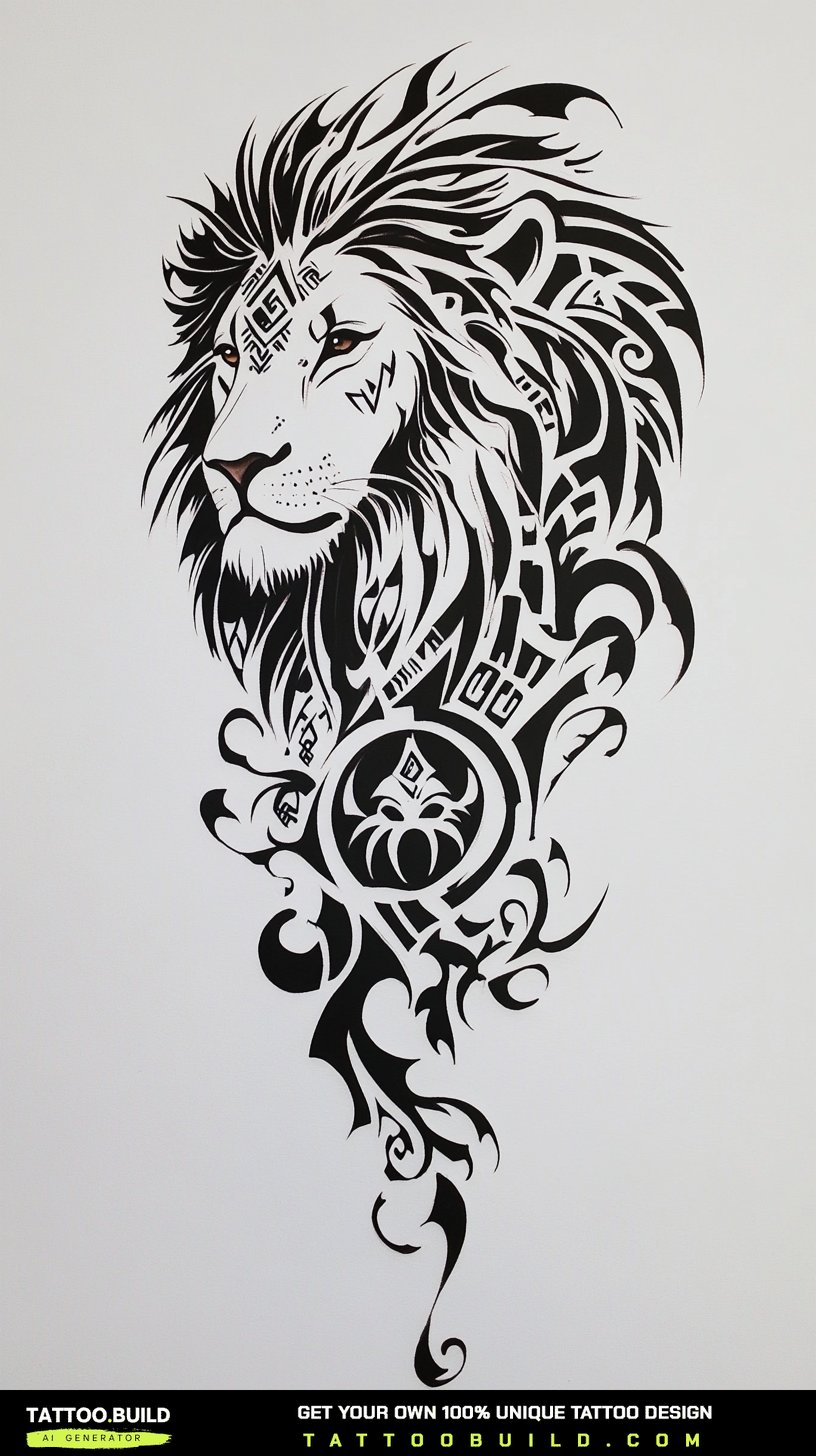
Animal sleeves are where blackwork earns its reputation. A tribal lion built from solid black shapes will still read clearly long after a soft grey portrait has gone hazy.
The phoenix is the best wrapping animal on this list. Drawn properly, the tail feathers spiral the bicep on their own and you barely need filler.
Wolves paired with mountains give you a landscape sleeve, which is a genuinely different look – quieter, more open, easier to read from a distance.
Ask for the animal’s eyes to be placed where you will actually see them – on the outer arm, not tucked into the armpit. It sounds obvious, and it is missed constantly. There are more directions in this wolf tattoo ideas collection.
5. Nautical Compasses and Wave Work
A compass is one of the few motifs that works equally well as a centrepiece or a filler. The rose shape is symmetrical, which gives the eye a resting point in a busy sleeve.
Waves are the western equivalent of Japanese water bars – they carry flow, they hide joins between sessions, and they are quick to tattoo relative to how much space they cover.
In my experience the forearm is the best home for a compass, because the flat inner face lets the symmetry show without distortion.
6. Reapers, Skulls and Memento Mori
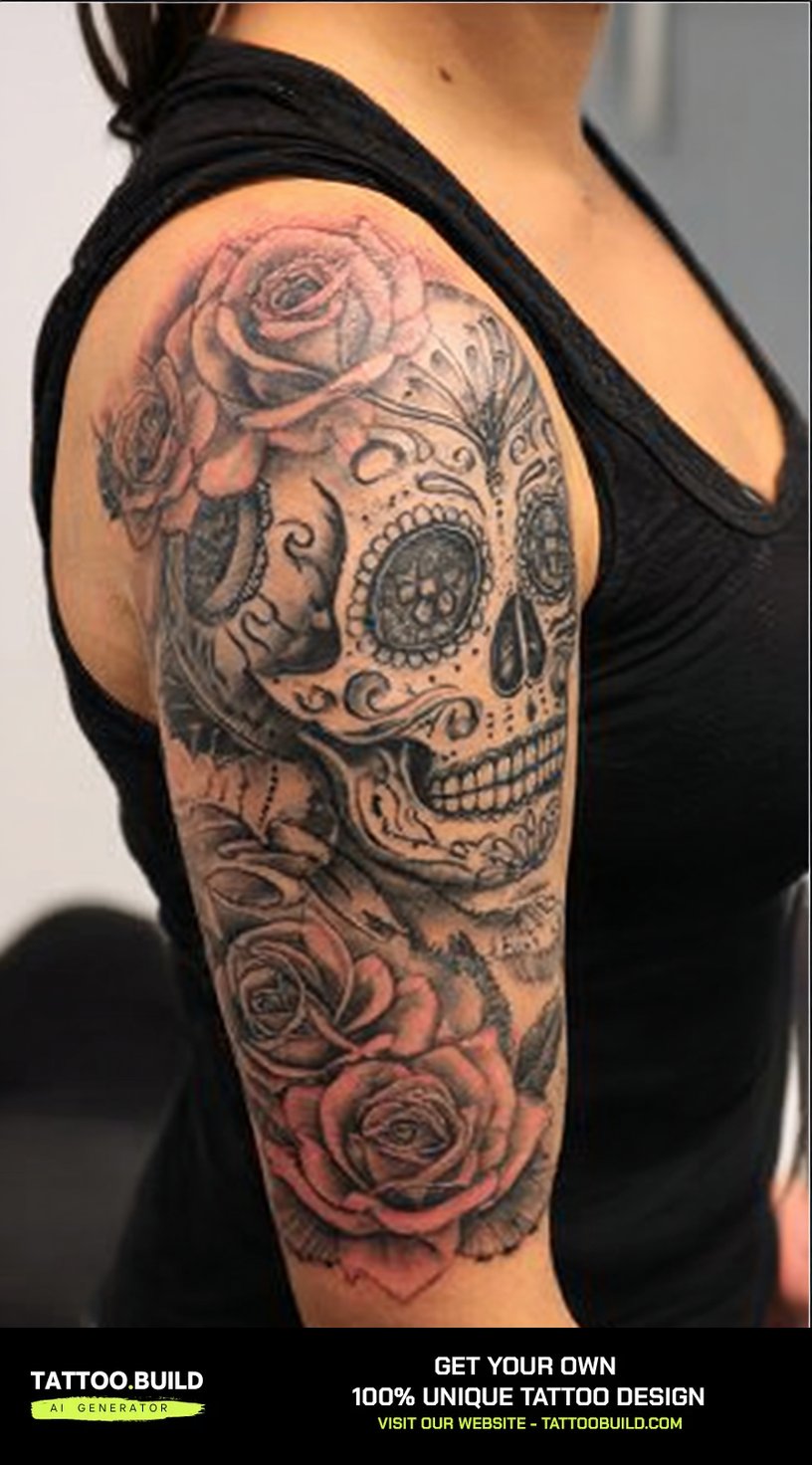
Skull, clock and roses is the single most requested trio I have seen for a dark sleeve, and there is a reason: the three shapes stack together without fighting each other.
An hourglass gives you a vertical element, the skull gives you a strong round mass, and roses fill the awkward gaps. It is a compositionally tidy set.
The reaper works best when the hood is drawn as an open black shape rather than detailed fabric. Detail inside a dark area is the first thing to disappear as ink settles.
If this is your direction, grim reaper tattoo ideas is worth a look for pose and scythe variations.
7. Gambling, Poker and Vegas Scenes
Gambling sleeves are the most filler-friendly theme here. Cards, dice, chips and smoke can be scaled to any gap left over.
The risk is clutter. A Vegas scene with a slot machine, neon and a skyline needs at least one large simple shape to anchor it, or the whole arm becomes visual noise.
Neon lettering is the exception to the “avoid fine detail” rule, because the glow effect actually benefits from soft edges as it ages.
8. Florals and Nature for Men
Floral sleeves on men are far less unusual than they were a decade ago, and they solve a real problem: flowers fill space beautifully at any scale.
Lilies and sunflowers are drawn large here for a reason. Small petals blur; large ones keep their shape for decades.
Nature sleeves also mix well with almost everything else on this page – roses under a skull, blossoms behind a samurai, lilies around a cross.
Alternatives to a Full Sleeve
A full sleeve is a large commitment of money, time and skin. There are three smaller formats that use the same drawings.
The Half Sleeve
Shoulder to elbow, or elbow to wrist. It gives you a complete composition at roughly half the sessions, and it is easy to extend later if the artist plans the edge properly.
Most of the drawings above adapt cleanly – see half sleeve tattoo drawings for how the same subjects are cropped down.
The Upper Arm Piece
A single strong image on the bicep and deltoid, with no wrap and no background. This is the format I usually suggest to someone getting their first large tattoo.
It stays covered by a t-shirt, which matters more in some workplaces than others. There is a good range of upper arm tattoo drawings built around this format.
The Leg Sleeve
Often overlooked and, for many people, less painful than the inner arm and elbow ditch. The thigh in particular gives you a large flat area for a detailed panel.
Compositions transfer almost directly – leg sleeve tattoo drawings uses much of the same imagery on a different cylinder.
Practical Tips Before You Book
Bring three to five reference images, not thirty. A dozen half-liked references gives your artist nothing to work with; three strong ones tell them exactly what you respond to.
Ask to see healed photos, not fresh ones. Fresh tattoos look sharp on everyone. Healed work at one to two years old is what tells you how an artist’s shading actually settles.
Plan the session order with your artist rather than booking piecemeal. Outlining a whole sleeve first and shading later is common, and it keeps the composition unified.
On healing: follow the aftercare your artist gives you, keep the area clean, and do not pick. If you see spreading redness, heat, pus or a fever, that is a doctor’s visit rather than a forum question – the American Academy of Dermatology and Mayo Clinic both set out the risks and the warning signs clearly. This article is design guidance, not medical advice.
It is also worth reading what the US Food and Drug Administration publishes about tattoo inks and reactions before a project this size, particularly if you have sensitive skin or a history of allergies.
Common Mistakes – and What to Do Instead
Collecting tattoos instead of designing a sleeve. Unrelated pieces stitched together with filler almost never look intentional. Decide on a theme before the first needle.
Cramming too much detail into the wrist and inner elbow. Both areas move constantly and hold ink less predictably than the outer bicep.
Choosing an artist by price alone. A cheap sleeve you dislike is far more expensive than a good one, once you count cover-up or laser work.
Leaving no plan for filler. If you are unsure how to bridge the gaps between your main pieces, tattoo sleeve filler ideas covers the standard solutions – smoke, waves, wind bars and geometric banding.
Frequently Asked Questions
How long does a full sleeve tattoo take?
Most full sleeves take somewhere between five and twelve sessions, depending on style, detail and how long you can sit. Blackwork and bold traditional work tends to sit at the shorter end, while black and grey realism sits at the longer end. Sessions are commonly three to five hours, spaced two to four weeks apart to allow healing. Your artist will give you a far more accurate estimate once they have seen the drawing at full size.
Where should I start a sleeve tattoo?
Most artists I have spoken to prefer to start with the main subject on the outer upper arm, then work outward. Starting with the anchor piece means the composition is built around something you definitely want, rather than being forced to fit around filler. Some artists outline the entire sleeve first and shade afterwards, which keeps the flow consistent. Either approach works, but decide it before the first session rather than midway through.
Do sleeve tattoos hurt more than other placements?
Pain varies a lot between people, but the pattern is fairly consistent across the arm. The outer bicep and forearm are usually the easiest areas, while the inner bicep, elbow ditch and wrist are the ones most people find hardest. The armpit area is generally reported as the worst of the arm. Eating properly beforehand and stopping when you genuinely need to makes more difference than any numbing product.
Can a men’s sleeve tattoo drawing be changed once it is on skin?
To a degree, yes. Adding to a sleeve is straightforward, and skilled artists can rework shading or extend a background. Removing or fundamentally changing an existing design is much harder, usually requiring laser fading over multiple sessions before a cover-up is possible. This is why planning the whole composition upfront saves both money and regret.
Which sleeve style ages the best?
In general, styles with bold outlines and strong contrast age best – Japanese irezumi, traditional and blackwork are the usual examples. Fine-line and soft black and grey work can lose definition sooner and often needs touch-ups. Sun exposure is the single biggest factor within any style, so sunscreen on a healed sleeve genuinely matters. Ask your artist to show you their own healed work before deciding.
Quick Summary
- Treat a sleeve as one composition, not a collection – pick a theme before the first session.
- Choose the artist before the drawing, and match the drawing to what they already do well.
- Japanese and blackwork designs are the most reliable long-term; realism needs the most maintenance.
- Build in flow lines – waves, clouds, smoke or wind bars – to carry the eye along the arm.
- Leave negative space deliberately, or the sleeve will read as a grey mass from a distance.
- Give portraits and detailed faces more room than you think they need.
- Consider a half sleeve, upper arm piece or leg sleeve if the full commitment is too much right now.
- Follow your artist’s aftercare, and see a doctor rather than a forum if healing goes wrong.