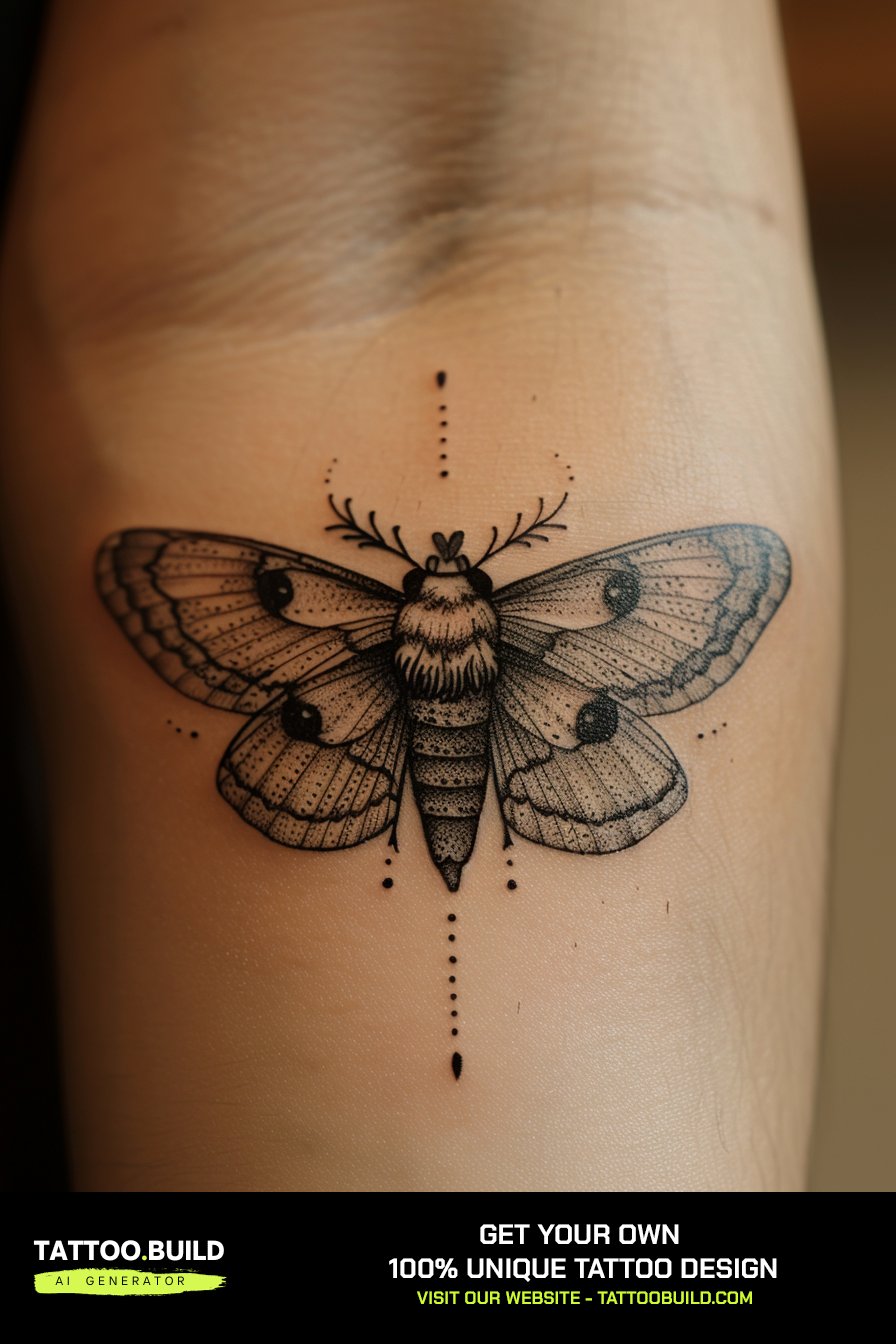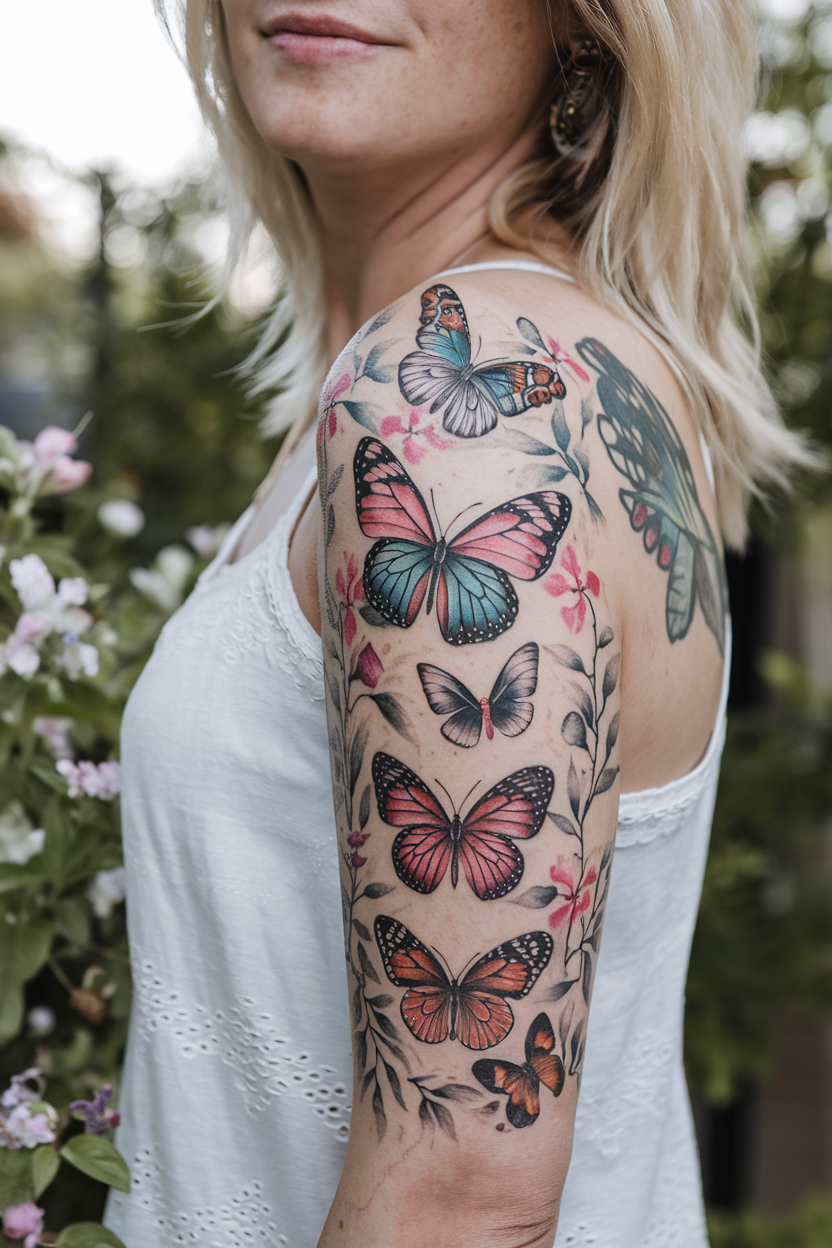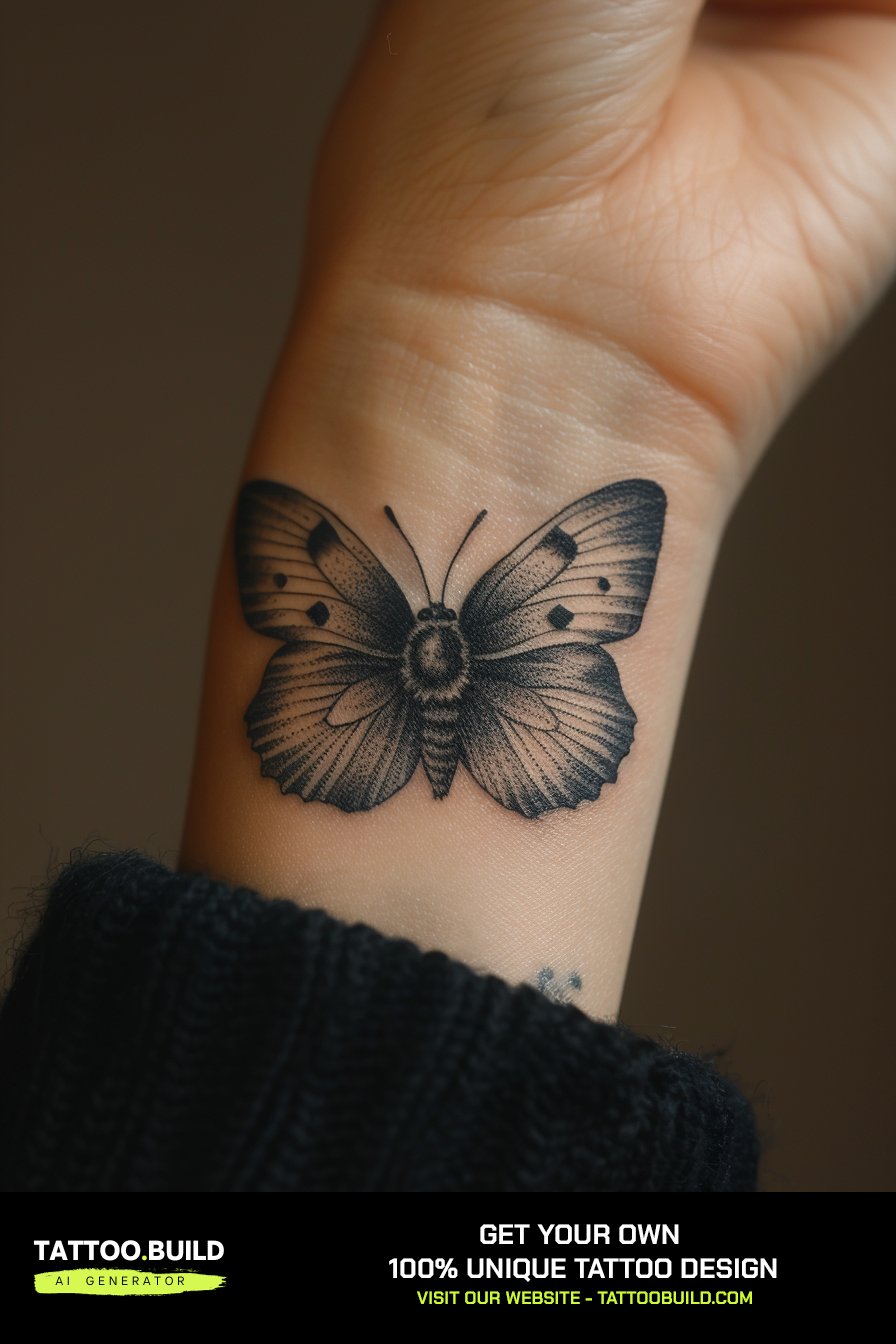
A moth tattoo drawing lives or dies on its wing pattern, not on its outline. That is the one thing I wish somebody had told me before I booked mine.
I have sat with a folder of moth references in three different studios now, and the same conversation happens every time. The client points at a delicate sketch, the artist gently explains which two thirds of that detail will survive a decade in skin, and the drawing gets rebuilt.
This guide is that conversation, written down. What a moth actually symbolises, which drawing styles hold their shape, which moth species carry their own meaning, and where the design sits best on the body. If you are also weighing the softer, brighter alternative, it is worth reading what a butterfly tattoo means before you commit.
Every drawing below is one I picked because it shows a specific technical decision, not just a pretty moth.
Which Moth Tattoo Style Is Right for You?
I put this together after asking artists the same three questions over and over: how long does it take, how well does it age, and who should avoid it.
| Style | Typical sitting | How it ages | Best for |
|---|---|---|---|
| Fine line | 2–3 hours | Softens fastest; may need a touch-up in 5–10 years | Small, delicate placements on protected skin |
| Blackwork | 3–5 hours | Holds contrast longest of any style here | Anyone who wants it readable across a room |
| Black and grey realism | 4–7 hours, often two sessions | Mid-tones flatten slowly; structure stays | Forearms, backs, anywhere with room |
| Dotwork / stipple | 4–6 hours | Dots can blur together if packed too tightly | Ornamental and geometric compositions |
| Ornamental / celestial | 3–6 hours | Depends entirely on line spacing | Sternum, spine, symmetrical placements |
| Watercolour | 3–4 hours | Fades noticeably; plan for refreshing | Colour lovers who accept upkeep |
The sitting times are what artists have quoted me for mid-size pieces, roughly palm-sized to forearm-length. Your artist’s number may differ, and that is normal.
Why the Moth Reads Differently Than the Butterfly
Both insects go through the same metamorphosis. The difference is entirely cultural, and it is the reason people choose one over the other.
Butterflies got attached to daylight, renewal and lightness. Moths got attached to night, to porch lamps, to the slightly unsettling. That association is not scientific, but it is real in how people read the tattoo.
Most people I have spoken to choose a moth precisely because it is the less flattering option. It carries change without pretending change is comfortable.
There is also a design argument. Moth bodies are thicker and furrier than butterfly bodies, and the wings are broader and less glossy. That gives an artist far more surface to shade, which is why moth drawings tend to look heavier and more sculptural on paper.
If the symbolism is what pulls you in, that heaviness is the whole point — the moth is the version of the story that admits the cost.
Moth Tattoo Drawing Styles That Hold Up
Every style below can produce a beautiful drawing. Not every style produces a beautiful drawing that is still legible in fifteen years, and that gap is where most regret lives.
Fine Line and Single Needle
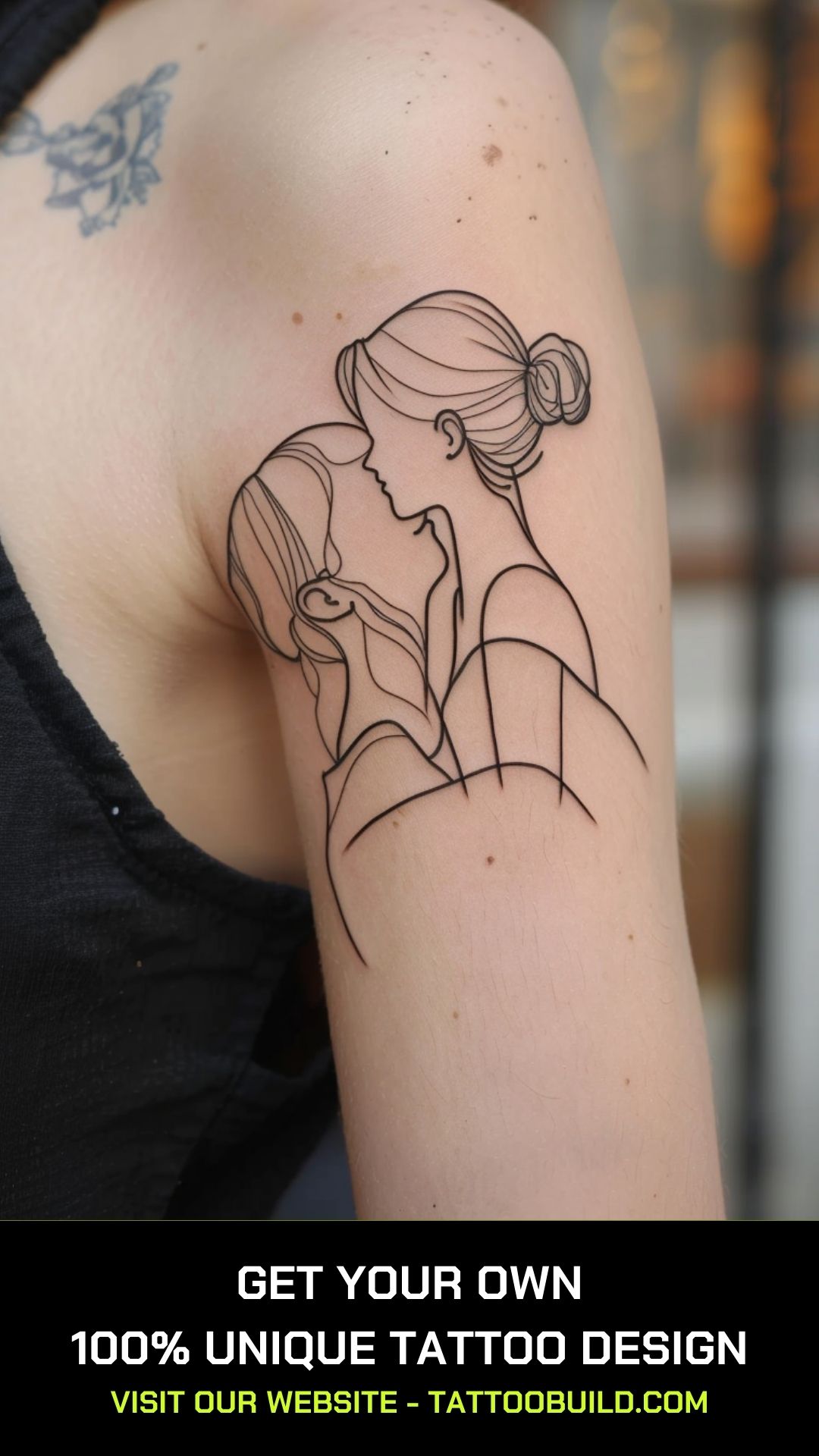
Fine line moths are the most requested version right now, and the most misunderstood. The drawing looks weightless on paper because paper does not spread ink.
Skin does. Every line you put down gets slightly wider over years as ink settles, which means lines drawn too close together eventually touch and read as a grey smudge.
When I asked a fine line specialist how she handles moth wings, her answer was blunt: she deletes about a third of the reference detail before she ever starts. The remaining lines get more space, and the piece stays readable. The wider fine line tattoo approach follows the same rule.
Ask to see a healed fine line photo from at least two years ago, not a fresh one. Fresh fine line always looks perfect.
Blackwork and Bold Traditional
Blackwork moths are the safest long-term bet on this list, and I say that as somebody who prefers softer styles.
Solid black holds. The contrast between filled wing sections and bare skin does not depend on delicate mid-tones surviving, so the design stays punchy long after a fine line piece has gone soft.
The trade-off is subtlety. You cannot render a photorealistic wing pattern in solid black, so the drawing has to be simplified into shapes: bands, eye spots, forked tails, hard edges.
Every artist I have asked who does heavy blackwork says the same thing about placement — give it room. A bold moth crammed into a two-inch space loses the negative space that makes the style work.
Ornamental and Celestial Moths
This is where moth drawings get genuinely elaborate: moon phases above the wings, dotwork rings, hanging jewels, mandala flourishes under the abdomen.
The moth becomes the centre of a composition rather than the whole tattoo. It suits symmetrical placements, which is why sternum and spine pieces dominate this category. Moon phase tattoo layouts pair with it almost too easily.
My honest warning: ornamental designs are the easiest to over-commission. Each extra ring and pendant adds an hour, and the moth itself can end up as the smallest element on your body. Browsing celestial tattoo ideas first helps you see where the natural stopping point is.
Black and Grey Realism
Realistic moths are the most technically demanding drawings here, and the most rewarding when they land.
The thing that sells realism is the body, not the wings. A furry, dimensional thorax with real light direction is what makes viewers read the image as an insect rather than a symbol.
Expect two sessions for anything larger than a hand span. Artists build these in passes — structure first, then mid-tones, then the darkest darks — and rushing that sequence produces a muddy result.
Realism needs an artist who specialises in it. A generalist who does great traditional work will not necessarily render a convincing wing membrane, and most good artists will tell you so if you ask.
Dotwork and Stippling
Dotwork builds tone entirely from spaced points. Done well, it gives moth wings a soft, powdery texture that no line shading can match.
It is slow. Every dot is a separate movement, so a stippled moth commonly takes longer than a line-shaded one of the same size. Dotwork tattoo artists price accordingly.
The risk is density. Dots placed too close eventually merge into flat grey, which erases the exact texture you paid for. Good dotwork artists leave more space than looks right on paper.
Sketch and Illustrative Moths
Sketch style keeps the construction lines. Guidelines, stray marks, a diamond frame drawn around the insect — the drawing looks like a page from the artist’s book rather than a finished render.
I find these age unusually well, because a design that already looks loose does not suffer when it softens slightly.
They also let an artist show their hand. If you like a specific tattooist’s drawing style, sketch work is the version that keeps the most of it.
Moth Species and Variations Worth Knowing
Picking a real species instead of a generic moth gives the tattoo a specific meaning and gives your artist a real reference to draw from.
Luna Moth
The luna moth is the elegant one: pale green, long trailing tails, unmistakable silhouette. According to the Luna moth entry on Wikipedia, adults have vestigial mouthparts, do not feed at all, and live roughly seven to ten days.
That detail is why people choose it. A creature that emerges fully formed, cannot eat, and has about a week to do everything it came to do is a fairly direct memento mori.
Design-wise, the long tails need vertical room. They work beautifully down a forearm or a spine and get cramped almost anywhere else.
Death’s-Head Hawkmoth
The death’s-head hawkmoth carries a skull-shaped marking on its thorax, which is exactly why it ended up on horror film posters and, eventually, on a great many arms.
It is the boldest choice on this list. The skull marking does most of the storytelling, so the wings can stay comparatively simple.
A softening trick I like: tuck flowers under the lower wings. It keeps the memento mori reading without the piece looking purely gothic.
Atlas, Emperor and Other Giants
Large silk moths give you the broadest wings and therefore the most surface for pattern work.
They suit backs, thighs and full chest pieces. Shrunk down to wrist size, the wing detail that makes them impressive disappears entirely.
Add-Ons: Moons, Florals and Jewels
Most moth tattoos I see are not just a moth. The insect anchors a small composition — a crescent above, a bloom below, a hanging gem on a chain.
One add-on usually helps and three usually crowd. Choose the element that means something to you and let the moth keep the space.
Placement, Pain and Practical Planning
Moth drawings are symmetrical, which makes placement less forgiving than it is for asymmetric designs. A moth sitting slightly off-centre on a sternum reads as a mistake in a way a rose never would.
Sternum, spine and centre-back are the classic symmetrical spots, and all three are near bone. They are also among the sharper places to sit, which the most painful tattoo spots guide covers in more detail.
Forearms are the practical compromise: enough vertical space for tails, moderate pain, easy to keep clean while healing, and a natural fit if you are already considering forearm tattoo ideas.
Ask for the stencil to be placed twice. Every artist I have worked with expects this, and it costs ten minutes against a permanent asymmetry.
Healing Your Moth Tattoo Safely
Fine detail heals differently from solid black. Heavily packed areas weep more in the first days, and delicate line work is easier to damage by over-moisturising.
Follow the aftercare instructions your artist gives you, since they know what they put in your skin. Our general tattoo aftercare guide and the tattoo healing stages breakdown cover the normal timeline.
On the risk side, the FDA’s Tattoos & Permanent Makeup fact sheet notes that unsterile equipment can transmit infections, that contaminated inks have caused infections even where hygiene was good, and that no tattoo ink is approved for injection into skin. That is worth reading once before your first appointment.
If you develop spreading redness, heat, pus, a fever, or a rash that appears weeks or months later, contact a doctor rather than your group chat. This article is design guidance, not medical advice, and delayed reactions to pigment are a real thing that needs a clinician.
Never attempt to tattoo or remove a tattoo yourself. Both belong with a licensed professional, and removal in particular is a medical procedure.
Common Mistakes and What to Do Instead
The mistake I see most often is bringing a single reference image and asking for it exactly. Artists draw better work when you bring three or four images and explain what you like in each.
The second is sizing down. A moth drawing designed at forearm scale does not simply shrink to a wrist; the wing pattern has to be redrawn with fewer elements. If small is what you want, start from a design built small rather than compressing a detailed piece.
The third is choosing a style your chosen artist does not actually specialise in. Portfolios are honest. If nobody in their gallery has a watercolour tattoo in it, do not be the first.
Still not sure? Book a consultation before booking the tattoo. Most studios do them free, and a twenty minute conversation with the person holding the machine settles more questions than another month of scrolling.
Frequently Asked Questions
What does a moth tattoo symbolise?
Most commonly transformation, intuition and an attraction toward light or truth. The moth’s pull toward a flame gets read as pursuing something meaningful even at a cost, and its metamorphosis carries the same growth symbolism a butterfly does but with a darker tone. Many wearers also choose it for its association with night, dreams and the parts of themselves they keep private. There is no single fixed meaning, and the one you assign it matters more than any list.
How much does a moth tattoo drawing cost?
It depends far more on size, style and your artist’s hourly rate than on the moth itself. A simple fine line moth is usually a single short session, while black and grey realism or a heavily ornamental composition often runs across two sittings. Ask for a quote in hours rather than a flat number, since that is how most artists actually price. Studio minimums also apply, so very small pieces rarely cost proportionally less.
Does a moth tattoo hurt more than other designs?
The design does not change the pain, but the placement does. Sternum, spine, ribs and the tops of the feet sit close to bone and are widely reported as sharper, and those happen to be popular spots for symmetrical moth pieces. Outer forearm and outer thigh are generally more comfortable. Long sessions also hurt more simply because they are long, so ask about splitting a large piece.
Which moth species works best as a tattoo?
The luna moth is the most graceful and needs vertical space for its tails, while the death’s-head hawkmoth is the boldest thanks to the skull marking on its thorax. Large silk moths such as the atlas give the widest wings and the most room for pattern work, which suits backs and thighs. If you want something specific to you, look up moths native to where you grew up. Your artist will appreciate a real reference photo either way.
Will a detailed moth tattoo blur over time?
Some softening is normal for every tattoo, and fine detail softens first. Lines placed too close together are the usual cause of a moth losing its wing pattern, which is why experienced artists thin out reference detail before drawing. Sun exposure accelerates the process more than anything else, so daily sunscreen once healed makes a genuine difference. A touch-up years later is routine, not a sign anything went wrong.
Quick Summary
- Wing pattern carries a moth tattoo — get that right before worrying about the outline.
- Blackwork ages best; fine line looks best on day one and needs the most planning.
- Realism and dotwork usually need two sessions and a specialist, not a generalist.
- Pick a real species — luna for grace, death’s-head for boldness, atlas for scale.
- Symmetrical placements like sternum and spine are unforgiving; have the stencil placed twice.
- One add-on element helps the composition, three crowd it.
- Bring three or four references and explain what you like in each, not one image to copy.
- Follow your artist’s aftercare, and see a doctor for spreading redness, fever or a delayed rash.