Angel tattoos are one of the few designs I see requested at every stage of a collection – first tattoo, tenth tattoo, and the piece someone finally commits to after years of thinking about it. The reason they hold up is that an angel can carry almost any meaning you give it, and still read as beautiful to someone who knows nothing about your story.
I have spent a lot of time looking at how these designs actually age on skin rather than how they look in a portfolio photo taken the same day. That gap matters more with angels than with most subjects, because so much of the appeal lives in fine detail.
What follows is the honest version: which angel styles hold their shape, which placements suit which designs, what to expect from the appointment, and where people most often go wrong. If the spiritual side is what draws you in, our wider guide to spiritual tattoo ideas covers the broader territory.
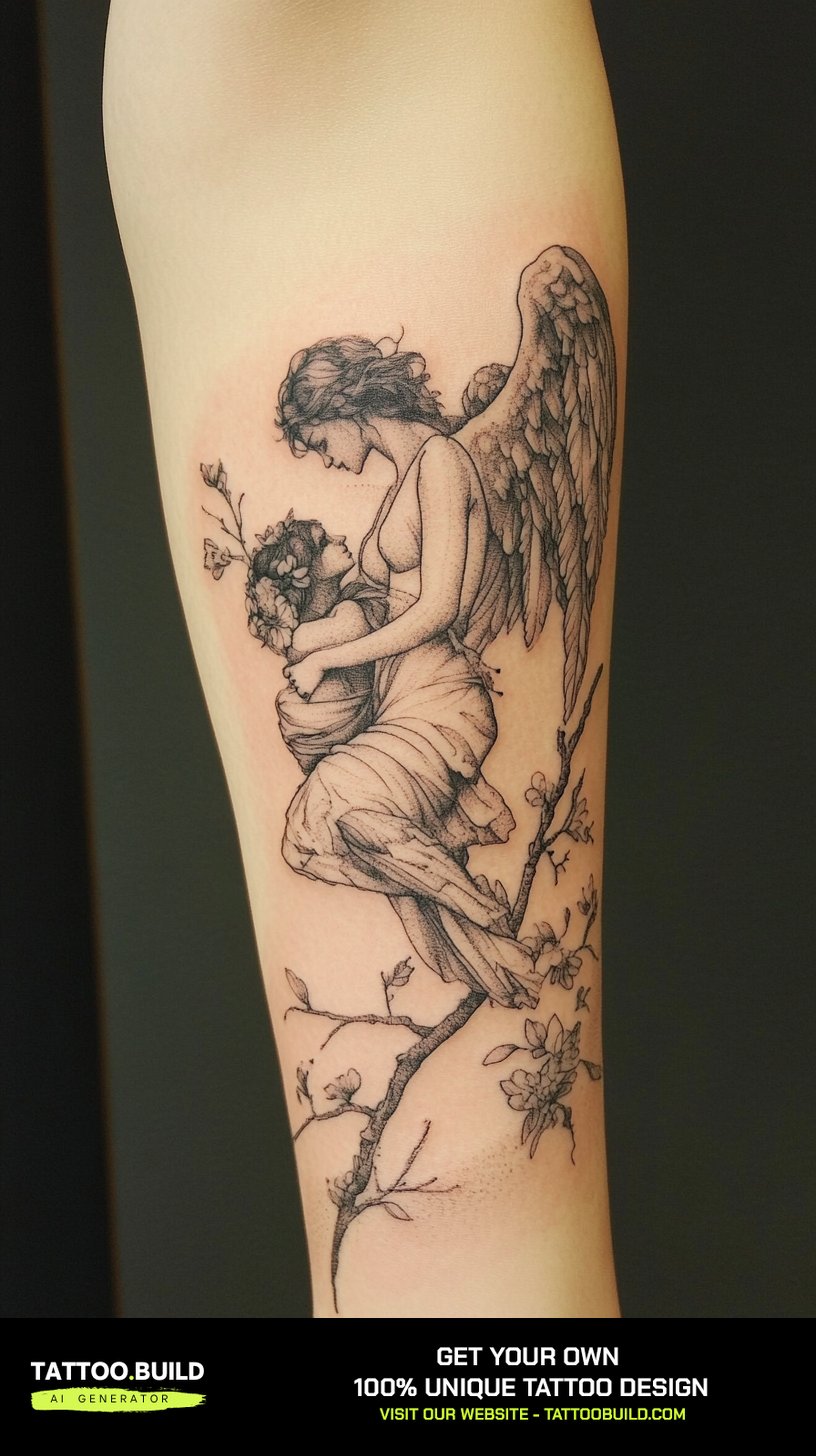
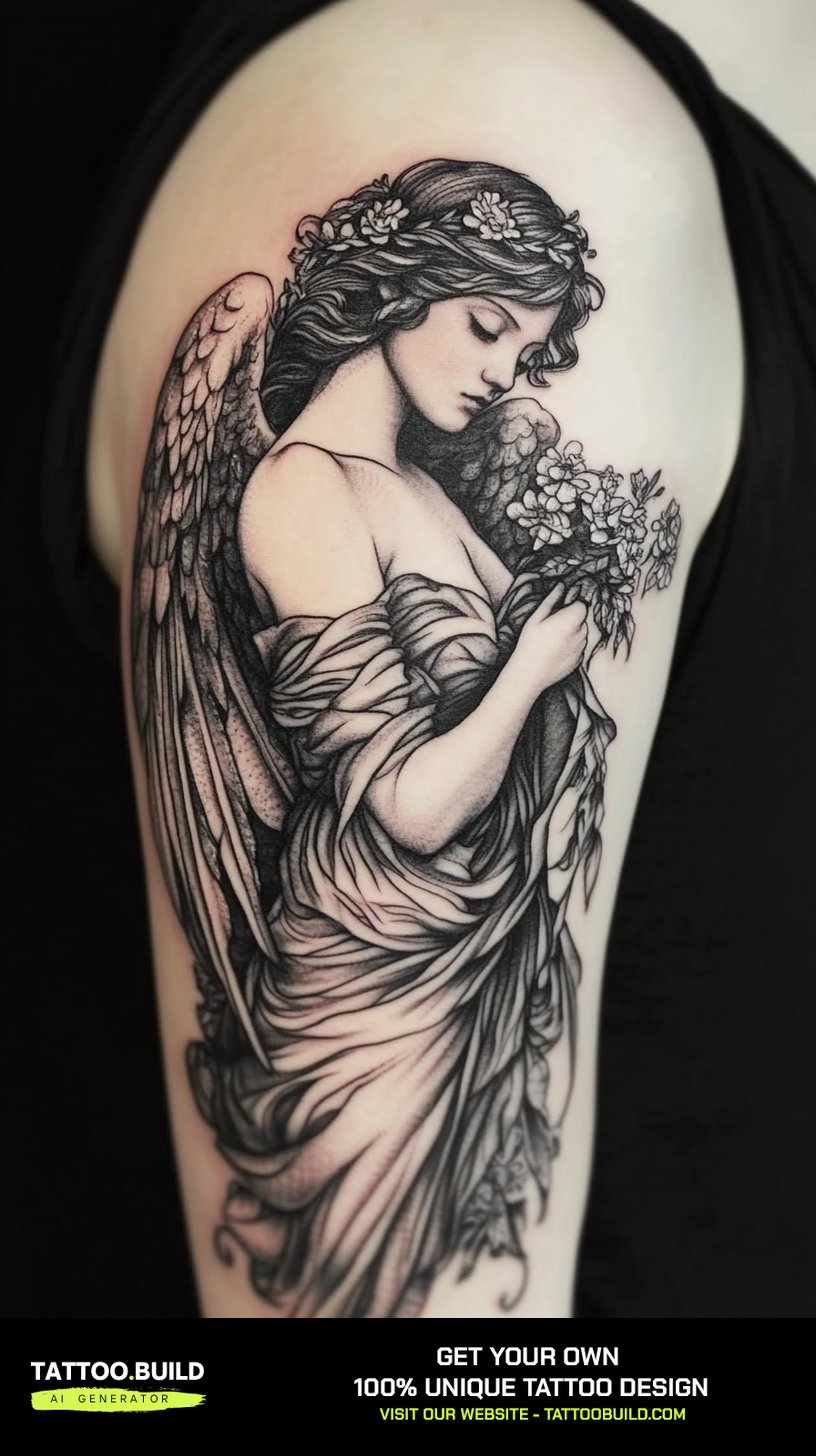
Every image below is a real design reference, and I have flagged what each one is doing well.
Which Angel Tattoo Style Is Right for You?
The style you pick decides more about the tattoo’s future than the subject does. Here is how the four most common approaches compare.
| Style | Best For | Typical Session | How It Ages |
|---|---|---|---|
| Fine line | Small forearm, wrist and spine pieces | 1-3 hours | Softens noticeably; usually wants a touch-up within a few years |
| Black and grey realism | Upper arm, back and thigh figures | 4-8 hours, often split across sittings | Holds well when the artist keeps real contrast in the shading |
| Neo-traditional | Half sleeves and bold statement pieces | 3-6 hours | The most forgiving of the four, thanks to heavier linework |
| Minimalist wings | Nape, ankle, behind the ear, ribs | Under 2 hours | Fine if the lines are not drawn too thin to begin with |
If you are torn, the honest tie-breaker is size. Detail needs room, and a design that would sing at forearm scale often turns muddy on a wrist.
What an Angel Tattoo Actually Means
Angels appear across Christian, Jewish and Islamic tradition, and in each of them they function as messengers rather than as gods. That shared role is why the imagery travels so easily.
In practice, most people I talk to are working with one of three ideas: protection, remembrance, or a marker for coming through something difficult. None of those meanings live in the design itself – they live in why you chose it.
Remembrance pieces are the most common of the three by a wide margin, at least among the designs people bring in. If that is your reason, it is worth reading our guide to memorial tattoo ideas before you settle on an angel specifically, because there are quieter ways to say the same thing.
There is also a purely aesthetic camp, and there is nothing wrong with it. Wings are a genuinely good shape for the human back, and a lot of people want one for exactly that reason.
If your reason is explicitly religious, the wider faith tattoo ideas collection sits closer to that intent than a generic angel does.
Angel Tattoo Designs for Women That Hold Up
These are the six directions almost every angel tattoo falls into. I have ordered them roughly from most to least common.
1. Angel Wings on Their Own
Wings without a figure are the single most requested version, and for good reason – they are the easiest angel design to place well.
A pair across the nape or upper back uses the natural symmetry of the shoulders. A single wing down the forearm or shoulder works differently: it reads as a fragment, which some people find more interesting than the full pair.
The detail that separates a good wing tattoo from a mediocre one is feather variation. Feathers should change size and direction as they move outward. When every feather is the same, the wing looks like a stencil rather than a wing.
Expect 2-4 hours for a modest pair, considerably longer for a full realistic back piece.
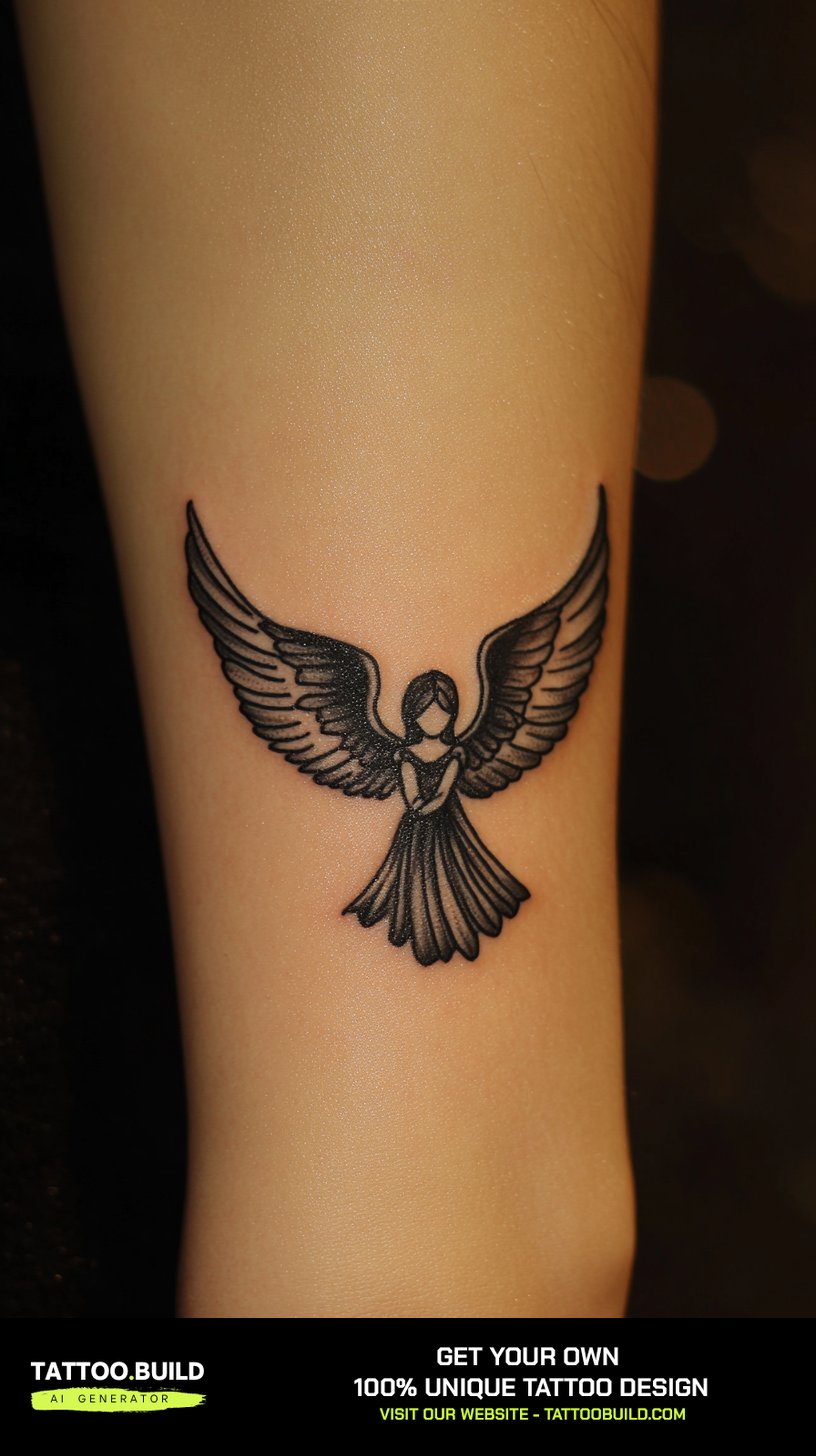
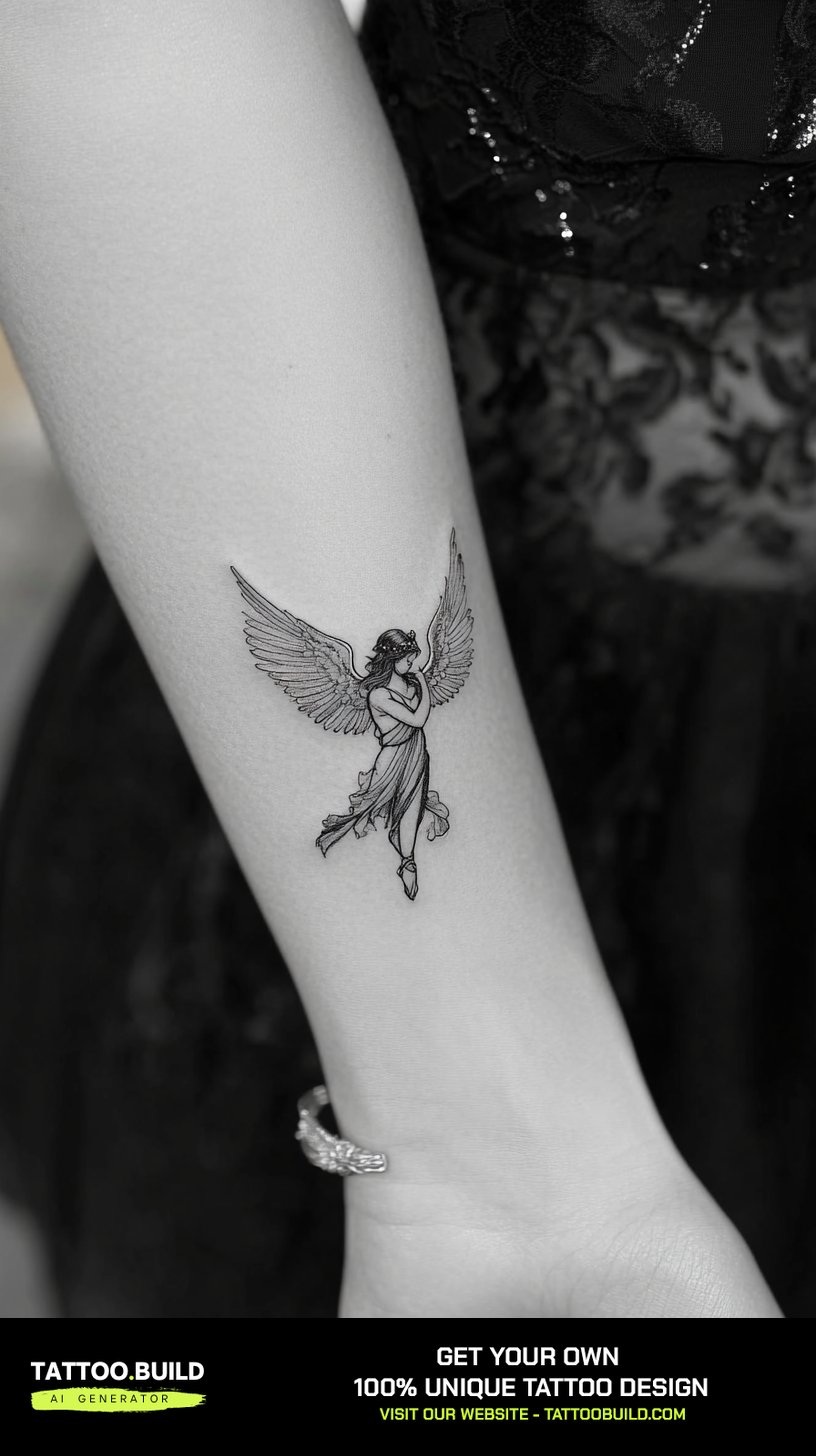
2. The Full Guardian Angel Figure
A complete standing or seated angel is the most demanding option on this list, and the one most worth spending money on.
The difficulty is the face. A slightly wrong eye or mouth reads instantly as wrong, in a way that a slightly wrong feather never does. This is the design where you should be checking an artist’s healed photos rather than their fresh ones.
Placement wants length: the forearm, the outer thigh, the calf, or the upper back. Trying to fit a full figure into a small square almost never works.
In my experience, people are happier with these five years on than with any other angel style, because there is enough going on to keep rewarding a second look.
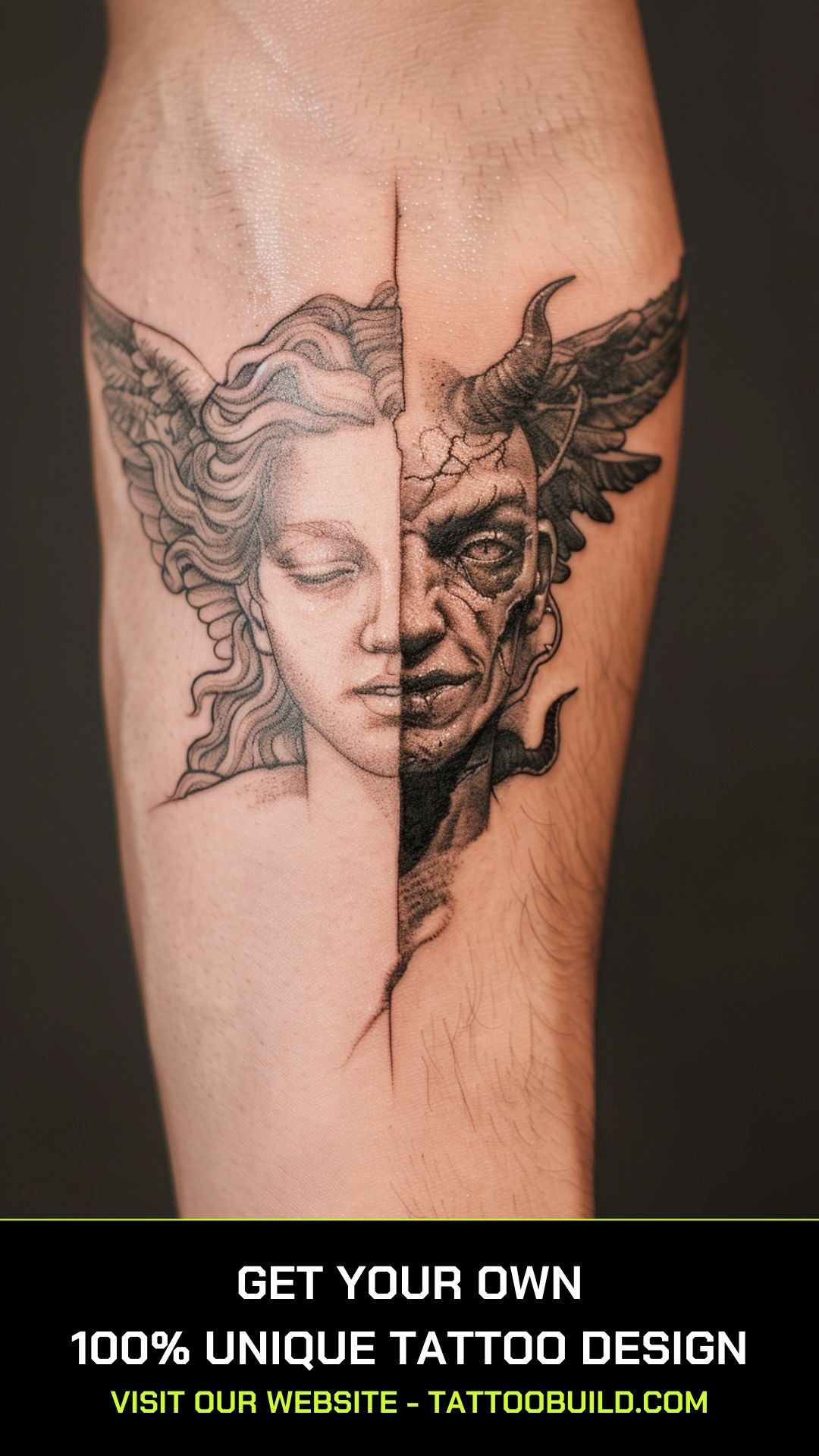
3. Angel Portraits and Angelic Faces
A portrait piece crops the angel down to the face and shoulders, often framed with flowers or a halo arch.
These read as softer and more decorative than a full figure, and they suit the upper arm and sternum particularly well.
Every artist I have asked about portrait work says the same thing: bring reference for the expression you want, not just the pose. Serene, sorrowful and defiant are three completely different tattoos.
Budget for shading time. A portrait that looks flat is almost always a portrait that was rushed through the grey wash stage.
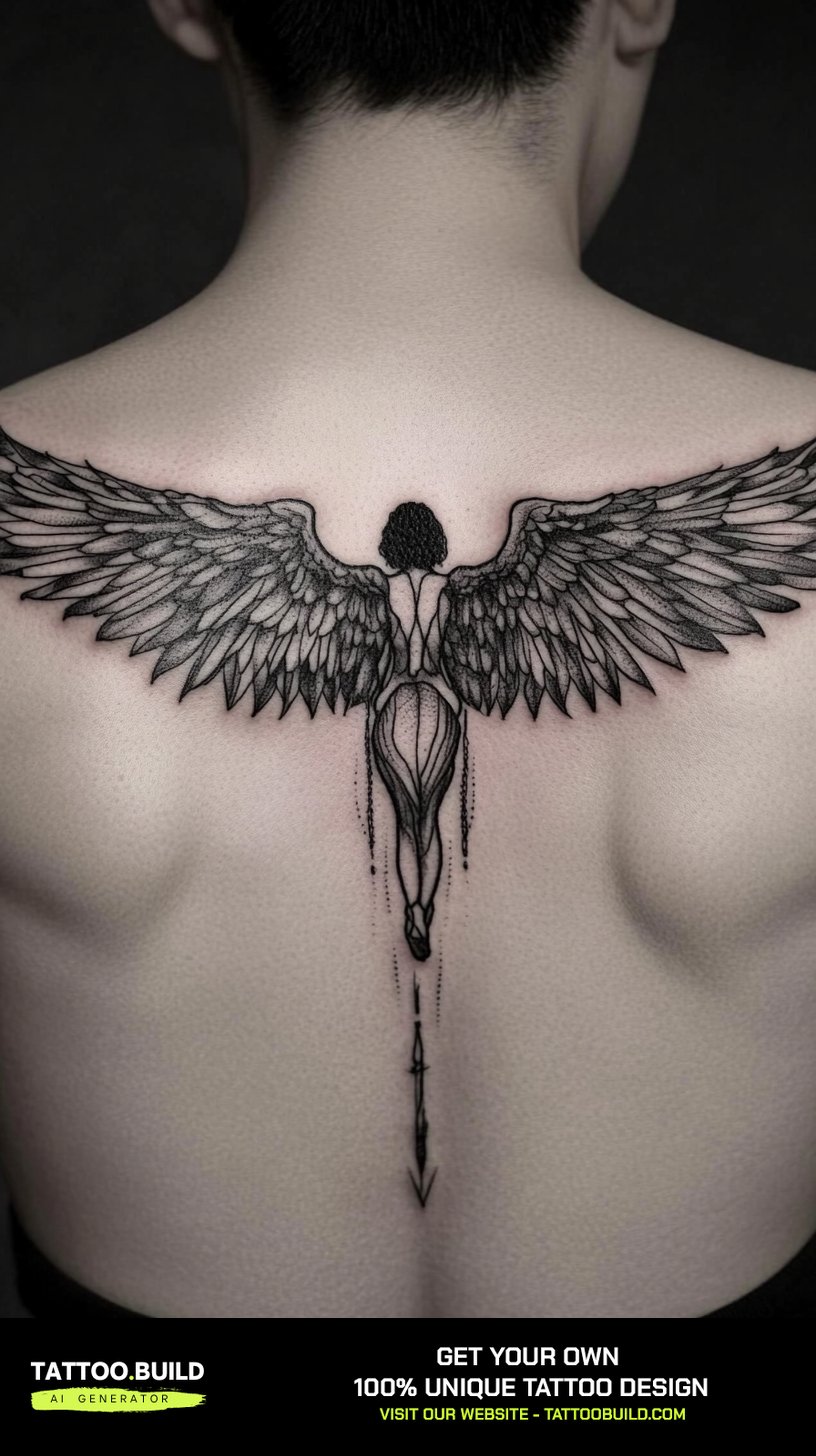
4. Spread-Wing Back Pieces
The upper back is the placement angels were made for, and a spread-wing design centred on the spine is close to a default choice.
Two practical advantages: the skin there is relatively flat and stable, and the whole piece is covered by almost any top.
The trade-off is that you will rarely see it yourself, and you cannot easily monitor it while it heals. Have someone check it for you during the first week.
If you are drawn to this area generally, the spine tattoo ideas guide covers how designs behave along the centre line.
5. Angels Combined With Florals
Adding flowers is the most reliable way to make an angel design feel personal rather than generic.
It also solves a compositional problem. Angels are vertical shapes, and flowers give the artist something to fill the awkward space on either side of the figure.
Roses, peonies and lilies are the usual choices. I would push people toward whichever flower actually means something to them, because the difference in the finished tattoo is real.
Colour is genuinely optional here. A black and grey floral angel is not a lesser version of the colour one – it is a different design with a longer touch-up interval.
6. Praying and Kneeling Angels
A kneeling or praying angel carries a heavier emotional register than a standing one, and people usually choose it deliberately.
These designs sit naturally in a rounded space – the outer shoulder, the upper arm, the top of the thigh – because the folded posture is already compact.
They are also the version most often paired with a date, a name or a short line of text. If that is where you are heading, look at bible verse tattoo ideas for how lettering can be integrated without crowding the figure.
One caution from experience: keep any text short. Long passages beside a detailed figure almost always end up too small to stay legible.
Variations Worth Considering
If none of the six above is quite right, these adjacent directions come up often.
Angels With Symbolic Objects
A dreamcatcher, a dove, a compass or a set of keys changes the story without changing the style. It is a good option when the plain angel feels too generic to you.
The Cross Instead of the Figure
Sometimes what someone actually wants is the faith, not the angel. A cross is smaller, cheaper and ages better – see cross tattoos for women for that route.
Masculine and Neutral Takes
Angel designs are not gendered by nature. If the versions here feel too soft, the angel tattoo ideas for men collection leans heavier on architecture, armour and hard shading.
Placement, Pain and Practical Planning
Angel designs are vertical, so the best placements are the ones with vertical room: forearm, outer thigh, calf, spine, upper back.
On pain, the honest ranking from people I have asked is that the outer arm and outer thigh are the most tolerable, the ribs and sternum are the worst, and the spine sits somewhere unpleasant in between. Individual variation is large enough that these are guidelines rather than promises.
Size is the decision people regret most, and they almost always regret going too small. If your artist suggests scaling up by twenty percent, they are usually protecting the design’s future, not padding the bill.
For a smaller commitment, the small shoulder tattoo ideas guide shows what actually works at reduced scale.
Aftercare and Safety, Briefly
Follow the aftercare instructions your artist gives you over anything you read online, including this. They know their inks, their needles and how your particular tattoo was worked.
The general shape of it is consistent: keep it clean, keep it lightly moisturised, keep it out of the sun, and do not pick at it. Fine-line angel work is especially vulnerable in the first two weeks, because losing a small amount of ink from a thin line is proportionally a much bigger loss.
On safety, the U.S. Food and Drug Administration notes that unsterile equipment can transmit infections and that contaminated inks have caused infections even where hygiene was otherwise sound – their tattoos and permanent makeup fact sheet is worth ten minutes before your first appointment. Bloodborne infections including hepatitis C are part of why licensed, inspected studios matter.
If you develop spreading redness, swelling that worsens after the first few days, pus, or a fever, that is a doctor’s question rather than an artist’s one. Nothing in this article is medical advice, and I would rather you overreact than wait.
Never attempt to tattoo or remove a tattoo yourself. Removal in particular is a clinical procedure, and home methods scar.
Common Mistakes, and What to Do Instead
The first is choosing an artist by price rather than by portfolio. Angel work is technical, and the gap between a specialist and a generalist shows up within a year.
The second is copying a design wholesale from a photo. Ask your artist to draw something original around the same idea – it costs a little more and the result is yours.
The third is going too small, which I have already said and will keep saying.
Still deciding? If it is the scale that is bothering you, browse minimalist tattoo ideas. If you are ready to commit to something larger, full back tattoo ideas shows how an angel can anchor a much bigger composition.
Frequently Asked Questions
How much does an angel tattoo cost?
Cost depends far more on time than on subject, and angel designs vary enormously in how long they take. A small fine-line wing might be a shop minimum, while a detailed black and grey figure across the back can run to multiple full-day sittings. Ask for an hourly rate and an estimated number of hours rather than a flat quote, and treat any quote given without seeing the design as provisional. In most cases, paying more for an artist who specialises in this style is the better value over a decade.
Do angel tattoos have to be religious?
No. Angels appear in several religious traditions, but plenty of people choose them for remembrance, for protection as a general idea, or simply because wings suit the human back. The meaning is supplied by you rather than by the imagery. If you want the tattoo to read as explicitly religious to other people, adding a cross, a halo or scripture makes that intent legible.
Where do angel tattoos hurt the least?
The outer upper arm and outer thigh are usually reported as the most tolerable placements, since there is more soft tissue between needle and bone. The ribs, sternum, spine and the area over the shoulder blades tend to be the hardest. That said, pain tolerance varies enough between individuals that these are rough guidelines. Tell your artist if you need a break – it is completely normal and they would rather you say so.
How long does an angel tattoo take to heal?
The surface usually looks settled in two to three weeks, while the deeper layers generally take a few months to fully settle. Fine-line work can look patchy during the peeling stage and then improve, so try not to judge it early. Follow your artist’s specific aftercare instructions throughout. If anything looks infected rather than simply healing, see a doctor.
Will a fine-line angel tattoo blur over time?
Some softening is normal for any tattoo, and fine-line work shows it soonest because there is less ink holding the line. How quickly depends on placement, sun exposure, line thickness and your skin. Hands, fingers and feet blur fastest; the inner arm and back hold up best. A touch-up every few years keeps a fine-line angel looking sharp, and most artists expect that.
Quick Summary
- Angel tattoos work at any scale, but detail needs room – going too small is the most common regret.
- Wings alone are the easiest angel design to place well; a full figure is the hardest and the most rewarding.
- Fine line suits small forearm, wrist and spine pieces but expects touch-ups; neo-traditional ages most forgivingly.
- The upper back and spine are the natural home for spread-wing designs, and they are easy to cover.
- Adding florals makes an angel feel personal and solves the composition problem around a vertical figure.
- Check an artist’s healed photos, not their fresh ones, especially for faces.
- Follow your artist’s aftercare over anything you read online, and see a doctor for anything that looks infected.
- Meaning comes from your reason for the tattoo, not from the design itself.