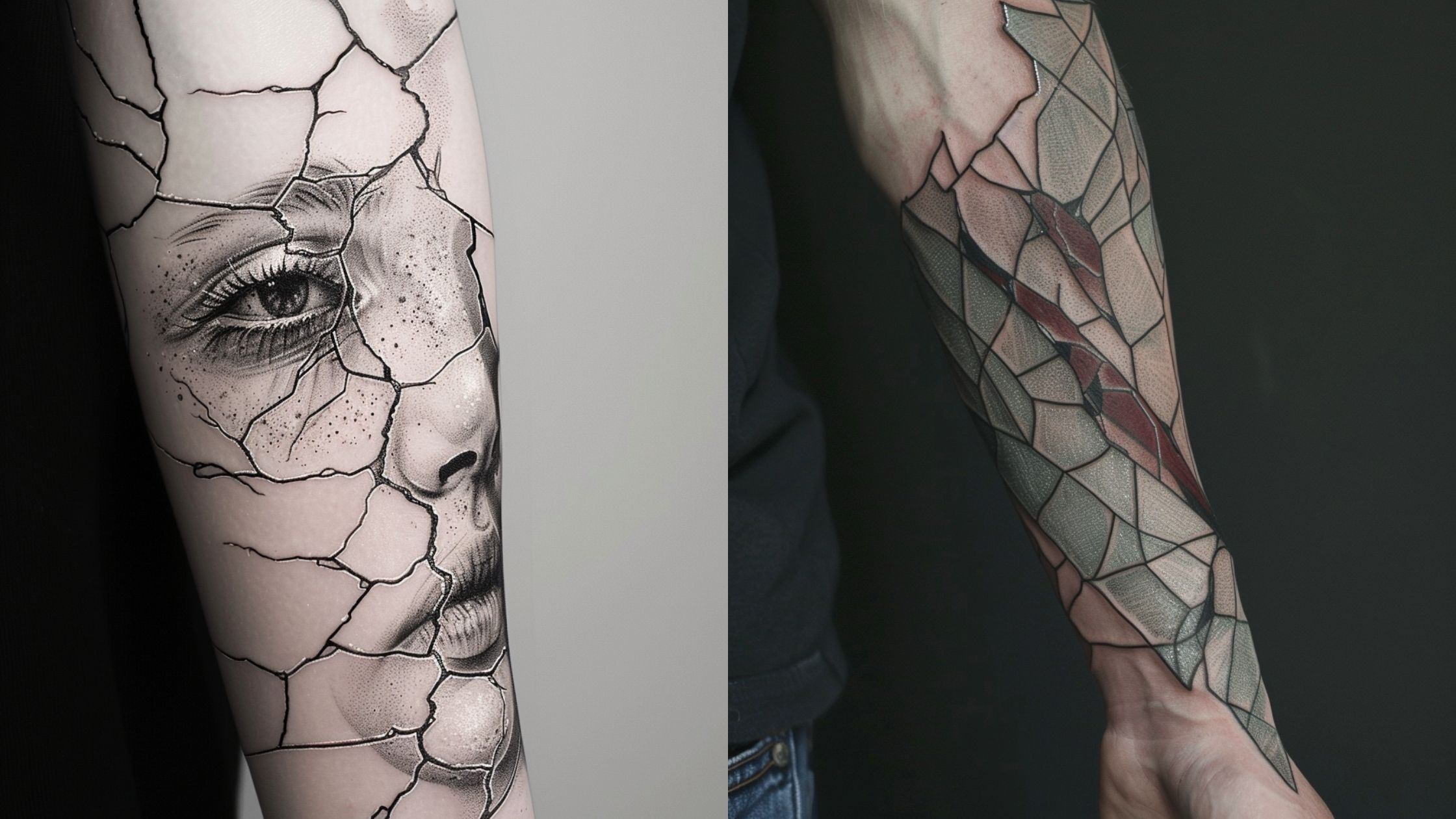
I have been sketching and researching tattoo symbolism for years, and broken imagery is the one theme people keep circling back to. Broken tattoo ideas are not about damage — they are about what the fracture reveals, and almost every good one is a story about surviving something.
A cracked clock face, a snapped chain, a shattered mirror: each one carries a very different message even though they all share the same visual language.
In my experience, the people who love these designs most are the ones who have already come out the other side of something hard. They are not marking the wound, they are marking the repair — which is why broken pieces sit so close to memorial tattoo ideas in tone.
Below I have laid out the meanings, twenty-plus design directions, honest placement advice, and the mistakes I see people make most often with this style.
Which Broken Tattoo Style Is Right for You?
Before picking a subject, it helps to decide what you actually want the piece to say. These four directions cover most of what I get asked about.
| Direction | Best Subjects | Typical Size | What It Says |
|---|---|---|---|
| Repair | Kintsugi pottery, cracked porcelain, mended heart | 4–8 inches | I was broken and I was put back together |
| Release | Broken chains, snapped cage bars, cut rope | 3–6 inches | I got free of something |
| Grief | Stopped clock, shattered glass, broken wing | 3–7 inches | Something ended and I carry it |
| Defiance | Broken sword, snapped arrow, fractured skull | 5–10 inches | It hit me and I am still standing |
Most people I talk to land in the repair or release column. If you cannot pick, that is usually a sign the piece wants to be bigger and combine two ideas.
Why Broken Imagery Resonates So Strongly
Tattoos are permanent, so people gravitate toward images that will still make sense in twenty years. A fracture qualifies, because nobody gets through two decades without one.
There is also a purely visual reason. Crack lines give a tattoo artist something almost no other motif does: a built-in excuse for irregular, organic linework that flows with the body instead of fighting it.
A straight geometric shape has to be placed perfectly or it reads crooked. A crack does not — it is supposed to wander.
The idea also has real cultural weight behind it. Kintsugi, the Japanese practice of repairing broken ceramics with lacquer dusted in gold, treats the break as part of the object’s history rather than something to hide, and museum collections still display those repairs as the point of interest rather than a flaw (Smithsonian Institution).
That framing is what most clients are reaching for, whether or not they know the word. When I ask people to describe what they want, “you can see where it broke and that is the best part” comes up constantly.
The Meanings Behind Broken Tattoos
Resilience After Hardship
This is the most common reading, and the most durable one. A cracked surface that has not fallen apart is a compact way of saying the structure held.
The design trick here is restraint: the fewer cracks, the stronger it reads. Ten hairline fractures look like damage. Two deep ones look like survival.
Every artist I have asked about this says the same thing — clients almost always ask for more cracks than the piece needs, and regret it later when the detail muddies.
If resilience is the whole point of your piece, it is worth looking at strength tattoo ideas alongside broken motifs, since the two categories overlap heavily.
Healing and Visible Repair
Repair-focused designs add a second element to the break: gold seams, stitches, staples, or wire binding the pieces together.
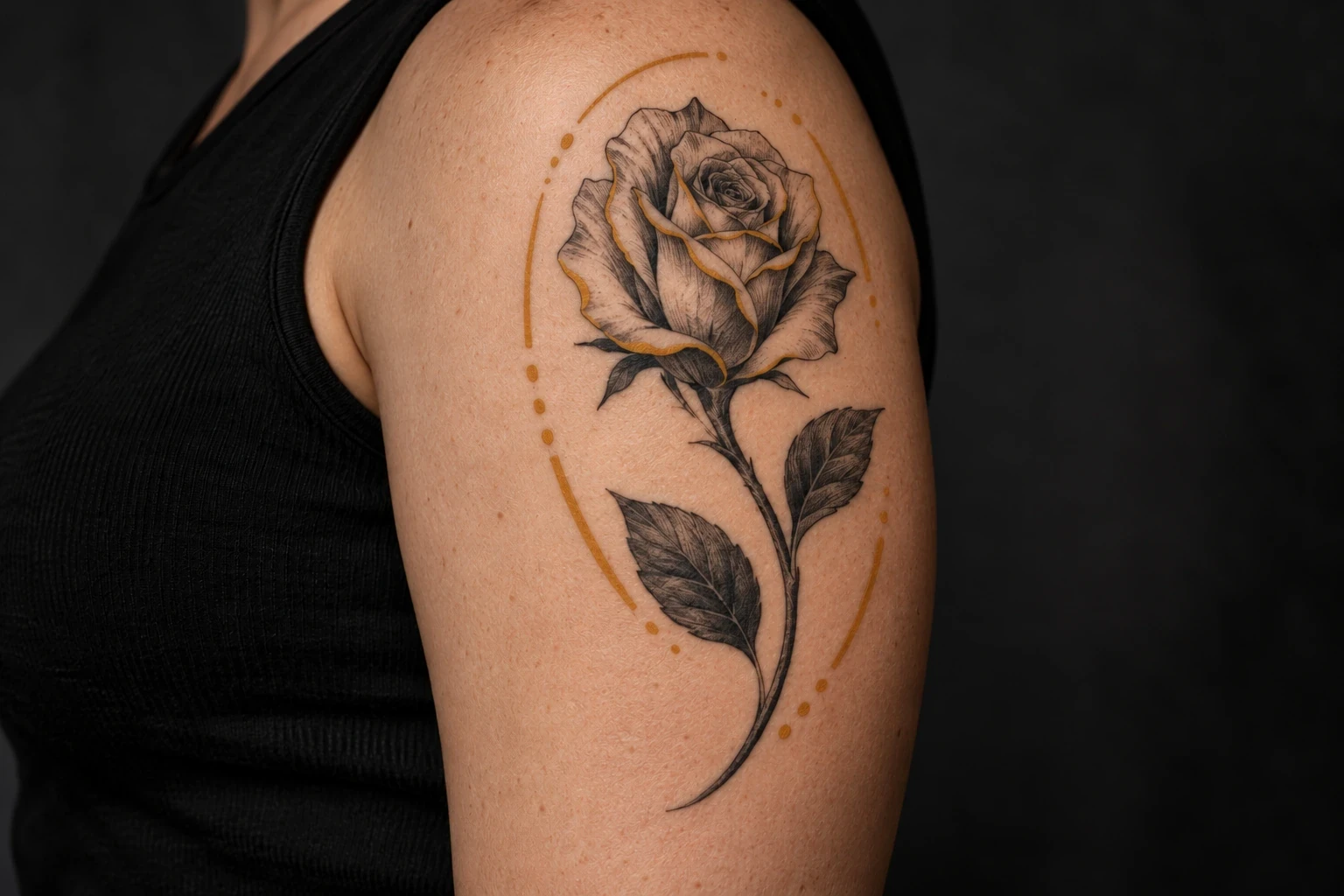
Gold is the classic choice, but I have seen artists use warm ochre and a thin white highlight to fake the metallic effect convincingly, because true metallic ink does not exist in the way people imagine.
That is worth saying plainly: no tattoo ink is actually reflective, so “gold” in a kintsugi tattoo is a colour-theory illusion built from yellows, browns and a highlight. Ask to see healed photos, not fresh ones, before you commit.
Beauty in Imperfection
Some people want the break with no repair and no triumph attached — just an honest acknowledgment that nothing intact stays intact.
These pieces tend to be quieter and smaller. Fine-line work suits them, and a light hand matters far more than the subject you pick.
The risk is that a subtle crack can read as a scratch or a scar to a stranger. That does not bother most of my clients, but it is worth knowing before you sit down.
Grief and Emotional Honesty
Broken imagery is one of the few tattoo languages that can express loss without a name, a date, or a portrait.
When I have worked on grief pieces, clients often prefer the ambiguity. A shattered pane says what it needs to say to them and nothing at all to a coworker.
If the loss is recent, most artists will gently suggest waiting a few months. Not because the feeling will fade, but because the design you want at week three is rarely the one you want at month six.
Freedom and Release
Break-to-escape imagery is the most optimistic corner of this category: chains, cages, locks, shackles.
People choose these to mark sobriety, leaving a relationship, finishing a sentence, or getting out of a job that was eating them alive.
Visually they are the easiest to read from across a room, which matters if you want the tattoo to actually communicate something.
Broken Tattoo Design Ideas Worth Stealing
Broken or Stopped Clock
A clock with a cracked face, bent hands, or numerals spilling out of the frame is the most requested broken design I have come across.
The hands can be set to a meaningful time, which gives you a hidden date without tattooing digits on yourself.
Give this one room — clocks need diameter to stay legible. Under about three inches the numerals blur into a grey ring within a few years, which is the same aging problem you see across detailed clock tattoo drawings generally.
Forearm, outer bicep and upper back all work. I would avoid the wrist for anything with Roman numerals.
Shattered Mirror and Broken Glass
Mirrors add a layer the other subjects cannot: whatever is reflected in the fragments becomes part of the story.
I have seen versions where each shard reflects a different age of the same face, and versions where the reflection is simply missing. Both land hard.
Plain broken glass is the simpler cousin and holds up better small, because it is all negative space and sharp angles rather than fine internal detail.
Broken Chains and Shackles
Chains are forgiving because they follow limbs naturally — around a wrist, down a forearm, across a collarbone.
The break should be off-centre. A chain that snaps exactly in the middle looks diagrammatic rather than dramatic.
Adding birds emerging from the broken links is common enough now that it borders on cliché, so consider whether you want that or something quieter, like a single link simply gone.
Broken Arrow
In several traditions a broken arrow signals peace rather than defeat — the weapon deliberately made useless.
That gives the design a double reading: an end to conflict, or an attack that failed. Both are useful.
It is one of the best small options in this whole list, since a snapped shaft stays legible at two or three inches.
Broken Sword
A snapped blade is the defiance option. It says the fight happened and the weapon did not survive it, but you did.
This one rewards size. The hilt wrapping, the grain of the break, the guard — all of it needs space to be worth doing.
Outer forearm and calf are my usual recommendations, because the long vertical shape matches the limb.
Fractured Geometric Shapes
Take a clean geometric form — a circle, a hexagon, a mandala — and split it, offsetting the halves slightly.
The tension between mechanical precision and the break is the entire appeal, and it ages well because the shapes are simple.
If this is your direction, browse geometric tattoo designs first and bring your artist a reference for the underlying shape, not just the crack.
Broken Cup, Vase and Vessel
A cracked cup with its contents spilling out is one of the more literal designs here, and one of the more affecting.
People use it for burnout, for giving more than they had, and for the “you cannot pour from an empty cup” idea without the text.
Keep the spill loose. Overworked liquid is the fastest way to make this design look like a sticker.
Variations and Combinations
Broken Wing or Butterfly
A butterfly with one torn wing is the softest entry point into this category, and popular for good reason — it pairs fragility with the insect’s existing transformation symbolism.
If you want the shape but not the damage, standard butterfly tattoo ideas give you the same silhouette with a different mood.
Broken to Reborn
Some of the strongest compositions I have seen show the break at the bottom and something rising out of it — flowers through cracked concrete, a bird from a shattered cage.
The full version of that idea is the firebird, so it is worth comparing against phoenix tattoo ideas before committing to a hybrid.
Cracked Earth and Splintered Wood
Dried, cracked ground or a lightning-split tree scales up beautifully for thighs, backs and ribs.
Texture carries these pieces, so they need an artist comfortable with stippling or heavy black shading rather than clean outlines.
Fracture Lines Over Existing Scars
Crack designs are unusually good at incorporating real scar tissue, because the eye reads the scar as another line in the pattern.
Scarred skin takes ink differently and needs to be fully matured — commonly at least a year, though your artist and a doctor should make that call. There is more on the approach in this guide to tattoo over scar ideas.
Placement, Sizing and Aftercare
Broken designs have one placement rule that matters more than the rest: cracks should run with the body’s lines, not across them. A fracture that follows the length of a forearm looks intentional; one that cuts sideways looks like a mistake.
Size honestly. If your design has internal detail — clock numerals, mirror reflections, porcelain texture — add an inch or two beyond what looks right on paper, because tattoos soften as they settle.
Ribs, sternum and the inner arm all hurt more than the fleshier spots, and the difference is real rather than imagined; the breakdown in this guide to painful tattoo spots is a reasonable starting point for planning a longer session.
For healing, follow your artist’s written instructions over anything you read online, keep the area clean and moisturised, avoid soaking or sun exposure while it repairs, and contact a doctor rather than a forum if you see spreading redness, swelling, pus or fever — those can signal infection or an ink reaction (American Academy of Dermatology). The normal timeline is walked through in this piece on tattoo healing stages.
Common Mistakes and How to Avoid Them
The mistake I see most often is over-cracking. People want the design to look thoroughly broken and end up with a grey mass that reads as texture rather than meaning.
The second is choosing an artist by portfolio breadth rather than fit. Broken designs live or die on line quality, so look specifically for healed photos of fine or irregular linework, not just fresh colour pieces.
Third is going too small on a detailed subject, which is the single most common regret I hear about clock and mirror designs in particular.
If the fine-line approach worries you on longevity grounds, a heavier treatment holds up better over decades — the trade-offs are laid out in these blackwork tattoo designs. Either way, the honest test is whether the design still reads from three feet away.
Frequently Asked Questions
What does a broken tattoo actually mean?
There is no single fixed meaning, and that is part of the appeal. In practice the readings cluster into four groups: resilience, repair and healing, grief or loss, and freedom from something that held you. The specific subject narrows it — a broken chain reads as escape, a stopped clock reads as loss. Most wearers I have spoken to attach a private meaning on top of the obvious one.
Are broken tattoos considered negative or bad luck?
Generally no, though a shattered mirror carries superstition baggage in some Western contexts and it is fair to think about that before choosing it. Most broken motifs are read as recovery imagery rather than misfortune, particularly kintsugi-style pieces where the repair is visible. Cultural readings do vary, so if a specific tradition matters to you it is worth checking rather than assuming. Your own intention is what you will actually live with.
How small can a broken tattoo be?
It depends entirely on the subject. Simple shapes like a snapped arrow or a few crack lines work at two to three inches. Anything with internal detail — clocks, mirrors, porcelain texture, chains with individual links — usually needs four inches or more to stay readable as it ages. Ask your artist to print the stencil at two sizes and hold both against your skin before deciding.
Can gold kintsugi tattoos really look metallic?
Not literally, no. Tattoo ink sits under the skin and does not reflect light the way metal leaf does, so any metallic effect is an illusion created with warm yellows, browns and a carefully placed highlight. A skilled artist can make it convincing, especially in photos. Ask specifically for healed examples, since the effect softens noticeably once the tattoo settles.
Is it safe to tattoo over an old scar?
Often it is, but it is not a decision to make from an article. Scar tissue behaves differently from normal skin, may hold ink unevenly, and generally needs to be fully mature before anyone works on it. Raised or keloid scarring in particular calls for a conversation with a doctor as well as an experienced artist. Bring the scar to a consultation and let both professionals assess it in person.
Quick Summary
- Decide first whether your piece is about repair, release, grief or defiance — the subject follows from that.
- Fewer cracks read stronger than many; over-cracking is the most common design mistake.
- Cracks should run along the limb, not across it, or the tattoo looks accidental.
- Detailed subjects like clocks and mirrors need four inches or more to age well.
- Kintsugi “gold” is a colour illusion, not metallic ink — always ask to see healed photos.
- Snapped arrows and simple crack lines are the most reliable small options.
- Fracture designs incorporate existing scars unusually well, but only on fully matured tissue.
- Follow your artist’s aftercare instructions, and see a doctor for any sign of infection.