A bull tattoo is one of the few animal designs that still reads as powerful when it is shrunk down, simplified, or stripped back to pure black. That is the whole reason it keeps showing up in portfolios year after year.
I have spent a lot of hours going through bull pieces — realism, tribal, skulls, fine line — and the pattern is consistent. The ones that hold up have a strong silhouette first and detail second.
The horns do most of the heavy lifting. Get the sweep and spread of the horns right and the piece reads as a bull from ten feet away, which is more than you can say for a lot of animal tattoos.
This guide walks through the symbolism, the styles worth considering, realistic placement and sizing advice, and the mistakes I keep seeing. If you are weighing a bull against other big-cat and predator options, the lion tattoo ideas guide is a useful comparison point.
Which Bull Tattoo Style Is Right for You?
Style choice affects cost, session length, and how well the piece ages more than most people expect. Here is how the main options compare.
| Style | Best Size | Typical Sessions | Ages Well? | Best For |
|---|---|---|---|---|
| Realism | Large (8 in+) | 2–4 | Only if sized generously and kept out of the sun | Back, chest, outer thigh |
| Tribal / Blackwork | Medium to large | 1–3 | Excellent — the most forgiving option | Shoulder, upper arm, back |
| Bull Skull | Small to large | 1–2 | Very good — strong shapes, few thin lines | Forearm, chest, calf |
| Geometric / Dotwork | Medium | 1–3 | Good, though fine dotwork can soften | Forearm, shoulder, thigh |
| Fine Line / Minimalist | Small to medium | 1 | Weakest of the group — expect softening | Inner arm, ribs, ankle |
| Neo Traditional | Medium to large | 1–3 | Very good — bold outlines hold shape | Upper arm, thigh, chest |
If blackwork is where you are leaning, the blackwork tattoo ideas collection shows how far solid black can be pushed before a design stops reading.
Why the Bull Carries So Much Weight as a Symbol
Cattle have been in human art for as long as human art has existed. The aurochs — the wild ancestor of domestic cattle — appears in Palaeolithic cave paintings and stayed a live animal in Europe until the seventeenth century.
That deep history is why a bull does not feel like a trend. You can read more about the animal itself in the Wikipedia entry on the aurochs.
Across cultures the associations repeat: strength, fertility, stubbornness in the good sense, and a refusal to be moved. The Minoan bull, the Spanish fighting bull, the Hindu Nandi, the American longhorn — different animals, same core idea.
Most of the people I have spoken with about their bull tattoos chose it for endurance rather than aggression. That distinction matters when you brief an artist, because an angry bull and a calm one are two very different drawings.
There is also the astrological angle. Taurus is the bull, and a fair share of bull tattoos are really birth-sign tattoos in disguise — worth saying out loud to your artist if that is your reason.
Bull Tattoo Design Ideas Worth Considering
These are the variations that come up most often, with an honest note on what each one asks of you.
1. Realistic Bull Tattoos
Realism is the most impressive and the most demanding option. The artist is rendering muscle, hide texture, wet nose, and the specific gloss of a horn — all in grey wash or colour.
In my experience the single biggest predictor of a good realistic bull is size. Below roughly the span of a hand, the detail collapses into mush within a few years.
Ask to see healed photos, not fresh ones. Fresh realism always looks incredible; healed realism is where you find out whether the artist packed the greys properly.
Expect two to four sessions for a back or chest piece, and expect a specialist rather than a generalist. Realism is not a style most walk-in artists do well.
2. Tribal and Blackwork Bull Tattoos
Tribal is the most durable bull option on this list. Thick black shapes with clean gaps between them stay readable for decades with almost no maintenance.
The style suits the bull unusually well because horns are already a strong graphic shape. A tribal artist can extend and taper them into the composition instead of fighting them.
One caution worth stating plainly: many tribal patterns come from specific living cultures — Polynesian, Maori, Bornean — with their own rules about who wears what. Generic blackwork is a respectful alternative if you have no connection to those traditions.
For a wider view of the style, the tribal tattoo ideas gallery covers both traditional and modern approaches.
3. Minimalist and Fine Line Bull Tattoos
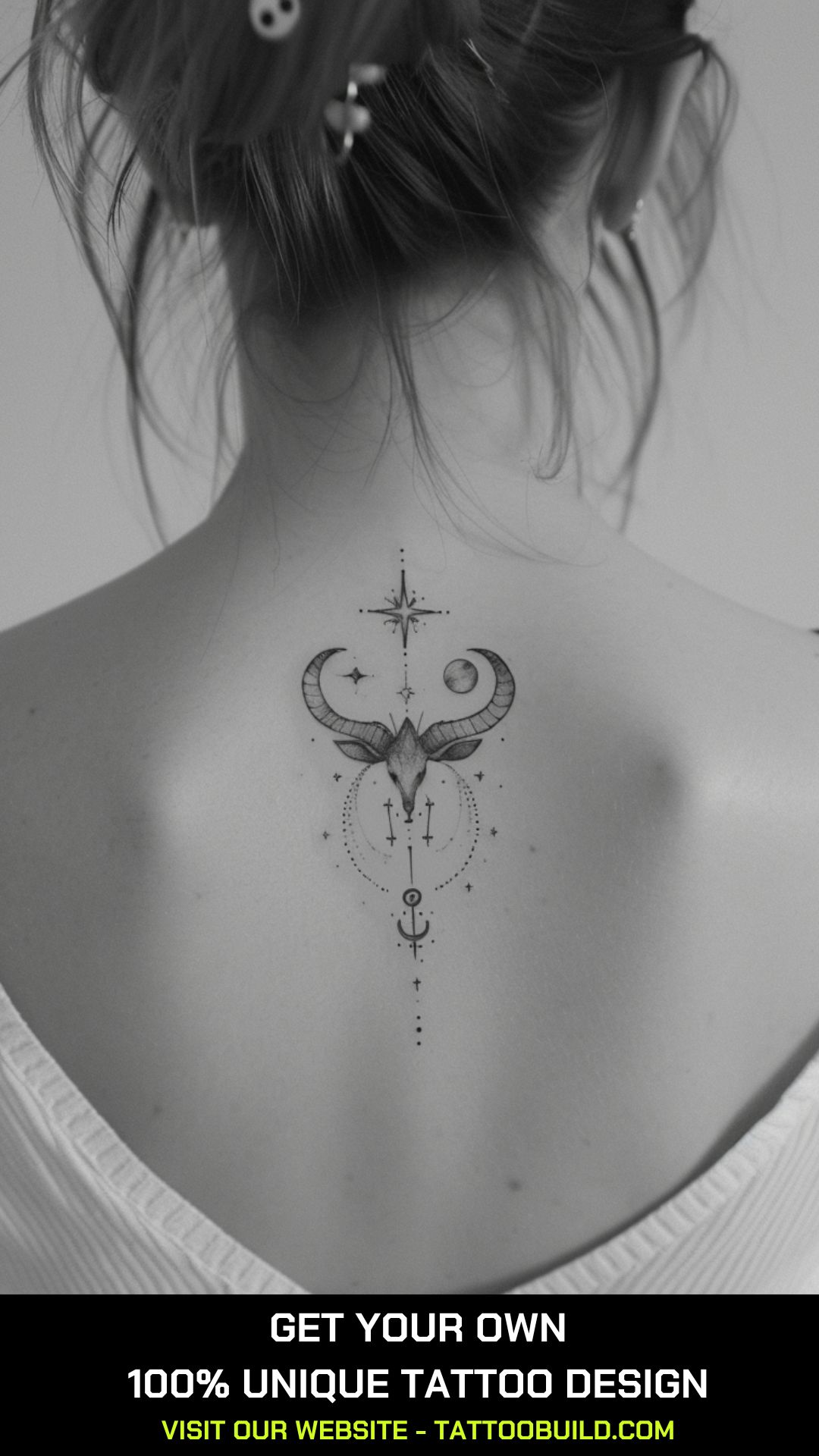
A single-line bull head is one of the cleanest small tattoos going. It works because the horns alone are enough information for the eye to complete the animal.
When I have compared healed fine-line work against healed bold work, the fine line pieces consistently softened more. Lines spread slightly under the skin over years — that is normal, not bad work.
The fix is spacing, not thickness alone. Ask your artist to leave more gap between lines than looks necessary on paper, so the design still reads once it settles.
Placement matters here too. Areas that see constant friction or sun — hands, feet, outer forearm — are the hardest on delicate line work.
4. Bull Skull Tattoos
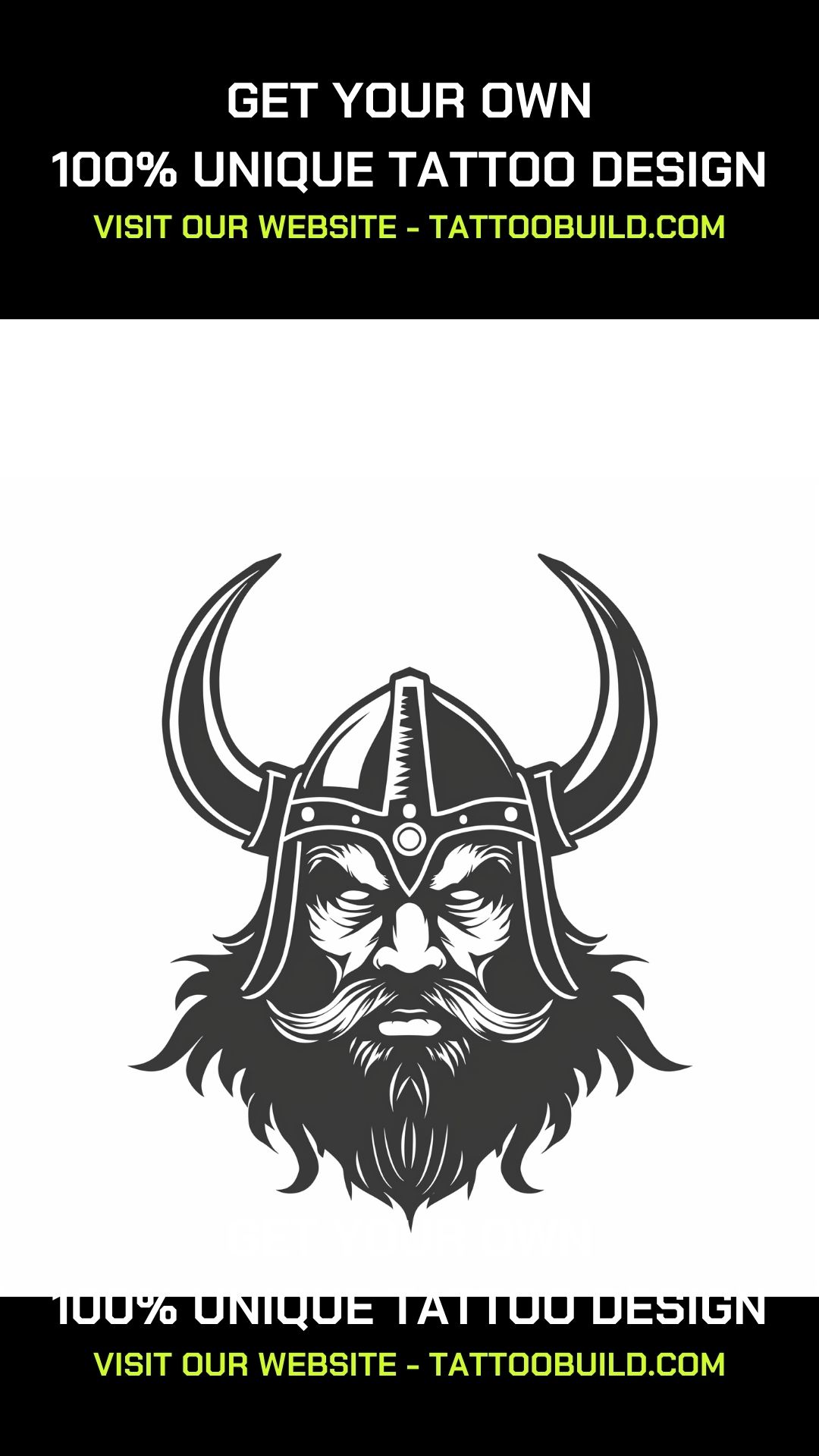
The skull is arguably the strongest version of the design. You get the horns at full length, a striking symmetrical shape, and none of the difficulty of rendering hide.
It also shifts the meaning. A live bull reads as power in motion; a skull reads as survival, memory, or the American West depending on how it is styled.
Longhorn skulls sit beautifully across the chest and collarbones because the horn spread follows the natural line of the shoulders.
Every artist I have asked says skulls are among the easier requests to execute well, which is part of why the price is usually lower. The skull tattoo ideas guide shows how the same logic applies to other skull designs.
5. Geometric and Dotwork Bull Tattoos
Geometric bulls break the head into planes, triangles, and mandala patterning. Done well it looks architectural rather than decorative.
The risk is clutter. When every plane gets its own pattern, the bull disappears and you are left with an interesting texture that nobody recognises.
The best geometric pieces I have seen keep one clean anchoring shape — usually the horns or the muzzle — and let the patterning sit behind it.
Dotwork shading is slow work. Budget for longer sessions than a whip-shaded piece of the same size. See the geometric tattoo ideas collection for more on the style.
6. Bull and Matador Tattoos
The matador scene is a full narrative composition rather than a single motif, and it needs the space to breathe — a thigh, a back, or a large upper arm panel.
A single spot of red on the cape in an otherwise black and grey piece is the classic move, and it still works.
Worth knowing before you commit: bullfighting is genuinely contentious, and banned or restricted in parts of Spain and Latin America. Some people will read the tattoo as heritage, others will read it as cruelty.
If that ambivalence bothers you, the bull alone mid-charge carries the same energy without the argument attached.
7. Bull and Nature Compositions
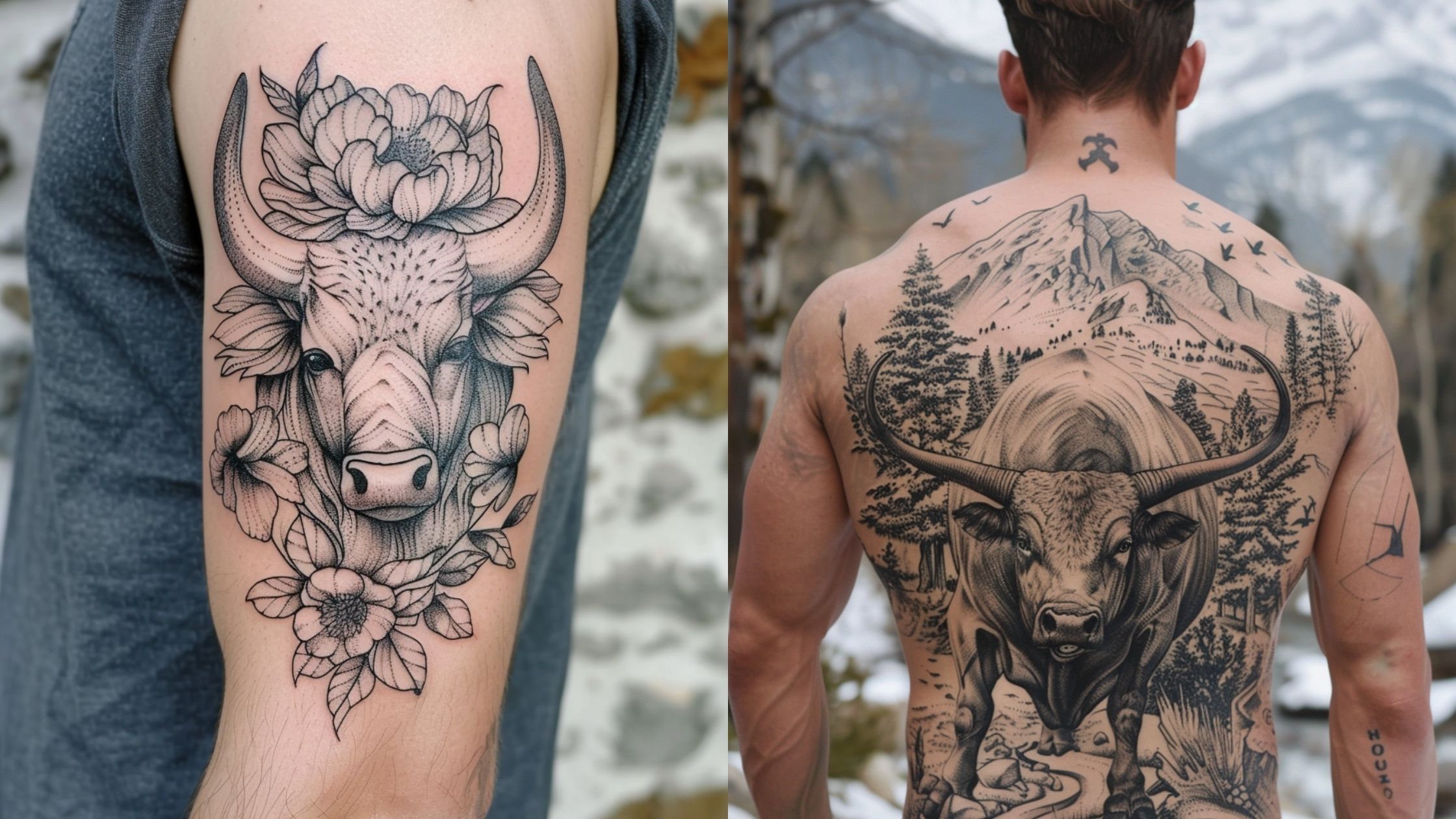
Framing a bull head or skull with mountains, pines, wildflowers, or a sunburst turns a symbol into a scene. It is also the easiest way to make a bull piece feel personal.
These read as memorial pieces more often than people expect. Flowers around a skull soften it into something commemorative rather than aggressive.
Practically, the frame also solves a composition problem: it gives the artist a natural border so the tattoo does not float awkwardly on the limb.
The American traditional animal tattoos guide is worth a look if you want the same idea in a bolder, more graphic style.
8. Highland, Longhorn and Breed-Specific Bulls
Naming an actual breed is the single easiest upgrade to a bull tattoo brief. “A bull” gives your artist nothing; “a Highland bull, three-quarter view, shaggy fringe over the eyes” gives them a drawing.
Highland cattle are a favourite for good reason — the long fur gives a black and grey artist endless texture to play with.
Texas longhorns go the other way: smooth coat, almost nothing to shade, and a horn spread that can reach well over a metre on a real animal. All the drama sits in the silhouette.
Spanish fighting bulls, Brahmans, and Angus each have distinct head shapes too. Bring reference photos of the actual breed — every artist I have asked prefers it.
Alternatives and Variations to Consider
If a straight bull is not quite the fit, these adjacent ideas cover similar ground.
The Taurus Glyph Route
The Taurus symbol is a circle with horns, and it can be woven into a bull design or worn on its own. It is a smaller commitment with the same meaning. The Taurus sign tattoo ideas guide covers this properly.
Horns Only
Skip the head entirely and tattoo just the horns, curving across the collarbones or the small of the back. Minimal, unusual, and instantly recognisable.
Bull Paired with a Second Animal
Bull-and-wolf, bull-and-lion, bull-and-bear pairings show up constantly in half sleeves. They work best when one animal clearly dominates the composition instead of both competing.
Charging Versus Standing
A standing bull reads as steady and immovable. A charging bull reads as forward momentum. Decide which one you actually mean before the stencil goes on.
Placement, Sizing and Getting Through the Session
Horns need horizontal room. That is why bulls sit so well on the chest, upper back, and outer thigh, and why they get cramped on a narrow inner forearm.
Pain varies enormously between people, but the areas over bone and thin skin — ribs, sternum, spine, inner arm — are widely reported as the roughest. The most painful tattoo spots rundown is a reasonable expectation-setter, not a guarantee.
Eat properly beforehand, stay hydrated, and skip alcohol the night before. These are unglamorous and they genuinely make long sessions easier.
On healing: follow whatever aftercare your artist gives you, since they know their inks and their local climate. For general guidance the American Academy of Dermatology guide to caring for tattooed skin is solid, and our own tattoo aftercare guide covers the day-to-day routine.
If you develop spreading redness, heat, pus, fever, or a rash that appears weeks or months later, that is a doctor’s question rather than an artist’s. The AAD’s page on unexpected tattoo skin reactions explains why. Nothing in this article is medical advice.
Common Mistakes and How to Avoid Them
Going too small is the mistake I see most often. A detailed bull crammed into a two-inch space is a blur waiting to happen.
The second is bringing no reference at all. “Something like a bull, kind of tribal” wastes your consultation and your artist’s drawing time.
The third is picking an artist by price rather than by portfolio style. A brilliant traditional artist is not automatically a brilliant realism artist, and vice versa.
The fourth is planning a single piece with no thought to what goes around it later. If a sleeve is even a possibility, say so now so the bull is positioned to become part of one.
And the fifth is ignoring how the design sits on a curved limb. A drawing that looks balanced flat on paper can distort badly once it wraps.
- Bring three to five reference images, including at least one of the breed you want
- Ask to see healed work in the style you are booking
- Say out loud whether you plan to extend the piece later
- Check the stencil placement in a mirror, standing naturally, before any needle touches you
- If the stencil looks wrong, say so — every good artist would rather redraw it than fix a tattoo
Frequently Asked Questions
What does a bull tattoo mean?
Most commonly it signals strength, determination, and the ability to endure. Depending on the culture it can also carry associations with fertility, prosperity, and protection, and in some cases it is simply a Taurus birth-sign tattoo. A bull skull shifts the meaning toward survival, memory, or western heritage. The honest answer is that the meaning is largely whatever you and your artist decide to build into the design.
Are bull tattoos only for men?
No. The design reads as masculine to many people because of how it is usually styled — heavy black, large scale, aggressive posture — but none of that is fixed. Fine-line bull heads, floral bull skulls, and delicate Highland cattle pieces are common and look nothing like the stereotype. Style and scale drive that impression far more than the animal does.
How much does a bull tattoo cost?
It depends on size, style, and your artist’s hourly rate, which varies hugely by city and by reputation. As a rough guide, a small fine-line bull head is usually a single short session, while a realistic back piece is a multi-session project. Ask for a written estimate at consultation, and treat any quote that seems dramatically below local rates as a warning rather than a bargain. Never choose a tattooist on price alone.
Which placement works best for a bull tattoo?
Anywhere with horizontal room for the horns — the chest, upper back, outer thigh, and outer upper arm are the usual winners. Narrow spots like the inner wrist force the horns to be shortened, which weakens the silhouette. Calves work well for charging bulls because the muscle shape adds to the sense of motion. Talk it through with your artist while the stencil is still movable.
Does a bull tattoo age well?
Bold styles do. Tribal, blackwork, neo traditional, and bull skulls hold their shape for decades because they rely on strong outlines and open space rather than fine detail. Realism and fine line work both soften more, though generous sizing and daily sunscreen make a real difference. In most cases, sun exposure does more damage over time than anything else you control.
Quick Summary
- Silhouette first. If the horns read clearly, the tattoo works; if they do not, no amount of detail saves it.
- Match style to size. Realism needs large placements; fine line suits small ones; blackwork works at almost any scale.
- Bull skulls are the safest bet for a piece that still looks sharp in fifteen years.
- Name a breed in your brief. Highland, longhorn, and Spanish fighting bulls are three completely different drawings.
- Give the horns horizontal room — chest, upper back, and outer thigh beat narrow inner-arm placements.
- Pick the artist for their portfolio style, not their hourly rate, and always ask to see healed work.
- Decide charging or standing before the stencil, because they mean different things.
- Follow your artist’s aftercare, and see a doctor rather than the studio if you suspect infection or an allergic reaction.
Still weighing options? The forearm tattoo ideas guide is a good next stop if you are set on placement before style.