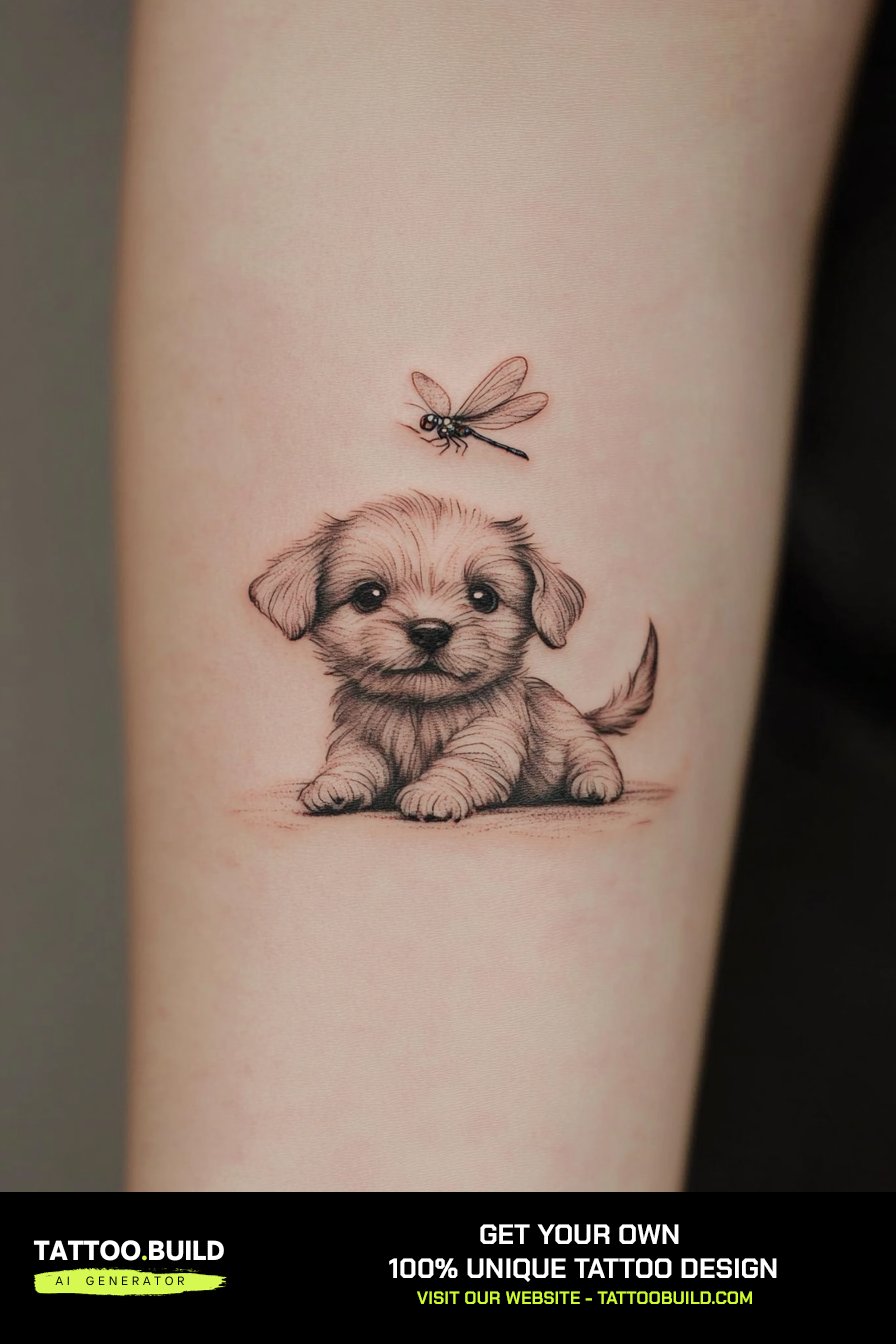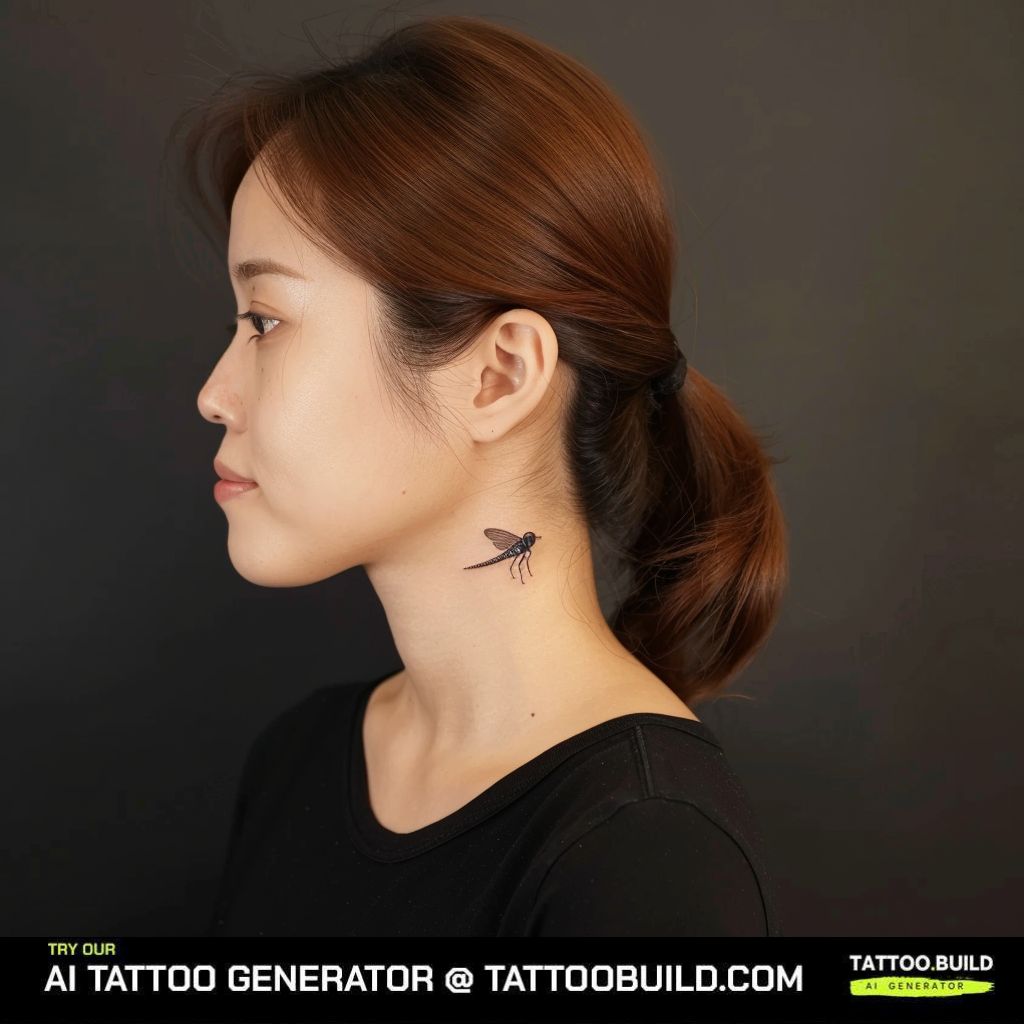
The first fly tattoo I ever watched being done took nineteen minutes, cost less than a decent dinner, and the client teared up when it was finished. A fly is one of the few tattoo subjects where the design is trivially small and the meaning is enormous, which is exactly why people keep asking for it.
I have spent a lot of hours in tattoo studios looking at insect work, and flies come up far more often than most people would guess. They sit somewhere between a bee and a moth on the popularity scale, and well below either on the list of things artists expect to be asked for.
Almost nobody gets a fly for decoration. In my experience the reason is usually decay, survival, a person who died, or a stubborn refusal to be swatted away by life — and sometimes all four at once.
This guide covers what the fly actually symbolises, which styles hold up over the years, where the design sits best on the body, and what to ask an artist before you book. If you want the broader small-tattoo picture first, our minimalist tattoo ideas guide is a useful companion.
Which Fly Tattoo Style Is Right for You?
Style matters more than size with a subject this small. The table below reflects what I have consistently seen hold up in healed work, not what looks best on the day it is finished.
| Style | Best for | Typical size & session | How it usually ages |
|---|---|---|---|
| Fine line | A quiet, private symbol | 2–4 cm, 20–45 minutes | Softens noticeably; expect a touch-up within a few years |
| Blackwork / solid silhouette | Legibility at a glance | 3–6 cm, 30–60 minutes | The most reliable option; edges stay readable |
| Micro realism | Anatomical detail and texture | 5–9 cm, 2–4 hours | Detail blurs first; needs a specialist to be worth it |
| American traditional | Bold colour and longevity | 6–10 cm, 1–2 hours | Built to last; heavy outlines carry the shape |
| Dotwork / stipple | Soft shading without grey wash | 4–7 cm, 1–2 hours | Dots merge slightly; still holds form well |
| Illustrative / etching | A woodcut or scientific-plate look | 5–10 cm, 1.5–3 hours | Good, provided the line weights vary enough |
If you are torn, my honest advice is to pick the boldest version of the design you can live with. Small and delicate is the most common regret I hear about insect tattoos, and it is almost never the other way round.
What a Fly Tattoo Actually Means
The fly is one of the oldest symbols in human art, and it has never been a flattering one. That is precisely where its power comes from.
In Western art history the fly appears in still-life painting as a marker of decay and mortality, sitting on fruit that is about to turn. It is the reminder that everything on the table is temporary.
The other reading is the opposite of decay. Flies survive conditions that kill almost everything else, reproduce relentlessly, and cannot be permanently driven off — so the same insect that stands for death also stands for a stubborn, unglamorous kind of persistence.
There is a religious thread too. The name Beelzebub is commonly translated as “lord of the flies,” which is why some people choose the design as a deliberately dark or anti-authoritarian symbol rather than a sentimental one.
And then there is the personal layer, which in my experience outranks all of the above. Every artist I have asked about fly tattoos has a story about a client who got one for a specific person, a specific summer, or a specific bad year they came out the other side of. The historical meaning gives the design weight; the private meaning is the reason it goes on.
Fly Tattoo Design Ideas Worth Considering
These are the directions I see working most often, ordered roughly from simplest to most involved.
The Single Fine Line Fly
This is the entry point: one insect, no shading, drawn with a consistent thin line. It usually takes under an hour and often costs a shop minimum.
The appeal is restraint. From two metres away it reads as a small dark mark, and only up close does anyone realise what it is — which suits people who want the meaning without the conversation.
The trade-off is durability. Very thin lines spread over time as the ink settles into the skin, so a design that relies on hair-thin legs will look softer at ten years than it did at ten weeks. When I have asked artists about this directly, most suggest going one line weight heavier than the reference photo. Our fine line tattoo ideas gallery shows how much difference that single decision makes.
Blackwork and Solid Silhouettes
A solid black fly — filled body, filled or heavily outlined wings — is the most reliable version of this tattoo.
It works because a fly is recognisable purely by its silhouette. You do not need the wing venation to be accurate for the shape to read correctly.
Solid black is also the most forgiving as it ages. Where fine line work loses its detail, a filled shape simply stays a shape, and touch-ups are straightforward when they are eventually needed. If you want one fly that still looks intentional in twenty years, this is the version I would pick.
It scales well too, from a two-centimetre mark behind the ear up to a palm-sized piece. If you like the heavier end of this look, browse our blackwork tattoo ideas for weight and contrast references.
Micro Realism and Anatomical Detail
A realistic fly is a genuinely difficult tattoo. The wings are semi-transparent, the eyes are compound and reflective, and the body has a metallic sheen that has to be built from grey values rather than drawn.
Done by the right artist it is remarkable. Done by a general practitioner it turns into a grey smudge within a few years.
Two things matter here. First, size — anything under about five centimetres does not give an artist room to render texture, however skilled they are. Second, portfolio evidence: ask specifically to see healed photographs of small realism work, not fresh ones.
Expect a longer session and a higher rate. In my experience this is the version people most often wish they had scaled up, because the detail they paid for is the first thing to go when the tattoo is too small.
The Fly and Skull Pairing
Pairing a fly with a skull is the most direct way to state the memento mori reading, and it is a combination with real art-historical precedent behind it.
The composition usually places the fly on the cranium or in an eye socket, which gives the design a focal point and stops the insect from floating in empty skin.
It also solves a practical problem. A lone fly needs an anchor to sit on — skin alone gives the eye nothing to measure it against — so a skull, a flower, or a piece of fruit gives the piece scale.
This version tends to be larger, so the forearm, the outer bicep and the calf all suit it better than a wrist or an ankle.
American Traditional and Neo-Traditional Flies
Traditional tattooing was built for exactly this problem: bold outlines, limited colour, high contrast, designed to stay readable for a lifetime on a working body.
A traditional fly usually has a heavy black outline, a black or deep green body, and wings picked out in a single flat tone.
Neo-traditional loosens the palette and adds dimensional shading while keeping the structural outlines, which suits people who want colour without a photorealistic look.
If longevity is your priority and fine line is your instinct, this is the compromise I would suggest looking at first. The outlines do the heavy lifting so nothing critical depends on detail that will soften.
Swarms, Trails and Scattered Layouts
Rather than one insect, a scattered group of three to seven flies can travel up a forearm, across a shoulder, or over the ribs.
This layout has a practical advantage: it is extendable. You can start with three and add more over years without the composition looking patched, provided the artist plans the overall shape at the outset.
It also reads differently. One fly is a symbol; a swarm is a scene, and it carries a heavier, more unsettling tone that some people want and some very much do not.
Ask your artist to map the placement with stencil transfers before any needle work starts. Scattered layouts live or die on spacing, and spacing is almost impossible to judge from a flat drawing on paper.
Botanical and Floral Combinations
Setting a fly among line-drawn stems, seed heads or a single flower softens it considerably, and the result often reads closer to a vintage natural-history plate than to anything grim.
This is the version I most often see chosen by people who want the persistence meaning without the decay association.
It suits the ribs, the outer thigh and the back of the upper arm, where there is room for the composition to breathe.
Where to Put a Fly Tattoo
Placement changes cost, healing and how often you have to explain the tattoo. These are the spots that come up most.
Wrist and Inner Forearm
The most popular choice, and a sensible one. The inner forearm holds ink well, hurts moderately, and lets you see the tattoo without a mirror.
The wrist itself is bonier and slightly sharper, and the thin skin over the tendon can spread fine lines faster than the forearm does. Our tiny wrist tattoo ideas collection is a good sizing reference.
Ankle and Foot
Discreet, easily covered, and genuinely one of the more painful small-tattoo locations because of how little sits between skin and bone.
Feet and ankles are also the spots artists most often flag for patchy healing, since footwear rubs and the area swells. Plan around a few days of loose shoes.
Neck, Behind the Ear and Sternum
A fly on the neck is a deliberate statement, and the small scale of the subject makes it a comparatively gentle introduction to visible tattooing.
Behind the ear is the quieter cousin — hidden by hair, revealed when you want it. See our small neck tattoo ideas for placement comparisons.
Back, Ribs and Shoulder
For anything larger than a single insect, these give the composition room and keep the piece private under clothing.
Ribs are consistently rated among the more uncomfortable areas, so budget for a longer session with breaks rather than pushing through in one sitting.
Alternatives and Variations to Consider
If the fly is not quite right, these subjects carry overlapping meanings with a different tone.
The Moth
The closest relative in symbolism: transformation, attraction to light, and a strong association with mortality through the death’s-head moth.
It is also a far more forgiving design, because the wings give an artist a large surface to shade. Our moth tattoo drawings guide covers the main variants.
The Dragonfly
Where the fly means persistence through grim conditions, the dragonfly usually means change, adaptability and lightness.
It is the obvious choice if you want an insect tattoo that people react to warmly. There are plenty of directions in our dragonfly tattoo inspiration collection.
The Bee
Work, community and loyalty rather than survival and decay — and the friendliest of the insect options by a wide margin.
Bees also handle colour well, since the yellow and black banding survives ageing better than most palettes. See our bee tattoo design ideas.
The Housefly Wing Alone
An abstracted single wing, rendered as venation line work, is the most subtle version of this idea I have come across.
It keeps the reference for anyone who recognises it and stays fully ambiguous to everyone else.
Aftercare and Practical Advice
Small tattoos are not exempt from aftercare. A two-centimetre fly on a wrist heals on roughly the same timeline as a much larger piece — typically two to three weeks on the surface and longer underneath.
Follow the aftercare instructions your artist gives you, since they know their inks and their technique. In general that means keeping the area clean, applying a thin layer of the recommended ointment rather than a thick one, and leaving scabs and flaking skin alone. The American Academy of Dermatology’s guidance on caring for tattooed skin is a solid, non-commercial reference.
Sun exposure is the single biggest long-term threat to a small black tattoo. Once it is fully healed, sunscreen on the area is the cheapest way to keep the lines sharp.
Watch for warning signs and take them seriously. Spreading redness, heat, swelling that worsens after a few days, pus, fever, or a raised itchy reaction can all indicate infection or an allergic response — and red inks in particular are known to cause delayed reactions. None of this is something to self-treat. The AAD documents the range of skin reactions tattoos can cause; if you see any of them, contact your artist and a doctor rather than a forum. This article is general information, not medical advice.
One last practical note: never attempt to tattoo or remove a tattoo yourself. Home kits and DIY removal methods carry real risks of scarring and infection, and removal in particular is a medical procedure that belongs with a qualified professional.
Common Mistakes — and What to Do If You Are Still Not Sure
The most frequent mistake is going too small. A fly at two centimetres with realistic detail is asking an artist to fit information into a space that physically cannot hold it.
The second is skipping the anchor. A lone insect on bare skin can look accidental; giving it something to sit on, or a considered position relative to a joint or a scar, fixes that immediately.
The third is choosing an artist by price rather than portfolio. Insect work is unforgiving, and a shop minimum from someone who has never tattooed one is not a bargain.
If budget is the sticking point, our guide to how much a small tattoo costs sets realistic expectations before you walk into a consultation.
And if you are still undecided about the design itself, spend an evening generating variations before you book. Seeing twenty versions of an idea is the fastest way to find out which one you actually want.
Create Your Own Fly Tattoo Design With Tattoobuild AI
You can sketch design directions with our tattoo image generator before your consultation.
Describe the style, the placement and the mood — for example “fine line housefly, side profile, inner forearm, black ink only” — and the more specific you are, the closer the result will be to what you have in mind.
Take the versions you like to your artist as a starting point, not as a finished design. Every good artist will redraw the idea to fit your body, and that step is where a generated image becomes a real tattoo.
Frequently Asked Questions
What does a fly tattoo symbolise?
A fly tattoo most often symbolises mortality, decay and the passing of time, drawing on centuries of still-life painting where a fly marks something that will not last. The second common reading is the reverse: survival, persistence and the refusal to be driven away, because flies endure conditions that kill most other insects. Some people also choose it for its Beelzebub association as a deliberately dark symbol. In practice, the personal reason — a person, a period, a hard year survived — usually matters more than any of the traditional meanings.
Do fly tattoos hurt more than other small tattoos?
The design itself has little to do with the pain; placement does almost all of the work. A fly on the inner forearm or outer shoulder is generally rated as mild to moderate, while the same design on the ribs, ankle, foot or sternum is noticeably sharper because there is less tissue over the bone. Most small fly tattoos are finished in under an hour, so even the uncomfortable placements are short. If you are anxious about it, ask your artist to start with the outline so you know what to expect.
How much does a fly tattoo cost?
A simple fine line or blackwork fly usually lands at or near a shop’s minimum charge, because the work takes well under an hour. Larger illustrative pieces, skull pairings and micro realism are billed by the hour and can run to several hours with a specialist. Rates vary widely by city and by artist reputation, so the only reliable number is the quote you get in a consultation. Be sceptical of a price far below local norms for detailed work.
Will a small fly tattoo blur over time?
Some softening is normal for every tattoo, and it is most visible in very thin lines and tightly packed detail. A solid blackwork silhouette holds its shape well for decades; hair-thin fine line work and small realism blur soonest, and many people book a touch-up within a few years. Sun exposure accelerates all of it, so sunscreen on a healed tattoo makes a real difference. Going slightly larger and slightly bolder than feels necessary is the most effective insurance.
Is a fly tattoo considered a bad omen?
That depends entirely on the tradition you are drawing from, and there is no single answer. In European art the fly signals decay and mortality, and its Beelzebub association gives it a genuinely dark reading in some Christian contexts. In other framings it is a symbol of resilience and unkillable persistence, which is anything but negative. If the symbolism concerns you, it is worth deciding what the tattoo means to you before you book, because that is the meaning you will live with.
Quick Summary
- A fly tattoo carries two opposite meanings at once: mortality and decay on one side, stubborn survival on the other.
- Blackwork silhouettes are the most reliable style over time; fine line is the most popular and the first to soften.
- Micro realism looks spectacular but needs a specialist and at least five centimetres to be worth the money.
- Give the fly something to sit on — a skull, a flower, a stem — so it does not read as accidental.
- Inner forearm and wrist are the easiest placements; ribs, ankle and foot are sharper and heal slower.
- Scattered swarm layouts are extendable, but the spacing has to be stencilled and checked on the body first.
- Aftercare matters as much on a small tattoo as a large one, and any spreading redness, pus or fever needs a doctor.
- Choose the artist by healed portfolio photographs of small detailed work, not by the quoted price.