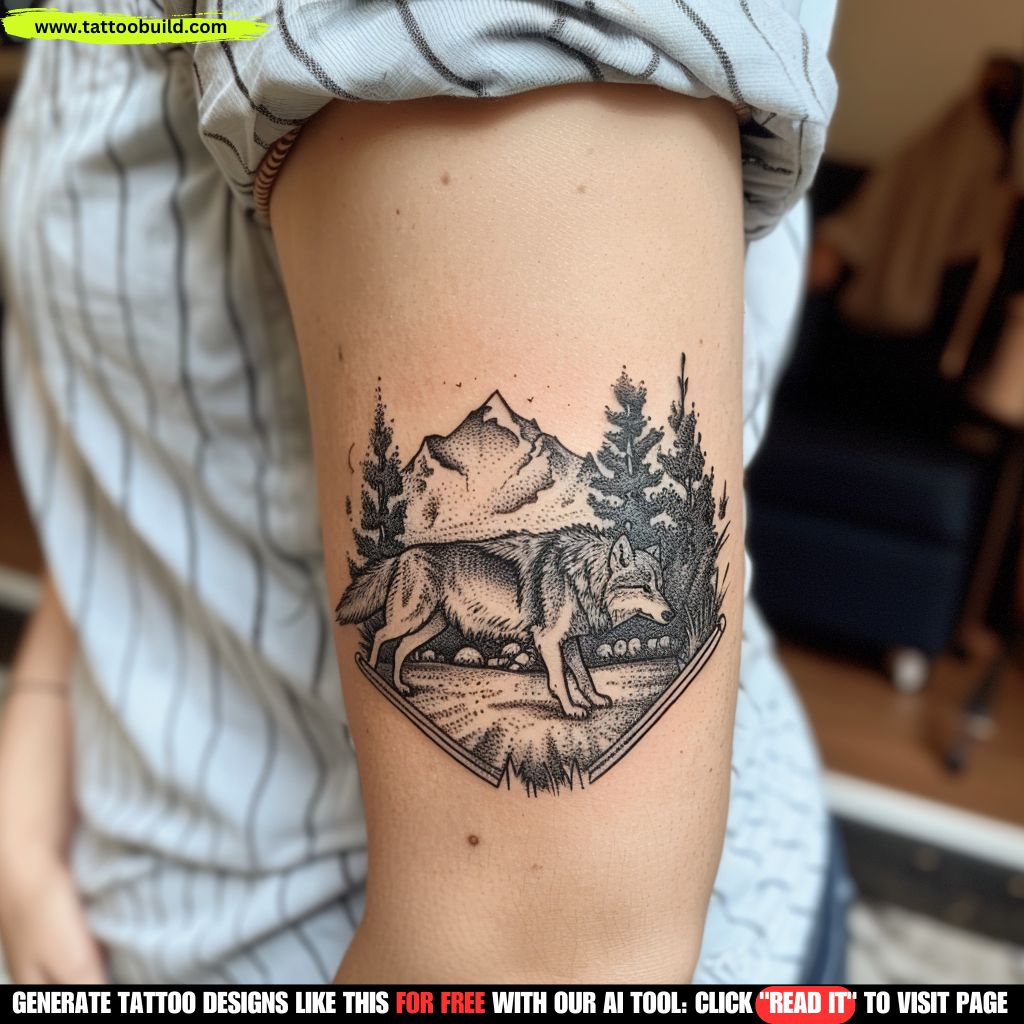
Bohemian tattoos are less a style than a mood: loose line work, natural shapes, and a lot of deliberate empty space.
I have sat in on more boho consultations than almost any other category, and the same thing happens nearly every time. Someone arrives with a folder of images and no idea what actually links them.
What links them is usually restraint. Bohemian work borrows motifs from folk art, botanical illustration and fine line tattooing, then leaves half the drawing out on purpose.
Below are 26 designs worth stealing ideas from, plus the practical stuff nobody mentions until you are already in the chair.
Which Bohemian Look Is Right for You?
Boho is a broad umbrella. In my experience these four sub-directions cover almost everything people bring in.
| Direction | Looks Like | Best Placements | Typical Sitting | Ages Best If |
|---|---|---|---|---|
| Fine line botanical | Single-weight stems, leaves, small blooms | Forearm, spine, ankle, ribs | 1–3 hours | Kept above roughly 3 inches and out of the sun |
| Ornamental / mandala | Symmetrical patterning, dotwork, repeated shapes | Shoulder, thigh, back, sternum | 3–6 hours, often split | Line spacing is generous rather than packed |
| Illustrative folk | Feathers, dreamcatchers, moons, sketchy shading | Upper arm, thigh, calf | 2–5 hours | There is real contrast, not all mid-grey |
| Ornamental jewellery | Chains, drapes, beads, garter and bracelet forms | Wrist, ankle, upper thigh, collarbone | 2–4 hours | It is drawn to wrap, not stamped flat |
If you cannot pick, start with the placement rather than the motif. The body panel narrows the options faster than the imagery does.
What Actually Makes a Tattoo “Bohemian”?
There is no technical definition, which is why the label gets stretched so far. But the through-line is negative space used as a design element rather than as leftover skin.
A packed, edge-to-edge ornamental sleeve is beautiful. It is not boho.
The second marker is subject matter drawn from nature and folk symbolism rather than from portraiture or pop culture. Feathers, moons, botanicals, hands, eyes, simple geometry.
The third is a soft tonal range. Most bohemian work I have watched being done stays in black and grey with light stippling, occasionally with a muted terracotta or sage accent.
When people say a design “does not feel boho enough,” in almost every case the answer is that it is too dense, too dark, or too tightly outlined. Ask your artist to open it up before you ask them to add anything.
The Motifs That Define Bohemian Tattoos
These are the seven recurring building blocks. Most finished pieces combine two or three of them, rarely more.
1. Feathers
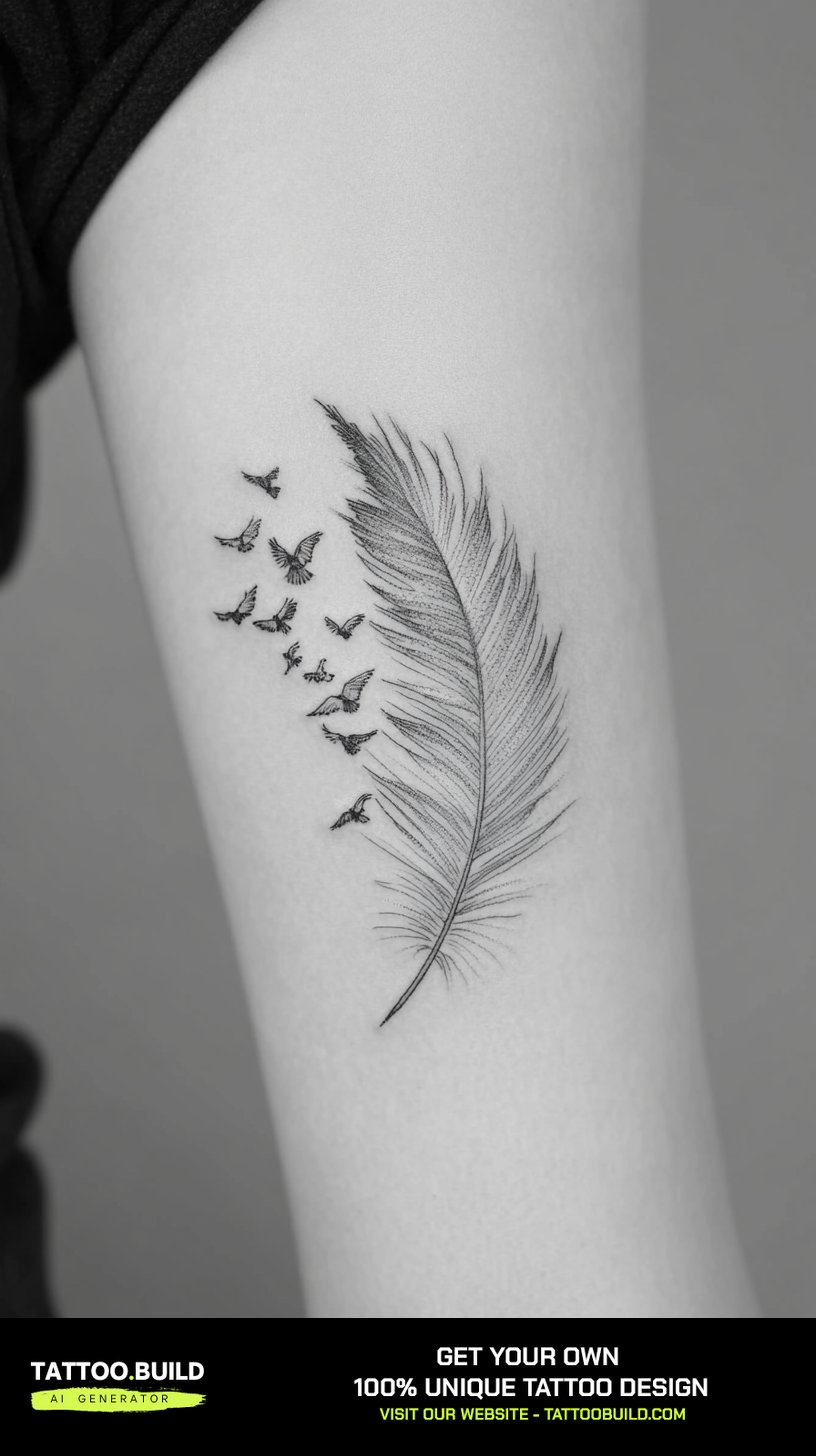
Feathers are the most-used boho motif and the most commonly ruined one. The failure mode is always the same: too many barbs, drawn too close together.
Ink spreads slightly under the skin over years, so barb lines packed tighter than a millimetre or two tend to merge into a solid shape. Every artist I have asked about this says the same thing unprompted.
The version that holds up separates the barbs, breaks the quill in places, and lets the shape trail off rather than terminating in a hard point. If you want a wider range of shapes to work from, our feather tattoo drawings for females collection is a good starting point.
Meaning-wise, feathers carry associations with freedom and lightness across a lot of different cultures, though it is worth being specific about which tradition you are drawing from rather than treating it as generic.
2. Dreamcatchers
Dreamcatchers come out of Ojibwe tradition and have since been widely adopted, which is worth knowing before you commit to one.
Design-wise they are the single most detail-hungry motif in the boho vocabulary, because the web is a fine repeated pattern and the hanging elements add more.
The practical consequence is size. Under about four inches across, the web tends to close up over time. I have seen five-year-old small dreamcatchers where the interior is effectively a grey disc.
If you want one small, ask for a simplified web with fewer crossings rather than a shrunken version of a detailed drawing. Our dreamcatcher tattoo ideas gallery shows the range of scales that work.
3. Mandalas and Sacred Geometry
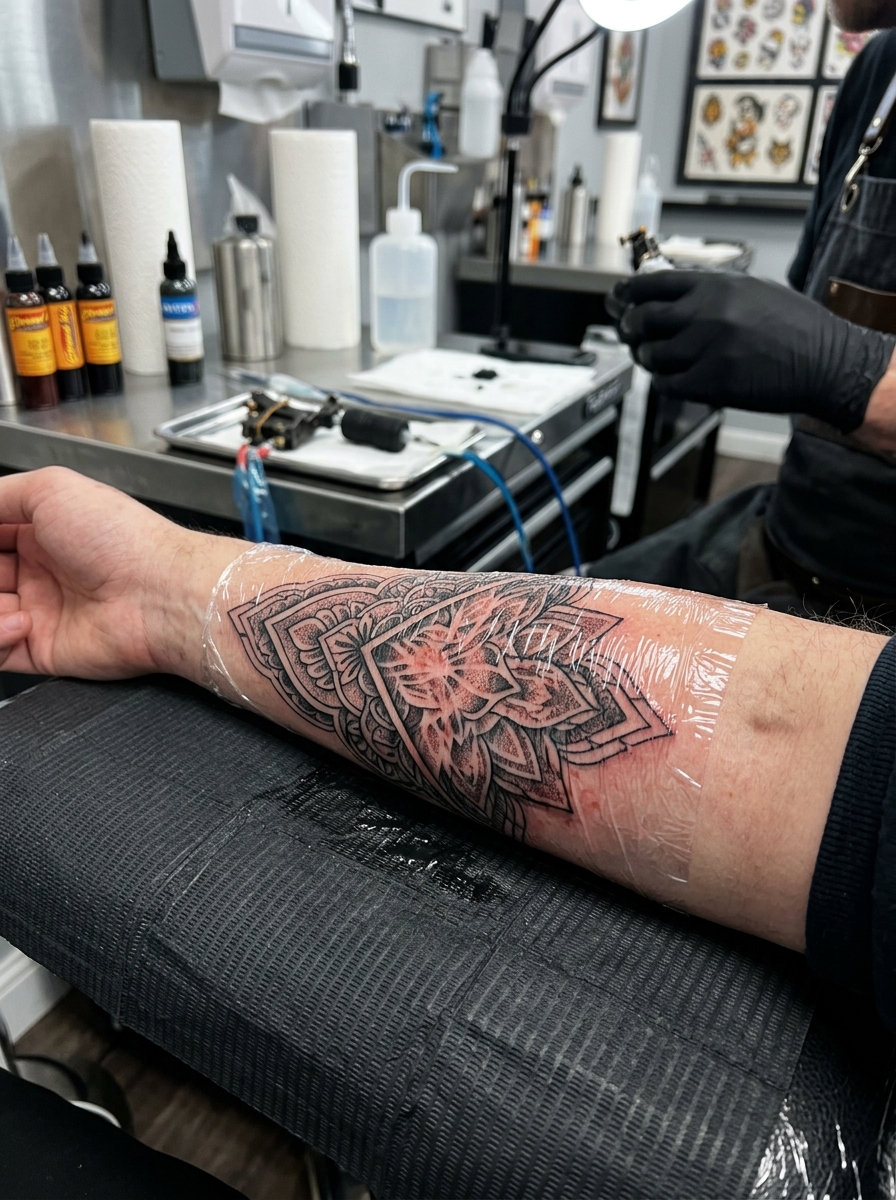
Mandalas give a boho piece structure. They are also the most technically demanding thing on this list to execute well, because symmetry errors are obvious to everyone.
A good artist will stencil a mandala with guide lines and check it on you standing up, not lying down. Skin moves.
Half mandalas and quarter mandalas anchored to a body line are often the better choice. They read as intentional rather than as a circle stuck onto a shoulder.
In my experience mandala-based work suits the outer thigh, the shoulder cap and the sternum best, since those panels are relatively flat. The mandala tattoo ideas for women roundup covers the common layouts.
4. Florals, Vines and Botanicals
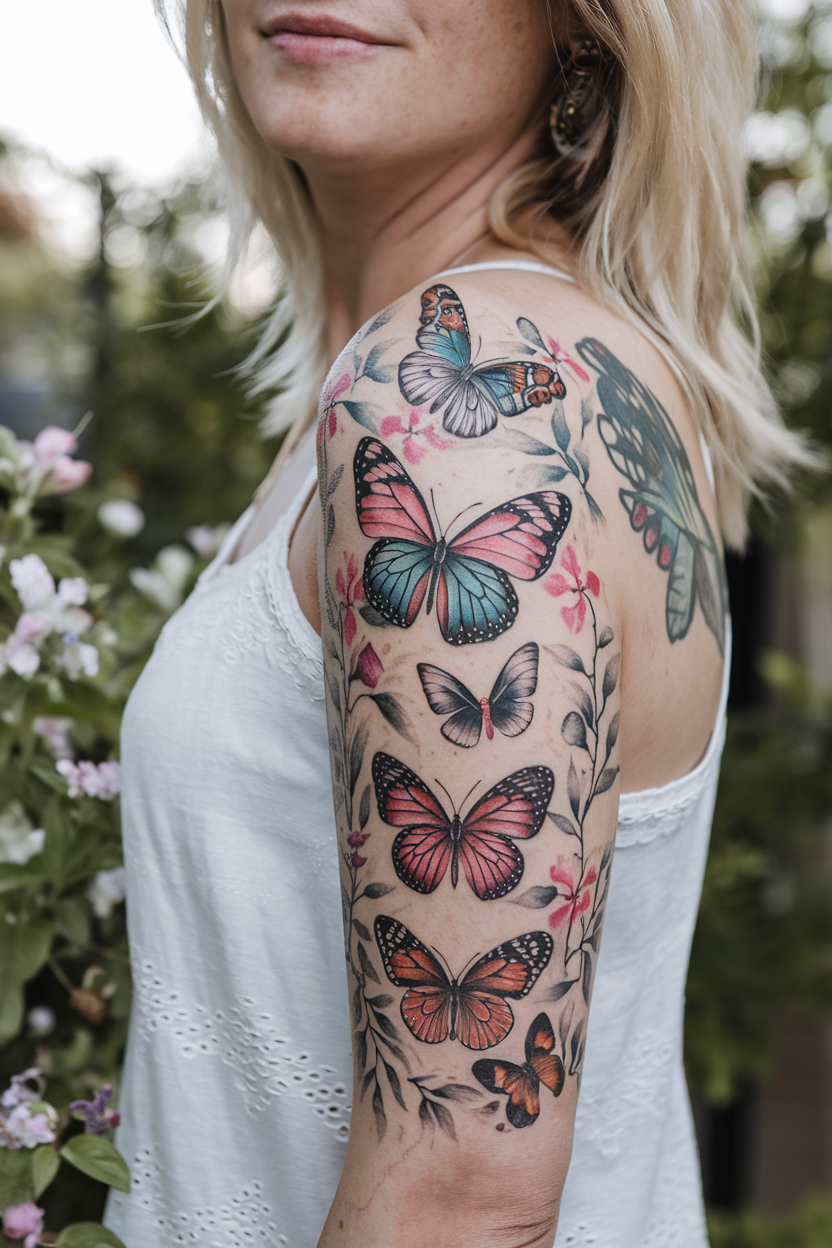
Botanicals are the workhorse of bohemian tattooing. They fill space without weight and they wrap around limbs naturally.
The design decision that matters most is whether the plant is drawn as a specimen or as a growth. A specimen sits still; a growth follows the body.
For anything running down an arm or a leg, ask for the growth version. It will look right when you move, which is most of the time.
Lotus is the most-requested single flower in this category and carries strong symbolic weight, particularly around renewal. We have a dedicated lotus tattoo guide if that is the direction you are leaning.
5. Sun, Moon and Stars
Celestial imagery slots into boho work more easily than almost anything else, because the shapes are simple and read at any size.
Moon phases in a row are popular partly because they suit narrow panels: the spine, the inner forearm, the side of a calf.
The one thing worth insisting on is that solid black areas are genuinely solid. Half-packed black in a crescent moon is the most common touch-up job I hear artists complain about.
If you are weighing a paired design, our sun and moon tattoo ideas guide covers the balance-and-contrast versions specifically.
6. Arrows, Hands and Talismans
This group covers the small symbolic pieces: arrows, open palms, eyes, keys, simple amulet forms.
They are the cheapest way into bohemian tattooing, often finished in under an hour, which makes them a reasonable first tattoo.
The catch is that small symbolic pieces are the hardest to add to later. A lone arrow on a forearm constrains everything you might want there in five years.
If you think a larger piece is eventually coming, place the small one where it can become part of a composition rather than in the middle of a prime panel.
7. Ornamental Jewellery Pieces
Garter, bracelet, anklet and chandelier designs are having a long moment and they suit the boho palette well.
These live or die on whether they were drawn to wrap. A chain drawn flat and then applied to a curved limb will look pasted on.
Ask to see the stencil on the actual limb, in a mirror, before the first line goes down. Any artist doing this properly will offer it without being asked.
Delicate versions of these designs work best when the line weight stays consistent all the way around the limb, so the piece does not thicken where the artist had an easier angle.
Where Bohemian Tattoos Sit Best
Placement does more for a boho piece than the drawing does. These are the panels that consistently work.
Forearm and inner arm
The most forgiving panel on the body: flat enough for detail, visible enough to enjoy, and it heals quickly in most cases.
Fine line botanicals running from wrist to elbow are the single most common bohemian request I see.
Spine and centre back
A narrow vertical panel that suits moon phases, trailing stems and ornamental columns. It is also one of the more uncomfortable sittings, particularly over the vertebrae.
Expect to split anything long across two sessions. Our feminine spine tattoo guide covers the layout choices in more depth.
Thigh
The best panel for large ornamental and mandala work: plenty of flat area, easy to cover, and it ages slowly compared with hands or feet.
If you want scale without a visible commitment, this is where to put it. See our feminine thigh tattoo roundup for composition ideas.
Ankle and foot
Beautiful for jewellery-style pieces, but be realistic: feet take friction from shoes and the ink tends to need touching up sooner than elsewhere.
Keep the line weight slightly heavier than you would on a forearm. Our female ankle tattoo ideas collection shows what survives well down there.
Variations Worth Considering
If the standard boho vocabulary feels overused to you, these adjacent directions keep the mood without the familiar motifs.
Muted colour accents
A single desaturated tone — terracotta, sage, dusty rose — used sparingly against black and grey. It reads as bohemian without going full colour.
Be aware that lighter and warmer pigments generally fade faster than black, so expect the accent to soften first.
Blackwork negative space
Inverting the usual approach: solid black shapes with the design carved out in unlinked skin. Bold, graphic, and it holds up unusually well over decades.
Hand-poked (stick and poke) work
Done professionally, machine-free tattooing produces a softer, slightly irregular line that suits boho work naturally. Sessions run longer for the same design.
This should only ever be done by a licensed artist in a proper studio. Home kits are a genuine infection risk and are not a shortcut worth taking.
Micro-composition sets
Instead of one large piece, a scattered set of small elements placed across a panel and unified later. It lets you build slowly and change direction.
Practical Advice and Aftercare
Fine line work is less forgiving during healing than heavier styles, because there is less ink in the skin to begin with. Patchy healing shows up faster.
Mayo Clinic guidance describes roughly a two-week wound-care period: washing gently with soap and water, moisturising with a mild product, and keeping the area out of the sun, out of pools, and away from tight clothing while it heals. That matches what most reputable studios hand out on their aftercare sheet. You can read the full Mayo Clinic overview of tattoo risks and precautions.
Sun is the main long-term enemy of delicate work. Once fully healed, high-SPF sunscreen on the area is the cheapest thing you can do to keep it crisp.
The FDA notes that unsterile equipment can transmit infections including hepatitis and staph, and that allergic reactions to pigment can appear even years after a tattoo is done. If you develop a rash, swelling, spreading redness, or anything that is not settling, see a doctor rather than waiting it out — and see the FDA tattoo and permanent makeup fact sheet for the full picture. This article is design guidance, not medical advice.
Still Not Sure? Common Mistakes to Avoid
The most frequent regret I hear is going too small for the detail level. Detail needs room; a shrunken drawing is not the same design.
The second is collecting reference images from a style the artist does not actually work in. Look at healed photos in the artist’s portfolio, not fresh ones, and not other people’s work.
The third is treating placement as an afterthought. If you are still deciding, browsing by body panel helps — our meaningful forearm tattoos gallery shows how much scale changes the same idea.
And a quiet one: booking the consultation and the tattoo on the same day. Give yourself a week between seeing the drawing and sitting for it.
Frequently Asked Questions
How much do bohemian tattoos usually cost?
It depends far more on time than on style, and shop rates vary widely by city and by artist demand. A small symbolic piece finished in under an hour sits at most studios’ minimum charge, while a full ornamental thigh piece is a multi-session commitment. Ask for a time estimate rather than a price estimate, then apply the shop’s hourly rate. Most artists will give you an honest range at consultation if you ask directly.
Do fine line bohemian tattoos fade faster than other styles?
They tend to show ageing sooner, yes, though “fade” is not quite the right word. What actually happens is that thin lines soften and spread slightly as ink settles, so very tight detail can close up over years. Keeping the design above roughly three inches, avoiding sun exposure, and choosing an artist experienced in fine line work all make a large difference. Touch-ups every several years are normal rather than a sign something went wrong.
How painful is a bohemian tattoo compared with other styles?
Style matters less than placement and duration. Fine line work involves less repeated passing over the same skin than heavy shading, so an hour of boho line work is generally easier than an hour of solid black fill. That said, the spine, ribs, sternum, ankle and inner arm are uncomfortable regardless of style. Longer ornamental pieces are usually split across sessions for exactly this reason.
Are dreamcatcher and feather tattoos culturally appropriative?
This is a fair question and worth thinking about rather than dismissing. Dreamcatchers originate in Ojibwe tradition and have specific meaning within it, and some Indigenous people object to their use as decoration. There is no single agreed answer, but being informed about the origin, avoiding sacred or restricted imagery, and choosing a design that means something specific to you is a reasonable approach. If it sits uneasily, the botanical and celestial motifs cover similar ground without the concern.
Can I add to a bohemian tattoo later?
Usually yes, and boho work is better suited to this than most styles because the open space gives an artist somewhere to build. The main constraint is placement: a small isolated piece in the middle of a prime panel limits what can be composed around it. If you know a larger piece is coming eventually, tell your artist at the first appointment so they can place the starter piece accordingly. Working with the same artist across additions also keeps the line weight and tone consistent.
Quick Summary
- Bohemian tattoos are defined by open negative space, nature-led motifs and a soft tonal range, not by any single symbol.
- The four main directions are fine line botanical, ornamental/mandala, illustrative folk, and jewellery-style ornamental work.
- Feathers, dreamcatchers, mandalas, botanicals, celestial shapes, small talismans and drapes are the recurring building blocks.
- Detail needs size: dreamcatchers and mandalas under roughly four inches tend to close up as ink settles over the years.
- Forearm and thigh are the most forgiving placements; ankle and foot need heavier line weight and earlier touch-ups.
- Ask to see the stencil on your body, standing up, before the first line goes down.
- Expect a roughly two-week wound-care period, then treat sunscreen as permanent maintenance for delicate work.
- Take a week between seeing the drawing and sitting for the tattoo, and see a doctor for any reaction that is not settling.