A dragon tattoo works on a woman’s body for one reason above all others: the shape is long, flexible and directional, so it can be drawn to follow almost any part of you.
That single quality is why the dragon has outlasted nearly every other mythological motif in tattooing.
I have spent years looking at these pieces heal, and the ones that still look sharp a decade later have almost nothing to do with how complicated the design was on paper.
Below I have pulled together the styles that consistently work, what each one actually costs you in sittings and upkeep, and where a dragon sits best on the body. If you want a broader sweep of the motif first, my guide to dragon tattoo ideas for women covers the ground more generally.
Which Dragon Tattoo Style Is Right for You?
This is the comparison I end up drawing on a napkin for people more often than any other.
| Style | Typical Sitting Time | Best Placements | How It Ages |
|---|---|---|---|
| Chinese | 6–15 hours | Ribs, thigh, spine, forearm | Very well — long flowing lines stay readable |
| Japanese (Irezumi-influenced) | 15–40+ hours | Back, full sleeve, thigh | Excellent — built for longevity by design |
| Fine line / minimalist | 1–3 hours | Forearm, ankle, behind the ear | Softens fastest; often needs a touch-up |
| Blackwork / tribal | 4–12 hours | Shoulder, upper back, calf | Strongest of all — solid black holds shape |
| Dragon and florals | 5–12 hours | Thigh, ribs, upper arm | Good, if the florals are not overly delicate |
| Outline only | 2–5 hours | Spine, forearm, hip | Depends entirely on line weight |
Sitting times are what I have seen quoted by artists for mid-size work; your own quote will move with size, detail and how fast your artist works.
What Actually Affects How a Dragon Tattoo Ages
Most people choose a dragon design based on how the drawing looks. Almost nobody asks how it will look in year twelve.
Line weight is the single biggest factor. Ink spreads slightly in the skin over time, so lines drawn very close together eventually blur into each other.
A dragon is unusually vulnerable to this because scales, whiskers and claws are all small repeated details packed into a small area.
Placement matters nearly as much. Areas that see constant sun or constant friction — hands, feet, the outer forearm — fade faster than the ribs, thigh or upper back.
Size is the quiet third factor. The same design at four inches and at twelve inches ages completely differently, because the larger version has physical room between its lines.
Every experienced artist I have asked says roughly the same thing: go bigger than you think you need, and let them thicken the linework more than feels comfortable on the stencil.
Womens Dragon Tattoo Ideas by Style
1. Chinese Dragon Tattoos
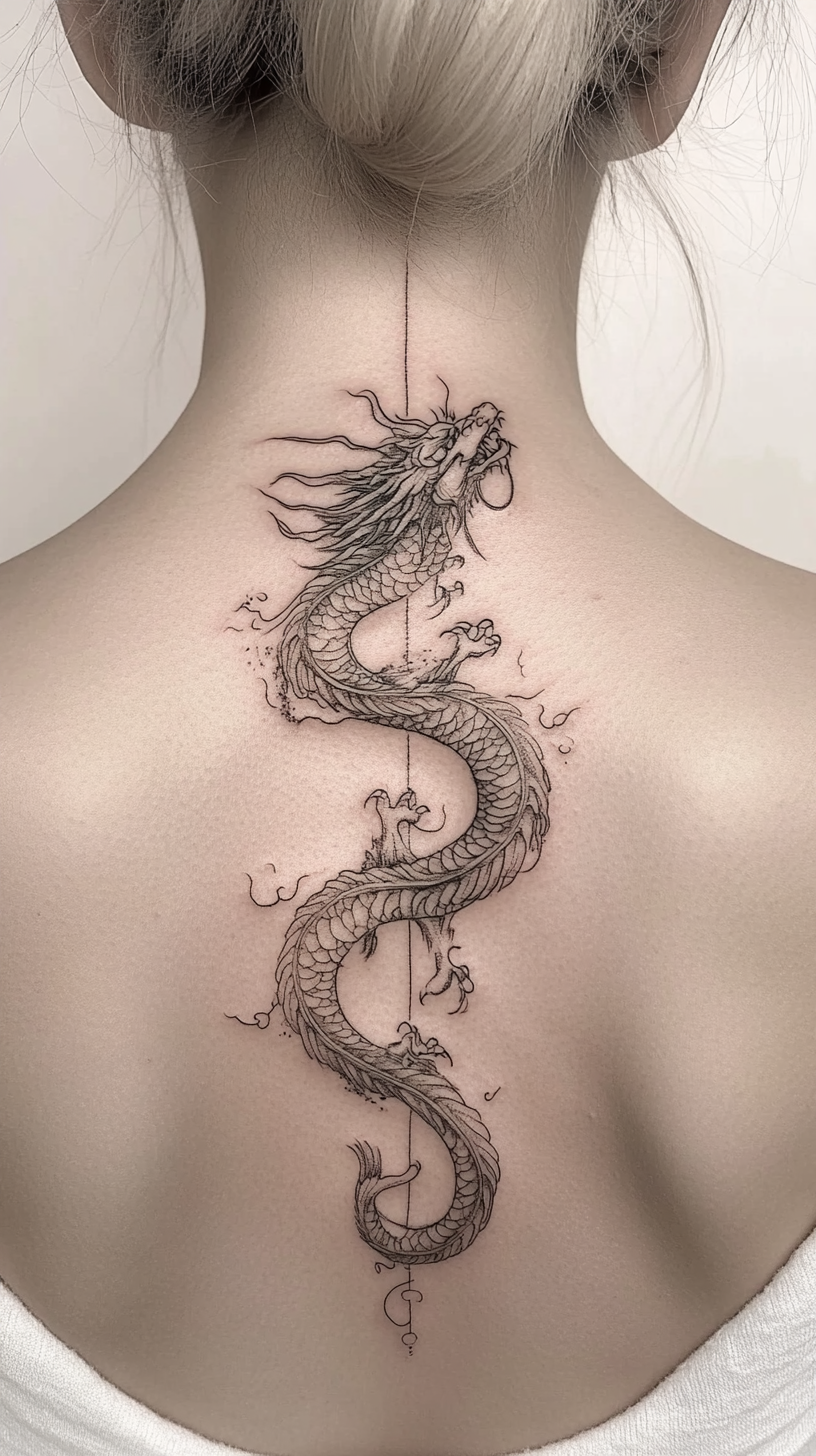
The Chinese dragon is serpentine — long body, four short legs, no wings, and a mane that trails behind the head.
It is the most adaptable dragon in tattooing precisely because it has no fixed silhouette. It becomes whatever shape the body gives it.
In Chinese tradition the dragon is a benevolent figure associated with water, rain and imperial authority, which is close to the opposite of the fire-breathing European version described in Britannica’s entry on the dragon as a mythological creature.
When I have watched these pieces being placed, the artist almost always starts by finding where the head will sit and works backward from there — the tail is the flexible end.
Ribs, thigh and spine all suit it. If the spine appeals to you, the dedicated guide to Chinese dragon spine tattoos goes deeper on that placement specifically.
This is the style I recommend most often to women who want something large but not overwhelming.
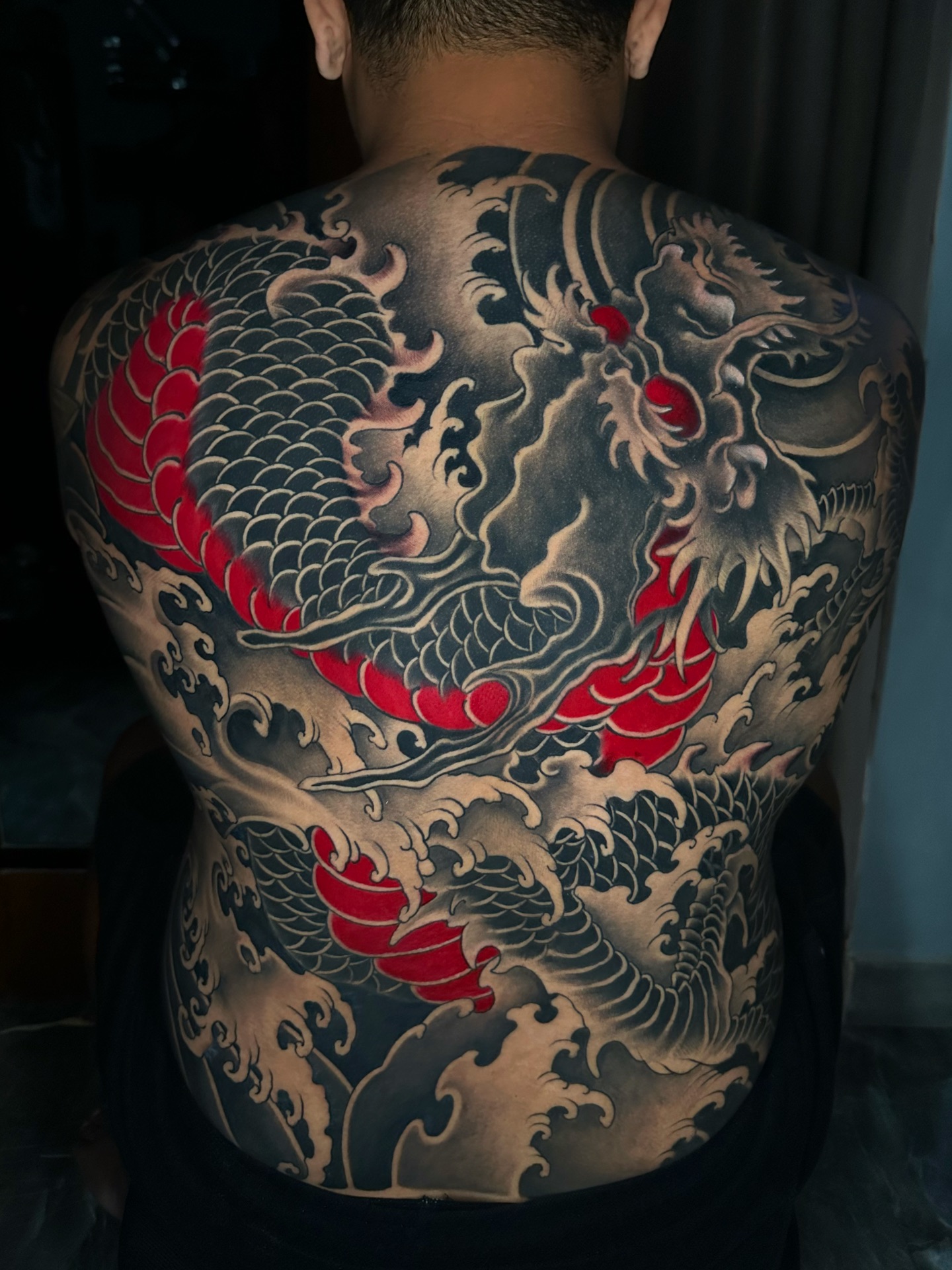
2. Japanese Dragon Tattoos
Japanese dragons look similar to Chinese ones at a glance, but the tattooing conventions around them are entirely different.
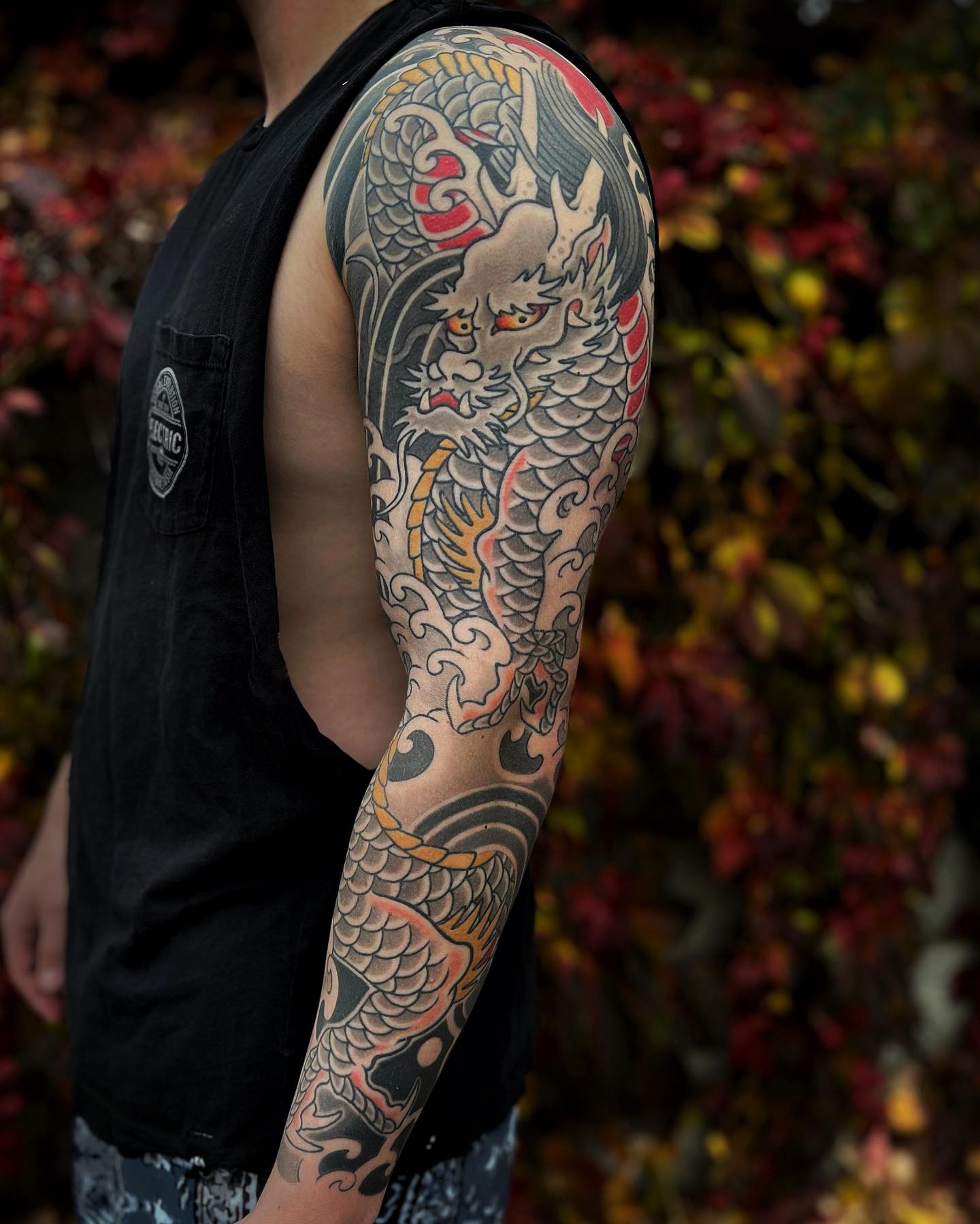
Japanese work uses heavier black outlines, denser shading, and — critically — a background of waves, clouds or wind bars that ties the whole piece together.
That background is not decoration. It is what allows a large piece to read as one image instead of a dragon floating in empty skin.
The tradeoff is time and money. A Japanese-style back piece or full sleeve is a project measured in multiple sittings across months, not a single afternoon.
If the broader visual language interests you, the overview of Japanese tattoo designs explains how the motifs fit together.
In my experience this style rewards patience more than any other — half-finished Japanese work looks unfinished in a way half-finished fine line work does not.
3. Dragon and Flower Tattoos
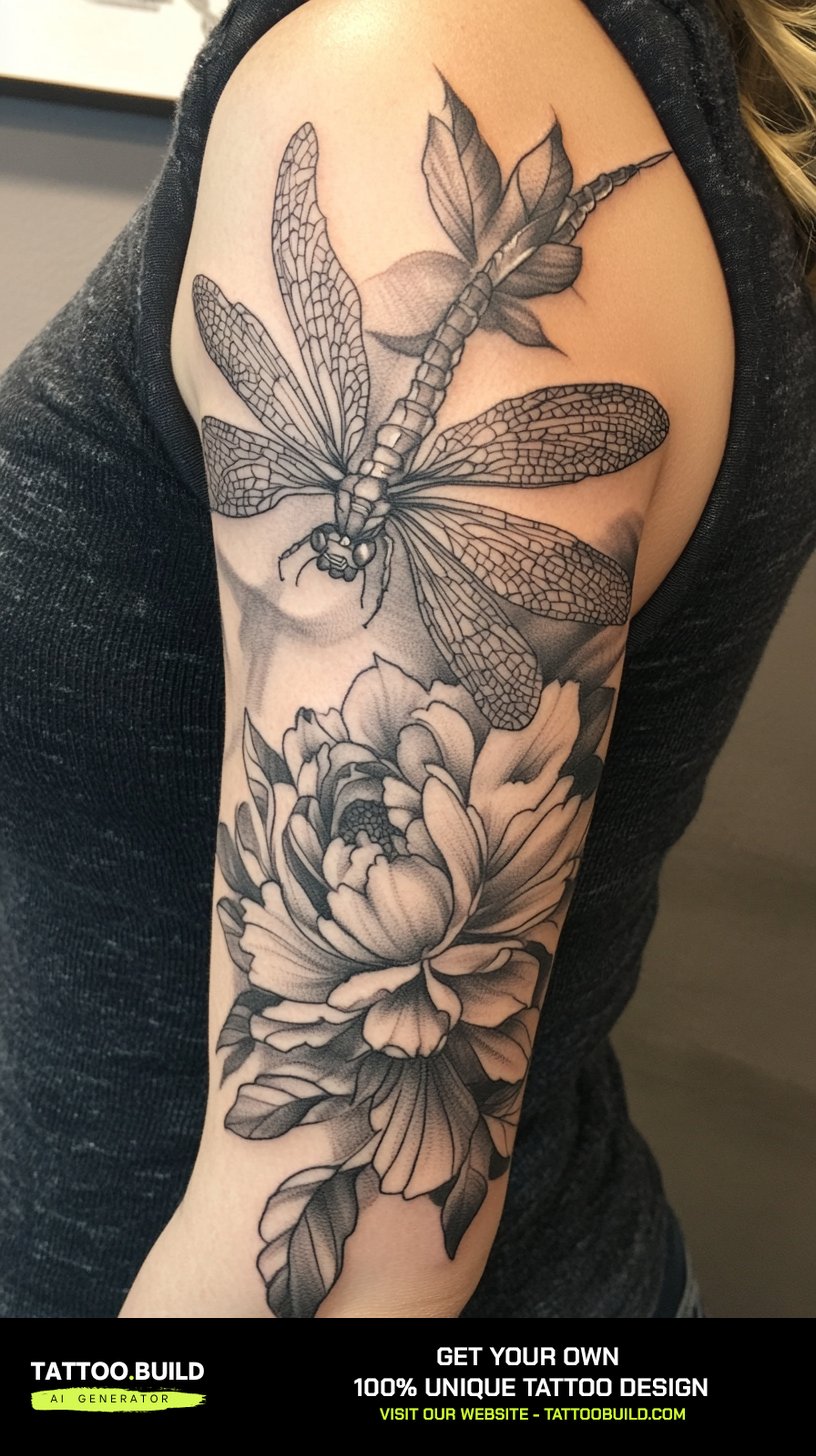
Pairing a dragon with florals is the most requested variation I come across, and it works for a structural reason rather than an aesthetic one.
Flowers fill the negative space that a long thin dragon inevitably leaves behind.
Peonies are the traditional pairing in Japanese work. Roses, lotus and chrysanthemums all appear regularly in contemporary pieces.
The mistake to avoid is letting the florals compete with the dragon. One of the two elements has to be the subject; the other supports it.
Ask your artist to draw the dragon first and add flowers only where the composition genuinely needs them.
4. Minimalist and Fine Line Dragon Tattoos
Fine line dragons are the entry point for a lot of women, and there is nothing wrong with that.
They are quick, comparatively affordable, and easy to place somewhere you can cover.
The honest caveat: single-needle work does not hold its crispness the way bolder work does. Expect some softening, and budget mentally for a touch-up in a few years.
I have seen fine line pieces that still look sharp after five years and others that had blurred noticeably within two. Skin type, sun exposure and the artist’s hand all play a part.
If you like the restrained look generally, there are more ideas in the collection of classy tattoo designs for women.
Choose an artist whose healed fine line photos you have actually seen — not just fresh ones.
5. Dragon Sleeve Tattoos
A sleeve is where the dragon shape finally gets everything it wants: length, wrap and a natural beginning and end.
The usual composition runs the head at the shoulder or upper arm and lets the body spiral down toward the wrist.
Half sleeves are the sensible compromise. You get the wrap and the flow without committing the entire arm.
What surprises most people is the planning stage. A good artist will want to map the whole sleeve before touching skin, even if you are only doing the top third this year.
Working out the layout is worth the extra consultation; there are more layouts to study among these sleeve tattoos for women.
6. Tribal and Blackwork Dragon Tattoos
Blackwork dragons trade detail for permanence, and it is a genuinely good trade.
Solid black shapes with clean negative space between them will still read clearly decades after fine detail in the same spot has softened.
The style suits the shoulder, upper back and calf, where there is a broad flat surface for bold shapes to sit on.
A note on terminology: ‘tribal’ is used loosely in tattoo shops to mean bold black graphic work, but genuine Polynesian, Māori and Bornean traditions carry specific cultural meaning. It is worth knowing which one you are asking for.
For more of the graphic approach, see these tribal tattoo ideas.
If you want one tattoo that will still look intentional in thirty years, this is the style.
7. Dragon Outline Tattoos
An outline dragon strips the design back to silhouette and line, with no shading at all.
It is deceptively difficult. With nothing to hide behind, every wobble and every uneven line width shows.
The upside is speed and a graphic clarity that shaded work cannot match.
These work particularly well following a long straight run of the body — the spine, the outside of the forearm, along the hip bone.
When I have compared healed photos, the outline pieces that held up best all used a medium line weight rather than the thinnest possible needle.
Placement Variations Worth Considering
The style question and the placement question are really the same question asked twice.
Arm and Forearm
The most practical placement: easy to sit through, easy to see, easy to cover with a sleeve when you need to.
The outer forearm does catch more sun than most people expect, so sunscreen matters here. More options in this set of classy arm tattoos for women.
Ribs and Side Body
Visually the best fit for a long serpentine dragon, and comfortably the most painful of the common placements.
Ribs are thin skin directly over bone. Plan for shorter sessions. There is more on this area in the guide to rib tattoos for women.
Spine and Back
The spine is the one placement that matches a dragon’s proportions almost perfectly — long, narrow and vertical.
It is also a bony area and tends to be a tougher sit than the surrounding back.
Thigh
Underrated. Plenty of surface area, relatively forgiving to sit through, and easy to keep out of the sun.
If you want a large piece but are nervous about pain, the outer thigh is where I would start.
Aftercare and Practical Advice
A dragon tattoo lives or dies on the first three weeks and the following thirty years, and the second part is mostly about sun.
Follow whatever aftercare instructions your artist gives you — they know their ink, their needles and their local climate. The American Academy of Dermatology’s guidance on caring for tattooed skin is a solid general reference alongside it.
Once healed, daily sunscreen on exposed placements does more to preserve linework than any product marketed specifically at tattoos.
Watch for anything that is not ordinary healing. Spreading redness, increasing rather than decreasing pain, heat, pus or a fever are reasons to see a doctor rather than wait it out.
Delayed reactions to tattoo ink are also real and can appear months or years later, particularly with certain pigments. The AAD’s overview of tattoo skin reactions covers what these look like.
None of this is medical advice. If something about your healing worries you, ask your artist first and a doctor next — not a comment section.
Common Mistakes — and What to Do If You’re Still Not Sure
The most common mistake is going too small. A dragon shrunk to fit a wrist loses the detail that made you want it.
The second is choosing an artist by price rather than by portfolio. Dragons are a specialist shape, and not every excellent artist draws them well.
The third is deciding on placement before design. Bring a rough idea of both and let your artist adjust one to suit the other.
Still undecided on the motif itself? A phoenix tattoo carries similar scale and symbolism with a different silhouette, and the wider round-up of pretty tattoo ideas for women is a good place to browse before committing.
There is no deadline on this decision. Sitting with a design for a few months costs nothing and has talked more than a few people out of a tattoo they would have regretted.
Frequently Asked Questions
Do dragon tattoos have a specific meaning for women?
Not one fixed meaning, no. Across East Asian traditions dragons are generally associated with water, protection, wisdom and good fortune, while European dragons lean toward danger and guardianship. Many women I have spoken to choose the motif for personal reasons — resilience, a transition, a period they came through — rather than any inherited symbolism. The meaning you assign it is the one that lasts.
How much does a dragon tattoo cost?
It depends almost entirely on size, detail and your artist’s hourly rate, which varies widely by city and by reputation. A small fine line dragon is usually a single short session; a Japanese back piece is a multi-session project spread over months. Ask for an estimate in hours rather than a flat number, since that is how most artists actually price large work. Always confirm the rate and deposit terms before booking.
Which placement hurts the least for a dragon tattoo?
In general, areas with more muscle and fat between skin and bone are more comfortable — the outer thigh and the outer upper arm are the usual answers. Ribs, spine, sternum and ankle sit directly over bone and are widely reported as harder. Pain is genuinely individual though, and plenty of people find the supposedly painful spots manageable. If you are worried, book a shorter first session and see how you go.
Will a fine line dragon tattoo blur over time?
Some softening is normal for any tattoo, and fine line work shows it soonest because the lines start so thin and sit close together. How quickly depends on your skin, the placement, sun exposure and the artist’s technique. A touch-up after several years is common rather than a sign anything went wrong. If you want minimal maintenance, ask your artist to use a slightly heavier line weight than the reference image.
Can I add to a dragon tattoo later?
Yes, and dragons are one of the better motifs for it because the body and tail can extend naturally into new space. The key is telling your artist at the first session that you may expand later, so they can leave the composition open at the right end. Retrofitting a background around a piece that was designed as a standalone is possible but harder. Staying with the same artist for the additions also keeps the style consistent.
Quick Summary
- The dragon’s long, flexible silhouette is what makes it work on almost any placement — choose the style to suit the body part, not the other way round.
- Chinese dragons are serpentine and adaptable; Japanese dragons are bolder, heavier and need a wave or cloud background to hold together.
- Line weight, placement and size determine how a dragon tattoo ages far more than the complexity of the original drawing.
- Fine line dragons are quick and affordable but soften fastest — view an artist’s healed work, not just fresh photos.
- Blackwork and tribal dragons hold their shape longest of any style covered here.
- Ribs, spine and sternum are the most painful common placements; outer thigh and outer upper arm are the most forgiving.
- Daily sunscreen on healed, exposed tattoos preserves linework better than any tattoo-specific product.
- See a doctor for spreading redness, worsening pain, pus or fever — and know that ink reactions can appear months or years later.