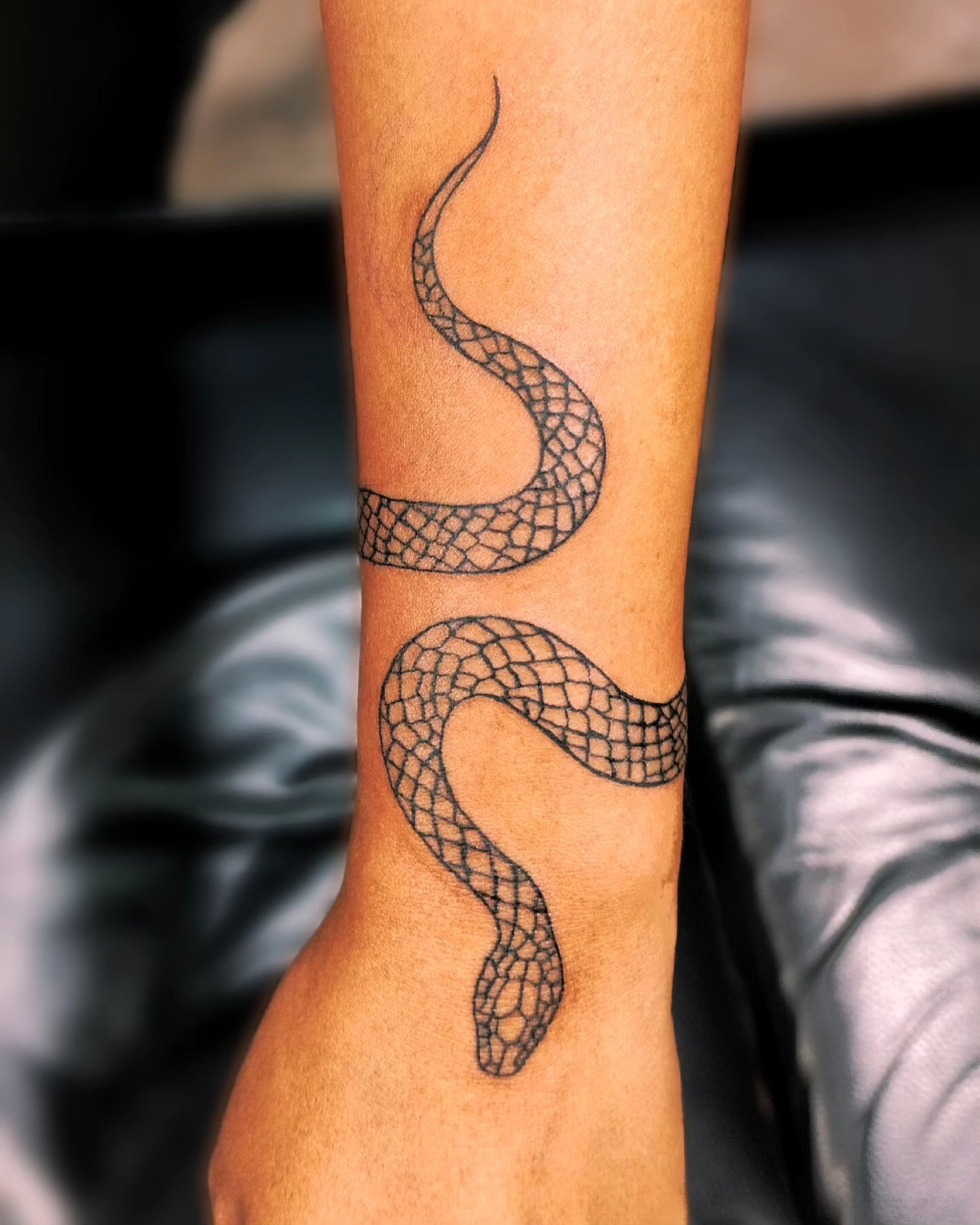
The wrist is the placement you see more than anyone else does. It sits in your line of sight every time you check the time, reach for a door handle or type, which means a wrist tattoo has to survive being looked at by you, every day, for the rest of your life.
I have watched this placement move from borderline unconventional to completely ordinary. In my experience the men who ask about it now are rarely worried about whether it is acceptable at work; they are worried about whether the design they have in mind will still read clearly in ten years.
That is the right thing to worry about. The wrist is a small, mobile, thin-skinned canvas, and it is unforgiving of designs that carry more detail than the space can hold. Everything below is filtered through that constraint, alongside a wider set of small meaningful tattoo ideas for men if you are still narrowing things down.
Here are 21 wrist tattoo ideas for men, grouped by what they actually do on the body rather than by style label alone.
Inner, Outer or Wrap-Around: Which Is Right for You?
The three wrist positions behave differently enough that choosing between them matters more than choosing the design.
| Position | Visibility | Discomfort | How it ages | Best suited to |
|---|---|---|---|---|
| Inner wrist | Faces you; shows on a handshake or raised hand | Usually the sharpest of the three — thin skin, tendons, nerves close to the surface | Softer skin, so fine detail tends to spread sooner | Dates, single words, small symbols, anything personal |
| Outer wrist | Public-facing; the side other people see first | Generally more tolerable, though the wrist bone is a sharp spot | Thicker skin usually holds ink a little better | Bold icons, animal heads, traditional work |
| Wrap-around | Visible from every angle; reads as jewellery | Mixed — includes the tender inner section | Usually strong if the linework is bold; weak points appear where the band crosses the inner wrist | Bands, patterns, snakes, anything continuous |
If pain is the deciding factor, it is worth reading a broader breakdown of the most painful tattoo spots before you book, because the wrist is not the worst place on the body but it is far from the easiest.
What Makes the Wrist a Demanding Placement
The wrist flexes, rotates and extends hundreds of times a day. That constant movement is the single biggest reason wrist tattoos age differently from a bicep or a shoulder.
It is also one of the most sun-exposed spots on the body for anyone who spends time outdoors, drives regularly, or wears short sleeves for half the year. Ultraviolet exposure is the fastest way to dull a tattoo, and the wrist gets more of it than almost anywhere else you can reasonably put one.
The skin is thin over the inner wrist, sitting directly over tendons and close to the radial artery. Artists usually work a little lighter there, which is sensible, but it also means the ink can sit less densely than it would elsewhere.
Every artist I have asked about this says the same thing in different words: give the wrist a design with room to breathe. Packed detail at this scale tends to close up as the lines soften over the years.
None of that is a reason to avoid the placement. It is a reason to choose line weight deliberately and to accept that a wrist piece may want a touch-up sooner than a tattoo on a more protected part of the arm.
21 Wrist Tattoo Ideas for Men
1. Dates, Coordinates and Numbers
Numbers are the quietest way to carry something specific. A birthdate, an anniversary, a memorial date, or the latitude and longitude of a place that changed things for you.
The Roman numeral date is the single most requested wrist design I see among men, and the reason is practical as much as sentimental: serif numerals are clean, they sit well in a horizontal line across the inner wrist, and they carry meaning that is completely private to anyone who has not been told. If you want a fuller treatment of layout and font choice, the guide to Roman numeral tattoo ideas goes deeper than there is room for here.
Decimal coordinates work the same way but need more horizontal space, so they tend to sit better running along the forearm side of the wrist than straight across it. An infinity symbol belongs in this group too — it is a number in disguise, and it is often combined with initials or a date tucked inside the loop.
When I have seen these go wrong it is almost always because the type was set too small or too thin. Ask for a slightly heavier weight than the stencil looks like it needs.
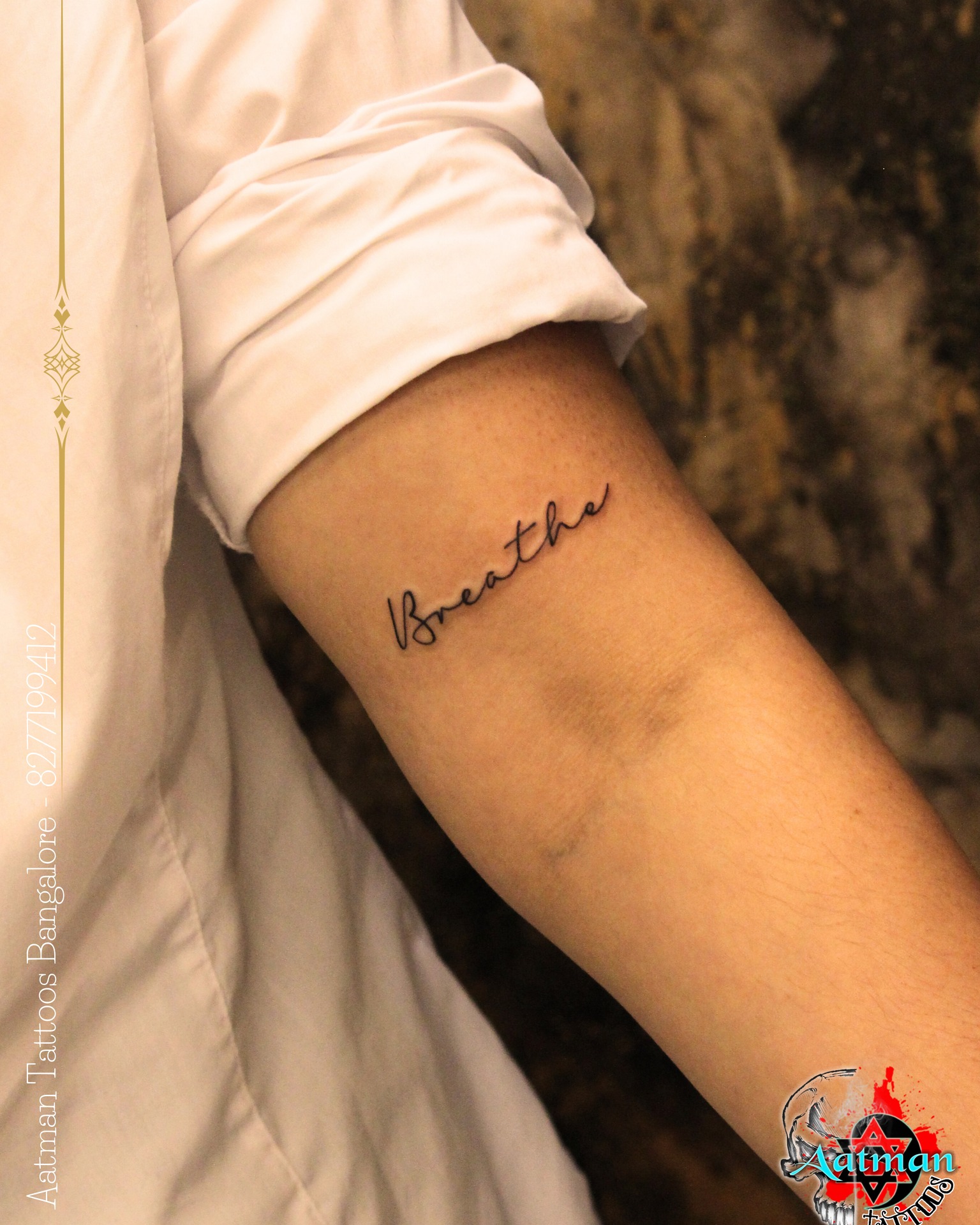
2. Single Words and Script
One word on the inner wrist is the most direct text tattoo there is. There is nothing to interpret.
Strength, patience, a family name, a word from a language only you and one other person speak — the value of this design is in the choosing, not the drawing. In my experience the men who regret word tattoos usually picked a concept they were feeling that year rather than one they had already lived with for a decade.
Script style matters more than most people expect. A heavily flourished calligraphic hand looks beautiful on paper and becomes a smudge at wrist scale after a few years; a simple serif or a restrained italic holds up far better. If you are weighing options, there is a broader set of word tattoo ideas for men worth working through first.
Have the artist print the word at actual size and tape it to your wrist for a day before the appointment. It is the cheapest test available and it catches most sizing mistakes.
3. Bands That Wrap the Wrist
A band is the only wrist design that uses the placement as a shape rather than just a surface. It reads as jewellery, it is visible from every angle, and it has no awkward orientation problem.
Geometric bands — triangles, diamonds, repeating angular forms — are the most flexible option because the pattern can be scaled to your wrist rather than squeezed to fit. Tribal bands in solid black are the older tradition and remain one of the most durable things you can put on a wrist, since heavy black ages better than anything else at this size.
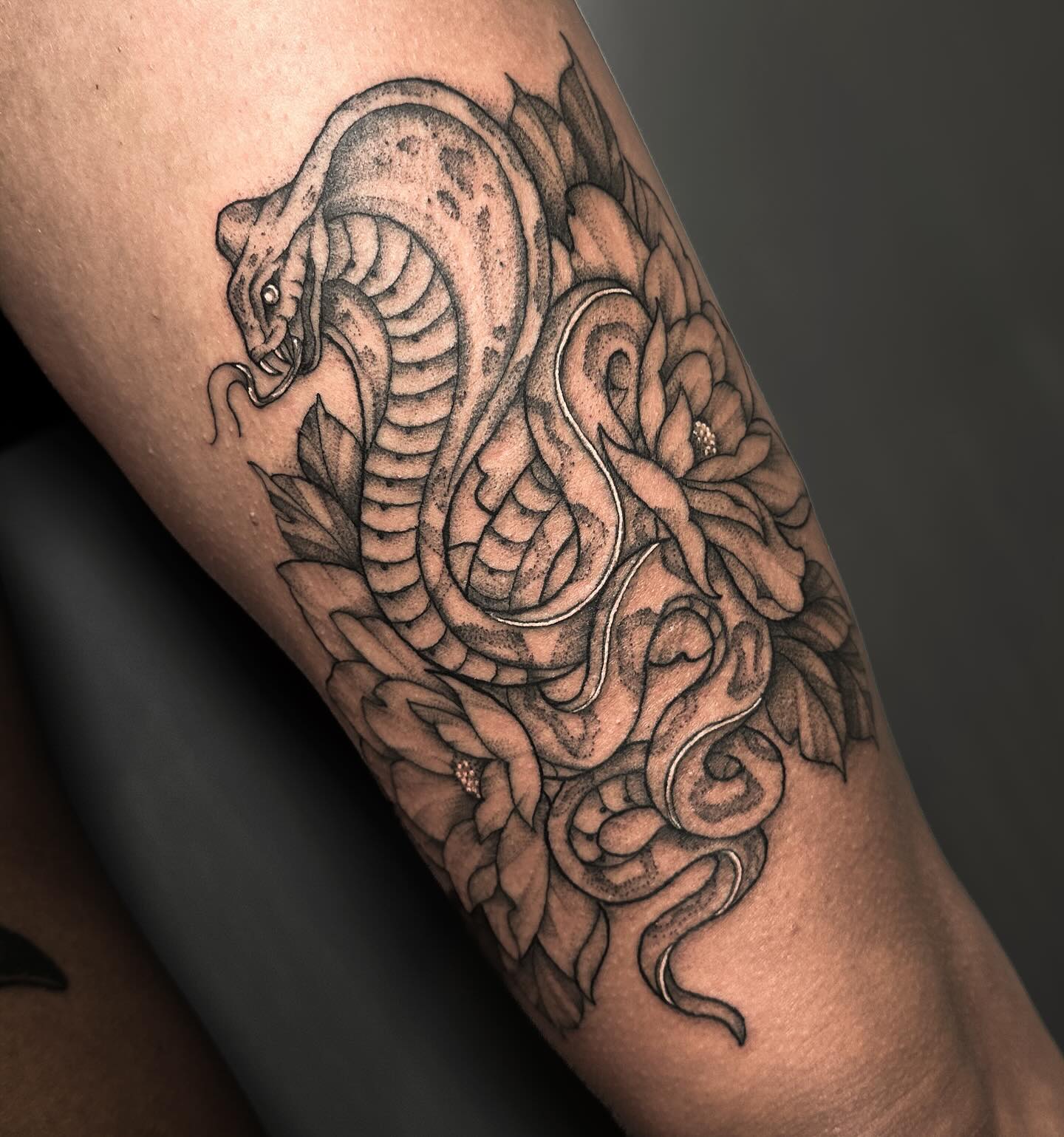
The snake is the third member of this group. Its body is naturally linear, so it wraps the circumference without any distortion, and the head usually sits on the outer wrist where it gets seen. A wrapping snake is the design I most often recommend to men who want a band that is not just a pattern. The wider snake tattoo ideas for men collection covers how the same subject scales up if you later extend it onto the forearm.
One warning: a band has to close. Ask your artist how they plan to join the two ends across the inner wrist, because that seam is where a badly planned band becomes obvious. More on the format in the guide to wrap-around wrist tattoos.
4. Bold Traditional Icons
If you want one design that will still read clearly in twenty years, this is the group to pick from. Traditional American tattooing was built for exactly this problem: heavy outlines, flat fills, strong internal contrast, and shapes that survive when the lines soften.
An anchor is the archetype. A skull is equally reliable, because the silhouette alone carries the image even before you see the detail. A lion head works at wrist scale as long as the mane is simplified into a handful of decisive shapes rather than rendered hair by hair.
An eagle or a raven closes out the group. Birds are the hardest of these to shrink well — wing feathers are where small traditional work usually fails — so look at healed photographs of your artist’s small birds specifically, not their large ones.
Every traditional artist I have spoken to about small-scale work gives the same advice: fewer lines, more space between them. That is not a stylistic preference, it is how the design stays legible.
5. Direction and Navigation
Compasses, arrows and mountains all say a version of the same thing, which is why they end up in the same conversation so often.
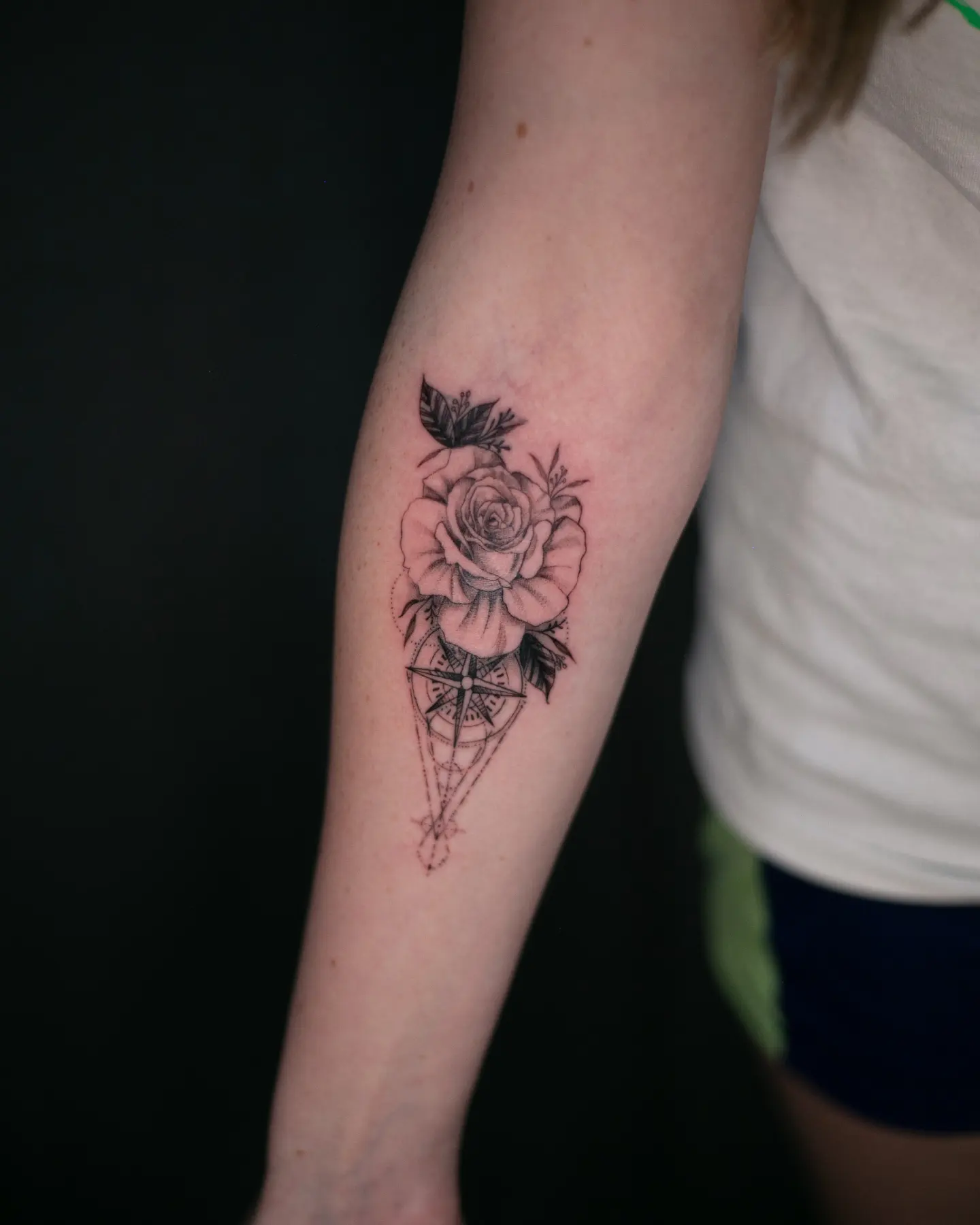
A compass rose is the most detailed of the three and the one most likely to be oversold at wrist size. A cartographic compass with a full rose, degree markings and ornamental scrollwork needs more room than the wrist has. A simplified four- or eight-point rose does not, and it ages far better.
An arrow is the opposite problem: it is so simple that it lives or dies on line quality and placement. Run it vertically along the outer wrist toward the elbow and it follows the natural line of the arm. Run it horizontally and it fights the anatomy.
Minimal mountain ranges have become one of the most common wrist requests I get from men who spend time outdoors. Keep it to two or three peaks. Adding a treeline, a sun and a lake at this scale is how a clean design becomes a grey smudge.
6. Faith, Protection and Symbols
A cross on the inner wrist is one of the oldest small tattoos in continuous practice, and it is still among the most requested. Its strength is that it needs no detail at all to be understood.
The Eye of Horus sits in the same territory — an ancient protective symbol whose distinctive curved line and teardrop are recognisable even at very small sizes. A plain eye, geometric or realistic, reads as watchfulness or protection depending on how it is drawn.
Symbols carry meaning you do not control. Anything drawn from a living culture or religion that is not yours deserves a real conversation before you commit, and a decent artist will have that conversation with you rather than just taking the deposit.
Practically, these are forgiving designs. A cross, an eye or a simple protective symbol has a strong silhouette, which is exactly what a small mobile placement wants.
7. Time, the Pulse and the Vertical Line
Some designs earn the wrist specifically rather than just happening to fit there. A heartbeat line is the clearest example — an EKG waveform sitting on the exact spot where the pulse is taken.
A clock or pocket watch does the same trick from the other direction, putting a permanent timepiece where a watch has always been worn. This is the most detail-heavy idea in the whole list, so it needs the most honest conversation with your artist about size. A pocket watch rendered properly usually wants to spill slightly onto the forearm.
A crescent or half moon is the minimal end of the same theme: cyclical, quiet, and about as simple as a wrist tattoo can be while still holding presence.
A sword running vertically along the outer wrist rounds out the twenty-one. It is the one design here that genuinely benefits from the wrist’s narrow vertical orientation rather than working around it — blade toward the hand, pommel near the wrist bone.
If the Wrist Is Not Quite Right
Plenty of men come in set on a wrist tattoo and leave with something better placed. These are the alternatives that come up most often.
The Forearm, Just Above the Wrist
Moving two or three inches up the arm gives you noticeably more space, thicker skin, less movement and less sun. Everything in this list works there, usually better. The trade is that you lose the daily self-visibility that makes the wrist appealing in the first place.
The Hand and Fingers
If your instinct is toward maximum visibility rather than the wrist specifically, look at hand tattoo ideas for men instead. Be realistic about the maintenance, though — hands and fingers shed ink faster than anywhere else on the body because the skin regenerates so quickly. The same applies to finger tattoo ideas for men, which usually need touch-ups on a schedule rather than as an exception.
Both Wrists as a Pair
Two matched designs, one on each wrist, is an underused option. Matching bands, or a split symbol that only completes when your hands come together. It doubles the sitting time and the cost, but it solves the composition problem that a single small wrist tattoo sometimes has.
Inside the Wrist Only, Hidden by a Watch
If workplace visibility is genuinely a concern in your industry, a design sized to sit under a watch strap is a practical compromise. Bring the watch to the consultation and let the artist place the stencil around it.
Getting a Wrist Tattoo Right
Choose line weight before you choose the design. On the wrist this single decision affects the outcome more than the subject does, and slightly bolder lines almost always outlast very fine ones in this placement.
Ask to see healed wrist work from the artist you are considering. Fresh photographs tell you very little about how someone’s fine line work behaves after two years, and wrists are where that difference shows up first. Any artist worth booking will have healed photos and will be glad you asked.
Follow whatever aftercare instructions your artist gives you, and expect the wrist to be more awkward than other placements — sleeves catch on it, hand washing soaks it, and it moves constantly. The American Academy of Dermatology publishes straightforward, non-commercial guidance on caring for tattooed skin that is worth reading alongside it.
Once it is fully healed, sunscreen on that spot is the highest-value habit you can build. It costs nothing and it is the difference between a wrist tattoo that looks sharp at ten years and one that looks tired at five.
If the skin becomes increasingly red, swollen, hot or painful after the first few days, or if you develop a rash, fever or drainage, that is a matter for a doctor rather than a forum thread. Reactions to tattoo ink are uncommon but real, and both the FDA and the Mayo Clinic cover the risks plainly. Nothing in this article is medical advice, and no wrist design is worth improvising on a healing problem.
Still Not Sure? The Mistakes Worth Avoiding
The most common mistake is cramming a forearm design onto a wrist. If the artist says it needs to be bigger, the artist is right; shrinking a drawing does not shrink the amount of detail in it.
The second is choosing single-needle fine line purely on how it looks in a fresh photograph. Fine line is a legitimate and beautiful style, but it asks more of this placement than most others — the fine line tattoo overview is worth reading with the wrist specifically in mind.
The third is orientation. Decide early whether the tattoo is meant to read correctly to you or to the person facing you, because you cannot have both, and it is a decision people frequently postpone until the stencil is already on.
The fourth is going too small out of caution. A design that is nervous about being seen usually ends up being the one that needs reworking, because there was never enough room for the linework to hold.
Frequently Asked Questions
Do wrist tattoos hurt more than other placements?
For most men the inner wrist is more uncomfortable than the outer wrist, because the skin there is thin and sits directly over tendons with nerves close to the surface. The outer wrist is usually more tolerable, though the wrist bone itself can be sharp. Pain is highly individual, so treat any ranking as a rough guide rather than a promise. The upside is that wrist pieces are small, so most sessions are short.
How long does a wrist tattoo take to heal?
Surface healing for a small wrist tattoo is typically a couple of weeks, with the deeper skin settling over a longer period. The wrist can be slower in practice simply because it moves constantly and gets caught on sleeves and cuffs. Follow your artist’s aftercare instructions rather than generic advice, since they know what they put in your skin. If anything looks infected, see a doctor rather than waiting it out.
Will a wrist tattoo fade faster than one on my arm?
Usually yes, at least a little. The wrist combines constant movement with heavy sun exposure and thinner skin, and all three contribute to fading and line spread. Bolder line weights, solid black work and consistent sunscreen all slow it down considerably. Many wrist tattoos want a touch-up at some point, which is normal rather than a sign something went wrong.
Can I cover a wrist tattoo for work?
In most cases a long sleeve, a watch or a cuff covers a wrist tattoo completely, which is part of why the placement has become so widely accepted. Attitudes vary a lot by industry and region, so judge your own workplace rather than the general trend. If coverage is a real concern, size the design to sit under a watch face or strap. Bring the watch to your consultation so the artist can place the stencil around it.
What is the best wrist tattoo for a first tattoo?
Something small, bold and personally meaningful is the safest starting point: a date, a single word, a simple symbol. Avoid heavily detailed subjects and very fine script for a first piece, because those are the designs most likely to need reworking later. Sit with the idea for a few months before booking. If it still feels right after that, it probably is.
Quick Summary
- Pick the position first — inner wrist for personal designs, outer wrist for bold icons, wrap-around for bands.
- Bolder line weights outlast very fine ones on the wrist, because movement and sun exposure work against thin lines.
- Dates, coordinates and single words are the most reliable small designs; keep the type slightly heavier than it looks like it needs.
- Bands — geometric, tribal or a wrapping snake — use the wrist’s shape instead of fighting it.
- Traditional American icons like anchors, skulls, lions and eagles are built for exactly this scale.
- Simplify anything detailed: a four-point compass, two or three mountain peaks, a lion mane in a few decisive shapes.
- Ask your artist for healed photographs of their small wrist work before booking.
- Sunscreen once healed is the cheapest thing you can do to keep a wrist tattoo sharp.