The first crying clown tattoo I ever watched being finished took nine hours across two sittings, and the client cried harder than the clown did when he saw it healed. A crying clown tattoo is almost never about clowns at all — it is about the gap between the face you show people and the one you actually have.
That gap is why the design refuses to die. Circus imagery goes in and out of fashion; the idea of performing happiness you do not feel never does.
I have seen it worn by people processing a death, people marking years of depression they came out the other side of, and people who just think Chicano-style portraits look incredible on skin. All three are legitimate reasons.
This guide covers what the symbol actually means, which styles hold up over decades, where to place it, and the mistakes I keep seeing on cover-up consultations.
Which Crying Clown Style Is Right for You?
Style is not decoration here — it decides what the tattoo says about you. The same face rendered in fine line and in horror realism communicate opposite things.
| Style | Emotional Tone | Typical Size | Ages Best At |
|---|---|---|---|
| Chicano black & grey | Tender, reverent, autobiographical | 4–7 inches | Forearm, outer bicep, chest |
| Photorealism | Raw, confrontational, cinematic | 6–10 inches | Thigh, back, outer arm |
| Gothic / horror | Menacing, theatrical, defiant | 5–9 inches | Calf, ribs, outer arm |
| Fine line | Quiet, private, understated | 2–4 inches | Inner forearm, ankle, ribs |
| Neo-traditional | Bold, decorative, storybook | 5–8 inches | Outer arm, thigh, chest |
| American traditional | Blunt, graphic, timeless | 3–6 inches | Forearm, calf, shoulder |
Sizes above are what I typically see working in practice, not rules. The one number I would treat as close to a rule is the four-inch minimum for a detailed face.
What the Crying Clown Really Symbolizes
The core reading is simple and nearly universal: a painted smile with a real tear underneath it. Joy performed, sorrow felt.
It draws on a very old theatrical idea. The tragic clown who entertains an audience while privately falling apart shows up in opera, in vaudeville, and in the Pagliaccio figure of Italian commedia dell’arte that most people know secondhand even if they have never seen the opera.
In Chicano tattooing the payaso carries something more specific. It is usually about endurance — carrying hardship without letting it show, which is where the “smile now, cry later” pairing comes from.
Some wearers mean it as memorial. Some mean it as a record of a mental health chapter they survived. Some mean it as a warning not to assume they are fine.
And some, honestly, just love the aesthetic. When I ask clients what it means and they say “I think it looks cool,” that is a complete answer and I have never once talked someone out of it.
Popular Crying Clown Tattoo Meanings and Styles
Six approaches account for most of what walks through a shop door. Each one changes the emotional weight of the same face.
The Chicano Crying Clown
This is the version most people picture: soft greywash, feathered edges, often no hard black outline at all. The tear is built from shading rather than drawn as a shape.
In my experience it ages better than almost any other take on the subject, because smooth gradients blur gracefully while thin isolated details do not.
The tradition comes out of Chicano fine-line and black and grey work, where portraiture, lettering and religious imagery share a visual language. Artists who work in this style tend to have deep portrait skills as a matter of course.
Look for an artist whose healed greywash still shows separation between tones — that is the whole craft in one detail. Fresh photos hide a lot; six-month photos do not.
It suits people who want the piece to read as tender rather than threatening. It is the version most likely to make a stranger ask a gentle question instead of stepping back.
The Realistic Crying Clown
Photorealism makes the tear physical. A good realism artist renders a droplet as a lens — it refracts what is behind it and carries a bright specular highlight.
When I tested reference images with a realism specialist, the difference between a convincing tear and a sticker-looking one came down entirely to where that highlight sat and how sharply it stopped.
These pieces need room. Six inches is roughly the floor, and most artists I have asked would rather go eight or ten so the eye socket, the paint texture and the skin underneath can all read separately.
Expect multiple sessions. Realism is also the least forgiving style for a budget artist — a portrait that is slightly off looks wrong in a way a traditional design never does.
Plan for sun protection from day one, since fine tonal work in greywash is what fades first.
The Gothic or Horror Clown
Cracked paint, sunken eyes, heavy blacks and a tear that could be blood. This is the crying clown as threat rather than confession.
It borrows from horror film language, and it reads that way to strangers, which is worth knowing before you put it somewhere visible. I have had two clients move a horror clown from forearm to calf after thinking about client-facing work.
The upside is durability. Heavy black holds up for decades with very little maintenance, and gothic linework tends to look intentional even as it softens.
Ask for a mid-tone buffer between the heavy blacks and the open skin. Without it, a horror clown can flatten into a dark blob from six feet away, which is the distance most people actually see your tattoo from.
The Fine-Line or Minimal Clown
The smallest version of the idea and, for a lot of people, the most wearable. A few dozen lines, a single tear, no shading.
Every fine-line artist I have asked says the same thing about longevity: thin lines spread over time, and the tighter the details sit together, the faster small gaps close up.
So build in breathing room. Space the linework wider than looks right on the stencil and it will look right in ten years.
This is the version to choose if you want something private — an inner forearm or ankle piece you can read yourself without explaining to anyone. It pairs naturally with other fine-line pieces if you are building a collection slowly.
The Traditional and Neo-Traditional Clown
American traditional strips the clown to its graphic essentials: bold outline, limited palette, high contrast, no fuss. It is the most durable style on this list by a wide margin.
Neo-traditional keeps the strong outline but opens up the shading and the colour range, which lets the face carry more expression without sacrificing structure.
I recommend this route constantly to people who want a crying clown but worry about how it will look at sixty. Bold lines and solid colour are the closest thing tattooing has to a guarantee.
The trade-off is emotional register. A traditional clown reads as a design; a realistic one reads as a person. Both are valid, but they are not interchangeable, and it is worth sitting with each option for a week before you decide.
The Clown and Drama Mask Pairing
Two faces, one laughing and one crying, usually sat side by side or stacked. The most literal expression of the whole idea.
It is often called smile now, cry later, and it is one of the few tattoo phrases where the imagery genuinely predates the slogan.
Composition matters more here than in any single-subject version. The two faces have to feel like a pair rather than two separate tattoos that happen to be near each other.
Give your artist enough space to unify them — a shared banner, connected smoke, a common shadow. Chest, upper back and outer thigh all take this well because the flat plane keeps both faces readable at once.
Meaningful Variations to Consider
Additions change the story. These are the three I see requested most, and what each one tends to signal.
Adding a Rose or Banner
A rose beside the clown usually softens the piece toward love, memory or loss, depending on whether it is fresh or wilting.
Banners let you add a name or date without lettering floating unattached in skin, which almost never ages well. If you are considering one, look through rose tattoo designs to see how the shape sits against a face.
Playing Card or Poker Motifs
Cards, dice and chips push the piece toward fate, risk and the idea that the hand you were dealt was not your choice.
It is a natural fit with the joker figure specifically, and poker tattoo ideas give you a deep well of supporting imagery to build a half sleeve around.
Skull and Clown Combinations
A skull under or behind the painted face makes mortality explicit — the mask over the thing the mask cannot hide.
This one gets heavy fast, which is usually the point. Browsing skull tattoo ideas helps you gauge how much of the skull to show before it takes over the composition.
Placement, Sizing, and Aftercare Tips
Outer forearm and outer upper arm are where I would send most first-timers. Both are flat, both distort little with movement, and both sit in the moderate range for pain.
Calf and outer thigh are the next tier up in size. Ribs, sternum, hands and neck are visible or sharp enough that I would save them for a later tattoo, once you know how your skin takes ink. Comparing forearm placement options is a useful reality check on scale.
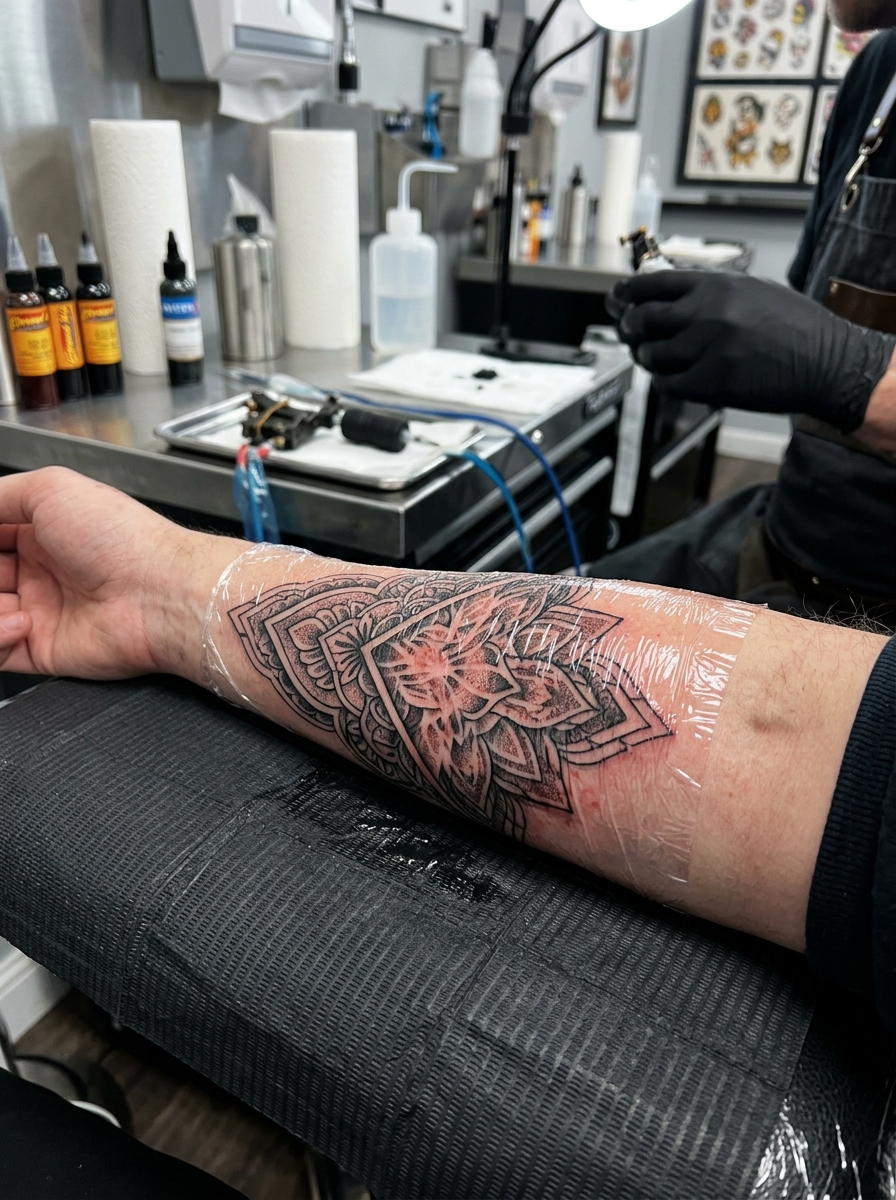
On aftercare, follow your artist’s instructions over anything you read online, including this. Shops differ on wrap times and products, and yours has seen how their work heals on hundreds of people. Broadly: wash gently with clean hands and unscented soap, moisturise thinly, skip soaking and swimming while it heals, and keep it out of direct sun.
Some redness, swelling and clear weeping in the first days is normal. Spreading redness, heat, pus, a red streak or a fever is not — that warrants contacting your artist and a doctor promptly, because tattoo infections are treatable and get worse when ignored. The NHS guidance on tattoo safety is a reasonable plain-language starting point on what to watch for, but it is not a substitute for a medical opinion.
Common Mistakes and How to Avoid Them
The cover-up consultations I have sat in on repeat the same handful of errors.
- Going too small. A face under about three inches loses the expression, and expression is the entire tattoo. Drop detail instead of shrinking it.
- Hiring a generalist for a portrait. Faces punish approximation. Find someone whose healed work in your chosen style you have actually seen.
- Ignoring regional symbolism. In some areas specific pairings read as affiliation. A local artist will tell you honestly if a detail is loaded where you live.
- Cramming detail into thin lines. Linework spreads with age. Space it wider than feels right on the stencil.
- Skipping sun protection. Greywash gradients fade before black outlines do. Sunscreen once healed is the cheapest maintenance there is.
Still not sure which direction to take? It often helps to look sideways at adjacent styles — black and grey portraiture and skull design drawings both overlap with this subject and can clarify what you actually respond to.
Frequently Asked Questions
What does a crying clown tattoo symbolize?
Most often it symbolises hidden pain: a performed smile covering grief the wearer does not show publicly. The painted face is the mask and the tear is the truth leaking through. In Chicano tattooing it commonly carries the smile-now-cry-later idea of enduring hardship without complaint. Plenty of people also wear it purely as a love letter to circus and carnival imagery, with no autobiography attached at all.
Is the crying clown tattoo connected to gang culture?
The crying clown, or payaso, has roots in Chicano prison and street art, so some designs do carry that association in specific regions. The imagery has long since gone mainstream and is worn by people with no connection to that history whatsoever. If you are concerned, avoid pairing it with numbers, letters, regional markers or particular hand signs. A local artist who knows the area is the best person to tell you what reads as neutral where you live.
Where is the best place to get a crying clown tattoo?
The outer forearm and outer upper arm are the usual first choices, because both give a flat, low-distortion canvas with moderate pain. Detailed faces need width, so anything under roughly three inches tends to lose the expression that makes the piece work. The calf and thigh suit larger realistic pieces well. Ribs, hands and neck are visible or painful enough that most artists suggest saving them for a later tattoo.
How much does a crying clown tattoo cost?
Pricing varies widely by city, artist reputation and shop, so treat any figure you see online as a rough guide rather than a quote. A small fine-line version is often a shop-minimum or single short-session job, while a detailed realistic piece is usually priced by the hour across several sittings. Faces are unforgiving, so an experienced portrait or black-and-grey artist is worth the premium here more than on most designs. Ask for a written consultation quote before booking, and see our guide to tattoo design costs for a broader picture.
Does a crying clown tattoo hurt a lot?
Pain depends far more on placement than on the design itself. Fleshy areas like the outer arm, thigh and calf are generally the most tolerable, while ribs, sternum, inner bicep, hands, feet and the back of the knee tend to be sharper. Heavy black shading over a large area is usually more of an endurance problem than a pain spike, and long sessions are often split across appointments. Eat beforehand, stay hydrated, and tell your artist when you need a break — every artist I have asked would rather stop than have you push through.
Quick Summary
- A crying clown tattoo is about the gap between the face you show and the one you have — performed joy over real sorrow.
- Chicano black and grey is the most common and, in my experience, one of the best-ageing versions of the design.
- Realism needs six inches minimum and a specialist; the tear’s highlight is what makes or breaks it.
- Gothic and horror versions read as threatening to strangers, so think about placement and visibility first.
- Fine line suits a private, understated piece — space the linework wider than looks right on the stencil.
- Traditional and neo-traditional are the safest bets for long-term durability thanks to bold outlines and solid colour.
- Outer forearm and outer upper arm are the easiest placements; ribs, hands and neck are best left for later.
- Follow your artist’s aftercare over anything online, and see a doctor promptly for spreading redness, pus or fever.