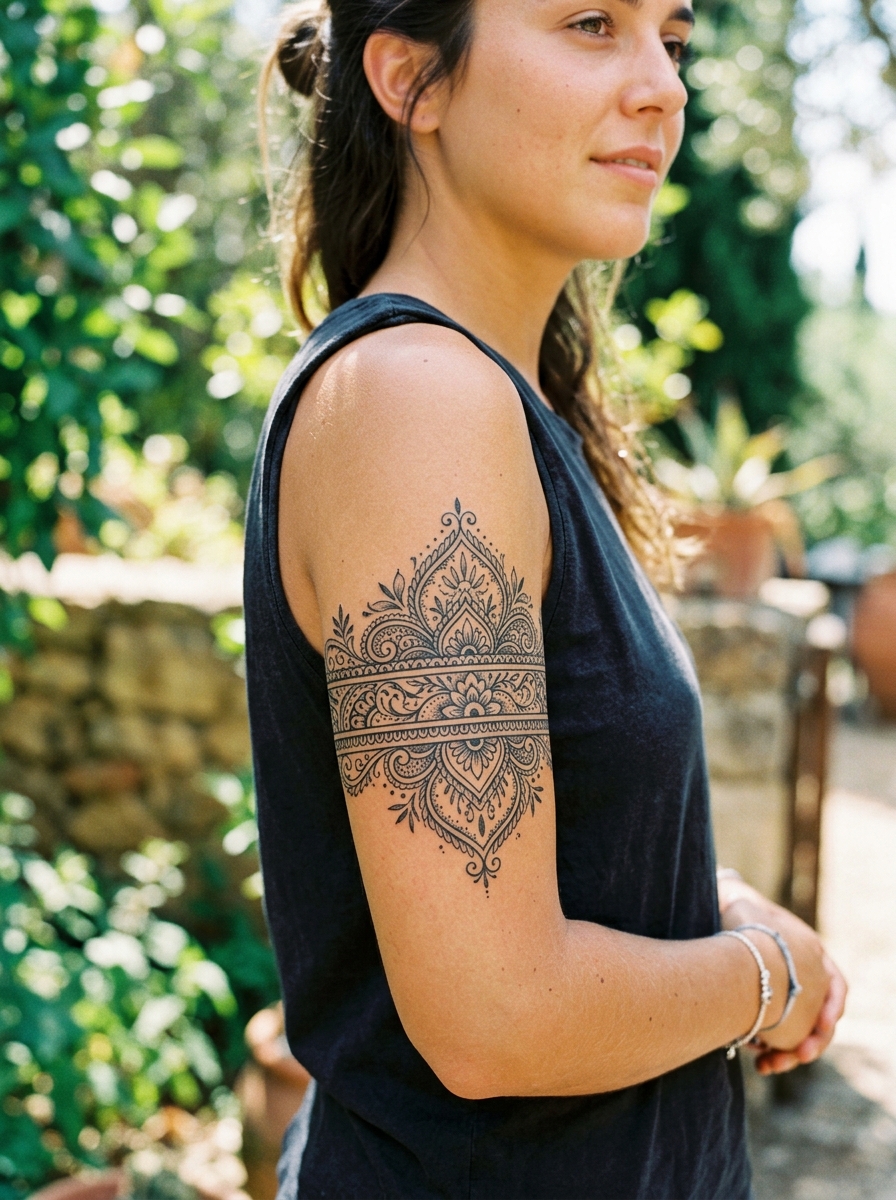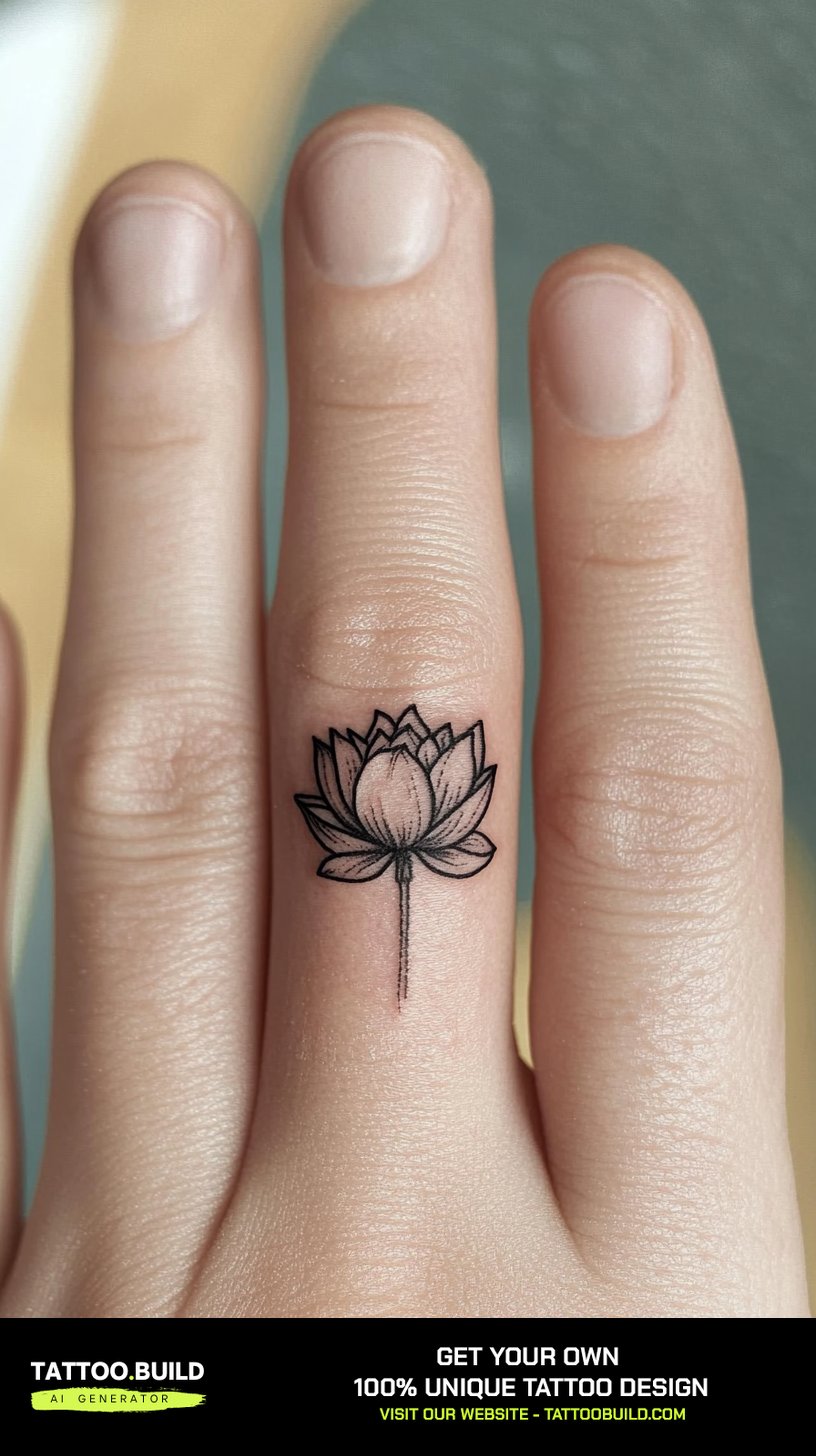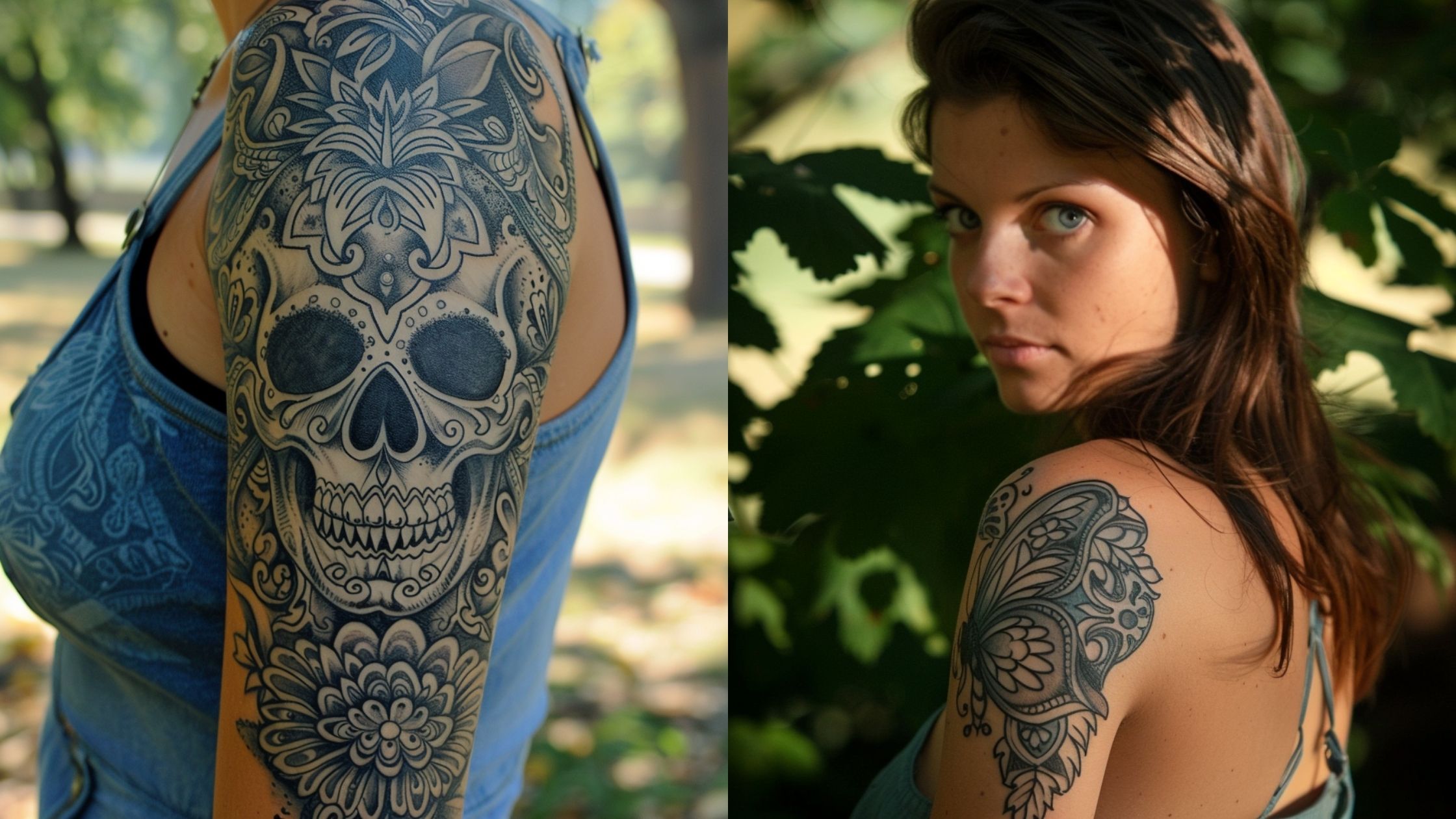
The first filigree piece I watched being tattooed took just over four hours, and nearly all of that time went into lines thinner than a sewing thread. Filigree tattoos borrow the language of antique metalwork — twisted wire, scrollwork and tiny beaded dots — and translate it onto skin.
In jewellery, filigree is made by soldering fine threads of gold or silver into open, lace-like patterns. The tattoo version keeps that same open, airy quality instead of filling the shape with solid black.
That is why filigree reads as jewellery rather than as a picture. Every artist I have asked about it says the same thing: the negative space is doing half the work, so the design has to be planned around the skin it leaves bare.
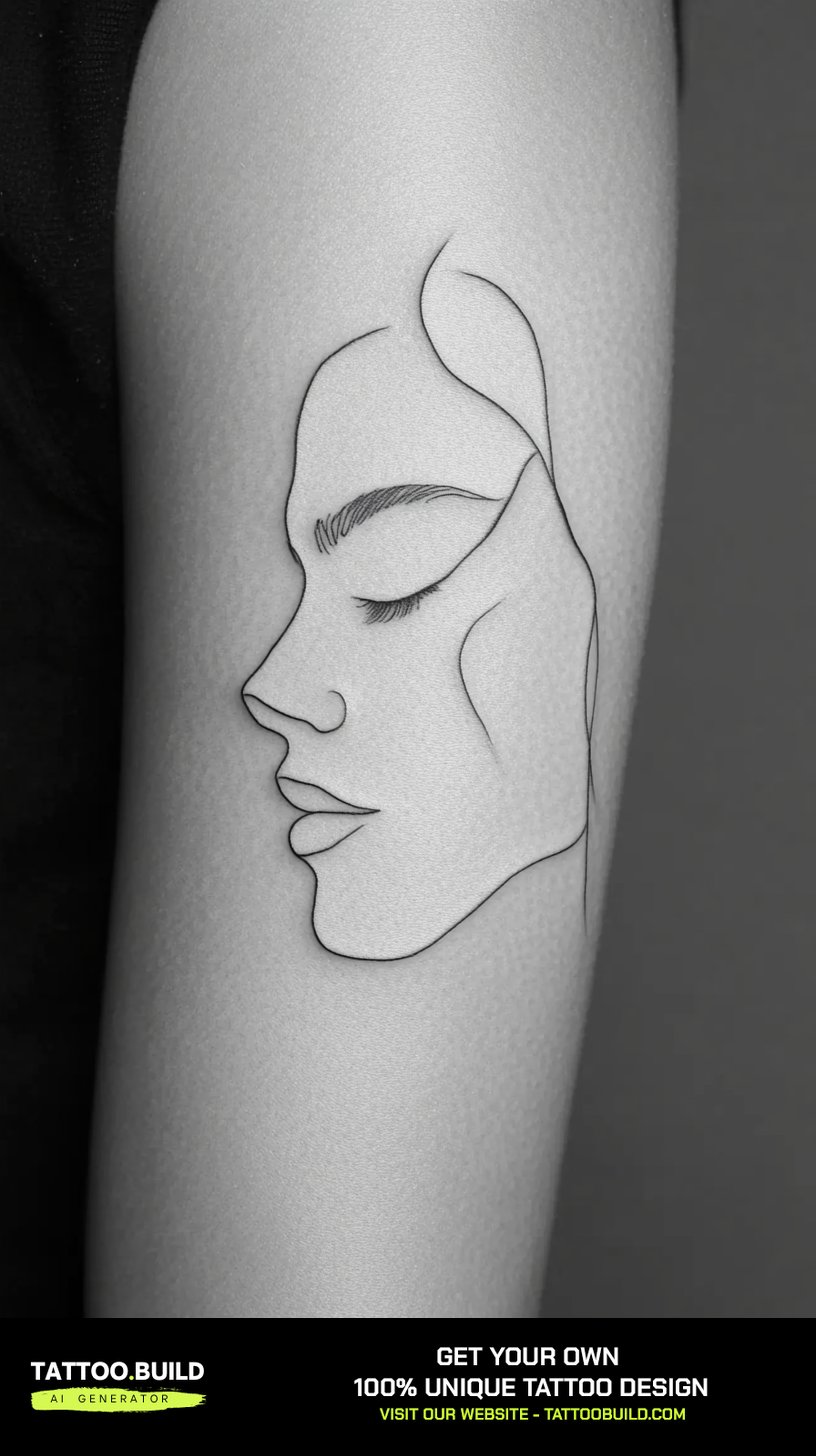
If you like the delicacy but want something even simpler, it is worth comparing filigree against fine-line tattoo ideas before you book. Below is everything I would want to know first — the design families, the placements that hold up, the ones that do not, and what these actually cost you in healing time.
Which Filigree Style Is Right for You?
There is no single filigree look. These are the five families I see most often, and how they behave over time.
| Style | Best For | Typical Size | Usual Session Time | How It Ages |
|---|---|---|---|---|
| Classic scrollwork | A first filigree piece, forearm or spine | 10–20 cm | 2–4 hours | Good, if line weight is varied rather than uniform |
| Floral filigree | Anyone who wants a recognisable subject inside the ornament | 12–25 cm | 3–6 hours | Good, the petals hold shape as lines soften |
| Jewellery & chandelier | Chest, collarbone, ankle, back of the hand | 8–30 cm | 3–7 hours | Depends heavily on placement; hands and feet fade fastest |
| Filigree over blackwork | Bold pieces that still need texture | 15–40 cm | 5–10 hours, often split | Very well; the solid black anchors the design |
| Minimal fine-line filigree | Small, discreet placements | 3–8 cm | 45 minutes–2 hours | The trickiest — tight curls can blur into one another |
What Makes Filigree Different From Other Ornamental Work
Filigree is often lumped in with mandalas, lace and baroque ornament, but the construction logic is different.
A mandala is built outward from a centre point and is usually symmetrical in every direction. Filigree grows along a line, curling back on itself like a vine or a wrought-iron gate.
That directional flow is the reason filigree wraps limbs so comfortably. It has a beginning and an end, so it can follow a forearm, a collarbone or the curve of a hip instead of fighting it.
Lace tattoos, by comparison, are woven — the pattern repeats as a fabric. Filigree does not repeat; each curl is drawn to fit the space it sits in, which is why good filigree is nearly always drawn on the body rather than printed from a flat stencil.
In my experience the pieces that disappoint are the ones where the artist treated filigree as wallpaper: an identical motif copied four times around an arm. It reads as filler almost immediately.
Filigree Tattoo Designs Women Ask For Most
These eight design families cover the overwhelming majority of filigree requests I have seen come through studios.
1. Floral Filigree
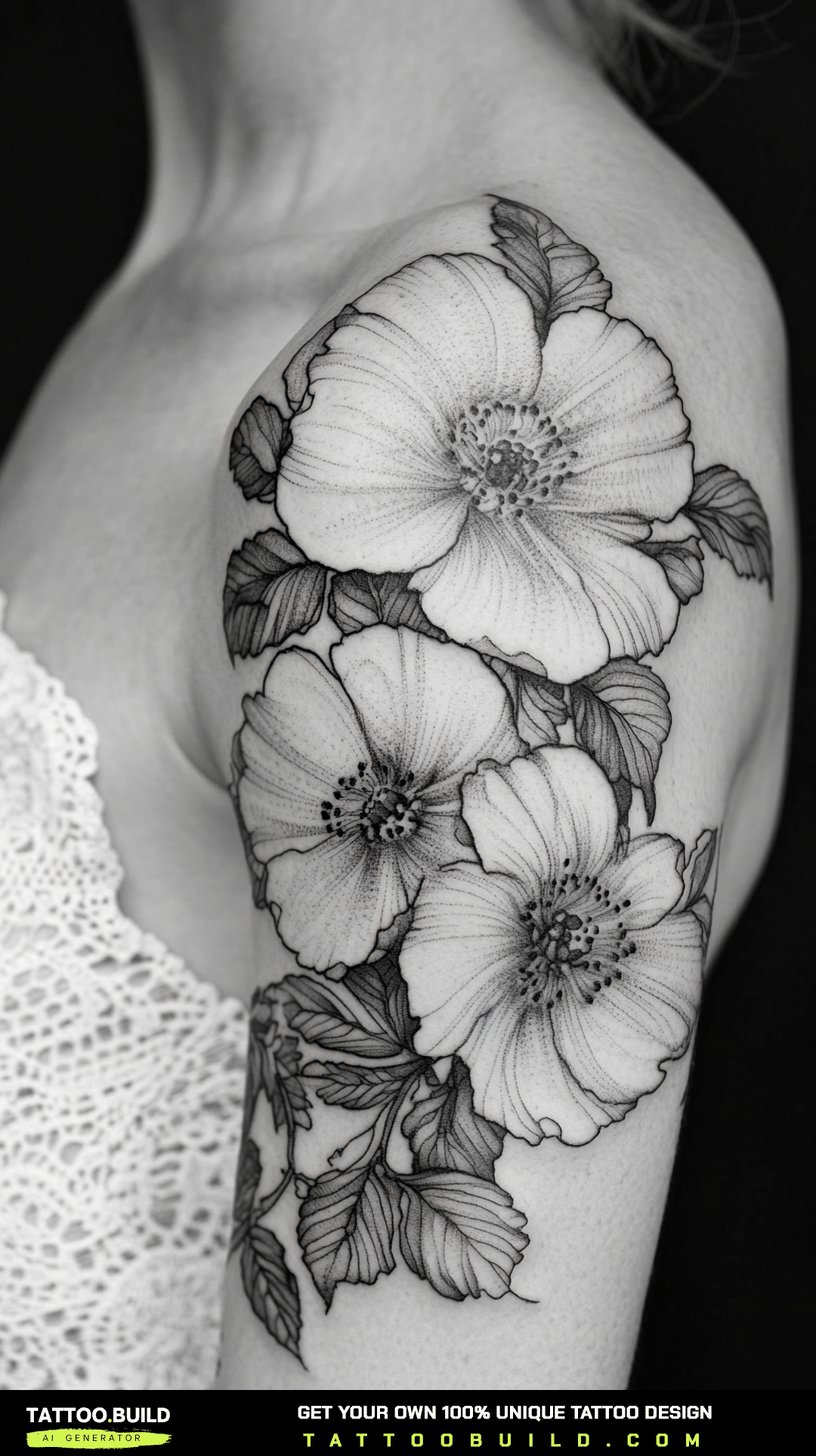
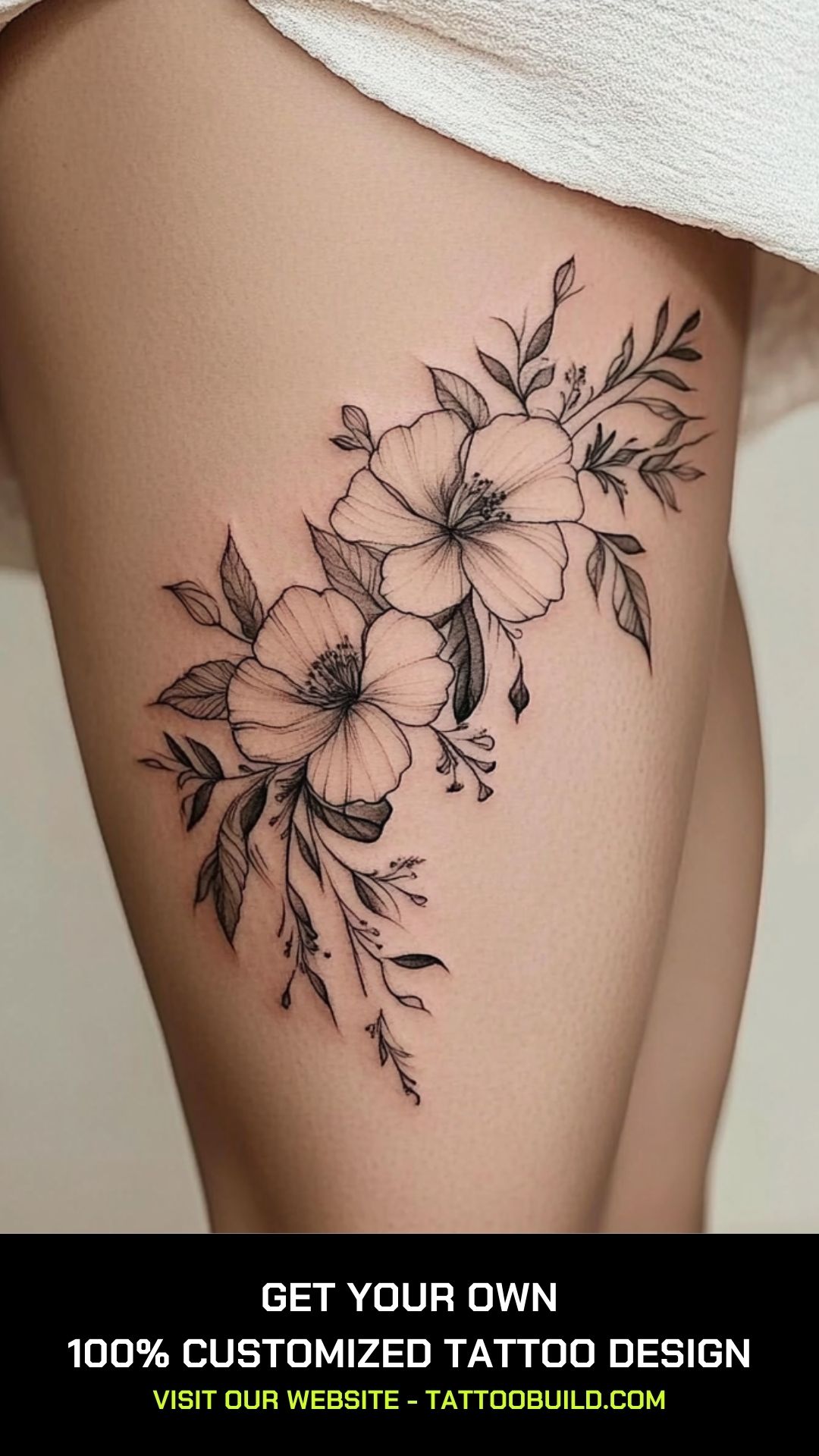
Floral filigree puts a real flower — rose, peony, lily, wildflower — at the heart of the design and lets ornamental scrolls spill out of it.
It is the most forgiving version for a first filigree tattoo, because the flower gives the eye something solid to land on while the thin work does the decorating.
Ask your artist to shade the flower a little heavier than the scrollwork. That contrast in weight is what stops the whole piece from turning grey and flat in ten years.
Roses and peonies suit larger placements like the thigh or upper arm. For anything under about 10 cm I would push toward a simpler bloom — a single lily or a sprig of forget-me-nots — because petal detail is the first thing to blur when a tattoo is packed too tightly.
2. Heart Filigree
The heart is the most requested filigree subject I come across, and it is easy to see why: the outline is simple enough that all the interest can live in the ornament.
Two approaches work. Either the heart is drawn as filigree — the outline itself made of curling wire — or a solid heart sits inside a filigree frame.
The first is lighter and more jewellery-like. The second holds up far better at small sizes, because there is a solid shape to read even after the fine lines soften.
A locket-style heart with a tiny keyhole is a common variation, often tattooed as a memorial piece. If it carries a name or a date, keep the text outside the scrollwork rather than woven into it — lettering surrounded by fine lines becomes very hard to read as it ages.
3. Butterfly Filigree
Butterfly filigree replaces the wing membrane with open scrollwork, so the insect looks like a brooch rather than a specimen.
It is one of the few subjects where perfect symmetry actually helps. The eye expects a butterfly to mirror itself, and any drift between the wings is noticeable.
Placement should follow the body’s own centre line. Sternum, upper spine and the back of the neck all work; an off-centre butterfly on a forearm tends to look tilted no matter how well it is drawn.
If you like the shape but want something less literal, look through our wider collection of butterfly tattoo ideas first — there are a lot of ways to abstract those wings before you commit to the ornamental version.
4. Skull Filigree
Skull filigree is the sugar-skull idea pulled toward European ornament: the bone is left mostly clean and the decoration runs across the brow, the cheekbones and the jaw.
It reads far softer than a traditional skull tattoo, which is exactly why people who would never get a skull otherwise end up with one.
The technical challenge is that a skull needs real shading to look three-dimensional, while filigree needs to stay light. Good artists solve it by shading the eye sockets and nasal cavity properly and keeping everything else linework.
Roses paired with skulls are the classic combination, and that old pairing of life and death held in one image carries over intact when the design is ornamental.
5. Filigree Jewellery and Chandelier Designs
This is filigree at its most literal: a necklace, a pendant, a garter or a chandelier drop, tattooed as though the jewellery were actually resting on the skin.
Chandelier designs hang from a fixed point — the base of the throat, the centre of the sternum, the hollow of the ankle — and taper as they fall.
The illusion only works if the piece obeys gravity. I have seen chandelier tattoos placed sideways on a ribcage, and the moment the wearer stands up the whole design looks like it is falling over.
Ankle and wrist versions overlap heavily with feminine bracelet tattoo ideas, and the same rule applies to both: leave a visible gap in the band rather than closing it into a perfect ring, so the line does not have to be flawless where it meets itself.
6. Filigree Wings
Wings rendered in filigree lose the feather-by-feather realism and gain a stained-glass quality instead.
Small paired wings across the shoulder blades or on either side of the spine are the common version. Larger single wings running down a ribcage or an outer thigh are rarer and considerably more striking.
Because feathers naturally repeat, this is the one subject where a repeating filigree motif does not look lazy — the repetition is doing the work feathers would do.
If you are drawn to the shape, our broader wing tattoo ideas guide covers the placements that suit larger versions. In my experience anything above about 25 cm per wing is worth splitting across two sessions.
7. Filigree Animals
Cats, wolves, horses, hummingbirds and elephants all get the filigree treatment, usually as a silhouette whose interior is drawn as scrollwork.
The trick is choosing an animal with a strong outline. A cat’s profile or a hummingbird in flight survives being hollowed out; a face-on portrait usually does not.
Silhouette first, ornament second. If the shape is not readable in solid black at arm’s length, it will not be readable once it is filled with curls.
Memorial pet tattoos are a large share of this category. If that is your reason, ask for a small solid element somewhere in the design — a filled paw pad, a solid eye — so there is a piece that stays crisp for decades.
8. Filigree Lotus and Mandala Hybrids
The lotus is the most common flower to be drawn in a fully ornamental style rather than a botanical one, and it sits naturally between filigree and mandala work.
Symmetrical petals give the design a centre, and filigree scrolls can then radiate outward from beneath the bloom.
These pieces work beautifully on the sternum, the centre of the back and the top of the thigh, where the body itself is roughly symmetrical.
If the symmetry is the part you like, compare it against mandala tattoo ideas for women and our dedicated lotus tattoo guide — the two styles can be combined, but a design that commits to one usually looks cleaner than one that hedges.
Where Filigree Sits Best on the Body
Filigree is unusually placement-sensitive, because thin lines behave very differently depending on the skin underneath them.
Spine and Centre Back
The spine is the natural home for vertical filigree — the design has an obvious axis to follow and the skin there stretches very little.
It is not a gentle placement. Bone sits close to the surface along the whole run, and most people find the lower spine considerably sharper than the upper.
Our guide to the feminine spine tattoo covers sizing in more detail, but as a rule the design should stop before the natural waist curve if you want the lines to stay straight when you bend.
Thigh and Hip
The thigh gives you the most room and the most comfortable session of any filigree placement I have seen.
Large ornamental panels, garter-style bands and chandelier drops all work here, and the area is easy to keep covered while it heals.
The one caution is weight fluctuation: the outer and front thigh handle it well, the inner thigh less so. Classy feminine thigh tattoo placements tend to favour the outer curve for exactly this reason.
Forearm and Wrist
The inner forearm is the placement I recommend most often for a first filigree piece: flat, visible, easy to care for and only moderately painful.
Filigree that wraps from the inner to the outer forearm suits the style’s directional flow particularly well.
Avoid the wrist crease itself. The skin folds constantly there and fine lines placed directly across it break up faster than anywhere else on the arm.
Sternum and Ribs
Sternum filigree is the most dramatic placement and the one people most often underestimate.
The ribs are widely reported as one of the sharper areas to tattoo, and a symmetrical ornamental piece there is rarely a short session. Our guide to the most painful tattoo spots is worth reading before you book a full sternum panel.
Ankle and Foot
Ankle filigree looks like an anklet, which is exactly the appeal — but it is the placement where I have seen the most disappointment two or three years later.
Feet and ankles rub against shoes and socks constantly, and fine lines there generally need touching up sooner than the same design on an arm. Go slightly bolder than feels necessary.
Shoulder and Collarbone
The collarbone gives filigree a natural line to hang from, and the shoulder gives it a curve to wrap around. Both age well because neither area gets much friction.
Epaulette-style pieces that run from the collarbone over the shoulder cap are one of the most flattering uses of the style I have come across.
Keeping Fine Filigree Crisp
Fine lines are less forgiving than bold ones, so aftercare matters more here than it does on a traditional tattoo.
Sun exposure is the single biggest threat to a filigree tattoo. Thin black lines break down faster than solid fills, and once they have faded unevenly there is not much a touch-up can do beyond going heavier than the original.
Keep the healing piece clean and lightly moisturised, avoid soaking it, and follow whatever routine your artist gives you rather than a routine you read online — our tattoo aftercare guide covers the normal timeline.
If you see spreading redness, swelling that increases after the first few days, pus, or a fever, that is not normal healing and it needs a doctor rather than a forum thread. Mayo Clinic and the US FDA both publish plain-language guidance on tattoo risks, including allergic reactions to specific pigments, which can appear weeks after the session. This article is design guidance, not medical advice.
Common Mistakes I See With Filigree Tattoos
The first is going too small. Filigree needs breathing room between the lines, and a design shrunk below the size it was drawn for will close up as the ink settles.
The second is uniform line weight. Real metalwork has thick and thin sections; a filigree tattoo drawn entirely in one needle width looks printed rather than made.
The third is choosing the artist by portfolio aesthetic rather than by healed photographs. Ask specifically to see fine-line work that is at least two years old. Fresh photos tell you almost nothing about how someone’s thin lines settle.
And the fourth is treating filigree as filler between existing tattoos. It can connect a sleeve beautifully, but it needs to be designed for that job from the start, not squeezed into whatever gaps are left.
Still not sure it is your style? Filigree is only one of several ornamental routes, and it is not the easiest one to maintain — sitting with the idea for a few weeks costs nothing.
Frequently Asked Questions
Do filigree tattoos age well?
It depends almost entirely on line weight and placement. Filigree drawn with varied line thickness, placed on flat low-friction skin like the forearm, outer thigh or spine, generally holds up well for many years. Very small, very tightly curled designs on hands, feet and wrists are the ones that tend to blur soonest. In my experience the single best predictor is whether the artist left enough bare skin between the strands.
How painful is a filigree tattoo?
Pain comes from the placement rather than the style, since filigree uses relatively light needle work. Ribs, sternum, spine, ankle and the inside of the upper arm are widely reported as the sharper areas, while the outer thigh and outer forearm are usually described as much more manageable. The sessions are often long, though, so fatigue matters as much as intensity. Eat properly beforehand and tell your artist when you need a break.
How much does a filigree tattoo cost?
Pricing varies enormously by country, studio and artist reputation, so any figure I gave you would be misleading. What is consistent is that filigree is charged by time rather than by size, because the detail work is slow. A small ornamental piece may be a single short sitting, while a full sternum or thigh panel is usually several hours and sometimes multiple sessions. Ask for a quote based on the finished drawing, not on a rough idea.
Can filigree tattoos be done in colour?
Yes, though the great majority are black or black-and-grey because that is what reads as metalwork. Soft gold, rose gold and muted jewel tones can work, particularly on jewellery-style designs where you are imitating an actual metal. Be aware that lighter and warmer pigments generally fade faster than black, so a coloured filigree piece is likely to need attention sooner. Some people also react to specific coloured pigments, which is worth raising with your artist beforehand.
What is the difference between filigree and lace tattoos?
Lace tattoos repeat a woven pattern, like a piece of fabric laid on the skin, and usually have a defined edge where the lace ends. Filigree flows along a line, curling and branching, with no repeating unit. Filigree also tends to include beaded dots and varied line weights borrowed from goldsmithing, while lace is more uniform. The two are often combined, but they are drawn on completely different logic.
Quick Summary
- Filigree tattoos imitate fine metalwork — open, curling linework with deliberate bare skin between the strands.
- Unlike mandalas, filigree flows along a line, which is why it wraps limbs and follows the spine so naturally.
- The most requested subjects are floral, heart, butterfly, skull, jewellery, wings, animal silhouettes and lotus designs.
- Varied line weight is the difference between a piece that ages gracefully and one that turns into a grey smudge.
- Forearm, outer thigh, spine, collarbone and sternum are the placements that hold detail best; hands, feet and wrist creases fade fastest.
- Going too small is the most common mistake — the design closes up as the ink settles.
- Ask any prospective artist for healed fine-line photos at least two years old before you book.
- Sun protection matters more for filigree than for almost any other style, and anything that looks like infection needs a doctor, not a forum.