A tattoo drawing is not a smaller version of the tattoo — it is the decision-making stage, and it is where almost every good piece is either won or lost. I have watched more designs get rescued by ten extra minutes on paper than by any amount of skill at the machine.
I started collecting reference sheets years ago because I kept walking into consultations with a phone full of finished tattoos and no way to explain what I actually liked about them. Line weight? Composition? Subject? A drawing forces you to answer that. If you want a broader sweep of styles first, our roundup of cool tattoo drawings covers a lot of ground.
Everything below is drawn as flash — black linework on white paper, no shading tricks to hide a weak shape. That is deliberate. If a design reads clearly at this stage, it will usually read clearly on skin.
I have grouped 44 drawings by subject rather than by body part, because in my experience people arrive knowing what they want long before they know where they want it.
Which Tattoo Drawing Style Should You Sketch In?
Before you copy a single line, decide which drawing language you are working in. The same subject drawn in four styles produces four completely different tattoos.
| Drawing Style | How the Sketch Looks | Pencil Skill Needed | How It Tends to Age |
|---|---|---|---|
| Fine line | Thin, even outlines with large amounts of white space | Low to draw, high to keep steady | Softens fastest; often needs a touch-up within a few years |
| Bold traditional | Heavy outline, simple shapes, minimal interior detail | Low | Usually the most forgiving over decades |
| Neo-traditional | Varied line weight, decorative framing, more depth | Medium | Holds well if the outline stays bold |
| Illustrative / sketch | Visible construction lines, loose hatching, texture | Medium to high | Fine hatching can blur together; spacing matters |
| Dotwork / stippling | Tone built entirely from dots, no solid fill | High patience more than high skill | Dense areas darken and merge over time |
| Blackwork silhouette | Solid black shape, detail carved out in negative space | Low to draw, hard to design well | Very durable, but almost impossible to cover later |
Why the Drawing Matters More Than the Machine
Most tattoos that disappoint people were badly designed, not badly executed. The needle only repeats the decision the drawing already made.
When I have brought a drawing to a consultation, the conversation changes completely. Instead of an artist guessing at my taste, we are both looking at the same shape and arguing about line weight — which is a far more useful argument.
A drawing also exposes scale problems early. A design that looks intricate at A4 may lose half its interior detail once it is shrunk to fit a forearm, and paper tells you that before your skin does.
There is a healing reason too. Lines placed too close together tend to spread into one another as the skin settles, so leaving deliberate gaps in the drawing is not laziness — it is planning for how the tattoo will look in five years.
Every artist I have asked has said some version of the same thing: bring a drawing, bring a reference, or bring an idea — but do not bring a screenshot and expect an identical copy. Most reputable artists will redraw it anyway, both for originality and because copying another artist’s work outright is poor etiquette.
Tattoo Drawing Ideas for Men
These 24 sheets lean toward bolder outlines and heavier black, which is partly convention and partly practical — they are often planned for larger placements like the outer forearm, chest or calf.
Animal and Beast Drawings
Animals are the safest starting point for a first tattoo drawing because the silhouette does most of the work. If you can recognise the creature from across the room with the page held at arm’s length, the drawing is strong enough.
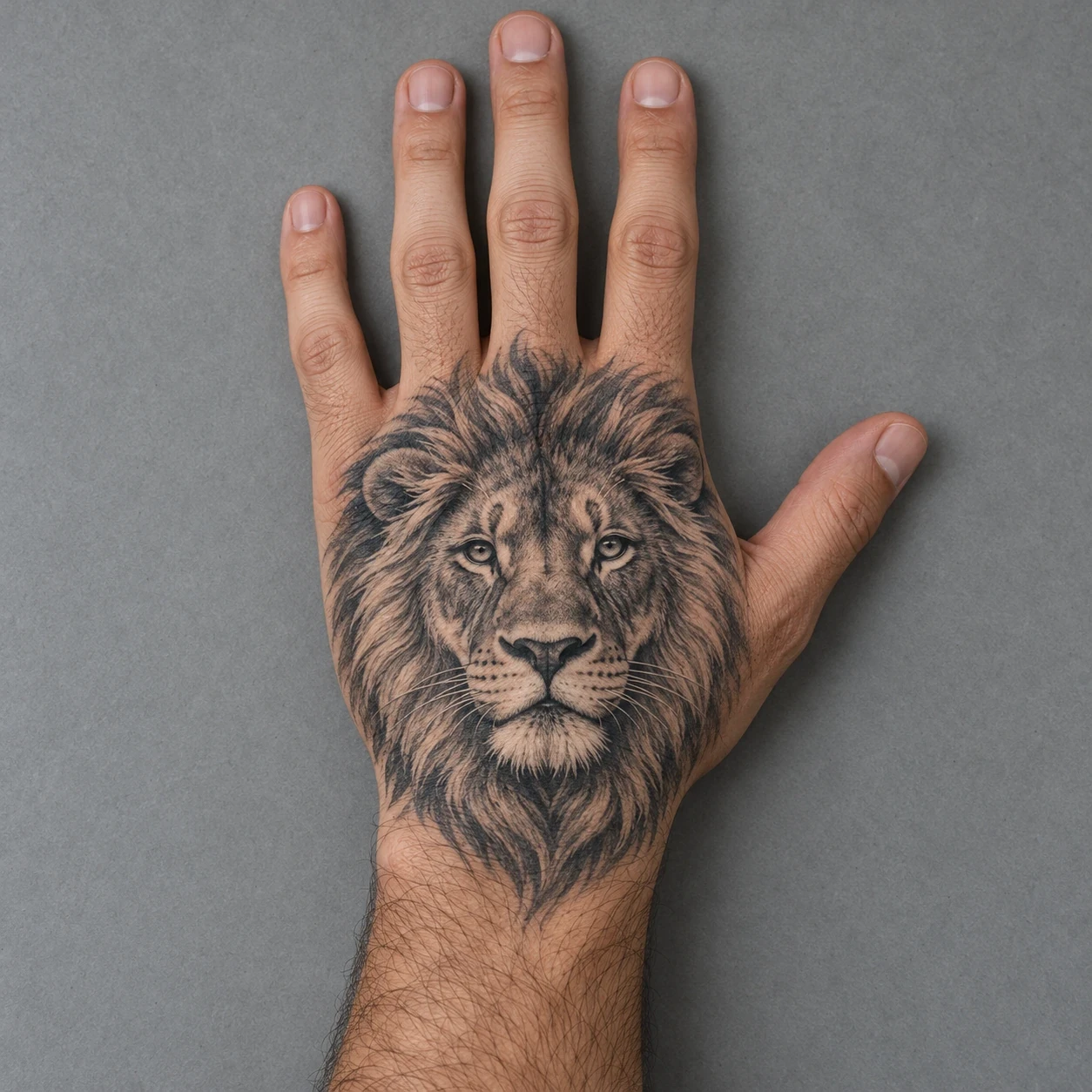
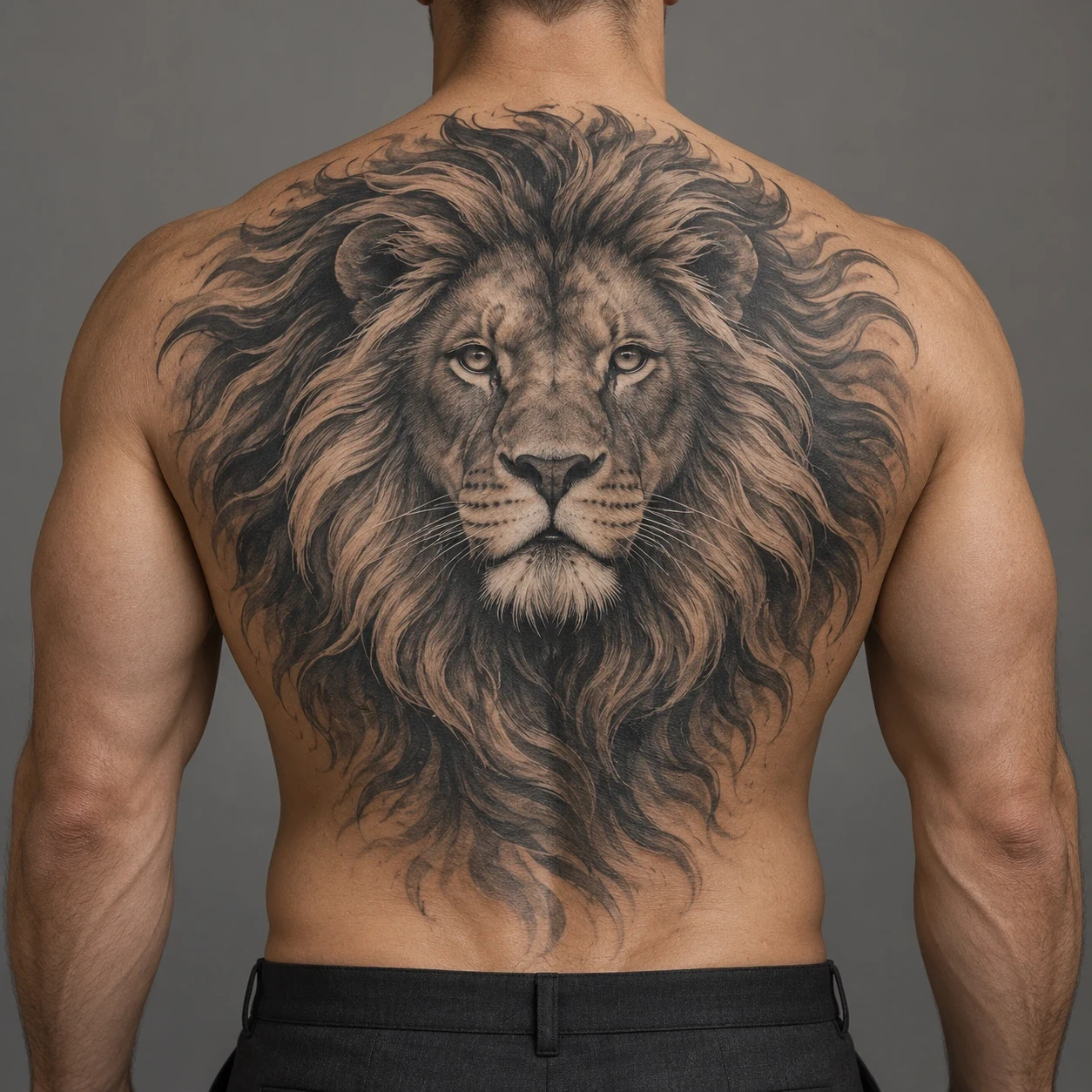
The lion and tiger sheets below are worth studying for how the mane and stripes are simplified. Neither one draws every hair — they draw the direction the hair travels and let the eye fill in the rest.
Wolves and bears give you a different problem: both are mostly fur and shadow, so the drawing has to invent structure. Notice how the forest behind the bear is reduced to flat triangles rather than realistic trees. If big cats are your direction, our lion tattoo ideas gallery shows how the same subject shifts across styles.
The dragon-and-tiger sheet is the hardest of this group to execute — two focal points competing in one composition rarely works unless one is clearly subordinate.
Viking, Warrior and Weapon Drawings
Norse-inspired drawings live or die on their knotwork. The interlace has to actually interlace — over, under, over — and a surprising number of designs online quietly cheat this.
I sketched the axe-and-helmet layout half a dozen times before the handles read as symmetrical. Weapons crossed behind an object are much harder to draw than they look. If you like this direction, the geometry in our tribal tattoo ideas collection uses similar rules.
The dragon boat is the most narrative piece here. It is really a landscape drawing disguised as an object, and it rewards being tattooed large — usually a back, thigh or full outer arm rather than a wrist.
Ocean, Compass and Landscape Motifs
Direction motifs are the most requested category I have come across, and the compass rose is the reason. It is geometric, so it can be drawn accurately with a ruler and a pair of compasses, which makes it unusually beginner-friendly.
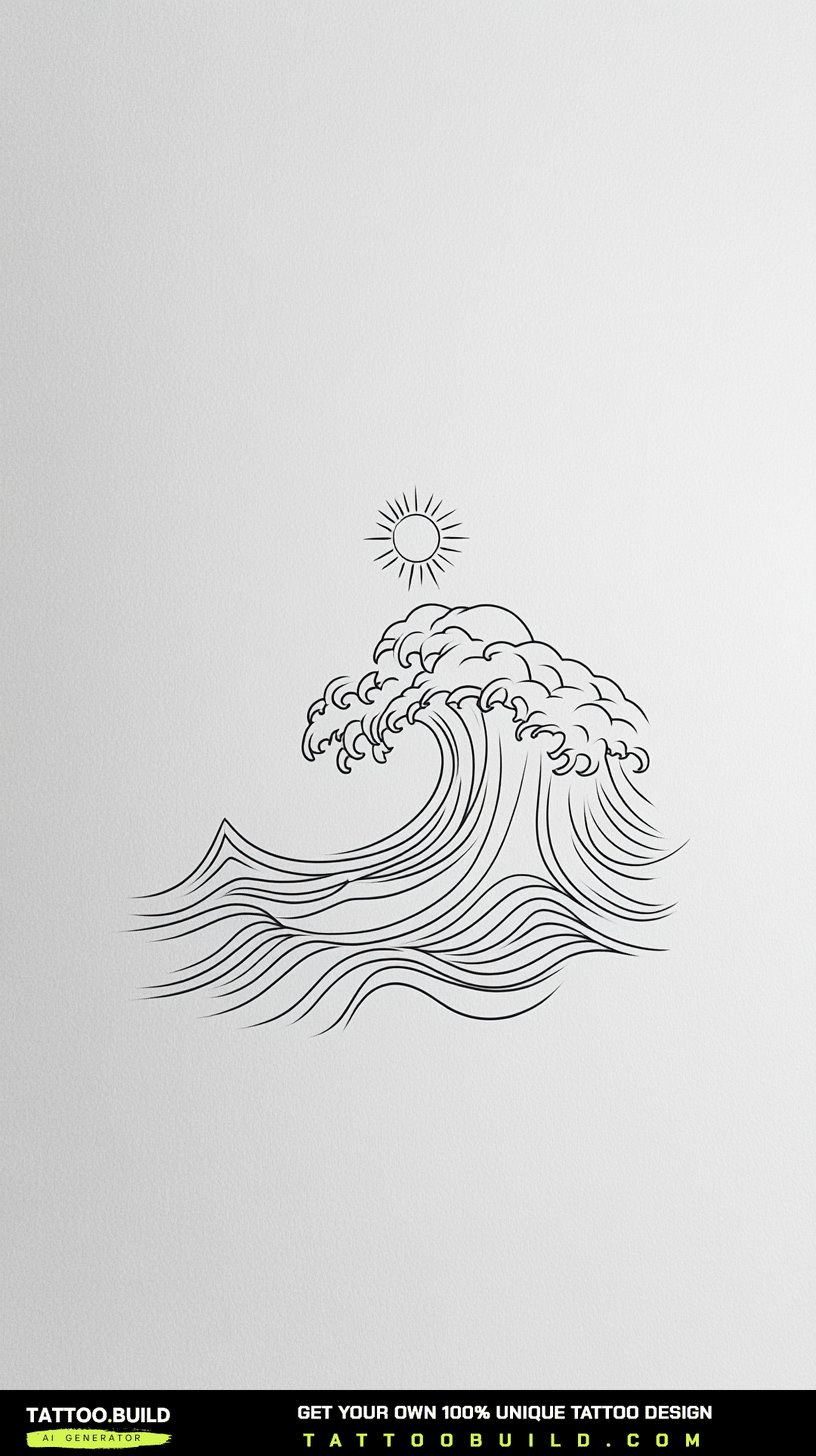
Waves are the opposite. The Japanese-influenced wave below works because the foam is drawn as repeating spirals rather than as random shapes — a rule borrowed from woodblock printing. For more variations on the geometry, see our compass tattoo designs guide.
Mountain-and-sun compositions are the easiest of the whole article to adapt. Swap the peaks for a skyline you actually know and the drawing becomes personal without becoming harder to tattoo.
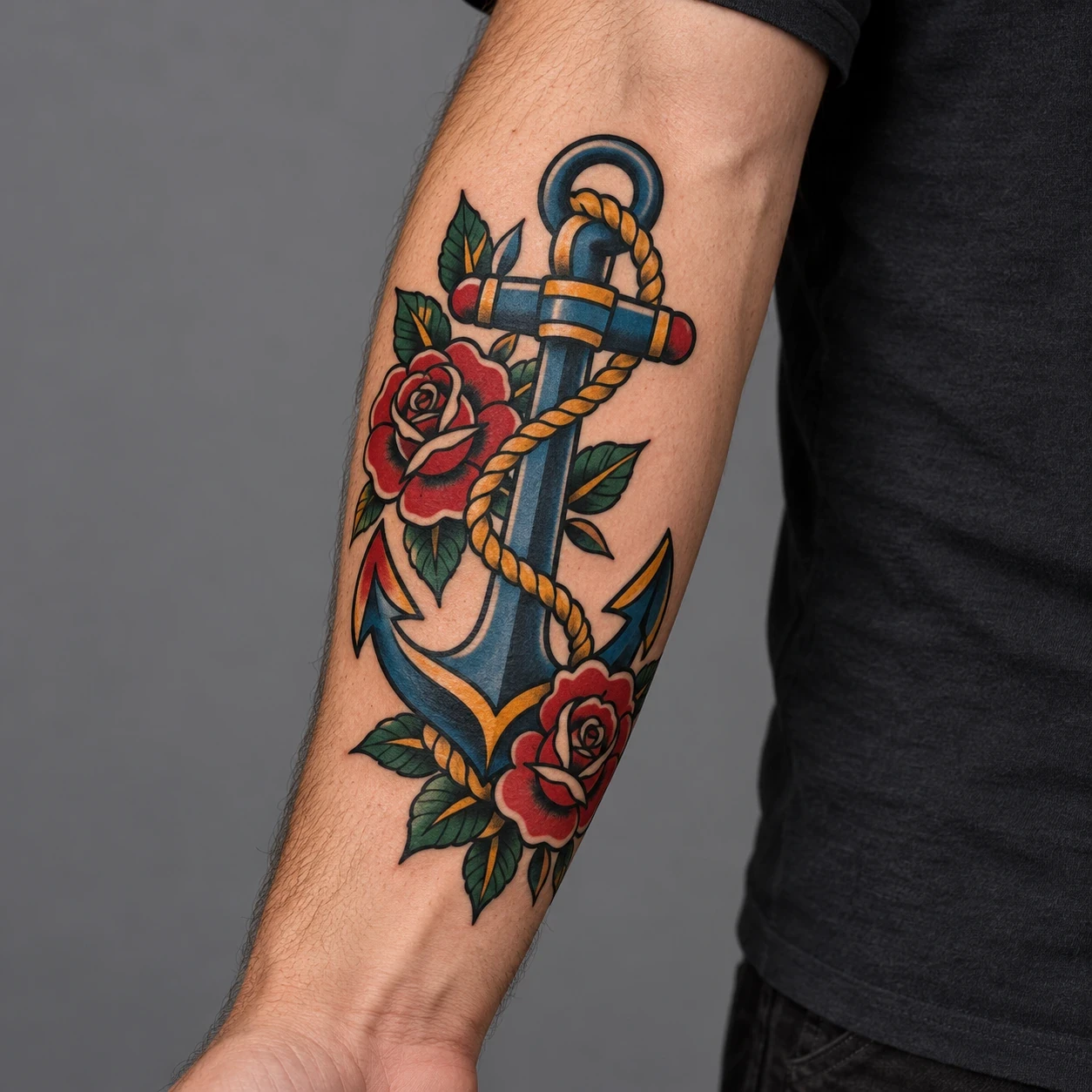
The eagle-and-anchor sheet is the most traditional piece in the article, and traditional designs are traditional because they have already survived a century of ageing.
Skulls, Jokers and Darker Symbolism
Skulls are a technical exercise more than a stylistic one. Get the eye sockets and the cheekbone plane right and almost any style will sit on top of them convincingly.
The snake threading through the socket is doing structural work as well as symbolic work — it breaks up what would otherwise be a very static, symmetrical shape. Our skull tattoo drawings page goes deeper on the underlying anatomy.
Joker portraits are the riskiest drawings in this article. Character faces date quickly, and a likeness that is slightly off is far more noticeable than a slightly off flower.
Crowns, Gears and Fantasy Detail
This group is where ornament takes over from subject. The crown, the gear and the floral surround are all essentially frames looking for something to frame.
The mechanical gear sheet is the one I would think hardest about. Clockwork drawings depend on many small interior lines staying separate, and that is exactly the detail that closes up first as a tattoo settles.
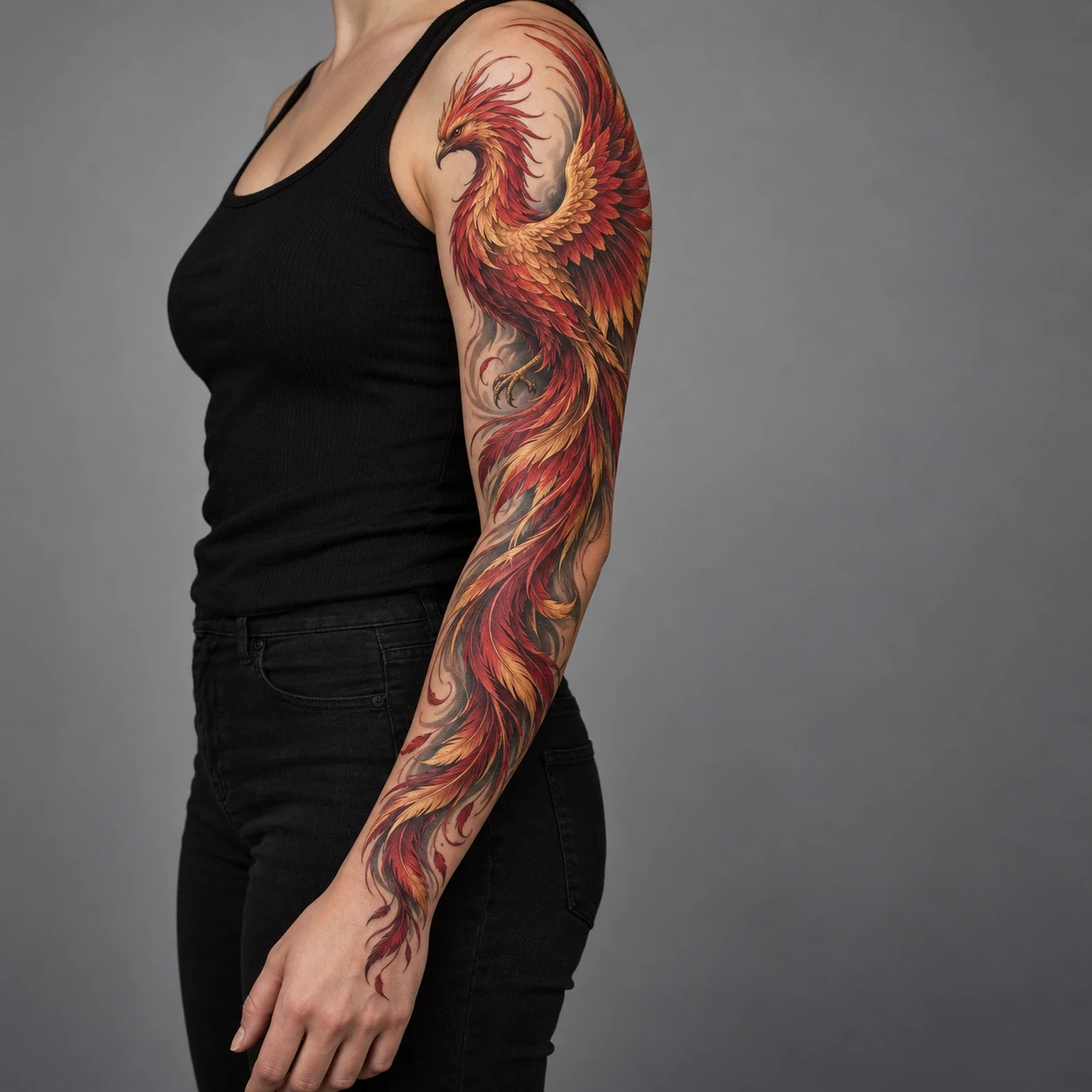
The phoenix reads well because the tail feathers move in a single sweeping direction. When a phoenix drawing fails, it is almost always because the feathers point in three or four directions at once.
Deer-and-floral compositions are the quiet standout of this set — the antlers and the stems share a branching logic, so the two halves of the drawing agree with each other.
Tattoo Drawing Ideas for Women
These 20 sheets sit further toward fine line and botanical work. That is a stylistic tendency rather than a rule — I have seen every one of these tattooed in bold traditional and look excellent.
Botanical and Floral Line Drawings
Flowers are the most reliable subject in tattooing, and the drawings below show why: a petal is a simple curve, but the arrangement can carry as much complexity as you want to give it.
When I tested these at different sizes, the lavender and daisy sheets held up smallest — around two inches — because their negative space is generous. The peony needed roughly four inches before the interior petals stopped merging. Our flower tattoo drawings collection has more species to compare.
Cherry blossom branches are the most flexible composition here. The branch can be lengthened, curved or wrapped to fit almost any body part without redrawing the flowers themselves.
The classic rose outline is the single most useful drawing to practise — nearly every traditional and neo-traditional design borrows its spiral construction.
Mandalas and Geometric Ornament
Mandalas are the most measurable drawings in the article. You are working with a circle, a set of guide rings and a fixed number of repeats, and the whole design is a matter of dividing the circle honestly.
I draw these with a protractor rather than by eye. Eight, twelve or sixteen segments all work; seven does not, because the human eye is very good at spotting a repeat that does not close. The same principles run through our geometric tattoo designs guide.
The lotus mandala hybrid is a good compromise if strict geometry feels cold — the petals give it an organic outer edge while the interior stays symmetrical.
Celestial, Winged and Delicate Subjects
Crescent moons filled with flowers have become a genuine modern classic, and the reason is compositional: the crescent gives you a ready-made frame that is already interesting on its own.
Butterflies are harder than they appear. Wing symmetry is unforgiving, and a wing pattern drawn freehand on the second side almost never matches the first. I fold the paper and trace.
The floral face outline is the most stylised drawing in this article, and the most divisive. It reads beautifully at large sizes and turns into an unreadable blob when it is shrunk below about three inches.
The sleeping fox is the sleeper favourite of the whole set — a curled animal is a naturally circular composition, which makes it fit awkward placements like a shoulder blade or hip.
Water, Symbols and Storytelling Pieces
This last group is subject-led rather than style-led. Each drawing is carrying a meaning, which changes how you should judge it — clarity matters more than decoration.
The koi and peony sheet is the most technically demanding. Scales have to suggest volume without being drawn individually, and the flower has to sit behind the fish without competing with it. Our koi fish tattoo design guide covers the traditional symbolism in more detail.
Dreamcatchers deserve a note of caution: they originate with the Ojibwe and other Indigenous nations, and many people consider casual use of the design disrespectful. It is worth reading about the origin before committing to it.
The bow and arrow is the simplest drawing in the article and, in my experience, one of the most frequently regretted — simple designs give you nothing to grow into.
Variations Worth Sketching Before You Commit
Do not treat any of these as finished. The value of a drawing is that it is cheap to change, so change it several times before anyone charges you for it.
Redraw It at Two Line Weights
Trace the same design twice — once with a fine pen, once with a marker. The bold version will lose interior detail, and whatever survives is the actual design.
This is the fastest way I know to find out whether a drawing depends on detail or on shape. Designs that depend on shape age better.
Try a Negative-Space Version
Fill the background solid black and leave the subject as bare paper. It sounds drastic, but it often turns a crowded drawing into a striking one.
Be aware that heavy blackwork is very difficult to cover or remove later, so it is a decision worth sitting on.
Scale It to the Real Placement
Print the drawing at the exact size you intend it, cut it out, and tape it where it will go. Wear it for a day.
In my experience this kills about a third of designs outright — usually because they turn out to be far bigger than people pictured.
Rough In Colour Over the Same Linework
Photocopy the outline several times and colour each copy differently. Keeping the linework identical isolates the colour decision from the design decision.
Turning a Tattoo Drawing Into a Tattoo That Ages Well
Once you have settled on a drawing, a few practical steps make the handover to an artist much smoother.
Bring the drawing on paper as well as on your phone. Paper shows true size, and artists can trace, measure and mark it up directly.
Be explicit about which parts are non-negotiable and which are open. Saying “the wolf must face left, everything else is yours” gives an artist far more useful freedom than “do whatever you think.”
Expect the drawing to be redrawn. A good artist will rebuild it for your specific anatomy — the way a design sits on a curved calf is not the way it sits on flat paper.
On the health side, ask about ink ingredients if you have known allergies, and follow the aftercare your artist gives you rather than advice from the internet. The US FDA fact sheet on tattoos and the American Academy of Dermatology guidance on tattooed skin are reasonable starting points, but if a healing tattoo becomes hot, swollen, unusually painful or starts weeping after the first few days, see a doctor rather than looking for answers online. Nothing in this article is medical advice, and no tattoo should be attempted at home.
Common Mistakes I Keep Seeing in Tattoo Drawings
The most common mistake by far is drawing at a size the design will never be tattooed at. A gorgeous A4 sketch that gets reduced by 70% is a different design entirely.
The second is cramming. Two strong elements almost always beat four competing ones, and empty space is a design choice rather than a failure to finish.
The third is ignoring the shape of the body part. Vertical designs suit forearms and calves; circular designs suit shoulders and hips. If you are planning something larger, our half sleeve tattoo drawings guide shows how compositions wrap.
The fourth is copying another artist’s finished tattoo line for line. Use it as a reference for mood and style, then ask for something original — the gothic tattoo drawings collection is a good example of a recognisable style you can borrow without copying a specific piece.
And the last is rushing. Every design I have regretted was decided inside a week; every one I still like sat in a folder for months first.
Frequently Asked Questions
Do I need to be able to draw to design my own tattoo?
No. Most artists would rather see a rough sketch with clear intent than a polished drawing with no direction. In my experience a stick-figure layout plus three reference images communicates more than a traced copy of someone else’s tattoo. The drawing’s job is to settle composition, scale and subject — the artist handles the execution. Bring what you have and be honest about which parts are fixed.
How big does a tattoo drawing need to be to work as a tattoo?
It depends almost entirely on how much interior detail the drawing carries. Simple botanical outlines like the daisy and lavender above hold at roughly two inches, while dense pieces such as the mandalas or the clockwork gear generally need four inches or more. A useful test is to print the drawing at the intended size and look at it from arm’s length. If the interior lines start merging visually, the tattoo will merge them permanently as it heals.
Will my artist tattoo my drawing exactly as I drew it?
Usually not, and that is a good thing. Artists redraw designs to suit your anatomy, to correct line spacing that would blur during healing, and to fit their own style. Most will show you the redraw before starting so you can flag anything they changed. If an artist agrees to copy a drawing line for line without any adjustment, ask why.
Which tattoo drawing styles age the best?
Bold traditional and neo-traditional linework generally hold up best over decades, because heavy outlines have room to spread without the design collapsing. Fine line and dense dotwork tend to soften soonest, and often need a touch-up sooner than people expect. That said, ageing depends heavily on placement, sun exposure and your own skin, so no style is guaranteed. Ask your artist how similar pieces they tattooed years ago are holding up.
Is it safe to tattoo a drawing on myself at home?
No. Home and hand-poke tattooing without proper sterile equipment and training carries real risks of infection, bloodborne disease transmission and permanent scarring. There is no safe DIY version of this, and improvised removal methods are more dangerous still. Take the drawing to a licensed professional working in a regulated studio, and speak to a doctor if you have concerns about your skin or an existing tattoo.
Quick Summary
- Pick your drawing style before your subject — the same idea reads four different ways in fine line, traditional, illustrative and blackwork.
- Judge a drawing by its silhouette first. If it does not read at arm’s length in outline, more detail will not save it.
- Print the design at true size and wear it taped in place for a day before booking.
- Leave deliberate gaps between lines — closely spaced detail merges as the tattoo settles.
- Two strong elements beat four competing ones; negative space is part of the design.
- Match the drawing’s shape to the body part: vertical for forearms and calves, circular for shoulders and hips.
- Use references for mood and style, then ask your artist for something original rather than a line-for-line copy.
- Never attempt a tattoo at home, and see a doctor rather than the internet if a healing tattoo looks infected.